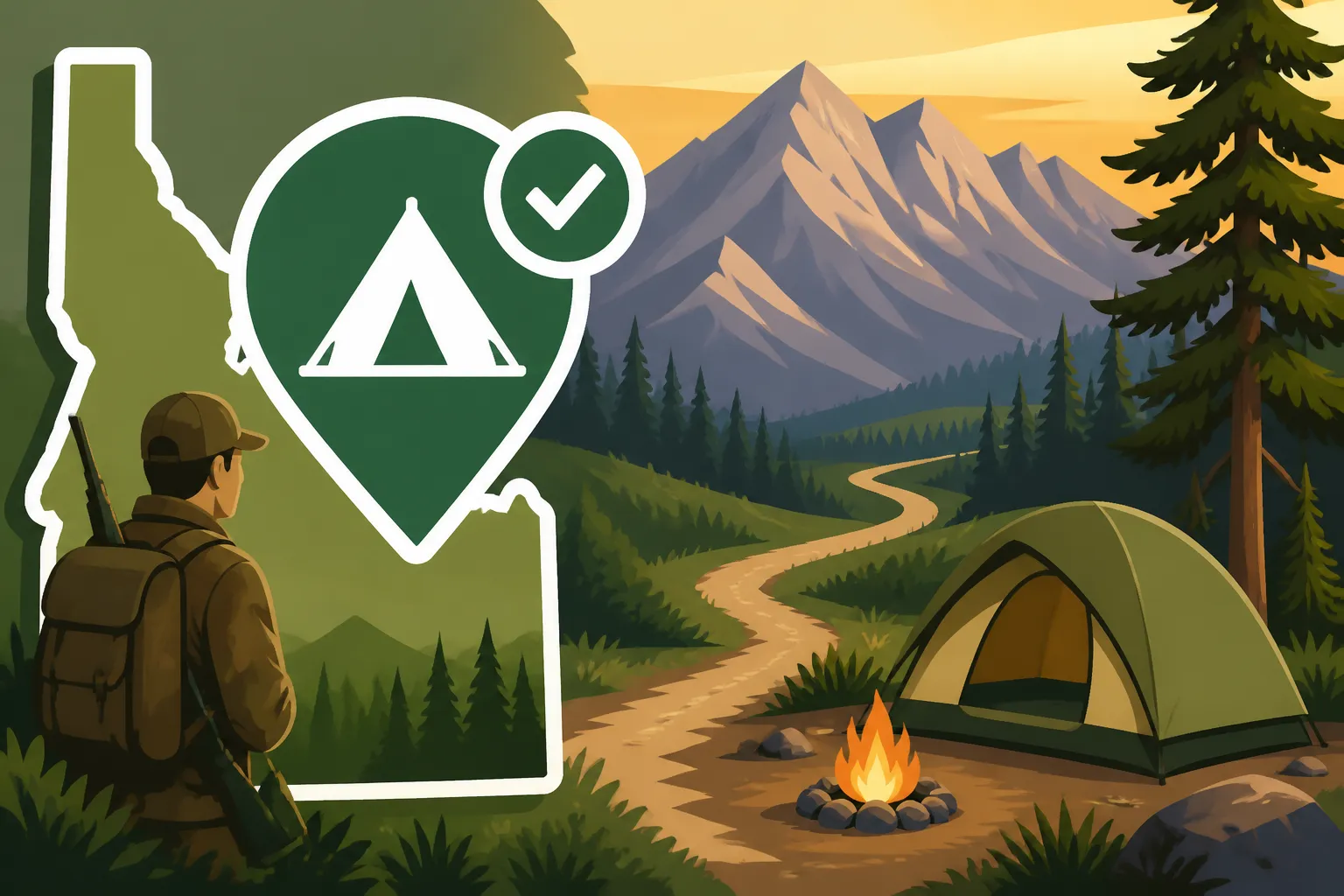
Where to Camp Legally Near a Trailhead
Arriving at a trailhead, ready for an early morning hunt or a deep dive into the backcountry, only to realize you have no idea if you can legally pitch your tent right there is a frustration many Idaho hunters know all too well. After a long drive, the last thing you want is to be scrambling in the dark, wondering if you're trespassing or breaking some obscure camping rule. This guide will walk you through the ins and outs of finding a legal and responsible place to camp near Idaho trailheads, helping you plan ahead and avoid unnecessary headaches.
Navigating Idaho's Land Ownership for Trailhead Camping
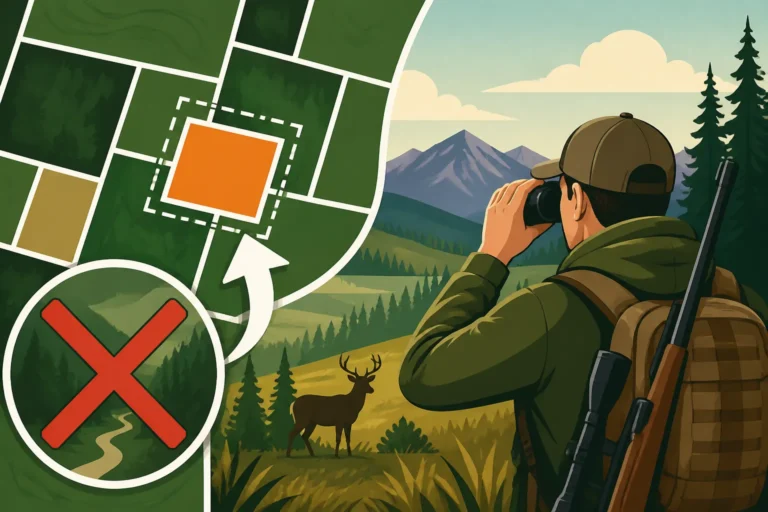
The first, and arguably most critical, step to finding a legal camping spot near an Idaho trailhead is understanding who actually owns the land you're on. Idaho is a checkerboard of public and private property, and the rules change dramatically depending on whether you're on National Forest, BLM land, State property, or private ground. Misunderstanding this can quickly turn an exciting hunt into a legal nightmare.
National Forest and Bureau of Land Management (BLM) Ground
These are often your best bets for convenient, legal trailhead camping. A vast majority of Idaho's trailheads, especially those leading into prime hunting country, are located within National Forests or on BLM land. Both agencies generally permit what's known as "dispersed camping," which essentially means you can set up camp pretty much anywhere that isn't a developed campground, as long as you follow a few common-sense rules.
For example, if you're heading into the Boise National Forest or across the expansive BLM lands near the Owyhee Breaks, you'll find plenty of opportunities. The key here is that these lands are managed for multiple uses, including recreation, and that usually includes primitive camping. You might pull off a Forest Service road, drive a short distance down a two-track, and find a perfect, secluded spot for your wall tent or truck camper. These areas are typically free to use and don't require reservations, which is a huge bonus for spontaneous trips or when plans change due to weather or game movement. It's crucial to distinguish between a clearly marked developed campsite with amenities like picnic tables and fire rings, and a simple pull-off. Dispersed camping applies to the latter, undeveloped sites.
Idaho State Lands and Private Property
While not as common for direct trailhead camping, it's vital to be aware of State and private land boundaries. Idaho has State Endowment Lands, managed by the Department of Lands, and while some are open to public recreation, the rules can be different from federal lands. Always check the specific regulations for Idaho State Endowment Land Access Rules if you suspect you're on State ground. Sometimes, these lands might have more restrictive camping rules or even require permits, especially near developed areas or timber operations.
Private property is, of course, entirely off-limits for camping without explicit permission from the landowner. You might encounter trailheads that actually start on private land before quickly crossing onto public ground. This is a common situation, and setting up camp on that initial private stretch is a direct path to a trespass violation. It's not worth the risk or the potential confrontation. Always assume private land is closed unless you've personally secured permission. This is where detailed mapping tools truly become your best friend, as they clearly delineate ownership boundaries, preventing accidental trespass.
Deciphering Idaho's Camping Regulations for Trailheads
Understanding land ownership is half the battle; the other half is knowing the specific regulations that apply to camping on those lands. Even on public ground, there are rules designed to protect the environment, prevent conflicts, and ensure public safety. These rules can vary slightly between different National Forests or BLM districts, but some general principles apply across the board in Idaho.
Dispersed Camping Rules and Restrictions
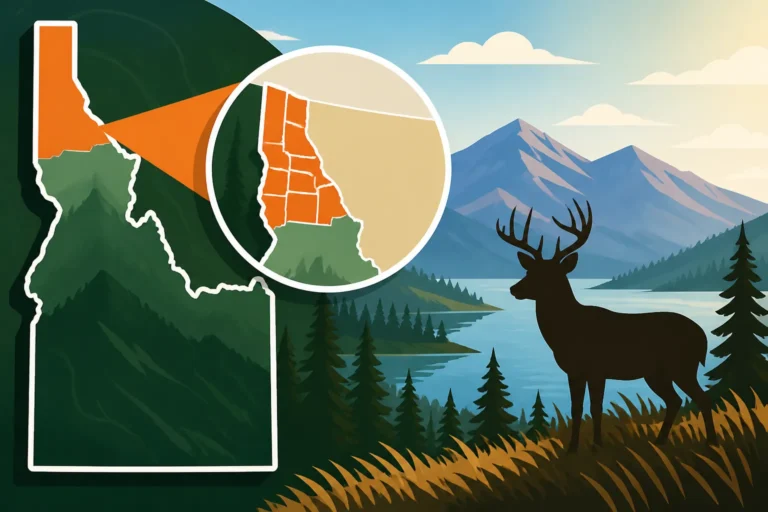
Most trailheads will be in areas where dispersed camping is the norm. The Idaho panhandle, for instance, offers countless trailheads leading into dense timber where you can find a quiet spot. Generally, you'll need to camp a certain distance away from established roads, developed recreation sites, and water sources. This is usually around 100-200 feet from roads and trails, and at least 200 feet from water bodies like streams or lakes. These distances help protect water quality, allow for quiet enjoyment by others, and keep the main thoroughfares clear.
The length of stay is another common regulation. On most federal lands, you can typically dispersed camp for up to 14 days within a 30-day period in one general area before you need to move a certain distance (often several miles) to a new spot. This rule is in place to prevent long-term residency and undue impacts on any single area. Fire regulations are paramount; always check for current fire restrictions or bans, especially during dry summer and fall months. A small campfire can feel essential on a chilly Idaho evening, but wildfires are devastating. You might find certain areas have year-round fire restrictions, requiring you to use a fire pan or even banning open flames entirely.
Designated Campsites and Seasonal Considerations
Sometimes, a trailhead might actually have a small, designated Forest Service or BLM campground right at its base or very nearby. These sites often come with basic amenities like picnic tables, fire rings, and sometimes vault toilets, but they might also come with a small fee. They offer convenience and certainty, but less solitude than dispersed camping. If you prefer the comfort of a pre-established site, look for these options through official agency websites or tools like The Idaho Hunt Planner Is the Tool to Start With.
Seasonal road closures are another critical factor. Many trailheads in high-elevation or remote areas of Idaho become inaccessible in the late fall, winter, and early spring due to snow. You might scout a perfect spot in July only to find the road gated and impassable by October. Checking Seasonal Road Closures Across Idaho Forests before your trip can save you a significant amount of frustration and wasted time. Furthermore, remember that the Idaho's Motorized Hunting Rule Runs August Into December in many areas. While this primarily restricts driving off established roads for hunting purposes, it underscores the importance of staying on designated routes for accessing your campsite. You can legally drive to your camping spot on an established road, but you cannot just make a new path off-road to get there.
| Land Type | Common Camping Type | Fees Required | Typical Stay Limit | Amenities Provided | General Distance from Roads/Water |
|---|---|---|---|---|---|
| National Forest (NF) | Dispersed, Designated | No (dispersed), Yes (designated) | 14 days/30 days | None (dispersed), Basic (designated) | 100-200 ft (dispersed) |
| BLM Land | Dispersed, Designated | No (dispersed), Yes (designated) | 14 days/30 days | None (dispersed), Basic (designated) | 100-200 ft (dispersed) |
| Idaho State Endowment | Varies by parcel | Varies, sometimes permits | Varies | None to basic | Check specific regulations |
| Private Land | Permission only | No (if free), Yes (if paid) | As agreed | None | As agreed |
Tools and Tactics for Finding Your Legal Campsite
Gone are the days of relying solely on paper maps and vague descriptions. Modern technology, combined with traditional scouting, makes finding a legal and suitable trailhead campsite much more straightforward. Leveraging these tools is essential for a successful and stress-free trip.
Harnessing Digital Mapping Applications
This is where applications like onX Hunt and GoHunt truly shine. These aren't just for finding game; they are invaluable for identifying land ownership, roads, and potential camping spots. With onX Hunt, you can toggle on layers that clearly show public vs. private land, Forest Service boundaries, BLM ground, and even State lands. This immediately tells you whether a spot near a trailhead is legally accessible for camping. You can zoom in and see contour lines, treelines, and even satellite imagery to get a sense of the terrain. Is there a flat spot? Is it too steep? Is there dense cover or open sage?
For instance, if you're planning a trip to a trailhead in the Clearwater country, you can pull up your onX Hunt map, find the trailhead, and then scan the surrounding public land for pull-offs or existing primitive camp spots. You can measure distances to roads and water to ensure you're compliant with dispersed camping rules. Often, you'll see faint two-tracks or old logging spurs that branch off main Forest Service roads – these can lead to fantastic, secluded campsites. Using onX Layers for Idaho Public Land effectively means you're seeing the ground with a clarity that was unimaginable a few decades ago. Similarly, GoHunt offers mapping features that can assist in identifying public access and potential camping areas, often integrated with their hunting unit breakdowns and draw odds.
Official Resources and E-Scouting
Don't underestimate the power of official agency maps and websites. The U.S. Forest Service and BLM field offices often have detailed Motor Vehicle Use Maps (MVUMs) that show which roads are open to public travel, which are restricted, and where designated camping might be available. These maps are critical for knowing where you can legally drive your vehicle, especially relevant for those wanting to car camp right at a trailhead. Motor Vehicle Use Maps for Forest Ground are your bible for legal vehicle access.
Beyond that, dedicating time to E-Scouting an Idaho Unit Before the Season from the comfort of your home is a game-changer. Use satellite imagery on mapping apps or even Google Earth to virtually "drive" the roads and look for suitable camping clearings. Look for areas with existing fire rings (a sign of previous use, often a good spot), flat ground, and some natural cover or windbreak. Pay attention to how the Reading a Land Ownership Layer Correctly can impact your plans for both camping and hunting. The Idaho Fish and Game website and their Hunt Planner tool can also provide information on specific unit regulations that might impact camping near trailheads within certain zones or units.
Practicing Responsible and Safe Trailhead Camping in Idaho
Finding a legal spot is just the beginning. To truly enjoy your Idaho hunting or hiking adventure and ensure these privileges remain available for everyone, responsible and safe camping practices are paramount. This is especially true when you're setting up camp in bear country or areas with high fire danger.
Embrace Leave No Trace Principles
The cornerstone of responsible outdoor recreation is practicing Leave No Trace (LNT). This means minimizing your impact on the environment and leaving the area as, or even better than, you found it. When camping near a trailhead, this includes:
- Packing it in, packing it out: All trash, food scraps, and even human waste (properly buried or packed out) must leave with you.
- Minimizing campfire impacts: Use existing fire rings if available. If not, consider a fire pan to contain ashes. Keep fires small, and ensure they are dead out before you leave. This means cold to the touch. Always check for current fire restrictions.
- Respecting wildlife: Store food properly to prevent attracting animals. Don't approach or feed wildlife.
- Dispersing use: If you're in a popular area, try to camp on durable surfaces away from sensitive vegetation. If you find an established campsite, use it to concentrate impact.
Following these principles helps preserve the wild beauty of Idaho and ensures that other hunters and outdoor enthusiasts can enjoy the same pristine conditions. When you’re Camping on Forest Ground During Hunting Season, remember that many others share your passion, and respectful use is key.
Bear Safety and Fire Precautions
Idaho is bear country, with both black bears and grizzlies in certain regions, particularly in the northern panhandle and around Yellowstone. Bear Safety Practices in an Outfitter Camp apply just as much to a DIY trailhead camp. This means properly storing all food and scented items in bear-resistant containers, a hard-sided vehicle, or by hanging them from a tree, well away from your sleeping area. Never keep food inside your tent. Pay close attention to Food Storage Rules in Grizzly Country if you're in an area known for grizzlies, as regulations can be stricter and penalties for non-compliance severe. A clean camp is a safe camp.
Fire is another major concern. The dry forests and sagebrush of Idaho can ignite quickly, especially in late summer and fall. Always check local fire danger levels and restrictions before lighting a campfire. If a ban is in place, respect it—a small portable stove for cooking is often allowed, but an open flame is not. Even if fires are permitted, ensure your fire is attended at all times and completely extinguished before you go to bed or leave camp. Keep a shovel and water nearby to douse any errant embers.
By understanding the land, adhering to regulations, utilizing modern tools for planning, and practicing responsible outdoor ethics, you can confidently find a legal and enjoyable place to camp near Idaho trailheads. This preparation will not only ensure a smoother trip but also contribute to the long-term health and accessibility of Idaho's incredible wild lands for everyone.
Disclaimer
This article is for general informational purposes only and does not constitute professional advice. Laws, prices and regulations vary by location and change over time. Consult a qualified professional for guidance on your specific situation.