Panhandle Units Within Reach of Coeur d’Alene
If you're calling Coeur d'Alene home base and dreaming of a hunting adventure in Idaho's Panhandle, it can feel overwhelming to figure out which game management units are actually within a reasonable driving distance for a day trip or a quick weekend. Hunters often struggle with balancing the desire for prime hunting ground against the reality of travel time and accessibility. This guide will help you pinpoint the most accessible and promising units within striking distance of Coeur d'Alene, focusing on the unique terrain and species found in North Idaho.
Understanding the Panhandle's Landscape and General Units
The Idaho Panhandle is a remarkable part of the state, often feeling distinct from the sagebrush-covered mountains further south. It's a land of dense timber, sparkling lakes, and the mighty rivers that carve through rugged terrain. Understanding this unique geography is key to picking your hunting unit.
The Geography of North Idaho Hunting
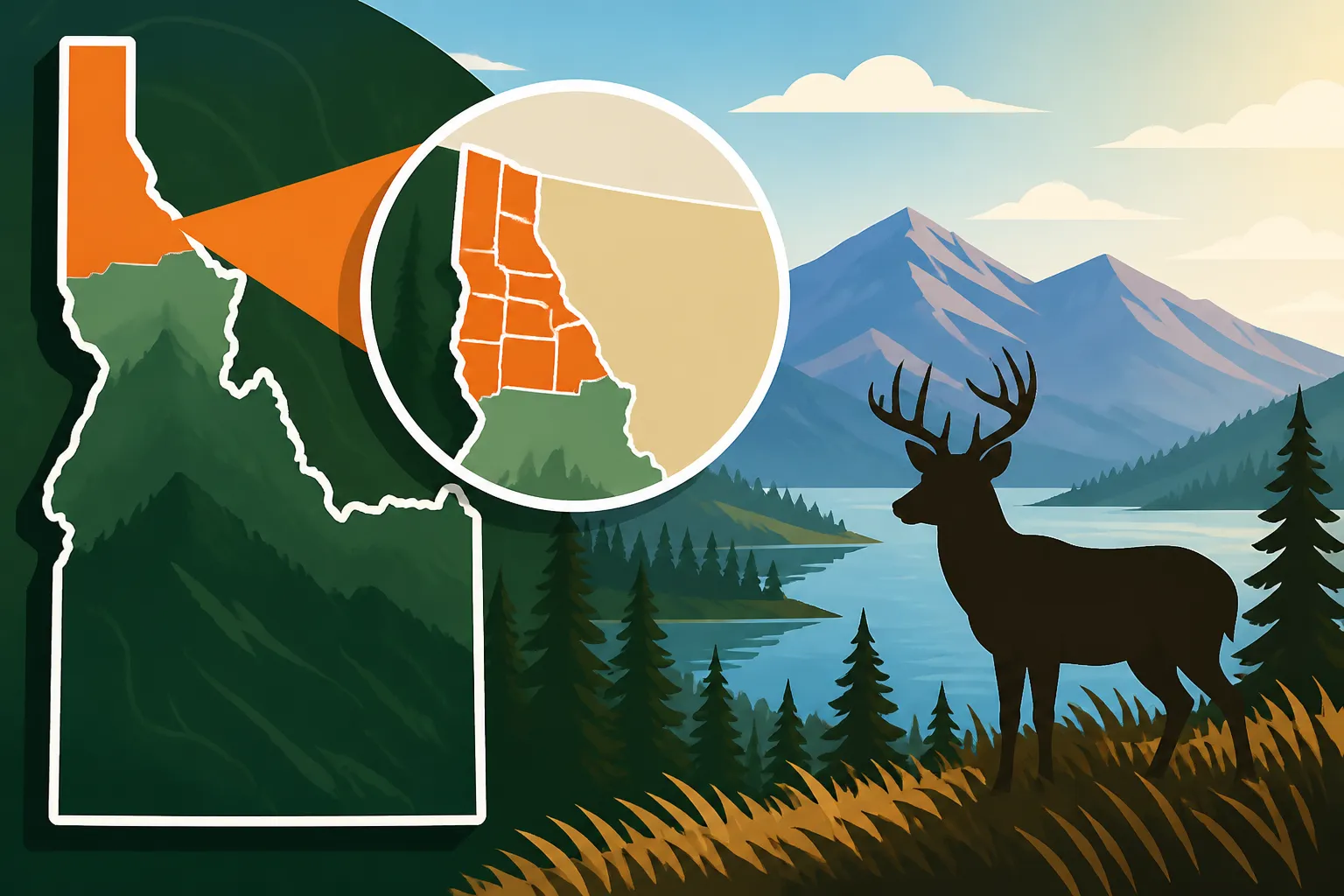
When you look at a map of Idaho, that skinny northern finger reaching up to Canada is our Panhandle. This region is dominated by national forests like the Coeur d'Alene, St. Joe, and Kaniksu, which are all part of the larger Idaho Panhandle National Forests. What does this mean for hunters? Lots and lots of public land. We're talking about endless miles of timbered slopes, deep drainages, and high ridges. The hunting here is often physically demanding, characterized by still-hunting through thick cover, listening for the crunch of leaves underfoot, or glassing small openings in the forest. You won't find the wide-open sagebrush flats of southern Idaho, which significantly changes your hunting strategy.
The game animals here thrive in this environment. Whitetail Deer Hold Idaho's Northern Panhandle, often preferring the dense cover and mixed conifer forests. While mule deer are present, they are less common than whitetails, especially closer to Coeur d'Alene. Elk are also a major draw, with populations scattered throughout the timber, often moving between higher elevations in early season and lower, more accessible areas as snow begins to fall. Beyond big game, this region is a haven for upland birds like grouse and even chukar in the dryer, rockier river breaks. Understanding this timbered environment and its inhabitants is the first step in successful hunting from Coeur d'Alene.
Overview of Panhandle Elk Zone Units
Idaho Fish and Game organizes hunting opportunities into Game Management Units (GMUs), which are then grouped into larger Elk Zones. For those hunting out of Coeur d'Alene, you're primarily concerned with units that fall within the Panhandle Elk Zone. This zone, like others, dictates certain season structures, but the individual units define the specific terrain and local game concentrations. Knowing How Idaho Numbers Its Game Management Units can give you a quick geographic reference; lower numbers generally denote units in the northern part of the state.
The Panhandle Elk Zone encompasses a broad area, but for practical purposes, we'll focus on the units most conveniently accessed from Coeur d'Alene. These units share common characteristics: heavy timber, often steep terrain, and a mix of logging roads and wilderness areas. While elk are the namesake for the zone, these units also offer robust opportunities for whitetail deer, black bear, and various upland birds. It’s important to remember that general tags for the Panhandle Elk Zone are exactly that – general. You'll need to research specific unit harvest statistics and access points using tools like The Idaho Hunt Planner Is the Tool to Start With to find the best spots, as hunting pressure can vary widely even within the same zone.
Specific Units Within a Day's Drive of Coeur d'Alene
When considering units within a "day's drive" or a reasonable round-trip for a morning or evening hunt, we're generally looking at units roughly an hour to two hours from Coeur d'Alene. This includes units directly adjacent to the city and those a bit further afield but still very manageable for short trips.
Units East and Northeast: Timber and Mountains
Heading east and northeast from Coeur d'Alene plunges you deep into the heart of the Idaho Panhandle National Forests. This is classic timber country, rugged and often steep, offering excellent opportunities for both whitetail deer and elk.
- Unit 3: Directly bordering Coeur d'Alene to the east, Unit 3 is incredibly accessible. It's a vast unit covering significant portions of the Coeur d'Alene National Forest. Here, you'll find a mix of older growth timber, clear-cuts from past logging operations, and dense second-growth. This variety creates diverse habitat for whitetails and elk. Expect steep hillsides, numerous logging roads (many of which are gated or seasonal), and a decent amount of hunter pressure due to its proximity to population centers. However, if you're willing to hike off the roads a bit, solitude and quality hunting can still be found. This unit is particularly known for its whitetail hunting.
- Unit 4A: Just north of Unit 3, Unit 4A is another heavily timbered unit, often characterized by even steeper terrain and denser forests as you get closer to the Montana border. Access is primarily via forest service roads that spiderweb through the mountains. This unit offers solid opportunities for elk, especially during the archery and muzzleloader seasons when elk can be found in higher elevations before snow pushes them down. It's also prime habitat for moose, though those tags are highly sought-after controlled hunts. For those seeking Chukar, Grouse and Idaho's Upland Country, pockets of blue grouse and ruffed grouse are plentiful here, particularly along stream bottoms and ridge lines.
Hunting in these units demands good physical conditioning and a willingness to navigate thick cover. The sheer amount of public land, primarily National Forest, means you have plenty of ground to cover. However, be mindful of Seasonal Road Closures Across Idaho Forests that can limit access, especially in late fall and early winter.
Units West and Northwest: Rivers and Mixed Terrain
Venturing west and northwest from Coeur d'Alene takes you into a slightly different, though still heavily timbered, landscape. Here, the large lakes and major rivers like the Spokane River influence the terrain and provide different types of habitat.
- Unit 1 and Unit 2: These units are located northwest of Coeur d'Alene, spanning areas west towards the Spokane River and north towards the Pend Oreille River and Priest Lake. Unit 1 is the northernmost unit in the panhandle, extending to the Canadian border, while Unit 2 is immediately south of it. Both units offer a mix of public and private land, with significant portions of state and private timber holdings mixed with national forest. Whitetail deer are kings here, especially in the agricultural fringes and mixed timberlands. Elk are present but can be more challenging to locate consistently due to the broken nature of the habitat and a higher proportion of private land.
Access in Units 1 and 2 is a blend of paved highways, county roads, and forest service roads. You'll encounter more private timber lands than in the purely eastern units, so always be vigilant about land ownership boundaries. This is where tools like onX Hunt become invaluable for identifying private parcels and ensuring you're legally hunting public ground. For smaller game, these units can offer opportunities for forest grouse and sometimes pheasants in localized agricultural areas. Being close to larger bodies of water also means some waterfowl opportunities, though not the primary focus for big game hunters.
Units South and Southeast: Heading Towards the St. Joe
Moving south and southeast from Coeur d'Alene guides you into the famed St. Joe River country, an area renowned for its rugged beauty and excellent big game hunting, especially for elk.
- Unit 7: Situated south of Coeur d'Alene, Unit 7 is another expansive, heavily timbered unit within the St. Joe National Forest. This unit is a consistent producer of elk and whitetail deer. The terrain here is classic Idaho backcountry, with the St. Joe River flowing through its heart, creating deep canyons and steep, timbered slopes. This unit can hold some exceptional elk, and the river system provides natural travel corridors.
- Unit 9: Just southeast of Unit 7, Unit 9 extends further into the St. Joe and Clearwater National Forests. This unit is arguably one of the premier elk hunting destinations within easy reach of Coeur d'Alene, though it requires a slightly longer drive. The remote nature of some areas within Unit 9 means less pressure if you're willing to go deep. It's characterized by vast wilderness-like tracts, very steep mountains, and dense timber that tests even seasoned hunters.
Hunting these units often involves navigating extensive networks of logging roads, many of which are designated for non-motorized use or are seasonally closed. You'll need to consult MVUM (Motor Vehicle Use Maps) to understand where you can drive. Idaho's Motorized Hunting Rule Runs August Into December in many areas, dictating that you stay on established roads. These units offer true backcountry experiences, making them ideal for multi-day trips. When you're planning a trip to units like 7 or 9, Reading Terrain Before You Pick a Camp is crucial. Scouting for water sources, game trails, and potential bedding areas before your trip is highly recommended.
Here's a quick overview of these units:
| Unit Number | Primary Location Relative to Coeur d'Alene | Dominant Habitat Type | Key Big Game Species | Notable Characteristics |
|---|---|---|---|---|
| 3 | East | Dense Timber, Mixed Conifer, Clear-cuts | Whitetail, Elk | Highly accessible, higher pressure, good for day hunts |
| 4A | Northeast | Steep, Dense Timber, Mountainous | Elk, Whitetail | More rugged, less pressure off main roads, good for grouse |
| 1 & 2 | Northwest, West | Mixed Public/Private, Timber, River Basins | Whitetail, Elk | Proximity to lakes/rivers, attention to land ownership |
| 7 | South | St. Joe National Forest, Deep Canyons | Elk, Whitetail | River influence, challenging terrain, consistent elk |
| 9 | Southeast | Remote St. Joe/Clearwater NF, Backcountry | Elk, Whitetail | Premier elk, more remote, longer drive, multi-day potential |
Navigating Access and Planning Your Hunt
Hunting in the Panhandle, especially close to a city like Coeur d'Alene, requires a bit of savvy when it comes to understanding public access, land ownership, and regulations.
Utilizing Mapping Tools for Public Land Access
One of the biggest challenges in North Idaho hunting is discerning public from private land. Many areas are a patchwork of National Forest, State Lands, and private timber company holdings. While many private timber companies allow public access, always verify their current policies, as these can change. This is where modern mapping technology becomes an absolute game-changer.
Applications like onX Hunt are indispensable for Panhandle hunters. They provide detailed land ownership maps, showing property boundaries, public land designations (like National Forest or BLM ground), and even parcel owner information. Before you ever leave your driveway, you can use these tools to identify accessible public land, scout potential hunting spots, and understand the lay of the land. Similarly, platforms like GoHunt can provide valuable insights into unit statistics, drawing odds (for controlled hunts), and general information that helps you narrow down choices. Don't rely solely on paper maps, as land ownership changes and boundaries can be tricky to interpret without digital precision. Utilizing onX Layers for Idaho Public Land is not just a convenience; it's practically a necessity for ethical and legal hunting in these complex areas.
Understanding Motorized Hunting Rules
Idaho, like many Western states, has specific rules regarding motorized vehicle use on public lands, especially in hunting units. The intent is to maintain wildlife habitat and offer a fair chase experience. Most national forests, including those in the Panhandle, have designated Motor Vehicle Use Maps (MVUMs) that show which roads are open to motorized travel, which are closed, and which are seasonally restricted.
It's absolutely critical to consult these maps before your hunt. Driving off an established road, or on a closed road, can result in significant fines and impact your hunting privileges. Even if a road looks passable, if it's not marked as open on an MVUM, you cannot drive on it. This means much of your hunting will involve hiking from designated parking areas, often miles into the timber. This commitment to foot travel is often what separates successful hunters from those who struggle, allowing you to get away from road hunters and into less-pressured areas. Remember, Hunting Idaho's National Forests and BLM Ground often means adhering strictly to these rules to preserve access for everyone.
Key Considerations for Hunt Planning
Beyond knowing the units and how to access them, successful hunting from Coeur d'Alene involves a few other planning elements.
Firstly, always check the current Idaho Fish and Game regulations for your chosen unit and species. Seasons, bag limits, and specific weapon restrictions can change year to year. Reading an Idaho Controlled Hunt Area Boundary is crucial if you're pursuing a tag that isn't a general harvest. What might have been legal last year might not be this year, so a fresh look at the regulations every season is a must.
Secondly, prepare for the weather. North Idaho weather, especially in the fall, can be highly unpredictable. You might start your day in sunshine, only to be hit with rain, sleet, or even snow a few hours later. Layered clothing, quality rain gear, and a solid understanding of cold weather survival are not just suggestions; they are necessities.
Finally, consider your physical conditioning. Hunting in the Panhandle's steep, timbered terrain is physically demanding. You'll be climbing, descending, and navigating thick brush, often miles from your vehicle. The better shape you're in, the more enjoyable and successful your hunt will be. Even if you're just planning a day hunt, being prepared for unexpected challenges or having to pack out an animal over rugged ground is vital. Understanding the demanding nature of the terrain when Reading Terrain Before You Pick a Camp will help you set realistic expectations for your physical exertion.
Taking the time to research these units, understand the regulations, and properly equip yourself will not only increase your chances of success but also ensure a safer and more enjoyable experience in Idaho's beautiful Panhandle. Whether you're chasing Whitetail Deer Hold Idaho's Northern Panhandle or listening for an elk bugle, the opportunities are abundant within a short drive of Coeur d'Alene.
Disclaimer
This article is for general informational purposes only and does not constitute professional advice. Laws, prices and regulations vary by location and change over time. Consult a qualified professional for guidance on your specific situation.