Shiras Moose Across Idaho
Many hunters dream of drawing a moose tag, but the sheer difficulty and complex application process in states like Idaho can feel like an impossible puzzle. This guide cuts through the confusion, offering a realistic look at Shiras moose hunting in Idaho, from understanding their habitat and biology to navigating the controlled hunt draw, planning your strategy, and what to expect when you finally get that coveted tag in hand.
Shiras Moose Biology and Distribution in Idaho
Understanding Shiras Moose Characteristics
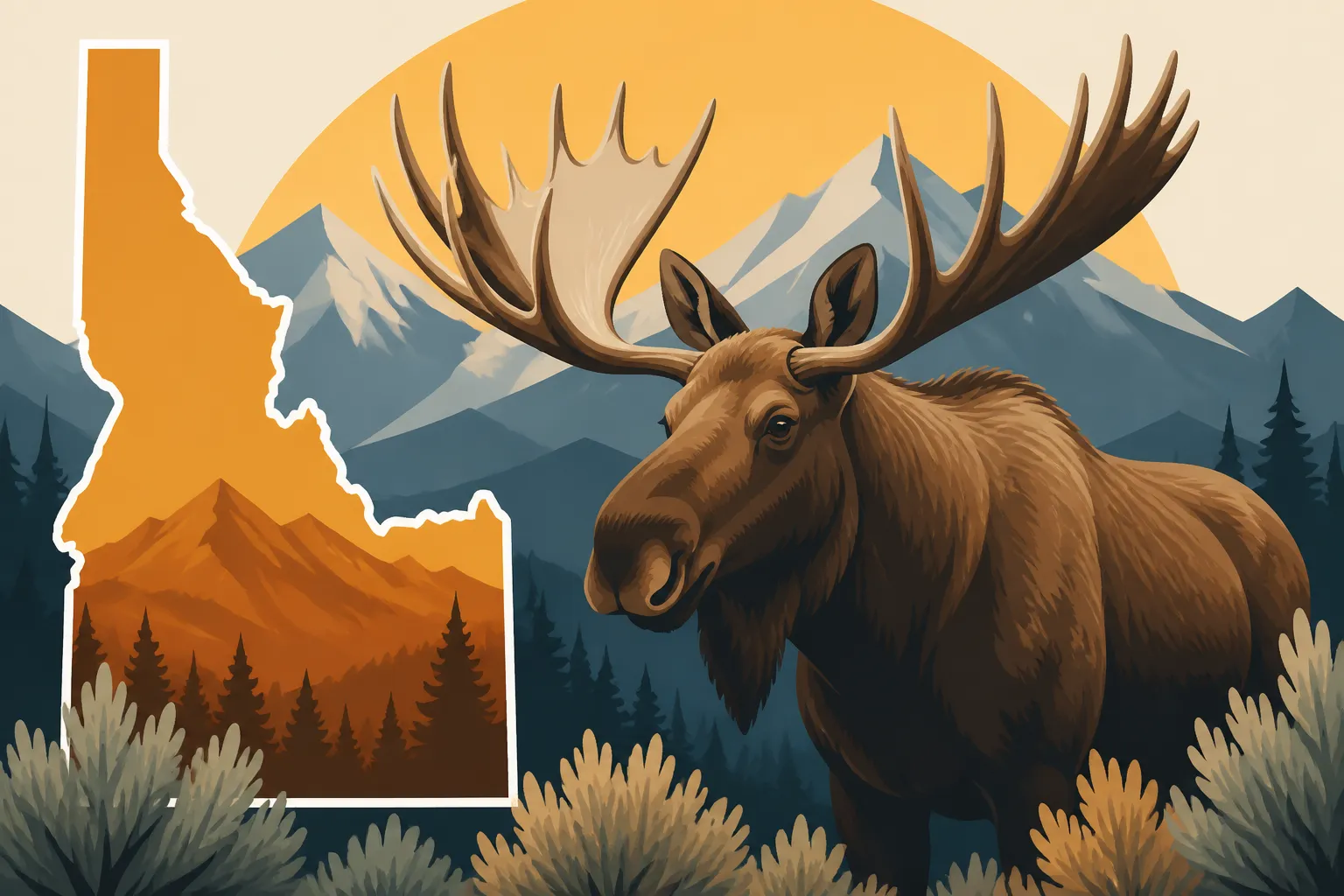
Shiras moose, Alces alces shirasi, are the smallest subspecies of moose in North America, but don't let that fool you – they are still massive animals, often weighing between 800 to 1,200 pounds for bulls and 600 to 900 pounds for cows. They stand an impressive 5-6 feet tall at the shoulder, making them an imposing sight in the Idaho backcountry. Unlike elk or deer, moose have a distinctive 'bell' (a dewlap of skin and hair under their throat) and a long, drooping snout. Their antlers are broad and palmate, not branching like deer or elk, and can span over 40 inches on mature bulls, making them a truly unique and sought-after trophy.
Their dark, shaggy coats provide excellent insulation against the harsh Idaho winters, and their long legs are perfectly adapted for wading through deep snow or marshy areas. These animals are surprisingly agile despite their size, capable of moving quietly through dense timber. Their senses are keen, especially their hearing and smell, which they rely on heavily in the thick cover they often inhabit. They are not known for their eyesight but compensate with acute auditory and olfactory senses.
Understanding these physical and behavioral traits is crucial for any hunter hoping to spot and approach one successfully. Moose don't spook in the same way a whitetail might, often choosing to stand their ground or slowly melt into cover, making a quiet approach essential. Their impressive size also means that a downed moose presents a significant recovery challenge, demanding careful planning before the shot is even taken.
Preferred Habitats and Idaho's Moose Country
Shiras moose thrive in cooler, high-elevation habitats that offer a mix of dense forest cover, willow thickets, and aquatic vegetation. In Idaho, this primarily means the vast expanses of the northern and central parts of the state, particularly within the Panhandle, Clearwater, and Salmon-Challis regions. They are particularly fond of riparian areas, wetlands, and the edges of lakes and ponds where they can feed on aquatic plants like water lilies and horsetail, which are rich in sodium. This preference for moist environments is a key differentiator from elk or mule deer, which often prefer drier, more open country.
You'll often find moose in willow swamps, regenerating clear-cuts with abundant browse, and dense conifer forests that provide thermal cover. Areas with a strong presence of aspen, willow, and subalpine fir are prime moose country. The Clearwater and Panhandle National Forests, along with portions of the Salmon-Challis National Forest, offer vast tracts of this ideal habitat. Hunters focusing on these areas should pay close attention to topography that funnels game through dense pockets of willows or along the edges of water bodies, especially during the rut when bulls are on the move.
When scouting, look for heavily browsed willows, large tracks, and distinctive moose droppings, often found in concentrated areas where they feed. These signs are often found near water sources or in thick, brushy areas where other big game might not frequent. The IDFG website also offers resources to help understand Moose Hunt Area Boundaries Explained in detail, which can be invaluable when planning your scouting trips and focusing on the most promising habitat types.
Population Trends and Conservation Efforts
Idaho's Shiras moose population, while never as numerous as deer or elk, has experienced fluctuations over the years. Historically, moose expanded their range into Idaho in the early 20th century, and populations generally grew until the late 1990s. Since then, some areas have seen declines, attributed to a combination of factors including habitat changes, increased predation by wolves and bears, and a parasitic brain worm (Parelaphostrongylus tenuis) that can be fatal to moose, though its prevalence varies. The Idaho Department of Fish and Game (IDFG) actively monitors moose populations through aerial surveys, harvest data, and habitat assessments to inform management decisions.
Conservation efforts focus on habitat improvement, such as managing forest regeneration to provide preferred browse and protecting critical winter range. This can involve timber harvests designed to encourage new growth of favored forage species like willow and aspen, or targeted efforts to mitigate disease vectors. These efforts are often long-term and require continuous monitoring to assess their effectiveness.
The limited number of controlled hunt tags issued each year reflects a conservative management approach designed to ensure sustainable populations. While the presence of predators like wolves is a natural part of the ecosystem, IDFG also considers their impact on ungulate populations, including moose, when setting harvest quotas. Understanding these dynamics helps hunters appreciate the value and rarity of an Idaho moose tag. It's a privilege, and managing these populations for future generations is a shared responsibility, extending beyond just setting hunt seasons.
The Idaho Moose Controlled Hunt System
Why Moose Hunting is Controlled in Idaho
Unlike general season hunts for deer or elk in many units, moose hunting in Idaho is strictly managed through a controlled hunt system. This isn't just a bureaucratic hurdle; it's a critical conservation tool. Moose have lower reproductive rates than deer or elk, typically only having one calf per year, and they are more sensitive to hunting pressure. Without tight controls, populations could quickly be over-harvested, leading to severe declines that take decades to recover. The controlled hunt system allows IDFG to precisely manage the number of tags issued, distribute hunting pressure, and target specific areas or even specific types of animals (like bull-only tags) to maintain healthy population demographics.
This selective approach ensures that enough breeding animals remain to sustain the population while still providing limited, high-quality hunting opportunities. It's a delicate balance to strike between hunter opportunity and species conservation, especially for animals with slower reproduction cycles. The controlled system is designed to err on the side of conservation, prioritizing the long-term health of the moose population.
It also helps IDFG collect vital data on population health, harvest success, and animal condition through mandatory check-ins and reporting. This data is essential for making informed management decisions for future seasons. For the hunter, it means that drawing a tag is incredibly challenging, often requiring many years of applications, but the reward is access to a truly unique and low-pressure hunting experience. This system truly makes an Idaho moose tag a once-in-a-lifetime opportunity for many.
Overview of Hunt Areas and Seasons
Idaho is divided into various Game Management Units (GMUs) and within these, specific Moose Hunt Areas are designated for controlled hunts. These areas are carefully delineated to correspond with known moose populations and habitat. Each hunt area will have specific tag allocations, weapon restrictions (though most are any-weapon), and season dates. Typically, moose seasons run from early September through November, often overlapping with deer and elk seasons, but some specialized hunts might occur earlier or later. It's crucial to consult the annual Idaho Big Game Regulations for the exact dates and details for each specific hunt code you're interested in, including understanding the nuances of Idaho Moose Season Dates by Weapon.
Some hunt areas might be general moose tags (any moose), while others could be bull-only, or even cow-only tags, depending on management objectives for that specific area. For instance, in areas where cow numbers might need trimming or where research is underway, cow tags might be offered. The specific unit you apply for will dictate the precise opening and closing dates, and these dates rarely shift once published for the year.
The IDFG's online Idaho Hunt Planner is an invaluable resource for researching these specific hunt areas, their boundaries, and historical harvest data. This tool allows you to overlay hunt units, access points, and public land boundaries, which is essential for e-scouting. When you're using the Idaho Hunt Planner, don't forget the power of the map center to visualize the terrain and access, which is crucial for moose country. Understanding the terrain and access for your chosen hunt area is paramount, as moose often inhabit very rugged and remote country that demands physical exertion and careful route planning.
Residency and Non-Resident Tag Allocations
Idaho is highly sought after by both residents and non-residents, and the allocation of moose tags reflects this. The state reserves a significant majority of its controlled hunt tags for residents, as is common in most western states. For non-residents, the number of available moose tags is extremely limited, making the draw odds even steeper. For example, in a given year, there might only be a handful of non-resident tags available across the entire state for all moose hunts combined, while residents might have hundreds of tags. This is a common point of frustration for out-of-state hunters, but it ensures that Idaho residents have priority for their own state's resources.
Non-residents must first purchase a non-resident hunting license for the current year before they can apply for any controlled hunts. The application period for moose, bighorn sheep, and mountain goat typically opens in April, with the deadline often falling in late April. Knowing When Moose and Sheep Applications Open in Idaho is your first critical step to ensure you don't miss the window. Results are usually posted in May or June, and drawn tags must be purchased by an August deadline. It's a significant financial commitment just to apply, considering the non-refundable license fee and the application fees. For detailed information on the specific costs, you might look into resources like A Nonresident Idaho Elk Hunt Starts at $836.75, which, while focused on elk, provides context for the overall cost structure for non-residents, making it clear this is a substantial investment.
The challenge is real, and it demands careful consideration of your financial and time investment. Many non-residents will apply for years, even decades, hoping to draw one of these highly coveted tags. It truly is a testament to the quality and rarity of the Idaho moose hunting experience.
Applying for an Idaho Moose Tag: Strategy and Odds
Navigating the Application Process
Applying for an Idaho moose tag is a multi-step process that demands attention to detail. First, you need an Idaho hunting license for the current year. For non-residents, this is a significant upfront cost and is non-refundable, regardless of draw success, a fact that can sting if you're unsuccessful. Once you have your license, you can apply for controlled hunts through the GoOutdoorsIdaho portal, the official online licensing system. You'll need to select your desired hunt codes, which identify specific species, areas, and seasons. Make sure to double-check these codes against the current regulations to avoid costly mistakes.
Idaho's draw system is purely random, meaning there are no preference points or bonus points. Every applicant, whether it's their first time applying or their twentieth, has the same statistical chance of drawing a tag each year. This means that while some hunters might feel like they're "due" for a tag after years of applying, the reality is that the odds reset annually. This can be both a blessing and a curse: a first-time applicant could draw a coveted moose tag, while a veteran hunter might go decades without success. It emphasizes the "lottery" aspect of trophy hunting in Idaho.
The application window for moose, sheep, and goat is typically April 1st to April 30th, so marking your calendar is absolutely critical. Missing this window means another year of waiting and another year of hoping. The system is straightforward, but its lack of point accumulation means pure persistence and luck are your biggest allies.
Understanding Draw Odds and Wait Times
The draw odds for Shiras moose in Idaho are notoriously long, particularly for non-residents. We're talking single-digit percentage chances, often less than 1% for the most desirable units. For residents, the odds are better, but still challenging, often ranging from 2% to 10% depending on the unit and tag type. This is why many hunters consider it a once-in-a-lifetime tag, even if it's not explicitly stated as such by IDFG. The sheer number of applicants compared to the limited number of tags creates these slim odds. For example, you might see 5,000 applicants for just 50 resident tags in a popular unit. Understanding Idaho Moose Controlled Hunt Draw Odds can set realistic expectations for your application journey.
While Idaho doesn't have a preference point system, which means your odds don't improve with each unsuccessful application, resources like GoHunt's insider information can provide valuable data on historical draw odds, harvest success rates, and tag allocation trends. This kind of information, when available, can help you make an informed decision on which hunt codes to apply for, potentially increasing your chances, even if marginally. It's about playing the percentages as best you can in a completely random system.
Knowing that the wait can be many, many years long, which is often detailed in analyses like How Many Years It Takes to Draw Idaho Moose, is important for managing expectations. Many hunters view the application as a long-term investment in a dream hunt rather than an expectation of drawing every year. It's a game of patience and perseverance that rewards those who stick with it.
Maximizing Your Chances with Research
Even without a preference point system, strategic application can improve your prospects. Dive deep into the Idaho Fish and Game regulations and, if you're a subscriber, use tools like GoHunt's detailed draw odds analysis. Look for units that might have slightly better odds, perhaps those that are more remote, more physically demanding, or have had lower success rates in previous years (which can sometimes deter applicants, though not always). Pay attention to specific tag types—sometimes a cow moose tag might have marginally better odds than a bull tag, or a specific weapon type hunt might be less popular.
Researching historical harvest data is also key. The IDFG website provides harvest reports that detail success rates, weapon types used, and even the average antler size in some areas. This can give you a realistic picture of the quality of the hunt if you do draw. This level of granular data helps you align your expectations with the realities of a particular unit, balancing draw odds with hunt quality.
Consider applying for units that are geographically challenging, as these often have fewer applicants. For instance, some of the units in the Frank Church River of No Return Wilderness might have less pressure due to the logistical hurdles and physical demands involved, although they still fall under the Idaho Forces Nonresidents to Hire a Guide for Wilderness Elk rule for elk, a similar rule may apply for other species depending on specific regulations. Even though the guide rule for moose in wilderness is not identical, the principle of challenging access remains. Diversifying your applications across different hunt areas over several years, rather than always applying for the same high-demand unit, could also subtly improve your overall chances of eventually drawing that tag. For comprehensive planning, considering all angles is important, and services like GoHunt provide an excellent platform for this kind of in-depth analysis.
Hunting Shiras Moose: Tactics and Considerations
Pre-Hunt Scouting and E-Scouting
Drawing an Idaho moose tag is just the first step; the real work begins with preparing for the hunt itself. Pre-hunt scouting is absolutely critical, even if you're unable to do it in person. E-scouting, using tools like Google Earth, OnX Hunt, or other mapping software, allows you to meticulously study the terrain, identify potential bedding and feeding areas, locate water sources, and plan out access routes. Look for areas with dense willow thickets, regenerating timber, or the marshy edges of lakes and ponds – these are prime moose habitat. Pay attention to elevation changes and areas that offer thermal cover, as moose will seek out shaded, cool spots during warmer periods.
If you can make a trip or two before the season, focus on finding fresh sign: large tracks, heavily browsed willows (moose browse woody vegetation extensively, often leaving jagged, torn ends on twigs), and rub lines on small trees. Moose often leave distinct "signposts" of their presence, such as deep trails through thickets or even mud wallows. Getting boots on the ground in the summer months can reveal game trails, wallows, and bedding areas that will be invaluable come hunting season.
Remember, moose don't generally migrate vast distances like elk, so if you find good habitat and sign during scouting, there's a good chance moose will be in the general vicinity when the season opens. Having a solid understanding of "Reading an Elk Zone Boundary on a Map" can also be applied to understanding moose hunt area boundaries, ensuring you're scouting and hunting in the correct zone. It's all about minimizing surprises once the season is open.
Effective Hunting Methods for Moose
Moose hunting in Idaho is predominantly a spot-and-stalk affair, often combined with still-hunting through dense timber and willow bottoms. Given their preference for thick cover, glassing vast open country isn't as effective as it might be for mule deer or elk. Instead, focus on glassing small pockets of open timber, clear-cuts, or marshy areas from elevated positions. Early mornings and late evenings are prime times when moose are often actively feeding, making them more visible. During the rut (late September through October), calling can be incredibly effective. Bulls become very vocal and responsive to cow calls and even bull grunts. A realistic cow call can often draw a bull out of thick cover, sometimes with surprising speed and aggression.
Still-hunting through prime moose habitat, moving slowly and deliberately, pausing frequently to listen and scan, is another productive tactic. Moose are large, but their dark coloration and ability to stand motionless in dense timber make them surprisingly hard to spot. Their dark bodies blend incredibly well into the shadows of the conifers and the deep greens of dense willows. Keep the wind in your favor, as their sense of smell is excellent and they will quickly detect human odor.
If you locate a bull, a cautious stalk using terrain features and dense vegetation for cover is essential. Unlike a whitetail, a moose might stand its ground, offering a shot, but don't assume it's docile. Always be prepared for a quick follow-up shot, and be aware of their impressive size and power. Ethical shot placement is paramount on an animal of this magnitude. Consider reading up on "The Effective Range of a Muzzleloader on Elk" for general range understanding, even though moose are the target, as shot placement and ethical ranges are universally critical.
Gear Essentials for a Moose Hunt
A successful Idaho moose hunt demands robust and reliable gear, especially given the remote and rugged terrain moose often inhabit. Here’s a breakdown of essentials:
- Optics: High-quality binoculars (10×42 or 12×50) are crucial for picking apart dense cover and identifying game in low light. A spotting scope (20-60x) can be helpful for evaluating bulls from a distance, though less critical than for open-country hunts.
- Weapon: Most moose hunts are any-weapon. A reliable rifle in a capable caliber (.30-06, .300 Win Mag, .338 Win Mag, etc.) with quality, heavy-for-caliber bullets is recommended for moose's size and toughness. If hunting during a muzzleloader-only season, ensure your rifle meets the Idaho Muzzleloader Caliber Minimums: .45 for Deer, .50 for Elk requirement, with .50 caliber being the minimum for moose.
- Navigation: A GPS device or a smartphone with reliable mapping apps (like OnX Hunt) is indispensable. Download offline maps, carry a physical compass, and know how to use them as backup.
- Clothing: Layered clothing suitable for variable mountain weather, including waterproof rain gear and insulated outer layers. Waterproof, sturdy boots are a must for traversing wet, boggy areas and steep, uneven terrain.
- Pack: A sturdy frame pack or large internal frame pack capable of comfortably carrying heavy loads is non-negotiable. If you're successful, you'll be packing out hundreds of pounds of meat and antlers, often over significant distances.
- Game Processing: Sharp, high-quality knives, a bone saw, plenty of breathable game bags (synthetic or cotton), and cordage for hanging meat. Consider a small, lightweight tarp for keeping meat clean during quartering.
- Safety: A comprehensive first-aid kit, bear spray (especially in grizzly country like parts of central Idaho), fire starter, headlamp with extra batteries, satellite communication device (like a Garmin inReach or Zoleo) for emergencies, and plenty of water/water filtration.
Remember that moose meat needs to be cooled quickly, so planning for meat care and retrieval is just as important as the hunt itself. A successful shot is only the beginning of a physically demanding but rewarding endeavor.
Post-Harvest Logistics and Regulations
Field Dressing and Carcass Transport
Harvesting a moose is only half the battle; the real logistical challenge begins afterward. Moose are massive animals, and getting the meat from the field to a processor or your home cooler requires significant effort and planning. Field dressing immediately after the harvest is critical for cooling the carcass and preventing spoilage. Many hunters choose to quarter a moose in the field, which involves breaking the animal down into manageable pieces (quarters, backstraps, tenderloins, neck meat, etc.) to be carried out on frame packs. This is a labor-intensive process, often requiring multiple trips or a team of hunters working efficiently.
Having strong, breathable game bags is essential to protect the meat from dirt, flies, and debris while allowing it to cool. Once quartered, hanging the meat in a shady, cool spot, preferably off the ground, is vital to promote air circulation and continued cooling. Planning for extraction before you even start hunting is smart. Do you have horses, ATVs (where legal and permissible by Idaho's Motorized Hunting Rule Keeps You on the Road), or enough manpower? Many remote moose hunts necessitate packing out on foot, which can take days.
The importance of quick cooling cannot be overstated, especially if temperatures are warm. Neglecting this step can lead to spoiled meat, a heartbreaking and wasteful outcome after such a monumental effort. Every effort should be made to cool the meat quickly and thoroughly.
Mandatory Reporting and Tagging
Idaho Fish and Game has strict rules for reporting your harvest and tagging your animal, particularly for controlled hunt species like moose. Immediately after harvesting a moose, you must validate and attach your tag to the animal. The specific instructions for validating (notching) and attaching the tag are printed on the tag itself and detailed in the annual regulations. This typically involves noting the date of kill and signing the tag, then securely attaching it to the largest portion of the carcass or the antler, ensuring it remains with the meat until processed. Failure to properly tag your animal can result in significant fines and penalties. This is not just a formality; it's a crucial part of Idaho's wildlife management, ensuring accurate harvest data.
In addition to physical tagging, you are typically required to report your moose harvest to IDFG within a specific timeframe, often within five days of harvest. This can usually be done online through the IDFG website or by phone, and the specific method will be outlined in your tag instructions or the regulations. Some controlled hunts may also require mandatory check-ins at specific IDFG offices, particularly if biological samples (like teeth for aging, or tissue samples for disease monitoring) are needed. Always refer to the current year's regulations for the exact reporting requirements for your specific moose tag. Adhering to these regulations is a non-negotiable part of ethical and legal hunting.
Meat Care and Preservation
Proper meat care and preservation are paramount to honoring your harvest. Once the moose is field dressed and quartered, the goal is to get the meat cooled as quickly as possible. If ambient temperatures are above freezing, hanging quarters in the shade, protected by game bags, and allowing air circulation is a good start. In warmer weather, ice can be packed into coolers around the meat (never directly on it if possible, to avoid waterlogging) for transport to a processor or home freezer. Some hunters will even make use of portable refrigeration units or large coolers filled with block ice for remote camps, to maintain optimal temperatures.
Upon reaching your final destination, the meat should either be taken to a reputable butcher for processing, or you can process it yourself. If processing at home, ensure all meat is deboned, trimmed of fat and fascia, and packaged appropriately for freezing. Thoroughly cleaning and wrapping the meat correctly is key to its longevity in storage. Vacuum sealing is an excellent way to prevent freezer burn and extend the life of your moose meat for a year or more.
Moose meat is lean and delicious, making excellent roasts, steaks, ground meat, and sausages. Treating it with the respect it deserves, from field to plate, is the ultimate way to cap off an incredible Idaho moose hunting adventure. Don't let your hard work in the field go to waste; proper care means delicious meals for months to come, providing a lasting memory of your successful hunt.
Moose Controlled Hunt Application Deadlines
Here's a quick overview of the key dates for Idaho's controlled hunt applications for moose:
| Action | Typical Month | Details |
|---|---|---|
| Purchase Hunting License (Non-Resident) | Prior to Application | Must have current year's license before applying for any controlled hunt. |
| Controlled Hunt Application Period Opens | April 1st | Apply for Moose, Bighorn Sheep, Mountain Goat. |
| Controlled Hunt Application Deadline | April 30th (5 PM MT) | Absolutely critical to apply before this deadline. No exceptions. |
| Draw Results Posted | Mid-May to Early June | Check your account online. |
| Deadline to Purchase Drawn Tag | August 1st | If successful, you must purchase your tag by this date or it will be forfeited and offered in a second drawing. |
| Second Drawing (if applicable) | Early August | Any unpurchased tags or leftover tags might be offered. |
Note: Always double-check the current year's Idaho Fish and Game regulations for exact dates and times, as these can occasionally shift.
Disclaimer
Please note that hunting regulations, seasons, and tag allocations can change annually. Always consult the most current Idaho Fish and Game regulations or visit their official website before planning any hunt. This guide is for informational purposes only and should not be considered a substitute for official legal documents or expert advice.