Idaho Unit 6 Hunting Overview
Hunting in Idaho can feel like trying to solve a complex puzzle, especially when you're staring at a map with all those unit boundaries, trying to decide where to focus your precious hunting time. It's tough to know what you're getting into without boots on the ground, and that's exactly why we're diving deep into Idaho Unit 6 today, giving you a clear picture of what to expect and how to plan a successful hunt in this unique area.
Navigating the Landscape of Idaho Unit 6
Idaho Unit 6 is a prime example of the rugged, beautiful, and often challenging terrain that defines the Idaho Panhandle. This isn't your wide-open sagebrush country; it's dense timber, steep hillsides, and a lot of water. Understanding its unique geography and land ownership is the first step to unlocking its potential.
Geographic Boundaries and Key Features
Unit 6 is nestled in the extreme northern part of the Idaho Panhandle, sharing its northern border with Canada and its western edge with Washington. To the east, it borders Montana, making it a truly tri-state hunting experience for those who look across the lines. The unit is characterized by the Selkirk Mountains, which dominate much of its landscape, bringing with them heavily timbered slopes, deep drainages, and high-elevation basins. Think thick forests of cedar, fir, and pine, often broken by clearcuts from past logging activity, which can create fantastic deer and elk browse but also make for incredibly difficult navigating.
The Kootenai River carves its way through the northern part of the unit, and numerous smaller rivers and creeks feed into it, such as the Moyie River. These water sources are vital, providing corridors for game movement and often dictating where animals will be found, especially during drier periods. Access is often tied to logging roads, some well-maintained, others barely passable, which spiderweb through the public lands. These roads can be your friend for initial access, but don't expect to hunt exclusively from your truck; the real opportunities usually lie a good distance off the beaten path. The varied elevations, from river bottoms to mountain peaks, mean that conditions can change dramatically within a few miles, impacting snow depth, vegetation, and game distribution.
Public Land Access and Ownership
One of the big draws of Unit 6, like much of northern Idaho, is the significant amount of public land available to hunters. You'll find a healthy mix of National Forest land, primarily within the Idaho Panhandle National Forests, alongside parcels of State Endowment Land. This isn't to say it's all public; there are private timber company holdings and private residences scattered throughout, especially in the valleys and along major roads. It's a common frustration to scout a promising area only to find it's a checkerboard of ownership, requiring careful attention to boundaries.
This is where a good mapping system like onX Hunt becomes absolutely indispensable. Relying solely on a paper map or a vague memory of where public land begins is a recipe for disaster and potential trespassing issues. You need to be able to identify property lines down to the foot, especially when you're deep in the timber with limited visibility. Many private timber companies allow public access, but some require permits or have specific rules, so always do your homework before heading out. Understanding these layers of ownership is critical for planning your approach and ensuring you're hunting legally. Using onX Layers for Idaho Public Land can really help you visualize the land ownership before you even leave your living room.
Game Species and Hunting Opportunities in Unit 6
Unit 6 offers a diverse array of hunting opportunities, but it truly shines for certain species, largely due to its specific habitat types. It's a unit where hunters need to adjust their expectations and tactics compared to Idaho's more arid, open country.
Elk and Mule Deer Prospects
When it comes to elk in Unit 6, you're generally looking at lower densities compared to some of the famous central Idaho zones, but don't let that discourage you. These are often timber elk, meaning they live their lives in the thick stuff, moving through dark timber, utilizing dense cover for security. Finding them can be a challenge, requiring patience, quiet movement, and a keen understanding of elk sign. Harvest success rates can be modest, reflecting the difficulty of hunting elk in such dense cover. However, a hunter willing to put in the miles and hunt smarter, not just harder, can absolutely find success here. Elk here often don't bugle with the same intensity as they might in more open, higher-elevation areas, so being proficient at Reading Fresh Elk Sign in Dark Timber becomes paramount.
Mule deer are present, particularly in higher, more open slopes and recent clearcuts where new growth provides food. However, Unit 6 is not renowned for its trophy mule deer like some of the units further south or in the high desert. Hunters targeting mule deer might find them in pockets, often sharing habitat with whitetails. The steep, timbered terrain makes glassing for them a different game; instead of vast expanses, you're often picking apart small openings, old burns, or south-facing slopes. Both elk and mule deer hunting in Unit 6 demand solid physical conditioning to navigate the steep, often brushy terrain.
Whitetail Deer and Other Big Game
Where Unit 6 truly stands out among Idaho's general units is its strong whitetail deer population. The thick forests, ample water, and specific agricultural interfaces in some areas provide ideal habitat for these adaptable deer. Northern Idaho, in general, is whitetail country, and Unit 6 is no exception. Hunters pursuing whitetails will often find themselves still-hunting through dense timber, focusing on pinch points, creek bottoms, and recent clearcuts where deer browse. The rut in this region can be quite exciting, typically peaking in mid-to-late November, offering fantastic opportunities for a patient hunter. Understanding Whitetail Rut Timing in Northern Idaho is crucial for maximizing your chances.
Beyond deer and elk, Unit 6 offers opportunities for black bear, mountain lion, and wolf. Bear populations are healthy, and hunters can pursue them in both spring and fall, either by spot-and-stalk or, where legal, by baiting. Mountain lion hunting is a unique challenge, often requiring hounds and a dedicated effort to be successful. Wolf seasons are also open, with specific regulations that change year to year, providing an opportunity for those interested in predator management. Remember to always check the latest regulations for quotas and specific season dates for these species.
Upland Birds and Small Game
While big game might be the primary draw, Unit 6 also provides excellent upland bird hunting. The mixed forests are home to forest grouse species like ruffed and blue grouse, which can be found along logging roads, creek bottoms, and in dense timber patches. Chukar and Hungarian partridge might be found in more open, broken terrain, particularly on the dry, grassy slopes near river breaks, though their presence is less widespread than in some other parts of Idaho.
Hunting these birds often involves a lot of walking and can be a fantastic way to extend your time in the woods after filling a big game tag, or just to enjoy a different kind of challenge. Small game like snowshoe hare and cottontail rabbits are also present, especially in dense undergrowth or recent clearcuts, offering year-round hunting fun for those seeking it. Forest Grouse Through Idaho's Timber are a challenging but rewarding pursuit in this kind of habitat.
Strategic Considerations for Hunting Unit 6
A successful hunt in Unit 6 isn't just about showing up; it's about understanding the nuances of the unit's regulations, access, and hunting pressure. This area demands a thoughtful and prepared approach.
Understanding Regulations and Controlled Hunts
One of the biggest hurdles for any Idaho hunter is navigating the state's complex regulations. While Unit 6 offers general season opportunities for deer and elk, it’s always critical to consult the current year's Idaho hunting regulations pamphlet. Seasons, weapon restrictions, and tag types (A or B tags) can vary significantly even within general seasons, and they change from year to year. You need to know if you're holding an "A Tag" or a "B Tag" and what that means for your season dates and legal game, especially for elk. What an Idaho A Tag Allows and What an Idaho B Tag Allows are critical distinctions.
For species like moose, bighorn sheep, and mountain goat, Unit 6 would fall under controlled hunt application processes. This means drawing a specific tag through a lottery system, which often requires years of applying due to the limited number of tags available. Even for general deer and elk, some specific areas within Unit 6 might have special controlled hunts. Tools like GoHunt can be incredibly helpful for analyzing draw odds and historical harvest data for specific controlled hunts within or around Unit 6, giving you a statistical edge in your application strategy. Always check the Idaho Fish and Game website for the most up-to-date information; nothing ruins a hunt faster than a missed regulation.
Road Systems, Motorized Rules, and Backcountry Access
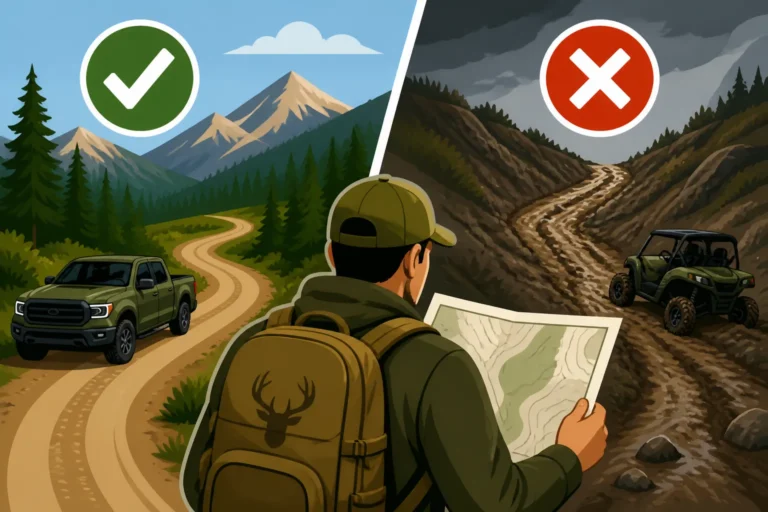
The road system in Unit 6 is extensive, thanks to decades of logging activity. While these roads provide fantastic access deep into the unit, they also concentrate hunter pressure. Many of these roads are under Idaho's motorized hunting rules, meaning you can't drive off established roads. This is a crucial regulation to understand and obey. Idaho's Motorized Hunting Rule Keeps You on the Road is a reality you'll face here. Respecting these rules is not only about legality but also about maintaining the quality of the hunting experience for everyone.
For true backcountry access and to escape the crowds, you'll need to leave the roads behind. This means hiking, often steeply, into the roadless areas or wilderness study areas within the unit. Many promising areas require a significant hike to reach, often over rough terrain with no maintained trails. Be prepared to carry all your gear, food, and water, and to potentially pack out an animal from a long distance. Identifying these remote pockets on maps before your hunt is a key strategy for finding undisturbed game.
Hunter Pressure and Tactics
Unit 6, being a general hunting unit with good access, can experience significant hunter pressure, especially during opening weekends and popular rifle seasons. Hunters driving the logging roads are a common sight, as are those who park and hike in a short distance. To find success, especially on mature animals, you often need to employ tactics that take you beyond the casual hunter's reach.
This usually means getting off the roads and into the thick, steep stuff. Still-hunting through dark timber, patiently picking apart clearcuts, or targeting north-facing slopes where animals might seek refuge from pressure are all effective strategies. Understanding game movement patterns relative to pressure is key. Elk, in particular, will quickly move to the densest cover when disturbed. For whitetails, focusing on creek bottoms, natural funnels, and dense bedding areas that offer security can pay dividends. Patience and persistence are your greatest allies here. Finding Low Pressure Ground on Opening Weekend involves moving away from easy access points.
Planning Your Hunt in Idaho Unit 6
Proper planning is the bedrock of any successful hunting trip, and Unit 6, with its challenging terrain and dense cover, demands extra attention to detail.
Essential Gear and Physical Preparation
Hunting Unit 6 is physically demanding. The steep, often brushy terrain, combined with potentially varying weather conditions from mild autumn days to early winter snow, means you need to be in good physical shape. Don't underestimate the effort required to navigate steep hillsides all day, especially when you might be moving slowly through dense timber. Start a fitness regimen well before your hunt, focusing on cardio, leg strength, and endurance. Being physically ready directly impacts your ability to stay focused and make good decisions in the field.
Your gear needs to be up to the task as well. High-quality waterproof boots with good ankle support are non-negotiable. A reliable navigation system, like a GPS unit with pre-loaded maps or a smartphone running onX Hunt, is absolutely critical given the lack of clear landmarks in dense timber. Good rain gear is a must, as conditions can change quickly in the Panhandle. Optics are important, but perhaps less so for long-range glassing than for picking apart dense cover at closer ranges; a good pair of 8x or 10x binoculars will be invaluable for scanning brush and timber. Don't forget a sturdy pack capable of carrying out meat and all your day's essentials.
Utilizing Mapping Tools and Resources
In today's hunting world, mapping applications are not just helpful; they are essential, particularly in a unit like 6. onX Hunt allows you to view property boundaries, topography, satellite imagery, and even historical fire data, all from your phone or tablet. You can mark potential bedding areas, travel corridors, water sources, and access points from your couch, saving valuable time in the field. Downloading offline maps is crucial, as cell service will be spotty to non-existent in many parts of the unit.
Beyond private apps, the Idaho Fish and Game website offers a wealth of information through its The Idaho Hunt Planner Is the Tool to Start With. Here, you can delve into specific unit details, harvest statistics, public land percentages, and even road and trail layers. Spending time with these resources before your hunt will give you a significant advantage, allowing you to identify key terrain features, understand historical success rates, and pinpoint areas with less pressure. It's like having a local guide's knowledge at your fingertips, helping you visualize the unit long before you ever set foot in the timber.
| Species | Primary Habitat in Unit 6 | Best Hunting Method | General Season Status (Check current regs) |
|---|---|---|---|
| Elk | Dense timber, steep drainages, clearcuts | Still-hunting, tracking, calling (spotty) | General (A/B tags apply) |
| Mule Deer | Higher, more open slopes; clearcut edges | Spot-and-stalk in openings, still-hunting timber | General |
| Whitetail Deer | Thick timber, creek bottoms, agricultural edges | Still-hunting, stand hunting, drives (with group) | General |
| Black Bear | Timbered slopes, clearcuts, berry patches | Spot-and-stalk, baiting (where legal) | General (Spring/Fall) |
| Mountain Lion | Rugged, timbered terrain | Hound hunting (specialized) | Quota-based, often late season |
| Wolf | All habitats, especially dense timber | Calling, trapping, incidental | Unit-specific regulations |
| Forest Grouse | Timbered areas, logging roads, creek beds | Still-hunting, walking roads with a dog | General |
Disclaimer
This article is for general informational purposes only and does not constitute professional advice. Laws, prices and regulations vary by location and change over time. Consult a qualified professional for guidance on your specific situation.