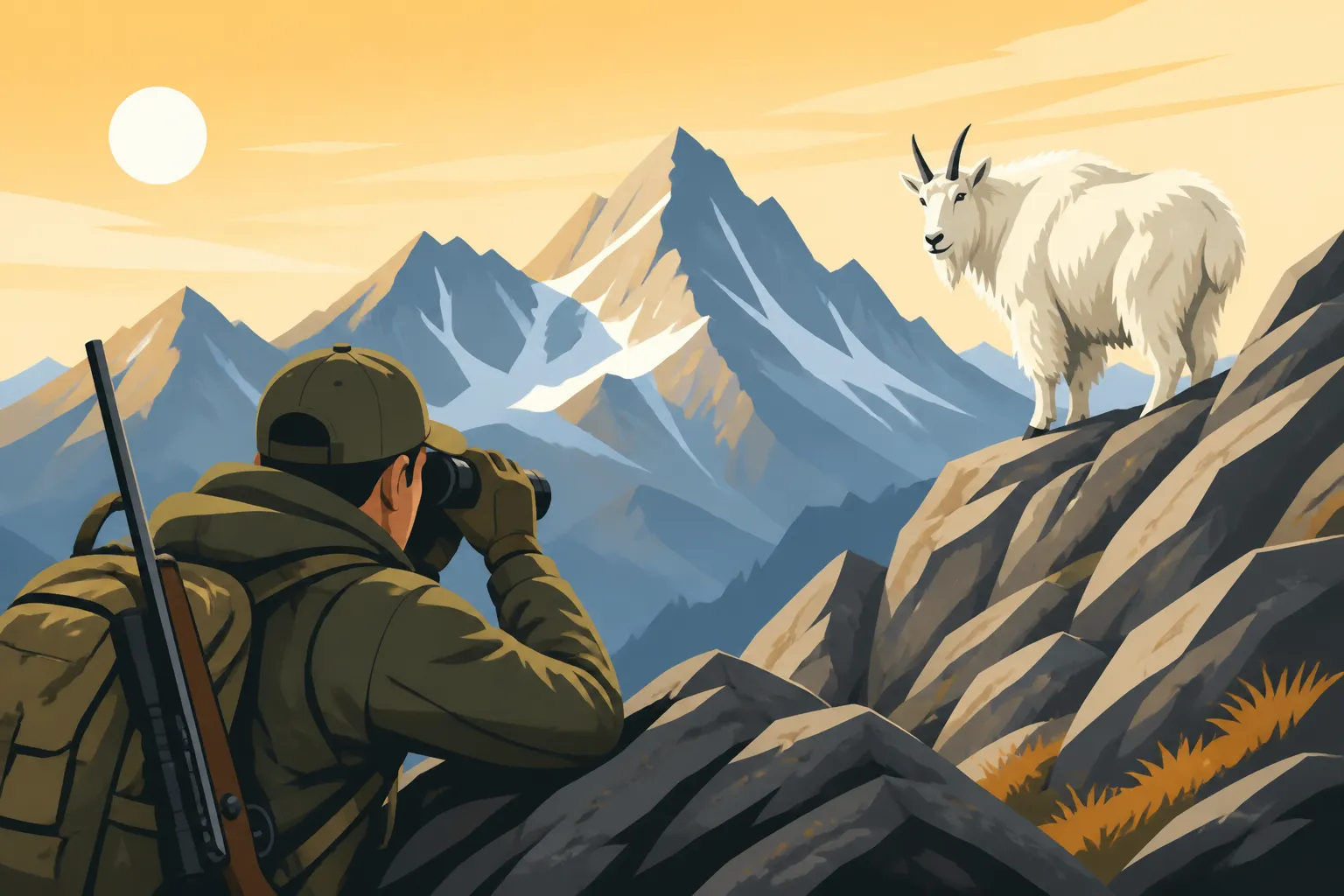
Mountain Goat Hunting Above Idaho Timberline
There's a unique kind of challenge that calls to a certain breed of hunter, one who dreams of craggy peaks, thin air, and the elusive mountain goat. It’s not just about the animal, but the sheer, unforgiving beauty of their alpine kingdom and the incredible physical and mental grit required to even step foot in it. If you've ever felt that pull, you know it's a profound, almost spiritual quest, but it comes with immense hurdles—from the impossibly tough draw odds to the brutal demands of hunting high above the timberline in Idaho. This guide is here to walk you through every aspect of planning, preparing for, and hopefully, successfully completing one of the West's most rewarding hunts.
The Allure of Idaho's High-Country Goats
For many, mountain goat hunting isn't just another tag; it's a pinnacle experience, a true test of will against some of the most formidable terrain imaginable. Idaho, with its vast stretches of rugged mountains, offers some incredible opportunities, even if they are few and far between. The sheer beauty of hunting in the high alpine, surrounded by towering peaks and crystalline air, is an experience that changes you.
Why Mountain Goats Are So Special
Let's be honest, you don't hunt mountain goats for the meat, though it can be surprisingly good when properly cared for. You hunt them for the adventure, the challenge, and the iconic trophy that represents a lifetime of effort. These animals are perfectly adapted to environments that would leave most creatures, and many hunters, gasping for air and clinging to cliffs. Their pristine white coats, black horns, and incredible agility make them living symbols of the wild, untamed wilderness. Just seeing one, let alone pursuing one, in its natural element is a privilege.
The opportunity itself is a scarce commodity. Unlike deer or elk, where general season tags might be available over the counter, mountain goat tags in Idaho are exclusively allocated through a controlled hunt draw. This scarcity naturally elevates the value of the experience. It means that when you do finally draw that coveted tag, you've earned not just the hunt, but the right to chase an animal that few ever get the chance to pursue. This exclusivity is a huge part of the allure, making it a truly once-in-a-lifetime endeavor for most.
Idaho's Unique Mountainous Habitat
Idaho's landscape is a mosaic of steep mountains, deep canyons, and vast wilderness areas, providing ideal habitat for mountain goats. From the peaks of the Lost River Range to the formidable crags within the Frank Church-River of No Return Wilderness, these animals thrive where little else can survive. These areas are characterized by extreme elevations, rocky outcrops, and sparse vegetation, pushing both the hunter and the hunted to their limits.
The sheer verticality of these environments is what makes them unique. We're talking about terrain where goats navigate cliffs with ease, seemingly defying gravity, while a hunter struggles for every foot of elevation gain. This habitat dictates everything about the hunt, from how you approach a stalk to how you recover an animal. Understanding these nuances is crucial. You'll often find goats on south-facing slopes in the early season, enjoying the sun, but they can be anywhere there's relief from predators and access to forage. The ability to climb, endure thin air, and maintain sure footing on scree and rock faces is paramount. It’s an environment that demands respect, and often, humility, from anyone who ventures into it.
Navigating Idaho's Controlled Hunt Draw for Goats
Drawing a mountain goat tag in Idaho is a monumental achievement in itself. These are some of the toughest tags to get your hands on, making the application process incredibly important. It's not just about throwing your name in the hat; it's about understanding the system, setting realistic expectations, and playing the long game.
Understanding the Draw Odds and Application Process
Idaho runs its trophy species hunts, including mountain goat, through a controlled hunt draw system. Unlike states with preference or bonus points, Idaho operates on a true lottery system. This means that every applicant, regardless of how many times they've applied in the past, has the same odds of drawing a tag in any given year. For a species like mountain goat, these odds are notoriously low, often in the single-digit percentages, or even less than one percent for some units.
The application period for mountain goat, bighorn sheep, and moose typically opens in April, with a deadline usually in late April. It's crucial to mark these dates on your calendar because missing the deadline means waiting another year. You apply for a specific unit, and this is where thorough research becomes critical. You can only apply for one species in this particular draw, so you must choose wisely between moose, sheep, or goat. Many hunters spend countless hours poring over harvest statistics, public land percentages, and the detailed unit descriptions found in the official regulations. For those serious about increasing their knowledge and chances, utilizing resources like GoHunt can provide a distinct advantage in analyzing past draw odds and unit characteristics. You can apply online through the Idaho Fish and Game website, and there's a non-refundable application fee regardless of whether you draw. The draw results are usually posted in mid-May, bringing with them a mix of heartbreak and ecstatic celebration for the lucky few. If you're fortunate enough to draw, you then have a deadline, usually in August, to purchase your tag. For more detailed information, checking out Idaho Mountain Goat Draw Odds Explained can be incredibly helpful.
Why Mountain Goat Tags Are So Limited
The primary reason mountain goat tags are so incredibly limited in Idaho, and across the West, boils down to conservation and biology. Mountain goats have relatively low reproductive rates and inhabit fragile, specific habitats that make their populations particularly vulnerable to overharvesting. Idaho Fish and Game carefully manages these populations to ensure their long-term health and stability, which translates to a very conservative tag allocation.
Each year, biologists conduct surveys and assess the health of goat herds in various units. Based on these assessments, they recommend a limited number of tags to ensure sustainable hunting opportunities without jeopardizing the population. This scientific management is paramount. You might wonder, "Why not more tags if there are goats?" The answer lies in the delicate balance of predator-prey dynamics, habitat constraints, and the goats' own slow population growth. Unlike deer or elk, which can rebound more quickly from harvest pressure, goat populations take a long time to recover. This cautious approach ensures that future generations will also have the chance to pursue these magnificent animals. Understanding Why Goat Tags Are So Limited in Idaho helps put the low draw odds into perspective and underscores the immense privilege of drawing one.
Researching Hunt Areas and Unit Selection
Once you've committed to applying for a goat tag, the next critical step is selecting your hunt unit. Idaho boasts a number of stunning mountain ranges where goats reside, and each unit presents its own unique challenges and opportunities. This isn't a decision to be taken lightly; it requires extensive e-scouting, map study, and potentially even boots-on-the-ground reconnaissance if you're able.
Start with the Idaho Fish and Game regulations and the official hunt planner. This planner is an invaluable resource that provides details on specific units, historical harvest success rates, public land percentages, and sometimes even topographic maps. Platforms like GoHunt also offer sophisticated mapping tools and data analysis that can help you cross-reference different units, analyze terrain, and identify potential goat habitat from your computer. Look for units with a high percentage of public land and rugged, high-elevation terrain—the kind of country goats love. Pay close attention to unit boundaries, as some tags are valid for multiple units or specific portions of a unit. Consider the access points, potential wilderness areas, and whether the unit requires an outfitter for nonresidents, as outlined in topics like Mountain Goat and Sheep Under the Idaho Guide Rule. Researching Idaho Mountain Goat Hunt Areas will give you a head start on where to focus your efforts. Don't be afraid to call the regional Idaho Fish and Game office to speak with a biologist or conservation officer; they often have invaluable insights into specific units and goat movements. This diligent research is what separates a hopeful application from a strategically informed one.
Preparing for the Physical and Mental Demands
Mountain goat hunting is not for the faint of heart. It will push your body and mind to their absolute limits, and then some. The thin air, steep inclines, loose rock, and unpredictable weather are all part of the equation. Proper preparation is not just recommended; it's absolutely essential for both success and safety.
Conditioning for High Elevation and Steep Terrain
The physical demands of hunting goats above timberline are unlike almost any other hunt. You'll be climbing thousands of vertical feet, often with a heavy pack, at elevations where oxygen is noticeably scarcer. This isn't just about being "in shape"; it's about being mountain-strong. Your training regimen should mimic the conditions you'll face.
Start your physical preparation months, if not a year, in advance. Focus on building cardiovascular endurance and leg strength. Hiking with a weighted pack on steep trails or a stair climber is incredibly effective. Incorporate exercises like lunges, squats, and calf raises. Don't neglect core strength, as it's crucial for stability on uneven terrain. If possible, train at higher elevations to help your body acclimate. Hydration and nutrition during your training are just as important as the workouts themselves. Remember, every pound you carry in your pack up the mountain feels like two at 10,000 feet. This kind of intense preparation is fundamental, and reading up on Physical Conditioning for Idaho Backcountry can offer more specialized advice to get you ready. Ignoring this step is not just a risk to your hunt, but potentially to your safety.
Mental Fortitude for Remote and Challenging Hunts
Beyond the physical, the mental game of mountain goat hunting is equally, if not more, challenging. You’ll face moments of doubt, exhaustion, frustration, and solitude. The sheer remoteness of goat country means you're often alone with your thoughts for days on end, far from any easy bailout points.
Cultivating mental toughness involves several aspects. First, embrace discomfort. Expect to be cold, wet, tired, and hungry at various points. Learning to push through these feelings rather than succumbing to them is key. Second, practice problem-solving under pressure. In the mountains, things often go wrong, from gear malfunctions to unexpected weather shifts. Your ability to calmly assess a situation and adapt will define your success and safety. Third, manage your expectations. A goat hunt is often characterized by long hours of glassing, brutal climbs, and many days without seeing an animal. Patience and persistence are paramount. Develop a strong "why"—a deep reason for being there—to draw upon when motivation wanes. Mentally rehearsing difficult scenarios can also help. Visualizing successful navigation of steep terrain or calmly making a shot under pressure can build confidence. Remember that satellite communication from a backcountry camp is a vital safety net, allowing you to maintain some connection to the outside world, but ultimately, the mental challenge is yours to conquer.
Essential Gear for Above Timberline Hunting
The gear you choose for a mountain goat hunt isn't just about comfort; it's about survival and efficiency in one of the planet's harshest environments. Every item in your pack needs to be lightweight, durable, and perform reliably under extreme conditions.
Layering Systems for Unpredictable Alpine Weather
Weather in the mountains, especially above timberline, can change in an instant. A sunny, calm morning can quickly turn into a raging blizzard with driving rain or snow. Your clothing system must be versatile enough to handle everything from warm, sunny climbs to freezing winds and precipitation. The key is layering.
Start with a good base layer of merino wool or synthetic material that wicks moisture away from your skin, keeping you dry. Next, a mid-layer for insulation – a lightweight fleece or a puffy jacket. Your outer shell needs to be completely waterproof and windproof, but also breathable. Look for high-quality fabrics from brands like Gore-Tex or similar, known for their performance in extreme conditions. Don't forget insulated gloves or mittens, a warm hat that covers your ears, and a neck gaiter. Having multiple layers means you can shed or add clothing as conditions dictate, maintaining a comfortable body temperature and preventing dangerous hypothermia or overheating. Always pack an extra puffy layer, even in September, because sitting still for hours glassing can quickly chill you to the bone.
Optics, Navigation, and Safety Equipment
Your optics are arguably your most important tools for a mountain goat hunt. You’ll spend countless hours glassing distant cliffs and basins, searching for that telltale white speck. High-quality binoculars (10x or 12x) are a must, paired with a reliable spotting scope (20-60x or 25-75x) on a sturdy tripod. This combination allows you to effectively scan vast landscapes and then zoom in to identify and judge animals from a distance. Consider Optics Power for Idaho's Long Canyon Sightlines to pick the right setup for expansive views.
For navigation, a GPS device or a smartphone with a reliable hunting app (like onX Hunt) is non-negotiable. Always carry paper maps and a compass as a backup, and know how to use them. Being able to pinpoint your location and navigate treacherous terrain, especially in poor visibility, is paramount. Safety equipment includes a first-aid kit tailored for backcountry emergencies, a headlamp with extra batteries, fire-starting materials, and an emergency shelter like a lightweight tarp or bivy bag. And let's not forget a reliable form of communication. A satellite messenger or phone is vital for emergencies and provides peace of mind. Consider how a Satellite Communication From a Backcountry Camp device could be a lifesaver when you're far from any cell service. Always pack enough water or a quality water filter, as reliable water sources can be few and far between on the peaks.
Footwear and Backpack Choices
Your boots are your foundation on a mountain goat hunt. They need to be stiff, supportive, and offer exceptional ankle support for navigating steep, unstable terrain, scree, and boulders. Look for boots with a high-cut ankle, a stiff sole for side-hilling, and excellent traction. Waterproofing is essential, but they also need to be breathable. Break them in thoroughly before your hunt to avoid debilitating blisters.
Your backpack is your lifeline, carrying all your essential gear, food, water, and ultimately, your meat and trophy. A high-quality internal frame pack, capable of comfortably carrying 60-80 pounds, is crucial. It needs to fit you well, distribute weight effectively, and have external strapping options for things like your spotting scope, tripod, and rifle. Consider packs from brands like Mystery Ranch, Kifaru, or Stone Glacier, which are designed for serious backcountry hunting. Make sure your pack has easy access to water bottle pockets and essential items. When planning your load, remember that every ounce counts, especially when you're going to be packing out an animal from remote, rugged country. A well-chosen pack will make the difference between a miserable pack-out and a manageable one.
Spotting and Stalking Mountain Goats
Finding mountain goats in their vast, vertical world is often the hardest part of the hunt. They blend seamlessly into the rocky backdrop, and their movements are often subtle. Once spotted, closing the distance requires immense patience, careful planning, and a deep respect for the terrain.
Identifying Goat Habitat and Behavior
Mountain goats are creatures of the high alpine, favoring steep, rocky slopes, cliffs, and cirques above the timberline. They thrive in environments where predators struggle to follow. Look for areas with a mix of escape terrain (cliffs and steep rock faces) and alpine meadows or pockets of forage. In the early season, they might be found grazing on greener vegetation, often on south-facing slopes, soaking up the sun. As seasons progress, they might move to areas with more protection from the elements or better access to mineral licks.
Understanding their behavior is key. Goats are generally not skittish animals compared to deer or elk, but they are incredibly vigilant. They often bed in positions that offer commanding views of their surroundings. Nannies with kids will often be in even steeper, more inaccessible terrain. Billies (males) tend to be more solitary and might be found lower or higher depending on the time of year, but always near escape cover. Look for sign: fresh tracks in soft dirt or snow, droppings, and rubbed areas on rocks. Learning to "read" the mountain and identify these prime goat locations is a skill developed over time, but e-scouting using satellite imagery to identify cliff bands, snowfields, and alpine basins can give you a massive advantage. Knowing where to look is half the battle, and this often involves extensive pre-season scouting and careful study of the terrain, as noted in how to plan a trip like Reading Terrain Before You Pick a Camp.
Effective Glassing Techniques
Given the expansive and rugged nature of mountain goat habitat, effective glassing is paramount. You'll spend far more time looking through optics than actually moving. This requires patience, a systematic approach, and quality equipment.
Set up your spotting scope and binoculars on a sturdy tripod. Begin by breaking down the landscape into manageable sections, systematically scanning each one. Don't just glance; scrutinize every rock, snowfield, and patch of vegetation. Look for anything out of place: a patch of white that seems too white, a horizontal line in a vertical world, or subtle movements. Many goats are found not by seeing the whole animal, but by catching a glimpse of a horn, a leg, or the slight shift of their white coat against the grey rock. Start your glassing sessions early in the morning and late in the evening when goats are often most active. If you spot a white dot, keep watching it for a long time. Is it a patch of snow? A white rock? Or does it move, however slightly? The more time you dedicate to methodical glassing, the higher your chances of success. A critical part of successful spotting is having the right tools for Idaho's long canyon sightlines.
Planning and Executing the Stalk
Once you’ve spotted a goat and determined it’s a legal animal (typically a billy, though nanny tags are available in some areas, and field judging mature billies requires practice), the real challenge begins: the stalk. This is often an all-day affair, involving painstaking climbs, navigating treacherous terrain, and dealing with constantly shifting winds.
Before you take a single step, use your optics to map out your entire approach and potential escape routes. Identify natural terrain features that can provide cover, like ridges, draws, and rock outcrops. Pay extreme attention to wind direction; mountain winds are notoriously fickle, often swirling and changing direction with elevation and terrain. Goats have an excellent sense of smell, and a single whiff of your scent can send them scrambling. Plan your stalk to keep the wind in your favor. Approach slowly and deliberately, constantly reassessing the goat's position and any changes in wind. Be prepared for multiple re-routes or even abandoning a stalk if conditions become too dangerous or the goat moves into an unapproachable position. It’s a game of chess against an animal that lives in a three-dimensional world, and every decision can either lead to success or send you back to square one. Patience, caution, and a willingness to retreat are virtues on a goat stalk.
Ethical Shot Placement and Recovery
Taking an ethical shot and ensuring a successful recovery are paramount in any hunting scenario, but especially so in the steep, unforgiving landscape of mountain goat country. The consequences of a poor shot or a lost animal are significantly amplified.
Aiming for Quick, Ethical Harvest
When you finally get into position for a shot, calm your nerves and focus on making it count. Goats are incredibly tough animals, and their thick hide and dense bones mean you need a powerful enough cartridge and a well-placed shot to anchor them quickly. For most situations, a shot to the vitals (heart/lungs) is the best choice. This area is typically just behind the front shoulder, slightly lower than midway up the body.
If the goat is quartering away, aim for the opposite shoulder to ensure the bullet travels through the vitals. Avoid head-on shots unless absolutely necessary and you are extremely confident in your ability to hit the central nervous system. A frontal chest shot can be effective, but carries higher risk. Practice shooting from various positions – prone, kneeling, sitting, and even unsupported – to prepare for the reality of shooting in difficult, steep angles. Using shooting sticks or a bipod is highly recommended for stability. Double-check your range, especially on steep up or downhill shots, as gravity can play tricks on your trajectory. The goal is a quick, clean kill to prevent the animal from escaping into even more treacherous terrain, making recovery nearly impossible or extremely dangerous.
The Challenge of Downed Animal Recovery
This is where the real work often begins. A goat, even when cleanly shot, can still take a few steps and tumble down a cliff face, or simply expire in a spot that is incredibly difficult, if not impossible, to reach safely. This is a primary concern for every goat hunter.
Before taking the shot, try to anticipate where the goat might go if hit. Ideally, you want to shoot a goat in a position where it will stay put or fall onto a relatively flat, accessible bench. This isn't always possible, but it should be a consideration. If the goat does tumble, do not rush after it. Mark the exact spot where you last saw the animal and the direction it went. Use your binoculars and spotting scope to meticulously scan the terrain below. If it’s lodged on a cliff, you might need specialized climbing gear or professional assistance, which can be expensive and time-consuming. Safety is paramount; no animal is worth risking your life over. If the goat is still alive, dispatch it quickly and humanely if you can safely approach. The terrain is often the biggest obstacle in recovery, and sometimes, the best shot placement means avoiding a shot if the location is too risky for retrieval.
Field Dressing and Carcass Care in the Mountains
Once you've safely reached your downed goat, the clock starts ticking, especially if the weather is warm. Proper field dressing is crucial for meat preservation and for easing the pack-out. Start by getting the animal into a stable position.
Begin the field dressing process immediately, gutting the animal to allow the carcass to cool down as quickly as possible. In extremely steep terrain, you might opt for the "gutless method," skinning and quartering the animal without rolling it. If you've shot a billy, remember the strong musky odor, which can sometimes taint the meat if not handled quickly and cleanly. Carefully remove the cape for taxidermy, ensuring you take plenty of hide, especially around the neck and shoulders. Keep the cape clean and cool. In many units, evidence of sex must remain attached to the carcass or be visibly displayed until you're out of the field. Pack the meat in breathable game bags, keeping it off the ground and in the shade to cool. The cold mountain air is your friend here. Taking the time to properly care for the meat and cape in the field will pay dividends later and is a mark of a responsible hunter.
Packing Out Your Trophy From the Alpine
The exhilaration of a successful hunt quickly transitions into the daunting reality of packing out an entire mountain goat from high above timberline. This is often the most physically grueling part of the entire adventure, demanding careful planning and immense effort.
The Logistics of a Backcountry Pack-Out
Packing a mountain goat out of its alpine sanctuary is a multi-day, multi-load endeavor for most solo hunters or small teams. Unlike a deer, a goat's compact, dense body and heavy hide mean a substantial load, often exacerbated by the sheer verticality of the terrain. The first step after field dressing is to divide the animal into manageable loads. This typically means quartering the animal and putting each quarter, along with the cape and head, into separate game bags.
Prioritize getting the meat and cape cooled down and off the mountain as quickly as possible. If you're hunting with a partner, you can split the load, making it a bit more manageable. If you're solo, you'll likely need to make multiple trips. Cache meat in a cool, shady spot, perhaps covered with a tarp or a rock cairn to protect it from scavengers, and clearly mark its location on your GPS. When planning your route for packing out, avoid taking shortcuts down dangerous terrain; stick to the safest path, even if it's longer. Remember, fatigue increases the risk of falls and injuries. This stage truly tests your resolve and physical conditioning.
Specialized Gear for Heavy Loads
Carrying 80+ pounds of meat, hide, and bone across jagged rocks, scree fields, and down steep slopes requires more than just a strong back; it demands specialized gear. Your backpack, which was critical for carrying your hunting gear in, becomes even more vital now. It needs to be a true load hauler, with a robust internal or external frame system designed to comfortably distribute extreme weight.
A good frame pack will have a strong hip belt and adjustable shoulder straps that allow you to shift the weight from your shoulders to your hips. Compression straps are essential to keep the load tight and stable, preventing it from shifting as you move. Trekking poles are no longer an option; they are a necessity. They provide crucial stability, especially on steep descents, helping to prevent falls and reducing strain on your knees. Heavy-duty game bags are also critical for keeping the meat clean and allowing it to breathe. Some hunters even carry lightweight, collapsible sleds or meat haulers if the terrain allows for dragging on snowfields or less technical slopes, though this is rare in typical goat country. Investing in high-quality pack-out gear is an investment in your safety and the quality of your hard-earned meat.
Staying Safe While Descending Difficult Terrain
Descending with a heavy pack is often more dangerous than ascending. Your center of gravity shifts, and momentum can quickly get away from you on steep slopes. Fatigue sets in, and judgment can become impaired. Maintaining focus and extreme caution is paramount.
Take your time. There's no prize for being the fastest one off the mountain. Each step needs to be deliberate and controlled. Utilize your trekking poles for balance and to test unstable footing. Never try to slide or run down a steep slope, especially with a heavy load. If you encounter a section of terrain that feels too dangerous, backtrack and find an alternative route, even if it adds significant time or distance. If you're with a partner, communicate constantly about hazards and provide spotting assistance for difficult sections. Be aware of loose rocks that could dislodge and fall on those below. Pack extra water and food for the descent; you'll still be burning a lot of calories. As darkness approaches, stop and set up camp rather than risking a descent in low light. Your safety, and the integrity of your trophy, depend on your disciplined approach to the pack-out.
Responsible Hunting Practices and Conservation
Hunting mountain goats in Idaho is a privilege, and with that privilege comes a significant responsibility to uphold ethical hunting standards and contribute to conservation efforts. This ensures that these magnificent animals and their unique habitats will continue to thrive for future generations.
Adhering to Idaho's Hunting Regulations
First and foremost, it is absolutely critical to know and strictly adhere to all of Idaho's hunting regulations. These rules are designed to manage wildlife populations sustainably, ensure fair chase, and promote safety. For mountain goats, this includes understanding your specific unit boundaries, legal shooting hours, identification requirements for sex and species, and mandatory harvest reporting.
Always carry your license and tag with you. If you're hunting in a designated wilderness area, remember that there are additional rules, especially for nonresidents. As discussed, Mountain Goat and Sheep Under the Idaho Guide Rule specifies that nonresidents must be accompanied by a licensed Idaho outfitter or resident hunter for certain species within wilderness areas. Even if you believe you have an animal properly identified, use your optics to double-check before making a decision. Mistaking a nanny for a billy, or vice versa, can result in severe penalties and harm conservation efforts. Ignorance of the law is never an excuse, so spend ample time reviewing the current year's Idaho hunting regulations before you ever step foot in the field.
Practicing Leave No Trace Principles
The pristine nature of mountain goat country is one of its greatest appeals, and it's our responsibility as hunters to ensure it remains that way. Practicing Leave No Trace principles is fundamental to ethical backcountry hunting. This means minimizing your impact on the environment.
Pack out everything you pack in, including all trash, spent casings, and any food scraps. Plan your campsites on durable surfaces, away from water sources, and use existing sites when possible. Minimize fire impacts by using established fire rings or portable stoves. When field dressing, spread out offal to allow it to quickly decompose and return to the ecosystem, but do so away from trails, water sources, and high-traffic areas. When navigating, stick to established trails or travel on durable surfaces like rock or scree to prevent vegetation damage. Every hunter is an ambassador for our sport, and leaving the mountain cleaner than you found it sets a powerful example. This respect for the land is part of the essence of hunting above timberline.
Contributing to Wildlife Conservation
Every mountain goat hunter, whether successful or not, plays an active role in conservation. The fees you pay for your license and application directly fund Idaho Fish and Game's wildlife management programs, including research, habitat preservation, and law enforcement. This is the financial backbone of conservation.
Beyond financial contributions, your adherence to regulations and ethical practices is a form of conservation in itself. By hunting responsibly, you contribute to the overall health and public acceptance of hunting. Consider volunteering with local conservation groups or participating in habitat improvement projects. If you have a successful hunt, mandatory harvest reporting provides crucial data that biologists use to assess population health and make future tag allocation decisions. This data is invaluable for the sustained management of mountain goat populations in Idaho. Being a responsible hunter means being an active participant in the stewardship of our wild places and the animals that call them home.
Summary of Key Application and Gear Considerations
Planning and executing a mountain goat hunt in Idaho is an extensive undertaking, demanding rigorous preparation and a deep understanding of the unique challenges involved. From the moment you decide to apply, to the arduous pack-out, every step requires deliberate thought and effort.
Here's a quick reference table for some key considerations:
| Category | Key Considerations | Essential Gear Examples |
|---|---|---|
| Application | Idaho's lottery system (no preference points). Apply for one species (goat, sheep, moose) in spring draw. | Idaho Hunting License, Controlled Hunt Application Fee |
| Physical Prep | High elevation, steep terrain, heavy pack loads. Cardio & leg strength focus (weighted hikes, stair climber). | High-quality mountaineering boots, trekking poles, durable backpack |
| Mental Prep | Endurance for discomfort, solitude, problem-solving. Patience for long glassing/stalks. | Resilient mindset, strong "why," mental rehearsal |
| Clothing | Layering system for rapid weather changes (base, mid, outer shell). Windproof/waterproof. | Merino wool base layers, puffy jacket, Gore-Tex shell, insulated gloves/hat |
| Optics | Extensive glassing for vast terrain. Need power to identify/judge from distance. | 10x-12x binoculars, 20-60x or 25-75x spotting scope, sturdy tripod |
| Navigation | GPS/hunting app is primary, but paper map/compass backup is critical. Know how to use both. | GPS device, smartphone with hunting app (e.g., onX Hunt), paper maps, compass |
| Safety | First aid, emergency shelter, fire starter. Satellite communication for remote areas. | Comprehensive first-aid kit, emergency bivy, fire starter, satellite messenger |
| Recovery | Ethical shot placement to prevent animal from tumbling. Anticipate fall zones. Safety first during retrieval. | Strong rifle/ammunition, shooting sticks/bipod, sharp knife, game bags |
| Pack-Out | Gutless method may be necessary. Multiple trips likely. Safe descent with heavy, unstable loads. | Heavy-duty frame pack, trekking poles, quality game bags |
| Conservation | Strict adherence to regulations. Leave No Trace. Mandatory harvest reporting. Support IDFG efforts. | Current regulations, respect for rules and environment |
Remember that success in mountain goat hunting is not guaranteed, even after drawing a tag. It is a journey that starts long before you even apply, with years of dreaming, physical training, and meticulous planning.
Looking Ahead
After all that preparation and effort, drawing a tag like a mountain goat is truly a once-in-a-lifetime opportunity for many. Whether you're a seasoned backcountry hunter or an aspiring one, the challenges and rewards of hunting above Idaho's timberline are profound. The sheer difficulty often means you might spend years applying, learning more each time the When Idaho Controlled Hunt Applications Open reminder hits your inbox. But for those who commit to the journey, the mountains will surely teach you more about yourself than you ever thought possible.
Whether you're planning a DIY adventure or considering a guided experience, perhaps using a service like GoHunt to vet potential outfitters and understand the terrain, thorough preparation is your greatest asset. For those considering a guided hunt, knowing How Far Ahead to Book an Idaho Hunt is also a crucial planning step. Ultimately, a mountain goat hunt in Idaho is an experience that transcends mere hunting; it's an immersion into one of the wildest corners of the world, a testament to endurance, and a deep connection to the spirit of the mountains.
Disclaimer
Please be aware that hunting regulations, seasons, and tag allocations in Idaho are subject to change annually. Always consult the most current Idaho Fish and Game regulations for the exact details pertaining to your hunt before planning or going afield. This guide is for informational purposes only and does not supersede official state regulations.