Idaho Mountain Goat Hunt Areas
Hunting mountain goats in Idaho is a dream for many, but it’s an incredibly challenging pursuit, not just because of the extreme terrain, but also due to the sheer difficulty of drawing a tag. Unlike deer or elk, where general season tags offer over-the-counter opportunities or more frequent draws, mountain goat hunts are strictly limited, controlled affairs. This guide will take a deep dive into understanding Idaho's specific mountain goat hunt areas, why these tags are so incredibly scarce, and what you need to know to even begin planning for one of these once-in-a-lifetime experiences.
Understanding Idaho's Mountain Goat Hunt Areas
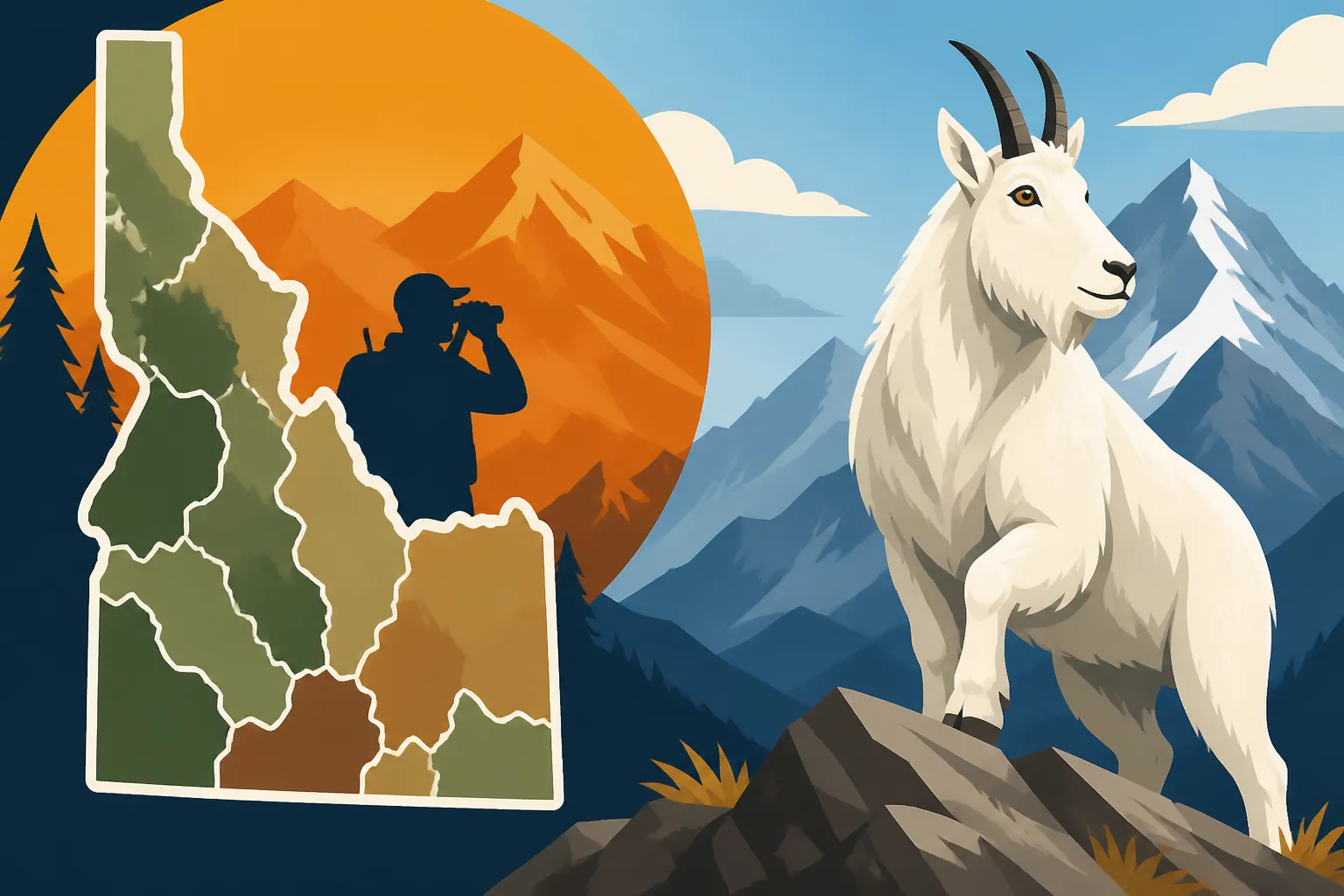
When you talk about mountain goat hunting in Idaho, you're not just talking about any piece of public land. You're talking about very specific, often remote, and exceptionally rugged hunt areas that are carefully managed to ensure the long-term health of these unique populations. These areas are distinct from general game management units in their scope and the rules that govern them, making careful study essential for anyone hoping to pursue a tag.
The Rarity and Specificity of Goat Hunts
Mountain goats are a truly iconic species of the Western mountains, perfectly adapted to live in some of the most unforgiving environments imaginable. Their populations are naturally smaller and grow much slower than deer or elk, making them highly vulnerable to overhunting. Because of this, Idaho Fish and Game manages mountain goat hunting with an extreme level of caution. Each year, only a handful of tags are issued statewide, typically through a highly competitive controlled hunt drawing. This isn't like a general deer season where you can buy a tag over the counter and pick a unit. Instead, you apply for a very specific hunt area, and if successful, that's where you'll be focusing your efforts. The very concept of "Idaho mountain goat hunt areas" implies a precision and scarcity that is unparalleled in most other big game pursuits. It's a testament to their conservation-first approach.
Furthermore, these specific hunt areas are often defined by natural geographic barriers like major river drainages, ridgelines, or even wilderness boundaries, rather than arbitrary lines on a map. This helps biologists manage discrete populations more effectively and ensures that hunting pressure is distributed appropriately, or in most cases, incredibly limited to allow for population stability and growth. For a hunter, this means knowing the exact boundaries of your potential hunt area is paramount. Straying outside these lines, even by a few yards, can result in serious legal trouble and the loss of a precious tag.
How Hunt Areas Differ from Game Management Units
It's easy to get Idaho's various hunting designations mixed up, especially when you're looking at maps and regulations. Most hunters are familiar with Game Management Units (GMUs), which are the foundational building blocks for most big game seasons in the state. An elk zone, for example, is usually made up of several GMUs. However, when it comes to mountain goats, the "hunt area" is a more precise, often smaller, designation that may or may not perfectly align with traditional GMU boundaries.
Sometimes, a mountain goat hunt area might encompass an entire GMU, especially a larger, more remote one. Other times, it might be just a portion of a GMU, or even straddle parts of several GMUs if it's following a specific mountain range or ecological boundary. The key difference is that while GMUs are broad management zones, mountain goat hunt areas are hyper-specific units designed for the careful management of a low-density, sensitive species. This granularity allows Idaho Fish and Game to fine-tune harvest quotas and monitor populations with greater accuracy. Hunters need to pay extremely close attention to the detailed maps provided by the Idaho Department of Fish and Game (IDFG) when applying for or scouting one of these tags. Using resources like the official Idaho Hunt Planner is invaluable for understanding these nuanced boundaries. You can easily visualize the specific "Reading an Idaho Controlled Hunt Area Boundary" when you dive into the interactive map tools, helping you avoid any potential misunderstandings about where you can and cannot hunt.
Navigating Idaho's Premier Mountain Goat Territories
Idaho is home to a robust population of mountain goats, scattered across its most rugged, high-elevation landscapes. These animals thrive in country that makes most humans gasp for air and cling to precarious ledges. Identifying these prime territories is the first step in understanding where a potential mountain goat hunt might take you, whether you’re fortunate enough to draw a tag or simply admire these creatures from afar.
Central Idaho Wilderness Strongholds
When you think of Idaho's most rugged and wild country, the vast expanse of the Central Idaho Wilderness comes to mind—areas like the Frank Church-River of No Return Wilderness and the Selway-Bitterroot Wilderness. These massive tracts of roadless land are absolute strongholds for mountain goats. The goats here benefit from minimal human disturbance and an abundance of the steep, rocky, high-alpine terrain they crave. This region offers expansive, unbroken habitat for goats to roam and flourish.
Within this central wilderness, specific mountain ranges and drainages are known to hold robust populations. The Bighorn Crags, the Salmon River Mountains, and the main Salmon River Breaks are all prime examples. These areas are characterized by towering granite peaks, deep canyons carved by glacial activity, and large expanses of alpine tundra and subalpine forest. Access to these regions is often limited to foot, horseback, or even small bush planes flying into designated backcountry airstrips, making any hunt here a true expedition. The remoteness helps preserve the wilderness experience and offers an unparalleled challenge to the hunter lucky enough to draw a tag for one of these areas.
Northern Idaho's Rugged Peaks
While the Central Idaho Wilderness often grabs the spotlight for its sheer scale, Northern Idaho also boasts significant mountain goat populations in its own rugged mountain ranges. The Panhandle region, with its extension of the Rocky Mountains, provides excellent high-elevation habitat. Areas like the Selkirk Mountains, the Cabinet Mountains, and parts of the Bitterroot Range that extend into Idaho offer steep, glaciated terrain perfect for goats.
These northern areas can be equally challenging to hunt, with dense timber often giving way abruptly to sheer rock faces and alpine basins. The weather patterns in Northern Idaho can also be particularly volatile, especially during early hunting seasons, bringing early snow and challenging conditions. While perhaps not as vast as the central wilderness, these northern strongholds still offer incredibly remote and physically demanding hunts. Understanding these geographical distinctions is crucial for anyone planning to apply, as the specific hunt areas will correspond to these major mountain ranges, each with its unique characteristics and challenges.
Southeastern Idaho's Isolated Ranges
Moving to the southeastern corner of Idaho, you'll find another series of isolated mountain ranges that provide critical habitat for mountain goats. These ranges, often characterized by different geological formations compared to the granite core of central Idaho, still offer the steep, rocky escape terrain that goats require. Areas within the Caribou-Targhee National Forest, including parts of the Snake River Range and the Palisades, can support healthy goat populations.
The goat habitat in southeastern Idaho often consists of limestone and shale cliffs, offering a slightly different ecological niche than the granitic peaks further north. While these populations might be smaller and more fragmented than those in the vast central wilderness, they are equally important and managed with the same conservative approach. These hunt areas can be just as challenging, requiring extensive scouting and physical preparation to navigate the broken terrain and potentially higher elevations. Each of Idaho's premier mountain goat territories, whether central, northern, or southeastern, demands respect and a thorough understanding of its unique characteristics for a successful and ethical hunt.
Why Idaho Mountain Goat Tags Are So Few
The scarcity of Idaho mountain goat tags is not an accident; it's a deliberate and necessary conservation strategy. Unlike species with rapid reproductive rates and broad distribution, mountain goats exist in a delicate balance with their extreme environment. This delicate balance dictates strict limits on hunting pressure, ensuring these magnificent animals continue to thrive in Idaho's highest peaks for generations to come.
The Delicate Nature of Goat Populations
Mountain goats have a fascinating biology that makes them inherently susceptible to overharvest. They are highly specialized animals, perfectly adapted to their rugged, high-altitude habitat. This specialization means they don't easily relocate to new areas if their current habitat becomes unsuitable, and their populations are often isolated, with limited genetic exchange between groups. Furthermore, mountain goats have a relatively low reproductive rate. Nannies typically don't have their first kid until they are three or four years old, and they usually only have one kid per year, sometimes two. Compared to deer or elk, which can start breeding earlier and often have twins, this slow reproductive cycle means that it takes a long time for a goat population to recover from any significant decline.
Because of these biological factors, even a small increase in harvest pressure can have a disproportionately large impact on local populations. Idaho Fish and Game biologists meticulously study herd dynamics, monitoring population numbers, kid survival rates, and age structures. They use this data to set incredibly conservative harvest quotas, often issuing only one or two tags in a specific hunt area for an entire season. This scientific approach ensures that hunting remains sustainable and does not jeopardize the long-term viability of these sensitive populations. This careful management is the primary reason for the limited availability, a topic explored further in "Why Goat Tags Are So Limited in Idaho".
Balancing Opportunity with Conservation Goals
Idaho Fish and Game faces the challenging task of balancing limited hunting opportunity with robust conservation goals. On one hand, there's a strong demand from resident and nonresident hunters alike for the chance to pursue a mountain goat, recognized as one of North America's premier big game trophies. On the other hand, the primary mandate of IDFG is to conserve and protect Idaho's wildlife resources. When it comes to mountain goats, conservation always takes precedence.
This balance is achieved through the controlled hunt system, which ensures that only a predetermined number of tags are issued, directly reflecting what the science indicates the population can sustain without negative impact. This means that year after year, the number of tags remains extremely low, often in the single digits for many hunt areas. The objective is not to maximize hunter numbers, but to maintain healthy, viable goat populations across their range. For hunters, this translates into exceptionally low drawing odds, making a mountain goat tag one of the most coveted and difficult to acquire in the state. GoHunt and other platforms often highlight these low odds, preparing applicants for the reality of this unique draw.
Drawing Odds and the Application Process
Given the limited number of tags and the high demand, drawing an Idaho mountain goat tag is an aspiration that often takes many years, if not decades, of consistent applications. Idaho operates on a true lottery system for controlled hunts, meaning there are no preference points or bonus points that accumulate over time. Every applicant starts with the same odds each year, regardless of how many times they've applied previously. This "Idaho Has No Preference Points, and What That Changes" philosophy means that a first-time applicant theoretically has the same chance as someone who's been applying for twenty years. While this might seem frustrating, it also means that every year brings a fresh opportunity, and luck truly plays a significant role.
The application window for Idaho's trophy species, including mountain goats, typically opens in April, with a deadline in June. The drawing usually occurs in July, and results are posted shortly thereafter. This detailed schedule is part of "The Idaho Controlled Hunt Calendar, April Through August". The application fee itself is relatively modest, but the cost of the nonresident hunting license, which must be purchased before you can apply for any controlled hunt, can add up over years of applying without success. Hunters often research "Idaho Mountain Goat Draw Odds Explained" on platforms like GoHunt to understand just how competitive these hunts are. It's not uncommon for drawing odds to be less than 1% for some of the more popular or accessible hunt areas. Because of this, many hunters apply annually, fully aware that a tag is a long-shot, but holding onto the hope that one day their number will finally come up for this truly special hunt.
Terrain, Access, and Physical Demands of Goat Hunting in Idaho
Drawing a mountain goat tag in Idaho is just the first hurdle; the real challenge begins when you step into their world. Mountain goats inhabit some of the most unforgiving landscapes in North America, demanding extreme physical fitness, specialized gear, and a deep understanding of alpine environments. This isn't a walk in the park; it's a vertical marathon.
The Vertical World: Steep Cliffs and High Altitudes
Mountain goat hunt areas are, by definition, found in Idaho's most rugged and high-elevation terrain. This means you'll be navigating steep, often unstable scree slopes, sheer rock faces, and dense subalpine timber that gives way to open alpine basins. Expect significant elevation gains and losses daily, often measured in thousands of feet, with little to no flat ground. The air is thinner up here, typically above 8,000 feet, and often exceeding 10,000 feet, which can be a real shock to anyone not accustomed to high-altitude exertion. Symptoms like headaches, nausea, and extreme fatigue are common for those who haven't acclimatized properly.
The ground itself can be treacherous. Loose rock, talus slides, and snowfields (even in late summer/early fall) are standard features. Every step needs to be deliberate and stable. This challenging environment is precisely what makes "Mountain Goat Hunting Above Idaho Timberline" such a distinct and demanding endeavor. You'll often find yourself staring up at slopes that look impossible to climb, trying to figure out a safe route that avoids cliffs and dead ends. This isn't just about physical strength; it's about mental fortitude, route-finding skills, and a healthy respect for the inherent dangers of the mountains.
Remote Access and Backcountry Commitments
Many of Idaho's prime mountain goat hunt areas are located deep within designated wilderness areas or vast tracts of roadless national forest land. This means vehicle access is often limited to trailheads, which might themselves be hours from the nearest paved road. From there, you're looking at multi-day pack-in trips just to reach the core goat habitat. Expect to hike for miles, carrying heavy loads, often uphill, for extended periods. This level of remoteness also means you're entirely self-sufficient for the duration of your hunt. There's no quick run to the store for forgotten supplies, and emergency services are days away, if accessible at all.
For those hunting in the Frank Church-River of No Return or Selway-Bitterroot Wilderness, where a nonresident is required to hire a licensed outfitter for certain species, the logistics become even more complex. An outfitter might use horses or mules for packing in gear, or even fly you into a backcountry airstrip. But even with assisted access, the daily hunting itself will be on foot in extremely demanding terrain. This commitment to the backcountry requires meticulous planning, from food and water filtration to navigation and emergency preparedness. Even something like "Packing an Elk Out of Steep Country Alone" feels like a walk in the park compared to retrieving a goat from some of the places they inhabit.
Essential Gear and Physical Preparation
To even consider a mountain goat hunt, you need to be in peak physical condition. This means months of dedicated training focused on endurance, strength, and especially leg and core stability. Hiking with a heavy pack on steep inclines, often off-trail, is a non-negotiable requirement. Think StairMaster with a 60-pound pack, or long, steep hikes with elevation gain, not just flat trail walking.
Your gear needs to be top-notch and tailored for alpine conditions. Lightweight but durable clothing systems that can handle rapidly changing weather are crucial. You'll need sturdy, high-quality mountain boots, gaiters, trekking poles for stability, and potentially ice axe and crampons depending on the season and specific hunt area. Optics are paramount: high-quality binoculars and a spotting scope with a tripod are essential for locating goats in vast, broken terrain. A reliable GPS device or satellite communication device, like a Garmin inReach or Zoleo, is not optional; it's a safety necessity. Don't forget a first-aid kit, emergency shelter, and sufficient water purification. Choosing the "Best All-Around Caliber for Timber and Breaks" is one consideration, but selecting a lightweight, accurate rifle that you can comfortably carry and shoot precisely in steep positions is more critical for a goat hunt. Every ounce counts when you're gaining thousands of feet of elevation.
Planning Your Idaho Mountain Goat Hunt Area Strategy
Successfully navigating an Idaho mountain goat hunt, from application to harvest, demands meticulous planning. With such limited tags and challenging terrain, a well-thought-out strategy is your best asset, leveraging modern tools and, at times, professional expertise.
Utilizing Mapping Tools and Hunt Planners
The first step in planning any Idaho hunt, especially for a specific species like mountain goats, is to immerse yourself in mapping and planning resources. The Idaho Fish and Game website offers an incredible tool: the Idaho Hunt Planner. This interactive online map allows you to visualize game management units, wilderness boundaries, and critically, the exact boundaries of "Idaho Mountain Goat Hunt Areas". You can zoom in, toggle various layers like public/private land, roads, and trails, and even see historical harvest statistics or drawing odds for specific units. This is your digital bible for understanding the lay of the land and identifying potential areas where you might find goats.
Beyond the official IDFG planner, subscription-based mapping apps like GoHunt, onX Hunt, or BaseMap are indispensable. These tools offer enhanced satellite imagery, 3D terrain views, and the ability to download maps for offline use—a critical feature when you're in areas with no cell service. They allow you to mark potential glassing knobs, escape routes, water sources, and camping spots. Using these tools to e-scout an Idaho unit before the season can give you a significant advantage, helping you identify the steepest, highest country where goats thrive, and plan realistic access points and approaches. It allows you to simulate your hunt from your armchair, identifying potential challenges and opportunities long before you set foot on the mountain.
The Role of E-Scouting and Boots-on-the-Ground
E-scouting is a powerful preliminary step, but it's not a substitute for boots-on-the-ground reconnaissance, if possible. If you're fortunate enough to draw a tag, spending time in your hunt area before the season opens is invaluable. This allows you to verify access points, assess trail conditions, identify water sources, and get a feel for the scale and verticality of the terrain. Even more importantly, you can locate goat sign, identify preferred bedding areas, and potentially spot goats, giving you a massive head start come opening day.
For many nonresident hunters, however, a pre-season scouting trip isn't feasible. In such cases, maximizing your e-scouting efforts becomes even more critical. Spend hours studying every ridge, basin, and drainage on your mapping app. Look for the distinct white dots of goats in high-resolution satellite imagery (though this is rare). Read hunting forums, consult with IDFG biologists, and reach out to local experts or previous tag holders if you can. Piece together as much information as possible to build a comprehensive mental map of your hunt area. E-scouting can also help you identify areas of low pressure within a unit, even if the unit itself is known to be popular.
Hiring an Outfitter for Designated Wilderness Areas
For nonresident hunters, a significant regulatory consideration when planning a mountain goat hunt, particularly in the vast wilderness areas of Central Idaho, is the requirement to hire a licensed outfitter. Idaho state law stipulates that nonresidents must utilize the services of a licensed outfitter or guide when hunting certain big game species, including mountain goat and bighorn sheep, within designated wilderness areas. This rule is explicitly detailed in "Mountain Goat and Sheep Under the Idaho Guide Rule" and further explained in "Designated Wilderness Changes the Rules for Idaho Nonresidents". This isn't just a suggestion; it's a legal mandate that can lead to severe penalties if ignored.
Even if your mountain goat hunt area falls outside a designated wilderness, an outfitter can still be a tremendous asset. Their local knowledge, experience with the terrain, access to horses or mules for packing, and familiarity with goat behavior can dramatically increase your chances of success and, more importantly, your safety. They can provide essential logistical support, from camp setup to game retrieval, allowing you to focus on the hunt itself. Vetting and booking an outfitter should be done well in advance, ideally immediately after drawing your tag, as reputable outfitters often book years out for these highly sought-after hunts.
Regulatory Considerations for Idaho Goat Hunt Areas
Beyond the physical and logistical challenges, understanding the specific regulations governing mountain goat hunts in Idaho is absolutely critical. These rules are designed to protect the species and ensure fair chase, and they can vary significantly from general hunting regulations.
Weapon Restrictions and Season Dates
Unlike some other big game species that might have archery, muzzleloader, and rifle seasons, mountain goat hunts in Idaho are typically general weapons seasons, meaning you can use a rifle, bow, or muzzleloader, assuming they meet the state's minimum requirements for big game. However, it's always imperative to double-check the specific regulations for your drawn hunt area, as there can be nuances. For example, while centerfire rifles are the most common choice due to their range and knockdown power in vast, open country, some hunters opt for archery for an even greater challenge. Ensure your chosen weapon complies with all minimum caliber, bullet weight, or draw weight regulations.
Season dates for mountain goat hunts are generally quite short and fall within late summer or early fall, typically August through October. This timing often aims to avoid the peak of the rut and harsh winter conditions. These dates are rigidly enforced, and hunting outside of them is a serious violation. Always refer to the most current Idaho Big Game Regulations booklet for the precise season dates specific to your hunt area, as they can occasionally shift year to year based on management objectives.
Carcass Transport and Mandatory Check-In
Harvesting a mountain goat is only half the battle; getting it off the mountain and fulfilling reporting requirements is the other. Due to the remote and rugged nature of goat habitat, field dressing and quartering your animal is almost always necessary to make it packable. Idaho has specific "Evidence of Sex Requirements on a Carcass" for big game, which you must adhere to, typically meaning the head or proof of sex must remain attached to one of the main quarters until it reaches a residence or meat processor.
Crucially, mountain goat harvests in Idaho usually require mandatory check-in with Idaho Fish and Game within a very short timeframe after harvest, often within a few days. This check-in serves several purposes: it verifies the harvest, allows biologists to collect critical biological data (such as age by counting horn annuli), and ensures compliance with management goals. You'll typically need to bring the skull and horns, and sometimes other parts of the animal, to a designated IDFG regional office or check station. Failing to report your harvest or check in the animal can result in severe penalties, including fines and license revocation. Always confirm the exact check-in procedures and deadlines for your specific tag.
Specific Unit Rules and Public Land Ethics
Every Idaho mountain goat hunt area may have its own particular rules or recommendations, so a thorough review of the permit packet and regulatory supplements is a must. These might include access restrictions, specific boundaries to observe, or even requests for additional data collection by the hunter. It's not uncommon for IDFG to ask for photographs or specific measurements to aid in their research.
Beyond the letter of the law, ethical conduct on a mountain goat hunt is paramount. This includes strict adherence to fair chase principles, respecting other hunters, and leaving no trace. Given the fragile nature of alpine environments, packing out all trash, practicing responsible waste disposal, and minimizing your impact on the delicate tundra are essential. Be prepared for rapidly changing weather, carry appropriate emergency gear, and always prioritize safety over success. The sheer beauty and challenge of a mountain goat hunt mean that upholding the highest standards of public land ethics is not just a rule, but a responsibility that all hunters must embrace to preserve this exceptional opportunity.
Disclaimer
Please remember that hunting regulations, fees, and season dates can change. Always consult the most current Idaho Fish and Game regulations and official publications before planning or embarking on any hunting trip. This content is for informational purposes only and should not be considered legal advice.