Longbow Against Recurve on a Western Hunt
Choosing a traditional bow for a Western hunt, especially in Idaho’s wild and unforgiving landscapes, can feel like a deeply personal and often daunting decision. Many hunters grapple with the timeless debate between a longbow and a recurve, wondering which will truly give them the edge when facing a savvy mule deer or a towering elk in dense timber or across a vast sagebrush canyon. This guide is here to untangle that choice, helping you understand the unique characteristics of each and how they might fit your personal hunting style and the rugged demands of an Idaho adventure.
The Core Differences: Longbow vs. Recurve for Western Terrain
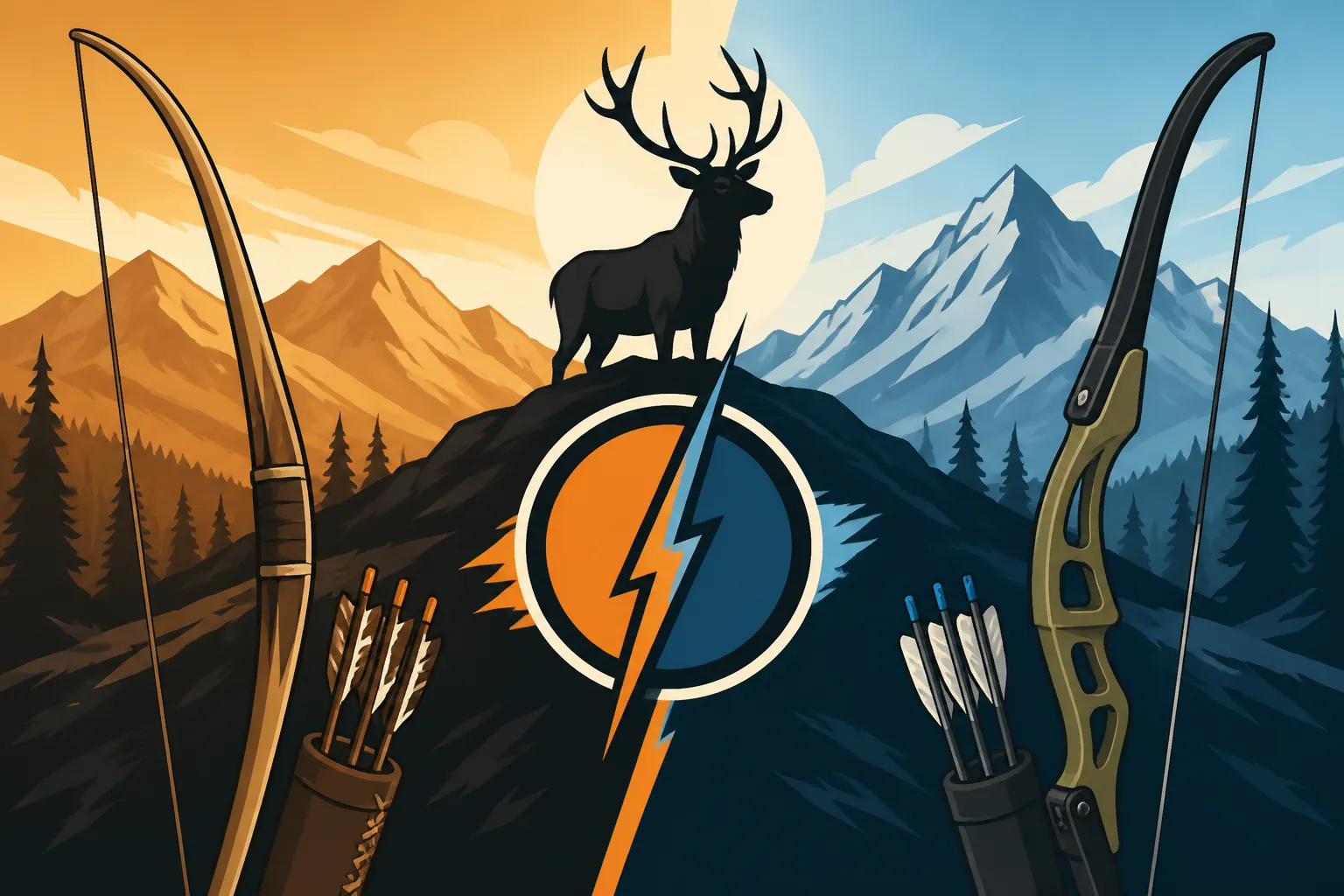
When you strip away all the marketing and the endless discussions around aesthetics, the fundamental difference between a longbow and a recurve boils down to limb design, and that design dictates a lot about how the bow performs and feels in the field. This isn't just about what looks cool; it's about physics and practicality when you're miles deep in elk country.
Understanding the Traditional Design Philosophy
The longbow embodies simplicity and a deep connection to history. Picture Robin Hood, and you're thinking longbow. These bows typically feature straight, non-curving limbs that, when unstrung, are relatively flat or have a gentle, continuous curve. The string makes contact with the limb tips throughout the draw cycle. This design inherently leads to a smoother, often quieter shot, and for many, it represents the purest form of archery hunting.
Hunting with a longbow is a commitment to a certain philosophy. It's about getting closer, honing your instincts, and embracing the raw challenge. There's a certain satisfaction that comes from mastering a bow that, on paper, might seem less efficient than its modern counterparts. In Idaho, where the terrain itself is a challenge, the added self-imposed challenge of a longbow only amplifies the hunting experience for those who choose it. It’s a pursuit of minimalism in a world of complexity.
Recurve bows, on the other hand, derive their name from their distinctive limb tips that curve away from the archer when unstrung. When the bow is strung and drawn, these curved tips straighten out, storing more energy than a straight limb of comparable length and material. This "re-curve" in the limb design allows for a shorter bow that still generates significant power and speed.
Modern recurves, particularly takedown models, are often lauded for their versatility and portability. You can easily remove the limbs from the riser, making them incredibly convenient for packing into a backcountry spike camp or for long drives to distant trailheads. They offer a blend of traditional aesthetics with a slight nod to modern engineering principles, without sacrificing the raw, intuitive feel that traditional archers cherish. Many hunters feel a recurve offers a slight efficiency boost, helping them achieve the required arrow speeds and kinetic energy more readily for larger Western game.
Performance Metrics: Speed, Accuracy, and Energy Transfer
When you're chasing big game in Idaho, whether it's an elk, a mule deer, or a bear, you need confidence that your arrow will fly true and penetrate deep. This is where the performance characteristics of longbows and recurves really come into play.
Generally speaking, a recurve bow of a given draw weight will deliver an arrow with more speed and kinetic energy than a longbow of the exact same draw weight. This is due to the limb geometry; the recurved tips store and release energy more efficiently during the power stroke. For a bowhunter eyeing large animals like an Idaho elk, that extra bit of speed and energy can translate to better arrow penetration, especially if you encounter a quartering-away shot or need to punch through a rib. A faster arrow also means a flatter trajectory at typical hunting distances, which can be a subtle advantage in judging yardage in varied terrain.
The perceived accuracy between the two is a nuanced discussion. While it's true that a recurve's limb design can sometimes feel more stable at full draw and potentially offer a slightly more forgiving shot due to less string pinch or more controlled limb movement, ultimate accuracy always rests in the hands of the archer. A well-tuned longbow in the hands of a skilled archer is just as deadly accurate as a recurve. However, some recurves, particularly those designed for target archery that can be adapted for hunting, might offer more options for adjustable rests or subtle aiming points, even within strict "barebow" regulations. For Western hunting, where ethical shots are paramount, consistent accuracy born from diligent practice is far more important than any theoretical advantage one bow might hold over the other.
Energy transfer is another critical aspect. Both bows, when properly matched with the right arrow setup, are perfectly capable of humanely harvesting big game. However, a recurve's more efficient energy transfer often allows it to propel a heavier arrow at sufficient speed, maximizing the devastating force upon impact. This becomes especially relevant when considering the dense bone structure of a mature bull elk.
Here's a quick comparison of some general characteristics:
| Feature | Longbow | Recurve |
|---|---|---|
| Arrow Speed | Generally slower for a given draw weight | Generally faster for a given draw weight |
| Kinetic Energy | Moderate, depends heavily on arrow weight | Higher, more efficient energy transfer |
| Draw Cycle | Smooth, linear stack throughout | Smooth, but can "stack" more heavily at end |
| Noise | Often inherently quieter due to simpler design | Can be slightly louder, but easily silenced |
| Portability | One-piece can be long; takedowns less common | One-piece average length; takedowns very compact |
| Forgiveness | Less forgiving of form flaws | Slightly more forgiving due to limb design |
| Tradition Feel | Peak traditional, elemental | Traditional with a hint of modern efficiency |
Hunting Idaho's Diverse Landscapes with Traditional Archery
Idaho is a land of incredible contrasts, from the dense cedar and pine forests of the Panhandle to the vast, open sagebrush flats and deep canyons of the Owyhee Breaks. The bow you choose will interact differently with these varied environments, influencing everything from how you carry it to how silently you can close the final distance.
Navigating Timber and Brush: Portability and Maneuverability
Imagine still-hunting through thick, dark timber in the Clearwater National Forest, trying to slip within bow range of a bedded mule deer buck. Or perhaps you're crawling on your hands and knees through dense mountain mahogany trying to get eyes on a bull elk. In these scenarios, the physical dimensions of your bow matter immensely.
A longbow, by its very nature, tends to be longer. Many traditional longbows range from 64 to 68 inches in length. This can be a double-edged sword. While the longer length contributes to stability and a smooth draw, it can also become a snag hazard in dense undergrowth. Picture trying to slip through a tangle of huckleberry bushes with a 66-inch stick in your hand – it can be cumbersome. The tips can catch on branches, creating noise and slowing your stalk, which is the absolute last thing you want when that bull is just out of sight.
Conversely, many recurve bows are designed to be more compact. A typical hunting recurve might range from 58 to 62 inches, with many takedown models coming in even shorter when assembled. The ability to break down a takedown recurve into three pieces makes it incredibly convenient for packing on a backpack hunt. You can strap the limbs and riser to the outside of your pack, keeping them secure and out of the way, especially when navigating dense areas or climbing steep, rocky slopes. This kind of portability can be a significant advantage when you're covering many miles in rough terrain.
However, the longer, slimmer profile of a longbow can sometimes allow it to slip through tighter vertical openings than a wider recurve riser might. It's really about personal preference and how you carry and move with your bow. For hunters who do a lot of crawling or navigating very tight spaces, the compact nature of a good recurve can be a real blessing. Just consider how much you're willing to endure for the sake of tradition versus practical maneuverability in the thick stuff.
The Silent Stalker: Noise and Shooting Dynamics
The moment of truth in traditional bowhunting often comes down to silence. A branch snap, a rustle of clothing, or, yes, even bow noise, can send an animal bolting before your arrow ever leaves the string. In the quiet solitude of Idaho's wilderness, sound carries, and animals are highly attuned to it.
Longbows are renowned for their inherent quietness. Their simpler design, with limbs that flex in a relatively straightforward manner, tends to produce less vibration and less noise upon release. Many longbow purists prefer to hunt without any string silencers, confident in their bow's natural stealth. This can be a huge advantage when you’re attempting to close the final few yards on a cagey animal. A truly quiet longbow can allow for a clean shot without the deer or elk jumping the string, often referred to as "string jumping." The less noise, the more likely your animal will stay put long enough for the arrow to find its mark.
While recurve bows are also generally very quiet, especially when properly tuned and accessorized, they can be slightly louder than a perfectly silent longbow. The recurved limb tips, by their very nature, snap back into place with more force, potentially creating a bit more vibration and sound. However, modern recurve hunters almost universally use string silencers – everything from traditional wool puffs to more technical rubber "cat whiskers" – to dampen any residual noise. With proper tuning and silencing, a recurve can be incredibly stealthy and effective. The key is meticulous attention to detail in your setup.
Whether you choose a longbow or a recurve, the principle remains the same: a silent setup is critical for consistent success on game in Idaho. An elk at 30 yards is going to pick up on any unnecessary noise, and your margin for error is razor-thin. For more on this critical distance, consider checking out How Close a Bowhunter Needs to Get on Elk.
Durability and Maintenance in the Backcountry
A hunting bow needs to be a reliable companion, especially when you're deep in the Idaho backcountry, many miles from the nearest road. Breakdowns are not an option.
Many one-piece longbows are exceptionally durable due to their minimalist construction. With fewer parts, there are fewer things to potentially break or come loose. They are essentially a single, solid piece of wood or composite material, making them incredibly robust and reliable in harsh conditions. However, if a longbow limb were to delaminate or break, it would typically mean the end of your hunt, as field repairs are rarely feasible.
Recurve bows, especially the popular takedown models, offer a different kind of durability and practicality. While they have more components (riser, two limbs, string), these components are often designed to be incredibly tough. The significant advantage of a takedown recurve is that if a limb were to get damaged – perhaps you dropped your bow on a rock, or a limb twisted – you could potentially replace just that limb and be back in action. This modularity is a huge plus for hunters who spend extended periods far from civilization. Imagine being able to pack a spare limb set on a multi-day trip into the Gospel-Hump Wilderness. It’s peace of mind that a one-piece bow can’t offer.
Maintaining both bows typically involves keeping them clean, waxing the string, and checking for any signs of wear or damage. For recurves, paying attention to the limb bolts and ensuring they are tightened correctly is important. For both, proper string care is paramount. Ultimately, both types of traditional bows are built to withstand the rigors of hunting, but the takedown recurve offers a unique advantage in terms of field repairability and compact storage, which is a big deal when you're focused on Packing an Elk Out of Steep Country Alone after a successful hunt.
Making Your Choice: Personal Preference, Ethics, and the Idaho Rules
Ultimately, the best traditional bow for you is the one you shoot best, feel most confident with, and that aligns with your personal hunting philosophy. There's no single "right" answer, only the right answer for your individual journey.
Personal Fit and Shooting Style
This is perhaps the most crucial factor. You can read all the articles and watch all the videos, but until you get both a longbow and a recurve in your hands and shoot them, you won't truly know what feels right.
Longbows often have a very smooth, consistent draw cycle. The weight typically builds linearly throughout the draw, without the "hump" or significant increase in stack that some recurves exhibit at the very end of the draw. This can feel very natural and fluid for some archers. They also tend to have less hand shock (vibration transmitted to the hand after the shot) than some recurves, contributing to that smooth shooting experience. However, their longer length and sometimes larger risers can be less forgiving of poor form, making consistent anchor points and follow-through absolutely vital.
Recurves, while also having a smooth draw, can sometimes feel like they "stack" more abruptly at the very end of the draw. This isn't necessarily a bad thing; it's just a different feel that some archers prefer. Many find recurves slightly more forgiving due to their limb design, which can help mitigate minor inconsistencies in form. The grip and riser design can also play a big role in how a recurve feels in your hand, with many different options available to suit various hand sizes and shooting styles.
The key is to try them out. Visit an archery shop that specializes in traditional gear. Shoot different models, different weights, and different lengths. Pay attention to how the bow feels at full draw, how it releases, and how comfortable it is in your hand. Your shooting style – whether you prefer a deep hook, a split finger, or a three-under grip – might also subtly influence which bow feels more natural. Remember, consistency is king, and choosing a bow that encourages consistent practice is the first step to becoming an ethical and effective traditional bowhunter. Finding a bow that fits your style will help you reach Realistic Archery Practice Distance for Big Game consistently. For additional insights on equipment and unit research, a platform like GoHunt can provide valuable data to complement your hands-on experience.
Ethical Considerations for Traditional Bowhunting
Regardless of whether you pick a longbow or a recurve, the ethical imperative is clear: you must be proficient enough to make a clean, humane kill. Traditional archery inherently demands a higher degree of skill, discipline, and commitment than compound bow hunting.
Both longbows and recurves, when wielded by a skilled archer with a well-tuned setup, are highly effective hunting tools. The critical factors are:
- Shot Placement: This is non-negotiable. You need to be able to put your arrow precisely where it needs to go, usually the vital lung and heart area.
- Arrow Penetration: Your arrow needs to pass through the animal, ideally creating two holes for maximum blood trail. This means selecting the right draw weight, a heavy arrow, and a razor-sharp fixed-blade broadhead.
- Practice: There is no substitute. Hours on the range, shooting from different positions, in various weather conditions, and at varied distances, will build the muscle memory and mental fortitude needed for that high-pressure shot in the field.
Never let ego dictate your draw weight. Shoot a weight you can comfortably and accurately control, not one you think you should shoot. Ethical hunting means knowing your limitations and sticking to them. For an in-depth look at ensuring maximum arrow penetration, check out Arrow Weight That Gets Through an Elk.
Idaho's Archery Regulations and What They Mean
Idaho Fish and Game regulations are designed to ensure ethical hunting practices and the welfare of game animals. When it comes to traditional bows, the rules are primarily focused on minimum performance standards rather than specific bow types.
For big game in Idaho, the minimum peak draw weight for any bow, including longbows and recurves, is:
- 40 pounds for deer and antelope.
- 50 pounds for elk, moose, bighorn sheep, and mountain goat.
It's crucial that your longbow or recurve meets these minimums at your actual draw length. If your draw length is shorter than 28 inches, for example, your bow might need a higher marked draw weight to hit the minimums at your shorter pull. Most traditional bow manufacturers will provide charts or information on how their bows perform at various draw lengths. Understanding Idaho Requires a 40-Pound Bow at a 28-Inch Draw is essential before you head into the field.
Generally, for standard archery seasons, Idaho does not differentiate between longbows and recurves in terms of legality. Both are considered "archery equipment" as long as they meet the draw weight minimums and other general archery rules (e.g., no electronic devices that cast a light onto the target, no explosive broadheads, no poisoned arrows).
While Idaho has specific "short-range weapon" seasons, these are usually defined by weapon type (shotgun, muzzleloader, pistol, some archery) rather than traditional bow specifics. True "traditional archery only" hunts are less common in Idaho but always check the current regulations carefully for the specific unit and hunt you plan to apply for. GoHunt is an excellent resource for cross-referencing these regulations with specific hunt units and season dates, helping you ensure full compliance. Always double-check the current Idaho Fish and Game regulations handbook before you go.
Optimizing Your Setup, Whichever You Choose
Once you’ve made the foundational decision between a longbow and a recurve, the real work of optimizing your setup begins. A traditional bow is only as good as the arrows it shoots and the hunter behind it. This applies equally to both bow types.
Arrow Selection and Tuning for Penetration
This cannot be overstated: arrow selection and tuning are paramount for traditional bowhunting, especially when targeting large, tough animals like elk in Idaho. Unlike compounds that can launch lighter arrows at blistering speeds, traditional bows benefit immensely from heavier arrows and proper tuning to maximize penetration.
For elk and other large game, aim for an arrow that is relatively heavy, typically 500 grains or more for most traditional setups. A heavier arrow carries more momentum, which is crucial for punching through hide, muscle, and potentially bone. Also consider a high FOC (Front of Center) weight, meaning a significant portion of the arrow's weight is biased towards the front. This can be achieved with heavier broadheads, brass inserts, or footing the arrow shaft. A high FOC arrow tends to stabilize faster in flight and maintain its momentum better.
The broadhead you choose is equally vital. For traditional bows and big game, a two-blade or three-blade fixed-blade broadhead with a wide cutting diameter and excellent steel is almost universally recommended. Mechanical broadheads are generally not advised for traditional bows due to the lower kinetic energy and potential for failure upon impact with bone. A razor-sharp edge is absolutely essential. For a deep dive into broadhead choices, read Fixed Blade Against Mechanical Broadheads on Elk.
Tuning your arrows to your specific bow is critical for consistent accuracy and optimal flight. This involves making sure the arrow shaft's spine (stiffness) matches the draw weight and limb dynamics of your bow. Common methods include bare shaft tuning, where you shoot an arrow without fletching to observe its flight, and paper tuning, where you shoot through a sheet of paper to see how the arrow leaves the string. A perfectly tuned arrow will fly straight and true, maximizing its kinetic energy and increasing your chances of a clean pass-through. Don't skip this step! It’s a vital part of Bow Tuning Worth Doing Before a Mountain Hunt.
Accessorizing for Western Hunting
Even the most traditional bow can benefit from a few thoughtful accessories to enhance performance and comfort in the field.
- String Silencers: While longbows are often quiet, adding a good set of string silencers (like cat whiskers, wool puffs, or rubber spiders) can further dampen any residual noise for both bow types. This is a small investment that can pay huge dividends on a close-range encounter.
- Bow String: A quality, modern bow string made from low-stretch materials (like Dacron or Fast Flight) can improve arrow speed and consistency. Ensure it's built to the right length and strand count for your specific bow.
- Quiver: How you carry your arrows is important.
- Bow-mounted quivers keep your arrows immediately accessible and close to the bow, making for quick follow-up shots if needed.
- Back quivers offer a classic look and keep arrows out of the way, but drawing an arrow can be slower and sometimes noisy.
- Hip quivers are convenient for the range but can be cumbersome and noisy in thick brush.
Consider the terrain you'll be hunting in Idaho and choose a quiver that allows for quiet, snag-free movement and quick access.
- Armguard and Finger Protection: A good leather armguard is essential to protect your forearm from string slap. For finger protection, a well-fitting shooting glove or a leather tab will protect your fingers and provide a consistent release point.
These accessories might seem minor, but they contribute significantly to your overall comfort, stealth, and efficiency as a traditional bowhunter in the rugged West.
Training and Conditioning for Idaho's Backcountry
No matter how well-tuned your bow or how perfectly matched your arrows, none of it matters if you aren't physically and mentally prepared for the demands of an Idaho backcountry hunt. Traditional bowhunting, by its very nature, often requires getting closer, moving slower, and often covering more ground.
Physical conditioning is absolutely paramount. Idaho's mountains are steep, its canyons are deep, and the elevation can be taxing. You'll be hiking for miles, often with a heavy pack, and then be expected to draw your bow smoothly and hold it steady for a precise shot. Incorporate hiking with weight, incline training, and core strength exercises into your routine well before the season. Practice shooting after exerting yourself to simulate real hunting conditions. This isn't just about drawing the bow; it's about being able to perform under stress when your heart rate is elevated. More detailed guidance can be found in Physical Conditioning for Idaho Backcountry.
Mental conditioning is just as important. Traditional bowhunting often tests your patience and resolve. You might spend days stalking, only for one tiny mistake to blow the hunt. Developing the mental toughness to stay focused, remain optimistic, and execute under pressure is vital. Practice visualization, breath control, and maintain a positive attitude.
Remember, a successful traditional hunt isn't just about the shot; it's about the entire journey. Being prepared for the physical and mental challenges that Idaho's wild country will throw at you will make the experience far more rewarding, regardless of the outcome. Utilize resources like GoHunt to scout potential units and understand the terrain you'll face, allowing you to tailor your physical preparation even further.
Disclaimer
Please note that hunting regulations, license requirements, and fees are subject to change. Always consult the most current Idaho Fish and Game regulations handbook or website before planning your hunt. This guide is for informational purposes only and does not constitute legal advice.