Deer and Bear Escape Idaho’s Wilderness Guide Rule
Navigating the complex world of Idaho hunting regulations can feel like trying to track a ghost in the deep timber, especially when you're a non-resident dreaming of a wilderness adventure. One of the biggest head-scratchers often revolves around who needs a guide in those vast, rugged backcountry areas. Many hunters get frustrated, assuming all big game requires an expensive outfitter, but the truth is, deer and bear hunts are a welcome exception to Idaho's wilderness guide rule, opening up fantastic DIY opportunities. This guide will meticulously break down why these species are exempt and how you can plan your own unguided wilderness hunt.
Understanding Idaho's Wilderness Guide Rule
Idaho has some truly incredible wilderness areas, vast expanses of roadless country that hold some of the West's most challenging and rewarding hunting experiences. For non-residents, however, accessing these pristine landscapes for certain big game species comes with a specific requirement: you generally need to hire a licensed Idaho outfitter or guide. This rule is often a point of confusion and sometimes even contention for hunters coming from other states.
The Purpose Behind the Regulation
The core reason for Idaho's wilderness guide rule for non-residents, particularly for species like elk, moose, bighorn sheep, and mountain goat, often boils down to a few key factors. Primarily, it's about managing hunting pressure and ensuring ethical hunting practices in these sensitive, remote ecosystems. The thought is that outfitters, with their deep local knowledge and vested interest in sustainable hunting, can help manage the impact of non-resident hunters who might be less familiar with the specific terrain and regulations of Idaho's wilderness. They also help facilitate safe and successful hunts in incredibly challenging environments. This regulation helps maintain the integrity of the wilderness experience for everyone, residents and non-residents alike, by limiting unregulated access and promoting responsible stewardship of these unique areas. It's a way to ensure that the demand for these coveted wilderness hunts doesn't overwhelm the resources or diminish the quality of the hunting itself.
Which Species Fall Under the Rule
The Idaho wilderness guide rule specifically applies to non-resident hunters pursuing elk, moose, bighorn sheep, and mountain goat within designated wilderness boundaries. If you're coming from out of state and have your sights set on one of these majestic animals in a place like the Frank Church-River of No Return Wilderness, you'll need to arrange your hunt through a licensed Idaho outfitter. This means a fully guided trip or, at the very least, a drop camp service where an outfitter packs you and your gear in and out. There's a lot of information on Idaho Forces Nonresidents to Hire a Guide for Wilderness Elk that really digs into the specifics of this requirement. It’s a significant financial and logistical commitment, which is why many non-residents initially shy away from wilderness hunts, or feel locked out of them entirely. Knowing these rules upfront is crucial for planning, as failing to comply can lead to serious legal consequences, not to mention a ruined hunt.
The "Exempt Species" Explained: Deer and Bear
Now, here's where we get to the good news for many non-resident hunters: not all big game falls under this strict wilderness guide requirement. Deer and bear are the welcome exceptions, allowing non-residents to pursue these animals in Idaho's designated wilderness areas without hiring an outfitter. This opens up a whole new world of adventure for those looking for a true do-it-yourself backcountry experience in some of the most remote and wild country the West has to offer.
Deer: More Numerous, Less Restricted
Idaho boasts healthy populations of both mule deer and whitetail deer, and thankfully, these species are generally exempt from the non-resident wilderness guide rule. This means if you draw a general deer tag or a controlled hunt tag for a unit that includes wilderness, and you're a non-resident, you can pack in on your own two feet, with your own horses, or even a jet boat if river access allows, and chase deer without a guide.
The exemption for deer likely stems from a combination of factors. Deer populations are generally more robust and widespread than, say, moose or bighorn sheep. They inhabit a broader range of habitats, from dense timber to sagebrush-covered breaks, including areas both inside and outside wilderness boundaries. This widespread distribution means that hunting pressure on any single wilderness deer population might not be as intense or concentrated as it could be for more specialized species like mountain goat. Furthermore, deer hunting, while still challenging in wilderness terrain, doesn't always carry the same extreme logistical or safety demands as pursuing a bighorn ram high on an exposed ridge or an elk deep in roadless canyons where specialized knowledge of vast areas is often critical. The Idaho Fish and Game recognizes that deer provide a fantastic opportunity for hunters to experience the wilderness on their own terms, fostering a deeper connection to the land and the hunt. You can explore topics like Mule Deer Across Idaho's High Desert and Breaks or Whitetail Deer Hold Idaho's Northern Panhandle for more species-specific information.
Bear: Unique Management Considerations
Black bear hunting in Idaho also stands apart from the wilderness guide rule, offering another exciting unguided opportunity for non-residents. Whether you're interested in spring bear hunting or a fall pursuit, you can plan your own wilderness adventure. This exemption for bear is a little different from deer due to the nature of bear management and hunting methods.
Idaho has a robust black bear population, and management often involves a variety of strategies, including baiting and hound hunting (where legal) in addition to spot and stalk. While baiting and hounds are generally regulated outside of wilderness, spot and stalk is a common wilderness method. The ability for non-residents to hunt bear unguided in wilderness areas provides important management flexibility. Bears can be somewhat solitary and elusive, and while they can be challenging to hunt, their behavior and habitat use often allow for more dispersed hunting pressure compared to highly sought-after, herd-dwelling animals like elk. The sheer number of bears across vast swathes of Idaho, including wilderness, makes them a viable target for a self-guided experience. The state also recognizes the conservation benefits of providing diverse hunting opportunities, and bear hunting, specifically, plays a role in managing populations and mitigating potential conflicts with humans or other wildlife, all while offering an accessible big game experience for non-residents who want to go it alone. Learning more about Idaho Spring Bear Runs From April Into Summer can really help you plan one of these unique hunts.
Defining Idaho's Designated Wilderness Areas
When we talk about hunting in Idaho's wilderness, it's crucial to understand exactly what that means. These aren't just any remote, roadless areas; designated wilderness has a specific legal definition and management framework that influences everything from access to hunting regulations. Knowing these boundaries is paramount to staying legal and planning a successful hunt.
The Frank Church-River of No Return Wilderness
The "Frank Church," as it's affectionately known, is Idaho's crown jewel of wilderness areas, and indeed one of the largest contiguous wilderness areas in the Lower 48 states. Covering a staggering 2.3 million acres, it encompasses a diverse landscape of rugged mountains, deep canyons, and significant portions of the Salmon River and its tributaries. For a non-resident hunter, the Frank Church represents the epitome of a backcountry experience.
This vast area, with its remote airstrips and challenging terrain, is precisely where the non-resident guide rule applies to elk, moose, sheep, and goat. However, as we've discussed, it's also a prime location for unguided deer and bear hunting. Imagine packing into a remote basin within the Frank Church, knowing that while the elk around you might technically require an outfitter if you had an elk tag, your deer tag allows you to pursue a wary mule deer buck entirely on your own terms. It's a place where you truly earn your harvest, relying solely on your skills, fitness, and navigation. Access points are limited, often requiring long hikes, horseback trips, or even flying into an authorized backcountry airstrip. Understanding Access Points Into the Frank Church Wilderness is critical for planning such an adventure.
Selway-Bitterroot Wilderness
Straddling the border of Idaho and Montana, the Selway-Bitterroot Wilderness is another massive tract of wild country, covering approximately 1.3 million acres in Idaho. Characterized by its incredibly steep, timbered mountains, the deep canyon of the Selway River, and high alpine lakes, this wilderness offers a different kind of challenge and beauty.
Similar to the Frank Church, the Selway-Bitterroot falls under the non-resident guide rule for specific big game. However, it too offers phenomenal opportunities for unguided deer and bear hunts. The dense timber and rugged terrain of the Selway-Bitterroot can be incredibly demanding, making a successful unguided deer or bear hunt here a truly significant accomplishment. Hunters often focus on still-hunting through thick cover or glassing openings in the steep mountainsides for black bear or a whitetail buck moving through the dark timber. Planning for an unguided hunt here means meticulous preparation for navigation, self-sufficiency, and dealing with potentially harsh weather. Access is often via challenging trailheads, and knowing the specifics of Selway-Bitterroot Wilderness Access in Idaho is key.
Other Idaho Wilderness Areas
Beyond these two giants, Idaho is home to several other designated wilderness areas, each offering unique landscapes and hunting opportunities. These include the Gospel-Hump Wilderness, the Sawtooth Wilderness, and portions of the Hells Canyon Wilderness. While smaller, these areas still represent significant tracts of roadless public land where the same non-resident guide rules for certain species apply – and where deer and bear remain exempt.
The Gospel-Hump, for example, offers rugged, remote hunting near Riggins and Grangeville, often characterized by steep, broken country. The Sawtooth Wilderness, iconic for its dramatic peaks, offers high-country challenges. Even though these areas are physically demanding, they are generally less expansive and sometimes more accessible than the Frank Church or Selway-Bitterroot, potentially offering a slightly less daunting entry point for a first-time wilderness hunter looking to pursue deer or bear unguided. Regardless of the specific wilderness area, the principles remain the same: understand the regulations, meticulously plan your logistics, and prepare for a truly self-reliant hunt. Each offers a chance to connect with the wild heart of Idaho in a profound way.
Why This Distinction Matters for Nonresidents
For non-resident hunters eyeing Idaho, the distinction between species that do and do not require an outfitter in wilderness areas isn't just a technicality; it’s a game-changer. It directly impacts your budget, your planning freedom, and the very nature of your hunting experience. Understanding this difference can unlock opportunities you might have thought were out of reach.
Cost Savings and Budgeting
Let's be brutally honest: guided hunts, especially in remote wilderness areas for sought-after species like elk or bighorn sheep, come with a significant price tag. When you factor in the outfitter's fees, tips for guides, and all the associated travel and licensing costs, it quickly adds up to an investment that's simply beyond the reach of many hunters. This can be incredibly frustrating if your dream is to experience Idaho's famous wilderness.
However, the exemption for deer and bear changes the entire financial picture. By allowing non-residents to pursue these species unguided, Idaho essentially cuts out one of the largest expenses of a wilderness hunt. You're still responsible for your non-resident hunting license and species tags, which can be considerable, but you eliminate the thousands of dollars typically associated with guide services. This means your hard-earned money can go towards better gear, more extensive scouting trips, or simply making the hunt more feasible within your personal budget. It transforms a dream that might have seemed impossible into an achievable goal, letting you experience the vastness of Idaho's wilderness without breaking the bank. This makes a huge difference, especially if you're trying to budget for your adventure. You can always check out resources like The Idaho Nonresident Hunting License Fee or The Nonresident Deer Tag Price Before License to get a clearer picture of those initial costs.
Flexibility and DIY Freedom
One of the most appealing aspects of hunting for many individuals is the challenge and satisfaction of a true do-it-yourself experience. Being able to choose your own pace, make your own decisions in the field, and navigate the wilderness entirely on your own terms is a deeply rewarding endeavor. The wilderness guide rule for specific species can feel restrictive, forcing hunters into pre-set itineraries and group dynamics that don't always align with their vision of a hunt.
With deer and bear, non-residents regain that coveted DIY freedom. You decide where to scout, where to camp, when to move, and how long to stay. This autonomy allows for a much more personal and immersive experience. You can spend more time glassing a particular basin for mule deer, follow a bear track for hours without feeling rushed, or simply set up your camp in that perfect, secluded spot you found on a map. This flexibility means you can tailor the hunt precisely to your preferences, skill level, and physical conditioning, creating a truly bespoke adventure. It's about earning your success through your own grit and resourcefulness, rather than relying on the expertise of others.
Access to Unpressured Public Land
Idaho is renowned for its vast tracts of public land, and its wilderness areas represent some of the most remote and, consequently, least pressured portions of that public estate. For species that require a guide, this access is still conditional. But for deer and bear, the exemption means that non-residents can explore these incredible landscapes, often encountering fewer other hunters than in more accessible general units.
While the physical challenge of reaching and hunting these areas naturally filters out some of the pressure, the legal ability for non-residents to do so unguided further expands the low-pressure opportunities. Imagine finding a pristine basin in the Selway-Bitterroot, knowing that you're one of only a handful of hunters willing to put in the effort to get there for a deer or bear. This isn't just about escaping crowds; it's about the potential for higher quality hunting, where animals might be less wary and behavior is more natural. This distinction offers a unique chance to experience Idaho's backcountry as it truly is: wild, challenging, and profoundly rewarding. It's a chance to find that sense of solitude and connection with nature that many hunters seek above all else. Hunting Idaho's National Forests and BLM Ground gives a good overview of the kinds of public access available.
Planning an Unguided Wilderness Deer or Bear Hunt
Okay, so you're stoked about the prospect of an unguided wilderness deer or bear hunt in Idaho. Fantastic! Now comes the critical part: planning. A wilderness hunt isn't something you just wing. It demands meticulous preparation, both in terms of logistics and personal readiness.
Researching Units and Access
The very first step is comprehensive research. You need to identify Game Management Units (GMUs) that contain designated wilderness areas and offer good deer or bear populations. This is where tools like the Idaho Fish and Game's online hunt planner become your best friend. Dive into harvest statistics, public land percentages, and the type of terrain available. You'll want to cross-reference this with wilderness boundary maps. For example, some units might have a small corner that's wilderness, while others are predominantly wild.
Look for areas with reasonable access points that match your chosen method of travel (foot, horse, or river). Consider how far you're willing to pack in, what the elevation gain looks like, and the availability of water sources. Are there established trails, or will you be navigating truly trackless terrain? Services like GoHunt can be invaluable here, providing detailed maps, drawing odds, and harvest data broken down by unit, helping you identify promising areas with high public land percentages. Pay close attention to seasonal road closures, winter range restrictions, and any specific rules for the wilderness area you're targeting. Remember, the deeper you get, the more self-reliant you need to be. Understanding how to use The Idaho Hunt Planner Is the Tool to Start With is truly foundational to this process.
Essential Gear and Supplies
Your gear list for an unguided wilderness hunt is going to be extensive and focused on self-sufficiency, safety, and comfort in challenging conditions. Think ultralight, durable, and redundant.
Shelter and Sleep System: A lightweight, sturdy tent or tarp system capable of handling potential wind and rain. A sleeping bag rated for temperatures colder than you expect, and a comfortable sleeping pad.
Navigation: A reliable GPS device with pre-loaded maps (including wilderness boundaries), a physical map and compass (and knowing how to use them!), and a satellite communication device (like a Garmin inReach or Zoleo) for emergencies. Cell service will be non-existent.
Water: A high-quality water filter or purifier, purification tablets, and multiple water bottles or hydration bladders. Knowing Finding Water Sources in Dry Sage Country or high timber is crucial.
Food: Lightweight, high-calorie, non-perishable food. Plan for more than you think you'll need in case of unexpected delays.
Clothing: Layered clothing system suitable for drastic temperature swings. Rain gear is non-negotiable. Sturdy, broken-in hiking boots are paramount.
Hunting Specifics: Your weapon, ammunition, optics (binoculars, spotting scope if applicable), field dressing kit, game bags, and an appropriate pack frame to get your animal out.
Safety and First Aid: A comprehensive first aid kit, bear spray (especially in grizzly country like parts of northern and eastern Idaho), fire starter, headlamp with extra batteries, and an emergency shelter.
Other: Knife, cordage, repair kit, trowel, personal hygiene items, and maybe a lightweight book for downtime.
Every item needs to earn its place in your pack. Test all your gear before you go, and ensure you're comfortable using it in adverse conditions.
Physical and Mental Preparation
A wilderness hunt is as much a mental and physical challenge as it is a hunting one. You can have the best gear and the best plan, but if your body and mind aren't ready, you'll struggle.
Physical Fitness: Start training months in advance. Focus on cardiovascular endurance, strength (especially for packing heavy loads), and hiking steep, uneven terrain. Mimic hunt conditions by hiking with your loaded pack. This isn't just about getting to your spot; it's about being able to hunt effectively once there, and then, crucially, being able to pack out a harvested animal. Packing an Elk Out of Steep Country Alone might be about elk, but the principles apply equally to a large deer or bear.
Mental Toughness: Practice problem-solving and decision-making under stress. Simulate uncomfortable situations. Wilderness hunting can be lonely, frustrating, and physically grueling. There will be bad weather, missed opportunities, and moments of doubt. Having the mental fortitude to push through, stay positive, and adapt to changing circumstances is vital. Learn to be comfortable with solitude and self-reliance. Think about how you'll manage disappointment, fatigue, and potential safety concerns far from any help. The ability to make sound judgments when exhausted or stressed is often what separates a successful and safe wilderness hunter from one who ends up in trouble.
Navigating the Hunt Planner and Regulations
The Idaho Fish and Game (IDFG) website, particularly its "Hunt Planner," is an absolute treasure trove of information for anyone planning a hunt in the state. Mastering this tool and understanding how to interpret the regulations are non-negotiable for a successful and legal unguided wilderness deer or bear hunt.
Utilizing the IDFG Hunt Planner
The IDFG Hunt Planner is an interactive map-based platform that allows you to explore units, zones, and hunt areas with incredible detail. It's designed to be your primary resource for understanding season dates, harvest statistics, and specific unit rules.
Start by selecting "Big Game" and then filter for deer or bear. You can then click on specific GMUs or zones to see all the relevant hunt information. The planner will display season dates (archery, muzzleloader, short-range weapon, general rifle), weapon restrictions, and tag types (e.g., general season, controlled hunt). For wilderness hunts, pay close attention to the unit boundaries and how they overlay with designated wilderness areas. The map layers are incredibly powerful; you can turn on public land boundaries, roads, trails, and even some topographical features. Use the data on harvest success rates to help gauge potential opportunities, but remember, wilderness hunting is inherently challenging, and "average" success might not reflect a DIY wilderness endeavor. This tool is also where you can find draw odds if you're looking at a controlled hunt. Becoming proficient with this resource is like having a seasoned local guide available 24/7 for your planning needs. Always double-check information directly in the current year's hunting regulations, as rules can and do change. This planner is key to Finding Idaho Drawing Odds Inside the Hunt Planner and Reading Harvest Statistics by Idaho Unit.
Understanding Season Dates and Weapon Restrictions
Idaho's hunting seasons are complex and vary significantly by species, unit, and weapon type. For your unguided wilderness deer or bear hunt, you'll need to pay meticulous attention to these details.
Season Dates: Identify the specific opening and closing dates for the unit and species you intend to hunt. Wilderness hunts often align with general season dates, but sometimes there are specific controlled hunts within wilderness boundaries. Knowing if you're hunting during an archery, muzzleloader, or general rifle season is critical. Remember that seasons can change year to year, so always consult the most current regulations.
Weapon Restrictions: This is particularly important for deer and bear. Ensure your chosen weapon (e.g., compound bow, recurve, rifle, muzzleloader, shotgun) is legal for the specific season and unit you're hunting. For instance, during archery-only seasons, a rifle is obviously not allowed. If you're using a muzzleloader, know the Idaho Muzzleloader Caliber Minimums: .45 for Deer, .50 for Elk and any restrictions on scopes or inline ignition systems. If you're using a bow, ensure it meets Idaho's Minimum Peak Draw Weight for Any Bow. Don't assume; verify every detail in the official regulations. Misinterpreting a season date or weapon restriction can lead to a ruined hunt, fines, or loss of hunting privileges.
Interpreting Regulations for Wilderness Specifics
Beyond general season dates and weapon rules, specific nuances apply when hunting within designated wilderness areas.
Motorized Use: Wilderness areas are, by definition, roadless and restrict motorized vehicles. This includes ATVs, e-bikes, and even drones for scouting or retrieval. You will be traveling on foot or horseback. Know Idaho's Motorized Hunting Rule Keeps You on the Road and how it applies to all wilderness access.
Camping and Fire Rules: While dispersed camping is generally allowed, specific wilderness areas might have rules regarding campsite locations (e.g., distance from water), fire restrictions (especially during dry periods), and Leave No Trace principles. Always check for current fire bans.
Pack Animals: If you plan to use horses or mules, research any specific regulations regarding their use, feed (often certified weed-free hay is required), and waste management within the wilderness. Pack Stock Rules Inside Designated Wilderness outlines important details.
Carcass Retrieval: Remember, you cannot use a motorized vehicle to retrieve downed game from a wilderness area. This means you must be prepared to quarter and pack out your entire animal using your own strength or pack animals. This logistical challenge is a core part of the wilderness experience.
Thoroughly reading the official Idaho hunting regulations, specifically the sections pertaining to the general rules, your chosen species, and wilderness area guidelines, is non-negotiable. Don't rely on hearsay or old information.
Finding Reputable Outfitters for Other Species
Even though deer and bear offer fantastic unguided opportunities for non-residents in Idaho's wilderness, there might come a time when you do want to pursue an elk, moose, bighorn sheep, or mountain goat in those same wild places. When that time comes, you'll need to navigate the world of licensed Idaho outfitters. This isn't just about fulfilling a legal requirement; it's about partnering with a professional who can deliver a safe, ethical, and memorable hunt in some of the most challenging terrain imaginable.
Why You Might Need an Outfitter
The primary reason, as we've covered, is Idaho's legal requirement for non-residents to use a licensed outfitter for elk, moose, bighorn sheep, and mountain goat within designated wilderness areas. But beyond the law, there are compelling practical reasons to consider an outfitter for these hunts. Wilderness elk, for example, live in truly remote, rugged country. An outfitter provides:
- Logistical Expertise: Packing you and your gear (and hopefully your harvested animal) deep into the backcountry, often with horses or mules, is a massive undertaking. Outfitters specialize in this.
- Local Knowledge: Years of experience mean outfitters and their guides know the terrain, animal patterns, water sources, and escape routes. This local knowledge is invaluable for maximizing your chances of success.
- Safety: The wilderness can be dangerous. Outfitters are experienced in managing risks, from weather changes to wildlife encounters and medical emergencies. They carry satellite communication, first aid, and often have emergency evacuation plans.
- Camp and Comfort: Outfitters provide comfortable base camps, often with tents, cooking facilities, and meals, allowing you to focus solely on the hunt rather than the logistics of survival.
For species like mountain goat or bighorn sheep, where the hunting often takes place in incredibly steep, high-alpine terrain, an outfitter's experience in navigating those treacherous landscapes becomes even more critical for both safety and success. There's a lot more on Which Species Trigger Idaho's Wilderness Guide Rule if you want to understand the specifics.
Vetting Potential Outfitters
Choosing the right outfitter is arguably as important as drawing the tag itself. This is a significant investment of time, money, and emotional energy. Don't rush the decision.
Check Licensing and Permits: Always verify that the outfitter is currently licensed by the Idaho Outfitters and Guides Licensing Board (IOGLB). They should also hold valid special use permits for the specific wilderness area you'll be hunting in, often issued by the Forest Service or BLM. You can contact the IOGLB directly to verify an outfitter's standing and check for any complaints.
Ask for References: Request a list of past clients, ideally from the last 1-3 years, and call them. Ask about the outfitter's communication, the quality of the guides, the camp, the food, the level of effort, and their honesty. Did the hunt meet expectations? Were there any surprises? Be wary of any outfitter unwilling to provide references or only offering glowing, decades-old testimonials.
Discuss Hunt Details and Expectations: Clearly communicate your physical abilities, hunting goals, and expectations. Ask about guide-to-hunter ratio, typical hunt areas, success rates (and how they're calculated – opportunity vs. harvest), and what happens if you don't draw a tag.
Review Contracts and Cancellation Policies: Understand the deposit requirements, payment schedule, and what happens if you need to cancel or if the outfitter cancels. Get everything in writing. A platform like BookYourHunt allows you to browse and compare many outfitters, often with client reviews and detailed hunt packages, which can be a great starting point for vetting options and getting a feel for pricing and services. Another great resource for research and comparing options is GoHunt, which often has outfitter information as part of their comprehensive hunting resources. Make sure you are really drilling down with Questions to Ask an Idaho Outfitter before you sign anything.
Types of Guided and Drop Camp Services
Even when you need an outfitter, there's a range of services available beyond the traditional "fully guided" hunt.
Fully Guided Hunts: This is the most comprehensive option. You'll typically have a dedicated guide (or a small guide-to-hunter ratio), all meals, lodging (tents or cabins), and all transportation into and out of the hunting area provided. The guide is actively involved in scouting, tracking, and often even field dressing. This is the ultimate "concierge" hunting experience. What a Fully Guided Idaho Elk Hunt Includes provides a good overview.
Drop Camp Hunts: If you want some of the logistical support of an outfitter but prefer to hunt independently, a drop camp might be for you. The outfitter packs you, your gear, and your food into a pre-set camp location and then picks you up at a pre-determined date. You are responsible for all your own hunting, cooking, and camp chores while there. This offers a good balance between self-reliance and having the heavy lifting of backcountry logistics handled. Idaho Drop Camp Hunts Explained can give you more insights into how these operate.
Transportation Services: Some outfitters offer strictly transportation services, such as packing in gear with horses or mules, or even flying hunters into approved backcountry airstrips within wilderness boundaries. This allows non-residents to access deep wilderness areas without hiring a full guide, but they are still responsible for all hunting and camp duties. This can be a great option if you have extensive wilderness experience and simply need help with the sheer mileage and weight of getting into a remote area.
No matter the service, clear communication and a thorough understanding of what's included (and not included) in your contract are essential for a successful and satisfying experience.
Common Misconceptions and FAQs
Even with the clearest regulations, certain aspects of Idaho's wilderness guide rule tend to trip people up. Let's tackle some of the most common misconceptions and frequently asked questions head-on, so you can plan your hunt with confidence and avoid any unwanted surprises.
"All Non-Residents Need a Guide for Idaho Wilderness"
This is perhaps the biggest and most pervasive misconception, and it's exactly what this whole article has aimed to clarify. It's simply not true! While it's understandable why this myth persists—the rule does apply to many highly sought-after species—it's crucial to remember the exceptions.
You absolutely do not need a licensed Idaho outfitter or guide if you are a non-resident pursuing deer or black bear within Idaho's designated wilderness areas. This exemption opens up incredible, affordable, and deeply rewarding DIY opportunities for those willing to put in the effort. For many hunters, being able to access the vast, untamed beauty of places like the Frank Church or Selway-Bitterroot for deer or bear on their own terms is the ultimate Idaho adventure. Don't let this common misunderstanding deter you from exploring these fantastic opportunities. The rules are very clear about Why Deer and Bear Are Exempt in Wilderness.
"What if I see an Elk While Hunting Deer in Wilderness?"
This is a classic scenario and a very important question. Let's say you've packed deep into the Gospel-Hump Wilderness on an unguided deer hunt, and suddenly, a magnificent bull elk steps out. Your heart pounds. You have a valid deer tag. Can you shoot the elk?
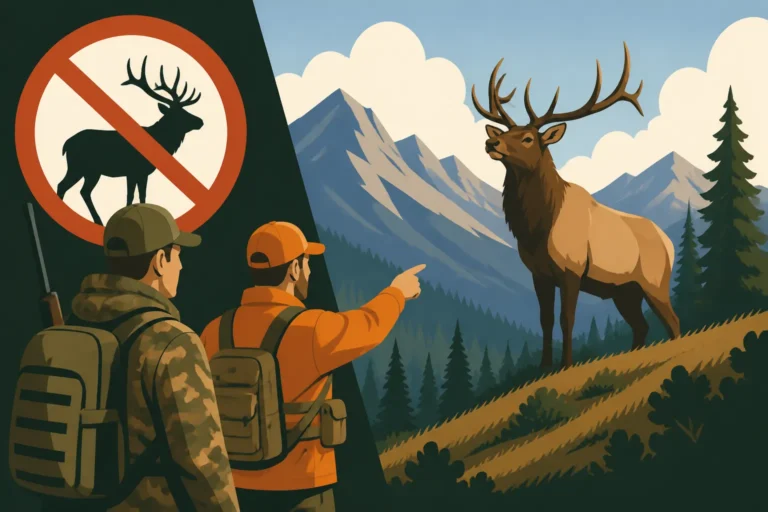
The answer is a resounding NO. Your non-resident deer tag does not, under any circumstances, allow you to harvest an elk in a designated wilderness area without a licensed outfitter. The species-specific guide requirement applies regardless of what tag you do hold. If you're on an unguided deer or bear hunt, and you encounter an elk, moose, bighorn sheep, or mountain goat, you must simply enjoy the sighting. Attempting to harvest one of these species without a guide (or the appropriate controlled hunt tag if applicable) would be a serious violation, resulting in heavy fines, loss of hunting privileges, and potentially even confiscation of your gear. It's tempting, but it's not worth it. Stick to the species your hunt allows.
"Does 'Wilderness' Include All Backcountry Areas?"
Another common point of confusion is mistaking any remote, roadless backcountry for "designated wilderness." While Idaho has vast amounts of rugged, remote public land, not all of it carries the specific "wilderness" designation, and therefore, not all of it falls under the non-resident guide rule for specific species.
Designated Wilderness Areas are legally defined by Congress and are managed under strict guidelines that prohibit motorized vehicles, permanent structures, and often even certain types of mechanized equipment. Examples include the Frank Church, Selway-Bitterroot, Sawtooth, and Gospel-Hump. Many other remote areas, while wild and challenging, are simply part of National Forests or BLM lands that do not carry the specific wilderness designation. In these non-wilderness backcountry areas, the non-resident guide rule for elk, moose, sheep, or goat generally does not apply. You can typically hunt these species unguided if you possess the appropriate tags. It's crucial to use your Idaho Fish and Game hunt planner, mapping apps like onX Hunt, or Forest Service/BLM maps to verify if the specific area you plan to hunt is actually designated wilderness. Know your boundaries! This is vital for understanding Reading an Idaho Controlled Hunt Area Boundary and ensuring you are in compliance.
"What if I Use a Drop Camp Service for Elk in Wilderness?"
This is a good question that highlights the nuance of the rule. If you're a non-resident wanting to hunt elk in a wilderness area, and you utilize a drop camp service provided by a licensed Idaho outfitter, does that satisfy the guide requirement?
Yes, generally, it does. A drop camp service, where a licensed outfitter packs you and your gear into a wilderness camp and then retrieves you later, is considered to be "guided" in the sense that you are utilizing the services of a licensed outfitter to access and hunt within the wilderness for those specific species. While you are hunting independently once at camp, the outfitter's role in facilitating your access and egress fulfills the legal requirement. This is often a more affordable option than a fully guided hunt and allows for a greater degree of independence while still complying with the law. Just ensure the outfitter is fully licensed and permitted for that specific wilderness area and species. Be sure to check What an Idaho Drop Camp Actually Includes to manage your expectations.
Disclaimer
This article is for general informational purposes only and does not constitute professional advice. Laws, prices and regulations vary by location and change over time. Consult a qualified professional for guidance on your specific situation.