Motorized Vehicles Inside Wilderness Boundaries
The allure of Idaho's vast wilderness areas calls to many hunters, promising untouched landscapes and a true backcountry experience. However, the sheer scale and remoteness can tempt hunters to consider using motorized vehicles for quicker access or game retrieval, often leading to confusion about what's actually permissible. This guide will walk you through the stringent rules governing motorized travel within Idaho's designated wilderness boundaries, helping you plan a lawful and ethical hunt.
The Strict Rules Against Motorized Vehicles in Idaho Wilderness
Stepping into a designated wilderness area in Idaho is like stepping back in time, deliberately. These vast, untamed landscapes, like the iconic Frank Church River of No Return or the Selway-Bitterroot Wilderness, are protected by federal law, specifically the Wilderness Act of 1964, precisely because of their wild character. The core principle behind wilderness designation is to preserve areas where the earth and its community of life are untrammeled by man, where man himself is a visitor who does not remain. This philosophy directly translates into strict prohibitions on motorized travel, creating a stark contrast to general forest service lands or Bureau of Land Management (BLM) areas where vehicle use might be more common on established roads.
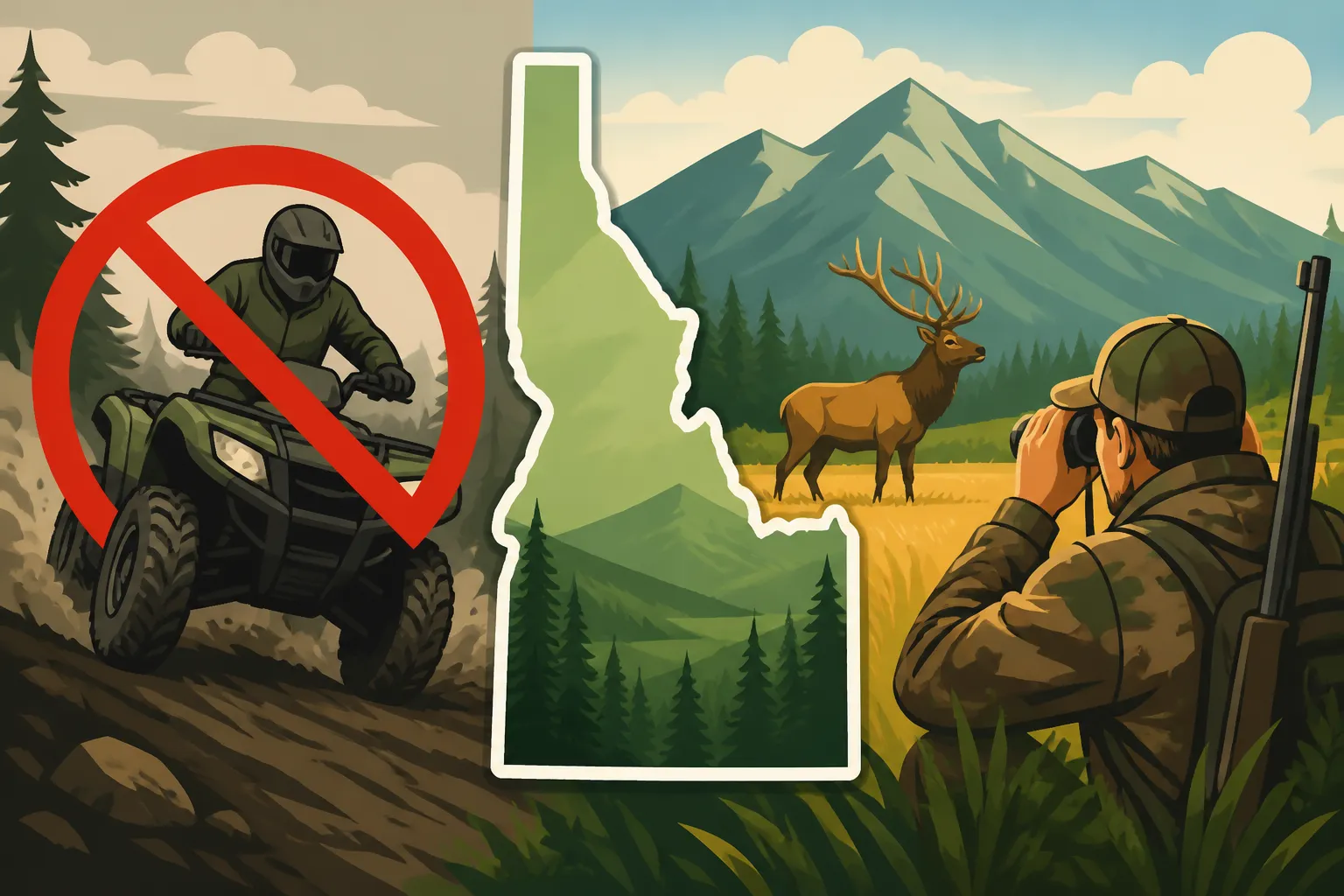
When you're looking at a map and see that distinct boundary for a wilderness area, understand that it's not just a line on paper; it's a hard boundary for how you interact with that land. There's a fundamental difference in management philosophy. On regular public lands, you might encounter an extensive network of roads, some maintained, some not, and even temporary roads created for logging or other resource management. But inside wilderness boundaries, that all changes. The goal is to minimize human impact, especially mechanization. This means no trucks, no ATVs, no dirt bikes, and generally, no e-bikes, regardless of how "quiet" they might be. It’s about preserving the solitude and primitive character of the landscape, not just reducing noise or emissions.
The frustration for many hunters, especially those new to Idaho or wilderness hunting, is understandable. You see miles of rugged terrain and think, "A quad would save me days!" But that's precisely the mindset wilderness designation aims to prevent. The challenge and effort of accessing these areas on foot or horseback are considered integral to the wilderness experience itself. It forces a different kind of planning, a deeper level of commitment, and often, a greater sense of accomplishment when you do connect with an animal far from any road. This isn't just about rules; it's about a conservation ethic that values wildness above convenience.
Why Wilderness Designations Prohibit Motorized Travel
The reasoning behind the blanket ban on motorized vehicles in designated wilderness areas is multi-faceted and rooted in the very definition of "wilderness" in the United States. Firstly, noise pollution is a significant factor. The roar of an engine, even a small one, shatters the natural soundscape, disturbing wildlife and ruining the sense of solitude for other visitors who are seeking a primitive experience. Imagine you've hiked for days into the backcountry, only to hear the distant buzz of a dirt bike. It immediately takes away from the wildness of the place.
Secondly, the physical impact of motorized vehicles on the landscape is substantial. Tires compact soil, erode trails, damage vegetation, and can spread invasive species from one area to another. Even a well-intentioned ATV ride can quickly turn a faint game trail into a rutted track that funnels water, leading to erosion. The intent of wilderness is to allow natural processes to dominate, and vehicle use directly interferes with that by altering the physical environment. This includes things like the creation of new routes, which can fragment habitat and disturb sensitive areas.
Finally, and perhaps most importantly for hunters, is the concept of "fair chase." Part of the wilderness experience is the physical and mental challenge of pursuing game in a vast, untamed environment. Using motorized vehicles to quickly cover ground, access remote areas, or retrieve downed game would fundamentally alter the nature of the hunt. It would give an unfair advantage, diminishing the skill and effort required. These rules are designed to ensure that the hunt remains a true test of woodcraft and endurance, in harmony with the primitive setting of the wilderness.
Common Misconceptions About Wilderness Access
It's easy to fall prey to misconceptions, especially when Idaho's hunting regulations can be so nuanced. One common misconception is that if a road looks unmaintained or overgrown, it might be open to ATVs or dirt bikes within wilderness. This is absolutely not the case. If the area is designated wilderness, the rule applies regardless of the current condition of any old two-track. The designation itself is the key. You cannot rely on visual cues alone; you must know the actual boundary of the wilderness area.
Another frequent misunderstanding is that e-bikes, or electric bicycles, are permitted because they are "bikes" and not traditional "motorized vehicles." However, under federal wilderness law, any device powered by a motor, no matter how small or "eco-friendly," is considered motorized. This means e-bikes are generally prohibited in federally designated wilderness areas, just like dirt bikes or ATVs. This can be a tough pill to swallow for some, as e-bikes offer an appealing way to extend range, but the rules are clear: if it has a motor, it's out. Always check local agency rules, but the federal wilderness act is very broad on this.
Lastly, some hunters believe that during game retrieval, exceptions might be made, especially for large animals like elk, or in emergency situations. While genuine emergencies are handled on a case-by-case basis by land management agencies, the general rule is that you cannot drive off an established, legal road to retrieve game, and certainly not into a wilderness area. The challenge of packing out an animal from a remote wilderness location is an inherent part of the hunt. Planning for this physically demanding task, including packing adequate supplies or organizing a Wilderness Pack Trips Built for Hunters with horses, is crucial before you even pull the trigger.
What "Motorized" Really Means in the Wilderness Context
When we talk about "motorized" in the context of Idaho's wilderness, it's crucial to understand that it encompasses a much broader definition than just your pickup truck or a large ATV. The intent is to exclude any mechanical means of propulsion that isn't human or animal-powered, unless specifically exempted by law. This distinction is vital for hunters, as the penalties for violations can be severe, ranging from hefty fines to confiscation of equipment, and even loss of hunting privileges. The Idaho Fish and Game often works closely with the U.S. Forest Service and BLM on these regulations.
Idaho's general motorized hunting rules, which apply outside of wilderness boundaries, can sometimes cause confusion. For example, Idaho's Motorized Hunting Rule Runs August Into December on many forest service roads. But this is not the same as wilderness rules. The wilderness designation trumps almost all other considerations regarding vehicle use. There’s a very clear line drawn: wilderness means no motors. This includes not only vehicles like cars, trucks, ATVs, and UTVs, but also extends to dirt bikes, snowmobiles, and even drones used for scouting or game retrieval.
Understanding the specific wording of these regulations requires attention to detail. This is where tools like onX Hunt become invaluable. By using the public land layers and carefully examining wilderness boundaries, you can ensure you're not inadvertently crossing into prohibited territory. Many hunters use these apps to understand Reading a Land Ownership Layer Correctly, including designated wilderness. Relying solely on a paper map or memory isn't enough when the consequences are so high.
Types of Vehicles Prohibited in Wilderness
Let's break down the specific categories of vehicles that are unequivocally banned inside Idaho's designated wilderness areas. This isn't an exhaustive list, but it covers the most common modes of transportation hunters might consider.
- Motorized Ground Vehicles: This includes your typical full-size vehicles (cars, trucks, SUVs), as well as off-highway vehicles (OHVs) such as All-Terrain Vehicles (ATVs), Utility Terrain Vehicles (UTVs or Side-by-Sides), and dirt bikes. These are the most obvious and widely understood prohibitions. Even if a trail appears wide enough, if it's within a wilderness boundary, these vehicles are not allowed.
- Snowmobiles: While snowmobiles are popular for winter recreation in certain areas of Idaho, they are strictly prohibited in wilderness areas, even when snow cover is deep. The motorized aspect, noise, and potential for terrain damage make them incompatible with wilderness values.
- Electric Bicycles (E-bikes): As mentioned, e-bikes fall under the "motorized" umbrella in federally designated wilderness. Despite their quiet operation and pedal-assist capabilities, the presence of an electric motor means they are not allowed. This is a point of contention for some, but the law currently stands firm on this interpretation.
- Drones: While not traditional "vehicles," drones are motorized aircraft. Using drones for scouting, spotting game, or assisting in retrieval within wilderness boundaries is a clear violation. Their use disrupts wildlife and infringes on the primitive experience of others. Always be aware of airspace restrictions, especially over wilderness areas, which are often classified as no-fly zones for drones.
- Motorized Watercraft: In certain wilderness areas that encompass rivers or lakes, motorized boats are also generally prohibited. While some exceptions might exist for specific historical uses or by special permit on certain waterways (like the Salmon River for Jet Boat Access Up the Salmon River in non-wilderness sections), the general rule for wilderness lakes and streams is paddle, oar, or sail power only.
Allowed Modes of Transportation
So, if you can't drive, ride, or fly into the wilderness with a motor, how do you get around? The answer lies in human power and animal power, which are the traditional and permitted means of travel within these protected areas.
- Foot Travel: This is the most common and fundamental way to experience wilderness. Hiking, backpacking, and trail running are all fully permitted. It’s physically demanding, yes, but it offers the most immersive experience, allowing you to move quietly and observe the natural world without disturbance. Many hunters rely solely on their boots to access remote hunting grounds, often covering miles each day.
- Horseback and Pack Stock: For covering significant distances and packing heavy gear or game, horses, mules, and llamas are invaluable. Pack Stock Rules Inside Designated Wilderness allow for these animals, provided you follow Leave No Trace principles regarding feed and waste. Outfitters frequently utilize pack strings for Wilderness Pack Trips Built for Hunters, establishing remote camps and hauling out harvests. This is a time-honored tradition and a perfect way to experience the vastness of areas like the Selway-Bitterroot Wilderness Access in Idaho.
- Non-Motorized Watercraft: Canoes, kayaks, rafts, and drift boats are permitted on navigable waters within wilderness boundaries, adhering to specific regulations for each waterway. This opens up opportunities for float hunting in certain river systems, offering a unique perspective and access to areas inaccessible by foot or road. However, remember, no motors are allowed on these crafts within wilderness.
- Bicycles (non-electric): Traditional bicycles (non-electric) are generally treated similarly to foot travel on designated trails where bikes are explicitly allowed. However, many wilderness trails are not open to bicycles, so always confirm trail-specific regulations before planning a ride. This is another area where a good mapping app can really help you navigate.
| Mode of Travel | Motorized? | Allowed in Wilderness? | Typical Use Case for Hunters |
|---|---|---|---|
| Pickup Truck | Yes | No | Road access to trailheads outside wilderness |
| ATV/UTV | Yes | No | Off-road access on designated trails outside wilderness |
| Dirt Bike | Yes | No | Trail riding outside wilderness |
| Snowmobile | Yes | No | Winter recreation outside wilderness |
| Electric Bicycle | Yes | No | Extended range on trails outside wilderness |
| Drone | Yes | No | Scouting, photography (prohibited over wilderness) |
| Foot Travel | No | Yes | All backcountry access, stalking, still hunting |
| Horseback/Pack Stock | No | Yes | Long-distance travel, hauling gear/game, setting up spike camps |
| Canoe/Kayak/Raft | No | Yes | Float hunting, accessing river-bound areas (check specific rules) |
| Traditional Bicycle | No | Usually no, check rules | On some multi-use trails outside wilderness (rarely inside) |
Planning Your Hunt Without Motorized Access
Planning a wilderness hunt in Idaho demands a completely different approach than a front-country hunt where roads are plentiful. You simply cannot rely on the convenience of vehicles. This means a greater emphasis on physical conditioning, meticulous gear planning, and a deep understanding of navigation and self-sufficiency. It’s an investment, not just of money, but of time and effort, but the rewards are often unmatched. The feeling of earning an animal deep in the wilderness is truly profound.
One of the first steps is to be realistic about your physical capabilities. If you're planning to hunt elk in the steep, timbered country of the Frank Church, for instance, you need to be prepared for days of strenuous hiking with a heavy pack, and potentially packing out hundreds of pounds of meat over multiple trips. This isn't a casual stroll; it's a genuine athletic endeavor. Start training months in advance, focusing on strength, endurance, and especially hiking with weight on steep inclines. No amount of gear can compensate for a lack of physical preparation.
Secondly, your gear choices become critical. Every ounce matters when it's on your back for days. Invest in high-quality, lightweight, and durable equipment, from your shelter and sleeping system to your cooking gear and water filtration. Think about redundancy: what happens if your primary water filter breaks? What if your headlamp dies? Packing a robust first-aid kit is non-negotiable, as help can be days away. Consider satellite communication devices like a Garmin inReach or Zoleo, not just for emergencies but for checking in with loved ones, as cell service will be nonexistent.
Scouting and Research for Wilderness Hunts
Without the ability to drive into the heart of a unit, your scouting strategy for wilderness areas shifts dramatically. While boots-on-the-ground scouting is always ideal, for remote wilderness, it often starts with intensive e-scouting from home. This is where tools like GoHunt and onX Hunt truly shine. You can spend hours poring over satellite imagery, topo maps, and public land layers, identifying potential access points, game trails, water sources, bedding areas, and glassing knobs. Look for changes in elevation, timber pockets, and open benches that might hold animals.
Pay close attention to wilderness boundaries. Using the map layers on your chosen app, you can clearly see where the wilderness begins and where you can legally park your vehicle. Mark these points. Then, trace potential routes into the wilderness on foot or horseback. Look for existing trails that might offer the easiest (or at least most feasible) path in. Remember, even marked trails in wilderness areas can be rugged and minimally maintained.
Beyond satellite imagery, dive deep into harvest statistics for the specific units you're considering. While not directly linked to wilderness boundaries, this data can give you an idea of game populations and success rates in the general vicinity. Understanding elk and mule deer patterns, whether they are Bugling Elk in Idaho's Timbered Zones or Glassing Idaho Breaks for Mule Deer, will inform your entry points and hunting strategies once you're on the ground. Also, research historical weather patterns for your hunt dates, as conditions can change rapidly and severely in the Idaho backcountry.
Gear and Logistics for Non-Motorized Trips
Packing for a non-motorized wilderness hunt requires a minimalist mindset balanced with an understanding of self-reliance. You’re not just bringing hunting gear; you’re bringing everything you need to survive comfortably for the duration of your trip.
Here's a breakdown of key considerations:
- Shelter: A lightweight backpacking tent, tarp, or bivy sack suitable for the weather conditions you expect. Weight and durability are paramount.
- Sleeping System: A high-quality sleeping bag rated for expected nighttime temperatures, paired with a lightweight sleeping pad for insulation and comfort.
- Cooking & Food: A compact backpacking stove, fuel, and dehydrated meals. Plan calorie intake carefully – you'll burn a lot of energy. Pack enough water purification tablets or a reliable filter.
- Navigation: A GPS device (your phone with onX Hunt, a dedicated handheld GPS), a physical map, and a compass. Know how to use all three, even if your battery dies.
- First Aid & Emergency: A comprehensive first-aid kit, emergency shelter (e.g., space blanket), fire starter, whistle, and a satellite communication device.
- Hunting Gear: Rifle, bow, or muzzleloader (and corresponding ammo/arrows), optics (binoculars, spotting scope if appropriate for long-range glassing), knives, game bags, and paracord. For archery, consider whether Fixed Blade Against Mechanical Broadheads on Elk is right for your hunt.
- Clothing: Layered system appropriate for potential temperature swings, including rain gear and insulation. Avoid cotton.
- Packing Out: This is where many underestimate. Bring sturdy game bags, at least one reliable knife, a small bone saw, and a large, comfortable pack frame capable of carrying heavy, awkward loads. Consider a separate meat-hauling pack or heavy-duty dry bags for separating meat from your personal gear.
Logistically, consider your trailhead. Where will you park your vehicle? Is it a secure location? How far is the hike from the trailhead to your intended hunting grounds? If using pack stock, where will you meet your outfitter? For those interested in a guided experience, knowing about Flying Into a Backcountry Airstrip to Hunt or utilizing a What an Idaho Drop Camp Actually Includes service can alleviate some of the heaviest lifting and navigation challenges, even within wilderness areas where motorized access is restricted. These services use traditional non-motorized methods once on the ground, or use designated airstrips which are specific exceptions for wilderness access. Always confirm these services adhere to all wilderness regulations.
Understanding the Consequences of Wilderness Violations
Ignoring the rules regarding motorized vehicles in Idaho's wilderness areas isn't just a minor infraction; it can lead to serious legal and financial repercussions. It's a federal offense with penalties that reflect the protected status of these lands. Land management agencies, like the U.S. Forest Service and the BLM, actively patrol and monitor wilderness areas, and they take these violations very seriously. The consequences are designed to be a significant deterrent, reinforcing the importance of preserving these unique landscapes.
Beyond the legal ramifications, there's an ethical component. Violating wilderness rules undermines the conservation efforts that safeguard these areas for everyone, including future generations of hunters. It gives ammunition to anti-hunting groups who might argue that hunters disregard regulations. Maintaining a positive image for hunters requires adherence to all laws and a strong commitment to ethical behavior. When you choose to enter the wilderness, you accept the responsibility that comes with it.
It's also worth noting that ignorance of the law is generally not considered a valid defense. It is every hunter's responsibility to understand the regulations of the area they are hunting, particularly in specially designated areas like wilderness. This is why thorough map review, using reliable apps like onX Hunt, and consulting official Idaho Fish and Game or Forest Service maps and regulations are so critical. Don't rely on assumptions or hearsay when your license, gear, and freedom could be on the line.
Penalties for Motorized Vehicle Violations
The penalties for operating a motorized vehicle within a designated wilderness area can be substantial. These aren't just minor traffic tickets; they are violations of federal law.
- Fines: Expect significant fines, often in the hundreds or even thousands of dollars. The exact amount can vary depending on the severity of the violation, the extent of environmental damage, and whether it's a first offense or a repeat offense. These fines can quickly add up, turning an intended shortcut into a very expensive mistake.
- Confiscation of Equipment: In many cases, enforcement officers have the authority to confiscate the offending vehicle (ATV, dirt bike, e-bike, etc.). Imagine having your expensive side-by-side towed out of the backcountry and potentially losing it permanently. This is a very real possibility.
- Imprisonment: For severe or repeated offenses, especially those involving significant resource damage, federal charges can potentially lead to jail time. While less common for a first-time, non-malicious violation, it's a possibility that underscores the seriousness of these laws.
- Loss of Hunting Privileges: A conviction for a wilderness violation can impact your hunting privileges, not just in Idaho, but potentially in other states as well, through interstate wildlife compacts. This could mean being unable to purchase licenses or tags for a period of time, effectively ending your hunting season.
- Restitution and Damage Repair: If your vehicle caused damage to trails, vegetation, or other resources, you might be ordered to pay restitution for the costs of repairing that damage. This can be extensive and costly, far exceeding the initial fines.
Avoiding Accidental Violations
The best way to avoid violations is through diligent preparation and cautious execution. It starts long before you ever set foot in the field.
- Map Study: Obtain detailed maps of your hunting area. Whether it's a paper map, a GPS unit, or a smartphone app, ensure it clearly delineates wilderness boundaries. Utilize mapping apps like onX Hunt to download offline maps before you lose cell signal. Zoom in on areas near wilderness boundaries to understand the terrain and any potential entry points or old roads.
- Boundary Awareness: Know exactly where the wilderness boundary lies relative to your intended access points and hunting grounds. Mark it on your GPS. Do not assume; verify. Even a few feet inside the boundary with a motorized vehicle is a violation.
- Respect Signage: Pay attention to all signs at trailheads and access points. Wilderness boundaries are often clearly marked with signs stating "Wilderness Area – Motorized Vehicles Prohibited." These signs are there for a reason and serve as a final warning.
- Err on the Side of Caution: If you are ever unsure whether you are in a wilderness area or if a particular route is open to motorized travel, assume it is not. Turn around or choose an alternative, non-motorized route. It's always better to be safe than sorry.
- Educate Your Hunting Partners: Ensure everyone in your hunting party understands and respects the wilderness regulations. One person's mistake can impact the entire group. Discuss your route and the rules before you even leave home. This includes making sure your partners are aware of rules like Idaho's Motorized Hunting Rule Keeps You on the Road in non-wilderness areas, so they understand the different layers of regulation.
- Seek Clarification: If you have specific questions about a particular area or trail, contact the local U.S. Forest Service or BLM office, or the Idaho Fish and Game. They are the authoritative sources for clarification and can provide the most accurate, up-to-date information.
By taking these steps, you can ensure your Idaho wilderness hunt is not only successful but also legal and respectful of these invaluable wild places.
Disclaimer
This article is for general informational purposes only and does not constitute professional advice. Laws, prices and regulations vary by location and change over time. Consult a qualified professional for guidance on your specific situation.