Rockchuck Hunting Across the Sage Flats
For many hunters, the vast, sun-baked sage flats of Idaho might seem empty, but they hold a secret: the rockchuck. These wary varmints present a fantastic challenge, demanding keen eyesight, careful stalking, and precise shooting, often leading to frustration for those who don't know where to look or how to approach them. This guide is dedicated to helping you unlock the secrets of successful rockchuck hunting in Idaho's iconic sagebrush country, from understanding their habits to mastering the techniques needed to find and harvest them responsibly.
Understanding Idaho's Rockchuck Habitat and Behavior
Rockchucks, often called marmots, are more than just targets; they're fascinating inhabitants of Idaho's rugged landscapes. Knowing where they live and how they act is the first step to putting yourself in a position for success.
Where Rockchucks Call Home in the Sagebrush Sea
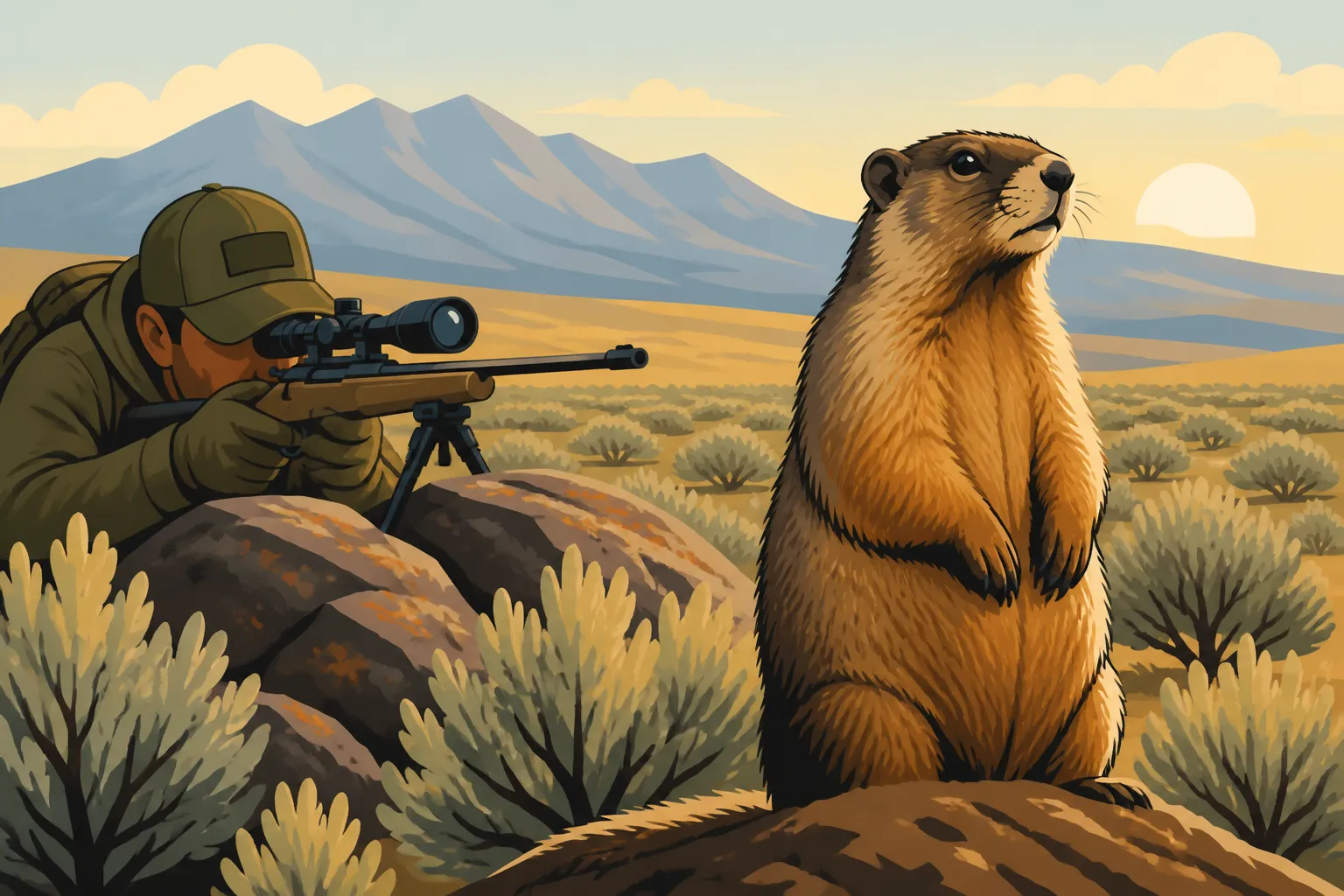
If you’ve spent any time driving through southern Idaho, you’ve probably seen the endless expanse of sagebrush. It’s breathtaking, but it can also feel utterly devoid of life. However, look closer, especially around the edges of canyons, rocky outcroppings, and stretches of basalt rimrock. This is where the rockchucks truly thrive. They are masters of finding natural fortifications within the sagebrush sea. They seek out areas with talus slopes – those jumbles of broken rock at the base of cliffs – or ancient lava flows that provide countless nooks, crannies, and underground burrows for shelter.
These rocky havens serve multiple purposes for rockchucks. First, they offer protection from predators like coyotes, badgers, and raptors. A rockchuck can disappear into a crevice in the blink of an eye, making a quick escape from danger. Second, these areas often provide elevated vantage points, allowing them to survey their surroundings for both food and threats. A rockchuck perched on a sun-warmed boulder, munching on a bit of greenery, is a classic Idaho sight. The adjacent sagebrush flats, while seemingly barren, are actually a buffet of grasses, forbs, and other vegetation that forms the bulk of their diet.
The Daily and Seasonal Rhythms of a Rockchuck
Rockchucks are creatures of habit, and understanding their daily and seasonal routines is paramount for hunters. They are strictly diurnal, meaning they are active during the day. You won't find them scurrying about in the dark. Their peak activity generally occurs during the cooler parts of the day: early morning, shortly after the sun has warmed their burrows, and late afternoon, as the heat of midday begins to wane. During the scorching midday hours of summer, they often retreat to the shade of rocks or into their cooler underground burrows, much like many of us seek air conditioning.
Seasonally, rockchucks are known for their impressive hibernation cycles. They typically emerge from hibernation in early spring, often in March or April, depending on elevation and snowmelt. This is when they are most active, feeding heavily to regain weight lost over winter and preparing for the breeding season. Hunting opportunity is usually excellent from late spring through mid-summer. However, by late summer, typically late August or early September, rockchucks begin to enter a state of torpor and then full hibernation, effectively disappearing until the next spring. This means that if you're planning a late-season hunt, you might find your targets scarce or completely absent. Knowing these patterns helps you plan your trips to coincide with maximum activity, increasing your chances significantly.
Essential Gear and Setup for Sage Flat Success
Hunting rockchucks in the wide-open, often treeless sage flats of Idaho demands specific gear. You’ll be dealing with vast distances, tricky light, and the need for precision. Don't skimp on these essentials.
Optics for Spotting Those Distant Critters
The importance of good optics in rockchuck hunting cannot be overstated. These animals are small, often blending seamlessly into their rocky surroundings, and in the expansive Idaho sagebrush, they can be incredibly difficult to spot with the naked eye. Your primary tool will be a high-quality pair of binoculars, something in the 10x to 12x range, like those robust models built to survive an all-day session. You'll spend hours behind them, patiently scanning every rock pile, every break in the terrain. Binocular Size That Survives an All-Day Session is a good read if you're considering an upgrade.
Beyond binoculars, a spotting scope is almost mandatory for truly effective rockchuck hunting. When you spot a potential target at a mile or more, a spotting scope (perhaps 20-60x or even 25-75x) becomes your best friend for confirming it's a rockchuck, judging its size, and most importantly, assessing the shot difficulty and background safety. A sturdy tripod for both your binoculars and spotting scope is crucial. Trying to glass freehand for extended periods will lead to fatigue and missed details. Stability is key for picking apart distant terrain, much like you would when you're looking for Spotting Scope Power for Canyon Glassing at longer distances. Take your time, set up comfortably, and let the glass do the work.
Rifles and Ammunition for Rockchuck Hunting
When it comes to putting a precise shot on a small target at variable distances, your choice of rifle and ammunition matters immensely. Many different calibers are popular for rockchuck hunting, each with its own advantages. For closer shots, say within 150 yards, a .17 HMR or a .22 Hornet can be incredibly effective, offering minimal recoil and excellent accuracy. They are fun to shoot and very capable on smaller varmints.
However, given the often long-range nature of Idaho's sage flats, many hunters gravitate towards cartridges that offer flatter trajectories and more kinetic energy at extended distances. The .223 Remington is a perennial favorite, offering a great balance of affordability, accuracy, and performance out to 300-400 yards and beyond. The .204 Ruger is another stellar choice, known for its blistering velocity and incredibly flat trajectory, making those longer shots a bit more forgiving. Other excellent options include the .22-250 Remington or even the 6mm ARC for hunters looking for serious reach. Regardless of your chosen caliber, always opt for varmint-specific ammunition, typically featuring lighter, frangible bullets designed to rapidly expand upon impact, ensuring humane kills and minimizing ricochets. Knowing your rifle's ballistic data, especially bullet drop and wind drift at various ranges, is critical for consistent success.
Field Comfort and Safety Considerations
Spending a day (or several) in Idaho's sage flats means being prepared for the elements and ensuring your safety. Comfort starts with good clothing: layers are always a smart choice, even in summer, as mornings can be chilly and afternoons scorching. Sun protection is non-negotiable—a wide-brimmed hat, sunglasses, and plenty of sunscreen will save you a lot of discomfort. Hydration is also key; pack more water than you think you'll need, especially if you're doing a lot of hiking.
A solid shooting rest is another essential for accuracy. Bipods attached to your rifle, shooting sticks, or a quality shooting bag will provide the stability needed for those precise shots. Trying to shoot offhand at small targets far away is a recipe for frustration. Safety, of course, is paramount. Always be aware of your backdrop. Idaho’s sagebrush country often has undulating terrain, and a seemingly clear shot can have a rise or ridge behind it that might conceal livestock, other hunters, or even a vehicle. Identify your target and what's beyond it before every shot. Remember that the vastness of the landscape means sound travels, and you might encounter other recreationists. Always be courteous, and adhere to all local regulations, including any rules that might apply regarding Idaho's Motorized Hunting Rule Runs August Into December if you're driving to access certain areas.
Proven Hunting Tactics for Idaho Rockchucks
Rockchuck hunting is a game of patience, observation, and precision. You can't just wander out and expect them to present themselves. There's a method to finding these masters of camouflage.
The Art of Glassing and Locating Rockchucks
The primary tactic for rockchuck hunting is systematic glassing. This isn't just idly looking around; it's a focused, deliberate process of searching. Start by finding a good vantage point, ideally one that allows you to survey a large area of rocky outcrops, rimrock, and surrounding sage. Set up your spotting scope and binoculars on tripods. Then, begin to methodically "grid glass" the terrain. This means dividing the landscape into imaginary sections and slowly scanning each section, moving from left to right, then dropping down a bit and moving right to left, like reading a book. The Grid Glassing Method, Step by Step is an excellent resource for refining this technique.
What are you looking for? Not just the whole rockchuck, which is rare. You're looking for subtle movements, a flick of a tail, the gleam of an eye in the sun, a patch of fur that looks just a little bit different from the surrounding rock or sage. Sometimes, it’s just the heat shimmer distorting the air above a rock, and a second look reveals a rockchuck sunning itself. Pay close attention to areas where there's a transition from rocky terrain to vegetation, as these are prime feeding zones. Using mapping tools like GoHunt can be incredibly helpful for scouting potential areas beforehand, identifying promising rocky features or areas with good public land access, and visually assessing the terrain from your couch before you even hit the road. E-Scouting an Idaho Unit Before the Season can give you a real edge.
Ethical Shot Placement and Range Estimation
Once you've spotted a rockchuck, the real challenge begins: making an ethical, humane shot. These animals are surprisingly tough for their size, and a poorly placed shot can lead to a wounded animal. Aim for the vital zone—typically the chest cavity—to ensure a quick kill. A headshot is also effective but a much smaller target, especially at longer ranges.
Range estimation is perhaps the most critical skill for long-range rockchuck hunting. In the wide-open, undulating terrain of Idaho, distances can be incredibly deceptive. What looks like 200 yards might easily be 350 or more. This is where a reliable laser rangefinder becomes indispensable. Range every shot, even if you think you know the distance. Once you have the range, you'll apply your ballistic data (drop charts, turret adjustments, or reticle holdovers) to ensure your bullet finds its mark. Wind is another huge factor in the sage flats. Even a light breeze can push a small, light varmint bullet significantly off course at extended ranges. Practice shooting in windy conditions and learn to read the wind by observing mirage, flags, or even blowing sagebrush.
Accessing Public Land in Idaho's Sage Flats
Idaho offers a vast amount of public land, including extensive tracts of Bureau of Land Management (BLM) and State Endowment Land, much of which is prime rockchuck habitat. Navigating these areas responsibly is key. Understanding land ownership is crucial to avoid trespassing. Tools like GoHunt are invaluable for displaying land ownership boundaries, often showing parcels of private land interspersed with public ground. Using onX Layers for Idaho Public Land or a similar mapping app can clearly delineate public from private land.
When you're out in the field, always have a current map or mapping app and know your exact location. Respect private property boundaries rigorously. Even if a rockchuck runs onto private land after being shot, you cannot retrieve it without permission from the landowner. A great read on this is Reading a Land Ownership Layer Correctly. Additionally, be mindful of any specific rules on Idaho State Endowment Land Access Rules or BLM Ground Across Southern Idaho. Often, these lands are multi-use, meaning you might encounter hikers, horseback riders, or ranchers with livestock. Always exercise courtesy and prioritize safety.
Regulations and Responsible Hunting Practices
Varmint hunting often has more relaxed regulations than big game, but that doesn't mean there are no rules. Responsible hunting is about understanding and adhering to these guidelines, ensuring continued access and a positive public image for hunters.
Understanding Idaho's Rockchuck Season and Limits
One of the great appeals of rockchuck hunting in Idaho is the long and often continuous season. For many areas, rockchucks fall under the "unprotected nongame wildlife" category, meaning they can often be hunted year-round without specific season dates or bag limits. This offers incredible flexibility, allowing hunters to target them from their emergence in early spring until they retreat for hibernation in late summer.
However, it's absolutely critical to always check the most current Idaho Fish and Game regulations for the specific unit or region you plan to hunt. While many areas have open, continuous seasons, local rules or land-specific closures (like some Wildlife Management Areas) can exist. There might also be different rules if you are using Electronic Calls for Predators and Varmint Hunting, which are generally allowed for varmints and predators. Don't assume; verify. Regulations are subject to change, so a quick check online or through the official regulation booklet before each season is always a good idea. Knowing the regulations will prevent any accidental infringements and ensure your hunt is legal and ethical.
Respecting the Land and Other Users
As hunters, we are stewards of the land, and practicing good outdoor ethics is paramount. "Leave No Trace" principles apply just as much to varmint hunting as they do to big game. Pack out everything you pack in, including spent casings, food wrappers, and any other trash. If you're hunting in remote areas, consider packing out any additional litter you might find.
Regarding carcasses, while rockchucks are not typically recovered for meat or hides, it's still important to be respectful. If you harvest an animal, try to place it in a discreet location where it won't be an eyesore for other users or pose a health hazard. Drag it into thick sagebrush or place it behind a large rock. On heavily used public lands, this consideration becomes even more important. Remember, many people enjoy Idaho's public lands for various activities, from hiking to photography. Be courteous and mindful of their presence. If you encounter others, give them space, especially if they are enjoying the quiet of the outdoors. We share these wild spaces, and maintaining a good reputation as hunters ensures that these opportunities remain available for everyone. Just as you would with Hunting Coyotes in Idaho Year Round, common sense and respect go a long way.
Disclaimer
This article is for general informational purposes only and does not constitute professional advice. Laws, prices and regulations vary by location and change over time. Consult a qualified professional for guidance on your specific situation.