Hunting Solo Against Hiring a Guide
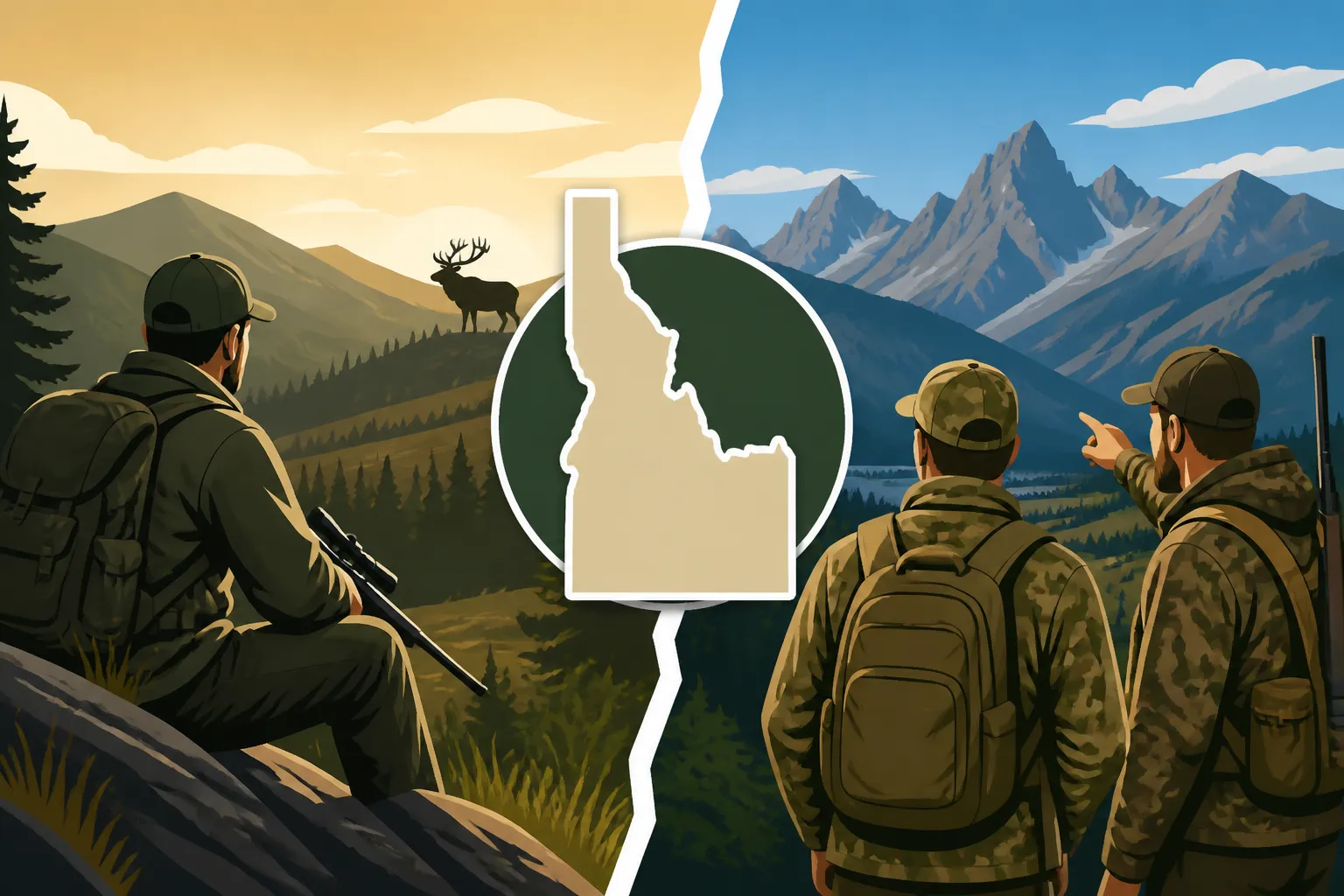
Planning an Idaho hunting adventure often brings you to a crossroads: do you brave the wilderness on your own, or do you enlist the expertise of a seasoned guide? It’s a huge decision, and one that weighs heavily on every hunter, whether you're a first-timer or a seasoned veteran looking for a new challenge. The truth is, there's no single "right" answer, as both paths offer unique rewards and distinct challenges. This guide will walk you through the nitty-gritty of hunting solo versus hiring a guide in Idaho, helping you understand what each entails so you can make the best choice for your next hunt.
The Allure and Hard Realities of a Solo or Do-It-Yourself Idaho Hunt
There's something deeply romantic about a do-it-yourself (DIY) hunt in Idaho. It conjures images of rugged independence, pristine wilderness, and the ultimate test of your skills against nature. And for good reason – it truly can be an incredibly rewarding experience. However, it's crucial to go into it with eyes wide open about both the unparalleled freedom and the very real logistical hurdles.
Embracing the Freedom and Personal Growth
The most powerful draw of a solo or DIY hunt is, without a doubt, the freedom. You set your own schedule, choose your own pace, and make every decision from scouting to tracking. There's an immense satisfaction that comes from planning every detail, executing your strategy, and ultimately finding success entirely on your own terms. This kind of hunt is an incredible teacher. You'll learn about yourself, your limits, and your capabilities in ways a guided trip simply can't offer. From navigating complex terrain using only a map and compass to making split-second decisions about a stalk, every challenge becomes a lesson.
Many hunters find that these self-reliant expeditions foster a deeper connection to the land and the animals they pursue. You become intimately familiar with the nuances of a specific area, learning the elk's preferred bedding areas, the mule deer's travel corridors, or the chukar's favorite rocky breaks. The financial aspect is also a significant factor; a DIY hunt almost always costs less in terms of upfront fees than a fully guided adventure, making it accessible to a wider range of hunters. You’re largely paying for your tag, license, and personal gear, rather than an outfitter's services. For those committed to this path, resources like The Idaho Hunt Planner Is the Tool to Start With can become an indispensable ally, helping you dig into unit-specific data, public land percentages, and even road and trail layers long before you ever set foot in the field.
Navigating Backcountry Logistics and Inherent Risks
While the appeal is strong, the practicalities of a solo or DIY Idaho hunt are demanding. Idaho’s diverse landscape—from vast sagebrush flats to incredibly steep, timbered mountains—presents formidable challenges. Physical fitness is paramount; you'll be covering miles on foot, often at high elevations, carrying heavy packs. Navigation skills are non-negotiable, especially in areas with limited cell service or dense timber where landmarks can be scarce. Getting turned around in the backcountry can quickly turn a memorable trip into a dangerous situation.
Then there's the monumental task of game retrieval. If you're fortunate enough to harvest an animal, especially a large one like an elk deep in a canyon, the real work begins. Packing an Elk Out of Steep Country Alone is no small feat, requiring serious physical exertion, specialized gear, and a solid plan. Many solo hunters opt for boning out an animal to reduce weight, but even then, it often takes multiple trips. Safety is another critical concern. Hunting alone means you're solely responsible for your well-being. A twisted ankle, an unexpected fall, or an encounter with dangerous wildlife—like a bear or mountain lion—can have severe consequences without immediate assistance. Carrying a satellite communication device is highly recommended for any solo hunter venturing into remote Idaho country.
Furthermore, hunters embarking on a DIY hunt must be intimately familiar with Idaho's hunting regulations. This includes everything from general season dates and weapon restrictions to specific rules about motorized travel on public lands, such as Idaho's Motorized Hunting Rule Runs August Into December. Without a guide's local knowledge, you're entirely responsible for knowing boundary lines, private land rules, and reporting requirements. This is where meticulous research using tools like GoHunt can make a huge difference, offering detailed insights into draw odds, unit analyses, and harvest statistics that can inform your planning. Without this dedicated research, even the most experienced hunter can find themselves at a disadvantage.
The Investment and Advantages of Hiring an Idaho Hunting Guide
On the other side of the coin lies the option of hiring a professional Idaho hunting guide or outfitter. This path represents a significant financial investment, but it often translates into a dramatically different hunting experience, particularly for those prioritizing success, efficiency, and safety in unfamiliar territory.
Leveraging Expertise and On-the-Ground Efficiency
When you hire an Idaho guide, you're not just paying for someone to walk with you; you're investing in years, often decades, of localized expertise. These professionals live and breathe the hunting life, spending countless hours in their assigned units. They know the elk herds' migratory patterns, where mule deer tend to bed during different weather conditions, and how to read the subtle signs of game movement that most casual hunters would miss. Their knowledge extends to understanding factors like Reading Wind in Steep Timbered Country, which can be the difference between a successful stalk and an animal vanishing into thin air.
This intimate knowledge translates into efficiency. Guides often know exactly where to find animals, cutting down on wasted time and effort. They understand the quirks of specific areas, from access points to challenging terrain, and can adapt plans on the fly based on current conditions. For nonresidents, especially, a guide can be invaluable in navigating complex regulations and ensuring legal compliance. They'll also handle many of the logistical headaches, allowing you to focus entirely on the hunt itself. This can dramatically increase your odds of success, particularly for elusive species or during specific controlled hunts where every advantage counts. They often have access to private ground or specific areas within National Forests via special use permits, further expanding your hunting opportunities.
Logistical Support: Camps, Stock, and Game Retrieval Handled
One of the biggest advantages of a guided hunt is the comprehensive logistical support. Imagine arriving at a comfortable backcountry camp, already set up, with meals prepared. This is a common feature of fully guided trips, freeing you from the burdens of pitching tents, cooking over a campfire every night, and planning your daily menu. Many Idaho outfitters specialize in horseback hunts, using pack strings to get deep into the wilderness, reaching areas that are inaccessible to foot hunters. This not only conserves your energy for the hunt but also provides a distinct advantage in covering more ground.
Perhaps the most stress-relieving aspect for many hunters is the assurance of game retrieval. If you down an elk or a deer, your guide and their team are there to help. This means less worry about Packing an Elk Out of Steep Country Alone and more focus on celebrating your accomplishment. They'll handle the heavy lifting, the quartering, and getting the meat back to camp and eventually out of the field. This can be a huge factor, especially for older hunters, those with physical limitations, or anyone who simply wants to maximize their hunting time rather than spending it on arduous hauling. For nonresidents venturing into specific wilderness areas, remember that Idaho Forces Nonresidents to Hire a Guide for Wilderness Elk, as well as for mountain goat, bighorn sheep, and mountain lion. This makes the choice for these hunts in designated wilderness areas very clear. When considering outfitters, websites like BookYourHunt can be a great starting point for finding reputable guides and comparing their services.
Choosing Your Idaho Adventure: Solo or Guided?
The decision between hunting solo and hiring a guide isn't about one being inherently "better" than the other. It's about aligning your hunting goals, experience level, physical capabilities, and budget with the realities of an Idaho hunt.
Assessing Your Experience, Fitness, and Goals
Before you commit to either path, take an honest inventory of your own situation.
- Experience Level: Are you comfortable with backcountry navigation, survival skills, and field dressing large game? Have you hunted similar terrain and species before? A novice hunter, especially one new to Idaho's rugged landscapes, might find a guided hunt far less overwhelming and more productive. An experienced hunter, on the other hand, might thrive on the challenge of a DIY trip.
- Physical Fitness: Idaho hunting often involves steep climbs, long hikes, and potentially heavy pack-outs. How prepared are you physically? Can you sustain strenuous activity for several days at elevation? If your fitness isn't top-tier, a guided hunt with horses might be a more realistic option. If you're a seasoned endurance athlete, a solo backpacking trip could be your dream.
- Hunting Goals: What do you hope to achieve? Is it primarily about the experience of self-reliance, or is harvesting a specific animal your top priority? If you're chasing a trophy bull elk or a rare bighorn sheep, the specialized knowledge and resources of an outfitter might significantly increase your chances. If the journey and the personal challenge are what you're after, a DIY hunt might be more fulfilling.
Weighing Budget, Time, and Specific Species Considerations
Cost is a major factor, and it's important to differentiate between direct and indirect costs.
| Feature | Solo/DIY Hunt | Guided Hunt |
|---|---|---|
| Cost | Lower direct costs (tag, license, gear, travel) | Higher direct costs (outfitter fees, tips) |
| Effort | High (planning, logistics, scouting, retrieval) | Lower for hunter (outfitter handles logistics) |
| Local Knowledge | Requires extensive personal research | Built-in through guide's expertise |
| Success Rate | Varies greatly by hunter skill and luck | Generally higher due to expertise |
| Learning | Deep personal growth, hands-on experience | Learn from guide, focus on hunting |
| Safety Net | Relies on personal preparation, comms | Guide provides experienced backup |
| Time Investment | Significant pre-hunt planning and research | Less pre-hunt planning for hunter |
| Game Retrieval | Hunter's sole responsibility | Handled by guide and team |
While the sticker price of a guided hunt, which can run into thousands of dollars for a big game trip, might seem daunting compared to the few hundred for a license and tag, consider the hidden costs of DIY. These can include specialized gear, extensive travel for scouting, potential time off work for longer trips, and the very real possibility of coming home empty-handed after considerable effort. What a Guided Idaho Elk Hunt Costs will give you a better idea of the investment needed for a professional service.
Your available time is also crucial. A successful DIY hunt in Idaho often requires extensive pre-season scouting, rigorous physical training, and a significant chunk of time actually in the field. If you have limited vacation days or can't dedicate weeks to preparation, a guided hunt streamlines the process, allowing you to maximize your hunting efforts during your condensed timeframe.
Finally, consider the species you're pursuing. For common species like deer or general-season elk in accessible units, a DIY approach is often feasible for prepared hunters. However, for highly sought-after controlled hunts or species that inhabit incredibly rugged, remote terrain (think Idaho Moose Is a Controlled Hunt You Wait Years For or Mountain Goat Hunting Above Idaho Timberline), the odds of success and the logistical challenges might strongly favor hiring an outfitter. Remember, some species within designated wilderness areas legally require a guide for nonresidents, which completely removes the "solo" option.
Hybrid Approaches and Key Considerations for Your Idaho Hunt
The beauty of hunting is that it's rarely black and white. There are often middle-ground options that blend the independence of a DIY hunt with some of the support of a guided trip. Exploring these can provide a perfect compromise for many hunters.
Drop Camps and Semi-Guided Options
If a fully guided hunt feels too restrictive or too expensive, but a completely solo venture feels overwhelming, consider a drop camp or semi-guided service.
- Drop Camps: An outfitter will pack you and your gear, often by horse or even plane to a backcountry airstrip, into a remote camp and then pick you up at a predetermined date. You are responsible for all your hunting, cooking, and daily camp chores, but the daunting task of transporting heavy gear deep into the wilderness is handled. This allows for a more independent hunting experience in prime, often hard-to-reach areas. You're still on your own for the actual hunting and field processing, but the physical burden of the initial and final haul is removed. This can be a fantastic way to access remote units like those found within Hunting Idaho's National Forests and BLM Ground without needing your own string of horses.
- Semi-Guided Hunts: These can vary widely, but typically involve an outfitter providing some level of support without a dedicated guide accompanying you daily. This might mean lodging and meals, advice on areas to hunt, game retrieval assistance, or initial transportation to promising spots. You're still doing the primary hunting work yourself, but you have a safety net and local intel readily available. These options provide a blend of self-reliance and convenience, often at a price point between a full DIY and a fully guided hunt. When looking at these options, make sure to ask very specific questions about what is included and what is not, so there are no surprises once you're in the field.
When Regulations or Special Access Dictate Your Choice
Idaho's hunting regulations, especially regarding wilderness areas, can significantly influence your decision. As mentioned, nonresidents are often legally required to hire a licensed Idaho outfitter when pursuing certain big game animals within designated wilderness boundaries. This rule applies to elk, moose, bighorn sheep, and mountain goat in areas like the Frank Church-River of No Return or the Selway-Bitterroot Wilderness. Does Nonresidents Need a Guide in Idaho Wilderness? is a question you absolutely need to answer before making plans for these iconic areas. Deer and bear are generally exempt from this rule, offering more flexibility for DIY hunters in wilderness settings, but it's always best to double-check the latest regulations.
Beyond legal requirements, certain access points or private land opportunities might only be available through an outfitter. Some outfitters have special use permits for specific areas within public lands or have established relationships with private landowners, offering hunting access that would be otherwise unavailable to the general public. These exclusive access opportunities, which might include private leases or Landowner Appreciation Program Tags in Idaho, can sometimes provide a significant advantage in terms of game quality or reduced pressure. If securing access to low-pressure, high-quality hunting ground is a top priority, exploring outfitters who can provide this might be well worth the investment. Always make sure to Vetting an Idaho Outfitter Before You Send a Deposit to ensure they are reputable and licensed by The Idaho Outfitters and Guides Licensing Board Explained.
Ultimately, the choice between hunting solo and hiring a guide in Idaho is a personal one, shaped by your aspirations, preparation, and willingness to embrace specific challenges. Both paths offer incredible adventures and the chance to experience Idaho's wild beauty. By understanding the pros and cons of each, you can make an informed decision that leads to a memorable and successful hunting experience.
Disclaimer
This article is for general informational purposes only and does not constitute professional advice. Laws, prices and regulations vary by location and change over time. Consult a qualified professional for guidance on your specific situation.