Evidence of Sex Requirements on a Carcass
There’s nothing quite like the rush of finally getting an animal on the ground after a long, hard hunt. Your heart is pounding, the adrenaline is pumping, and all you want to do is start the process of getting that hard-earned meat back to camp. But in that excitement, it’s all too easy to overlook some of the critical, less glamorous rules that ensure your harvest is legal from field to freezer. One of the most often misunderstood, and sometimes neglected, aspects of big game hunting in Idaho revolves around maintaining evidence of sex on your harvested animal. This guide will walk you through exactly what Idaho requires, why these rules are in place, and how to stay compliant every step of the way, saving you a headache and potential penalties.
Understanding Idaho's Evidence of Sex Requirements for Big Game
The moment you punch your tag, a new set of responsibilities begins. It's not just about proper field dressing and getting the meat cooled; it's also about adhering to specific regulations designed to ensure fair chase, proper management, and legal accountability. Idaho, like many states, has clear rules on what "evidence of sex" you must keep with your animal, and these vary slightly by species and the type of tag you hold.
Why These Rules Exist in the First Place
Idaho's evidence of sex requirements aren't just arbitrary hoops to jump through; they're vital tools for wildlife management and enforcement. Think about it: a significant portion of Idaho's hunting strategy relies on managing populations by sex and age class. For instance, specific units might have "spike-only" bull elk seasons, or antler point restrictions for deer, or even a focus on harvesting antlerless animals to control herd numbers. Without a clear way to verify the sex (and sometimes age) of a harvested animal, the entire system would break down.
These rules also help prevent poaching and misrepresentation. If a hunter were to illegally harvest a cow elk on a bull-only tag, for example, and then remove all evidence of its sex, it would be much harder for Idaho Fish and Game (IDFG) wardens to prove a violation. By requiring you to maintain specific physical evidence, it provides a transparent and undeniable record of what you actually harvested. It’s about accountability for every hunter, ensuring that everyone plays by the same rules for the health of Idaho's incredible wildlife.
What Qualifies as "Evidence of Sex" for Different Species
The specifics of what constitutes "evidence of sex" depend entirely on the species you've harvested and the type of tag you used. It's not a one-size-fits-all rule, which can sometimes lead to confusion. Generally, for antlered animals like deer and elk, the antlers themselves, attached to a portion of the skull, are the primary evidence of a bull or buck. For antlerless animals, or when antlers might be shed, it shifts to external genitalia.
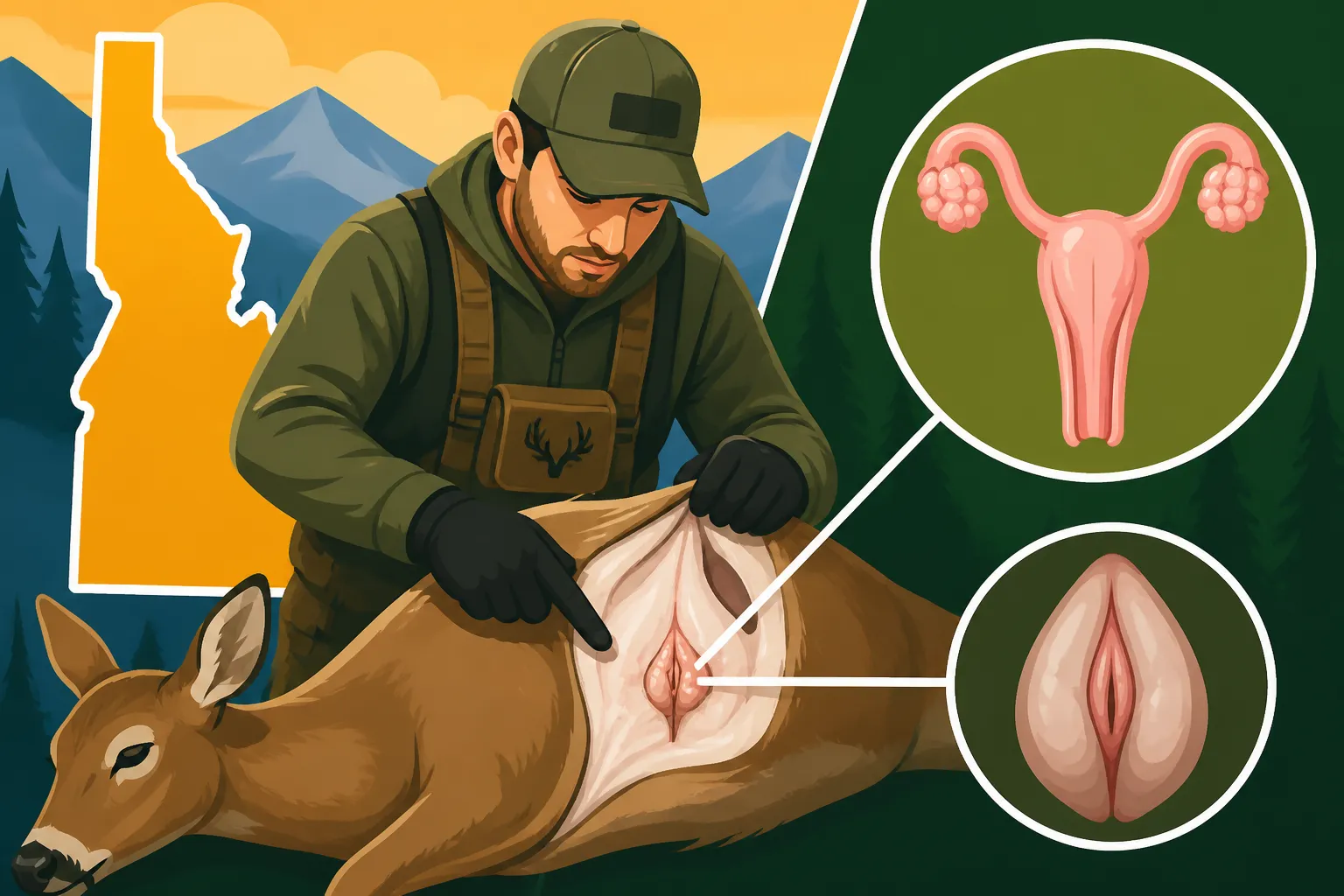
For deer (both mule deer and whitetail) and elk, if you harvested a buck or a bull, the antlers must remain naturally attached to a portion of the skull until the animal is processed or reaches its final destination. This means you can skull-cap your buck or bull, taking just the antlers and a portion of the skull, but that skull plate needs to stay with the meat. For antlerless deer or cow elk, you must retain the head, or the udder (for females), or a portion of the external genitalia naturally attached to a portion of the carcass until it's processed. This is especially critical for those hunts with specific antler point restrictions or for checking whether a bull is legal for rules like "Spike-Only Bull Rules Inside Idaho A Tag Seasons".
For other big game like moose, bighorn sheep, and mountain goats, the rules are often even more stringent, usually requiring the entire head with horns or antlers to remain with the carcass or specific portions until it's officially tagged and checked. For predators like black bear, mountain lion, or wolf, typically a portion of the external genitalia must remain naturally attached to the hide or a designated part of the carcass until it's legally processed or inspected. Even for wild turkey, if you're on a tom-only hunt, the beard must remain attached. It’s a lot to remember, which is why reviewing the regulations for your specific hunt and species is paramount.
Here’s a quick overview of common requirements, but always double-check the current Idaho Fish and Game regulations for your specific tag and unit.
| Species Category | Tag Type | Required Evidence of Sex |
|---|---|---|
| Deer & Elk | Antlered (Buck/Bull) | Antlers naturally attached to a portion of the skull. |
| Antlerless (Doe/Cow) | Head, udder, or external genitalia naturally attached to a portion of the carcass. | |
| Moose, Bighorn Sheep, Mountain Goat | Any | Entire head with horns/antlers (until required inspection or processing). |
| Black Bear, Mountain Lion, Wolf | Any | External genitalia naturally attached to the hide or a designated portion of the carcass. |
| Wild Turkey | Tom (Bearded) | Beard naturally attached to the carcass. |
Practical Application: Maintaining Evidence From Field to Home
The real challenge often lies in the logistics of keeping this evidence intact, especially when you're deep in the backcountry, trying to cool meat quickly, and preparing for a strenuous pack out. It’s easy to make a mistake when you're tired, cold, or just plain excited.
Field Dressing and Initial Transport Considerations
When you're field dressing an animal, especially something large like an elk or a mule deer, the immediate goal is usually to get the guts out and the hide off to cool the meat rapidly. However, you need to be mindful of where your "evidence of sex" is and how you're going to keep it identifiable with the rest of the carcass. If you're quartering an animal in the field, which is common for larger species, make sure that the required evidence stays with one of the primary quarters or is clearly marked and bagged to travel with the meat. For example, if you're required to keep the skull plate and antlers, ensure they are securely fastened to a pack frame with one of the quarters, or packed in a separate, clearly labeled game bag alongside the meat.
It’s generally a good idea to keep the head or skull plate attached to a major portion of the carcass—like a front quarter—until you're out of the field and at a place where you can properly deal with it, such as your camp or home. This minimizes the risk of separation or confusion, especially if you're hunting with a group and multiple animals are harvested. Remember, Idaho's rules apply to the entire carcass and its parts during transport. This also ties into the broader rules for "Field Dressing and Carcass Transport Rules Explained", which often require certain organs or parts to remain with the meat until a specific point to aid in disease monitoring or verification.
When and Where Evidence Must Be Maintained
The regulations are pretty clear: evidence of sex must be maintained "until the carcass is processed for consumption or storage." What does "processed" mean? It means until the animal is cut up into retail cuts, ground, frozen, or otherwise prepared for long-term storage or immediate cooking. This isn't just about the moment you leave the kill site; it extends through transport, at your hunting camp, and even at your home or a locker plant. If a conservation officer stops you on the road or visits your camp, they have the right to inspect your harvest.
This means you cannot simply take a photo of the buck's antlers, detach them from the skull, and then discard the skull plate before you've reached your final processing destination. The physical evidence must be present. This is true whether you're transporting the animal whole in the back of your truck, or packed out in game bags. Every part of your journey, from the moment the animal is down until it's ready for the freezer, is covered by these regulations. This also applies if you are donating meat under "The Meat Salvage Requirements for Big Game", as the recipient also needs to ensure the initial evidence was handled correctly. It’s a continuous chain of custody that ensures legal compliance.
Avoiding Costly Mistakes and Legal Pitfalls
In the excitement of a successful hunt, it’s all too easy to let details slip. But overlooking these "evidence of sex" rules can turn a successful hunt into a legal nightmare, costing you far more than just your pride.
Common Missteps Hunters Make
One of the most frequent mistakes happens when hunters get a magnificent buck or bull and, eager to start the taxidermy process, immediately cape out the head completely, removing the skull plate with the antlers. They might pack the skull plate separately, but forget that for transport, it must remain attached to a portion of the carcass until fully processed. Another common oversight is for hunters with antlerless tags. They might be so focused on identifying their doe or cow that they forget to retain the necessary external genitalia or udder with a portion of the carcass, thinking only antlered animals have specific head requirements.
Another common pitfall is the belief that a quick photo on your phone will suffice as proof. While photos are great for sharing memories, they are not considered legal evidence of sex by Idaho Fish and Game. You must have the physical evidence attached or clearly identifiable with the carcass. Furthermore, in group hunts, it's essential to clearly label each hunter's game bags and the corresponding evidence of sex. Imagine a scenario where two hunters harvest spike bulls, and they both throw their skull plates into the same cooler, unlabeled. How would a warden determine which spike belonged to which tag if there's any discrepancy? Clarity and careful labeling, even with a simple permanent marker, can prevent a lot of headaches later on.
Penalties for Non-Compliance
Idaho takes its hunting regulations seriously, and violations of evidence of sex requirements can carry significant consequences. It's not just a slap on the wrist. If you're found to be in non-compliance, you could be facing substantial monetary fines, which can easily run into the hundreds or even thousands of dollars. The harvested animal itself might be seized, meaning all your effort, time, and money invested in the hunt could be for naught, and you lose the meat.
Beyond fines and forfeiture, you could also face a revocation of your hunting privileges for a certain period, or even permanently in severe cases. This means no more hunting in Idaho for years, possibly even in other states due to interstate compacts. It's a heavy price to pay for a rule that seems minor in the grand scheme of an epic hunt. Conservation officers aren't looking to ruin your day, but they are sworn to uphold the law and protect Idaho's wildlife resources. Understanding and adhering to these rules shows respect for the resource, the law, and your fellow hunters. These rules are part of the larger framework that includes actions like "Mandatory Reporting After an Idaho Harvest", all designed to ensure integrity in the hunting process.
Tools and Resources for Staying Compliant
Navigating Idaho's hunting regulations can feel like a full-time job, but there are plenty of resources available to help you stay on the right side of the law. Being prepared and informed is your best defense against unintended violations.
Leveraging Technology and Information Sources
In this day and age, information is literally at your fingertips. The Idaho Fish and Game website is your official source for all regulations, and it's updated regularly. Before every hunt, make it a habit to visit the site and download the latest regulations brochure for your specific species and unit. While the official brochure is critical, platforms like GoHunt's Insider service can be incredibly helpful for advanced planning. GoHunt offers detailed breakdowns of units, draw odds, and often highlights specific regulations that might impact your hunt, such as unique antler restrictions or evidence of sex requirements for particular zones. This kind of detailed information, often presented in an easily digestible format, can complement the official regulations and help you scout and plan more effectively.
Beyond official regulations, mapping apps like onX Hunt are invaluable. While they won't tell you the evidence of sex rules, they will show you unit boundaries, public vs. private land, and other crucial details that can influence your hunt planning, especially if specific rules apply to certain units. Knowing exactly which unit you're in, and thus which regulations apply, is the first step to compliance. For a broader understanding of how all these tools fit together, checking out "A Walkthrough of the Idaho Hunt Planner" can provide additional insights into planning your next adventure. Always double-check information from third-party sources against the official IDFG regulations, but these tools can be powerful allies in your preparation.
Best Practices for Documentation and Preparedness
Staying compliant starts long before you pull the trigger. It begins with meticulous planning and packing. Make it a routine to always carry essential items like zip ties and permanent markers in your hunting pack. These simple tools are incredibly useful for tagging game bags with your name, tag number, and the species harvested, especially when quartering or hunting with a group. This clear labeling is vital if you need to keep specific evidence (like a skull plate) separate but identifiable with specific meat portions.
Before heading into the field, sit down and thoroughly review the specific regulations for the species and unit you'll be hunting. Pay close attention to any nuances regarding antler point restrictions or "any-weapon" versus specific weapon seasons, as these often have corresponding evidence of sex requirements. Discuss these rules with your hunting partners. Ensure everyone in your group understands what needs to be kept and how it needs to be transported. For instance, if you're hunting an area with "Idaho Elk Zones and the A Tag or B Tag Choice", make sure you know the specific rules for your tag, as A tags might have more restrictive harvest requirements like spike-only bulls in certain periods, making evidence of sex even more crucial. Being proactive and prepared is the best way to ensure your hunt is successful and legally sound from start to finish. You can always find the latest official information by consulting "Where the Current Idaho Regulations Are Posted".
Disclaimer
Please remember that hunting regulations are subject to change. While every effort has been made to provide accurate and up-to-date information in this guide, it is your responsibility as a hunter to consult the official Idaho Fish and Game regulations directly before participating in any hunting activity. This content is for informational purposes only and should not be considered legal advice.