Idaho Mountain Lion Quotas by Unit
Hunting mountain lions in Idaho is an incredibly challenging and rewarding pursuit, but nothing is more frustrating than putting in the effort to scout and prepare, only to find the unit you're targeting has closed its quota. Understanding Idaho's mountain lion quota system by unit is absolutely essential to avoid disappointment, ensure you're hunting legally and ethically, and maximize your chances of success. This guide will walk you through how these quotas work, where to find the most current information, and how to integrate this knowledge into your hunt planning.
Understanding Idaho's Mountain Lion Quota System
Idaho manages its mountain lion populations through a system of harvest quotas, which are set annually by Idaho Fish and Game. Unlike some species where a general season allows unlimited harvest until the season closes, mountain lion hunting is often directly tied to these unit-specific quotas. This approach allows the state to carefully manage local populations, ensuring both healthy lion numbers and a balance with prey species like deer and elk.
Why Quotas Exist for Mountain Lions
The primary reason for implementing harvest quotas on mountain lions is population management. Mountain lions are apex predators, and their numbers directly impact the health and dynamics of other game populations in an area. Too many lions can lead to declines in deer and elk, while too few might disrupt natural ecological balances. By setting specific harvest limits for each Game Management Unit (GMU), Idaho Fish and Game can:
- Maintain Sustainable Populations: Quotas prevent overharvesting in any single area, ensuring lions remain a viable part of the ecosystem for future generations.
- Balance Predator-Prey Dynamics: In areas experiencing deer or elk population struggles, higher lion quotas might be set to reduce predation pressure. Conversely, if lion numbers are perceived as low, quotas might be more restrictive.
- Address Local Concerns: Quotas can also respond to local concerns about livestock depredation or human-wildlife conflicts in specific areas. It’s a delicate balance, and these numbers are not set arbitrarily.
General Quotas Against Specific Quota Types
It's important to recognize that not all mountain lion quotas are created equal. You might encounter a few different types, depending on the unit and the management objectives:
- Total Quota: This is the most common and simply represents the maximum number of lions that can be harvested in a particular unit during a given season. Once this number is reached, the season for that unit closes immediately.
- Female-Specific Quota: Some units might have a separate, more restrictive quota specifically for female mountain lions. This is a critical management tool, as the number of breeding females is a direct indicator of population health and reproductive capacity. Harvesting too many females can have a much greater impact on future lion numbers than harvesting males. Hunters must be extra vigilant in identifying the sex of their lion if hunting in an area with a female-specific quota.
- Combined Quota: Less common, but sometimes a unit might have a combined quota where a certain number of lions can be harvested in total, but within that total, only a smaller number can be females.
Understanding these distinctions is crucial, as misidentifying a lion's sex or misinterpreting the quota type can lead to illegal harvest, even if you were otherwise within the general quota limit. Always check the current regulations for the specific unit you plan to hunt.
The Harvest Season and Unit Boundaries
Idaho's mountain lion seasons can be quite long, often spanning from early fall through late spring, which is quite different from the shorter seasons for many other big game species. However, the open season dates are largely irrelevant if a unit's quota has already been met. This means you could have a season technically open until March, but if the quota fills in December, the unit is closed.
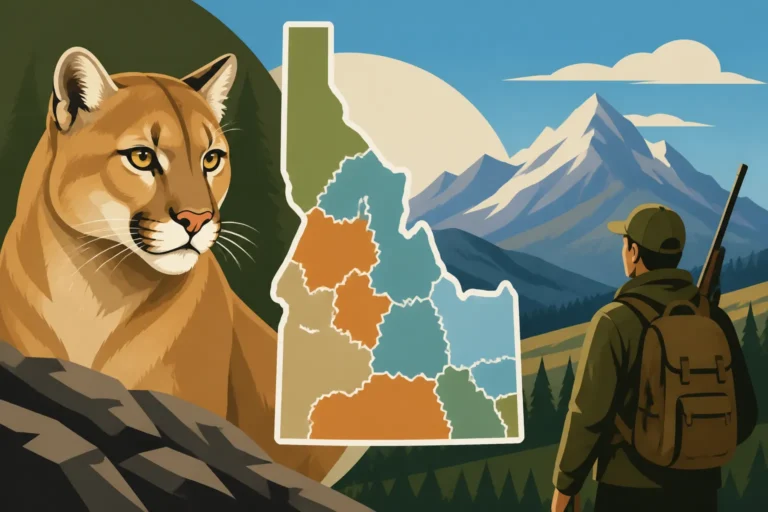
Each quota is tied directly to a specific Game Management Unit (GMU). These unit boundaries are critical and often follow natural features like rivers, mountain ranges, or roads. It's your responsibility as a hunter to know exactly which GMU you are in and to understand its specific quota and any special regulations. Hunting across unit lines, even unintentionally, can lead to serious legal issues if one unit is open and the adjacent one is closed due to quota. This is where detailed maps and GPS units, perhaps with layers from services like GoHunt, become indispensable tools for the modern hunter.
How Idaho's Quotas Are Managed Unit by Unit
The unit-by-unit management of mountain lion quotas in Idaho requires diligent hunter participation and continuous oversight from Idaho Fish and Game. It's a dynamic system that demands constant attention from anyone hoping to successfully harvest a lion.
Real-Time Monitoring and Reporting
One of the most critical aspects of Idaho's mountain lion quota system is the requirement for immediate harvest reporting. When you harvest a mountain lion, it is your responsibility to report that harvest to Idaho Fish and Game within a very short timeframe, often within 24 hours. This isn't just a suggestion; it's a legal requirement. This immediate reporting is what allows the department to track the quota status in near real-time. Without it, they wouldn't know when a unit is approaching its limit, and closures could be delayed, potentially leading to overharvest.
Imagine you're deep in the Selway-Bitterroot Wilderness, far from cell service, and you harvest a lion. The clock starts ticking from the moment you take that animal. You need a plan for how you will get to a place where you can report your harvest quickly. This might involve packing a satellite communicator or heading straight out of the backcountry to reach a phone. Failure to report promptly could not only mean a legal penalty for you but could also mean that other hunters continue hunting in a unit that has, unbeknownst to the state, already reached its quota. Every hunter plays a role in the integrity of this system. This level of oversight also includes strict Idaho Mountain Lion Pelt Tagging Rules to ensure each harvested animal is properly documented.
Factors Influencing Quota Numbers
The quota numbers for each unit aren't simply pulled out of a hat. They are the result of careful analysis and scientific data collected by wildlife biologists. Several factors play into how many mountain lions Idaho Fish and Game determines can be harvested in a particular unit:
- Population Surveys and Estimates: Biologists use various methods, including track counts, camera traps, and professional observations, to estimate mountain lion densities and population trends within each GMU.
- Prey Base Health: The abundance and health of prey species (deer, elk, bighorn sheep) in a unit are significant considerations. If prey populations are struggling, managers might opt for a higher lion quota to reduce predation pressure.
- Past Harvest Data: Previous harvest success rates, the number of lions taken, and the sex ratio of past harvests provide valuable historical context. If a unit consistently reaches its quota quickly, it might indicate a robust population, or perhaps too low a quota for the hunting pressure. Conversely, if a quota is rarely met, it could suggest a lower population or less hunting effort. Reading an Idaho Harvest Statistics Report can give you an insight into these trends.
- Habitat Quality and Size: Larger, more rugged units with ample cover and food sources can generally support more lions and, therefore, higher quotas than smaller, fragmented habitats.
- Public Input and Local Concerns: While science drives the core decisions, Idaho Fish and Game also considers input from local residents, landowners, and hunters regarding lion activity and concerns. This feedback helps fine-tune quotas to reflect on-the-ground realities.
Unit-Specific Challenges and Opportunities
The diverse landscape of Idaho means that mountain lion hunting opportunities and quota dynamics vary significantly from one unit to another. For instance, the heavily timbered, rugged country of the Panhandle or the Clearwater Region (Units like 1, 6, 8, etc.) might present different challenges and quota outcomes compared to the more open, sagebrush-steppe environments in parts of southern Idaho.
- Northern Idaho (e.g., Panhandle, Clearwater Zones): These units often have dense forests and more difficult access, meaning lions might be harder to find, and quotas might fill more slowly despite healthy populations. Hunter effort per lion harvested might be higher here. When considering these areas, looking into Idaho's Motorized Hunting Rule Keeps You on the Road becomes particularly important, as vehicle restrictions can significantly impact accessibility and hunting tactics.
- Central Idaho (e.g., Frank Church Wilderness Adjacent Units): Areas bordering vast wilderness might have robust lion populations, but the sheer scale and remoteness can make quotas challenging to fill quickly. These areas might offer longer hunting windows.
- Southern Idaho (e.g., Units near the Owyhees): While still rugged, these units might have more open country, which can sometimes make finding lions (especially with hounds) more efficient. Quotas here might fill up faster depending on accessibility and hunter pressure.
Understanding these regional differences can help you make informed decisions about where to apply your hunting efforts, and when to expect quotas to fill.
Finding Current Quota Information and Monitoring Hunt Status
In a quota-managed hunt, being informed isn't just good practice; it's essential. Relying on outdated information is a sure-fire way to end up on the wrong side of the law or, at the very least, waste precious hunting time.
Official Idaho Fish and Game Resources
The absolute best and most authoritative source for current mountain lion quota information is Idaho Fish and Game (IDFG) itself. They have dedicated platforms designed to keep hunters updated:
- Annual Big Game Regulations Brochure: This is your foundational document. It outlines the season dates, quota numbers (initial, at least), and specific rules for each GMU at the start of the season. Always get the most current year's regulations.
- IDFG Website: The Idaho Fish and Game website is regularly updated. They typically have a "Quota Hunt Status" page or a similar section specifically for mountain lions (and often wolves) that shows the current harvest count against the quota for each unit. This is often updated daily, or even more frequently during periods of high harvest. Many hunters bookmark this page on their phones.
- Local IDFG Offices: Don't underestimate the value of calling or visiting a local IDFG office in the region you plan to hunt. Biologists and conservation officers often have the most up-to-the-minute information and can provide nuances not found online. They can also clarify complex regulations or offer insights into recent activity.
Using Online Tools and Apps
Beyond the official IDFG resources, several third-party online tools and hunting apps can be invaluable for monitoring quota status and planning your hunt. While always cross-reference with official IDFG data, these tools can offer user-friendly interfaces and additional planning features.
- GoHunt: This platform is well-known among Western hunters for its detailed draw odds, application strategies, and unit information. GoHunt often integrates direct links or summaries of state quota data, making it a convenient one-stop shop for hunters who want to quickly check the status of multiple units. Their map layers can also help you visualize unit boundaries and public land access, which is crucial when trying to stay within a specific quota area.
- Other Mapping Apps (e.g., OnX Hunt): While not providing real-time quota updates themselves, apps like OnX Hunt are indispensable for showing unit boundaries on a detailed topographic map. You can mark potential hunting areas and ensure you are within the correct unit, preventing accidental quota violations in adjacent units. This is particularly useful when E-Scouting an Idaho Unit Before the Season to identify promising areas.
Checking Before and During Your Hunt
The dynamic nature of mountain lion quotas means that a quota can close at any time, often with very little warning. It’s not uncommon for a unit to be open on Friday evening and closed by Saturday morning if several hunters report kills simultaneously. Therefore, constant vigilance is required:
- Before You Leave Home: Always check the IDFG quota status page just before you head out for your hunt. Don't rely on information from a week ago.
- In the Field (When Possible): If you have cell service, check the status page daily, or even multiple times a day if you're actively hunting or expect the quota to be close to filling. This is where a hunting partner with reliable cell service can be a huge asset.
- Have a Backup Plan: Given the potential for quick closures, it's wise to have a backup unit or two in mind, complete with their respective quota statuses. If your primary unit closes, you can pivot quickly rather than having your hunt completely derailed.
Here's a hypothetical example of how a quota closure might look:
| Unit Name (GMU) | Initial Total Quota | Initial Female Quota | Harvested (Total) | Harvested (Female) | Status (as of a hypothetical date) |
|---|---|---|---|---|---|
| Palouse (GMU 10A) | 12 | 4 | 9 | 3 | Open, Nearing Female Limit |
| Hells Canyon (GMU 11) | 15 | 5 | 14 | 5 | CLOSED (Female Quota Reached) |
| Selway (GMU 17) | 18 | 6 | 10 | 2 | Open, Moderate Activity |
| Frank Church (GMU 20A) | 20 | 7 | 8 | 1 | Open, Low Activity |
Note: This table uses hypothetical data for illustrative purposes only. Always check current, official Idaho Fish and Game resources for actual quota numbers and statuses.
Strategies for Hunting Mountain Lions Within Quota Constraints
Successfully hunting mountain lions in Idaho, especially within the confines of a quota system, demands strategic planning, adaptability, and a deep respect for wildlife management. It’s not just about finding a lion; it’s about finding one in an open unit.
Flexibility in Hunt Planning
The most crucial strategy for quota-based lion hunting is to embrace flexibility. A rigid plan is likely to be broken by a sudden unit closure.
- Multiple Unit Options: As mentioned, always have several potential units scouted and researched. If your primary choice closes, you can immediately shift your focus to a secondary or tertiary option that is still open. This is where tools like GoHunt can shine, allowing you to quickly cross-reference unit details and quota statuses.
- Season Timing: Consider hunting earlier in the season if you want to avoid the rush or later in the season if you're prepared for units to be closed. Early season often has more units open, but also more hunting pressure. Late season might have fewer open units, but potentially less competition for the remaining quota.
- Adapt Your Method: If you're a hound hunter, a unit closure can be particularly frustrating, as moving an entire dog pack and support system can be a logistical nightmare. Still hunters might have an easier time pivoting locations. Be prepared to change your approach if necessary, even if it means altering your preferred hunting style.
Hound Hunting Against Still Hunting in Relation to Quotas
The method you choose for hunting mountain lions can significantly impact your experience within a quota system.
- Hound Hunting: Hound Hunting for Idaho Lions is an extremely effective method for treeing mountain lions, and many hunters rely on it. However, the investment in time, dogs, and travel means that a sudden quota closure can be particularly devastating. Hound hunters often need a few days to get set up in an area. If a unit closes overnight, that effort can be wasted. To mitigate this, many hound hunters dedicate considerable time to pre-season scouting, staying updated on populations, and having multiple potential units identified. They also often work closely with other hound hunters, sharing information about open units and where pressure might be building.
- Still Hunting: Still hunting for mountain lions involves tracking them on fresh snow or still-hunting through known lion habitat. This method is generally less efficient than using hounds but can be done more spontaneously. A still hunter might be able to check the quota status in the morning and decide on the spot which open unit to access for the day, offering greater flexibility. The trade-off, of course, is that successfully harvesting a lion this way is much more challenging. Regardless of method, understanding Mountain Lion Harvest Reporting Rules remains paramount.
Ethical Hunting Practices and Quota Respect
Beyond simply staying legal, hunting within a quota system requires a strong commitment to ethical hunting practices and respect for the wildlife management goals set by Idaho Fish and Game.
- Positive Identification: Always strive for positive identification of your target. This includes identifying the species, and if applicable, the sex of the animal. If a unit has a female-specific quota, ensuring you are shooting a male is paramount. When in doubt, let it walk.
- Prompt Reporting: We've discussed this, but it bears repeating: report your harvest immediately. It's not just a rule; it's a contribution to the integrity of the system and ensures other hunters don't accidentally overharvest.
- Respecting Closures: If a unit closes, it closes. Do not continue to hunt in that unit. Respect the decision of Idaho Fish and Game, as it's made for the health of the lion population. Trying to sneak in a hunt after a closure undermines the entire management effort.
- Conservation Mindset: Remember that quotas are a tool for conservation. By adhering to them, you are participating in a system that aims to ensure healthy wildlife populations for future generations of hunters and for the ecosystem as a whole. Your actions directly impact how these magnificent predators are managed.
Ultimately, hunting mountain lions in Idaho is an immersive experience that connects you deeply with the rugged landscape and its wild inhabitants. By understanding and respecting the unit-specific quota system, you not only increase your chances of a successful and legal hunt but also contribute to the long-term health and sustainability of Idaho's incredible mountain lion populations.
Disclaimer
This article is for general informational purposes only and does not constitute professional advice. Laws, prices and regulations vary by location and change over time. Consult a qualified professional for guidance on your specific situation.