Drop Camp Against Semi-Guided Hunts
Dreaming of chasing elk or mule deer through Idaho's rugged mountains but feeling a little overwhelmed by the sheer scale of the undertaking? You're not alone. Many hunters find themselves caught between the desire for a true wilderness experience and the practical realities of executing a successful hunt, especially when you're not a local. Deciding how much support you need can be a huge headache. This guide is here to untangle the complexities of drop camps versus semi-guided hunts in Idaho, helping you pinpoint the best fit for your skills, budget, and backcountry ambitions.
Understanding the Idaho Drop Camp Experience
The idea of a drop camp often conjures images of remote wilderness, breathtaking scenery, and the ultimate test of a hunter's self-reliance. It's a fantastic option for those who cherish independence but need a helping hand with the often-daunting logistics of reaching truly wild country.
What "Drop Camp" Actually Means
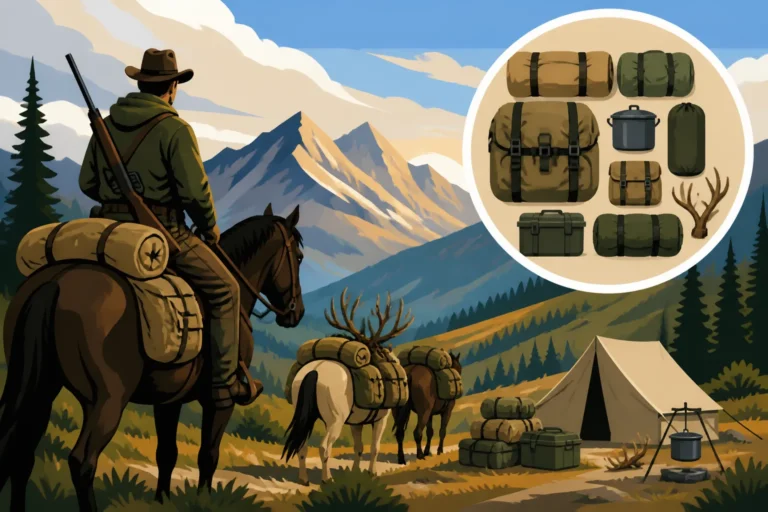
At its core, an Idaho drop camp is exactly what it sounds like: an outfitter "drops" you and your gear off in a pre-arranged, remote location, often deep in the backcountry, and then picks you up at a predetermined time. Think of it as a wilderness taxi service with a rudimentary base camp already set up. This service typically includes transportation into and out of the designated hunting area, which could be via horse pack string, jet boat navigating a remote river, or even a bush plane landing on a backcountry airstrip.
What's usually provided is the heavy lifting of camp infrastructure. This might mean a canvas wall tent, a wood stove, cots, and perhaps some basic cooking utensils like a pot, pan, and griddle. Essentially, the outfitter provides the backbone of your wilderness home, freeing you from hauling these bulky items yourself. However, it's absolutely crucial to remember that a drop camp generally does not include a guide, food, your personal hunting gear, or any assistance with the actual hunting, field dressing, or packing out of an animal. You're responsible for all of that, making it a truly self-sufficient adventure once you're on the ground. For a closer look at what to expect with these arrangements, read What an Idaho Drop Camp Actually Includes.
Many hunters are drawn to drop camps precisely because of this blend of logistical assistance and complete autonomy. You get to experience the raw, untamed beauty of Idaho's wild places without spending days packing in heavy equipment, yet you retain full control over your hunting strategy and daily schedule. This can be a significantly more cost-effective way to access remote areas compared to a fully guided hunt, making those hard-to-reach elk or mule deer strong possibilities for those with the right skills and mindset. It truly places you in the driver's seat for an authentic backcountry challenge.
The Skillset Required for a Drop Camp
Embarking on an Idaho drop camp hunt demands a robust and diverse skillset. When you choose a drop camp, you are effectively becoming your own guide, outfitter, and camp cook all rolled into one. This means your success—and even your safety—rests squarely on your shoulders and those of your hunting partners. You'll need to possess strong navigation skills, capable of reading maps, using GPS, and orienting yourself in unfamiliar and often featureless terrain. The ability to track game, understand their patterns, and effectively call elk or deer is paramount, as there won't be an experienced guide leading the way or offering real-time advice on where to find animals.
Beyond the immediate hunting skills, self-sufficiency is the name of the game. You'll be responsible for all camp chores, from building and maintaining a fire in the wood stove to cooking all your meals and keeping your camp clean and organized. Furthermore, the physical demands of a drop camp are considerable. Imagine the scenario: you've successfully harvested an elk, potentially miles from camp, deep in a steep canyon. Now, you and your partner (or partners) must field dress the animal, quarter it, and then pack hundreds of pounds of meat, hide, and antlers back to camp, often over challenging terrain. This isn't a task for the unprepared, and it requires significant strength, endurance, and mental fortitude. Ensuring you are in top shape is vital; check out Physical Conditioning for Idaho Backcountry for tips.
The reward for mastering these challenges, however, is immense. There's an unparalleled sense of accomplishment that comes from executing a successful backcountry hunt entirely on your own terms. It's a test of grit, knowledge, and teamwork that forges unforgettable memories and builds incredible confidence. While it's certainly not for everyone, those who embrace the demanding nature of a drop camp often find it to be the most fulfilling way to experience Idaho's wilderness hunting.
Deciphering the Semi-Guided Hunt in Idaho
If the full self-reliance of a drop camp feels like a bridge too far, but a fully guided, white-glove experience isn't what you're after, the semi-guided hunt often presents a compelling middle ground. However, "semi-guided" is a term that needs careful unpacking, as its definition can vary wildly between outfitters.
The Spectrum of "Semi-Guided"
The term "semi-guided" is perhaps one of the most ambiguously defined services in the hunting outfitter world, and it's a common source of confusion for hunters. Unlike a drop camp, where the outfitter's role is primarily logistical transportation and basic camp provision, a semi-guided hunt implies a level of active support and assistance from the outfitter or their staff. However, where that assistance begins and ends can be a real moving target. It's not uncommon to find significant differences between one outfitter's "semi-guided" offering and another's, validating the frustration many hunters feel when trying to compare options.
For some, "semi-guided" might mean the outfitter provides invaluable local knowledge, points you towards prime hunting areas based on recent scouting, and offers daily advice on animal movement or terrain challenges. They might even transport you to and from specific hunting locations each morning and evening, like dropping you off at a trailhead or a strategic ridge line. Other semi-guided hunts could include assistance with game retrieval once an animal is down, which is a huge benefit in Idaho's rugged country. The camp itself might be more elaborate than a basic drop camp, perhaps including prepared meals or even a camp cook, but you're still doing the actual hunting on your own. For clarity on how these compare, see Drop Camp Against Fully Guided.
The key takeaway here is that there's no universal standard for "semi-guided." You might encounter scenarios where an outfitter leads you to a particular area, helps you strategize a stalk, and then leaves you to execute the shot and pack out the animal. Or it could be as simple as providing maps, intel, and access to private ground, with minimal direct interaction during the hunt itself. Because of this variability, open and detailed communication with any potential outfitter about their specific "semi-guided" package is not just recommended, it's absolutely essential to avoid disappointment and ensure your expectations align with what's being offered.
The Advantages of a Semi-Guided Approach
Despite the sometimes murky definition, a semi-guided hunt offers distinct advantages that appeal to many hunters. One of the most significant benefits is access to invaluable local knowledge. An Idaho outfitter and their guides spend countless hours in their operating areas, year after year. They know the terrain intimately, understand animal migration patterns, can predict where game will be based on weather and pressure, and often have insights into historical hot spots or hidden draws. This expert advice can dramatically increase your chances of success, especially if you're unfamiliar with a particular unit or hunting out of state.
Beyond just intel, semi-guided services often come with logistical support that can take a huge burden off your shoulders. This might include transportation to hunting locations that would otherwise be difficult to access, or, crucially, help with game retrieval. The thought of packing a heavy elk out of a steep canyon alone is a daunting one, and having the assurance that your outfitter will assist in that effort can be a game-changer for many hunters. Some semi-guided options might also include comfortable camp accommodations and even prepared meals, allowing you to focus all your energy on hunting rather than camp chores. You can still expect to put in the work on the trail, but the support system around you reduces the overall stress of the expedition. Learn more about the practicalities of pack strings by reading The Logistics of a Horseback Drop Camp.
This approach allows you to retain a high degree of independence during the actual hunt – you're still making the stalks, reading the sign, and executing the shot – but with the added confidence and efficiency that comes from having experienced local support. It's a fantastic way to experience a challenging Idaho hunt with a safety net, making it a popular choice for hunters who are looking to step up their game but aren't quite ready for a full DIY backcountry endeavor.
Key Differences and Considerations for Your Idaho Hunt
When you're trying to choose between a drop camp and a semi-guided hunt in Idaho, it really boils down to a few core considerations: your budget, your desire for independence, and perhaps most importantly, your understanding of Idaho's unique hunting regulations, especially concerning wilderness areas.
Cost, Time, and Effort Investment
The decision between a drop camp and a semi-guided hunt often comes down to a careful balance of financial outlay versus your personal investment of time and physical effort. Generally speaking, an Idaho drop camp will represent a lower upfront monetary cost compared to a semi-guided hunt. You're essentially paying for transportation and basic camp infrastructure, not for the daily expertise and hands-on assistance of a guide. This makes drop camps an attractive option for budget-conscious hunters who still want to access remote, unpressured areas. However, what you save in dollars, you more than make up for in personal time and sheer effort. You are responsible for every aspect of the hunt, from detailed planning and scouting to cooking, navigating, and ultimately, physically packing out your harvest. This can be incredibly demanding and requires a significant personal investment.
A semi-guided hunt, on the other hand, typically falls into a mid-range price point. It's more expensive than a drop camp because you're paying for additional services: local knowledge, potential transportation to hunting spots, and often, crucial assistance with game retrieval or more comfortable camp amenities. This investment often translates to a reduced personal effort on logistics and camp chores, allowing you to focus almost entirely on the hunting itself. You still need to be a capable hunter, but some of the heaviest lifting, both literally and figuratively, is shared or handled by the outfitter. Understanding What an Idaho Drop Camp Costs can give you a baseline for comparison.
To visualize this, consider the following breakdown:
| Feature | Drop Camp (Idaho) | Semi-Guided Hunt (Idaho) |
|---|---|---|
| Outfitter Role | Primarily logistics: transport, camp setup | Logistics plus support, advice, or retrieval assistance |
| Hunter Independence | High: You manage all hunting, cooking, packing. | Moderate: You hunt, but benefit from local expertise/help |
| Local Knowledge | Minimal direct input from outfitter on the hunt | Direct input, scouting, tips from outfitter/guide |
| Physical Demands | Very High: You are responsible for everything | High: You still hunt hard, but may get help with heavy lifting |
| Game Retrieval | Entirely your responsibility | Outfitter may assist (confirm details) |
| Cost (Relative) | Lower | Mid-range |
| Gear Required | All hunting, personal, cooking, camp necessities | All hunting, personal; camp gear usually provided by outfitter |
| Ideal For | Experienced, self-sufficient hunters on a budget | Hunters wanting some support without full guiding costs |
Independence vs. Support: Finding Your Sweet Spot
The core philosophical difference between a drop camp and a semi-guided hunt lies in the balance of independence versus support. With a drop camp, you are granted almost total independence. Once the outfitter has dropped you off, you are the master of your own destiny for the duration of the hunt. Every decision, from where to hunt, how to stalk, what to eat, and how to manage camp, rests solely on you and your hunting party. For many seasoned hunters, this level of autonomy is precisely the allure, offering a profound sense of connection to the wilderness and an unparalleled feeling of accomplishment when successful. It truly is the closest you can get to a pure DIY backcountry experience while still using a service to access remote areas. If you're pondering a deep dive into self-reliant hunting, our article Planning a DIY Public Land Hunt in Idaho offers more perspective.
A semi-guided hunt, conversely, offers a blend of independence and crucial support. You still get to make the calls on your stalks, choose your shooting lanes, and experience the thrill of the hunt on your own terms. However, you also benefit from the outfitter's local knowledge, pre-scouted areas, and often, a more comfortable camp setup. The outfitter might offer daily advice, help you navigate to promising spots, or assist with the daunting task of packing out heavy game. This partnership allows you to maintain a significant degree of autonomy while leaning on expert support for key logistical and strategic elements. This can be an ideal scenario for hunters who are competent and enjoy the challenge of hunting themselves but want to mitigate some of the risks and physical demands of a fully independent expedition in vast and wild Idaho terrain.
Ultimately, the "sweet spot" depends on your personal hunting style, experience level, and comfort with risk and physical exertion. There's no right or wrong answer; both approaches offer incredible experiences. It's about honestly assessing your capabilities and determining how much support will enhance your hunt without diminishing your sense of personal achievement.
Legalities and Wilderness Areas
Navigating Idaho's hunting regulations can feel like deciphering ancient texts, and when it comes to drop camps versus semi-guided hunts, the rules around wilderness areas add another layer of complexity that is absolutely critical for nonresidents. Here's the deal: Idaho law stipulates that nonresidents must hire a licensed outfitter or guide to hunt certain big game species within designated wilderness areas. This isn't just a recommendation; it's a hard and fast rule. This specific regulation can drastically impact your decision between a drop camp and a semi-guided hunt, especially if your target is a species like elk or mountain goat.
For example, if you're a nonresident planning an elk hunt in the Frank Church River of No Return Wilderness, you must be accompanied by a licensed Idaho outfitter or guide. This means a purely unguided drop camp that flies you into a wilderness airstrip and leaves you to your own devices for elk hunting simply isn't an option unless you're an Idaho resident. You would need a service that provides direct guiding or at least falls under the umbrella of an outfitter who is legally overseeing your hunt. While a semi-guided hunt might fit this requirement if it includes a licensed guide providing oversight within the wilderness, it is essential to clarify the specifics with the outfitter. This specific requirement often catches nonresident hunters off guard, leading to last-minute scrambles or even wasted money. Our article Do Nonresidents Need a Guide in Idaho Wilderness? delves deeper into this rule.
It's vital to note that this wilderness guide rule doesn't apply to all species. Deer and bear, for instance, are often exempt from this specific nonresident wilderness guide requirement, meaning a nonresident could potentially use a drop camp to hunt those species within designated wilderness. This distinction highlights why it's so important to thoroughly research the regulations for your specific target species and the exact unit you plan to hunt. Always check the current Idaho Fish and Game regulations for the most up-to-date information, and be clear with any outfitter about whether their drop camp or semi-guided service complies with these wilderness rules for your chosen species. Knowing Which Species Trigger Idaho's Wilderness Guide Rule is paramount before you book anything.
Choosing Your Idaho Outfitter and Booking Smart
Once you've wrapped your head around the differences between drop camps and semi-guided hunts, the next big step is finding the right outfitter and locking in your plans. This isn't a decision to rush; a good outfitter can make your Idaho hunt legendary, while a poor choice can lead to frustration and disappointment.
Vetting and Communicating with Outfitters
Choosing an outfitter, whether for a drop camp or a semi-guided experience, is like choosing a partner for a critical mission – you need to be able to trust them. The single most important piece of advice here is to ask a ton of questions, and then ask some more. For semi-guided hunts especially, it's crucial to pin down exactly what "semi-guided" means to their operation. Does it include assistance with packing out an animal? Will a guide check in with you daily? What kind of pre-scouting do they do? Don't leave anything to assumption; ambiguity here is the fastest route to unmet expectations and a sour experience.
Always ask for references, and actually take the time to call them. Ask previous clients about the outfitter's communication, the quality of their gear, their knowledge of the area, and their overall professionalism. You can also utilize platforms like BookYourHunt to browse reputable outfitters and read reviews from other hunters, or consult services like GoHunt for additional research and resources. Beyond references, verify that the outfitter is properly licensed by the Idaho Outfitters and Guides Licensing Board. This is a non-negotiable step to protect yourself and ensure you're working with a legitimate operation. Being thorough in your vetting and establishing crystal-clear communication about expectations from the outset will lay the groundwork for a successful and enjoyable hunt. Our guide on Questions Worth Asking Before You Book can help you formulate the right queries.
Timing Your Booking and Draw Strategy
Booking an Idaho hunt, particularly a popular drop camp or semi-guided offering, isn't something you can usually do last-minute. Good outfitters often book out a year or more in advance, especially for prime season dates or units known for high success rates. As soon as you've decided on your preferred hunt style and done your research, reaching out to potential outfitters should be a top priority. This is especially true if you're planning around Idaho's controlled hunt draw calendar. Many nonresident elk and deer tags require applying months in advance, and you'll want to coordinate your outfitter booking with your draw strategy.
Imagine you've secured a fantastic semi-guided hunt for a specific controlled unit, but then you fail to draw the tag. What happens then? This is where understanding the outfitter's deposit, cancellation, and refund policies becomes paramount. Some outfitters might offer to roll your deposit over to the next year if you don't draw, while others might have stricter non-refundable clauses. Always get these terms in writing and ensure you understand them completely before sending any money. Resources like GoHunt can provide insights into draw odds and application deadlines, helping you make informed decisions about which units to apply for. Similarly, BookYourHunt can connect you with outfitters whose booking schedules align with Idaho's unique draw process, which we explain further in Booking an Idaho Hunt Around the Draw Calendar. Strategic planning that considers both your outfitter booking and the Idaho tag draw schedule is key to minimizing stress and maximizing your chances of a successful and memorable hunt.
Disclaimer
This article is for general informational purposes only and does not constitute professional advice. Laws, prices and regulations vary by location and change over time. Consult a qualified professional for guidance on your specific situation.