Backcountry Units That Require a Pack Trip
There's a deep allure to hunting Idaho's backcountry, a quiet whisper that calls you away from the truck roads and the crowds. But the dream of untouched wilderness can quickly become a harsh reality if you aren't prepared for the sheer physical and logistical demands of units that truly require a pack trip. This guide isn't about glamorizing the hardship, but rather giving you a realistic look at what defines these remote areas, how to find them, and what it truly takes to successfully hunt deep in Idaho's wild country.
What Defines a True Pack Trip Unit in Idaho?
When we talk about a "pack trip" unit, we're not just talking about a long day hike. We're discussing areas where the commitment extends beyond your vehicle, requiring you to physically carry in everything you need for multiple days, and often, to pack out a substantial amount of meat. These aren't casual strolls; they're expeditions into the heart of Idaho's rugged terrain, where infrastructure is non-existent and self-reliance is paramount.
Distance From Road Systems and Trailheads
The most obvious characteristic of a pack trip unit is its remoteness from any paved or even well-maintained gravel roads. You'll often find yourself driving miles down rough, sometimes unmaintained Forest Service roads just to reach a trailhead that serves as your jumping-off point. From there, the trail miles stretch out, often quickly gaining significant elevation or dropping into deep canyon systems. We're talking about units where reaching prime hunting grounds might mean a 5, 10, or even 15-mile hike just to get to a suitable camp, leaving you days away from your truck. This isn't just a matter of convenience; it’s a critical safety factor when you consider potential injuries or the monumental task of Packing an Elk Out of Steep Country Alone.
These distances aren't accidental; they're often a direct result of land management designations. Many of Idaho's truly remote units fall within vast roadless areas or even designated wilderness. In these places, motorized vehicles are strictly prohibited beyond the initial trailhead. That means no ATVs, no dirt bikes, no e-bikes – nothing with an engine. You're reliant on your own two feet, or the strong legs of a pack animal, to carry you and your gear into the remote hunting grounds. This can be a rude awakening for hunters accustomed to using motorized access to shorten their approach.
Rugged Topography and Wilderness Designations
Idaho is synonymous with mountains, and its pack trip units crank that up to eleven. We're talking about incredibly steep, broken country with deep canyons, towering peaks, dense timber, and high-alpine basins. These are not gentle rolling hills. The elevation changes are dramatic, often measured in thousands of feet over short distances. Moving through this kind of terrain with a heavy pack is a grind, even for the most seasoned hunter. It tests your endurance, your navigation skills, and your resolve with every step.
Many of these deeply remote areas are part of Idaho's designated wilderness areas, like the iconic The Frank Church River of No Return or portions of the Selway-Bitterroot Wilderness Access in Idaho. These wilderness designations intentionally preserve the wild character of the land by restricting mechanical and motorized access. This means no chainsaws for clearing deadfall, no wheeled game carts, and in some cases, specific rules about nonresident hunters needing to hire an outfitter for certain species, although Deer and Bear Escape Idaho's Wilderness Guide Rule usually. Understanding these specific rules is absolutely critical before you even consider applying for a tag in such an area.
Identifying Idaho's Backcountry Gems
Finding those true backcountry units isn't about throwing a dart at a map. It requires careful research, understanding Idaho's unique landscape, and knowing how to utilize modern mapping tools to your advantage. You're looking for areas that scream "remote" from every angle, places where the effort matches the potential reward of escaping pressure.
Using Mapping Tools for Remote Unit Research
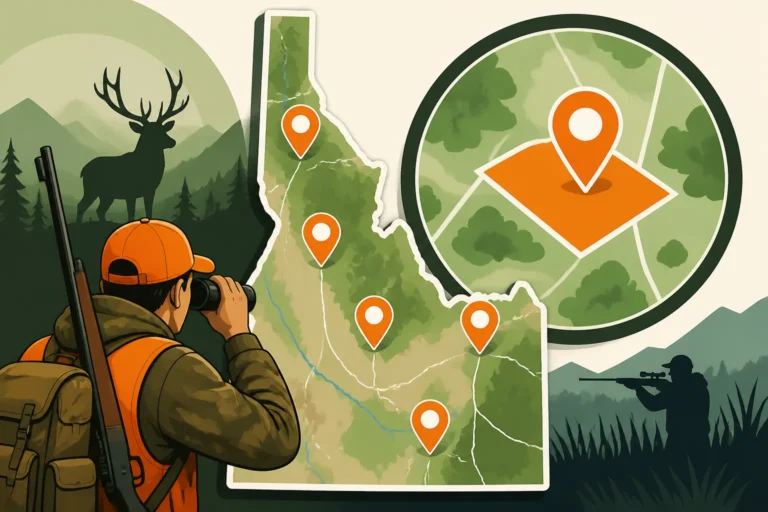
This is where your digital scouting tools become invaluable. Platforms like onX Hunt are game-changers for identifying potential pack trip units. Start by looking at road layers – or rather, the lack of them. Areas with vast stretches of green (public land) devoid of roads, or only showing faint, unmaintained tracks, are excellent candidates. Pay close attention to the wilderness boundaries overlay; these are guaranteed no-motorized-access zones. Use the topographical maps to identify areas with extreme contour lines, indicating steep terrain that naturally deters casual hunters. Reading Terrain Before You Pick a Camp is crucial, but equally important is reading the terrain to understand access.
Beyond roadless status, analyze public land percentages. Units with a high percentage of public land, especially those dominated by National Forests or BLM ground that is far from private inholdings or easily accessible roads, often lend themselves to deep backcountry experiences. You can dive into The Idaho Hunt Planner Is the Tool to Start With online, which offers maps and unit information, helping you cross-reference what you see on your mapping app with official state data. Look for areas where trail networks exist but are extensive and lead far into the interior, suggesting a commitment is required to hunt there.
Reading Unit Characteristics and Regulations
Idaho Fish and Game provides a wealth of information that, when combined with your map research, paints a clearer picture. When looking at harvest statistics, don't just focus on success rates; consider hunter densities. Lower hunter densities often correlate with more remote, harder-to-access units. Also, pay attention to the specific elk zones and units. Some zones are inherently more rugged and less accessible than others. For example, some of the units within the Lolo, Selway, or Middle Fork zones consistently offer genuine backcountry experiences.
It's also essential to scour the regulations for specific units. Some units might have unique motorized restrictions or special weapon seasons that influence hunter numbers and accessibility. Always check the official Idaho Fish and Game regulations for the specific year you plan to hunt. They'll outline any quirks for a given unit. For example, some units within designated wilderness might have stricter rules regarding Motorized Vehicles Inside Wilderness Boundaries or even Pack Stock Rules Inside Designated Wilderness. GoHunt can also be a valuable resource here, as it often consolidates drawing odds, harvest data, and unit-specific information, making it easier to filter for those less-pressured, backcountry opportunities.
| Characteristic | Day Trip Unit | Pack Trip Unit |
|---|---|---|
| Road Access | Extensive network, many access points | Few roads, long drives to trailheads, often gated |
| Distance from Truck | < 3 miles for prime hunting | 5+ miles to reach core hunting areas, multiple days |
| Terrain | Moderate hills, some steep areas near roads | Extreme elevation changes, deep canyons, dense timber |
| Hunter Pressure | Higher, especially on opening weekends | Lower, distributed over vast areas |
| Logistics | Day pack, return to truck nightly | Multi-day backpack, camping, extensive gear |
| Game Retrieval | Possible to retrieve with game cart/ATV access | Requires packing out on foot/horse, multiple trips |
| Wilderness | Minimal or no designated wilderness | Often contains large wilderness areas or roadless country |
Planning Your Pack Trip Logistics
Once you've identified a unit and secured a tag, the real work begins. A pack trip isn't just a hunting trip; it's a test of preparedness, endurance, and self-reliance. Without meticulous planning, what starts as an adventure can quickly turn into a dangerous ordeal.
Physical Conditioning and Gear Selection
You absolutely cannot underestimate the Physical Conditioning for Idaho Backcountry. Hauling a 60-pound pack over several miles of steep, uneven terrain at elevation is no joke. Start training months in advance, focusing on strength, endurance, and cardiovascular fitness. Think weighted hikes, stair climbing, and general full-body conditioning. Your body is your primary mode of transportation and retrieval in these units.
Your gear selection is equally critical. Every ounce matters. You'll need a lightweight, durable tent or shelter, a sleeping bag rated for unexpected cold, a reliable water filter, and an efficient backcountry cooking system. Navigation tools are non-negotiable – a GPS with downloaded maps (like onX Hunt), a compass, and a physical map are all essential. Think through clothing layers that can adapt to rapid weather changes. Remember, you're not just carrying your gear in; you're planning to carry out meat, cape, and antlers, potentially in multiple trips.
Pack Animals vs. Backpacking
The question of how to get your gear (and eventually your harvest) in and out often boils down to two options: pure backpacking or utilizing pack animals. Backpacking offers ultimate flexibility and silence, allowing you to go where horses can't easily tread. However, it severely limits the amount of gear and food you can comfortably carry, making longer trips challenging. It also means you're doing all the heavy lifting for meat retrieval yourself.
Pack animals, such as horses, mules, or llamas, open up a different realm of backcountry access. They allow you to carry more comfortable camps, more food, and significantly ease the burden of hauling out an animal. However, using pack stock introduces its own set of complexities: feeding, watering, shoeing, managing them in steep terrain, and ensuring you have appropriate hitching and grazing areas. Whether you own your own animals or hire a pack string outfitter, this choice fundamentally alters your hunt logistics. Many hunters find Backcountry Airstrips and Jet Boats Change Idaho Access another viable option for getting into truly remote areas, especially those deep within the wilderness where traditional road access is nonexistent.
The Realities and Rewards of Deep Wilderness Hunting
Hunting deep in Idaho's backcountry is not for everyone. It presents a unique set of challenges that can push you to your physical and mental limits. But for those who embrace it, the rewards are profound, offering an experience unlike any other.
The Unpredictable Challenges
When you're days from the nearest road, even minor issues can escalate quickly. A twisted ankle, a sudden snowstorm, or a gear malfunction can turn a hunt into a survival situation. You are largely on your own, responsible for your safety and well-being. This sense of isolation can be daunting, but it also fosters a heightened sense of awareness and self-reliance. Encountering dangerous wildlife, like a grizzly or a mountain lion, is a real possibility in some of these remote units, adding another layer of caution to your movements.
Weather, in particular, can be your biggest adversary. Idaho's mountains are notorious for rapid, dramatic shifts. A sunny autumn morning can give way to a blizzard by afternoon, dropping feet of snow and plummeting temperatures. Being prepared for everything from sweltering heat to freezing rain and heavy snow is not just smart, it's essential for survival. This often means carrying extra layers, emergency shelter, and being vigilant about forecasts, even when cell service is a distant memory.
The Profound Satisfaction of True Wildness
Despite the difficulties, the rewards of a successful backcountry pack trip are immense. There's an unparalleled sense of accomplishment that comes from harvesting an animal deep in the wilderness, far from roads and human noise. The meat tastes sweeter, the experience more meaningful. You've earned every step, every ounce, and every moment of solitude. The quiet beauty of Idaho's untouched landscapes, the crisp mountain air, and the sheer challenge of pitting yourself against nature create memories that last a lifetime.
Moreover, these remote areas often hold healthier, less-pressured animal populations. While success is never guaranteed, the opportunity to encounter mature animals less wary of human presence can be significantly higher than in heavily roaded units. The silence, the grandeur of the mountains, and the deep connection to the land are what truly draw hunters back year after year to these formidable, yet incredibly rewarding, backcountry units.
Disclaimer
This article is for general informational purposes only and does not constitute professional advice. Laws, prices and regulations vary by location and change over time. Consult a qualified professional for guidance on your specific situation.