Airport Transfers From Boise for Idaho Hunts
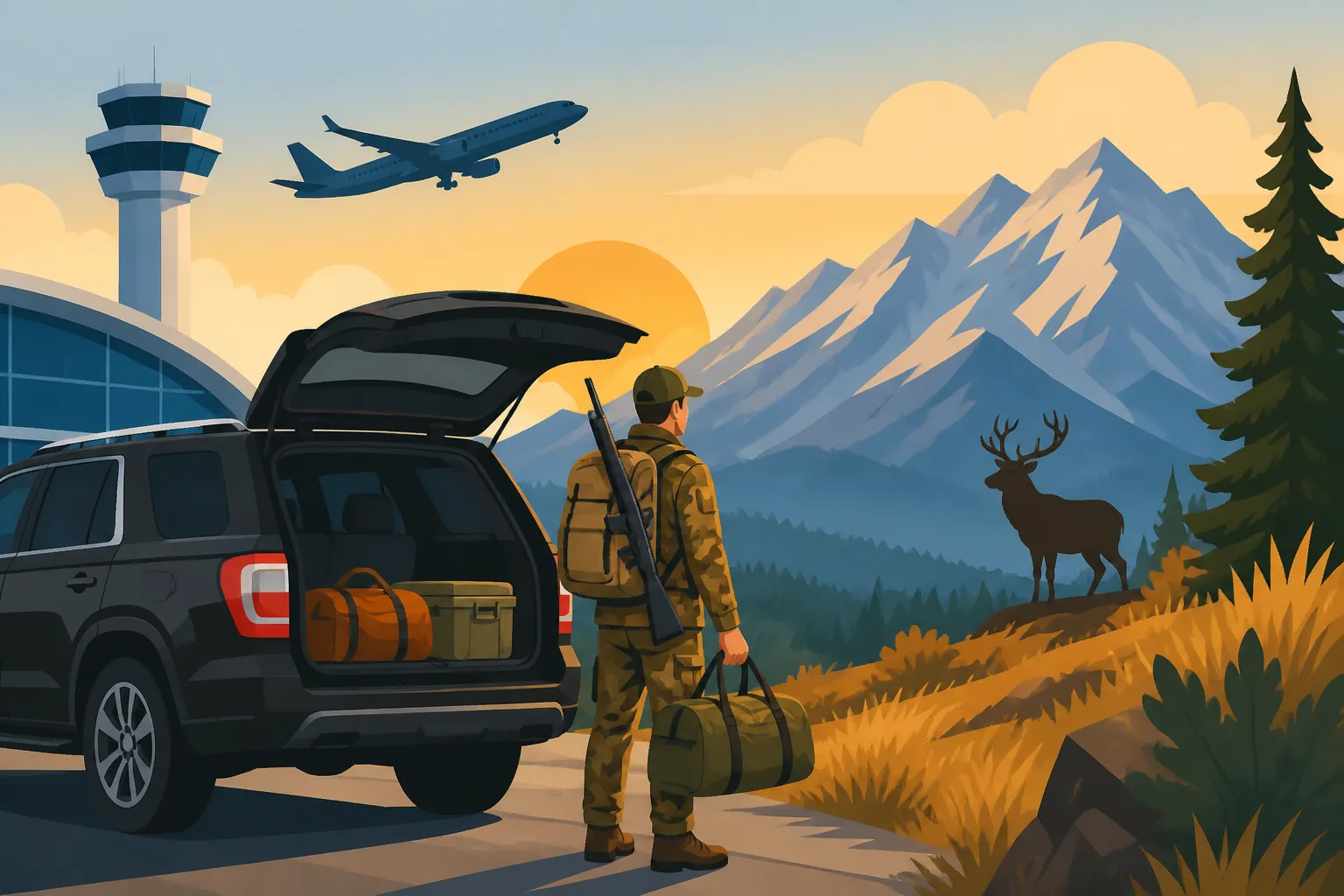
You've spent countless hours e-scouting, poring over draw odds, and finally secured that coveted Idaho hunting tag. The excitement is palpable, but a new challenge emerges for those flying in: how on earth do you get from the bustling Boise Airport, with all your gear, to that remote trailhead or outfitter camp hundreds of miles away? This guide is here to walk you through the often-overlooked logistics of airport transfers for your Idaho hunt, offering practical advice to ensure your journey to the mountains is as smooth as possible.
The Initial Hurdle: Getting From Boise to the Backcountry
Flying into Boise (BOI) often feels like the last "easy" part of your journey, especially if you're coming from out of state. You land, retrieve your luggage and firearm cases, and maybe grab a quick bite. But then reality sets in: your hunting grounds, whether it's the vast sagebrush flats for mule deer or the dense timbered mountains for elk, are rarely just a stone's throw from the city limits. Idaho is a massive state, and its prime hunting areas are often tucked away in truly wild, inaccessible terrain. The sheer distance and variety of landscapes between the Boise tarmac and your ultimate destination present a unique logistical puzzle that can easily throw a wrench into your plans if not thoroughly thought out. It’s a common frustration for hunters, this second leg of the journey, but with some foresight, it's entirely manageable.
Why Boise is a Common Gateway and Its Distance Challenges
Boise, as Idaho's capital and largest city, serves as the primary air travel hub for a huge swath of the state. If your hunt takes you to central or southern Idaho, particularly the popular units around the Owyhees, the Sawtooths, or even regions stretching toward the Frank Church Wilderness, BOI is likely your best, if not only, option for commercial air service. But here's the rub: even for areas considered "central," you're still looking at a multi-hour drive, often four to six hours, sometimes more, on highways that eventually give way to gravel, then dirt, then barely-there two-tracks.
Imagine landing after a long flight, adrenaline pumping, only to realize you still have half a day's drive ahead of you, possibly through unfamiliar terrain in the dark. That initial burst of energy can quickly dissipate into exhaustion if you haven't accounted for the vast distances. The sheer scale of Idaho means that "close" to Boise can still be a significant journey, and you need a transfer solution that respects that mileage and the type of roads you'll encounter. It's not like hunting small tracts of land a short drive from a regional airport. This is big country, demanding big planning.
Rental Cars: The Most Common DIY Option
For many DIY hunters, a rental car is the go-to solution for airport transfers from Boise. It offers unparalleled flexibility, allowing you to stop for groceries, last-minute gear, or even make a scenic detour on your way to camp. You're on your own schedule, which can be a huge plus when dealing with potential flight delays or just wanting to take your time. You can stash your hunting rifle in the trunk, making sure to follow all local transport laws, and hit the road. Choosing a Rifle for Idaho's Timber and Breaks might help you think about what kind of vehicle can get your rifle to its intended hunting grounds.
However, rental cars come with their own set of considerations. First, the cost can add up quickly, especially if you need a truck or a 4×4 SUV suitable for rougher Idaho roads. Standard sedans won't cut it on many forest service roads or two-tracks leading into prime hunting units. Booking these specialized vehicles requires foresight; they are often in high demand during hunting seasons, so reserving months in advance is critical. You'll also need to consider mileage limits, insurance options (which can be a lifeline if you encounter a stray rock or a tight turn on a gravel road), and the sheer wear and tear on a vehicle not designed for sustained backcountry travel. Rental car companies might not appreciate a truck full of muddy boots and elk hair, so be prepared to clean it thoroughly before returning. This is part of the realistic preparation that goes into E-Scouting an Idaho Unit Before the Season, including thinking about access points.
Public Transportation: Not a Realistic Hunting Option
While Boise itself has some limited public transit options, and you might find intercity bus services to larger towns like Twin Falls, Idaho Falls, or McCall, relying on these for your actual hunting transfer is simply not realistic. Imagine trying to board a Greyhound with multiple hard cases for firearms, oversized duffel bags crammed with hunting gear, a spotting scope, and your cooler for meat. It’s a non-starter.
The primary issue is that public transportation routes are designed for population centers, not remote trailheads or forest service roads that lead to hunting camps. Even if you could get to a town relatively close to your hunting unit, you’d still be faced with the enormous challenge of getting from that town's bus stop to your final destination, often dozens or hundreds of miles away in true wilderness. The logistical nightmare of hauling all your specialized hunting equipment on a public bus, let alone finding a way to get off the paved road system, makes it an impractical choice for serious hunters. This kind of travel just doesn't align with the demands of an Idaho hunt, where self-sufficiency and robust transport are paramount.
Navigating the Specifics: Outfitter Shuttles and Private Options
Once you realize a traditional rental might not be ideal, or you simply want to offload the logistical burden, you start looking at other avenues. This is where outfitters and specialized shuttle services really shine, bridging the gap between your arrival at Boise Airport and your boots on hunting ground. These options often provide a level of convenience and expertise that can be a game-changer for out-of-state hunters, allowing you to focus on the hunt itself rather than worrying about navigation or vehicle capabilities.
Outfitter-Provided Transportation: A Seamless Start to Your Hunt
For many guided hunts, particularly those that involve remote camps or designated wilderness areas, your outfitter will often provide airport transfer services. This is perhaps the most seamless way to handle your arrival. Imagine stepping off the plane, heading to baggage claim, and seeing your outfitter or one of their guides waiting for you, ready to load your gear into a comfortable and capable vehicle. This arrangement is designed to kick off your adventure without any added stress. What a fully guided Idaho elk hunt includes can vary, but transfers are often a major part of the package.
The benefits are numerous. First, convenience is key; you don't have to worry about navigating unfamiliar roads, dealing with rental car contracts, or figuring out where to buy last-minute supplies. The outfitter knows the terrain, the best routes, and often has vehicles specifically outfitted for rugged backcountry travel. This means peace of mind that you'll reach your destination safely and efficiently, even if it's deep in the timber. It also starts the camaraderie of the hunt early, allowing you to connect with your guide and fellow hunters. While it might be an added cost or factored into the overall package price, the value of this service, especially after a long day of travel, is immense. When you're asking Questions Worth Asking Before You Book an outfitter, definitely inquire about their transfer services and associated costs. If you're researching outfits, platforms like BookYourHunt can sometimes highlight services like airport transfers.
Private Shuttle Services: Tailored to Your Needs
Beyond outfitters, there are private shuttle services operating out of Boise that specialize in transport for outdoor enthusiasts and hunters. These aren't your typical airport taxis; they often run larger SUVs or vans, sometimes even capable 4×4 vehicles, specifically for long-distance travel to more remote locations. These services can be an excellent option for DIY groups who want the convenience of not driving themselves but aren't booking a fully guided experience.
The biggest advantage here is customization. You can arrange a direct pick-up from Boise, often with a driver who is familiar with hunting unit access points or specific trailheads. They can accommodate your schedule (within reason) and are typically equipped to handle bulky hunting gear, including hard-sided firearm cases and large coolers. For a group sharing the cost, a private shuttle can be surprisingly economical compared to renting multiple vehicles or a single, specialized 4×4 rental for an extended period. It eliminates the wear and tear on your own vehicle or the worry of rental car restrictions on gravel roads. However, like outfitter services, these need to be booked far in advance, especially during peak hunting seasons, as their specialized vehicles and experienced drivers are in high demand.
Ride-Sharing and Taxis: Limited Scope for Hunters
While ride-sharing apps like Uber and Lyft, and traditional taxi services, are readily available at Boise Airport, their practical application for hunters heading into Idaho's backcountry is severely limited. For getting from the airport to a hotel in Boise, or to a sporting goods store in the city for last-minute supplies, they are perfectly fine, even convenient.
However, for transferring to an actual hunting destination that's more than a few miles outside the city limits, these services quickly become impractical and incredibly expensive. Drivers are typically operating standard passenger vehicles that aren't equipped for rough dirt roads, nor are they generally willing to make multi-hour drives into remote areas. Furthermore, the sheer volume of hunting gear – hard cases for firearms, bows, large duffels, coolers, and potentially heavy packs – often exceeds the capacity of a standard sedan or even many SUVs used by ride-share drivers. The cost for such a long-distance trip, if you could even find a driver willing to take it, would be astronomical. Therefore, while useful for city travel, don't rely on ride-sharing or taxis to get you to your Idaho hunting camp.
Preparing for Your Transfer: Logistics and Gear
Once you've decided on your transfer method, the real game of logistics begins. Getting yourself from the plane to the ground is one thing, but getting all your specialized hunting gear, particularly firearms and ammunition, safely and legally to your destination requires careful planning. Overlooking these details can lead to significant delays, frustration, or even legal issues, effectively ruining the start of your hunt before it even begins. This is where meticulous attention to detail truly pays off.
Firearm and Ammunition Transport Rules
Transporting firearms and ammunition, especially when flying and then transferring to a ground vehicle, involves a strict set of rules. For airline travel, your firearms must be unloaded, cased in a locked, hard-sided container, and declared to the airline at check-in. Ammunition generally needs to be in its original packaging or a sturdy container and kept separate from the firearm, often in your checked baggage, adhering to specific weight limits. These are non-negotiable federal regulations. If you're using a suppressor, remember to check Suppressor Legality for Hunting Big Game as some states have different rules, though transport through airports follows TSA guidelines regardless.
Once you land and transfer to a rental car, outfitter vehicle, or private shuttle, the rules shift to state and local laws. In Idaho, generally, unloaded firearms can be transported openly or concealed in a vehicle. However, it's always wise to keep them cased and out of immediate reach, especially if you're traveling through populated areas or plan to make stops. If you're bringing a muzzleloader, understanding Idaho Muzzleloader Caliber Minimums: .45 for Deer, .50 for Elk is important for the hunt itself, but for transport, treat it like any other firearm in terms of safety and declaration. Always ensure your firearm is secure and inaccessible to unauthorized individuals during ground transport, whether it's in a locked trunk or a designated, secure area within an outfitter's vehicle.
Oversized and Odd-Shaped Gear Challenges
Hunting involves a lot of specialized gear, much of which is neither small nor conventionally shaped. Think about your bow in its hard case, a large backpack, a spotting scope with its tripod, waders, insulated clothing, and potentially a cooler. These items can present significant challenges when trying to fit them into a rental car, a shared shuttle, or even an outfitter's vehicle.
Airline checked baggage limits are usually the first hurdle. Many hunters pay extra for oversized or overweight bags to accommodate their bow cases or larger duffels. Once on the ground, visualize the space available. A standard SUV might seem big, but once you cram in three hunters, their personal duffels, firearm cases, and maybe a cooler or two, space disappears rapidly. If you're planning on using Fixed Blade Against Mechanical Broadheads on Elk, remember the arrow cases can be long and require careful packing. Consider compacting gear as much as possible, using vacuum-seal bags for clothing if necessary. Communicating the exact dimensions and number of your larger items to your outfitter or shuttle service beforehand is crucial. They need to know what they're accommodating to ensure they bring an appropriately sized vehicle. Similarly, if you're bringing high-quality optics like those discussed in Optics Power for Idaho's Long Canyon Sightlines, ensure they are protected and have a dedicated, secure spot during transit.
Here's a quick table to help you visualize gear considerations:
| Item Type | Airline Considerations | Ground Transfer Considerations |
|---|---|---|
| Firearms | Unloaded, locked hard case, declared at check-in | Unloaded, cased, secure in vehicle (trunk/designated area) |
| Ammunition | Original container, separate from firearm, weight limits | Keep secure, out of reach, in a sturdy container |
| Bows | Locked hard case, oversized baggage fees likely | Secure in vehicle, can be bulky, communicate dimensions |
| Backpacks | Checked baggage, often oversized/overweight | Can be bulky, consider breaking down (e.g., removing frame) |
| Optics/Tripods | Carry-on for sensitive items, checked for tripods | Protected storage, secure from movement, easily accessible |
| Coolers | Empty and clean for checked baggage | Fill upon arrival, secure with straps, account for melted ice |
| Clothing/Boots | Rolled or vacuum-sealed for space | Account for bulk and potential dirt/mud, bring scent-free bags |
Communication is Key: Coordinating Your Arrival
Effective communication is the linchpin of a successful airport transfer. Don't assume anything. Whether you're relying on an outfitter or a private shuttle service, provide them with all your flight details: airline, flight number, scheduled arrival time, and any potential connections or delays. It's wise to also give them your cell phone number and the number of a traveling companion. Confirm a specific meeting point at the Boise Airport – often a designated waiting area outside baggage claim or a specific door.
What if your flight is delayed, or worse, canceled? Having that communication established means your transfer provider can track your flight and adjust their schedule accordingly. Don't wait until you've landed to inform them of changes; reach out as soon as you know. For DIY hunters Planning a DIY Public Land Hunt in Idaho, this might mean informing your family or hunting partners of your plans and having a backup contact. Even for those using resources like GoHunt to plan their trips, the human element of communication remains paramount. A quick text or phone call can save hours of waiting or confusion. Confirm their contact information and know how to reach them once you land, especially if you anticipate limited cell service once you leave Boise.
Cost Considerations and Booking Strategies
Understanding the financial implications and how far in advance to book your airport transfer from Boise is just as crucial as knowing how you'll get to your hunting area. Unexpected costs or a lack of availability can quickly derail your meticulously planned hunt. This is where a little upfront research and a commitment to early booking can save you both stress and money.
Breaking Down the Costs
The cost of your airport transfer can vary wildly depending on the method you choose.
- Rental Cars: While seemingly straightforward, rental car costs can quickly escalate. Beyond the daily or weekly rate, consider the premium for a 4×4 or SUV, which is often essential for Idaho hunting access. Factor in fuel costs for potentially hundreds of miles of driving (and Idaho is a big state!), additional insurance (highly recommended for rough roads), and any mileage limits the rental company might impose. Cleaning fees are also a possibility if you return the vehicle full of mud and elk hair. This can become a significant chunk of your overall budget, sometimes rivaling the cost of a tag itself.
- Outfitter Shuttles: Often, outfitter-provided transfers are rolled into the total price of a guided hunt. However, some outfitters might charge an additional flat fee per person or per vehicle, especially if you have unique arrival times or require a significantly long drive. It's crucial to clarify this when you're vetting an outfitter before you send a deposit. Ask for a full breakdown of What a Guided Idaho Elk Hunt Costs to ensure transfers are explicitly included or priced out.
- Private Shuttle Services: These services generally provide a quote based on distance, vehicle type, number of passengers, and the amount of gear. They might charge a flat rate for a specific destination or a per-mile fee. While potentially more expensive than a basic rental car, they often offer a better value for groups or for those needing a more capable vehicle without the responsibilities of driving. Always get a clear, all-inclusive quote to avoid surprises.
Booking Smart and Early
This cannot be stressed enough: book your airport transfer early. This applies whether you're renting a specialized 4×4, coordinating with an outfitter, or hiring a private shuttle service. Idaho's hunting seasons are popular, and demand for all these services spikes significantly around those times.
For rental cars, especially trucks or SUVs, "early" means several months in advance. Waiting until a few weeks before your trip will likely leave you with limited, unsuitable, or exorbitantly priced options. Specialty vehicles disappear quickly. When you're working on Booking an Idaho Hunt Around the Draw Calendar, make a note to book your transfer as soon as you have your tags in hand.
For outfitter-provided transfers, confirm the details when you confirm your hunt. Most reputable outfitters will have their logistics locked down, but it's vital to ensure they have your flight information and know your gear requirements. If you're using a private shuttle, book as soon as your flights are confirmed. These small businesses often have limited fleets and drivers, and their calendars fill up rapidly. The earlier you secure your spot, the better your chances of getting the vehicle you need at a reasonable rate. Using resources like BookYourHunt or GoHunt for finding outfitters and researching units can help you identify periods of high demand for travel services in specific areas, allowing you to plan ahead.
Flexibility for the Unexpected
Even with the best planning, travel can throw curveballs. Flights get delayed, baggage goes missing, and weather can suddenly turn foul, impacting road conditions. Building in a buffer for the unexpected can save you a world of stress.
Consider arriving in Boise a day before your hunt officially starts, especially if you have a long drive ahead or your hunt begins early in the morning. An extra night in a Boise hotel allows you to pick up any forgotten gear, get groceries, or simply rest after your travels before embarking on the final leg of your journey. It also provides a cushion if your flight is delayed. Have backup contact numbers for your transfer provider, and let them know if you experience delays. For Vetting an Idaho Outfitter Before You Send a Deposit, ask about their contingency plans for client travel disruptions. Knowing your options for airport hotels or even late-night food in Boise can turn a stressful situation into a minor inconvenience. Sometimes, the peace of mind that comes from having a contingency plan is worth more than the small extra cost.
Disclaimer
This article is for general informational purposes only and does not constitute professional advice. Laws, prices and regulations vary by location and change over time. Consult a qualified professional for guidance on your specific situation.