Mountain Lion Quota Areas Explained
Trying to hunt mountain lions in Idaho can feel like navigating a constantly shifting maze, especially when you factor in the complex system of quota areas and harvest limits. It's frustrating to plan a hunt, only to find out a unit has closed due to quota fulfillment, often when you're already in the field or just about to head out. This guide will meticulously break down Idaho's mountain lion quota areas, helping you understand how they work, how to track them, and how to adapt your hunting strategy to these dynamic regulations, so you're never caught off guard.
Understanding Idaho's Approach to Mountain Lion Management
Idaho's management of mountain lions is a delicate balance, aiming to maintain healthy cougar populations while addressing concerns from livestock producers, ensuring fair chase opportunities for hunters, and managing prey species like deer and elk. It's not a simple "open season" everywhere; the state employs a nuanced system designed to react to real-time harvest data and population dynamics. This proactive approach means that what was open yesterday might be closed today, making vigilance a critical component of any lion hunt.
The Balancing Act: Conservation and Opportunity
The Idaho Department of Fish and Game (IDFG) works tirelessly to ensure mountain lion populations remain robust and healthy across the state. This isn't just about giving hunters something to pursue; it's vital for ecosystem health. Mountain lions, as apex predators, play a crucial role in managing ungulate herds and maintaining ecological balance. However, their presence can also lead to conflicts, particularly with livestock or in areas where deer and elk populations are struggling. The quota system is IDFG's primary tool to walk this fine line, allowing for harvest but controlling it precisely to prevent over-harvest in any specific area. Hunters, in turn, get the opportunity to pursue one of North America's most elusive big game animals, but with the added responsibility of understanding and adhering to a responsive regulatory framework.
Historical Context of Lion Management in Idaho
Historically, mountain lions were often viewed as varmints, with bounties placed on them in many states, including Idaho. This perspective led to unregulated hunting and significant population declines in some areas. Over time, scientific understanding evolved, and states recognized the ecological value of cougars. Idaho began managing mountain lions as a big game species, implementing regulated seasons, harvest limits, and specific hunting methods. The current quota system is a refinement of these efforts, building on decades of data collection and biological research. It represents a move towards more data-driven, adaptive management, a far cry from the blanket extermination efforts of the past. This evolution underscores the importance of every hunter’s compliance and accurate reporting in ensuring the longevity of these incredible animals.
Why Quotas Are Necessary for Sustainable Populations
So, why quotas? The simple truth is that mountain lions are notoriously difficult to survey accurately. They are solitary, elusive, and cover vast territories. Direct counts are nearly impossible. Instead, IDFG relies on harvest data, hunter reports, and other indicators to estimate population trends. Quotas act as a safety valve. By setting a predetermined number of lions that can be harvested in a specific area (a Mountain Lion Management Unit or MLMU), IDFG can prevent localized over-harvest. Without quotas, a popular area could see too many lions taken too quickly, potentially impacting the breeding population and long-term health of the cougar numbers. This system allows IDFG to quickly close a unit once its quota is met, ensuring that the harvest remains within biologically sustainable limits, protecting the resource for future generations.
How Mountain Lion Quota Areas Are Established and Defined
Idaho doesn't just draw lines on a map arbitrarily when it comes to mountain lion quotas. There's a methodical process driven by research, harvest history, and specific management objectives. Understanding how these areas are carved out and how quotas are assigned helps hunters grasp the "why" behind the rules, rather than just the "what." This detailed approach is crucial for effective wildlife management across the state's diverse landscapes.
Defining Mountain Lion Management Units MLMUs
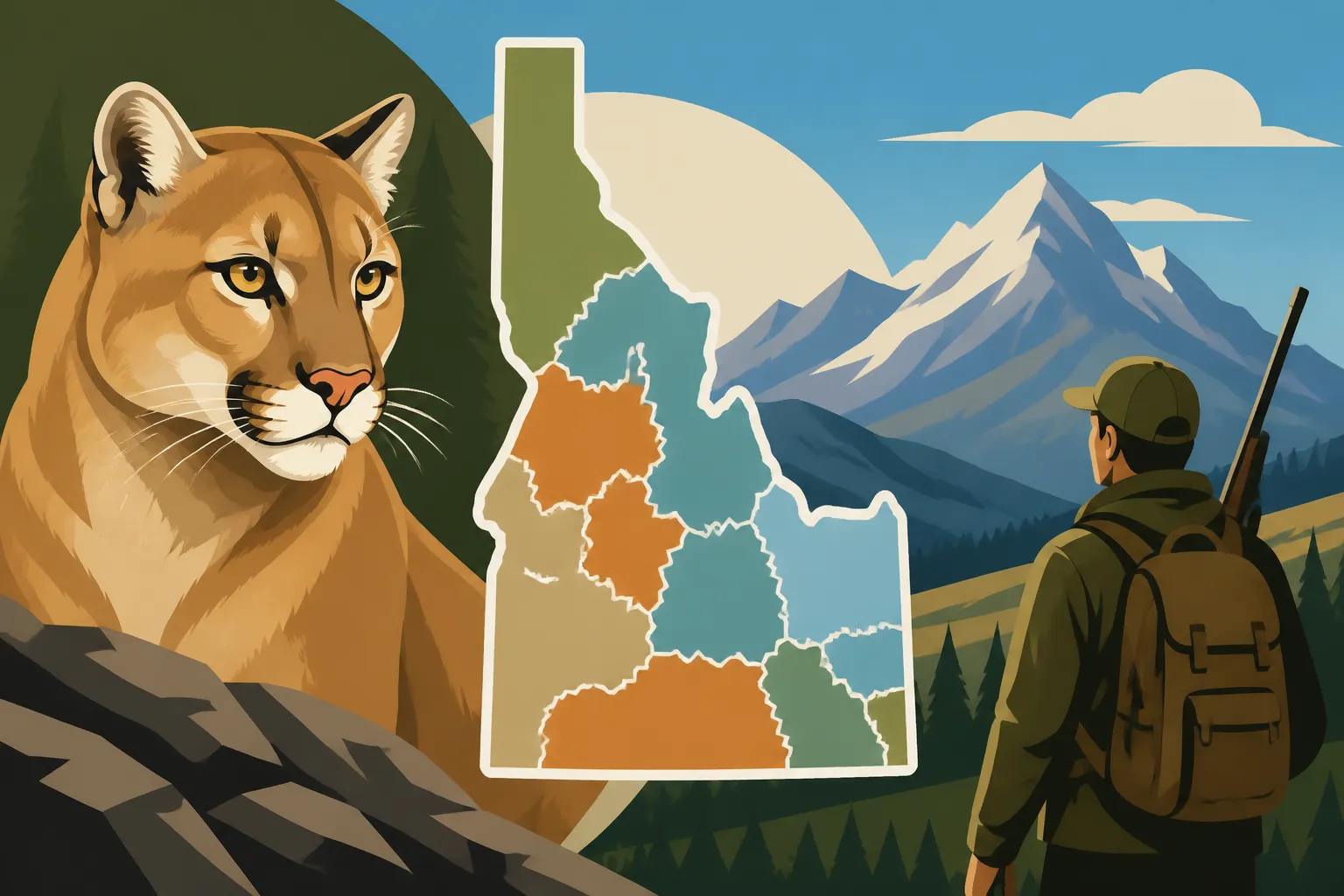
At the heart of Idaho's mountain lion quota system are the Mountain Lion Management Units (MLMUs). These units are typically defined by existing Game Management Unit (GMU) boundaries, which hunters might already be familiar with from deer or elk hunting. However, it's important to realize that several GMUs might be grouped together to form a single MLMU, or sometimes a single large GMU might be further subdivided for lion management purposes. These MLMU boundaries are critical because each unit has its own specific quota. It's not enough to know you're in Unit 1; you need to confirm which MLMU Unit 1 falls into for lion hunting. These boundaries are carefully drawn to reflect ecological distinctions, cougar habitat, and historical harvest data, allowing IDFG to manage smaller, more localized populations effectively. Hunters should always consult the official IDFG regulations map for the precise MLMU boundaries. You can often find this detail when you're performing E-Scouting an Idaho Unit Before the Season, a crucial step for planning.
The Data Behind Quota Allocations
The number of lions allocated to each MLMU isn't pulled out of thin air. It’s the result of extensive data analysis. IDFG biologists look at a variety of factors:
- Historical Harvest Data: What has been the average annual harvest in this area over the last 5-10 years? This provides a baseline.
- Population Estimates: While precise counts are difficult, various techniques, including modeling, trail camera surveys, and genetic analysis, help estimate population density and trends.
- Prey Base Health: If deer or elk populations are struggling in a particular MLMU, a higher lion quota might be set to help reduce predation pressure. Conversely, a healthy prey base might allow for a more conservative quota.
- Public Safety and Depredation: Areas with increased human-lion conflict or livestock depredation reports might also see adjustments to quotas to mitigate these issues.
- Habitat Suitability: Areas with prime cougar habitat can sustain more lions and, therefore, potentially higher harvest numbers.
This comprehensive approach ensures that quotas are biologically defensible and contribute to the long-term health of Idaho's mountain lion populations. Understanding this background emphasizes why accurate reporting, as detailed in Idaho Mountain Lion Harvest Reporting Rules, is so critical; every piece of data helps refine future quotas.
Seasonal Adjustments and Adaptive Management
Idaho's mountain lion quotas aren't static; they are part of an adaptive management strategy. This means that quotas can be adjusted year-to-year, and sometimes even within a season, based on new information or observed trends. For example, if a severe winter impacts ungulate populations, IDFG might increase lion quotas in specific areas the following year to help accelerate prey recovery. Conversely, if harvest numbers consistently fall short of the quota, it might indicate a lower population, prompting a reduction in the quota for the next season.
Moreover, the season itself is dynamic. Once a quota is met in a particular MLMU, that area closes to mountain lion hunting immediately. This real-time closure mechanism is what makes tracking quota status so important for hunters. It's a system designed to be responsive, ensuring that management objectives are met even when conditions change rapidly. This flexibility is a hallmark of modern wildlife management, allowing Idaho to react to unforeseen challenges and opportunities.
Hunting Mountain Lions: Season Structure and Quota System Details
Diving into the actual hunt, it's not just about finding a lion; it's about navigating the specific season structures and understanding how the quota system directly impacts your ability to harvest an animal. Idaho offers opportunities, but they come with stringent requirements and a need for constant awareness.
General Season vs. Controlled Hunts
Most of Idaho's mountain lion hunting takes place during a general season. This means that if you have a valid hunting license and a mountain lion tag, you can pursue lions in any open MLMU during the specified season dates, provided the quota hasn't been met. These general seasons typically run for several months, often from late fall through late winter or early spring, though exact dates vary by unit and year. It’s important to always check Where the Current Idaho Regulations Are Posted before planning your trip.
In contrast, some specific areas or unique circumstances might involve controlled hunts for mountain lions. While less common for lions than for other big game like deer or elk, controlled hunts allocate a limited number of tags through a drawing process. If you draw a controlled hunt tag, you are typically guaranteed an opportunity within that specific unit and timeframe, assuming you fulfill all other requirements. However, even within controlled hunts, general season quotas can sometimes still apply, or the controlled hunt itself might have a very small, specific quota that operates independently. Always read the controlled hunt information meticulously to understand all associated rules.
Weapon Choices and Season Dates
Idaho offers flexibility in weapon choices for mountain lion hunting, generally allowing for centerfire rifles, handguns, shotguns, muzzleloaders, and archery equipment. The key is to ensure your chosen weapon meets the minimum caliber or draw weight requirements for big game in Idaho. However, unlike some other species or specific weapon-restricted seasons (like muzzleloader-only hunts that ban scopes), mountain lion seasons typically allow for a broad range of hunting implements throughout the general season.
Season dates for mountain lions are usually quite long, often spanning from December 1st into March 31st or even April in some areas. However, these long dates come with a massive caveat: the quota closure. A unit might open on December 1st with a season set to run through March 31st, but if the quota for that MLMU is met by January 15th, the season for that unit immediately closes. This makes early-season hunting a popular choice, but also means intense competition in some high-density areas. Therefore, understanding the broader season dates is merely the first step; the real challenge lies in tracking the live quota status.
Understanding Resident vs. Non-Resident Implications
While Idaho is generally welcoming to non-resident hunters, there are distinctions when it comes to mountain lion hunting, primarily concerning tag availability and cost. Non-resident mountain lion tags are often more expensive than resident tags. Additionally, certain controlled hunt opportunities might be heavily weighted towards residents or have a limited number of non-resident tags available in the draw.
The quota system itself, however, applies equally to both residents and non-residents. Once an MLMU quota is met, it's closed for everyone, regardless of residency. This means non-residents planning a hunt need to be just as diligent, if not more so, in monitoring quota status, especially if they are traveling a long distance. Non-residents also need to be aware of the overall cost involved, as a mountain lion hunt can be a significant investment even before considering a guided trip, such as those that might specialize in Hound Hunting for Idaho Lions.
The Role of Harvest Limits and Quota Closures
The system for managing mountain lion harvest in Idaho isn't just about opening and closing units; it's also about individual hunter responsibility and prompt reporting. These elements are inextricably linked to the effectiveness of the quota system. Missing a report or misunderstanding individual limits can have ripple effects on the management of these magnificent predators.
Individual Hunter Limits
Beyond the unit-specific quotas, Idaho also imposes individual harvest limits on hunters. Typically, a hunter may only harvest one mountain lion per calendar year. This personal limit is designed to spread out hunting opportunities and prevent a single individual from taking multiple animals, further ensuring that the overall quota system functions as intended. While the unit might have a quota for ten lions, and the season is open, your personal tag only allows you to take one. It's a critical distinction to remember when you're out in the field. This individual limit often applies to other predator species as well, though specific rules can vary, for instance, compared to the multiple wolf tags allowed under Idaho Wolf Harvest Limits Per Hunter.
Reporting Requirements: Why Your Harvest Matters Immediately
This is perhaps the most crucial aspect of hunting mountain lions under a quota system: immediate harvest reporting. Idaho Fish and Game mandates that once you harvest a mountain lion, you must report it to the department within a very short timeframe – often within 24 hours. Furthermore, the carcass, and specifically the skull and hide, must be presented to an IDFG regional office or designated check station within 10 days of harvest, or sooner if the season closes before the 10-day period expires.
Why is this so urgent? Because your report directly impacts the live quota count. When you call in your harvest, that number is immediately deducted from the MLMU's remaining quota. If hunters delay reporting, the IDFG’s real-time count becomes inaccurate, potentially leading to the quota being exceeded before a closure can be enacted. This could force IDFG to reduce future quotas or even shorten seasons, impacting everyone. Your prompt compliance with Idaho Mountain Lion Harvest Reporting Rules is not just a legal obligation; it's an ethical one that supports sustainable management for all.
The Impact of Quota Closures on a Hunt
The instant a quota is met for a specific MLMU, that area is immediately closed to mountain lion hunting. This means no grace period. If you’re actively hunting in an MLMU when it closes, you must cease hunting for mountain lions immediately. This can be incredibly frustrating if you've spent days or weeks tracking a cat, especially if you're deep in the backcountry. Imagine the scenario: you're finally closing in on a track, your hounds are baying, and you get a text from a hunting buddy that your unit just closed. All that effort, and now you have to pack up and leave without a harvest. It's a real and common frustration for lion hunters.
This reality underscores the need for constant vigilance. Hunters must have a way to check the current status of quotas regularly, ideally multiple times a day when actively hunting. Being prepared for a sudden closure means having backup plans – other units you can move to, or alternative hunting activities if all nearby units are closed. The dynamic nature of these closures means that flexibility is as important as skill in a successful Idaho mountain lion hunt.
Tools and Resources for Tracking Quota Status in Real-Time
Given the dynamic nature of mountain lion quotas in Idaho, having reliable, up-to-date information is paramount. You can't just check the regulations once and assume they'll hold true for your entire hunt. Staying connected and informed is the key to navigating these real-time closures.
Idaho Fish and Game Website: Your Primary Resource
The official Idaho Department of Fish and Game (IDFG) website is, without a doubt, your single most important resource. They maintain a dedicated page for mountain lion quotas, often referred to as the "Quota Closures" or "Harvest Quotas" page. This page is updated in real-time as harvests are reported. You'll typically find a table that lists each Mountain Lion Management Unit (MLMU), its total quota, the number of lions already harvested, and the remaining quota. Crucially, it will also clearly indicate if a unit has closed.
This website should be bookmarked on your phone and checked religiously before you head into the field each day, and even periodically throughout the day if you have cell service or a satellite communicator with internet access. While other tools can be helpful, the IDFG website is the authoritative source for official closure information. It's also where you can directly access the Idaho Hunt Planner Is the Tool to Start With, which provides a wealth of information about specific units, including maps and general regulations.
Utilizing Third-Party Apps and Services
Beyond the official IDFG website, several third-party hunting apps and services have integrated Idaho's quota data, offering another convenient way to track closures. Brands like GoHunt are renowned for their mapping and data integration, often providing real-time updates on quota statuses directly within their mapping interface. This can be incredibly valuable, as you can see your current location relative to MLMU boundaries and simultaneously check if that unit is open or closed, all on one screen.
These apps often pull their data directly from the IDFG website, so while they offer a user-friendly interface, remember that the source of truth is always the IDFG's official page. However, the convenience of having this information overlaid on detailed topo maps, showing public and private land boundaries (which you can verify using Checking Public Land Percentage by Idaho Unit), can be a game-changer for planning and on-the-go decision-making. Just be sure to cross-reference with the official source, especially if you see conflicting information or if a long period has passed since an update.
Staying Informed Through Local Channels
While digital tools are indispensable, don't underestimate the power of local knowledge and communication. Before heading into a new area, consider calling the nearest IDFG regional office. Biologists and conservation officers can often provide insights into harvest trends, pressure in specific units, and anticipated closure times that might not be immediately obvious from raw data. They can also clarify any nuanced rules that might apply to a particular area, such as specific motorized vehicle restrictions like Idaho's Motorized Hunting Rule Runs August Into December, which can impact access.
Additionally, connecting with local hunters, outfitters, or even sporting goods stores can sometimes offer valuable anecdotal information about local conditions and recent harvests. While this should never replace official IDFG information, it can help you get a "feel" for the pace of harvest in an area and inform your decision-making. Just remember to verify any critical information with official sources before making a move.
Strategies for Hunting Mountain Lions Effectively Within Quota Constraints
Hunting mountain lions in Idaho with a quota system demands a level of adaptability and strategic planning that goes beyond typical big game hunts. It's not just about finding a cat; it's about finding one before the season closes. This requires a proactive approach and a willingness to adjust on the fly.
Pre-Season Scouting and Planning
Even with a dynamic quota system, thorough pre-season scouting and planning are absolutely critical. This isn't just about finding good lion habitat; it's about understanding the nuances of different Mountain Lion Management Units (MLMUs).
- Analyze Past Harvest Data: Look at IDFG's harvest reports from previous seasons. Which units typically fill their quotas quickly? Which ones remain open longer? This can give you an idea of pressure and cat density.
- Identify Multiple Backup Units: Never plan on just one MLMU. Have two, three, or even four backup units identified that you could pivot to if your primary area closes. Consider the logistics of moving camp, changing your focus, and the drive time between these units.
- Map Access and Terrain: Use mapping tools (like GoHunt) to thoroughly E-Scouting an Idaho Unit Before the Season. Identify potential access points, road systems, and trail networks. Understanding the terrain, like steep canyons and dense timber, is crucial for both pre-season planning and during the actual hunt, especially if you're hound hunting or still-hunting. Consider how Idaho Black Bear Baiting Rules Idaho Applies, as some units may have restrictions or require registration, and while not applicable to lions, it demonstrates the specificity of rules in certain areas.
- Understand Controlled Hunt Area Boundaries: If you're considering controlled hunts, make sure you clearly understand Reading a Controlled Hunt Area Boundary, as these can have very specific lines you cannot cross.
Adaptability in a Quota-Driven Hunt
Once the season opens, adaptability becomes your mantra. The "plan" you made pre-season is a guideline, not a rigid script.
- Monitor Quotas Constantly: As discussed, this is non-negotiable. Check the IDFG website multiple times a day. Set up alerts if available through third-party apps.
- Be Ready to Relocate: If your chosen MLMU's quota is nearing its limit, be prepared to pack up and move. This might mean having pre-packed gear, enough fuel for your vehicle, and flexible time off work.
- Consider Timing: Many hunters try to get out early in the season when quotas are fresh. This can lead to heavy pressure in popular units and quick closures. Conversely, hunting later might mean fewer open units, but potentially less competition in those that remain. Weigh the pros and cons based on your schedule and risk tolerance.
- Focus on Low-Pressure Areas: Use your mapping tools to identify areas with difficult access or less obvious entry points. While these areas might require more physical effort, they often hold cats that haven't been as pressured and might remain open longer due to fewer hunters. Also consider if you'll be using tools that can help, like understanding which roads qualify under Idaho's Motorized Hunting Rule.
Ethical Hunting Practices and Fair Chase
Regardless of the challenges presented by the quota system, ethical hunting practices and the principle of fair chase must always be upheld.
- Respect Closures: If a unit closes, you must stop hunting for lions in that unit immediately. Continuing to hunt is illegal and undermines the very conservation efforts designed to protect the species.
- Accurate Reporting: Report your harvest promptly and accurately. This not only fulfills your legal obligation but is vital for IDFG to manage the species effectively. It's a cornerstone of the quota system.
- Respect Private Land: Always obtain proper permission before hunting on private land, even if it's within an open MLMU. Ignorance of boundaries is not an excuse. This also applies to understanding rules like Why You Cannot Drive Off Road to Retrieve Downed Game, even if you are on public land.
- Minimize Stress on Animals: Use responsible hunting techniques that ensure a quick, clean kill. If hunting with hounds, manage your dogs ethically, ensure they are trained to avoid non-target species, and retrieve them promptly.
- Pack It In, Pack It Out: Leave no trace of your presence in the backcountry. This preserves the wilderness experience for others and maintains good relations with land managers.
By combining meticulous planning, constant vigilance, and a strong commitment to ethical hunting, you can significantly increase your chances of a successful and responsible mountain lion hunt in Idaho, even within the constraints of a dynamic quota system.
Disclaimer
The information provided in this guide is for informational purposes only and is not a substitute for the official Idaho Fish and Game regulations. Hunting regulations, season dates, and quota statuses can change frequently. Always consult the current official Idaho Fish and Game hunting regulations and real-time quota updates before planning or engaging in any hunting activity.