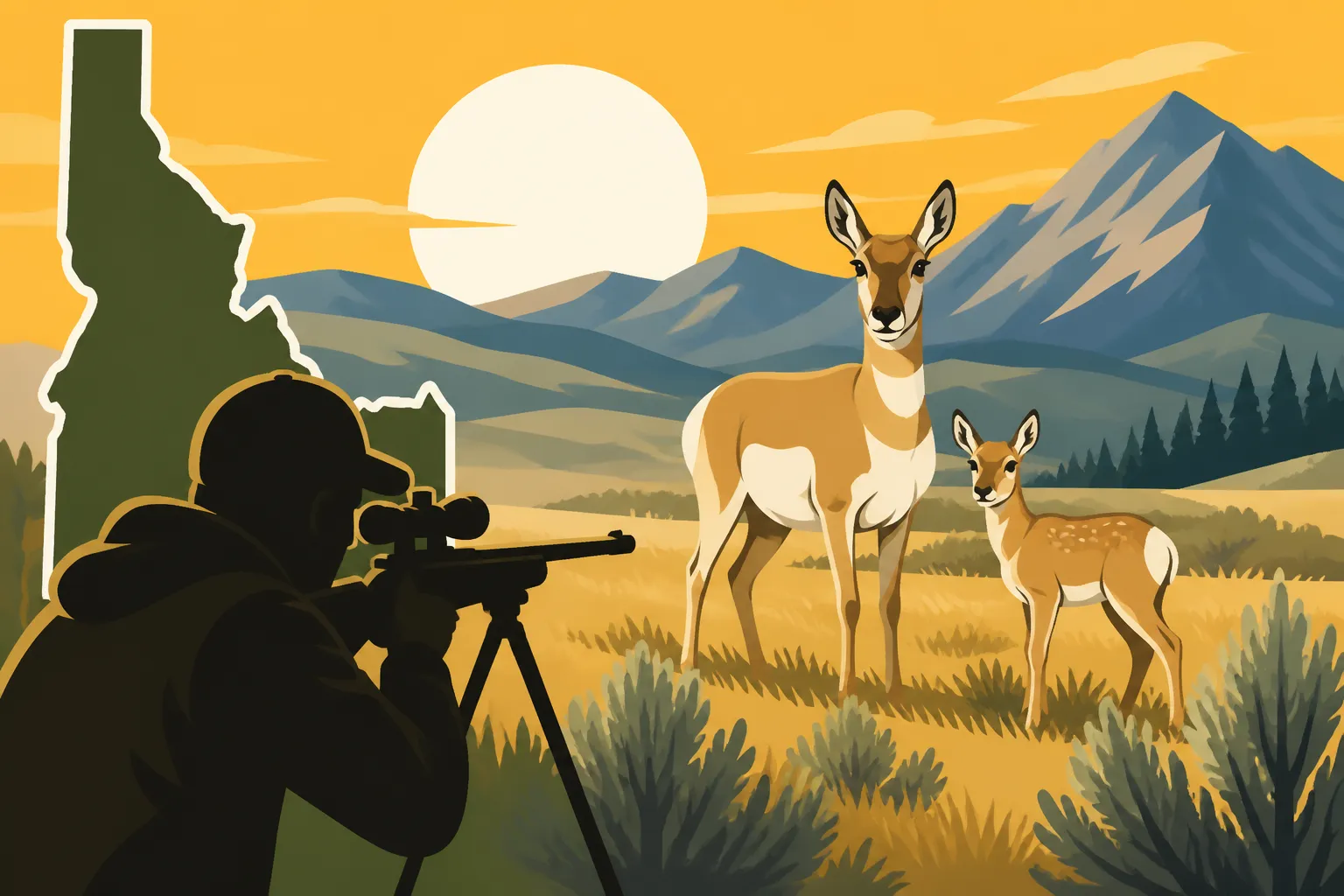
Doe and Fawn Antelope Opportunity in Idaho
If you've spent any time looking at hunting opportunities in Idaho, especially for big game, you've probably noticed that antelope tags for bucks are notoriously tough to come by. It can feel like you're playing the lottery with extremely long odds, and for many hunters, the dream of chasing one of these speedsters across the sagebrush flats seems forever out of reach. But what if I told you there’s a more accessible, incredibly rewarding way to experience an Idaho antelope hunt, one that also contributes significantly to herd management? That’s exactly what doe and fawn antelope tags offer, providing a fantastic opportunity for hunters seeking a different kind of adventure in the high desert.
Understanding Idaho's Antelope Management Philosophy
Idaho's approach to antelope hunting isn't just about offering trophy opportunities; it's deeply rooted in sound biological principles aimed at maintaining healthy, sustainable herds. This is particularly evident in how they manage doe and fawn antelope tags. These tags play a crucial role in balancing populations, ensuring that the rangelands can support the number of animals present, and ultimately, providing diverse hunting opportunities for everyone.
Why Antelope Hunts Are Controlled-Hunt Only
Unlike some other big game species in Idaho that might have general season tags available over the counter, antelope hunts are exclusively offered through a controlled hunt draw. This isn't an arbitrary decision; it's a strategic move by the Idaho Department of Fish and Game (IDFG) to meticulously manage the population. Antelope, while resilient, are susceptible to localized impacts from weather, habitat changes, and predation. By limiting the number of tags issued annually, the IDFG can precisely control harvest rates, preventing overharvest in specific units and ensuring the long-term health of the herds. It means fewer tags are out there, but each one is a carefully considered piece of the management puzzle.
This controlled approach allows the state to respond dynamically to changing conditions. For example, if a severe winter impacts fawn survival in a particular area, they can reduce tag allocations for the following season to give the population a chance to rebound. Conversely, if surveys show a robust, growing herd that is potentially exceeding habitat capacity, they might increase tag numbers to bring the population back into balance. This adaptive management is critical for a species that inhabits such specific and often fragile high-desert ecosystems, highlighting why every Idaho Pronghorn Controlled Hunt Timing decision is so important.
The system also helps to distribute hunting pressure more evenly across suitable habitats. If tags were unlimited, certain easily accessible or historically productive areas might see disproportionate pressure, leading to localized declines. By allocating tags through a draw, the IDFG ensures that hunters are spread out, reducing stress on the animals and providing a quality experience for those who do draw a tag. It might feel frustrating to apply year after year, but it's all part of safeguarding the resource for future generations, making every tag a privilege rather than a given.
Balancing Herd Health with Hunter Opportunity
The core of Idaho's wildlife management strategy is finding that sweet spot between maintaining robust, healthy animal populations and providing meaningful hunting opportunities. For antelope, this balance is especially critical. Antelope are a sight to behold, a true icon of the western landscape, and their unique biology and habitat requirements mean they need a nuanced approach. The goal isn't just more antelope, but healthy antelope that thrive in their environment, avoiding issues like disease spread or habitat degradation that can occur in overcrowded populations.
This balancing act involves continuous monitoring of antelope populations through aerial surveys, ground counts, and harvest data analysis. Biologists look at fawn-to-doe ratios, overall herd size, and habitat conditions to make informed decisions about tag allocations. When populations are at or near carrying capacity, additional doe and fawn tags can be a valuable tool to manage growth, ensuring that the available forage and water resources aren't overtaxed. This proactive management helps prevent boom-and-bust cycles that can be devastating to a herd and the hunting opportunities they provide.
For hunters, this translates into different tag types and opportunities. While trophy buck tags are highly coveted and difficult to draw, doe and fawn tags often have significantly better odds, especially in units where the IDFG aims to reduce overall numbers or redistribute pressure. This creates a pathway for more hunters to experience the excitement of an antelope hunt, even if it's not for a Boone and Crockett buck. It acknowledges that not every hunt needs to be for a giant animal; sometimes, the experience of being out in the open country, pursuing one of Idaho's most unique game species, is reward enough.
The Role of Doe and Fawn Tags in Management
Doe and fawn antelope tags are far from an afterthought in Idaho's wildlife management plan; they are a fundamental component. Think of them as precision tools that allow biologists to fine-tune antelope populations. When a herd is growing rapidly or its numbers are concentrated in areas causing agricultural damage, doe and fawn tags can be increased to gently reduce the overall population size or shift animal distribution. This is a much more effective and targeted approach than simply increasing buck tags, which might not address the root population density issues.
Beyond population control, these tags also help improve the health and vigor of the remaining animals. By selectively removing a portion of the female and young animals, the remaining does often have better access to forage, which can lead to healthier fawns in subsequent years. This can also help reduce competition for resources, especially during harsh winters, giving the entire herd a better chance of survival. It's a testament to how hunting can be a direct and positive force in conservation, actively improving the ecological balance.
For hunters, drawing a doe or fawn tag offers a unique and often less pressured hunting experience. These hunts are generally found in units that have healthy, abundant populations, meaning there's a good chance of success once you're in the field. They are also fantastic opportunities for new hunters, youth hunters, or those looking to fill their freezer with some delicious, lean antelope meat without the intense pressure or high expectations often associated with a trophy buck hunt. It's a chance to truly connect with the landscape and participate directly in responsible wildlife management.
Identifying Prime Antelope Habitat in Idaho
Idaho's landscape is incredibly diverse, from towering mountains to dense timber and vast desert expanses. When it comes to antelope, however, they are creatures of the open country. Understanding their preferred habitat is absolutely critical for anyone hoping to draw a tag and find success, whether you're targeting a buck, a doe, or a fawn. These animals have adapted perfectly to environments that would be challenging for most other big game, and knowing what they look for will put you miles ahead in your scouting and hunting efforts.
Key Geographic Regions for Pronghorn
When you picture pronghorn, you likely envision wide-open, treeless plains, and in Idaho, that image largely holds true. The vast majority of the state's pronghorn population is concentrated in the southern and eastern portions of the state, particularly in the sagebrush-steppe ecosystems. These regions, often characterized by rolling hills, expansive plateaus, and sparse vegetation, provide the ideal mix of forage and visibility that antelope depend on for survival. Areas like the Snake River Plain, the Owyhee Desert, and the southeastern plains near the Wyoming border are prime locations.
Specific game management units (GMUs) in these regions consistently hold the highest densities of antelope. Units in the Magic Valley, Upper Snake, and Southeast regions, such as parts of Units 43, 52, 53, 54, 60, 61, 62, 63, 68, and 68A, are often highlighted as having strong populations. These are the areas where you'll find the most consistent Where Pronghorn Populations Are Strongest year after year, and consequently, where the majority of antelope tags, including doe and fawn opportunities, are allocated. It's crucial to consult the current IDFG regulations and hunt planner to identify the specific units with tags available in any given year.
While these regions are generally reliable, pronghorn populations can fluctuate locally based on factors like precipitation, winter severity, and habitat improvement projects. Areas that might have been less productive a decade ago could now be thriving, and vice versa. This dynamic makes continuous scouting and staying updated with IDFG reports vital. However, generally speaking, if you're looking for antelope in Idaho, your focus should firmly be on those expansive, arid landscapes that stretch east and south from the central mountains.
Habitat Features That Attract Antelope
Antelope are truly unique in their habitat preferences, driven by their incredible eyesight and blistering speed. They thrive in open country where they can spot predators from miles away and outrun almost anything that pursues them. This means they generally avoid dense timber, steep canyons, or areas with thick brush that would impede their vision or mobility. Instead, they seek out landscapes dominated by low-growing vegetation, primarily sagebrush, grasses, and forbs. These plants form the core of their diet and provide essential cover.
Beyond the vegetation, certain topographic features are highly attractive to antelope. Gentle rolling hills and broad flats offer excellent visibility. They will often utilize subtle rises in the terrain to bed down, allowing them to scan the horizon while staying somewhat concealed from a direct line of sight. Draws and slight depressions can also provide temporary shelter from wind or sun, but they'll rarely be found in deep, timbered canyons that might hold deer or elk. Look for areas with a mosaic of different sagebrush species, interspersed with native grasses and forbs that offer a diverse food source throughout the seasons.
The overall vastness and unfragmented nature of these habitats are also key. Pronghorn prefer large, open areas where they can roam freely without encountering frequent fences, roads, or human disturbances. While they can adapt to some level of human presence, the most productive antelope grounds are often those with minimal development. Understanding these specific preferences is crucial for E-Scouting an Idaho Unit Before the Season, allowing you to pinpoint potential hotspots on maps before you even set foot in the field, saving valuable time and effort.
How Water Sources Influence Distribution
In the arid and semi-arid environments where Idaho's antelope thrive, water is an undeniable lifeline. While pronghorn are remarkably adapted to desert conditions and can often derive a significant portion of their moisture from the plants they eat, readily available water sources still play a crucial role in their distribution, especially during hot, dry periods. You won't typically find them far from a reliable water source, whether that's a natural spring, a guzzler, a stock tank, or a creek.
During the scorching summer months and into the early fall hunting seasons, antelope will often concentrate their activity around these water points. This makes water features invaluable scouting tools. Identifying springs, ponds, and cattle tanks on topographical maps or through satellite imagery can dramatically increase your chances of locating animals. It's not uncommon to see groups of antelope moving towards a water source in the mornings or evenings, or bedding within a reasonable distance of one during the heat of the day.
However, it's important to remember that water sources are not always obvious. Many springs are small seeps or intermittent puddles that might not appear on standard maps. Similarly, livestock tanks might only be visible on very detailed aerial photography. A good strategy is to use a tool like GoHunt's mapping features to identify known water points and then cross-reference with historical satellite imagery to see if there are any signs of consistent antelope activity in those vicinities. Don't be surprised to find them in areas that look completely devoid of water to the untrained eye; sometimes, a small depression holding rainwater for a few days is all they need, showcasing their incredible adaptability.
The Idaho Controlled Hunt Draw for Doe and Fawn Antelope
Navigating the Idaho controlled hunt draw system can feel a bit like deciphering an ancient scroll, especially for species like antelope where tags are limited and demand is high. While buck tags are notoriously hard to draw, doe and fawn opportunities often present a more realistic chance for success. Understanding the nuances of this application process and setting realistic expectations about drawing odds are key to eventually punching your tag on an Idaho antelope.
Application Process and Deadlines
The application period for Idaho's controlled hunts, including those for doe and fawn antelope, typically opens in the spring, usually in April, and runs through June. This is a critical window you absolutely cannot miss if you hope to hunt antelope in Idaho. The application is submitted online through the Idaho Fish and Game website or at any license vendor. It's a straightforward process, but you need to be detail-oriented to avoid mistakes that could jeopardize your application.
First and foremost, you'll need to purchase a valid Idaho hunting license for the current year before you can apply for any controlled hunts. This is a common point of confusion for new applicants – the license must be in hand before you apply, not just before the season starts. Once you have your license, you can select the specific controlled hunt codes for the doe and fawn tags you wish to apply for. The IDFG regulations booklet, available online and in print, is your best friend here. It lists all available hunts, species, units, and weapon types. Pay close attention to the details, as a small error in a hunt code can mean your application is invalid.
Remember, Idaho operates on a true lottery system; there are no preference points or bonus points that accumulate over time. Every applicant, regardless of how many years they've applied, has the same mathematical chance of drawing a tag in any given year. This means that even a first-time applicant could draw a coveted tag, though consistent application certainly increases your long-term odds by simply staying in the game. Check out When Idaho Controlled Hunt Applications Open for precise dates, and double-check your application thoroughly before submitting it, as mistakes are often non-refundable and can cost you a year's opportunity.
Understanding Drawing Odds for Doe/Fawn Tags
While buck antelope tags can have odds in the hundreds or even thousands to one, doe and fawn tags often present a much more favorable picture. The reason for this disparity ties directly back to Idaho's management objectives. In many units, the IDFG aims to manage overall herd numbers by increasing the harvest of female and young animals, which directly impacts reproductive potential. This often results in more doe/fawn tags being offered, and consequently, better drawing odds for hunters seeking these opportunities.
To truly understand your chances, you'll need to dive into the IDFG's harvest statistics and draw odds reports. These reports, usually found on the Idaho Fish and Game website under the "Hunt Planner" section, break down application numbers and tag allocations by unit and hunt code from previous years. Looking at these historical odds is crucial for formulating a strategic application. You might find some units with doe/fawn tag odds in the single digits (e.g., 1 in 5 or 1 in 10), while others might be closer to 1 in 20 or 1 in 30. Comparing these numbers will help you identify the "best bets" for drawing.
A platform like GoHunt can also be an invaluable resource for analyzing drawing odds and application trends. They often compile and visualize this data in a user-friendly format, allowing you to quickly compare different hunts and make an informed decision. Remember that odds can fluctuate year to year based on tag allocation changes and applicant numbers, but historical data provides the strongest guide. Even with better odds, drawing an Idaho antelope tag, whether for a buck or a doe/fawn, is never guaranteed, making it an exciting prospect when the results are released.
Strategic Application for Higher Success
Applying for a controlled hunt isn't just about picking a random unit; it's a strategic game, especially when you're targeting doe and fawn antelope tags where odds can vary significantly. The key is to balance your desire for a particular area with the reality of the draw odds. Don't just apply for the unit closest to home or the one you've heard about; do your homework and make an informed choice.
One effective strategy is to identify multiple units that offer doe and fawn tags and then rank them by historical drawing odds. While you can only apply for one specific hunt code as your first choice, understanding the broader landscape of opportunities allows you to adjust your strategy if a specific hunt becomes too popular. The IDFG also allows for a second choice, which can sometimes be drawn if your first choice is unsuccessful and there are leftover tags. However, it's generally best to focus on your first choice since second choices are drawn much less frequently.
Another tip is to consider the less popular weapon types. If a hunt offers tags for archery, muzzleloader, and any-weapon, sometimes the archery or muzzleloader tags will have slightly better odds simply because fewer hunters apply for them. While Are Scopes Allowed on Muzzleloader-Only Hunts might be a consideration, for a doe/fawn hunt, the opportunity itself might outweigh the desire for a specific weapon. Use The Idaho Hunt Planner Is the Tool to Start With to meticulously research each unit. Look at the public land percentages, access points, and the historical harvest statistics, specifically for doe and fawn antelope. Sometimes, a unit with slightly worse odds but better access or higher success rates for those who draw might be a more rewarding option in the long run.
Scouting and Hunting Strategies for Doe and Fawn Antelope
Once you've successfully navigated the controlled hunt draw and secured your coveted doe or fawn antelope tag, the real fun begins: scouting and hunting. Antelope are one of the most challenging animals to stalk in the open country, but with the right strategies and a bit of patience, you can turn those long odds of drawing into a high-percentage shot in the field. Remember, these hunts are often about putting meat in the freezer, so focus on ethical and effective harvesting.
E-Scouting Before You Hit the Field
E-scouting is an absolute game-changer for antelope hunting, especially for doe and fawn opportunities that are often found in vast, open landscapes. Before you even burn a drop of gas driving to your unit, spend significant time poring over satellite imagery, topographical maps, and public land ownership data. Your primary goals are to identify large expanses of suitable antelope habitat, pinpoint water sources, and locate good access points. Tools like GoHunt's mapping platform, OnX Hunt, or even Google Earth are indispensable for this phase.
Start by outlining the boundaries of your unit and then zoom in on areas with high public land percentages. Look for the classic antelope habitat: vast sagebrush flats, rolling hills, and minimal timber. Pay close attention to areas around known water sources – springs, guzzlers, stock tanks, and even isolated puddles that might collect rainwater. Antelope often concentrate their activity within a few miles of reliable water, making these areas prime candidates for closer inspection. Identify subtle topographical features like gentle ridges, draws, and small isolated clumps of cover that antelope might use for bedding or to move undetected.
Beyond habitat features, plan your access. Mark potential parking areas, legal roads, and trails. Determine how you'll approach different areas to avoid skyline yourself or spooking animals from long distances. Note any seasonal road closures or private land boundaries that might impact your hunt. Also, use the Reading an Idaho Harvest Statistics Report to see where most animals were harvested in previous years within your unit. While every year is different, historical data can point you towards generally productive areas, giving you a significant head start before you ever put boots on the ground.
Field Scouting Techniques and Timing
E-scouting provides a solid foundation, but nothing replaces actual boots-on-the-ground field scouting. Ideally, you want to get into your unit a few weeks or days before the season opener, if possible. This allows you to verify your e-scouting findings, identify current animal patterns, and get a feel for the terrain in person. Antelope behavior can shift based on forage availability, recent weather, and hunting pressure, so recent intel is gold.
The most effective field scouting technique for antelope is expansive glassing. Unlike deer or elk that often hide in timber, antelope are out in the open. You'll need high-quality binoculars (10×42 or 12×50 are excellent choices) and a good spotting scope with a stable tripod. Find a vantage point that offers a wide, unobstructed view of several square miles of prime habitat. Set up your optics and systematically grid-search the landscape, paying close attention to any movement, light-colored patches, or horizontal lines that might indicate an antelope. Patience is key here; spend hours behind the glass, sweeping every ridge, draw, and flat. Remember Optics Power for Idaho's Long Canyon Sightlines is crucial for spotting these small, distant targets.
Pay attention to where you see doe and fawn groups, their travel corridors, and preferred bedding areas. Are they watering at specific times? Are they using a particular draw to move from one feeding area to another? Note down these observations on your map or GPS. If you can't scout weeks ahead, even arriving a day or two before the opener to drive the main roads and glass from accessible points can provide invaluable real-time information, helping you refine your strategy for opening morning.
Effective Stalking and Shot Placement
Stalking antelope, particularly in their wide-open habitat, is often considered one of the most challenging hunts. Their incredible eyesight, often compared to an 8x binocular, means they will spot you long before you ever get close. The key to a successful stalk is to use the terrain and be incredibly patient and deliberate. Forget rushing; a slow, calculated approach is your only hope.
Start your stalk by identifying the group you want to target and then planning your route using every available piece of cover. This could be a subtle rise in the ground, a dry wash, a patch of taller sagebrush, or even a single juniper bush. You'll often have to crawl on your hands and knees, or even on your belly, for hundreds of yards to get within shooting range. Always keep the wind in your favor, though antelope don't have the keenest sense of smell, it's always best practice. Aim for a range where you are comfortable and confident in making an ethical shot. For many, this means 200-300 yards with a rifle, or much closer if you're bowhunting.
For doe and fawn antelope, shot placement is just as critical as it is for any big game. Aim for the vital zone behind the shoulder, targeting the heart and lungs. Antelope are relatively small-bodied animals, and while they don't have the dense bone structure of an elk, proper shot placement is essential for a quick, humane harvest. Practice your Rifle Zero Distance for Canyon Country Shooting for the open country, and be prepared to take an off-hand shot if cover runs out. After the shot, watch the animal until it's out of sight, marking the exact location. If it doesn't drop immediately, give it some time, but track quickly, as their speed can carry them far in a short amount of time, even with a lethal hit.
Essential Gear for an Idaho Antelope Doe/Fawn Hunt
A successful antelope hunt in Idaho, especially for does and fawns, hinges not only on good strategy but also on having the right gear. The open, high-desert environment presents unique challenges, from vast distances to extreme weather fluctuations. Being properly equipped can make the difference between a frustrating trip and a rewarding experience. Don't skimp on the essentials, as each piece plays a vital role in your comfort, safety, and success.
Optics for Wide-Open Country
For antelope hunting, your optics are arguably your most important piece of gear. Their habitat demands long-range glassing, so investing in quality is paramount. You'll want a good pair of binoculars, at least 10×42, but many experienced antelope hunters prefer 12×50 for their increased magnification and light-gathering capabilities. The extra power helps resolve detail at distance, which is crucial for distinguishing an antelope from a rock or identifying does and fawns from bucks. Ensure they are comfortable to hold for extended periods and have clear, bright glass.
Even more critical than binoculars is a reliable spotting scope. A 20-60x or 25-75x spotting scope mounted on a sturdy tripod is non-negotiable for serious antelope hunting. This will allow you to pick apart distant hillsides, identify specific animals, and evaluate their size and sex from afar without spooking them. You’ll be spending hours behind this piece of equipment, so ease of focus, eye relief, and image quality are key. A quality tripod is just as important as the scope itself; it needs to be stable in the wind and easy to adjust.
Don't forget a rangefinder! In the open country, distances are often deceptive. A laser rangefinder will give you precise yardage to your target, eliminating guesswork and dramatically increasing your confidence in shot placement. Many hunters also carry a small pair of compact binos (8x) on a chest harness for quick scans while on the move, reserving the higher power optics for detailed searching from a stationary position. This combination ensures you're ready for any situation the expansive Idaho landscape throws at you.
Rifle and Ammunition Choices
When it comes to rifles for doe and fawn antelope in Idaho, accuracy and flat trajectory are the most important considerations. Antelope are not large animals, but they are often shot at considerable distances across wide-open terrain. A caliber known for its inherent accuracy and moderate recoil, paired with a bullet designed for rapid energy transfer on thin-skinned game, is ideal.
Popular calibers like the .243 Winchester, 6.5 Creedmoor, .25-06 Remington, .270 Winchester, and 7mm-08 Remington are all excellent choices. For doe and fawn hunts, you don't need heavy-hitting magnum cartridges, as they often result in excessive meat damage. Focus on lighter, faster bullets in the 90-140 grain range, constructed to expand quickly without over-penetrating. Premium hunting bullets like Nosler AccuBond, Hornady ELD-X, or Barnes TTSX are all great options that perform reliably.
Practice, practice, practice at extended ranges. Get comfortable shooting from various field positions – prone, kneeling, and using shooting sticks. A flat-shooting rifle zeroed for 200 or 250 yards will simplify holdovers at longer distances. Given the open terrain, a quality scope with a BDC reticle or custom turrets can be a huge asset. Remember that even though you're hunting smaller animals, ethical harvesting requires precise shooting. This is particularly important on doe/fawn hunts where filling the freezer is often the primary objective.
Clothing and Hydration for the High Desert
The high-desert environment of Idaho can be incredibly unforgiving, and your clothing and hydration strategy need to reflect that. Early season antelope hunts often mean hot, dry days with intense sun, followed by surprisingly cool evenings. Layering is absolutely essential to adapt to these fluctuating conditions. Start with a moisture-wicking base layer to manage sweat, add an insulating mid-layer for warmth, and top it off with a windproof and water-resistant outer layer to protect against unexpected weather changes.
Camouflage patterns that blend into sagebrush and open plains are ideal, but more importantly, choose breathable fabrics that will keep you comfortable during long stalks and periods of glassing under the sun. A wide-brimmed hat, sunglasses, and sun-protective clothing are non-negotiable to prevent sunburn and heatstroke. Good quality, broken-in hiking boots that provide ankle support and can handle miles of uneven terrain are also critical.
Hydration cannot be stressed enough. You will be walking, stalking, and sweating, often miles from your vehicle or a reliable water source. Carry significantly more water than you think you'll need – a hydration pack or multiple water bottles are a must. Electrolyte supplements can also be a good idea to combat dehydration. Always have an emergency supply of water in your vehicle. Being unprepared for the heat and lack of water is not just uncomfortable; it can be genuinely dangerous in Idaho's remote high desert, particularly when you might be Packing an Elk Out of Steep Country Alone or just a doe antelope a few miles in.
Post-Harvest Considerations and Regulations
Congratulations, you've successfully harvested a doe or fawn antelope in Idaho! This is a moment of pride and accomplishment, but the hunt isn't over yet. There are crucial steps and regulations to follow post-harvest to ensure you legally and ethically care for your animal and its meat. The high-desert environment means dealing with warm temperatures, so prompt and proper field dressing is paramount to preserving the quality of your hard-earned harvest.
Field Dressing and Meat Care in Warm Weather
Antelope meat is renowned for its delicious, lean quality, but it can spoil quickly in warm temperatures if not handled correctly. The moment your animal is down, the clock starts ticking. Your first priority is to field dress the animal immediately. This involves gutting it to remove the internal organs, which are a major source of heat and bacteria. Work quickly and cleanly.
Once field dressed, try to get as much air circulation around the carcass as possible. If you're some distance from your vehicle, consider skinning the animal in the field. Removing the hide helps the meat cool down dramatically faster. Cut the animal into quarters if necessary to make it easier to pack out and cool. Carry game bags – breathable cloth bags, not plastic – to protect the meat from dirt, flies, and debris while allowing it to cool. If temperatures are high, even a few degrees can make a difference. Some hunters bring frozen water bottles or gel packs in their cooler to place inside the body cavity for an initial cooldown during transport.
Upon returning to your vehicle, get the meat into coolers as quickly as possible. Fill the coolers with ice, ensuring the meat is completely surrounded and submerged in ice if possible. Drain the meltwater regularly and replenish the ice. This rapid cooling process is vital for preventing spoilage and ensuring your antelope meat is tender and flavorful. Don't underestimate the heat; an hour or two left in the sun can ruin an otherwise perfect harvest.
Tagging and Reporting Requirements
After you've recovered your doe or fawn antelope, proper tagging is your next critical step. In Idaho, you must immediately validate and attach your tag to the carcass at the point of kill. "Immediately" means as soon as you reach the animal and before you move it. The specific instructions for validating your tag are printed directly on the tag itself, but generally, it involves notching the correct date and time and attaching it to the animal in a way that it cannot be removed or replaced without detection.
The tag must remain attached to the largest portion of the carcass (usually a hindquarter) until the animal is processed into its edible portions, or until it reaches its final destination for storage. It's also important to maintain Evidence of Sex Requirements on a Carcass as specified by IDFG regulations, often meaning keeping the hide or specific anatomical parts attached until certain conditions are met. Make sure you understand these rules clearly before you head out on your hunt.
Beyond the physical tag, Idaho has mandatory harvest reporting requirements for most big game species, including antelope. You must report your harvest to the Idaho Department of Fish and Game within a specified timeframe, usually within 10 days of harvest. This can typically be done online through the IDFG website or by phone. This data is absolutely vital for wildlife managers to track harvest rates, monitor populations, and make informed decisions for future seasons. Failing to report your harvest is a violation and can result in penalties, so don't overlook this crucial step.
Meat Salvage and Ethical Hunting Practices
Idaho law, like that in many other states, emphasizes the ethical principle of meat salvage. This means that after harvesting an animal, you are legally and morally obligated to make every reasonable effort to retrieve and care for all the edible portions of the meat. For a doe or fawn antelope, this typically means all four quarters and the backstraps. Wasting game meat is not only illegal but also fundamentally unethical and disrespectful to the animal and the privilege of hunting.
If you wound an animal, it is your absolute responsibility to track it and recover it. This reinforces the need for accurate shooting and knowing your effective range. Sometimes, even with a good shot, an animal can travel a significant distance, especially a fast antelope. Be prepared to spend hours, or even days, tracking if necessary. This commitment to recovery is a cornerstone of responsible hunting.
Finally, while the focus of a doe and fawn hunt is often meat, remember to treat the animal with respect. Take a moment to appreciate the harvest and the landscape. Dispose of offal ethically, usually by scattering it away from roads, trails, and water sources to allow natural decomposition. Participating in an antelope doe/fawn hunt is a wonderful way to connect with Idaho's wild places, fill your freezer, and contribute directly to the sustainable management of a truly iconic Western species.
| Hunt Type | General Drawing Odds (Historical Avg.) | Success Rate (Hunter-Harvested) |
|---|---|---|
| Buck Antelope | 1:50 to 1:500+ (unit dependent) | 40-70% |
| Doe/Fawn Antelope | 1:5 to 1:30 (unit dependent) | 60-85% |
| Example Unit A: | ||
| Buck Antelope | 1:120 | 55% |
| Doe/Fawn Antelope | 1:10 | 78% |
| Example Unit B: | ||
| Buck Antelope | 1:75 | 62% |
| Doe/Fawn Antelope | 1:6 | 81% |
Note: Drawing odds and success rates are highly variable by unit, specific hunt code, and year. Always consult the most current Idaho Fish and Game harvest and draw statistics for precise information. These are general historical averages for illustrative purposes only.
Disclaimer
Please remember that hunting regulations, seasons, and tag allocations in Idaho are subject to change annually. Always consult the most current official Idaho Fish and Game regulations booklet and the IDFG website before planning any hunt. This guide is for informational purposes only and should not be considered a substitute for official legal guidance or up-to-date regulatory information.