Mule Deer Winter Range Across the High Desert
The crisp, biting air of an Idaho winter can be absolutely breathtaking, but for us hunters, it brings a unique set of challenges and questions, especially when it comes to the elusive mule deer. As the snow deepens in the high country, these incredible animals start their predictable, yet often frustratingly hard-to-pin-down, migration to lower elevations. Understanding where mule deer spend their winters, particularly across Idaho's vast high desert, isn't just academic; it's absolutely vital for anyone hoping to be successful in a late-season hunt, and even more importantly, for understanding the delicate balance of their survival. This guide is going to take a deep dive into the critical topic of mule deer winter range in Idaho's high desert, unraveling the mysteries of these vital areas, the pressures they face, and how this knowledge can inform your hunting strategies and conservation efforts.
Understanding Idaho's High Desert Ecosystems for Mule Deer
When we talk about hunting in Idaho, many folks immediately picture towering timber and steep, rugged mountains. And while that's certainly a huge part of it, for mule deer, especially when winter hits, a significant portion of their survival hinges on Idaho's high desert ecosystems. These are unique, often overlooked landscapes that are just as critical as the high country.
Defining "High Desert" in the Context of Idaho
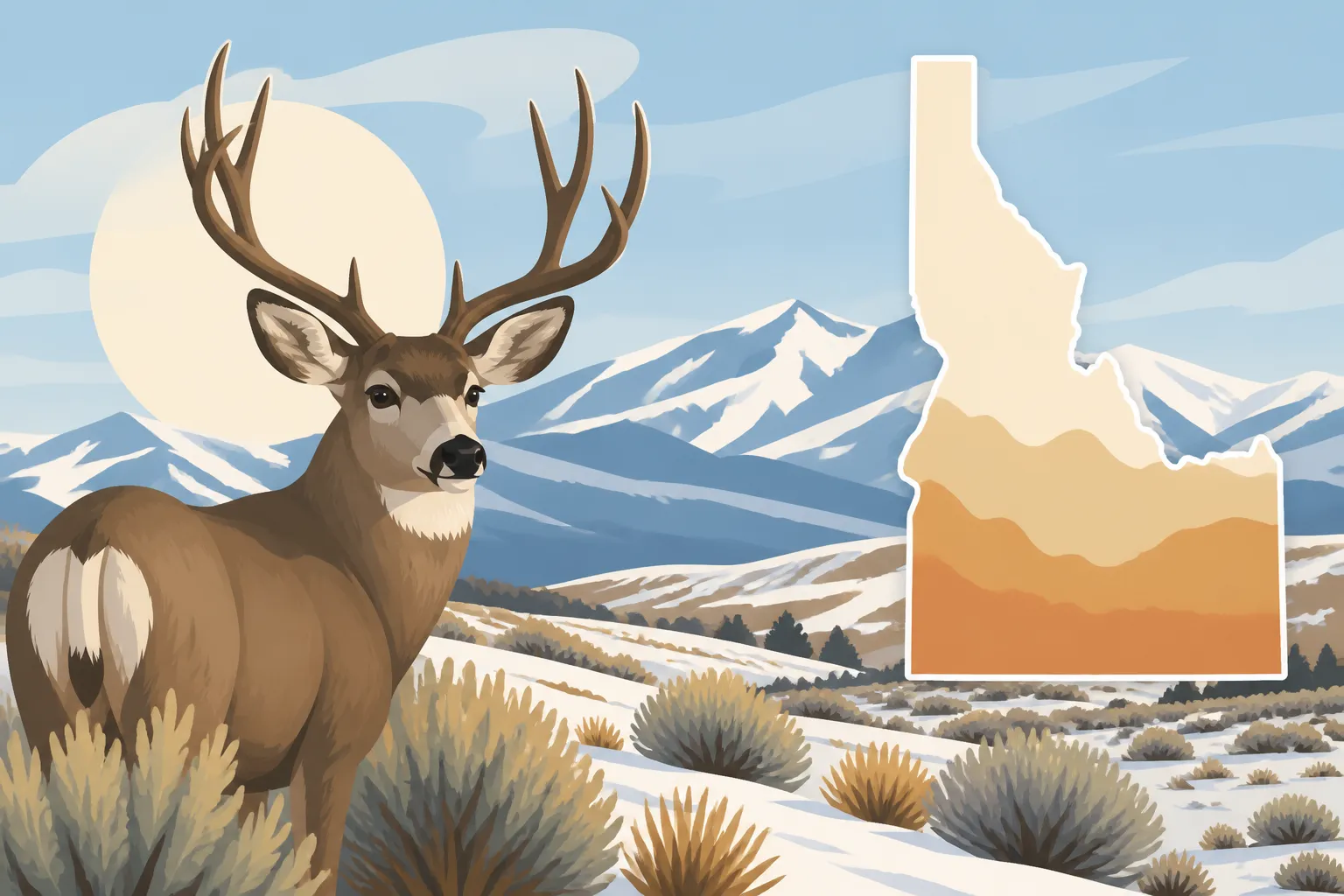
So, what exactly do we mean by "high desert" when we're talking about Idaho? We're not talking about scorching hot, sandy dunes like you might imagine in Arizona. In Idaho, the high desert primarily encompasses the expansive, arid and semi-arid regions of the southern part of the state. Think of the vast rolling hills and deeply cut canyons of the Owyhee country, the sprawling sagebrush flats of the Snake River Plain, and other similar areas that often transition into lower mountain foothills. These landscapes are characterized by their elevation, typically above 2,500 feet but often stretching much higher, combined with relatively low precipitation.
The climate here is one of extremes. Summers are usually hot and dry, with intense sun, while winters can be bitterly cold, often with significant snowfall, though it tends to accumulate differently and melt faster than in higher elevations. The vegetation is adapted to this harshness, dominated by various species of sagebrush, bitterbrush, rabbitbrush, and a mix of native grasses and forbs. You'll also find scattered pockets of juniper and mahogany, especially in draws and on north-facing slopes, providing critical cover. This isn't lush green country; it's a land of hardy, drought-tolerant plants that, to a mule deer, represent life-saving sustenance.
The Annual Cycle of Mule Deer Migration
Mule deer aren't static creatures, and their lives are largely dictated by a fascinating, ancient migration pattern that follows the seasons. This isn't just a leisurely stroll; it's a survival imperative, driven by food availability and snow depth.
During the warmer months, from late spring through early fall, mule deer are typically found on their summer ranges. These are usually at higher elevations, nestled in the mountains, forests, and subalpine meadows where feed is abundant and succulent. Here, they can pack on fat reserves, and does raise their fawns in relative safety and plenty. This is where most hunters dream of chasing velvet-antlered bucks.
However, as autumn deepens and the first significant snows begin to fall, a profound shift occurs. Triggered by shortening days, dropping temperatures, and increasing snow depth that covers their preferred forage, the deer initiate their fall migration. This is a critical journey that can span dozens, even hundreds, of miles, as they move from their high-elevation summer grounds down to their lower-elevation winter ranges. They follow age-old corridors, often funneling through specific saddles, draws, and river crossings. This transition period, especially during late-season hunts, can present unique opportunities as deer are "on the move," but it also makes them vulnerable. Many of us have felt the frustration of trying to pattern a buck only to have him vanish overnight because the snow pushed him lower.
Once they reach their winter range, primarily in Idaho's high desert, they settle in for the harshest part of the year. Here, they conserve energy, browse on winter-hardy vegetation, and try to make it through until spring. Their survival during this time depends heavily on the quality and integrity of these wintering grounds. As spring approaches, and snow melts from the mountains, the cycle reverses, and they begin their spring migration back to their summer ranges, following the green-up.
Key Habitats and Geographic Features
Within these high desert winter ranges, certain habitats and geographic features become absolute magnets for mule deer. Knowing these hotspots can be the difference between seeing a buck and seeing nothing but sagebrush.
One of the most crucial features is steep, south-facing slopes. Why south-facing? Simple science: they catch the most solar radiation. This means snow melts off them faster, exposing vital forage like sagebrush and bitterbrush much sooner than on shaded north-facing slopes. These sun-drenched areas become critical feeding grounds and often offer warmer bedding sites where deer can conserve precious energy. You'll often find deer "balled up" in these spots during mid-day, soaking up the sun.
River breaks and canyon rims also provide indispensable shelter. The deeply cut canyons of rivers like the Snake, Salmon, or Owyhee offer protection from brutal winter winds and often have milder microclimates. The rugged terrain provides thermal cover and also excellent escape cover from predators. Deer will frequently use these broken landscapes to navigate, bed, and feed, staying out of the harshest elements.
Of course, the sagebrush flats themselves are the primary cafeteria. Different species of sagebrush, particularly Wyoming big sagebrush, are incredibly important for mule deer survival. They offer browse that remains available even under moderate snow depths and provides crucial nutrients when other forage is scarce. While not as appealing as lush summer greens, it's what keeps them alive.
Finally, scattered juniper stands are vital for both thermal and escape cover. These evergreen trees break the wind, provide shade from the sun on warmer days (or camouflage against the sun's glare for a stalker), and offer visual security. Bucks, especially, will often seek out the densest juniper thickets to bed down, providing them with a sense of security and warmth against the elements. If you're looking for Where Mule Deer Winter in Sage Country, these are the features to key in on.
Characteristics of Prime Mule Deer Winter Range
Not all high desert is created equal when it comes to supporting wintering mule deer. Prime winter range has a specific combination of factors that allow deer to survive the leanest months of the year. It's a delicate balance of accessible food, adequate cover, and sometimes, water.
Critical Forage Resources
The primary goal for mule deer in winter is survival, and that means finding enough to eat to maintain body temperature and energy levels. Unlike summer, when they have a buffet of green growth, winter feed is limited, and deer become highly selective.
Sagebrush is, without a doubt, the king of winter forage in Idaho's high desert. While seemingly unappetizing to us, various species of sagebrush offer surprising nutritional value, providing protein and fats that are absolutely essential for deer when other options are buried under snow. Crucially, its woody stems often protrude above snowpack, making it accessible even after significant snowfall. Deer will spend hours browsing on sagebrush, meticulously stripping leaves and tender twigs.
Even more preferred than sagebrush, if available, is bitterbrush. This shrub is a powerhouse of nutrition, often containing higher protein levels than many other winter browse species. When deer have access to bitterbrush, particularly on sun-exposed slopes, they will gravitate towards it heavily. Unfortunately, bitterbrush is often overbrowsed or has suffered declines due to fire, making healthy stands even more valuable.
While less palatable and lower in nutritional value, juniper does provide some browse, especially during extremely harsh conditions when other options are completely unavailable. Its primary role, however, is providing dense, insulating cover, which we'll discuss next. Other grasses and forbs might be present and utilized, especially during milder periods or when snow is patchy, but they generally take a backseat to the woody browse in severe winter. The deer's digestive systems actually change to be more efficient at breaking down woody browse during these months.
Thermal and Escape Cover
Survival in winter isn't just about food; it's about minimizing energy expenditure. This means finding places to escape the relentless wind, bitter cold, and deep snow. Thermal and escape cover are paramount.
As mentioned, south-facing slopes are champions for thermal benefits. Not only do they shed snow faster, but they absorb solar radiation, creating microclimates that can be several degrees warmer than surrounding areas. Deer will bed on these slopes, often right against rocks or under sparse junipers, literally soaking up the sun's warmth. This can reduce the amount of energy they need to burn to stay warm, which is critical when their diet is already sparse.
Juniper thickets provide excellent wind protection and insulation. Imagine a deer hunkering down in a dense stand of junipers during a blizzard; those trees act like a natural barrier, cutting the windchill and trapping warmer air. This allows the deer to hunker down and ride out the worst of the weather without expending excessive energy. The thicker and more contiguous these stands, the better for the deer.
Deep canyons and river breaks offer extensive shelter from the most severe weather fronts. The topography itself breaks the wind, and the sheer faces or steep draws can offer pockets of refuge. These areas also often hold a mosaic of vegetation, providing both food and cover in close proximity.
Finally, escape terrain is crucial. Rocky outcrops, steep, broken ground, and dense juniper stands provide places for deer to quickly evade predators like coyotes and, increasingly, wolves. While not always directly related to thermal benefits, the ability to escape quickly reduces stress and energy expenditure from constant vigilance. When you're scouting, look for these combinations of south-facing exposure, thick cover, and broken terrain. It often screams "mule deer winter headquarters."
Water Sources and Their Importance
You might think water isn't a huge concern in winter when everything is frozen, but it's still a critical component of winter range, even if it's accessed differently.
During much of the winter, the primary water source for mule deer is simply snow. They will consume snow directly to meet their hydration needs. This is generally sufficient, but it does require energy to melt the snow internally, which is another reason conserving energy is so important.
However, in milder winters or during periods of chinook winds that cause temporary thaws, perennial springs or seeps can become critical, providing liquid water. These unfrozen sources offer an easier, less energy-intensive way for deer to hydrate. Knowing where these rare, unfrozen water points exist can be a golden ticket for hunters scouting late-season deer. Sometimes, these will be tucked away deep in a canyon, protected from the most severe freezes.
Deer have evolved remarkable adaptations to cope with limited liquid water. Their bodies are incredibly efficient at retaining moisture, and their winter diet of browse, especially sagebrush, contains some moisture. However, prolonged drought conditions, even in winter, can stress deer populations significantly, especially impacting fawn survival rates. When you're using tools like GoHunt to e-scout an area, try to overlay public land data with topographical maps. Sometimes, you can identify possible spring locations or low spots that might hold residual water or snowmelt longer, which could be critical for late-season animals.
Challenges and Pressures on Winter Range
Idaho's mule deer winter range, especially in the high desert, is a vital but incredibly fragile resource. It faces a barrage of challenges and pressures that threaten its integrity and, consequently, the health of our mule deer populations. Understanding these pressures is critical for any hunter who cares about the future of this species.
Habitat Loss and Fragmentation
Perhaps the most insidious and permanent threat to winter range is habitat loss and fragmentation. Idaho is growing, and with growth comes development, which too often encroaches directly onto traditional mule deer wintering grounds.
Urbanization and rural development are steadily eating away at these low-elevation lands. What was once undisturbed sagebrush steppe is now sprawling subdivisions, ranchettes, or industrial sites. This isn't just about losing acres; it's about disrupting age-old migration corridors and pushing deer into smaller, less optimal areas, increasing stress and competition for resources. It's a frustrating reality to watch prime habitat disappear under concrete and asphalt.
Agricultural expansion also plays a significant role. Vast tracts of high desert that were once perfect winter range are converted into irrigated farmland for crops. While agriculture provides some benefits (like waste grains after harvest), the wholesale conversion of native sagebrush habitat removes the essential browse that deer rely on during winter. Fences associated with agriculture can also become significant barriers, impeding the deer's ability to migrate freely to their traditional wintering grounds.
Speaking of barriers, fencing, whether for agriculture, range management, or private property, can fragment winter range and cut off crucial migration routes. A deer's ability to move between feeding, bedding, and escape cover can be severely hindered, especially in deep snow. Similarly, the proliferation of roads and infrastructure (power lines, pipelines, etc.) acts as a barrier and introduces constant disturbance. Deer are wary of human activity, and increased road densities often push them away from otherwise suitable habitat, creating "avoidance zones" that further shrink their effective range.
Wildfires and Invasive Species
The relationship between wildfires and invasive species is a vicious cycle that poses an immense threat to Idaho's high desert mule deer winter range. This is an issue that truly keeps wildlife managers up at night.
The primary culprit here is cheatgrass. This highly invasive annual grass has taken hold across vast swaths of the Intermountain West, including Idaho's high desert. It matures early, dries out quickly, and creates a continuous, highly flammable fuel bed. This dramatically alters the natural fire regime, leading to increased fire frequency and intensity. Instead of less frequent, patchy fires that native ecosystems can recover from, cheatgrass-dominated landscapes experience massive, hot, and frequent wildfires.
When these intense fires sweep through a sagebrush-dominated winter range, they destroy crucial sagebrush habitat. Sagebrush is not a fire-adapted species; it doesn't resprout from its base. Once burned, it's gone, and recovery is incredibly slow, often taking decades, if not centuries, for a healthy stand to return. In the aftermath, cheatgrass is often the first thing to grow back, creating a feedback loop for more frequent fires, preventing native species like sagebrush and bitterbrush from ever re-establishing. This means that a single wildfire can essentially eliminate a critical winter range for an entire mule deer herd for generations.
Drought and Climate Change Impacts
The long-term effects of drought and climate change are adding another layer of complexity and stress to mule deer winter ranges in Idaho. These are not isolated events but rather trends that are reshaping the landscape.
Prolonged drought conditions lead to reduced forage quality and quantity. When precipitation is low, even the hardy sagebrush and bitterbrush don't grow as robustly, meaning less browse is available for deer. This directly impacts their ability to put on fat reserves in summer and find adequate nutrition in winter, leading to weaker animals entering the lean season.
Drought also impacts water availability. While deer can eat snow, if early winter is dry, or if spring green-up is delayed, the lack of liquid water sources can become a severe stressor. Overall, these conditions contribute to increased stress on deer populations, making them more susceptible to disease and predation. Fawns, in particular, are highly vulnerable, with their survival rates often plummeting during severe drought years, which has a cascading effect on future herd numbers.
Adding to this, climate change is contributing to more erratic weather patterns. We might see earlier snowmelt in some years, which could seem beneficial, but it can also be followed by extreme cold snaps that catch deer unprepared for a sudden return to harsh conditions. It also affects the timing of green-up, which is critical for does and fawns in spring. As hunters, these environmental shifts make it even more important to monitor conditions and adapt our strategies. Platforms like GoHunt can offer data on snowpack levels and historical weather trends, which can be invaluable when trying to predict how deer might be reacting to current environmental pressures.
How Winter Range Influences Mule Deer Hunting in Idaho
Understanding mule deer winter range isn't just for wildlife biologists; it's absolutely crucial for us hunters. The seasonal shift to these lower-elevation, high desert areas dictates everything from where we focus our efforts to how we physically hunt.
Late-Season Hunting Strategies
For many of us, the late season is the holy grail for big mule deer bucks. By this time, the deer are firmly established on their winter ranges, and their patterns become more predictable, even if they're still incredibly challenging.
The cardinal rule for late-season hunting in Idaho's high desert is to focus on lower elevation, south-facing slopes. As previously discussed, these are the areas that shed snow earliest, expose forage, and provide crucial warmth. This means you're often looking for the sun-drenched side of a canyon, the southern face of a prominent hill, or the subtle rises in expansive sagebrush flats that catch the most sun. Deer are trying to conserve every calorie, so they'll be where it's warmest and easiest to access food.
Glassing techniques become the absolute cornerstone of late-season success. Since deer are concentrated and often trying to soak up sun, they can be visible from a distance. You'll spend hours behind your binoculars or spotting scope, meticulously picking apart south-facing slopes, juniper patches, and draws. Look for subtle movements, horizontal lines that don't belong in a vertical landscape, or the distinctive silhouette of an ear or antler against the snow. Knowing Optics Power for Idaho's Long Canyon Sightlines is key here, as you'll be covering vast distances. Sometimes, the snow cover can actually help, creating a stark contrast that makes deer stand out, but it also means they can see you just as easily.
Understanding deer movement patterns during harsh weather is also critical. During heavy snow or blizzards, deer will often hunker down in dense cover, only moving minimally to feed. As soon as the weather breaks, they'll be out on those sunny slopes. Anticipate these movements. A big buck might be invisible for days during a storm, only to appear on a south slope sunning himself the moment the clouds part. Remember to read the wind and always try to approach from downwind, especially when deer are congregated in these exposed areas. If you're looking for pointers, our guide on Glassing Idaho Breaks for Mule Deer offers deeper insights into these techniques.
Scouting and E-Scouting for Wintering Bucks
Effective scouting is always important, but for winter range mule deer, it's absolutely non-negotiable. You need to know the landscape inside and out.
Start with using topographical maps and satellite imagery (e-scouting) to identify key features. Look for the classic south-facing slopes, areas with dense juniper cover, and the intricate network of draws and ridges that define the high desert. Tools like GoHunt can be incredibly helpful here, allowing you to overlay different map layers (public/private land, topography, historical imagery) to pinpoint potential wintering areas. You can virtually explore an entire unit, looking for patterns. Our guide on E-Scouting an Idaho Unit Before the Season goes into much more detail on leveraging these tools.
Pay close attention to looking for historical data on snow lines and deer concentrations. Many experienced hunters or local Idaho Fish and Game personnel can offer insights into where deer tend to winter during "normal" or "harsh" winters. Satellite imagery from different times of the year can also show you where snow tends to linger or melt first. This historical context is invaluable because mule deer often use the same winter ranges year after year.
Finally, concentrate on identifying travel corridors between feeding and bedding areas. Even within their winter range, deer will have distinct paths they use to move from secure bedding cover to their preferred feeding grounds. These corridors might be subtle dips in the terrain, narrow strips of timber between open flats, or benches along a canyon wall. Finding these "deer highways" can put you in a prime ambush spot, especially early or late in the day. The Idaho Hunt Planner Is the Tool to Start With for this kind of research, as it offers a wealth of information on units and past harvest data that can indicate high-use areas.
Ethical Considerations and Conservation for Hunters
Hunting mule deer on their winter range carries a special responsibility. These animals are at their most vulnerable, and our actions as hunters can have a significant impact on their survival.
It's paramount to avoid undue stress on wintering deer. During these lean months, every calorie counts. Excessive chasing, pushing deer unnecessarily, or repeatedly disturbing them from their beds can force them to expend precious energy they cannot easily replace. A stressed deer is a weaker deer, more susceptible to disease and less likely to survive the winter. This means choosing your shot wisely, making quick, clean kills, and avoiding long, drawn-out pursuits.
Respecting private land and habitat closures is also non-negotiable. Many critical winter ranges exist on private property or within designated winter range closures that prohibit human entry during certain months. Always know your boundaries, verify land ownership with tools like onX or by checking IDFG maps (you can find helpful info like Reading an Idaho Controlled Hunt Area Boundary through the Idaho Hunt Planner), and always ask for permission if you're on or near private land. Ignoring these rules not only jeopardizes your hunt but also harms hunter-landowner relations and could lead to more closures. For clarity on boundaries, the Idaho Hunt Planner Map Center is an excellent resource.
Most importantly, we must understand the vulnerability of deer during harsh winters. A healthy-looking buck in October can be struggling by January. Mule deer winter kill is a natural, but often tragic, part of the ecosystem. As hunters, we have a role to play in minimizing our impact and supporting conservation efforts for winter range preservation. Every license and tag fee we pay contributes to the Idaho Department of Fish and Game's (IDFG) habitat work. Beyond that, consider getting involved with groups dedicated to mule deer habitat, or simply spreading awareness about the importance of these fragile ecosystems. This long-term thinking ensures that future generations will also have the opportunity to chase mule deer across Idaho's magnificent high desert.
Conservation and Management of Idaho's Mule Deer Winter Range
The future of Idaho's mule deer, and consequently, the quality of our hunting experiences, hinges on the health and integrity of their winter range. This isn't something that happens by accident; it's the result of concerted efforts by state and federal agencies, non-profit organizations, and, critically, by hunters like us.
State and Federal Management Efforts
At the forefront of winter range conservation are the various government entities responsible for wildlife and public lands. Their work is multifaceted and absolutely essential.
The Idaho Department of Fish and Game (IDFG) is the primary state agency tasked with managing Idaho's wildlife resources, including mule deer. They conduct research on deer populations, monitor habitat conditions, and implement specific programs aimed at improving winter range. This can include anything from habitat enhancement projects, like seeding native forage plants or removing invasive species, to adjusting hunting seasons and quotas to align with population health and winter range capacity. If you need information, the Idaho Department of Fish and Game Licensing Phone Line can connect you to resources and expertise.
On a larger scale, federal agencies like the Bureau of Land Management (BLM) and the U.S. Forest Service manage vast tracts of public land that serve as critical mule deer winter range. These agencies play a crucial role in implementing land-use plans that aim to protect and restore these habitats. Their responsibilities include managing grazing, wildfire prevention and rehabilitation, and coordinating with IDFG on wildlife-specific projects. Much of the high desert mule deer range falls under BLM management, particularly across southern Idaho, so understanding BLM Ground Across Southern Idaho is vital.
Often, these efforts involve collaborative projects between agencies and even with private landowners. For example, habitat restoration might involve partnerships to remove encroaching conifers from sagebrush stands or to plant new bitterbrush in areas that have been degraded. These coordinated efforts are crucial because mule deer don't recognize arbitrary property lines or administrative boundaries; their needs span across the landscape. The Motor Vehicle Use Maps for Forest Ground are another great resource for understanding how land is managed and where hunting access is allowed or restricted, often including seasonal closures that protect vulnerable winter range.
The Role of Non-Profit Organizations
While government agencies do heavy lifting, non-profit organizations are invaluable partners, often able to move quickly, fund projects through private donations, and mobilize volunteer efforts.
Groups like the Mule Deer Foundation (MDF) are specifically dedicated to ensuring the conservation of mule deer and their habitat. They champion habitat restoration projects, advocate for sound management policies, and educate the public on the challenges facing mule deer. MDF often partners directly with IDFG and federal agencies to fund and execute projects on the ground, such as removing old, detrimental fences that hinder migration or planting critical winter browse species.
Other conservation giants, like the Rocky Mountain Elk Foundation (RMEF), while focused on elk, also contribute significantly to mule deer habitat. The broad ecosystems that support elk often overlap with mule deer winter range, and RMEF's efforts in land acquisition, habitat enhancement, and advocating for public lands benefit many species, including mule deer.
Beyond these large national organizations, countless local conservation groups and volunteer efforts make a huge difference. These grassroots organizations often understand the specific needs of their local mule deer herds better than anyone and can rally community support for projects. They often provide volunteer labor for planting, fence removal, or weed eradication, stretching conservation dollars further. These groups provide vital funding for habitat improvements through grants, donations, and fundraising events, directly translating into more and better winter range for mule deer.
Hunter Contributions to Conservation
As hunters, we are often the most passionate advocates for wildlife, and our contributions to mule deer winter range conservation are fundamental, even if we don't always realize it.
First and foremost, our license and tag fees directly fund IDFG habitat work. A significant portion of the revenue generated from hunting and fishing licenses goes directly back into wildlife management, including specific projects aimed at improving and maintaining mule deer winter range. Every time we buy a tag, we are directly contributing to the future of the species we love to pursue. It's a user-pays, user-benefits model that works.
Beyond financial contributions, many hunters engage in participating in volunteer projects. Whether it's helping plant sagebrush, removing old barbed wire fences that trap deer, or participating in noxious weed eradication, hands-on involvement is incredibly valuable. It's a chance to give back to the resource and connect with the land in a different way.
Reporting observations to wildlife agencies is another simple yet powerful contribution. If you notice unusual deer concentrations, sick animals, or significant habitat degradation while scouting or hunting, letting IDFG know can provide valuable data that informs their management decisions. We are often their eyes and ears on the ground, covering vast distances that agency personnel simply cannot.
Ultimately, it's about educating others on the importance of winter range. Sharing your knowledge with fellow hunters, friends, and family about why these fragile high desert ecosystems are so critical for mule deer can foster a broader appreciation and support for their conservation. This collective awareness is vital in the face of ongoing pressures from development, fire, and climate change. Utilizing resources like GoHunt to research herd numbers, harvest statistics, and management plans can also empower you to stay informed and advocate more effectively for mule deer and their crucial winter homes. The future of Mule Deer Population Trends Across the West depends on all of us.
Disclaimer
Please remember that hunting regulations and wildlife management practices can change. Always consult the most current Idaho Fish and Game regulations and official publications before planning any hunting trip or making management decisions. This information is for educational and informational purposes only and should not be considered legal advice or a substitute for official sources.