Field Dressing and Carcass Transport Rules Explained
There’s nothing quite like the immense satisfaction of a successful hunt in Idaho, but that moment of triumph is quickly followed by the serious work of field dressing and, let’s be honest, the sometimes-daunting task of getting your animal out of the backcountry. Many hunters feel overwhelmed by the need to do it quickly, correctly, and in compliance with all the Idaho Fish and Game rules, especially when exhaustion sets in or the weather turns. This guide aims to clear up the confusion around field dressing and carcass transport rules, offering practical advice to ensure you preserve your hard-earned meat and stay on the right side of the law.
The Importance of Proper Field Dressing in Idaho's Backcountry
Field dressing is the critical first step after a successful harvest, and it’s a race against time, especially in Idaho’s often-warm early seasons or when you’re miles from the truck. Failing to properly field dress an animal quickly can mean the difference between delicious table fare and spoiled meat, not to mention potential health hazards.
Why Speed and Cleanliness Matter for Meat Quality
Imagine you’ve just taken down a beautiful mule deer buck in Idaho’s Owyhee breaks, a long way from any shade or ice. The clock starts ticking immediately. Once an animal is down, its internal temperature, especially around the core organs, starts to rise. This warm environment is a breeding ground for bacteria that will quickly degrade meat quality, leading to souring or spoilage. Rapidly removing the entrails helps the carcass cool down, slowing bacterial growth significantly.
Beyond temperature, cleanliness is paramount. During the field dressing process, it’s inevitable you’ll encounter stomach or intestinal contents. The goal is to minimize contact between these contents and the meat. A ruptured gut can contaminate large sections of the animal, making them unfit for consumption. It’s also important to clean up any blood clots or debris from the chest cavity as thoroughly as possible. While you might not have sterile conditions in the field, doing your best to keep things tidy dramatically improves the quality and safety of your meat. Think of it as beginning the butchering process right there in the woods, setting the stage for good processing later.
Essential Gear for an Idaho Field Dressing Job
Heading into the Idaho backcountry unprepared for field dressing is a recipe for disaster. You don't need a full surgical kit, but a few key items will make the job much easier, safer, and more efficient. First and foremost, a sharp knife is non-negotiable. Many hunters carry a fixed-blade knife, like a high-quality SOG or Outdoor Edge, with a blade around 4-6 inches, or a replaceable-blade knife like those from Havalon or Outdoor Edge. The replaceable blades ensure you always have a razor-sharp edge without needing to sharpen in the field. Don't forget a small sharpener if you opt for a fixed blade; a dull knife is a dangerous knife.
Next, you'll want a pair of sturdy, disposable gloves. Latex or nitrile gloves protect you from bloodborne pathogens and help keep your hands clean. They're cheap, lightweight, and absolutely invaluable. Some hunters also carry a small piece of rope or paracord, which can be useful for propping open the chest cavity for better air circulation or tying legs back. A small, lightweight bone saw can be a game-changer if you plan to split the pelvis or sternum to aid cooling. Lastly, always have some wet wipes or a small bottle of hand sanitizer. You’ll thank yourself when it’s time for a snack or to handle your phone. For those long hauls, a game bag or two is essential for protecting the meat from dirt, flies, and debris, and it makes carrying quarters much easier. When using a resource like GoHunt for e-scouting, factor in the terrain and potential heat, and pack accordingly.
Navigating Idaho's Carcass Transport Regulations
After you’ve done the hard work of field dressing your animal, the next hurdle is transporting it legally from the field to your vehicle, and eventually, home. Idaho has specific regulations designed to help game wardens verify harvests and to prevent the spread of wildlife diseases. Knowing these rules before you ever step foot into the woods will save you a lot of headache.
Evidence of Sex and Proof of Species Requirements
This is a big one, and it’s where many hunters get tripped up. Idaho law requires that evidence of sex be left naturally attached to the carcass, or at least to a portion of the carcass, during transport from the kill site to your home, a commercial processor, or a taxidermist. For male animals, this typically means leaving the testicles naturally attached or, in the case of a deboned carcass, ensuring a portion of the unskinned head or scrotum is retained. For female animals, the udder or vulva must remain naturally attached.
The primary reason for this rule is accountability. A game warden needs to be able to identify if the animal harvested matches the tag you hold. For instance, if you have an antlerless elk tag, they need to confirm it was indeed a cow. If you've tagged a bull, they need to see evidence that it was a male. It's not just about sex either; proof of species is also critical. Imagine you’ve quartered an animal and are packing it out. If you only have boned-out meat, how would a warden differentiate between elk and moose, or mule deer and whitetail? To avoid complications, leaving a portion of the head or hide with distinguishing features attached to one quarter, or having it with you, is often the safest bet. Make sure you understand the specific requirements for Evidence of Sex Requirements on a Carcass for the species you are hunting.
Transporting Whole Carcasses vs. Quarters
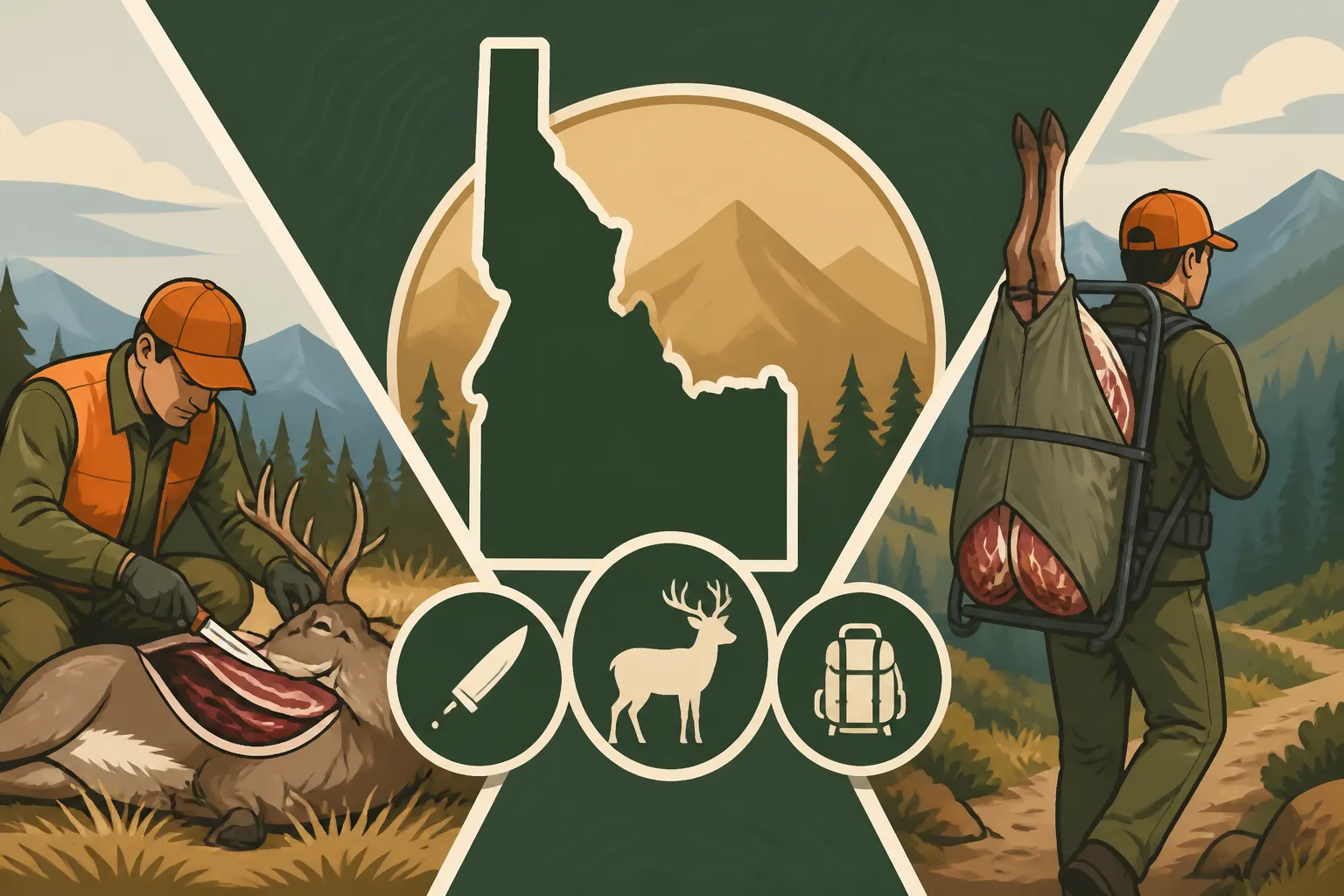
How you transport your game largely depends on the size of the animal, the terrain, and your personal capacity. For smaller animals like deer or antelope, a whole carcass (field dressed but intact) can often be loaded into a truck bed or on a game cart. However, for larger animals like elk or moose, it's almost always necessary to quarter the animal in the field. Quartering involves separating the animal into four main sections (two front shoulders, two hindquarters) plus the backstraps, tenderloins, and sometimes the neck meat. This makes the load manageable for packing out on your back, on a horse, or in a pack frame.
When quartering, remember the "evidence of sex" rule. Often, one hindquarter will have the required evidence attached. Be mindful of how you tag your animal, too. The Idaho Fish and Game regulations are clear about How Soon You Must Tag a Downed Animal, and that tag needs to be securely attached to the largest portion of the carcass. If you're using game bags, label them clearly, especially if you're hunting with a partner. Furthermore, be aware of Idaho’s strict Idaho's Motorized Hunting Rule Keeps You on the Road. You cannot drive off established roads to retrieve downed game, which means even if your animal falls close to a road, you might still be doing some heavy hauling. This makes planning your extraction route with tools like the Idaho Hunt Planner or GoHunt critical during your e-scouting phase.
Preventing the Spread of Disease: CWD and Other Concerns
Modern hunting isn't just about the thrill of the chase and filling the freezer; it's also about being a responsible conservationist. A critical aspect of this responsibility is preventing the spread of wildlife diseases, particularly Chronic Wasting Disease (CWD), which poses a significant threat to deer, elk, and moose populations. Idaho has taken a proactive stance, and hunters play a vital role in its efforts.
Understanding Idaho's Chronic Wasting Disease Rules
Chronic Wasting Disease is a neurological disease that is always fatal to cervids (deer, elk, moose). It's caused by prions and can be spread through direct animal-to-animal contact or indirectly through contaminated environments. While Idaho has generally seen a low prevalence of CWD compared to some other western states, specific management zones have been established where CWD has been detected or is a concern.
If you harvest an animal in a designated CWD management zone, there are specific carcass transport rules you absolutely must follow. Generally, hunters are restricted from transporting certain parts of the animal, particularly the brain, spinal cord, eyes, spleen, and lymph nodes, out of the management zone. These are the parts where CWD prions are most concentrated. You are typically allowed to transport boned-out meat, cleaned skull plates (antlers attached), capes for taxidermy (without spinal column or brain material), and cleaned teeth. The goal is to minimize the potential for contaminated materials leaving the area and infecting new populations. It’s imperative to familiarize yourself with the current Chronic Wasting Disease Testing in Idaho and the specific units involved before your hunt. Many hunters use mapping software like GoHunt to mark these zones on their maps.
Best Practices for Disposal and Cleaning
Beyond CWD-specific zones, general best practices for carcass disposal and cleaning are always a good idea. At the kill site, leave non-edible parts (guts, bones, hide) spread out so scavengers can quickly clean them up. This helps prevent the concentration of carcasses in one area, which can attract predators or spread disease. Never dump carcasses near roads, homes, or water sources.
When it comes to cleaning your gear, it’s not just about aesthetics. Blood, tissue, and other organic matter can harbor bacteria and disease agents. Thoroughly clean and disinfect your knives, saws, game bags, and pack frames after each use. A bleach solution (1 part bleach to 10 parts water) or a commercial disinfectant can be effective. If you’ve hunted in a CWD zone, pay extra attention to anything that came into contact with nervous system tissue. This diligence helps ensure you’re not inadvertently carrying disease agents from one area to another. Knowing Where Idaho CWD Sampling Stations Are is also crucial, as you may be required or encouraged to submit samples from your harvest for testing, particularly if you're in a CWD-affected area.
Practical Tips for Hauling Your Harvest Out of Idaho's Wilds
Getting an animal on the ground is only half the battle, especially in Idaho's rugged, expansive terrain. The real challenge often begins when you realize you're miles from the nearest road with hundreds of pounds of meat to move. Without a solid plan, this can turn an otherwise successful hunt into a grueling nightmare.
From Backcountry to Vehicle: Strategies for Heavy Loads
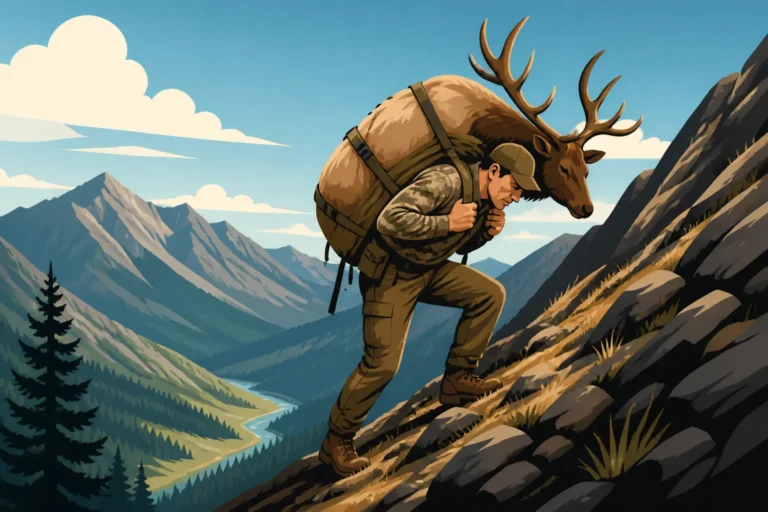
Packing out big game from Idaho’s steep timber or deep canyons requires physical conditioning and a smart strategy. For elk or moose, quartering is almost always the best approach. Each quarter can weigh 60-100 pounds or more, so using a sturdy pack frame is essential. External frame packs are often favored by meat haulers for their ability to carry heavy, awkward loads. When loading a quarter onto your pack, try to distribute the weight as high and close to your back as possible to maintain balance and leverage.
If you’re hunting with a partner, you can share the load, taking turns with the heaviest pieces. For solo hunters, it often means making multiple trips, stashing meat in cool, shaded spots, and protecting it from scavengers with game bags and perhaps a tarp. Consider covering the meat with natural debris to camouflage it if leaving it overnight. Game carts can be a lifesaver on relatively flat or gently sloped terrain, but in thick timber or across rocky draws, they quickly become more of a hindrance than a help. Remember that Packing an Elk Out of Steep Country Alone is incredibly demanding, and careful planning of your route—choosing the path of least resistance, even if it's longer—can save your body from unnecessary strain.
Keeping Meat Cool During the Journey
Idaho can throw all sorts of weather at you, sometimes within the same day. Early season hunts can be surprisingly warm, making meat care even more critical. Once the animal is field dressed, the goal is to get it cooled down as quickly as possible. Hang quarters in the shade, allowing air to circulate around them. Game bags are excellent for this, protecting the meat from flies, dirt, and debris while still allowing airflow.
If you have a long pack out or are hunting in warm temperatures, consider carrying cheesecloth bags or even lightweight pillowcases that can be dampened with water to create an evaporative cooling effect around the meat. Once you reach your vehicle, having a good supply of ice chests (coolers) is non-negotiable. Place meat directly on ice, ensuring the drain plug is open so water doesn't pool and spoil the meat. If you have a long drive home, periodically check and replenish the ice. For multi-day trips where you might not have access to fresh ice, some hunters will debone quarters right at the trailhead, making the meat more compact and easier to manage in coolers. Tools like the Idaho Hunt Planner can help you identify areas with extreme temperature swings, allowing you to prepare with appropriate cooling methods.
Here's a quick reference on carcass transport:
| Carcass Component | General Transport Rule (Outside CWD Zones) | CWD Zone-Specific Rule (Consult IDFG) |
|---|---|---|
| Boned-out Meat | Allowed (all areas) | Allowed |
| Quarters | Allowed, with evidence of sex attached to one. | Allowed, with evidence of sex attached. |
| Whole Carcass | Allowed for most species/zones if manageable. | Restricted (see below) |
| Head/Antlers | Allowed. | Skull plates & antlers allowed if brain removed and cleaned. Whole heads restricted. |
| Cape (for taxidermy) | Allowed. | Allowed if no brain/spinal tissue attached. |
| Spinal Column/Brain | Allowed. | Restricted. Cannot leave CWD zone. |
| Spleen/Lymph Nodes | Allowed. | Restricted. Cannot leave CWD zone. |
| Evidence of Sex | Must remain naturally attached to largest part of carcass during transport. | Must remain naturally attached. |
Remember, these are general guidelines; always check the latest Idaho Fish and Game regulations for the most current and specific rules, especially regarding CWD zones, which can change.
Disclaimer
Please remember that hunting regulations can change frequently. The information provided here is intended for general guidance and informational purposes only and does not constitute legal advice. Always consult the official Idaho Fish and Game regulations, current year proclamations, and any local restrictions before planning or undertaking a hunt. It is the hunter's sole responsibility to know and comply with all applicable laws and regulations.