Bugling Against Cow Calling Through September
The September elk woods in Idaho can be a real head-scratcher when it comes to calling. One moment, you hear a bull screaming his head off, and the next, everything goes dead silent, leaving you wondering if you should try to challenge him or play it coy with cow calls. It’s a common frustration, feeling like you’re either too aggressive or not aggressive enough, and figuring out the right vocalization at the right moment can truly make or break your hunt. This guide is here to walk you through the nuances of bugling versus cow calling strategies in Idaho throughout September, helping you understand when and how to deploy each to increase your chances of success.
Understanding Elk Behavior in September
September is a month of significant transition for Idaho elk, moving from bachelor groups and pre-rut tension to the full-blown chaos of the rut. Knowing where they are in this cycle is paramount to choosing the right call, or no call at all.
Early September: Pre-Rut and Bachelor Herds
As September kicks off, many bulls are still hanging out in bachelor groups, often in high-elevation timber or north-facing slopes, enjoying the last of the cooler weather before the real work begins. Their velvet is typically gone, and you might see them sparring lightly, rubbing trees, or just generally enjoying a somewhat relaxed existence. Cows and calves, on the other hand, are usually in separate herds, focused on feeding and fattening up for the winter ahead.
During this early period, vocalizations are generally minimal. You might hear an occasional soft "estrus buzz" or a quiet, questioning bugle, mostly as a form of social communication rather than aggressive challenges or breeding calls. It’s a classic frustration for hunters to go out on September 1st with high hopes of screaming bulls, only to be met with silence. If you charge into the woods with aggressive, screaming bugles, you’re very likely to spook these bachelor bulls, sending them off quietly into the next drainage. They’re just not in the mood for a fight yet. For example, imagine you’ve just hiked into a basin at dawn on September 5th, and you hear a faint, almost lazy bugle in the distance. Your first instinct might be to let out a thunderous challenge. However, a more effective approach here would be a quiet locator bugle or even a few soft cow mews, just to gauge interest without immediately signaling "threat."
Mid-September: The Build-Up to the Peak Rut
By mid-September, things start to shift. Bulls begin to break away from their bachelor groups and actively seek out cow herds. The tension in the air is palpable. You'll notice more rubbing, more ground pawing, and the bugles become more frequent and often more assertive. This is the period when dominant bulls start to gather their harems, and satellite bulls are constantly circling, looking for an opportunity to cut off a cow or challenge the herd bull. This is also when you'll begin to notice more aggressive responses to your calls.
Hunters often find themselves in a quandary during this stage: is it truly time for a full-on bugle battle, or should I still be cautious? The answer is often a mix, but leaning more towards active calling. Herd bulls will be protective and more likely to respond to a challenge. Cow calls also become increasingly enticing, as bulls are actively searching for receptive cows. This is when you can really start to implement some of the strategies we'll discuss later, playing off the increasing aggression and desire. It’s a good idea to pay attention to When the Elk Rut Actually Peaks Out West, as this mid-September timeframe is the exciting run-up to that climax. Understanding the difference in Bugle and Cow Call Timing Through September is critical here.
Late September: The Peak Rut and Post-Rut Lull
The last week or two of September usually marks the peak of breeding activity in many Idaho elk zones. Bulls are often "locked down" with their cows, herding them aggressively and chasing off any challengers. Bugling can be nearly constant, a symphony of roars and chuckles echoing through the timber and across canyons. However, this intense activity can also lead to a post-rut lull by the very end of the month, as some cows become bred and bulls start to tire.
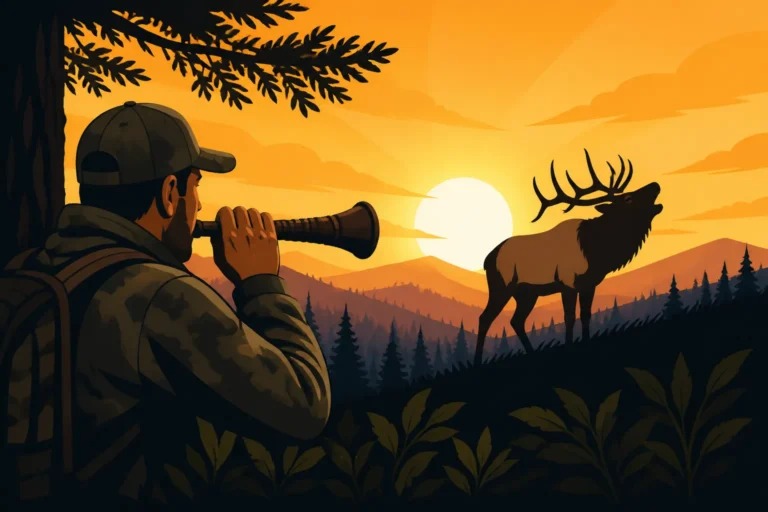
During the peak, locator bugles are fantastic for finding these active bulls. Challenge bugles can be highly effective, especially for drawing out a dominant bull who simply cannot tolerate a rival in his territory. Even if a bull is "locked down" with his harem, a well-placed challenge bugle can sometimes pull him away, or at least distract him enough for you to close the distance. This is also when estrus-heavy cow calls become incredibly powerful, capable of luring in satellite bulls who are desperate for a receptive cow, or even pulling the attention of a herd bull away from his immediate duties. The frustration here is when a bull is bugling his head off, sounds close, but simply won’t leave his cows. That's when you really need to consider your strategy, perhaps moving to cut him off or using more enticing cow calls to pull him. During this period, you’ll be seeing plenty of fresh sign, and understanding Reading Fresh Elk Sign in Dark Timber will help you confirm you're in an active area.
The Art of Bugling in September
Bugling an elk isn't just about making noise; it's about making the right noise at the right time, with the right intention. There’s a distinct difference between a general locator bugle and an aggressive challenge, and knowing which one to use is key to success in Idaho’s diverse elk country.
When to Deploy a Challenge Bugle
A challenge bugle is exactly what it sounds like: a direct, aggressive vocalization meant to mimic a rival bull encroaching on another bull's territory or cows. These are typically loud, long, and often accompanied by aggressive growls and chuckles at the end. You'd use a challenge bugle when you've already located a bull and want to draw him in for a confrontation, or when you believe another bull is nearby and you want to assert dominance or elicit a response.
The mistake many hunters make, born of excitement, is to just scream their loudest bugle at the first sound of an elk. This can be counterproductive, especially early in the month or on heavily pressured public land. A well-timed challenge bugle needs context. If a bull has just bugled, giving a confident, slightly more aggressive bugle back can often get him fired up. The trick is to not over-bugle. Once you get a response, listen. Does he sound like he’s coming in? Is he turning away? Give him time to process and respond. After you bugle, move a few steps, set up for a shot, and be ready. Elk can cover ground quickly and surprise you. This is also where you might consider using locator bugles first, as discussed in Locator Bugles for Finding Bulls at Dawn, before escalating to a full challenge.
Locator Bugles and How to Use Them
Unlike a challenge bugle, a locator bugle isn't meant to draw an elk in. Its primary purpose is simply to pinpoint an elk’s location without immediately putting them on high alert. These are typically softer, shorter, and more inquisitive bugles, lacking the aggressive growls or chuckles. Think of it as saying, "Is anyone out there?" rather than "Come fight me!"
Locator bugles are incredibly effective at dawn and dusk, or when you're hunting in thick timber where visibility is limited and you need to get a general bearing on where elk might be. You might use one from a ridge top overlooking a large basin, or from a dense patch of timber where you suspect elk are bedding. You're listening for a response, not expecting them to come running in. If you get a response, you can then begin to plan your approach, considering wind direction, terrain, and how you might follow up with other calls. Before hitting the woods, consulting resources like GoHunt can help you identify likely bedding areas or travel corridors where a well-placed locator bugle might elicit a response without alarming the entire herd. Knowing the lay of the land can really help you choose your calling spots effectively.
The Importance of Mimicking Elk Vocalizations
One of the biggest lessons in elk calling is that you’re not just making noise – you're communicating. This means listening intently to the elk themselves and trying to mimic what they’re doing. Elk have a wide range of vocalizations, and the better you can replicate them, the more convincing you’ll be.
Learn to identify a dominant bull's herd bugle, which often includes distinct chuckles and grunts indicating he has cows. Distinguish it from a lost or lonely bull's bugle, which might sound more plaintive. Similarly, cow calls vary from soft, contented mews to pleading estrus whines. Many hunters just get a diaphragm call and practice screaming. But if you’re not listening to the rhythm, intensity, and duration of what actual elk are doing, you’re missing a huge piece of the puzzle. Imagine a scenario where a bull is softly mewing and chirping as he moves through the timber. If you come in with a loud, aggressive challenge bugle, you've completely broken the illusion and likely sent him packing. Instead, a few soft mews in return, matching his energy, might draw him closer out of curiosity. Practice, listen to recordings, and most importantly, listen to the actual elk in the field.
Mastering the Cow Call Throughout September
While bugling often gets all the glory, the subtle allure of cow calls is frequently the most potent weapon in a September elk hunter’s arsenal, especially as the month progresses and bulls become more focused on breeding.
The Subtle Allure of Estrus Calls
An estrus call is a short, soft, pleading cow call designed to mimic a cow that is ready to breed. It’s distinct from a general contact mew. It often has a slightly higher pitch and a more drawn-out, nasal quality. These calls can be incredibly effective during the peak rut in mid to late September because they tap directly into a bull's strongest instinct: reproduction.
Many hunters, particularly those focused on bugling, underestimate the power of a well-executed estrus call. They can work wonders on satellite bulls who are circling a main herd, hoping to pick off a receptive cow. They can also, surprisingly, pull a dominant herd bull’s attention away from his harem, especially if he thinks he can quickly court a new cow without abandoning his current ones. The key is subtlety and realism. You’re not trying to shout; you’re trying to tempt. This is where a calling partner can be invaluable, with one hunter calling and the other setting up for the shot. Check out Two-Hunter Calling Setups That Actually Work for strategies on how to position yourselves for success.
Chirps, Mews, and Calf Calls for Different Scenarios
Beyond the estrus call, there’s a whole symphony of cow and calf vocalizations that can be leveraged. Soft, contented mews and chirps are excellent for reassuring elk that might be a bit wary, or for attracting curious cows and younger bulls. If you've just made a more aggressive bugle and a bull hangs up, a series of soft mews can sometimes calm him down and convince him to come closer.
Calf calls, particularly a "lost calf" bawl, can also be surprisingly effective in specific situations. These calls can sometimes draw in protective cows, which in turn might bring a bull with them, especially if he's the herd bull and feels a protective instinct over his entire group. A real-life scenario might be a bull staring intently in your direction, clearly on high alert. Instead of another bugle, which would likely send him crashing through the timber, a soft, almost imperceptible chirp or a couple of gentle mews might just convince him that what he heard wasn't a threat, but simply another elk. Tools like GoHunt can assist in understanding terrain and potential hidey-holes where these subtle calls might be effective, as elk often move cautiously through dense cover when responding to quiet sounds.
Combining Cow Calls with Bugles
Often, the most deadly strategy in September elk hunting isn't solely bugling or solely cow calling, but a thoughtful combination of both. This approach simulates a small, active herd, which can be highly convincing to a bull looking for receptive cows or a rival bull intruding on his domain.
The most common combined strategy involves one hunter bugling (acting as a bull) while another hunter, or even the same hunter using a diaphragm call with a mouth call, makes cow mews and chirps. This paints a picture of a bull with a few cows, making him a more compelling target for an aggressive herd bull or a more attractive prospect for a lonely satellite bull. Imagine setting up: the primary caller lets out a challenge bugle, and then immediately follows with a few soft cow mews. This makes the bugling bull sound less like a lone ranger and more like a bull that's already got some action. For a single hunter, this takes practice, but mastering a diaphragm call allows you to bugle with one hand and cow call with your mouth or vice-versa. Hunter frustration often comes from trying to do too much at once, but with practice, this combined approach can be incredibly potent. When considering areas that might experience heavy pressure, like some National Forest ground in Idaho, a combination of calls can often stand out from the noise, as discussed in Calling Elk on Pressured National Forest Ground.
Adapt Your Strategy to Pressure and Terrain
No matter how well you can bugle or cow call, success in Idaho's September elk woods often boils down to adapting your strategy to the realities of hunting pressure and the specific terrain you're in.
Calling on Pressured Public Land
Idaho offers vast tracts of public land, but much of it sees significant hunting pressure, especially on opening weekend and during the peak of the rut. Elk on these pressured lands are incredibly smart and become call-shy very quickly. If you're hunting within a mile or two of a road or popular trailhead, loud, aggressive bugling can often do more harm than good, sending elk deeper into inaccessible terrain.
On pressured public land, subtlety is often your best friend. Lean heavily on soft cow mews, chirps, and estrus calls. If you bugle, make it a soft, inquiry bugle, and listen closely. Sometimes, silence is truly golden. Instead of constant calling, focus on still hunting through prime elk habitat, using your calls sparingly to confirm presence or to make one last attempt to draw an animal that you’ve already spotted. The goal isn't to draw the bull to you with a battle cry, but to make him think there's a receptive cow or a non-threatening group of elk nearby. You might also find it useful to move further away from popular access points. Even a half-mile more can make a world of difference. Understanding Reading Wind in Steep Timbered Country is also paramount here, as pressured elk will use their senses to the fullest.
Using Terrain to Your Advantage
Idaho’s diverse landscapes, from the steep timbered mountains of the Panhandle to the rolling sagebrush country further south, mean that sound travels differently depending on where you are. Understanding how terrain affects your calls is crucial.
In deep canyons and draws, sounds can echo, making it hard for elk (and you) to pinpoint the exact location of a call. Use this to your advantage: call from a ridge, letting your sound carry into the draws below. However, be mindful that your call will also carry up the opposite slope, potentially spooking elk you didn't even know were there. In thick timber, sound is absorbed much more quickly, meaning you’ll need to be closer to elk for your calls to be effective. Conversely, in open country, your calls will carry a long way, requiring more caution. Use ridges and dense timber for cover when calling, setting up so that any responding animal has to come into your shooting lane to investigate. Knowing how to effectively use Using Benches and Draws to Close Distance also plays into this. Remember, the elk live in this terrain, they understand how sound works there better than you do, so try to use it to your advantage, not against yourself.
When to Go Silent and Stalk
Sometimes, despite your best calling efforts, elk just aren't responsive, or they've committed to coming in but hung up just out of sight. This is when the most difficult, but often most effective, decision needs to be made: drop your calls and switch to a silent stalk.
It's an intense moment when an elk is close, bugling back, but won't quite commit. Your heart is pounding, and the temptation to keep calling is overwhelming. But often, the last few yards are won by silence and careful movement. If you’ve got a bull responding but he’s stopped just inside the timber, or you hear him moving parallel to you, it’s time to put the calls away and become a predator. This is particularly true for bowhunters, who need to get incredibly close. For them, understanding How Close a Bowhunter Needs to Get on Elk is a critical factor. Using GoHunt’s mapping features can help you visualize the terrain, identify potential bedding areas, and plan a silent approach route through the densest cover. This can be the difference between a close encounter and an empty tag. Don't be afraid to switch from caller to stalker, especially when you know they are in close proximity or when a prolonged calling sequence simply isn’t working.
| Call Type | Best Use (Early September) | Best Use (Mid September) | Best Use (Late September) | Key Consideration |
|---|---|---|---|---|
| Locator Bugle | Initial contact, gauge interest | Locate active bulls, gauge distance | Find hot bulls, challenge herd dynamics | Soft, inquisitive, not aggressive. Aim to get a response. |
| Challenge Bugle | Risky, can spook bachelor bulls | Challenge rivals, draw bulls out | Assert dominance, pull bulls from cows | Match intensity of elk, avoid over-bugling. Be ready. |
| Estrus Cow Call | Limited, subtle interest | Growing effectiveness, attracts satellites | Highly effective, pulls receptive bulls | Soft, pleading. Great for drawing bulls from a distance. |
| General Cow Mew | Reassurance, curious cows/calves | Calm wary elk, attract curious bulls | Calming, subtle drawing, curiosity calls | Soft, natural, non-threatening. Often used in combination. |
| Lost Calf Bawl | Limited, may draw protective cows | Limited, may draw protective cows | Can draw protective cows, sometimes bulls | Use sparingly, can sometimes spook bulls if overdone. |
| Silence/Stalk | Moving through likely habitat, close range | Closing distance on wary bulls, high pressure | Closing distance on hung-up bulls, high pressure | Essential when calls stop working or elk are too close. |
Disclaimer
Hunting is an inherently dangerous activity. Always prioritize safety, understand and follow all Idaho Fish and Game regulations, and be aware of your surroundings. This guide provides general information and recommendations, but conditions and elk behavior can vary greatly. Always use your best judgment in the field.