Idaho Unit 1 Hunting Overview
Trying to make sense of a specific hunting unit in a vast state like Idaho can feel like staring at a complex jigsaw puzzle with half the pieces missing. You've heard whispers about a unit, maybe seen a trophy photo, and now you're trying to figure out if it's the right fit for your next hunting adventure. This guide is going to pull back the curtain on Idaho's Game Management Unit 1, giving you a detailed overview of what to expect, from its unique terrain and prime species to crucial access considerations.
Unpacking Unit 1's Distinctive Landscape and Terrain
Unit 1 is tucked away in the very northwest corner of Idaho, snuggled right up against the Canadian border and sharing a boundary with Washington to the west. This isn't your sagebrush country or wide-open plains; we're talking about classic Panhandle timber and steep, often unforgiving, mountains. The landscape here is defined by its dense coniferous forests, broken up by deep river drainages and rocky outcrops. It's a land of towering pines, firs, and cedars, creating a thick canopy that can make glassing a real challenge.
Geographical Features and Elevation Changes
Imagine rolling hills giving way to abrupt, steep mountainsides, carved by numerous creeks and rivers. Elevations in Unit 1 can range from around 2,000 feet in the valley bottoms up to over 6,000 feet on some of the higher peaks. This dramatic change in elevation means varied microclimates and vegetation, influencing where game animals live and move throughout the season. You'll find everything from lush riparian zones along the riverbeds to sparse, rocky ridges at higher altitudes. This is not a flat-country hunt; expect to gain and lose significant elevation daily, often on slippery, needle-covered slopes or through thick undergrowth. It's the kind of place where a good pair of boots and sturdy trekking poles become your best friends.
Dominant Vegetation and Its Impact on Hunting
The overwhelming feature of Unit 1 is its dense timber. We're talking thick stands of mature trees, often with a significant amount of blowdown and brush that can make travel incredibly slow and noisy. This dense cover is fantastic for wildlife, offering ample bedding areas and security, but it presents a serious challenge for hunters. Visibility can be severely limited, often to just a few dozen yards, which means your hunting strategy shifts from long-range glassing to meticulous still-hunting and tracking. Forget about spotting a bull across a mile-wide canyon; here, you're looking for an antler tip or a patch of hide through the trees. Understanding the timber and how game uses it for cover and travel is paramount. Hunting the Panhandle National Forests really delves into this kind of terrain.
Prime Game Species and Hunting Opportunities in Unit 1
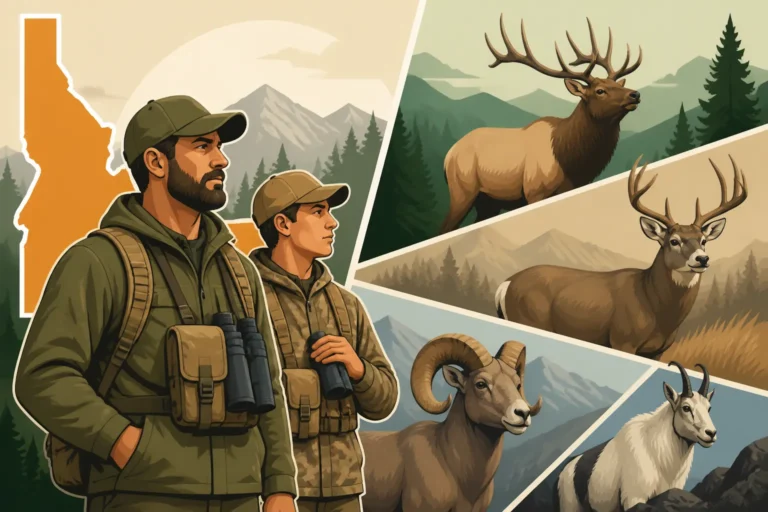
When you look at Unit 1, you're primarily thinking about two main big game species: whitetail deer and elk. However, there's also a solid black bear population, and for those who enjoy chasing upland birds, the timber here can offer some fantastic opportunities. The hunting experience in Unit 1 is largely dictated by the resident populations of these animals and the dense habitat they call home.
Whitetail Deer: The Panhandle's Signature Species
Unit 1 is renowned for its whitetail deer hunting. Unlike much of Idaho, where mule deer dominate, the northern Panhandle is classic whitetail country. These deer thrive in the dense timber and agricultural fringes found throughout the unit. The whitetail rut usually kicks in strong around mid-November, making the later general seasons particularly exciting for those looking for a mature buck. Hunters often employ still-hunting tactics, moving slowly and quietly through the woods, or setting up on pinch points and travel corridors. Don't expect to see deer at great distances; instead, anticipate close-range encounters in the thick cover. Understanding whitetail behavior in this type of habitat is key, as they can vanish into thin air faster than you can blink. Whitetail Deer Hold Idaho's Northern Panhandle offers more insight into these elusive animals.
Elk: A Challenging but Rewarding Hunt
Elk hunting in Unit 1 is definitely a timber game. The elk here aren't typically out in vast herds across open meadows; they're generally scattered throughout the thick forests, making them incredibly challenging to locate and stalk. While the area can hold some impressive bulls, success often comes down to persistent effort, good woodsmanship, and knowing how to read fresh sign. Calling can be effective during the rut, but the dense vegetation can make it tough to pinpoint a bull's location or get a clear shot. Hunters need to be prepared for rugged hikes, often covering miles of difficult terrain to find these elusive animals. It's a physically demanding hunt, but the rewards of a timber bull are immense. Unit 1 falls within the Panhandle Elk Zone, so understanding Idaho Elk Zones and the A Tag or B Tag Choice is important for tag selection.
Black Bear and Upland Bird Prospects
Beyond deer and elk, Unit 1 also offers good opportunities for black bear. The dense forests and abundant food sources make it prime bear habitat. Hunters can pursue bears through spot-and-stalk methods, particularly in spring when bears are out feeding on new growth, or through baiting where permitted. Color phase bears, from cinnamon to blonde, are also not uncommon in this region, adding an exciting element to the hunt. For those who appreciate wingshooting, the timbered slopes and creek bottoms also hold various species of forest grouse, like ruffed and blue grouse. These birds can offer a fun challenge and a nice break from the intensity of big game hunting. If you're wondering Where Black Bear Density Runs Highest, Unit 1 is certainly a contender in Idaho.
| Species | Primary Habitat | Hunting Style Focus | General Difficulty | Key Seasons |
|---|---|---|---|---|
| Whitetail Deer | Dense Timber, River Bottoms, Agricultural Edges | Still-hunting, Stand hunting | Moderate | General Archery, General Rifle |
| Elk | Thick Coniferous Forests, Steep Drainages | Spot & Stalk (close range), Calling | High | General Archery, General Rifle |
| Black Bear | Dense Forests, Berry Patches | Spot & Stalk, Baiting (where legal) | Moderate | Spring & Fall General |
| Forest Grouse | Timbered Undergrowth, Creek Beds | Still-hunting, Dog hunting | Low | Fall Upland Bird |
Public Access and Motorized Vehicle Rules in Unit 1
Access is king in any hunting unit, and Unit 1, with its significant public land holdings, offers a good amount of it. However, "access" doesn't always mean easy access. Understanding the mix of land ownership and the rules governing vehicle use is critical for planning a successful hunt and avoiding unwanted encounters or violations. This is an area where proper planning, often with mapping tools, pays dividends.
Navigating Public and Private Land Boundaries
A large portion of Unit 1 consists of public land, primarily managed by the U.S. Forest Service as part of the Kaniksu National Forest. This means vast tracts of timbered country are open for general hunting. However, interspersed with these public lands are private parcels, including timber company holdings and private residences, especially in the lower elevations and valley bottoms. It's absolutely crucial to know where these boundaries lie. Using a reliable mapping app like onX Hunt on your phone is non-negotiable here. It allows you to see property lines in real-time, helping you avoid accidental trespass and ensuring you're hunting legally. Before you head out, familiarize yourself with Reading a Land Ownership Layer Correctly so you know exactly where you stand. Always double-check current land status, as things can change.
Understanding Idaho's Motorized Hunting Rule
Idaho has specific rules regarding motorized vehicle use on public lands, and Unit 1 is no exception. Generally, the Idaho's Motorized Hunting Rule Runs August Into December, which means you're restricted to established, open roads and trails. Driving off-road, creating new tracks, or using ATVs and UTVs in areas designated as non-motorized is strictly prohibited. This rule is in place to protect wildlife habitat, prevent erosion, and maintain the primitive character of wild areas. For hunters, this often means parking your vehicle and covering ground on foot. Planning your approach to hunting areas will involve identifying legal parking spots and understanding how far you'll need to walk to reach prime hunting ground. Tools like GoHunt's map features or even the general Idaho Hunt Planner can help visualize road networks and restricted areas.
Specific Access Challenges and Considerations
While there's a good network of Forest Service roads throughout Unit 1, many of them are seasonal or can be in rough shape, especially after heavy rains or snow. Some roads may be closed entirely due to logging operations, fire activity, or designated wilderness boundaries. It’s always a good idea to check with the local Forest Service district office for current road conditions and closures before your trip. Additionally, some public land parcels might be landlocked by private property, requiring permission from landowners to access. Never assume you can cross private land without explicit permission. Plan for long hikes and consider packing essentials for extended periods away from your vehicle. Camping on Forest Ground During Hunting Season is also a key consideration, as regulations can vary.
Strategic Planning and Scouting for a Unit 1 Hunt
Hunting Unit 1 is not a casual affair; it requires deliberate planning, extensive scouting, and a mindset prepared for physical exertion and thick timber. Many hunters make the mistake of underestimating the Panhandle's terrain, leading to frustration and unproductive hunts. Being strategic from the outset can significantly increase your chances of success.
Utilizing Online Resources for Initial Scouting
Before you ever set foot in Unit 1, leverage the wealth of online resources available. The Idaho Hunt Planner Is the Tool to Start With is an invaluable resource, providing details on regulations, harvest statistics, and unit maps. You can also dive into satellite imagery through tools like onX Hunt or even Google Earth to identify potential bedding areas, travel corridors, water sources, and clearings within the dense timber. Look for topographical features that might funnel animals, like saddles, benches, and ridges. Pay attention to north-facing slopes, which often hold darker timber and provide cooler bedding in early seasons, and south-facing slopes, which get more sun and green up earlier. This kind of E-Scouting an Idaho Unit Before the Season can save you days of walking once you're on the ground.
On-the-Ground Scouting and Adaptability
Nothing replaces boots on the ground, especially in country as thick and varied as Unit 1. If possible, scout the area a few weeks or months before your hunt. Look for fresh tracks, scat, rubs, and active game trails. Pay attention to prevailing wind patterns in different drainages. If pre-season scouting isn't feasible, dedicate the first day or two of your actual hunt to thoroughly glassing from vantage points (even if limited), still-hunting quietly, and simply learning the lay of the land. The timber here can make even familiar areas seem disorienting, so carry a GPS device and a compass, and know how to use them. Being adaptable is also crucial; if your initial plan isn't producing, be willing to move to a different area or change your tactics.
Developing Effective Hunting Strategies for Thick Cover
Hunting in Unit 1's dense timber demands specific strategies. Forget about seeing deer or elk from hundreds of yards away. Focus on slow, methodical still-hunting, taking a few steps, then stopping to scan for movement or listen for the subtle sounds of animals. Use your ears as much as your eyes. When calling elk, remember that the sound doesn't carry as far in thick timber, and it can be harder to judge distance. Consider two-person calling setups to help pinpoint animals. For whitetails, identify natural funnels and pinch points, or areas where deer might be feeding or bedding, and set up ambushes. Patience is your greatest asset here. It's often a game of inches and waiting for that fleeting window of opportunity. Don't forget, communication with hunting partners is key in such dense cover; Two-Way Radio Use Between Hunting Partners can make a huge difference in safety and coordination.
Disclaimer
This article is for general informational purposes only and does not constitute professional advice. Laws, prices and regulations vary by location and change over time. Consult a qualified professional for guidance on your specific situation.