Hunting the Lolo Zone Backcountry
Okay, let's talk about the Lolo Zone. If you're dreaming of big timber, steep canyons, and a true test of your hunting grit, the Lolo Zone in Idaho probably calls to your soul. But let's be real, chasing game in that kind of country isn't for the faint of heart, or the unprepared. This isn't your flatland whitetail hunt. This guide is all about giving you a realistic roadmap for tackling the Lolo's rugged backcountry, focusing on what it takes to actually find success and enjoy the wild ride.
Understanding the Lolo Zone: A Land of Giants and Challenges
The Lolo Zone, situated in north-central Idaho, is a vast, rugged expanse that defines "backcountry" for many hunters. It's a place where elk are king, mule deer cling to the high ridges, and the sheer scale of the landscape can feel overwhelming. Many units within this zone are characterized by dense timber, steep elevation changes, and a network of primitive roads that can quickly become impassable with a bit of rain or snow. It's precisely this wildness that draws so many, but it's also what makes preparation absolutely critical. You're stepping into an environment that demands respect, solid planning, and the right tools.
Terrain and Accessibility in Lolo
When you look at a map of the Lolo Zone, what jumps out immediately are the intricate drainages and the dramatic elevation changes. We're talking about massive canyons, knife-edge ridges, and timber so thick you can barely see twenty yards. Access often means driving deep into national forest land on gravel or dirt roads that can be rough, winding, and seasonally closed. These roads might get you to a trailhead, but from there, it's typically foot traffic or horseback only. This limited access, while a challenge, is also a blessing, as it helps distribute pressure and keeps some areas truly wild. Hunters who are willing and able to push a few miles beyond the road systems often find themselves in untouched pockets of prime habitat. Understanding which roads are active, which are seasonally closed, and which are completely reclaimed by nature is your first puzzle piece, and tools like onX Hunt become invaluable for this level of detail.
Target Species and Hunting Pressure
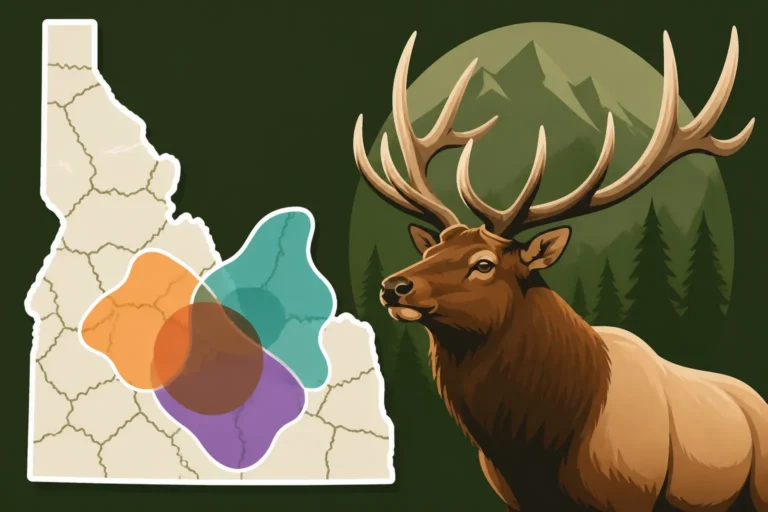
Elk are undoubtedly the primary draw in the Lolo Zone. This area consistently produces strong bull numbers, and the challenging terrain means those animals often grow old and wise. You'll find both Rocky Mountain elk and good numbers of mule deer, particularly as you get into higher elevations and more open timbered ridges or burns. Whitetails can also be found in the lower, thicker river bottoms and adjacent timber pockets, especially towards the eastern parts of the zone. Because of the incredible opportunity, hunting pressure can be significant, particularly during the early rifle and archery seasons in more accessible areas. However, this pressure tends to drop off dramatically once you venture a few miles off the main roads. That's where the backcountry hunter truly finds their advantage – by embracing the grind that others avoid. Hunters looking for specific details on other zones should check out Elk Herd Distribution by Zone.
Regulatory Nuances for the Lolo Hunter
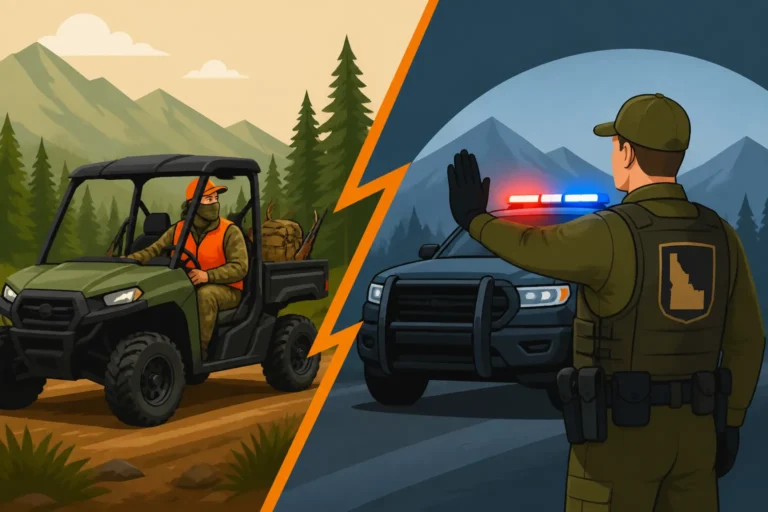
Idaho's general hunting regulations apply across the Lolo Zone, but there are always specific unit-by-unit rules and season dates to be aware of. Pay close attention to weapon restrictions, legal shooting hours, and any specific requirements for tagging and reporting. For example, understanding Idaho's Motorized Hunting Rule Keeps You on the Road is paramount when operating in this country, as driving off designated roads is strictly prohibited, even for game retrieval. Furthermore, if you're a nonresident considering an elk hunt deep in certain designated wilderness areas within or bordering the Lolo, you need to be acutely aware of Idaho Forces Nonresidents to Hire a Guide for Wilderness Elk. This rule doesn't apply to all backcountry areas, but it's a critical distinction you absolutely must understand before you apply or plan. Always double-check the current Idaho Fish and Game regulations for the specific unit and season you plan to hunt; they are your bible.
Navigating the Lolo Backcountry: Tools and Strategies for Success
Venturing into the Lolo backcountry without a robust navigation plan is asking for trouble. This isn't a place where you can just "wing it." The dense timber, steep ravines, and often featureless terrain can quickly disorient even experienced woodsmen. Success here hinges on meticulous pre-season scouting and reliable in-field navigation. Getting lost isn't just an inconvenience; it can be life-threatening in remote, steep country, especially as weather can turn on a dime.
Pre-Season E-Scouting and Map Work
Your hunt begins long before you ever set foot in the Lolo. E-scouting is your secret weapon. Start with the Idaho Fish and Game Hunt Planner; it's an incredible resource for understanding unit boundaries, harvest statistics, and public land percentages. Combine this with satellite imagery tools like onX Hunt or GoHunt. These platforms allow you to pour over topo maps, identify potential bedding areas on north-facing slopes, locate south-facing feed areas, and mark water sources or wallows. Look for subtle terrain features like benches, saddles, and old logging roads or trails that aren't visible on basic maps. Pay close attention to elevation bands where different types of vegetation dominate – the open parks, the dense stands, and the burn scars. These details paint a picture of where animals might move, feed, and bed, helping you narrow down vast areas into manageable hunting blocks.
In-Field Navigation and Redundancy
Once you're on the ground, your reliance on technology continues, but with a critical caveat: always have backups. A robust GPS unit or a smartphone with a reliable hunting app like onX Hunt is essential. Download offline maps for your entire hunt area, because cell service is practically non-existent in much of the Lolo. Mark your truck, your camp, potential game trails, and any notable features. But don't stop there. Always carry a physical map and a compass, and know how to use them. Batteries die, screens break, and satellites can be finicky. Being able to navigate by terrain association and a paper map could literally save your hunt, or your life. Understand how to read topo lines and identify key landmarks. Remember, when you're deep in timber, the sun isn't always a reliable compass, and one ridge can look identical to the next. For more on using your digital tools, consider reading Using onX Layers for Idaho Public Land or Reading a Land Ownership Layer Correctly.
Physical Conditioning and Gear Essentials
The Lolo Zone demands physical fitness. You'll be climbing, descending, and traversing steep, uneven terrain, often with a heavy pack. Training should include plenty of hiking with weight, stair climbing, and general cardio. Don't underestimate the strain this type of hunting puts on your body. Beyond fitness, your gear needs to be up to the challenge. Layered clothing is a must, as temperatures can swing wildly from cold mornings to warm afternoons, and rain or snow can appear without warning. A high-quality backpack, sturdy boots, a water filtration system, and emergency essentials (first-aid kit, fire starter, shelter) are non-negotiable. Don't skimp on optics – good binoculars and a spotting scope can make a huge difference when Glassing Idaho Breaks for Mule Deer or trying to locate elk in vast timber. Every ounce counts when you're miles deep, so balance utility with weight.
Hunting Strategies for Lolo's Timbered and Steep Country
Hunting in the Lolo Zone is less about sitting and waiting, and more about covering ground, understanding animal behavior in rugged terrain, and being adaptable. The dense timber and steep slopes dictate specific approaches whether you're chasing elk or deer. It's a game of persistence, patience, and knowing when to push hard and when to slow down.
Mastering Elk Hunting in Dense Timber
Elk in the Lolo spend a lot of time in the dark timber, using it for cover, thermal regulation, and security. Still-hunting becomes a primary tactic here. Move incredibly slowly, pausing often to listen and scan. Your eyes should be trained to pick out horizontal lines (an elk's back or belly) in a vertical world of trees. Pay attention to fresh sign – tracks, droppings, rubs, and fresh wallows. During the archery season, bugling and cow calling can be effective, especially if you can get an elk to respond. However, be mindful of pressured animals; they often go silent or circle downwind quickly. Learning Bugle and Cow Call Timing Through September is key, and understanding how to read the wind in these tight, timbered areas is paramount. Set up in a way that allows you to control the shot, especially if you're calling a bull into close quarters. For more on tactical calling, consider Calling Elk on Pressured National Forest Ground.
Locating and Stalking Mule Deer
Mule deer in the Lolo often frequent the higher, rockier, more open timbered ridges, old burn areas, and the fringes of clearcuts. They use the broken country and patchy cover to disappear. Glassing is your most powerful tool. Find a vantage point, even if it means climbing a small knoll, and systematically grid-glass the opposite slopes. Focus on areas where timber meets open ground, and where patches of green feed are present. Mule deer will often bed down in sparse timber on a slope, using the wind to detect threats. Once you spot a buck, the stalk can be incredibly challenging due to the steep, noisy terrain. Patience is critical. Use terrain features like draws, benches, and thick timber to break up your silhouette and mask your approach. Always keep the wind in your favor, as mule deer have an incredible sense of smell. For advice on specific terrain, check out Terrain That Hides a Stalk Above Timberline.
Reading the Wind and Animal Sign
In the Lolo, the wind is not your friend; it's your master. It swirls and changes direction constantly in steep canyons and dense timber. You absolutely must carry a wind checker and use it frequently. Understand that thermals will pull air up the canyon in the morning and early afternoon, and then reverse, pulling air down as the day cools. This predictable pattern is crucial for planning your approach and knowing when to move and when to hold still. Beyond wind, becoming a skilled tracker and sign reader is invaluable. Fresh elk tracks in a muddy seep, an antler rub on a small tree, or a well-used game trail leading into a bedding area – these are all clues that tell a story about where animals are and where they are going. Don't just look for a track; look for fresh track. The difference can mean the world.
The Logistics of a Backcountry Lolo Hunt
A successful backcountry hunt in the Lolo Zone isn't just about finding animals; it's about meticulously planning every aspect of your trip, from where you'll lay your head to how you'll get that meat out of a steep canyon. This level of detail can feel daunting, but it's what differentiates a successful, safe hunt from a frustrating, potentially dangerous one.
Backcountry Camp Setup and Management
Choosing your camp location is a critical decision. You want a spot that offers security, access to water, and is ideally positioned for your hunting objectives. For a true backcountry experience, this means a spike camp, often just a tent and minimal gear, hiked miles from the nearest road. Remember Camping on Forest Ground During Hunting Season often requires understanding specific rules for food storage, especially in areas with potential bear activity. Hang your food, or use bear-resistant containers. Keep your camp clean to avoid attracting critters. If you're using horses, establish a good picket line and ensure you have feed. Consider setting up a base camp closer to your vehicle for resupply, and then establish spike camps as needed to hunt specific areas more effectively.
Packing Out Game and Emergency Preparedness
This is where the Lolo truly tests your mettle. Once you've harvested an animal, particularly an elk, the real work begins. You'll likely be miles from your vehicle, in steep country. Having a plan for Packing an Elk Out of Steep Country Alone (or with partners) is non-negotiable. This means sharp knives, game bags, a sturdy pack frame, and the physical endurance to make multiple trips. Consider the quartering technique that works best for you. If you're hunting with horses, the process becomes significantly easier, but still demands effort. For emergencies, communication is key. Carry a satellite messenger or an InReach device; these allow you to send SOS signals and communicate with loved ones even without cell service. Ensure someone knows your detailed hunt plan, including your intended route and expected return date.
Strategic Planning for Resupply and Duration
A backcountry hunt in the Lolo isn't usually a quick weekend warrior trip. Most hunters plan for at least 5-7 days, if not longer, to truly get deep into the country and allow for varying weather and animal movement. This means strategic planning for food, water, and essential supplies. If you're setting up a base camp, consider how you'll resupply your spike camp. Dehydrated meals are lightweight and efficient. Water filters or purification tablets are essential, as you'll likely be relying on natural water sources. Thinking through your hunt's duration and your consumption rates for every item on your gear list will prevent you from running out of essentials when you're far from any support. Utilize resources like GoHunt for planning long-duration trips, as their detailed unit information can help you predict water sources and logistical challenges.
Key Considerations for the Lolo Backcountry Hunter
| Aspect | Challenge in Lolo Backcountry | Strategic Solution |
|---|---|---|
| Terrain | Extremely steep, dense timber, few trails, arduous hiking. | Rigorous physical training, quality boots, trekking poles. E-scout for benches/saddles. |
| Navigation | Limited cell service, easy to get disoriented in timber. | Offline onX Hunt or GoHunt maps, dedicated GPS, paper map, compass, know how to use all. |
| Weather | Unpredictable, sudden changes (rain, snow, temperature drops). | Layered clothing, waterproof outer shell, emergency bivy/shelter. |
| Animal Pressure | Roads and accessible areas see more pressure. | Hike deep, utilize less obvious access points, hunt mid-week. |
| Game Retrieval | Heavy animals, long distances, steep climbs. | Pack frame, game bags, sharp knives, hunting with partners/horses if possible. |
| Communication | No cell service in vast areas. | Satellite messenger (Garmin inReach, Spot), detailed plan left with loved ones. |
| Water | Can be scarce on high ridges, or require filtering from streams. | Water filter/purification, carry adequate water for daily needs, identify water sources pre-hunt. |
| Regulations | Specific unit rules, motorized vehicle restrictions, potential guide requirements. | Thoroughly review Idaho Fish and Game regulations for your specific unit and season. |
This article is for general informational purposes only and does not constitute professional advice. Laws, prices and regulations vary by location and change over time. Consult a qualified professional for guidance on your specific situation.