Bear Spray Against a Sidearm in Grizzly Country
Stepping into Idaho's backcountry, especially in units where the majestic grizzly bear shares the landscape, brings a whole new layer of consideration to your gear list. Many of us grapple with that age-old question: should I carry bear spray or a sidearm for protection? It's a deeply personal decision, fraught with strong opinions and understandable anxieties. This guide aims to cut through the noise, offering a realistic look at both options so you can make an informed choice before you head out into the wild.
The Reality of Hunting in Idaho's Grizzly Country
Hunting in Idaho is an incredible experience, but it also means understanding and respecting the wildlife that calls this state home, including our largest predators. The thought of a grizzly encounter can be daunting, and it's something every hunter needs to take seriously.
Where Grizzlies Roam in the Gem State
Idaho's grizzly population isn't spread uniformly across the state. These magnificent creatures are primarily found in the northern Panhandle and eastern regions, overlapping with specific hunting units that border Montana and Wyoming. Think of areas like the Selkirk and Cabinet-Yaak ecosystems in the north, or the Greater Yellowstone ecosystem in the east, which includes places like the Caribou-Targhee National Forest. When you're researching your hunt, it's absolutely crucial to use tools like The Idaho Hunt Planner Is the Tool to Start With to understand the specific units you'll be in and whether they're known grizzly country. Knowing your hunting grounds intimately, perhaps through resources like GoHunt, helps you anticipate potential encounters and prepare accordingly. If you're heading into these zones, understanding Where Grizzlies Overlap Idaho Hunting Units becomes a foundational piece of your pre-hunt strategy.
It's not just about knowing the broad regions; it's about understanding the specific habitats grizzlies prefer within those areas. They favor dense timber, riparian zones, and areas with abundant food sources like berries, roots, and carrion. Often, these are the same places we're trying to find elk or deer. This overlap means that encounters, while rare, are always a possibility, especially during prime hunting seasons when bears are actively feeding before hibernation. Being aware of the terrain and features that might conceal a bear can make a significant difference in avoiding an unexpected, close-range surprise.
Understanding Bear Behavior and Encounter Dynamics
Grizzly bears are powerful animals, and understanding their behavior is key to both prevention and response. Most encounters are non-aggressive, with the bear simply moving away if it detects you first. The truly dangerous situations often arise from surprise encounters at close range, especially if a sow has cubs nearby, or if you stumble upon a food cache. These are defensive behaviors, where the bear perceives you as a threat to its young or its meal.
In these high-stress situations, a bear's charge can be incredibly fast and terrifying. They can cover ground at speeds exceeding 30 miles per hour, closing distances in mere seconds. Distinguishing between a bluff charge and a full-on attack can be almost impossible in the moment, which is why a quick, decisive response is critical. Your best defense, however, is always prevention: making noise, traveling in groups, and being hyper-aware of your surroundings are paramount. Knowing how to interpret bear signs and understanding Grizzly Identification for Idaho Bear Hunters can give you an edge in avoiding these stressful situations altogether.
Many times, a bear encounter starts with a brief glimpse or a sudden noise, not a full-blown charge. It might be a bear feeding in a berry patch just off the trail, or one casually lumbering across a logging road. In these instances, calmly backing away, giving the bear plenty of space, and continuing to talk to it in a low voice is usually the best course of action. The problems typically arise when either the bear feels cornered or surprised, or when a human tries to get too close for a photo or a better look.
Bear Spray: The Widely Recommended Deterrent
When it comes to bear defense, bear spray is almost universally recommended by wildlife professionals, forest service personnel, and experienced backcountry users. There's a good reason for this consensus, rooted in its effectiveness and the outcome of encounters where it's been deployed.
How Bear Spray Works and Why It's Effective
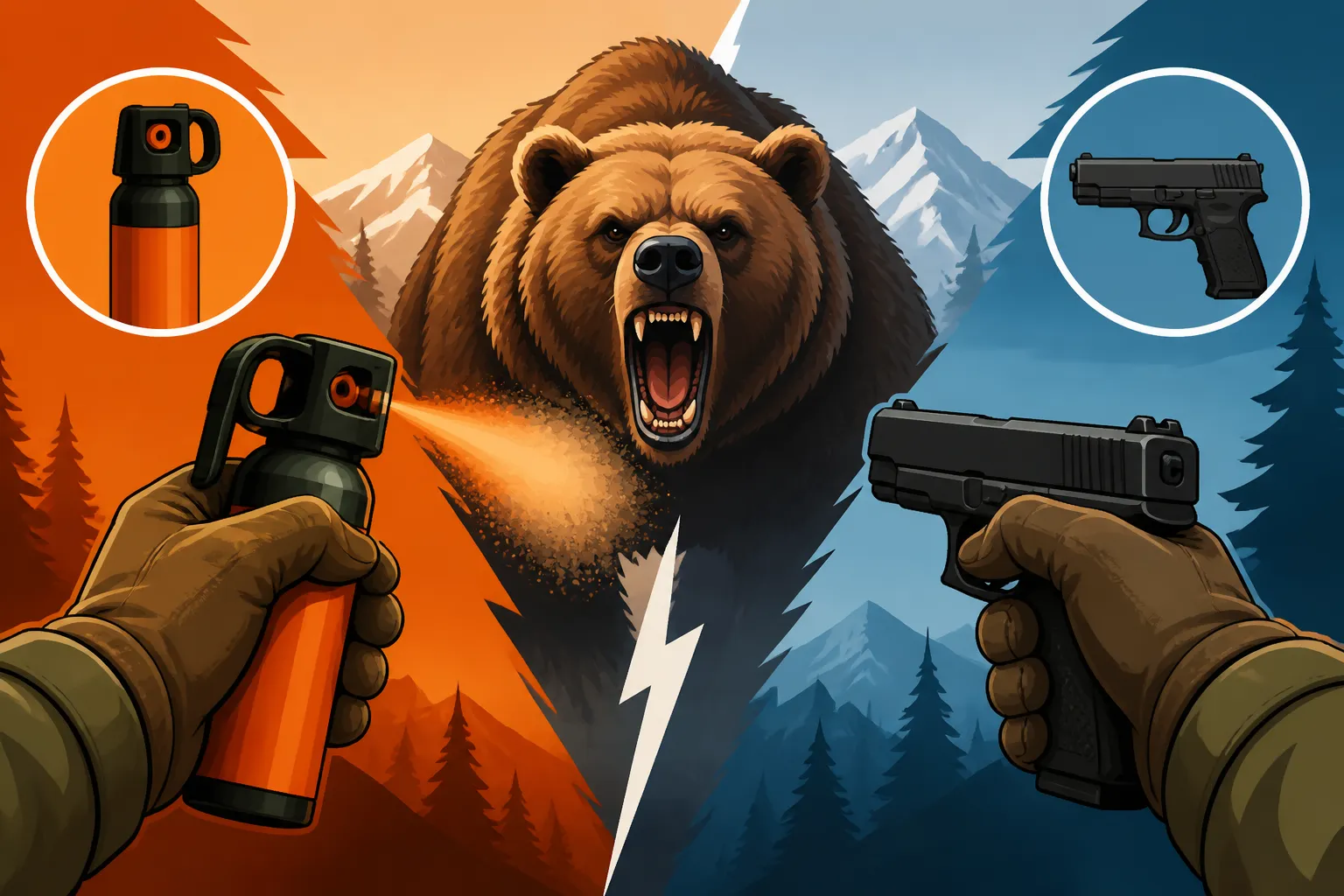
Bear spray is essentially a super-sized canister of highly concentrated capsaicin, derived from chili peppers. It creates an irritating cloud that affects a bear's eyes, nose, throat, and lungs, temporarily incapacitating it and allowing you to escape. The beauty of bear spray lies in its non-lethal nature. It deters the bear without causing permanent harm, which is a huge benefit for wildlife conservation and often reduces the severe legal and emotional aftermath that can follow a lethal encounter. Studies have shown bear spray to be remarkably effective in deterring aggressive bears, often more so than firearms, particularly in the chaos of a charge.
The sheer volume and spread of a bear spray canister create a "wall" of deterrent that a charging bear is likely to run into. This wide pattern means less precision is required compared to aiming a small projectile at a rapidly moving, dangerous animal. It capitalizes on the bear's sensitive olfactory system and mucous membranes. Think about getting a tiny bit of pepper spray on your finger – now imagine that concentrated blast to a bear's entire face. The temporary blindness, difficulty breathing, and intense burning sensation are powerful motivators for the bear to disengage and flee, buying you precious seconds to get to safety.
Proper Carrying, Deployment, and Maintenance
For bear spray to be effective, it must be accessible. Stuffing it deep in your pack is like having a fire extinguisher in your garage when your kitchen is burning. The ideal carry method is a chest holster or a belt holster that allows for immediate, one-handed deployment. When you're moving through dense timber or along noisy creeks, situations that increase the chances of a surprise encounter, having it at the ready is non-negotiable. Many experienced Idaho hunters recommend practicing drawing your inert canister (or an expired one) to build muscle memory under pressure.
Deployment requires a few critical considerations. First, understand the range of your spray – typically 25-30 feet. You don't want to wait until the bear is right on top of you. Second, aim for the head and face, creating a cloud between you and the charging bear. Thirdly, and crucially, be mindful of the wind. Spraying into a strong headwind can result in you getting a dose of your own deterrent, which will certainly ruin your day. Always be aware of the wind direction relative to your position and the approaching bear. Finally, bear spray has an expiration date; check it regularly and replace expired cans. Proper storage also matters; extreme temperatures can affect its pressure and effectiveness. Always check the regulations for the areas you're hunting; while widely accepted, certain restrictions might apply in very specific federal wilderness areas, though this is rare for actual bear spray products. Knowing these details is part of comprehensive Bear Safety Practices in an Outfitter Camp.
The Sidearm Option: Perceived Security vs. Practicality
The appeal of carrying a sidearm for bear defense is strong for many hunters. The feeling of having a powerful, definitive deterrent can offer a sense of security. However, the practical realities of using a handgun to stop a charging grizzly are far more complex and challenging than often portrayed.
Why Hunters Consider Carrying a Firearm for Bear Defense
For many, the primary draw of a sidearm is the belief in its ultimate stopping power. There's a deep-seated desire to have a lethal option, a final resort if all else fails, especially when facing an animal as formidable as a grizzly. The confidence that comes from carrying a potent handgun can, for some, make them feel more secure in remote backcountry settings. This often stems from a misconception that a firearm guarantees safety in a bear encounter, or that it's inherently "better" than bear spray simply because it's a weapon. This feeling is understandable; we all want to feel prepared.
Another consideration is perceived versatility. A sidearm might be seen as useful for other situations, like dispatching a wounded animal or general self-defense against other threats, though these are typically secondary to the primary concern of bear defense. Some hunters also prefer the compact nature of a handgun over a bulky bear spray canister, or they worry about the effects of wind on bear spray. They envision a scenario where a well-placed shot could instantly end the threat, overlooking the immense difficulty of achieving that outcome in a real-world charge. The discussion around this topic is often passionate and deeply held, reflecting deeply personal views on self-preservation and the role of firearms in the backcountry.
The Critical Challenges of Using a Sidearm Against a Charging Bear
Here's where reality often diverges from perception. Stopping a charging grizzly with a handgun is incredibly difficult, even for experienced shooters. First, there's the issue of shot placement: a bear's vitals are not as easily accessed as you might think, especially when it's barreling towards you. The skull is thick, and the heart/lung area is protected by heavy bone and muscle, particularly during a head-on charge. Even a powerful caliber like a .44 Magnum or 10mm Auto requires precise placement to be immediately effective. A poorly placed shot might only wound the bear, potentially escalating its aggression and turning a defensive charge into a full-blown, deadly attack.
Second, consider the environment. You're likely in uneven terrain, possibly in dense brush, with adrenaline surging, hands shaking, and limited time. A charging bear is not a static paper target at the range; it's a blur of fur, teeth, and claws moving at incredible speed. The recoil of a heavy handgun can make follow-up shots difficult and slow. Many law enforcement and wildlife professionals, after evaluating real-world incidents, have concluded that bear spray has a higher success rate at deterring attacks than firearms, primarily because it's easier to deploy effectively under extreme stress and doesn't require the same pinpoint accuracy. For those interested in self-reliance, understanding the nuances of Hunting Solo Against Hiring a Guide might also factor into this decision, as having a partner can significantly alter your defense strategy.
Making an Informed Choice for Your Idaho Hunt
Ultimately, the choice between bear spray and a sidearm is yours, but it should be an informed one, grounded in realistic expectations and a thorough understanding of the challenges involved. The best defense is always a combination of prevention, preparedness, and proficiency with your chosen tool.
Training, Proficiency, and Mental Preparedness
Regardless of what you choose to carry, training is paramount. For bear spray, this means not just buying a can, but actually familiarizing yourself with its operation, understanding its range, and even practicing drawing and deploying a practice canister or an expired one. Can you get it out and aimed in two seconds flat? That's the kind of speed you might need. Knowing how to quickly assess wind direction and deploy effectively can be the difference maker.
If you opt for a sidearm, the training requirements are exponentially higher. This isn't just about shooting at a static target; it's about defensive shooting drills under simulated stress, moving and acquiring a target that's actively moving and threatening. Do you regularly practice with your chosen caliber, not just for accuracy, but for quick draws, target acquisition, and follow-up shots from an awkward position? Can you safely operate your firearm while experiencing an intense adrenaline dump? The mental preparedness to actually use lethal force against a charging animal, knowing the severe consequences if you fail, is another layer of proficiency that cannot be overlooked. This level of dedication to practice is something GoHunt often advocates for, reminding hunters that true preparedness extends beyond just having the gear.
Prevention is Always Your Best Defense
While carrying a defensive tool is important, remember that the most effective strategy against grizzly encounters is prevention. This means actively trying to avoid an encounter in the first place. Make noise while hiking, especially in dense cover or along noisy streams where a bear might not hear you approaching. Travel in groups whenever possible, as larger groups are less likely to be approached by bears. Store your food properly in bear-resistant containers or hung from a tree, away from your camp, especially in areas with known bear activity – truly following Food Storage Rules in Grizzly Country. Be alert, constantly scanning your surroundings, and paying attention to fresh bear sign like tracks, scat, or overturned rocks.
Carrying and having your chosen deterrent ready for immediate use is part of this preventative mindset. An ounce of prevention is truly worth a pound of cure when it comes to grizzlies. By taking all these steps, you minimize the chances of ever needing to deploy your bear spray or draw your sidearm, allowing you to focus on the incredible hunting opportunities Idaho offers. Even if you're physically prepared for your Preparing for Elevation on an Idaho Hunt, mental preparedness for a bear encounter adds another critical layer of safety. Should an incident occur, having some Wilderness First Aid on a Guided Hunt knowledge can be invaluable for you or your partners.
Comparison: Bear Spray vs. Sidearm
When weighing your options, consider these key differences:
| Feature | Bear Spray | Sidearm |
|---|---|---|
| Effectiveness | Highly effective deterrent in most cases, non-lethal | Lethal potential, but highly dependent on precise shot placement |
| Ease of Use | Simpler, less precision needed, wider margin of error | Requires significant training and precision under extreme stress |
| Risk to Bear | Non-lethal, temporary incapacitation | High risk of injury or death, potential for prolonged suffering |
| Risk to Human | Low risk if deployed correctly, can be affected by strong wind | High risk if shot misses or wounds, can provoke further attack |
| Legality | Generally legal to carry, check specific wilderness rules | Generally legal to carry, but specific self-defense laws apply |
| Training Needs | Basic familiarization, regular practice deployment | Extensive, ongoing firearm proficiency training under duress |
| Cost | Relatively inexpensive (replacing expired cans) | Higher initial cost (firearm, holster), ongoing ammo and range fees |
| Availability | Widely available in outdoor stores and online | Requires firearm purchase, licensing (where applicable), and specific calibers |
This article is for general informational purposes only and does not constitute professional advice. Laws, prices and regulations vary by location and change over time. Consult a qualified professional for guidance on your specific situation.