Idaho Duck Bag Limits by Species
For many Idaho waterfowl hunters, the joy of a crisp fall morning in the marsh or along a riverbank can quickly turn into a headache when trying to keep track of the ever-changing duck bag limits. It's a common frustration – you want to do everything by the book, but the rules seem to shift and vary not just by species, but sometimes even by sex within a species. This guide is here to untangle the complexities of Idaho's duck bag limits, helping you understand the rationale behind them and how to stay compliant for a successful and legal hunting season.
Understanding the Fluctuating Nature of Duck Bag Limits
It's easy to get frustrated when you open the regulations booklet each year and see the duck limits have shifted again. One year you could take four mallards, the next only three, or suddenly the hen limit feels tighter. This isn't just Idaho Fish and Game trying to make things harder; it’s a critical part of managing a dynamic wildlife resource that spans continents. Ducks migrate across vast distances, and their populations are influenced by a myriad of factors far beyond our state borders.
Why Bag Limits Aren't Static Year to Year
The primary reason duck bag limits aren't set in stone is that duck populations themselves aren't static. Think about it: a species like the mallard might have a fantastic breeding season up in the prairie potholes of Canada, leading to a bumper crop of ducks heading south. The habitat conditions on their nesting grounds – how much water, how much food, how many predators – directly impact how many ducklings survive to fledge and join the migration. A drought year or a harsh winter can significantly reduce these numbers, and conservation managers need to react to those changes.
Idaho, like other states, receives guidance from federal agencies, primarily the U.S. Fish and Wildlife Service (USFWS), which sets the overall framework for waterfowl hunting seasons. These frameworks are based on extensive aerial surveys of breeding grounds, harvest data from previous seasons, and sophisticated population models. If the data suggests a species is struggling, limits might be tightened to ensure the population has a chance to rebound. Conversely, if numbers are robust, opportunities might expand. It's all about balancing hunting opportunity with long-term conservation, and that balance is rarely the same from one year to the next. That's why relying on what you "remember" from last season can get you into trouble.
Federal Frameworks and Idaho's Role
The management of migratory waterfowl is a massive, cooperative undertaking, primarily guided by the North American Waterfowl Management Plan (NAWMP). This plan involves agencies from Canada, the U.S., and Mexico, all working together to ensure the health of duck and goose populations across their migratory flyways. Idaho falls within the Pacific Flyway, one of four major migratory corridors in North America. Within each flyway, councils made up of state wildlife agency representatives meet to discuss population data and recommend specific hunting season options to the USFWS.
The USFWS then takes these recommendations, along with scientific data, and establishes a federal framework that outlines the maximum number of days for hunting, the earliest and latest possible season dates, and the maximum daily bag and possession limits for various species. Idaho Fish and Game, in turn, chooses its specific season dates and bag limits within these federal parameters. They consider local population trends, hunter pressure, and public input to tailor regulations that fit Idaho's unique environment while still adhering to the broader conservation goals. This tiered approach, from international agreements down to state-level decisions, is what allows for sustainable waterfowl hunting across the continent. It’s an intricate dance, and hunters play a vital role by understanding and respecting the rules derived from this process.
Idaho's General Duck Bag Limits: What to Expect
When you're out there, bundled against the crisp morning air, decoys bobbing in the current, the last thing you want to be doing is trying to remember a complex set of numbers for every single duck that flies by. The regulations are designed to provide a clear structure, but they require a little pre-hunt homework to internalize. Idaho typically operates with both an overall daily duck bag limit and then specific sub-limits for certain species within that total. This means you can't just fill your strap with any ducks you see; you have to be mindful of what you're shooting.
The Overall Daily Bag and Possession Limits
Idaho's waterfowl regulations will always start with a general daily duck bag limit. This number dictates the maximum total number of ducks of any species you can legally harvest in a single day. For example, if the general daily limit is seven ducks, that means seven ducks total, regardless of their species. However, as we'll discuss, certain species have even stricter limits that must be observed within that overall number. It's not uncommon for this general limit to remain fairly consistent for several years, providing a baseline for hunters.
Then there's the possession limit, which is often three times the daily bag limit. This refers to the maximum number of ducks you can have in your possession at any given time, whether they're in your cooler, at your home freezer, or being transported. This limit is designed to prevent hunters from stockpiling large quantities of birds over multiple days without having to deal with the cumulative daily limits. For instance, if your daily limit is seven ducks, your possession limit might be 21. This means if you hunt three days and harvest seven ducks each day, you're fine. But if you try to take 10 on day one and 10 on day two, you'd be over the possession limit from day two onwards, even if you hadn't technically exceeded a daily limit for that specific hunt. Always remember to count your birds!
Species-Specific Restrictions Within the General Limit
This is where things can get tricky and where knowing your ducks on the wing becomes absolutely essential. While there's an overall daily duck limit, Idaho, following federal guidelines, places stricter sub-limits on certain species or even specific sexes of a species. This is often due to population concerns for those particular birds. For instance, within a general daily limit of, say, seven ducks, you might find that only two of those can be hen mallards, two can be pintails, one can be a canvasback, and two can be redheads.
So, if you shoot seven ducks, but three of them are hen mallards, you've exceeded the sub-limit for hen mallards, even though you're within the overall seven-duck general limit. It's a violation. This layered approach means a hunter needs to quickly identify a bird before pulling the trigger, not just to avoid shooting a non-target species, but also to ensure they're not over the legal take for a specific duck. Learning these identification cues is a crucial part of becoming a responsible waterfowl hunter, and platforms like GoHunt often share resources to help hunters with this skill.
Key Duck Species with Specific Idaho Regulations
Idaho's diverse waterways and wetlands attract a wide array of duck species, but not all of them are managed with the same bag limits. Some species are robust and widespread, allowing for more generous harvest opportunities, while others require careful conservation and therefore have much tighter restrictions. Being able to distinguish between these birds quickly in the field is a fundamental skill for any ethical duck hunter.
Mallards: The Most Common, and Often Most Regulated
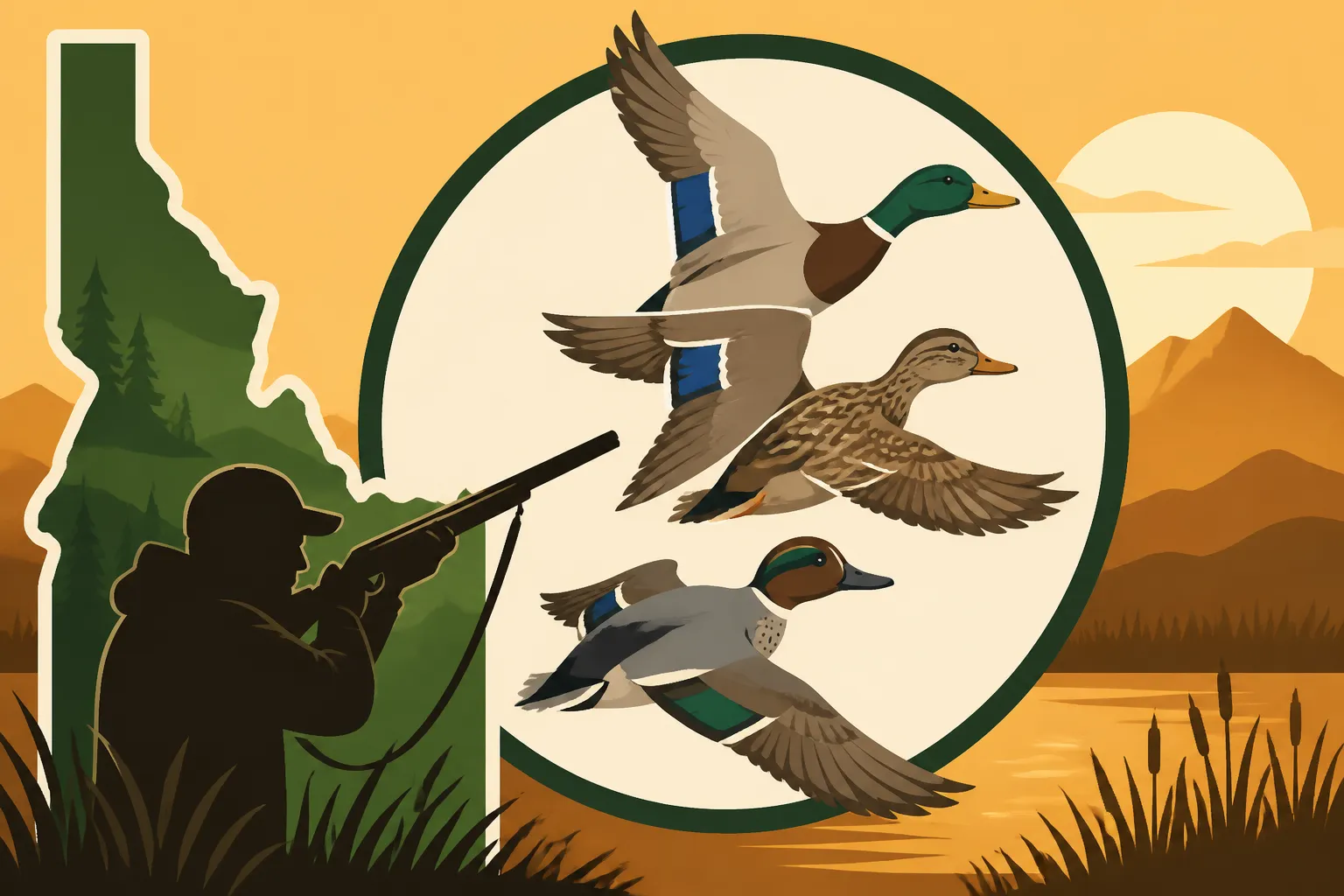
Ah, the mallard. For many hunters, this iconic greenhead is the quintessential duck. Mallards are abundant across Idaho and the continent, making them a staple in many hunters' bags. However, even with their strong populations, mallards often carry specific restrictions, most notably on hen mallards. You'll typically find a daily limit for mallards that is part of the overall duck limit, but within that, there will be a much lower limit on hens. For example, if the general mallard limit is five, the hen mallard limit might be just one or two.
This stricter limit on hens is a critical conservation measure. Hens are the breeding stock; they're the ones laying the eggs and raising the ducklings. Protecting a greater proportion of the female population helps ensure strong breeding success in future seasons. For hunters, this means not only identifying a mallard but also quickly determining if it's a drake or a hen before taking the shot. Mistaking a hen for a drake, especially in low light or at longer distances, is a common way hunters accidentally exceed the hen limit. It reinforces the need for positive identification and sometimes, passing on a shot if you're not 100% sure of the bird's sex.
Diving Ducks and Other Restricted Species
Beyond mallards, several other duck species frequently have stricter bag limits in Idaho, primarily because their populations are either less numerous, more localized, or subject to specific conservation concerns. Diving ducks, in particular, often fall into this category.
Canvasbacks and redheads, for example, are prized by many hunters for their beauty and culinary qualities, but they are also species that often have very low daily bag limits – sometimes just one or two birds, or even none in particularly challenging years. These limits are directly tied to population assessments, as these birds can be more sensitive to habitat changes or have lower breeding success rates than dabbling ducks. Similarly, pintails, with their distinctive long tails and elegant flight, often carry a low daily limit, which can fluctuate based on breeding ground conditions. Scaup (both greater and lesser), while often abundant, can also see specific limits depending on their population status within the flyway. Even common species like green-winged teal or wigeon, while generally part of the larger daily aggregate, might occasionally have specific advisories or slight modifications, which is why checking the Idaho Waterfowl Season Framework each year is non-negotiable.
Mergansers and Coots: Often Overlooked but Regulated
It’s easy to focus solely on the "ducks" when thinking about waterfowl limits, but Idaho's regulations also cover other migratory game birds that frequent the same habitats. Mergansers and coots are two such categories, and they often have their own generous, separate bag limits distinct from the typical duck limits. This is an important distinction, as these birds do not count towards your general duck bag limit, allowing you to potentially add more birds to your strap if you've reached your duck maximum.
Mergansers, often called "fish ducks" due to their diet, come in common, red-breasted, and hooded varieties in Idaho. While some hunters don't pursue them as readily as other ducks, they are a legal and often abundant game bird. Idaho usually allows a good number of mergansers in the daily bag, often significantly higher than for many other duck species. Coots, those dark, chicken-like birds with white bills that dabble amongst the ducks, also have a very generous separate bag limit. While not everyone's preferred table fare, they offer additional shooting opportunities and can make for excellent camp meals when prepared correctly. Always check the specific numbers for mergansers and coots in the current regulations, as they can still vary, but they generally provide a nice bonus for the intrepid waterfowl hunter.
Essential Practices for Idaho Duck Hunters
Navigating the nuances of duck bag limits and seasons demands more than just a quick glance at a pamphlet. It requires a commitment to ongoing education, keen observation skills, and a strong ethical foundation. Without these, even the most well-intentioned hunter can find themselves on the wrong side of the law or, more importantly, undermining the very conservation efforts that make hunting possible.
The Critical Importance of Annual Regulation Checks
I cannot stress this enough: always check the current year's regulations for Idaho's waterfowl season. What was true last year might not be true this year. As we discussed, populations fluctuate, and federal frameworks shift, leading to changes in bag limits, season dates, and even zone boundaries. Relying on outdated information is the quickest way to end up with a violation, a fine, and a tarnished reputation.
The Idaho Fish and Game website is your absolute best friend here. They publish the official regulations well in advance of the season. You can often find PDF versions that are easy to download and keep on your phone or print out for your blind bag. Many hunters also utilize platforms like GoHunt or similar apps that integrate regulation summaries and often provide alerts for changes. Don't just skim it; read it thoroughly, paying close attention to daily and possession limits, species-specific restrictions (especially for hen mallards, pintails, canvasbacks, and redheads), and any other special conditions. Planning your hunt, even just a few weeks out, should always start with this essential step. And remember that The Idaho Hunt Planner Is the Tool to Start With for all your planning needs, not just big game.
Field Identification: A Non-Negotiable Skill
Beyond just knowing the numbers, you absolutely must be able to identify your ducks in the field, often at a glance, in challenging conditions. The legal responsibility rests squarely on you to know what you're shooting before you pull the trigger. Mistaking a hen mallard for a drake, or an uncommon diving duck for a more numerous species, can quickly lead to an over-limit situation.
This skill isn't something you're born with; it takes practice and dedication. Invest in a good field guide specific to waterfowl. Spend time studying wing patterns, flight characteristics, size, and body shape. There are countless online resources, videos, and even identification quizzes that can help you hone your skills from the comfort of your home. Consider joining a local Ducks Unlimited or similar conservation group; experienced mentors are often happy to share their knowledge. Getting to a blind early and watching ducks fly, even without shooting, is another fantastic way to learn. Remember, if you're not 100% sure of the species or sex, especially for restricted birds, it's always better to pass on the shot. Our ethical responsibility as hunters demands positive identification.
Ethical Hunting and Conservation
Adhering to bag limits and practicing responsible identification aren't just about avoiding a ticket; they are fundamental tenets of ethical hunting and crucial contributions to conservation. Every duck hunter pays a federal duck stamp, and those funds directly support wetland conservation and acquisition across the country, benefiting countless species beyond just waterfowl. When you follow the regulations, you're upholding your part of that conservation compact.
Responsible hunting helps ensure the sustainability of waterfowl populations for future generations. It's about taking only your fair share, leaving plenty for others, and ensuring the continued health of the resource. Additionally, by being a visible example of a knowledgeable and ethical hunter, you contribute positively to the public perception of our sport. Whether you're hunting Waterfowl Along the Snake River or in smaller potholes, your actions reflect on all of us. Understanding things like Waterfowl Holding on Big Reservoirs can help you find areas where you might need to be extra vigilant with your identification due to mixed species. This thoughtful approach, combined with practical knowledge gleaned from resources like public land maps, where you can easily find information on Checking Public Land Percentage by Idaho Unit or even Idaho State Endowment Land Access Rules, truly defines the modern, conservation-minded hunter. It's not just about the harvest; it's about the stewardship.
| Species Category | Typical Daily Limit (Example) | Common Species Included | Key Idaho Regulation Notes |
|---|---|---|---|
| General Ducks | 7 | Wigeon, Gadwall, Shoveler, Green-winged Teal, Bufflehead | Overall daily limit, but specific sub-limits apply to certain species within this total. |
| Mallards | 5 (within General Duck limit) | Mallards (drakes and hens) | Often includes a strict sub-limit for hen mallards (e.g., 2 hens max within the 5 mallard limit). |
| Pintails | 1-2 | Northern Pintail | Lower limit due to population considerations; often fluctuates year-to-year. |
| Canvasbacks | 1 | Canvasback | Very low limit due to population sensitivities. |
| Redheads | 2 | Redhead | Lower limit for similar reasons as canvasbacks. |
| Scaup | 2-3 | Greater Scaup, Lesser Scaup | Limit can vary; check annually. |
| Mergansers | 5 | Common Merganser, Hooded Merganser, Red-breasted Merganser | Separate limit from "ducks"; does not count towards general duck bag. |
| Coots | 15 | American Coot | Separate, generous limit from "ducks"; does not count towards general duck bag. |
Note: This table provides typical examples and common species. Always consult the current year's official Idaho Fish and Game waterfowl regulations for precise and up-to-date daily and possession limits before hunting. Regulations change annually.
Disclaimer
This article is for general informational purposes only and does not constitute professional advice. Laws, prices and regulations vary by location and change over time. Consult a qualified professional for guidance on your specific situation.