Idaho Bighorn Sheep Draw Odds Explained
Dreaming of an Idaho bighorn sheep hunt? You're not alone. It's truly one of the most coveted tags in North America, and for good reason—these hunts take you into some of the most rugged, breathtaking country Idaho has to offer. But let's be realistic: getting one of these tags is incredibly difficult, and understanding the draw odds is the first step toward managing expectations and making informed application choices. This guide is here to unravel the mystery behind Idaho's bighorn sheep draw odds, helping you grasp what you're up against and how to approach this once-in-a-lifetime opportunity.
The Pinnacle of Idaho Hunting: Bighorn Sheep Rarity
Before we dive into the numbers, it's crucial to understand why bighorn sheep tags are so exceptionally rare. It’s not just about the thrill of the hunt; it’s about conserving these magnificent animals and their fragile mountain ecosystems. When you apply for an Idaho bighorn sheep tag, you're entering a draw for a truly limited resource, and the draw odds reflect that scarcity.
Why Bighorn Sheep Tags Are So Scarce
Idaho's bighorn sheep populations, while carefully managed and growing in some areas, exist in relatively small, isolated herds across remote and unforgiving terrain. Their habitat is specific, often requiring high-elevation, rugged, rocky slopes for escape terrain, alongside good forage. Managing these herds involves a delicate balance of habitat protection, disease monitoring, and conservative harvest strategies. The state wildlife agencies, like Idaho Fish and Game, issue very few tags each year to ensure the long-term health and stability of these populations. We're talking about a conservation-first approach, which means only a handful of lucky hunters get to pursue a bighorn ram in a given season.
This scarcity creates intense demand. Thousands of hunters, both residents and nonresidents, put in for these tags annually, understanding that it's often a decades-long pursuit or a stroke of pure luck. The sheer dedication to their survival is reflected in the tag numbers; it’s a commitment to ensuring future generations have the chance to see these incredible animals thriving in the wild.
Understanding the Draw Pool and Allocation
When you apply, you become part of the "draw pool" for bighorn sheep. This pool is essentially all the eligible applications submitted for a particular hunt area and tag type. The Idaho Fish and Game department then allocates a tiny fraction of these tags to that pool. For nonresidents, the challenge is even greater. Idaho, like many western states, has a cap on how many nonresident tags can be issued for certain species, including bighorn sheep. While it's not a hard percentage across the board for all species, the number of nonresident bighorn tags is typically extremely low, often just one or two tags across all hunt areas combined, if any at all.
This means that as a nonresident, you're not just competing against other nonresidents for a small allocation; you're often competing for a single tag, or sometimes no tag, in any given unit. This dramatically skews the odds, making it an even longer shot for those coming from out of state. It's a tough reality, but understanding this allocation is key to interpreting the long odds you'll see published each year.
Deciphering Idaho's Bighorn Sheep Draw System
Idaho's draw system is unique compared to some other western states, particularly when it comes to coveted tags like bighorn sheep. There are no preference points, no bonus points, and no loyalty points that accumulate over time. This particular structure has pros and cons, but it certainly impacts how you view the draw odds.
No Preference Points – A True Lottery
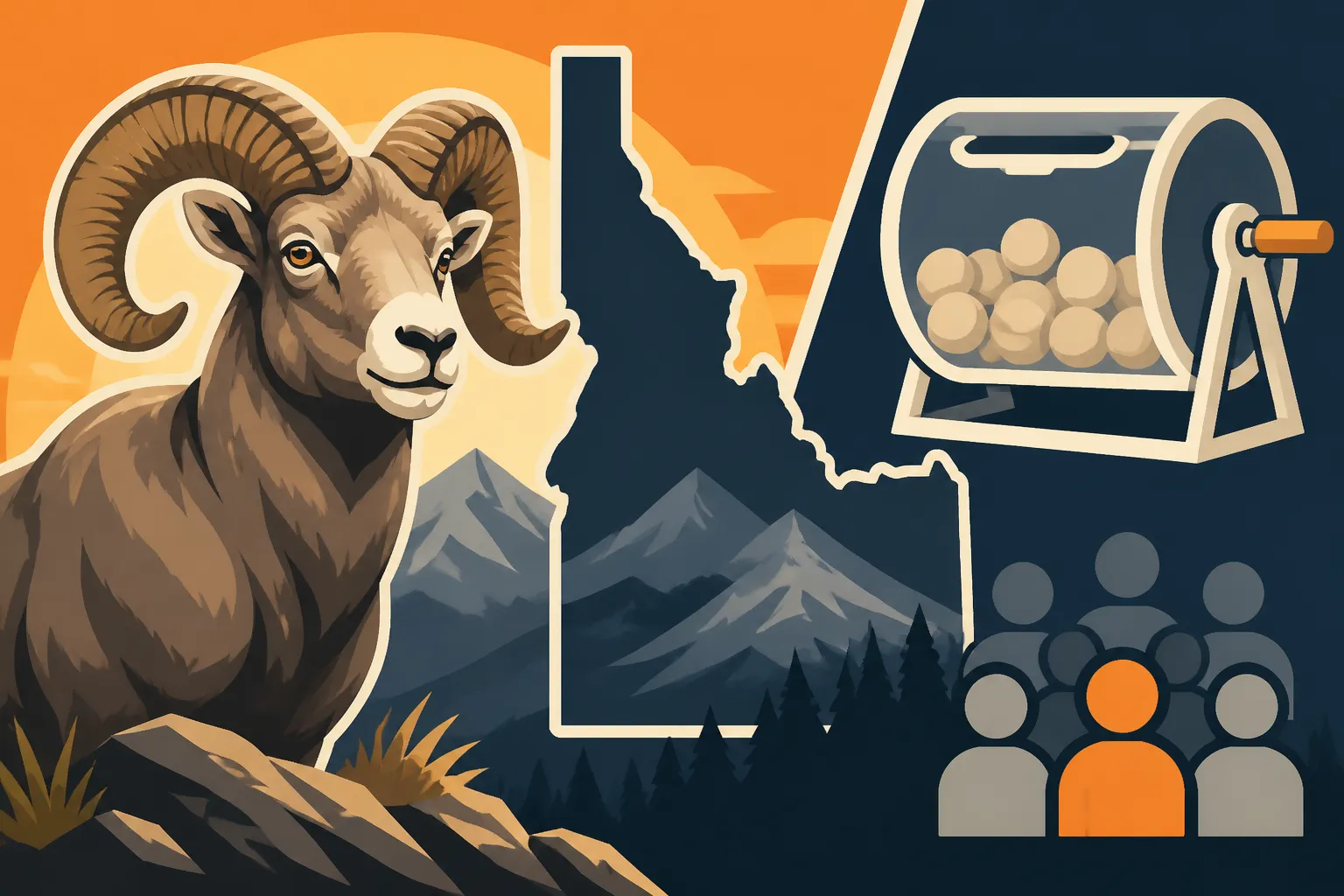
One of the most important aspects of the Idaho draw system for bighorn sheep, and indeed for all its controlled hunts, is that there are no preference points. This is a game-changer. In many other states, every year you apply and don't draw, you accumulate a point, improving your chances incrementally in subsequent years. Not so in Idaho. Here, every single applicant, whether it's their first time applying or their thirtieth, enters the draw with completely equal odds.
This "true lottery" system can be incredibly frustrating for those who have been applying for years, seeing newcomers draw tags they've dreamed of. Yet, it also offers a glimmer of hope to everyone. You don't have to wait decades to "catch up" on points; you genuinely have the same chance as anyone else the moment you submit your application. This means a first-time applicant could theoretically draw a bighorn tag right out of the gate, while someone who's applied for a quarter-century might still be waiting. It's pure luck of the draw. If you're wondering how the state manages its draws without points, it boils down to a truly randomized selection process. For more on this, check out our guide on How Idaho Draws Without a Point System.
How Draw Odds Are Calculated and Presented
Draw odds for bighorn sheep are typically presented in one of two ways: as a percentage (e.g., 0.1% chance) or as a "1 in X" chance (e.g., 1 in 1,000). Both convey the same information: how many applicants there were for each available tag.
The calculation is straightforward:
Odds = (Number of Tags Available / Total Number of Applicants) * 100 (for percentage)
or
Odds = Total Number of Applicants / Number of Tags Available (for 1 in X)
For example, if a unit has 2 bighorn sheep tags available and 2,000 applicants, the odds would be 0.1% or 1 in 1,000. These numbers are published annually by Idaho Fish and Game after the draw is completed, reflecting the previous year's success rates. Many savvy hunters also rely on third-party analytical tools, such as those provided by GoHunt, which compile and visualize this data, sometimes even offering predictive insights based on application trends. These platforms can be incredibly helpful for making sense of the raw data.
It's important to differentiate between overall draw odds and your personal odds for a specific unit. While the statewide odds might be bleak, focusing on individual unit statistics can help you identify areas where your chances might be marginally better, even if those "better" chances are still incredibly slim.
Factors That Influence Your Personal Odds
While the overall draw odds are largely statistical, several factors influence your personal chances and the competitiveness of the hunt unit you choose:
- Hunt Area (Unit) Choice: This is perhaps the biggest factor. Some bighorn sheep units are consistently more popular, either because they have a reputation for larger rams, more accessible terrain, or simply higher sheep densities. Units known for trophy Rocky Mountain Bighorns in Idaho will almost always have higher application numbers and thus, longer odds. Conversely, a unit with challenging access or lower ram numbers might see fewer applicants, marginally increasing your odds.
- Tag Type (Ram vs. Ewe): While most bighorn draws are for rams, some units occasionally offer ewe tags for management purposes. Ewe tags typically have significantly better draw odds than ram tags, as they are less sought after. If your goal is simply to harvest a bighorn sheep, and not necessarily a ram, a ewe tag might be a "better" bet, though still extremely difficult to draw.
- Application Volume: This is a direct consequence of the previous two points. The more hunters who apply for a specific unit and tag type, the lower your odds will be. Historical application data, which you can often find compiled by services like GoHunt or on the Idaho Fish and Game website, is crucial for understanding these trends.
- Resident vs. Nonresident Status: As mentioned, nonresident allocations are minimal, often just a single tag, or even zero, across multiple units. This severely impacts nonresident odds, making it an even rarer draw.
Strategies for Improving Your Chances (Realistically)
Given the challenging odds, especially for a tag like bighorn sheep, "improving" your chances is less about manipulating the system and more about smart application choices and persistent effort.
Researching Units and Hunt Areas
This is where the real work comes in. Simply throwing your name into the hat for the most popular unit year after year is a guaranteed recipe for continued disappointment. Instead, dedicate time to researching the various bighorn sheep hunt areas in Idaho.
- Dive into the Idaho Hunt Planner: This online tool is your best friend. The Idaho Hunt Planner Is the Tool to Start With is a treasure trove of information. You can explore different Game Management Units (GMUs) that hold bighorn sheep, look at historical harvest statistics, and crucially, review past draw odds. This allows you to identify units that might have slightly "less terrible" odds, even if they're still astronomically high.
- Analyze Historical Data: Pay attention to how many tags were offered, how many applications were received, and the resulting odds for each unit over several years. Look for trends. Has a unit seen a recent increase in popularity? Has a unit's tag allocation changed? Resources like GoHunt excel at presenting this historical data in an easily digestible format.
- Consider Hunt Difficulty and Access: Units with extremely rugged terrain, limited access, or lower sheep densities might deter some applicants, thereby slightly improving your odds. Are you physically capable of handling a strenuous, remote hunt? Some units with California Bighorns Along the Owyhee might offer different terrain challenges compared to those with Rocky Mountain bighorns. It’s a trade-off: easier to draw often means harder to hunt.
- Understand Subspecies Differences: Idaho manages two distinct bighorn subspecies: Rocky Mountain Bighorns and California Bighorns. Each has specific hunt areas and management strategies. Why the Subspecies Rule Matters When You Apply can give you more insight into how this impacts your choices and opportunities. Applying for both, if regulations allow and you have the funds, might be a way to double your chances (not your odds for a specific tag, but overall opportunity) in the once-in-a-lifetime game.
Applying Consistently and Staying Informed
The most straightforward "strategy" for drawing a bighorn sheep tag in Idaho is simply to apply every single year. Since there are no preference points, consistency in application is your only true lever. It's a game of persistence and patience.
- Mark Your Calendar: Don't miss the application window! The controlled hunt application periods, including those for bighorn sheep, typically open in April. For exact dates and deadlines, check our article on When Moose and Sheep Applications Open in Idaho. Missing a year means missing your one and only chance for that year.
- Stay Updated: Regulations can change, and so can unit boundaries, tag allocations, or even the application process itself. Regularly check the Idaho Fish and Game website for updates and consult reliable third-party resources like GoHunt, which often highlight rule changes and their potential impact on draw odds.
- Embrace the Journey: Think of each application as a small investment in a long-term dream. Even if you don't draw, the application fee often contributes to wildlife conservation, so you're still supporting the very animals you hope to hunt. Drawing a tag for a species like bighorn sheep is often a decades-long endeavor.
The Super Hunt: A Different Path to a Coveted Tag
Idaho also offers the Super Hunt drawing, which is a separate lottery entirely from the main controlled hunt draw. The Super Hunt gives hunters a chance to win a tag for deer, elk, moose, and mountain goat, or a combination hunt. While bighorn sheep isn't explicitly listed as a standalone tag for the Super Hunt, winning a "combo" tag could theoretically include a sheep tag depending on the specific offering and regulations for that year. It's another avenue, albeit with even longer odds due to the sheer number of entries, that offers a chance at these incredibly rare species. The entry fees for Super Hunt also go directly to Idaho Fish and Game's Access Yes! program, which helps open private lands to public hunting.
Understanding Idaho Bighorn Sheep Draw Odds: A Comparative View
To put the bighorn sheep odds into perspective, let's look at some hypothetical numbers across different units, keeping in mind that actual figures vary widely each year.
| Unit Name (Hypothetical) | Total Applicants (Resident) | Tags Offered (Resident) | Resident Draw Odds (Approx.) | Total Applicants (Nonresident) | Tags Offered (Nonresident) | Nonresident Draw Odds (Approx.) |
|---|---|---|---|---|---|---|
| Unit A (Rugged Mtn.) | 1500 | 2 | 1 in 750 (0.13%) | 500 | 1 | 1 in 500 (0.2%) |
| Unit B (River Breaks) | 2000 | 1 | 1 in 2000 (0.05%) | 700 | 0 | N/A (0%) |
| Unit C (High Plateau) | 1200 | 3 | 1 in 400 (0.25%) | 400 | 1 | 1 in 400 (0.25%) |
Please note: These are hypothetical numbers for illustrative purposes only. Actual draw odds for Idaho bighorn sheep are often significantly longer and vary year to year.
As you can see, even in a "good" unit (hypothetical Unit C for residents), the odds are still incredibly long. For nonresidents, the picture is often even more stark, with some units offering no tags at all in a given year. When Idaho Releases Moose and Sheep Results are out, you'll see how these real numbers play out. Comparing these to other species, even Idaho Moose Controlled Hunt Wait Times for moose, which can be long, often present better odds than bighorn sheep.
Conclusion: The Ultimate Test of Patience
Drawing an Idaho bighorn sheep tag is truly the pinnacle of a hunter's quest, and it's an experience that very few will ever realize. The draw odds are, frankly, brutal. There's no sugarcoating it. But that's also part of what makes these tags so special and the pursuit so captivating. With no preference points in Idaho's system, every year is a fresh start, a new lottery ticket purchased for an incredible adventure.
Your best approach is consistent application, thorough research into the different units and their historical draw odds, and maintaining realistic expectations. Use tools like the Idaho Hunt Planner and resources from GoHunt to make the most informed choices. Understand the nuances between Rocky Mountain Bighorns in Idaho and California Bighorns Along the Owyhee if you're considering units for each. For many, the dream of a bighorn sheep hunt is a lifelong pursuit, fueled by hope, patience, and a deep appreciation for these iconic animals and the wild places they call home. Keep applying, and maybe, just maybe, one day your number will be called.
Disclaimer
This article is for general informational purposes only and does not constitute professional advice. Laws, prices and regulations vary by location and change over time. Consult a qualified professional for guidance on your specific situation.