Mule Deer Migration Corridors Worth Knowing
It can be incredibly frustrating to scout a promising area, only to find the mule deer have seemingly vanished overnight. You spend countless hours glassing hillsides and checking water sources, yet the bucks you saw just weeks ago are nowhere to be found. This often isn't because they've disappeared entirely, but because they've begun their seasonal journey along ancient pathways. Understanding these critical mule deer migration corridors can be the key to unlocking consistent success and a deeper appreciation for these incredible animals in Idaho. This guide will walk you through what these corridors are, how to identify them, and how to ethically integrate this knowledge into your hunting strategy.
Understanding Mule Deer Migration: More Than Just a Walk
Mule deer aren't just meandering aimlessly; their annual movements between summer and winter ranges are a deeply ingrained survival strategy. These aren't just casual strolls, but rather long-distance journeys undertaken by thousands of animals, driven by instinct and the changing seasons. As hunters and outdoors enthusiasts, recognizing these patterns isn't just a matter of curiosity; it's fundamental to understanding the animals we pursue and their ecological needs.
What Exactly Are Migration Corridors?
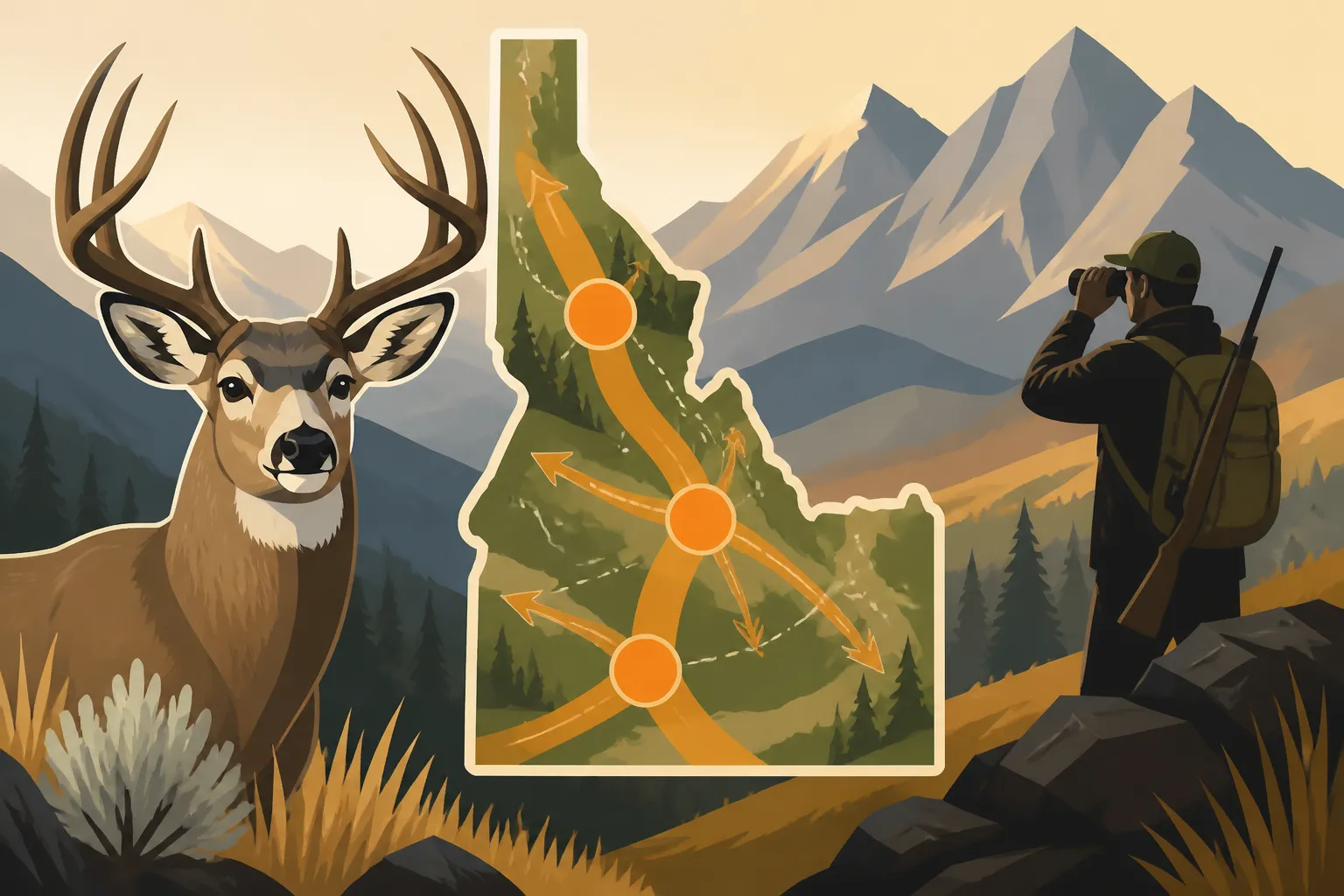
At its heart, a migration corridor is simply a route that deer regularly use to travel between their seasonal habitats. Think of it like a highway system for wildlife, with main arteries and smaller feeder roads. These aren't always visible paths on the ground; sometimes they're broad swathes of country, and other times they can be surprisingly narrow, funneling hundreds of animals through a small valley or saddle. For mule deer in Idaho, these movements are predominantly driven by food availability and snow depth. As the high country gets blanketed in snow, pushing deer off their summer browse, they descend to lower elevations where forage is still accessible. Conversely, as spring arrives and snow recedes, they climb back up to take advantage of new growth and cooler temperatures.
These corridors are often surprisingly consistent year after year, sometimes used for centuries. They are etched into the landscape not just by the deer's hooves, but by the very challenges and opportunities presented by Idaho's diverse terrain. From the rugged peaks of the Frank Church Wilderness to the sagebrush flats of the Owyhee Country, these routes connect vital habitats. Without these pathways, deer would struggle to find enough food, escape predators, or reproduce successfully, making them truly the lifelines of the herd.
The Importance of Seasonal Ranges
To fully grasp the significance of migration corridors, we need to talk about the endpoints: the seasonal ranges. Mule deer need distinct summer and winter homes, and sometimes even transitional areas in between.
During the summer, deer spread out, often moving to higher elevations with abundant forage, water, and security cover. This is where bucks put on mass, fawns grow rapidly, and does recover from the demands of raising their young. The availability of diverse plant life and the cooler temperatures of the high country make it an ideal nursery and feeding ground. Knowing the characteristics of their summer haunts, and how they relate to the terrain, can give you clues about their starting points before the big migration. You might find yourself Glassing Breaks and Benches for Mule Deer during these months, observing patterns that hint at future movements.
As winter approaches, usually with the first significant snowfalls, mule deer are forced to abandon these summer paradises. Their winter range is characterized by lower elevations, south-facing slopes, and areas where snow depth is manageable and bitterbrush, sagebrush, and other crucial forage remain accessible. These areas are often drier, less vegetated, and more exposed, but they offer the best chance for survival through the lean months. Understanding Mule Deer Winter Range Across the High Desert is paramount, not just for hunting, but for recognizing how human development and activity impact their survival during the most challenging time of year. These ranges are often the most sensitive to disturbance, and protecting them is crucial for herd health.
Unpacking Idaho's Mule Deer Migration Pathways
Identifying mule deer migration corridors isn't always as simple as looking at a single map; it requires layering information, understanding terrain, and sometimes a bit of detective work. Idaho's varied landscape means that these pathways can look very different from one region to the next, from wide-open desert country to dense timbered mountains.
Natural Funnels and Bottlenecks
Idaho's topography naturally creates areas where mule deer are funneled, making these locations prime candidates for migration corridors. Think about how a river cuts through a canyon, or how a mountain range leaves only a few low passes. Deer, like any traveler, will take the path of least resistance. These "natural funnels" can be:
- Mountain Passes and Saddles: Low points in mountain ranges are often heavily used by migrating deer to cross from one basin to another. A buck doesn't want to climb higher than he has to, especially with heavy snow or when trying to conserve energy.
- River Crossings and Drainages: While deer can be good swimmers, they'll often utilize specific points where a river is shallower, or where a major drainage provides an easier route through dense terrain.
- Ridgelines and Canyons: Certain ridge systems might offer easier travel than the steep, rocky canyon bottoms, or vice versa depending on the particular topography. Deer will often stick to these features for cover, travel, and to avoid deep snow.
- Edge Habitat: The transition zones between different types of vegetation, such as timber and open sage, can also act as natural lanes.
Identifying these on a topographic map during your E-Scouting an Idaho Unit Before the Season is a fantastic starting point. You're looking for areas where the landscape compresses, guiding deer into predictable avenues. High-resolution satellite imagery, readily available through tools like GoHunt's mapping platform, can highlight these terrain features with stunning clarity, allowing you to trace potential routes from a bird's-eye view.
Using Modern Mapping Tools and Public Data
In today's hunting world, we have access to incredible resources that were unimaginable just a few decades ago. Digital mapping platforms are no longer just for finding property lines; they're powerful tools for dissecting migration patterns.
Many state wildlife agencies, including Idaho Fish and Game, conduct studies using GPS collars on mule deer. While they often don't publish exact GPS coordinates of every collared animal for obvious reasons, they frequently release aggregated data, general maps, or scientific reports that highlight major migration corridors. These reports are often tied to specific Game Management Units and can be found through The Idaho Hunt Planner Is the Tool to Start With. Pay close attention to any public-facing data or maps they share that delineate winter ranges, summer ranges, and the corridors connecting them.
Tools like GoHunt offer sophisticated mapping layers that can overlay public land, private parcels, topographic maps, and even historical satellite imagery. By studying these layers, especially during different times of the year, you can visually trace patterns. Look for areas where:
- Game trails are obvious in open country, even on satellite views.
- Fences or roads create pinch points.
- Public land is connected through narrow strips, often acting as access routes for animals and hunters alike.
- Changes in vegetation type occur along a predictable path.
You might even be able to combine this with insights on Idaho Mule Deer Population Trends Across the West to focus your efforts on areas with healthy populations known for significant migratory movements.
| Resource Type | How It Helps Identify Corridors | Best Use Case |
|---|---|---|
| Topographic Maps | Reveals natural funnels, saddles, drainages, elevation changes. | Identifying potential travel routes, pinch points. |
| Satellite Imagery | Shows vegetation changes, visible game trails, human impact. | Ground-truthing topo maps, spotting faint travel ways. |
| State Wildlife Reports | Provides broad-scale data, GPS collar study summaries. | Understanding general migration routes for a region. |
| Digital Mapping Apps (e.g., GoHunt) | Integrates all layers, allows waypoint marking, track recording. | Comprehensive e-scouting, in-field navigation. |
| Local Knowledge | Historical observations from experienced hunters/biologists. | Refining broad data to hyper-local movements. |
Leveraging Migration Knowledge for a Successful Hunt
Knowing about migration corridors is one thing; actually using that knowledge to improve your hunting success is another. It's about timing, patience, and understanding animal behavior in a way that respects their journey.
Timing Your Hunt with the Migration
This is where the magic happens. Hunting migration corridors isn't about being in the deer's summer or winter home; it's about intercepting them during their travels. This means your hunt dates become incredibly critical.
- Early Archery Seasons: Sometimes, these can catch the very start of the migration, particularly in the highest elevations when the first cold snap hits or before heavy snow. Deer might be transitioning from summer feed to slightly lower, more secure cover, but they haven't committed to the long haul yet.
- Mid-Season Rifle Hunts: Many general rifle seasons in Idaho align perfectly with the peak migration window. This is when deer are actively moving, and finding them can feel like hitting a moving target. However, if you position yourself along a known corridor, especially near a natural funnel, your odds increase dramatically. These hunts can also overlap with the early stages of When the Mule Deer Rut Actually Starts, adding another layer of complexity and opportunity.
- Late Seasons: By late season, most deer have settled into their winter ranges. While you might still catch some stragglers, the bulk of the herd will have completed their journey. Your strategy then shifts from intercepting movement to hunting their specific winter habitat.
The key is to study the specific unit regulations and historical weather patterns. A heavy, early snowfall can trigger migration faster than a mild autumn. Conversely, a warm, dry fall might delay things, keeping deer higher for longer. Flexibility and adaptability are essential.
Ethical Hunting Strategies in Corridors
Hunting migration corridors comes with a heightened ethical responsibility. These aren't just any old spots; they're vital pathways.
- Minimizing Pressure: These corridors can concentrate animals, making them vulnerable. Over-pressuring these areas can cause undue stress on the deer, push them into less favorable routes, or even deter future use of the corridor. Be mindful of how many hunters are in the area and consider seeking out less-pressured alternative routes or habitats. If you notice a high concentration of hunters along a corridor, it might be worth exploring a less obvious, but still effective, route using your GoHunt maps to find overlooked pockets.
- Fair Chase Principles: Ensure your pursuit aligns with fair chase principles. Hunting migrating animals doesn't mean sitting on a road and shooting animals as they cross. It still requires skill, effort, and respect for the animal. This might involve setting up an ambush point, employing The Grid Glassing Method, Step by Step to locate moving deer from a distance, or executing a careful stalk on animals using the corridor as they feed or rest.
- Consider Winter Range Proximity: As deer move closer to their designated winter range, they are often in poorer condition, having expended significant energy on their journey. While perfectly legal to hunt, consider the long-term health of the herd. Many areas have seasonal closures specifically to protect Idaho Winter Range Closures That Affect Scouting and hunting during these critical periods. Always double-check regulations for any specific unit or area you plan to hunt.
- Quick and Clean Harvest: Because deer in migration corridors are often focused on their journey and can be traveling with speed, ensuring a clean, ethical shot is paramount. You need to be confident in your ability to make an accurate shot, especially if you're trying to Field Judging a Mule Deer Buck Quickly while he's on the move. Wounded animals in these areas can be incredibly difficult to recover, leading to unnecessary suffering.
Conservation and Ethical Considerations in Migration Corridors
Understanding mule deer migration isn't just about bagging a buck; it's also about being a responsible steward of the land and the wildlife we cherish. These corridors are facing increasing threats, and our awareness plays a vital role in their protection.
Threats to Migration Corridors
Mule deer have used many of these routes for thousands of years, but modern development is increasingly fragmenting and disrupting them.
- Habitat Fragmentation: New roads, subdivisions, fences, and energy development can cut off or significantly degrade migration corridors. A highway might be a deadly barrier, or a housing development might remove a critical pinch point, forcing deer to use less optimal routes, expending more energy, and increasing mortality.
- Human Encroachment: Increased recreational use, even non-hunting activities, can disturb deer during critical migration periods, forcing them off their paths or causing stress. This is particularly true in areas closer to human populations where Idaho's Motorized Hunting Rule Runs August Into December helps to limit disturbance.
- Climate Change: Shifting weather patterns, earlier snowmelt, or prolonged droughts can alter forage availability on both summer and winter ranges, potentially forcing deer to adapt their migration patterns in ways that put them at greater risk. This unpredictability adds another layer of challenge for both wildlife managers and hunters.
These threats highlight why knowing where these corridors are and advocating for their protection is so important for the future of Mule Deer Across Idaho's High Desert and Breaks.
Your Role as a Hunter and Conservationist
As hunters, we have a unique perspective and a vital role to play in conservation. We are often the first to notice changes in animal behavior or habitat.
- Educate Yourself: Continuously learn about the specific migration patterns in the areas you hunt. Use mapping tools like GoHunt to identify critical pathways, understand Reading Terrain Before You Pick a Camp, and keep up with research from Idaho Fish and Game. The more you know, the more effectively you can advocate.
- Support Conservation Efforts: Many organizations are actively working to protect and restore migration corridors. This could involve supporting land acquisition, fencing modification projects, or advocating for wildlife-friendly infrastructure. Your hunting license and tag fees also contribute directly to Idaho's wildlife management, including studies on migration.
- Be a Responsible Observer: When you're out scouting or hunting, pay attention to where you see deer moving, especially during transitional periods. Note if new developments seem to be impacting their travel. Report significant observations or concerns to Idaho Fish and Game.
- Respect Private Land: Many migration corridors traverse private land. Always ensure you have Getting Landowner Permission in Idaho if you need to cross private property, even if you suspect deer are using it as a travel lane. Maintaining good relationships with landowners is vital for preserving access and for conservation efforts.
By understanding mule deer migration corridors, we move beyond simply hunting an animal and instead participate in a much larger story of landscape, seasonality, and the intricate dance of life in Idaho's wild places. It enriches the experience and strengthens our connection to the incredible resources we are so fortunate to enjoy.
Disclaimer
This article is for general informational purposes only and does not constitute professional advice. Laws, prices and regulations vary by location and change over time. Consult a qualified professional for guidance on your specific situation.