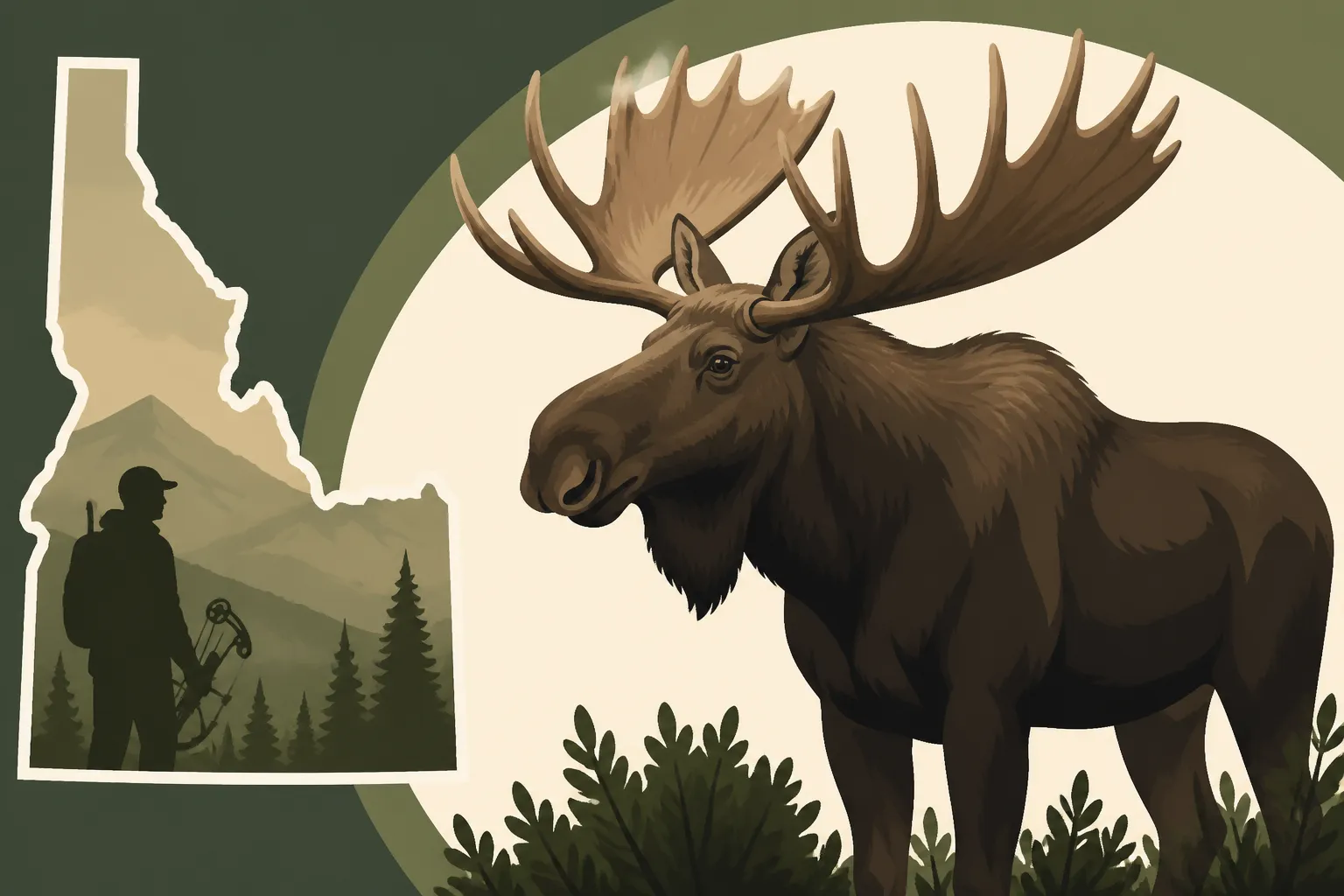
How Big a Shiras Moose Bull Gets
For anyone dreaming of a Western hunting adventure, the Shiras moose is often high on the list. These magnificent animals, especially the mature bulls, command respect and awe in Idaho's wild landscapes. You might be poring over maps, scouting potential units, or just daydreaming, and the question naturally arises: just how big do these Idaho Shiras moose bulls actually get? It's a fantastic question, because knowing what to expect, and what constitutes a truly impressive animal, can really shape your hunt planning and your expectations when you finally get boots on the ground.
Understanding the Shiras Moose: A True Mountain Dweller
The Shiras moose is often overshadowed by its larger cousins to the north, but make no mistake, it is a formidable and impressive animal in its own right. When you’re spending countless hours researching potential units and dreaming of your moose hunt, understanding the physical characteristics of the Shiras can give you a real edge in appreciating what you're seeing in the field. They are perfectly adapted to the rugged, high-elevation habitats they call home in Idaho.
The Shiras Moose: North America's Smallest Moose Subspecies
While they may be the "smallest" of the North American moose subspecies, that's a bit like saying a grizzly bear is the "smallest" bear in a lineup of Kodiak bears – they're still enormous creatures! The Shiras moose (Alces alces shirasi) primarily inhabits the Rocky Mountain states, with Idaho boasting a strong population. You'll find them thriving in high mountain valleys, along timbered river bottoms, and in dense willow thickets near water sources. Their preferred habitat often consists of a mosaic of conifer forests, aspen groves, and open meadows, providing both forage and cover.
Unlike the vast, open tundra or boreal forests where you might find their Canadian or Alaskan counterparts, Idaho's Shiras moose are true mountain dwellers. They're built for navigating steep terrain, often found in areas that would challenge even the most seasoned hiker. This habitat also influences their diet, leading to preferences for willow, aspen, various shrubs, and aquatic vegetation, all of which contribute to their overall health and size. Learning about the specific types of terrain and food sources that define Shiras Moose Across Idaho is crucial for anyone hoping to pursue them.
General Physical Characteristics of an Idaho Shiras Bull
When you finally spot a Shiras bull in Idaho, even a young one, your first thought will likely be, "Wow, that's a big animal!" Mature Shiras bulls are truly impressive. They typically stand quite tall, often reaching about 6 to 7 feet at the shoulder. This puts their heads well above most human observers, giving them an imposing presence. Their legs are long and powerful, designed to navigate deep snow and boggy terrain with ease, giving them a slightly gangly but incredibly strong appearance.
Their bodies are deep and robust, covered in a rich, dark brown to black coat that can appear lighter or browner in certain lighting or times of the year. They possess the characteristic moose hump over their shoulders, a large dewlap (bell) under their chin, and that unmistakable long, somewhat bulbous snout. While their overall body mass will vary, a large, mature Idaho Shiras bull can easily weigh anywhere from 900 to 1,200 pounds, with exceptional individuals potentially exceeding that. Imagine the sheer power and presence of an animal of that magnitude standing in a willow bog in front of you.
Antler Growth and What Defines a Trophy Shiras Bull
For many hunters, the antlers are a key aspect of what makes a bull moose a "trophy." It’s not just about the size, but the unique shape, palmation, and tines that distinguish these magnificent crowns. Understanding how these antlers grow and what to look for can significantly enhance your appreciation and field judging skills when pursuing a Shiras moose in Idaho.
The Dynamics of Antler Development in Shiras Moose
Moose antlers are fascinating. Like all cervids, bulls grow and shed their antlers annually. For Shiras moose in Idaho, antler growth typically begins in early spring, often around April, fueled by nutrient intake and increasing daylight. They grow rapidly through the summer, covered in a soft, vascular tissue called velvet. This velvet supplies the growing bone with essential blood and nutrients. By late August or early September, the antlers are fully grown, and the velvet begins to dry and peel away. Bulls will then rub their antlers on trees and shrubs to remove the remaining velvet, polishing their new racks to a hard, bony finish just in time for the rut.
The size and configuration of a bull's antlers are influenced by several factors, including age, genetics, and nutrition. A bull in his prime, typically between 5 and 10 years old, will usually sport his largest and most impressive rack. Younger bulls will have smaller, simpler antlers, often with less palmation. A bull that has access to rich forage and lives in a healthy habitat, free from undue stress or disease, will have a much greater chance of growing larger antlers. This annual cycle is a marvel of nature and a testament to the incredible energy these animals expend each year.
Typical Antler Spreads and Palmation for Idaho Shiras
When talking about "how big" a Shiras bull gets, the antler spread is often what most hunters are picturing. While a large Alaska-Yukon bull might boast a spread well over 60 or even 70 inches, a trophy Idaho Shiras bull will have a more modest, but equally impressive, spread. Most mature Shiras bulls in Idaho will have antler spreads ranging from 35 to 50 inches. Anything over 40 inches is generally considered a very respectable bull, and a bull approaching or exceeding 50 inches in spread is truly exceptional for the Shiras subspecies.
What really makes Shiras moose antlers distinct is their broad, flattened, and shovel-like palms, often with multiple points (tines) extending from the edges. These are not typically the long, sweeping tines you see on an elk; instead, they are shorter, wider, and more numerous on the palm. When evaluating a bull, look not only at the width (the greatest distance between the antler tips) but also the length and width of the palms themselves, and the number and symmetry of the points. Boone & Crockett and Pope & Young scoring systems recognize these unique characteristics, emphasizing spread, palmation, and tine length to classify truly outstanding trophies. Many hunters consider a bull with good, solid palmation and a decent number of points, even if the spread isn't massive, to be a prime animal.
Factors Influencing a Shiras Bull's Size and How to Spot Them
Deciphering the size of a Shiras moose bull in the field isn't always straightforward. It requires a keen eye and an understanding of the factors that contribute to their growth. For any hunter who has spent time agonizing over their Idaho Moose Controlled Hunt Draw Odds or thinking about Moose Controlled Hunt Wait Times, knowing what makes a bull big is part of the challenge and excitement.
Age: The Primary Driver of Bull Size
When it comes to the overall size of a Shiras moose, age is arguably the most critical factor. Like many big game animals, moose continue to grow in body size and antler development for several years. A 2- or 3-year-old bull will be significantly smaller in both body mass and antler size compared to a 7- or 8-year-old bull. Younger bulls often have narrower paddles, fewer points, and less mass to their antlers, sometimes even appearing as simple spikes or small forks.
As a bull matures, his body will fill out, becoming more muscular and robust. His antlers, in turn, will typically increase in mass, width, and palmation each year, eventually reaching their peak during his prime years, usually between five and ten years of age. After this peak, some bulls may start to decline in antler quality due to age, injury, or declining health. Estimating age in the field is a nuanced skill; you'll look for signs like a full, deep chest, a thick neck, a sagging belly, and a heavy, robust antler base. It’s a combination of these characteristics that helps differentiate a truly mature bull from a younger, still-growing one.
Habitat, Nutrition, and Genetics in Idaho's Moose Country
While age provides the framework for growth, a bull's environment plays a massive role in whether he reaches his full potential. High-quality habitat that provides abundant, nutritious forage is essential for a Shiras bull to grow large. Areas with ample willow, aspen, and aquatic plants rich in minerals contribute significantly to both body and antler development. Conversely, bulls in marginal habitat, or those that endure severe winters with limited food resources, may exhibit stunted growth or smaller antlers, regardless of their age or genetic potential.
Genetics also play an undeniable role. Some bulls are simply born with the genes to grow larger bodies and more impressive antlers, much like some human families are taller than others. While you can't assess a bull's genetics in the field, understanding that certain populations or specific Moose Hunt Area Boundaries Explained might consistently produce larger animals can be a valuable piece of information for long-term hunt planning. Using resources like GoHunt can help you research harvest data and historical trends for various units, giving you an idea of the kind of quality they tend to produce. When you combine favorable genetics with prime habitat and sufficient age, that's when you start seeing truly exceptional Idaho Shiras moose.
Field Judging a Shiras Moose Bull for Size
The moment of truth on a moose hunt often involves a fleeting glimpse of a bull through the timber or across a distant basin. Being able to quickly and accurately judge his size is a crucial skill. It can mean the difference between passing on a young bull and harvesting a true trophy, especially after you've waited so many years for a tag.
Key Features to Observe When Judging a Bull
When you spot a bull, take a deep breath and systematically evaluate him. First, assess his overall body size. Does he look massive and deep-chested, or does he appear leaner and more streamlined? A mature bull will often have a very thick, muscular neck, especially during the rut. Next, focus on the antlers. The easiest starting point is usually the spread. A common trick is to use the bull's ears as a reference; a bull's ears typically measure about 20-24 inches from tip to tip. If his antlers extend significantly past his ears on both sides, he's likely a very respectable bull.
Beyond spread, look at the palmation. Are the palms wide and well-developed, resembling large shovels? Or are they narrow and more fork-like? Count the points extending from the palms. More points and a good, heavy mass at the base of the antlers are indicators of maturity. Also, pay attention to the overall symmetry. While perfect symmetry is rare, a well-balanced rack often makes for a more aesthetically pleasing trophy. Don't be fooled by just one impressive characteristic; a truly big bull combines all these elements into a cohesive, magnificent package.
Practical Tips for Estimating Size on an Idaho Hunt
Judging moose in the field presents its own set of challenges, from dense timber to vast distances. First and foremost, invest in quality optics. A good spotting scope is invaluable for carefully examining a distant bull, allowing you to pick out details like palmation and points that might be invisible with binoculars alone. You'll find a wealth of information on choosing the right gear in articles like Spotting Scope Power for Canyon Glassing or Binocular Size That Survives an All-Day Session. Having a stable tripod for your optics is equally important, as it minimizes shake and allows for prolonged viewing.
Practice judging animals in photos and videos before your hunt. This mental exercise trains your eye to quickly assess the key features. When you're in the field, use known objects for scale if possible – a specific tree, a rock, or even the distance from the ground to the top of a familiar shrub. Remember that moose can look much larger or smaller depending on the angle, distance, and terrain. A bull uphill from you will always appear smaller, while one downhill will look larger. Lastly, research the specific unit you plan to hunt using tools like The Idaho Hunt Planner Is the Tool to Start With. Some units are known for producing larger Shiras moose due to better habitat or less hunting pressure, which can inform your expectations and judgment calls. Sites like GoHunt provide valuable data, allowing you to dive into harvest statistics and get a feel for the trophy potential of different areas before you even apply or buy your tags.
| Characteristic | Young Bull (2-4 years) | Mature Bull (5-10 years) | Exceptional Bull (8+ years, prime) |
|---|---|---|---|
| Body Build | Leaner, often lanky, less developed neck and chest | Deep chest, thick neck, robust, full-bodied appearance | Very massive body, pronounced hump, deep bell |
| Antler Spread | Typically < 30 inches, narrow | 35-45 inches, good width | 45-50+ inches, very wide and imposing |
| Palm Development | Little to no palmation, more spike/fork-like | Developing palms, distinct, often with 3-5 points per side | Broad, well-developed palms, many points (5-8+ per side) |
| Antler Mass | Slender bases, light appearance | Good mass, thicker bases, solid look | Very heavy, thick bases, substantial weight |
| Dewlap (Bell) | Shorter, less prominent | Longer, more defined | Very long, prominent, often bushy at the end |
| Overall Impression | Still growing, athletic | Powerful, in his prime, dominant | Unmistakable trophy, rare sight |
Disclaimer
This article is for general informational purposes only and does not constitute professional advice. Laws, prices and regulations vary by location and change over time. Consult a qualified professional for guidance on your specific situation.