Firearm Safety Expectations From Your Guide
Hunting in Idaho, especially for big game, often means navigating rugged terrain with powerful firearms. While the thrill of the chase is undeniable, the stark reality is that accidents can happen if proper protocols aren't followed. This guide is all about understanding the fundamental firearm safety expectations you should have for your Idaho hunting guide, and just as importantly, what they'll expect from you to ensure everyone comes home safe.
Why Firearm Safety is Paramount in a Guided Idaho Hunt
When you book a guided hunt, you're investing in an experience where a professional leads the way, often into challenging environments. Unlike hunting familiar ground with lifelong friends, a guided hunt introduces new dynamics: a guide you might not know well, potentially new hunting partners, and often, terrain and situations that demand extra vigilance. This is where explicit firearm safety becomes not just important, but absolutely critical for everyone's well-being.
The Inherent Risks of Backcountry Hunting
Idaho's backcountry is breathtaking, but it's also wild and unforgiving. We're talking steep, rocky slopes, dense timber, unexpected creek crossings, and weather that can change in an instant. Add a loaded firearm to that mix, and the stakes rise significantly. A slip on a wet rock, a branch snagging a trigger, or a momentary lapse in attention due to fatigue can have devastating consequences. Your guide understands these risks intimately, having spent countless hours in these places. Their job isn't just to find you an animal, but to ensure every step of the journey, especially those involving firearms, is as safe as possible. Think of a long descent through thick brush with a rifle slung over your shoulder; a good guide will be constantly assessing the situation, reminding you of safe muzzle direction, and sometimes even physically assisting to ensure stability.
Trust as the Foundation of a Safe Hunt
Entering the field with a guide means building a relationship of trust, and that trust starts with safety. You need to trust that your guide is competent, experienced, and prioritizes safety above all else. Similarly, your guide needs to trust that you, as their client, will listen, follow instructions, and handle your firearm responsibly. This isn't just about avoiding legal trouble; it’s about everyone’s life. Imagine tracking a bull elk through heavy snow, visibility dropping, and the adrenaline pumping. In such moments, clear, concise communication and unwavering adherence to safety protocols, established and reinforced by your guide, are what prevent tragic mistakes. Without this mutual trust, the hunt itself becomes unnecessarily dangerous, and honestly, a lot less enjoyable. Before you even head out, a good guide will often discuss their safety policies, setting the tone for the entire trip. This initial conversation is a key part of vetting an outfitter, something you might research on sites like BookYourHunt which often feature reviews that can hint at an outfitter's professionalism and safety standards.
Your Guide's Role in Firearm Safety
A professional Idaho hunting guide isn't just a tracker or a strategist; they're also a safety officer in the field. They carry a heavy responsibility, and you should expect them to take it seriously, leading by example and enforcing clear, consistent rules.
Pre-Hunt Safety Briefings and Protocols
Before any boots hit the trail or any vehicle leaves the pavement, a good guide will conduct a thorough safety briefing. This isn't just a quick mention; it's a dedicated session covering everything from proper firearm handling in camp and in the vehicle to specific protocols for approaching game and what to do in case of an accidental discharge. They'll outline their expectations regarding loaded chambers, muzzle direction, and trigger discipline. For example, many guides will have a strict "no loaded firearms in camp or vehicles" rule, or they'll specify how firearms should be cased and transported. They might even have a designated safe direction to point firearms when loading or unloading. This is also the time when they might ask about your experience level and comfort with your specific weapon, tailoring their instructions to ensure everyone is on the same page. You should feel comfortable asking any questions you have, no matter how basic, because this is the foundation of a safe hunt.
Continuous Oversight and Correction in the Field
The guide's responsibility doesn't end with a briefing. Out in the field, they are constantly observing, assessing, and, when necessary, correcting. This means paying attention to how you carry your firearm, where your muzzle is pointed, and how you're handling it around others or in tricky terrain. If you're climbing over a downed log, they might remind you to keep your action open or to hand them your rifle temporarily. When moving through dense brush, they'll emphasize keeping the muzzle pointed safely, often skyward or groundward, depending on the situation and group dynamics. If you're walking single file, there's usually a required distance between hunters to prevent accidental contact or a forward-pointing muzzle from sweeping another person. A guide might call out "muzzle!" if they see a weapon pointed unsafely. They're not trying to be overbearing; they're actively managing risk. This constant vigilance is a hallmark of a truly professional outfitter, often highlighted in testimonials you might find on platforms like GoHunt when researching guide services.
Safe Shooting Zone and Backstop Identification
When it's time to take a shot, your guide will play a crucial role in ensuring a safe shooting lane and identifying a proper backstop. They'll help you quickly assess the terrain beyond your target, looking for anything that could be in the line of fire or ricochet range – other hunters, livestock, roads, or even rock faces that could send a bullet in an unpredictable direction. In Idaho's expansive but often steep and timbered country, finding a safe shot can be more complex than on flat, open plains. They'll help you identify a solid, earth backstop and ensure no one is positioned in an unsafe downrange area. This might involve moving you a few yards, waiting for an animal to clear certain terrain features, or advising against a shot if the safety parameters aren't met. Their priority is that your bullet only hits its intended target and then comes to a safe stop. Rifle Zero Distance for Canyon Country Shooting is a critical factor here, as the guide must account for trajectory in uneven terrain.
Handling and Retrieval of Game
After a successful shot, the guide's safety role continues. Approaching a downed animal requires caution, as a wounded animal can still be dangerous. Your guide will lead the approach, often with their own firearm ready, ensuring the animal is truly deceased before anyone gets close. They’ll instruct you on how to keep your firearm safe and pointed in a safe direction during this process. Once the animal is secure, they'll supervise the unloading and casing of firearms before the hard work of field dressing and packing out begins. This is particularly important when game is located in challenging spots where hunters might need to climb, slide, or navigate precarious footing. Ensuring firearms are completely safe and out of the way before physical exertion is a key safety measure. Field Dressing and Carcass Transport Rules Explained will also be a part of their post-harvest instructions.
Your Responsibilities as a Hunter
While your guide is there to lead and enforce, firearm safety is a shared responsibility. As a client, you have a significant role to play in ensuring a safe and successful hunt. Your guide will expect, and frankly, demand, certain behaviors from you.
Arriving Prepared and Proficient
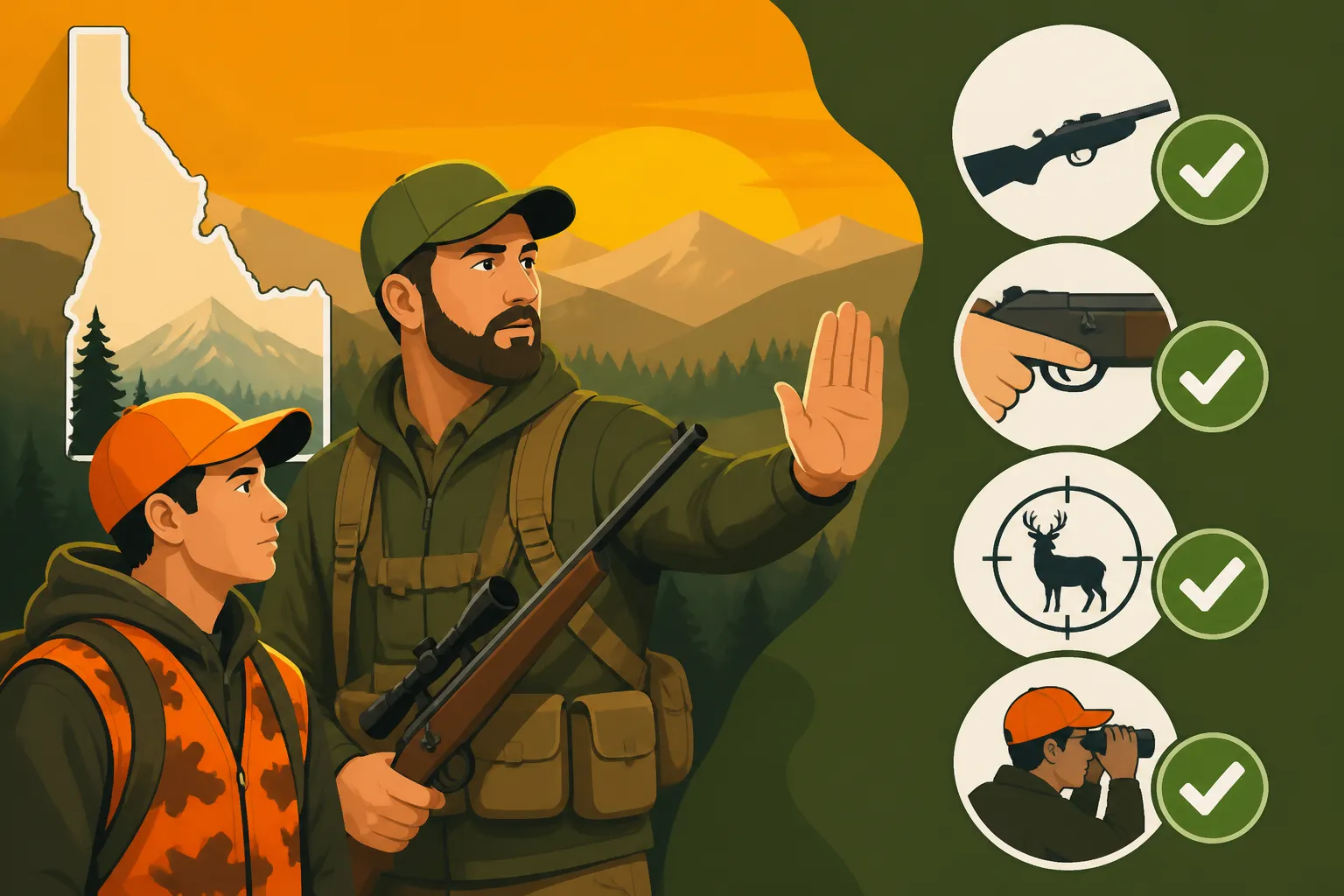
One of the biggest responsibilities you have is to arrive for your hunt proficient with your chosen firearm. This isn't the time for target practice or figuring out how your new scope works. You should have spent considerable time at the range, confidently handling your rifle, knowing its capabilities, and understanding its basic mechanics. Practice loading, unloading, and clearing malfunctions smoothly and safely. A guide shouldn't have to teach you how to operate your weapon. They expect you to know and respect the four fundamental rules of firearm safety: treat every firearm as if it's loaded, never point the muzzle at anything you're not willing to destroy, keep your finger off the trigger until your sights are on the target and you're ready to shoot, and be sure of your target and what's beyond it. Your physical condition also plays a role in safety; Physical Conditioning for Idaho Backcountry can prevent fatigue that leads to mistakes.
Adhering to All Instructions and Rules
Your guide is the expert in the field. They know the terrain, the local regulations, and the specific dangers of the area. When they give an instruction regarding firearm handling, muzzle direction, or when and where it's safe to load/unload, you must follow it without hesitation. This isn't a suggestion; it's a directive. Challenging their safety calls or ignoring their rules puts everyone at risk. This includes abiding by Idaho's specific hunting regulations, like Idaho's Motorized Hunting Rule Keeps You on the Road, which often means firearms must be cased when traversing non-motorized areas or during certain periods. If they say "unloaded and cased in the truck," that's what happens. If they tell you to clear your chamber before climbing a steep ridge, you do it. Your cooperation is paramount.
Communication and Situational Awareness
Effective communication is a two-way street. If you are ever unsure about a safety procedure, or if you feel uncomfortable with a situation, you must communicate that to your guide immediately. Don't assume anything. For instance, if you stumble and almost drop your rifle, you need to tell your guide. If you see another hunter's muzzle pointed in an unsafe direction, speak up. Situational awareness is equally vital; constantly be aware of where your guide and other hunting partners are, where the muzzle of your firearm is pointing, and what's in your immediate surroundings. This heightened awareness, particularly when moving through dense cover or over difficult terrain, can prevent accidents. If you're struggling with Packing an Elk Out of Steep Country Alone, for example, communicate your fatigue before it leads to a safety lapse.
Preparing for a Safe Hunt
The work of a safe hunt begins long before you set foot in Idaho. Proactive preparation on your part is a key component of mitigating risks and ensuring a smooth, enjoyable experience.
Pre-Trip Gear Check and Firearm Maintenance
Before you even pack your bags, give all your hunting gear, especially your firearm, a thorough inspection and maintenance check. Clean your rifle, check all screws and mounts, ensure your scope is properly zeroed and secured, and verify that all safety mechanisms are functioning correctly. Bring appropriate ammunition for your hunt and ensure it cycles smoothly through your action. If your rifle has any known quirks or issues, address them long before your trip. A firearm malfunction in the field can create a dangerous situation, especially if it leads to fumbling or distracted handling. This isn't just about your gear; it's about your readiness. Many outfitters will provide a The Gear List Your Outfitter Will Send, which often includes reminders for firearm preparation.
Understanding Idaho's Weapon-Specific Regulations
Idaho has specific regulations that vary based on the weapon type and the season you're hunting. For instance, muzzleloader-only hunts have strict rules about what constitutes a legal muzzleloader, often banning scopes and inline ignition. Archery hunts have their own set of rules regarding broadheads and equipment. It is your responsibility to understand the specific regulations for the weapon you intend to use and the season you are hunting. Ignorance of the law is never an excuse, and violating these rules can lead to citations, fines, and potentially dangerous situations if you're using equipment inappropriately. Your guide will expect you to be familiar with these rules, but they are not there to teach you the Idaho hunting regulations from scratch. You can find detailed information on the Idaho Fish and Game website or through resources like GoHunt's state-specific guides.
Practicing Realistic Shooting Scenarios
While range time is essential, try to incorporate realistic shooting scenarios into your practice. This means not just shooting from a bench, but practicing from various field positions: kneeling, sitting, standing, and even prone if your hunt might call for it. Simulate shooting with cold hands, while wearing your hunting clothes, and under a bit of physical exertion. Practice quick target acquisition and follow-through. If you're hunting a specific species like elk, understand their anatomy and where to place a shot for an ethical kill, something you might learn more about through resources from BookYourHunt if you're researching outfitters specializing in certain game. This kind of practical preparation builds confidence and muscle memory, which are invaluable when the pressure is on in the field and you need to make a safe, ethical shot.
Here’s a quick overview of shared responsibilities:
| Aspect of Safety | Guide's Expectation & Responsibility | Hunter's Responsibility & Expectation |
|---|---|---|
| Pre-Hunt Briefing | Provide clear, detailed instructions; answer all questions. | Actively listen, ask questions, understand all rules. |
| Firearm Handling | Enforce safe carry and muzzle direction; correct unsafe actions. | Maintain safe muzzle direction, finger off trigger, action open when required. |
| Vehicle/Camp Safety | Designate safe zones for firearms; enforce cased/unloaded rules. | Ensure firearms are cased, unloaded, and secured as instructed. |
| Shot Placement | Help identify safe backstops, clear shooting lanes. | Know your rifle's capabilities, ensure target identification and beyond. |
| Physical Condition | Monitor client fatigue; adjust pace as needed. | Arrive physically fit; communicate fatigue or discomfort. |
| Communication | Provide clear, concise instructions; be approachable for questions. | Ask questions when unsure; report any safety concerns or incidents. |
Conclusion
The vast and beautiful landscapes of Idaho offer incredible hunting opportunities, but they demand respect, particularly when firearms are involved. A good hunting guide will be a staunch advocate for safety, establishing clear rules and consistently enforcing them. Your role as a hunter is to come prepared, proficient, and committed to following every instruction to the letter. This partnership, built on mutual trust and a shared dedication to safety, is what ensures a successful hunt isn't just about the trophy, but about everyone returning home safe and sound.
Disclaimer
This article is for general informational purposes only and does not constitute professional advice. Laws, prices and regulations vary by location and change over time. Consult a qualified professional for guidance on your specific situation.