Longbow Against Recurve on a Western Hunt
Traditional longbows and recurves compared for Idaho mule deer and elk hunting, focusing on limb design, speed, and energy.
Close the distance.
Archery, muzzleloader, and firearm techniques — calling, stand placement, still-hunting, spot-and-stalk, and the weapon rules that change at the state line.

Traditional longbows and recurves compared for Idaho mule deer and elk hunting, focusing on limb design, speed, and energy.

Recurve bow poundage for hunting Idaho elk requires fifty to sixty pounds of draw weight to achieve ethical arrow penetration into vitals.
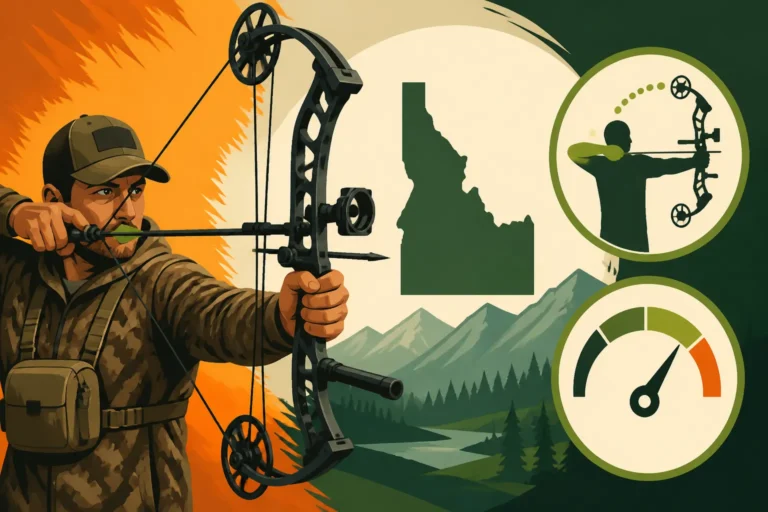
Compound bow let-off percentages and peak draw weights determine holding force and mechanical advantage for archery hunts.

Idaho archery hunting regulations explicitly permit mechanical release aids for compound, recurve, and longbows without special restrictions.

Idaho archery regulations and the Idaho Fish and Game rules permit lighted nocks for bowhunters to track and locate arrows after the shot.

Fixed blade and mechanical broadheads compared for Idaho elk hunting, detailing penetration, anatomy, and shot scenarios.

Idaho hunting regulations allow muzzleloaders during any-weapon seasons, enabling hunters to use scopes and inline ignition.

Idaho muzzleloader validations are required for hunting during designated muzzleloader-only seasons but not general any-weapon seasons.
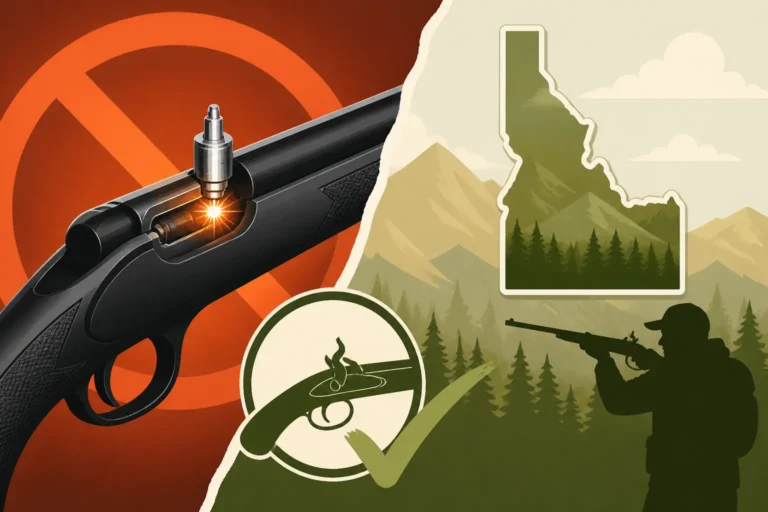
Idaho muzzleloader regulations and exposed cap rules explain why inline ignition systems are banned during muzzleloader-only hunting seasons.

Muzzleloader-only seasons in Idaho ban scopes, which leaves hunters to choose between open sights and peep sights and shapes how they keep accuracy.