When the Elk Rut Actually Peaks Out West
The Idaho elk rut progression and twenty four hour estrous cycles determine peak activity across western mountain landscapes.
Close the distance.
Archery, muzzleloader, and firearm techniques — calling, stand placement, still-hunting, spot-and-stalk, and the weapon rules that change at the state line.
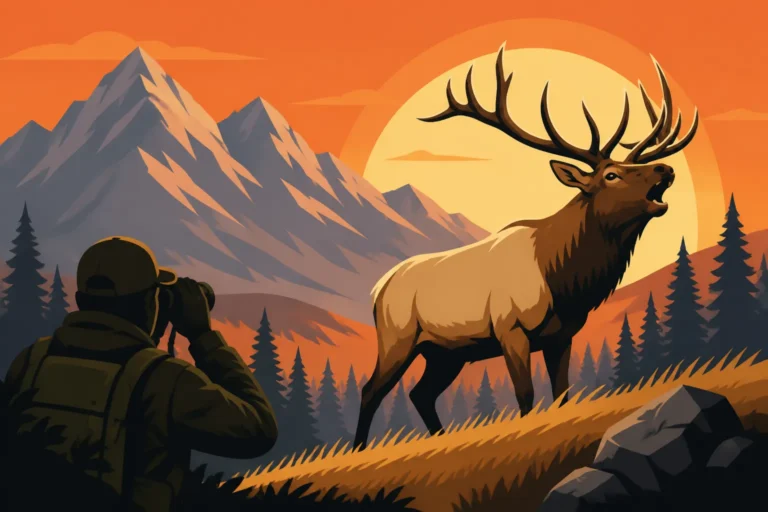
The Idaho elk rut progression and twenty four hour estrous cycles determine peak activity across western mountain landscapes.
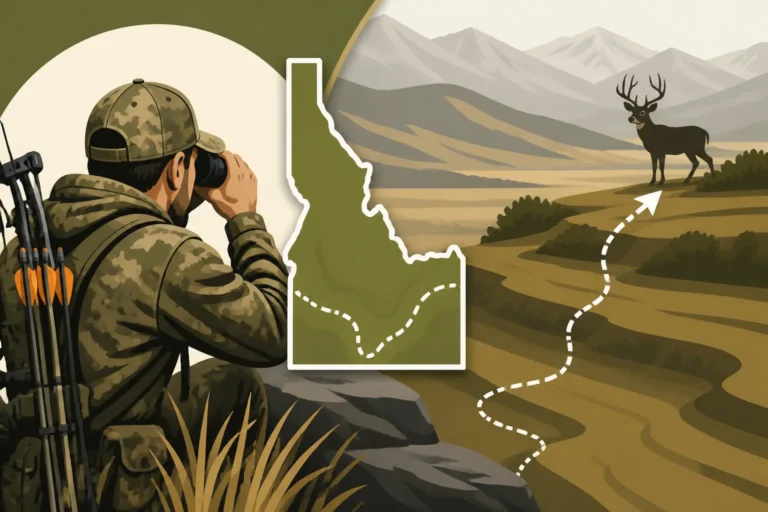
Using benches and draws as natural terrain shelters allows Idaho hunters to successfully close distance on elk and deer.
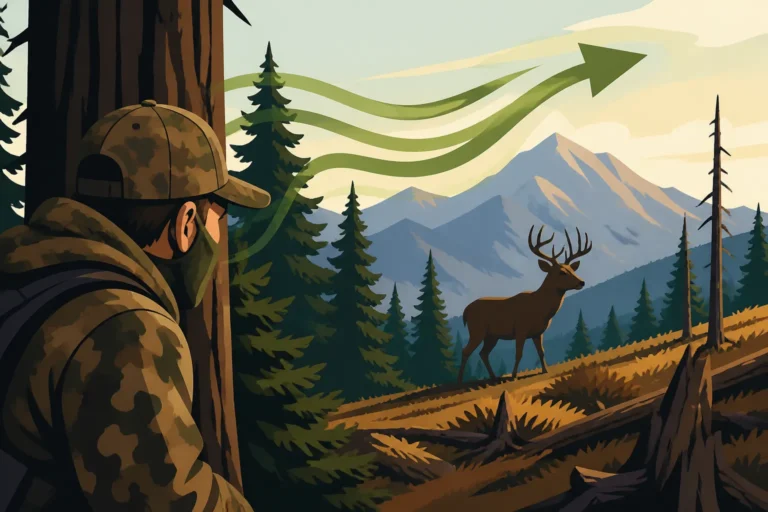
Idaho hunters navigating unpredictable wind in timbered terrain learn how thermals and canyons affect daily air movement.
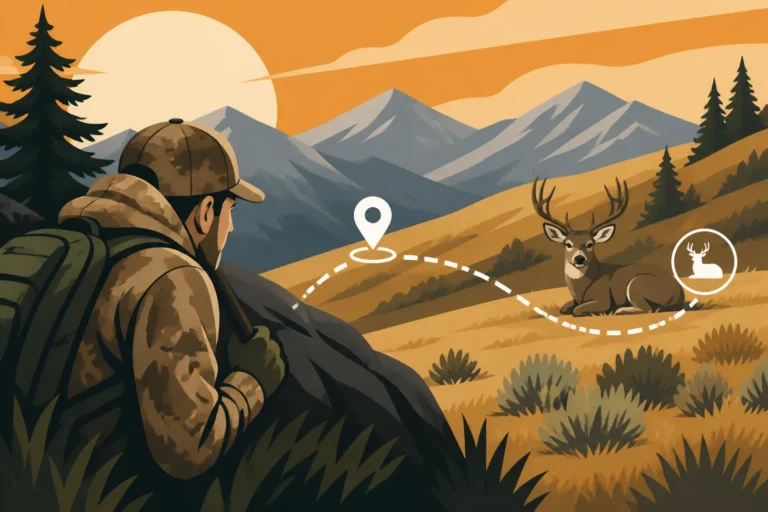
Stalking a bedded mule deer buck requires using terrain and understanding 300 degree vision to reach ethical shooting range.
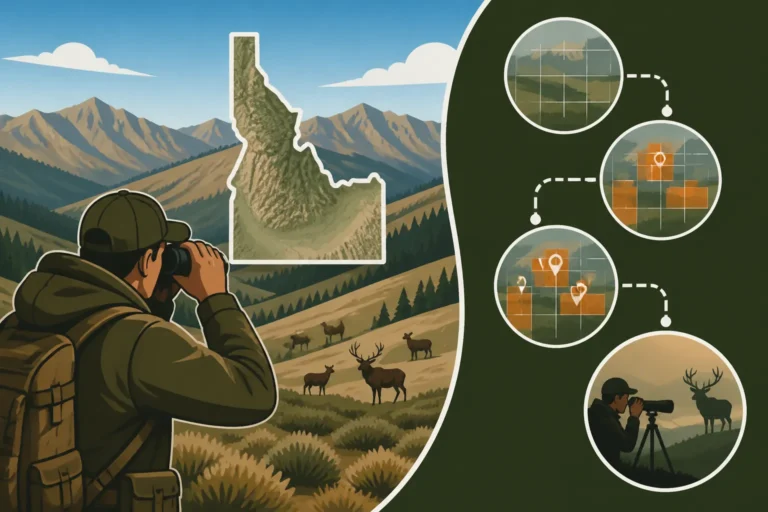
The grid glassing method provides a step by step system using binoculars and tripods to spot bedded game in Idaho canyons.
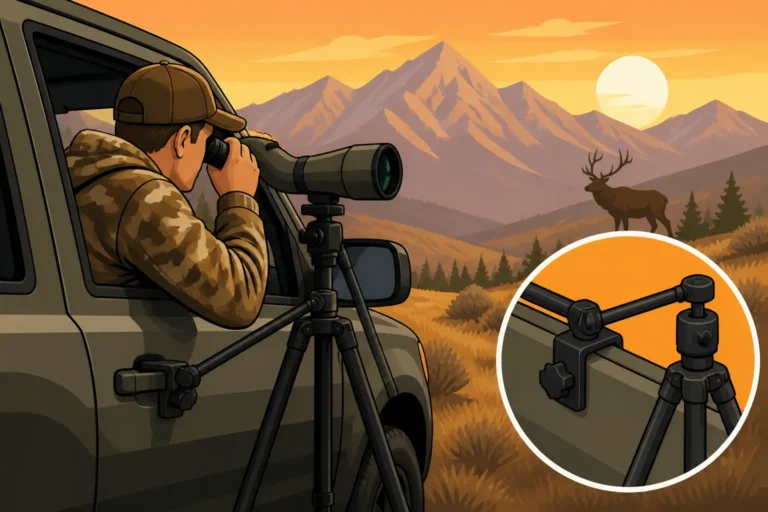
Tripod setup inside or near a vehicle enables stable glassing across Idaho hunting grounds, helping spot mule deer and elk.
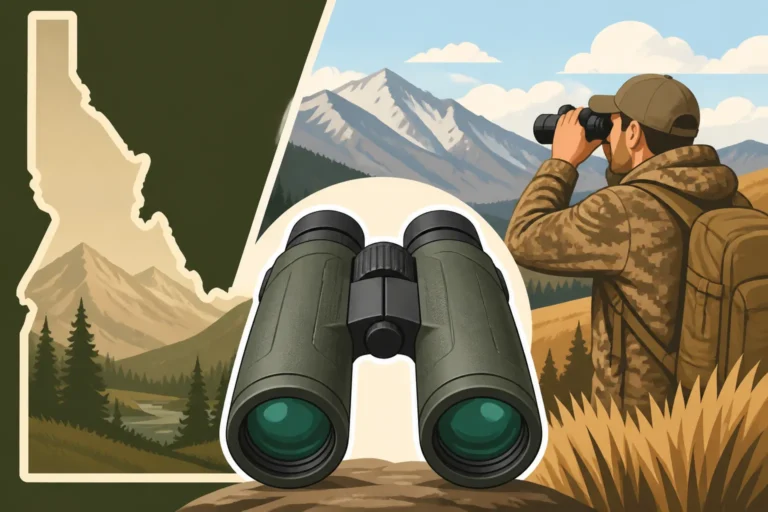
Proper binocular size balances magnification, weight, and objective lens diameter for all-day Idaho elk and mule deer hunting.
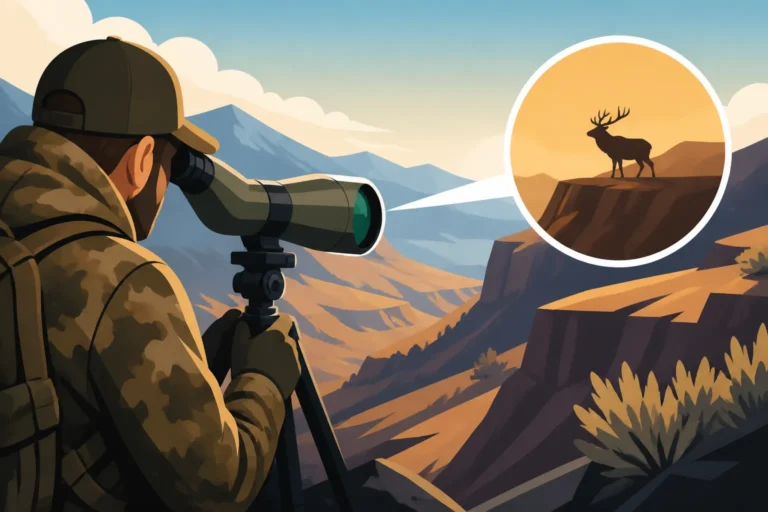
Spotting scope magnification helps hunters choose the correct power to identify elk and mule deer across wide Idaho canyons.
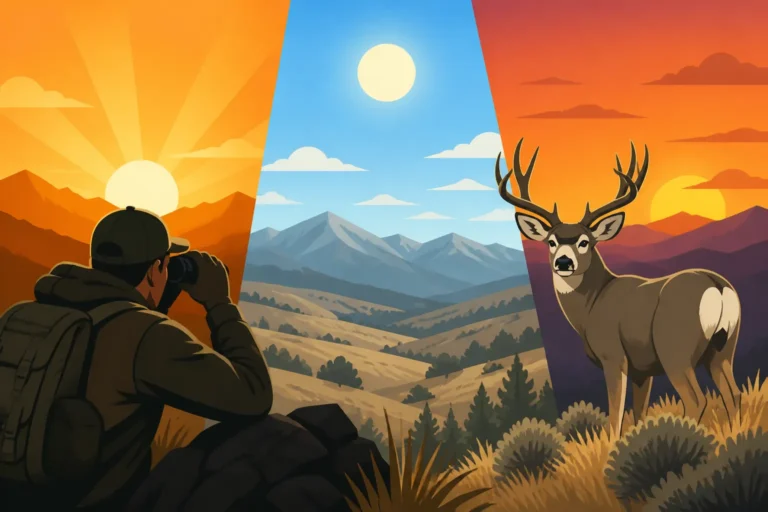
Early morning and late evening provide the best daily hours for spotting Idaho mule deer during overnight feeding and bedding.
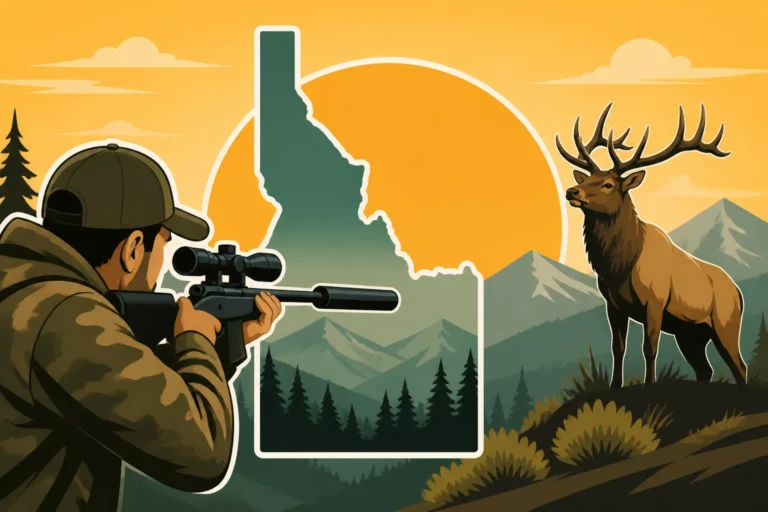
Idaho suppressor legality for big game hunting, covering federal NFA regulations, ATF requirements, and state permissions.