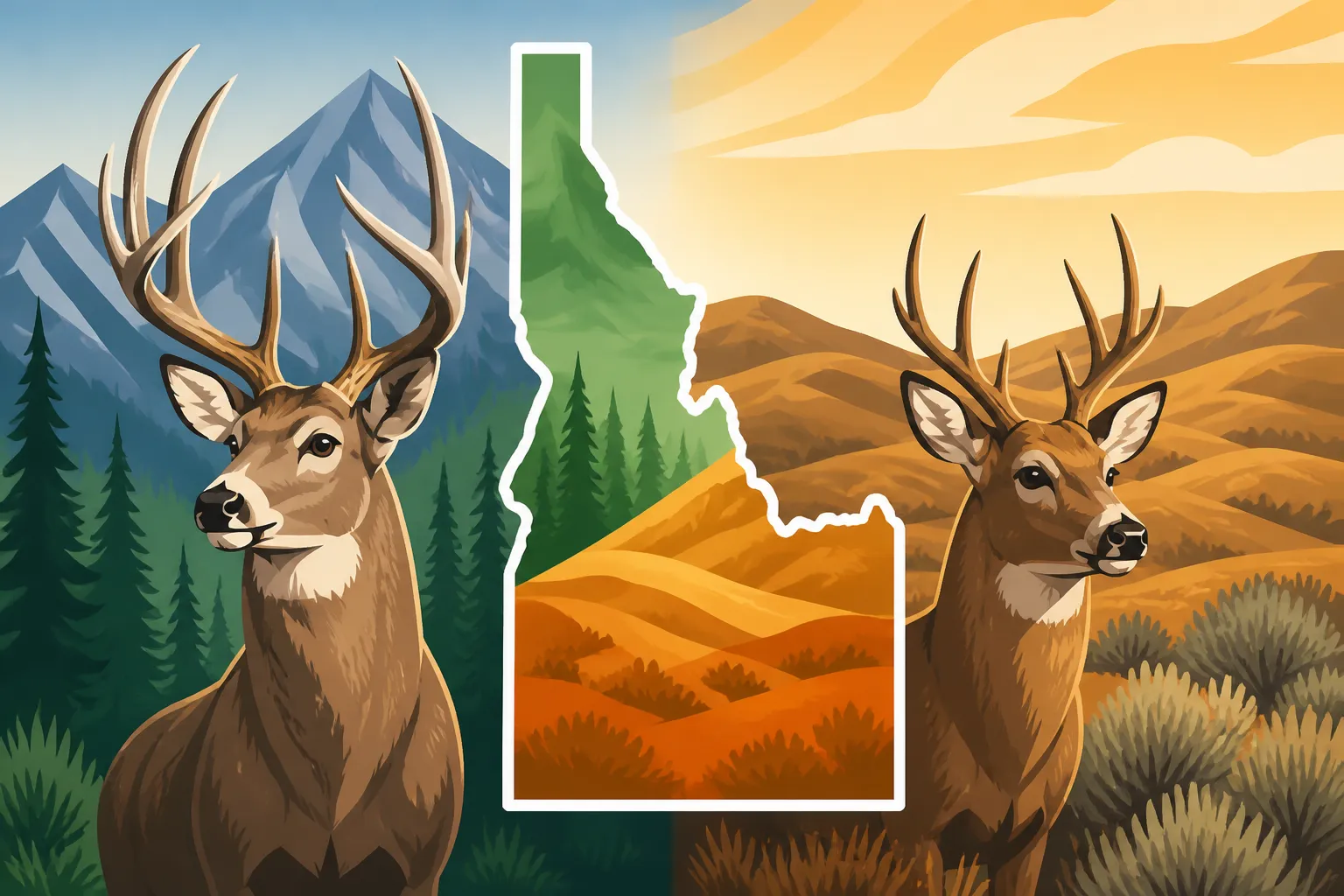
Why Idaho Buck Quality Varies North to South
It's a common observation among Idaho hunters, a whispered truth around many a campfire: the bucks you see in the northern reaches of our state often seem to carry a different kind of antler than those found roaming the sagebrush hills of the south. This isn't just hearsay; there are very real, ecological, and management-based reasons behind why Idaho buck quality varies north to south. This guide will dive deep into the unique factors that shape the antler growth and overall size of Idaho's whitetail and mule deer, helping you understand what to expect and where to focus your efforts.
Understanding Idaho's Diverse Landscapes
Idaho is a state of incredible topographical diversity, a true melting pot of ecosystems. From the dense, wet forests of the Panhandle to the arid, high-desert plains of the south, each region presents a unique set of challenges and opportunities for its resident deer. These distinct environments play a monumental role in the quality of bucks produced, influencing everything from available forage to predation pressure.
Northern Panhandle's Whitetail Dominance
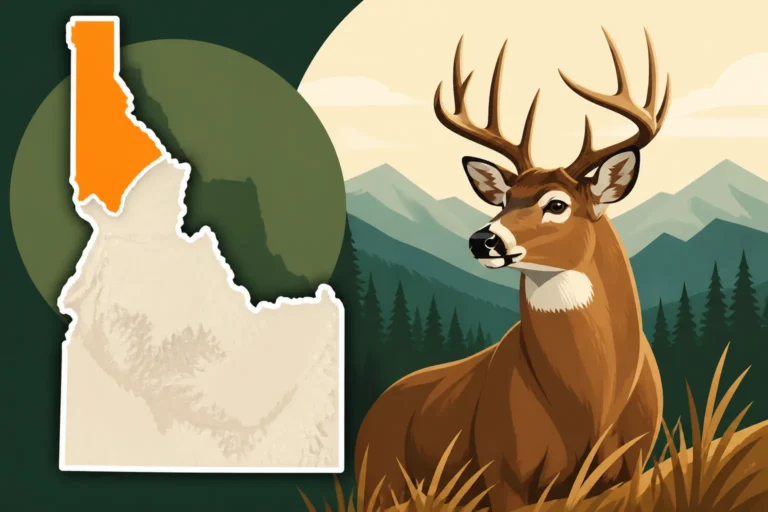
When you venture into northern Idaho, specifically areas like Bonner, Boundary, and Kootenai counties, you're stepping into prime whitetail country. This region is characterized by thick timber stands, often a mix of conifer and deciduous forests, punctuated by agricultural fields and river bottoms. The cover is dense, offering whitetails plenty of places to hide, breed, and escape predation. The consistent rainfall and milder winters create a lush environment where forage is typically abundant and accessible year-round. This stable habitat means that whitetails here can often reach their full genetic potential, benefiting from consistent nutrition that translates directly into impressive antler growth and heavier body weights. Hunters focusing on Whitetail Deer Hold Idaho's Northern Panhandle often find themselves navigating dense stands and creek bottoms, a stark contrast to the open country further south.
Central Mountains and High Desert Mule Deer Habitat
Moving south and east, Idaho's landscape shifts dramatically. The central mountains, encompassing ranges like the Sawtooths, Pioneers, and Lemhi, are rugged and high-elevation, while the southern and eastern parts of the state open up into vast sagebrush steppe and broken badlands. This is the domain of the mule deer. These deer are built for the wide-open spaces and often extreme conditions, navigating steep canyons, sparse timber, and expansive sage flats. The habitat here is typically drier, with less consistent forage availability, especially during prolonged droughts. Winters can be brutal, with deep snow in the mountains and bitter cold on the plains, forcing mule deer onto critical winter ranges where food can be scarce. These environmental stressors naturally impact a buck's ability to allocate resources to antler growth, often resulting in generally smaller racks compared to their northern whitetail cousins, though mature mule deer from these areas are still highly prized for their unique character and the sheer effort it takes to pursue them. The challenge of Mule Deer Across Idaho's High Desert and Breaks is truly an experience in itself.
Nutritional Differences Across the State
Nutrition is arguably the single most important factor determining antler size and body weight in deer. Without a consistent supply of high-quality forage, even genetically superior deer won't express their full potential. The significant climatic and ecological differences between northern and southern Idaho create vast disparities in the nutritional landscape for deer.
Forage Quality in the Northern Forests
The northern forests, especially those interspersed with private agricultural lands, provide a smorgasbord of high-protein forage for whitetails. Forest clearings and regenerating timber stands offer a diverse array of browse, including huckleberry, serviceberry, willow, and various forbs. These natural food sources are complemented by crop fields – peas, wheat, alfalfa – that provide a rich, supplemental diet. This consistent, nutrient-dense food supply allows young bucks to develop strong skeletal structures and reach maturity with ample energy reserves. The result? Bucks with the potential for larger body sizes and more robust antler development year after year, as their bodies aren't constantly trying to recover from periods of scarcity. This sustained nutrition is a key reason why hunters often report seeing higher quality deer in the Panhandle.
Impact of Drought and Winter Range in Southern Idaho
In stark contrast, much of southern Idaho experiences a semi-arid climate, making it susceptible to prolonged droughts. When rain is scarce, the growth of vital forbs and palatable shrubs, like bitterbrush and mountain mahogany, is severely curtailed. This reduction in available high-quality forage directly impacts mule deer. During critical periods of antler growth in spring and summer, bucks might not get the protein and minerals they need to maximize their racks. Furthermore, the harsh winters in the central and eastern mountains, with deep snowpack, push mule deer onto often overcrowded winter ranges. Here, food sources, primarily sagebrush, can be overbrowsed and less nutritious, leading to significant weight loss and stress. A severe winter can literally set a buck back a year or more in antler development, as his body prioritizes survival over growing an impressive rack. These environmental hardships are a constant battle for the Elk Are Why Most Hunters Come to Idaho, and mule deer alike, shaping their physical characteristics.
Population Dynamics and Genetic Factors
Beyond habitat and nutrition, the inherent health and genetic makeup of deer herds, coupled with external pressures like predation, play a crucial role in buck quality. Idaho's management strategies and the presence of various predators also contribute to these dynamics, leading to different outcomes for deer populations north and south.
Whitetail Herd Health and Reproduction Rates
Northern Idaho's whitetail populations generally exhibit robust herd health, benefiting from stable habitat and a relative abundance of food. Whitetails are known for their high reproductive rates, often having twins or even triplets when conditions are favorable. This strong recruitment means that despite hunting pressure, the population can sustain itself and produce a good number of mature bucks. In areas with less hunting pressure, or where hunters selectively pass on younger bucks, the age structure can skew towards older animals, allowing bucks more time to grow larger antlers. The genetics for big antlers are certainly present, and when combined with optimal nutrition and a favorable age structure, it's a recipe for quality bucks. Understanding these patterns is critical when Hunting Whitetails in Northern Timber Country.
Mule Deer Herd Management and Stressors
Mule deer in southern and central Idaho face a more complex set of challenges. While they possess excellent genetics for large antlers, these are often hampered by a multitude of stressors. Predation from a healthy wolf population, mountain lions, and coyotes can heavily impact mule deer fawn survival and overall herd numbers. Additionally, habitat fragmentation from development and continued pressure on winter ranges can reduce both the quantity and quality of forage. Idaho Fish and Game (IDFG) actively manages these herds, but the natural environment often dictates the pace. Hunters often use tools like the GoHunt platform to analyze herd data and understand the trends in mule deer populations, looking for units where conditions might be more favorable. Despite these challenges, mature mule deer from Idaho's tough country are often iconic, representing true survivors of a harsh landscape. Conservation groups like the Mule Deer Foundation are continuously working with IDFG to improve habitat and mitigate these stressors, aiming to enhance herd health and, consequently, buck quality.
Hunting Pressure and Management Strategies
The way Idaho manages its deer populations, and how hunters interact with these regulations, also creates distinct regional differences in buck quality. The type of tags available, season lengths, and specific harvest rules all contribute to the age structure of the buck population.
General Season Structures and Hunter Numbers
Northern Idaho, particularly the Panhandle, often offers more general, over-the-counter tags for whitetail deer. This means a higher number of hunters can access these areas, and while hunter density might be higher, the vastness of the timber and the whitetail's elusive nature can still allow some bucks to reach maturity. However, the "any buck" rules common in many northern units mean that younger bucks are often harvested. This can keep the average age of bucks lower, even if the nutritional potential is high. In contrast, many of Idaho's premier mule deer units in the south and east are managed under controlled hunt draws. This limits hunter numbers significantly, which, in theory, allows a greater proportion of bucks to survive to older age classes. However, the environmental stressors mentioned earlier can still limit their antler potential even with reduced pressure. To understand these intricacies, many hunters meticulously pore over the Reading an Idaho Harvest Statistics Report available from IDFG, often cross-referencing with data provided by services like GoHunt, which can give insights into success rates and average buck quality by unit.
Spike-Only vs. Any-Buck Rules
The specific regulations on what constitutes a legal buck can dramatically shape the age structure of a herd. While Idaho doesn't have widespread mandatory antler point restrictions for deer in the same way some states do, the general season structures often result in different harvest patterns. In many northern whitetail areas, an "any buck" rule means any antlered male deer can be harvested. This tends to remove younger bucks from the population, potentially reducing the number of deer that grow into truly large, mature animals. For mule deer, particularly in some controlled hunt units, there might be regulations aimed at protecting younger bucks. Though not universally applied to deer, similar principles seen in Spike-Only Bull Rules Inside Idaho A Tag Seasons for elk demonstrate how specific regulations can funnel harvest towards certain age classes, aiming to improve the overall quality and age structure of the remaining population. This careful balance of harvest and recruitment is what wildlife managers constantly strive for.
Localized Factors and Microclimates
While broad regional differences are clear, it's also important to remember that Idaho is a patchwork of microclimates and specific localized conditions. Within both the northern and southern regions, certain areas offer exceptional conditions that can produce truly outstanding bucks, defying the general trends.
Influence of Elevation and Aspect on Deer Health
Even within a single Game Management Unit, the influence of elevation and aspect can create pockets of prime deer habitat. North-facing slopes, for instance, often hold snow longer but can retain moisture through drier periods, promoting the growth of certain forage plants. South-facing slopes, conversely, might melt out faster in spring, offering earlier access to green-up, but can become parched during summer droughts. In the mountains, specific elevation bands might offer optimal thermal cover in dense timber, providing refuge from extreme temperatures. Hunters E-Scouting an Idaho Unit Before the Season pay close attention to these nuances, often looking for areas where varied terrain creates a mosaic of habitat types, providing everything deer need throughout the year. Understanding these subtle shifts, much like Reading an Elk Zone Boundary on a Map or Reading a Land Ownership Layer Correctly, is key to finding those hidden gems.
Agricultural Contributions and Private Land Impact
The presence of agricultural lands, particularly in regions bordering private farms and ranches, can significantly boost buck quality. This is especially true in parts of the northern Panhandle, the western Treasure Valley, and other irrigated areas. These fields provide an incredibly rich, concentrated food source – alfalfa, corn, winter wheat, peas, potatoes – that deer simply can't find in equivalent quantities on public land. Bucks that consistently feed on these high-calorie, high-protein crops will grow larger bodies and antlers faster. While much of southern Idaho is vast public land, pockets of irrigated agriculture exist, and bucks that can access these resources, even if just periodically, often show better development. However, gaining access to private land can be a challenge, requiring diligent effort to secure Getting Landowner Permission in Idaho.
Strategies for Locating Quality Bucks
Given the varied landscape and management approaches across Idaho, a smart hunter adapts their strategy to the specific region they're targeting. Whether you're chasing whitetails in the timber or mule deer in the high desert, effective scouting and research are paramount.
Scouting Different Habitats
For northern whitetails, your scouting efforts should focus on dense cover, natural pinch points between timber blocks and agricultural fields, and areas with good water sources. Look for trails leading to feeding areas, rub lines, and buck sign in creek bottoms and along the edges of clearcuts. These deer thrive in security cover, so finding where they feel safe is half the battle. When Hunting Whitetails in Northern Timber Country, understanding these patterns is key.
For mule deer in the central and southern mountains, the strategy shifts dramatically. Here, you'll be glassing vast basins, steep canyon faces, and open sagebrush flats. Your optics will be your best friend. Look for isolated pockets of timber, north-facing slopes that hold moisture, and benches where deer might bed. Identifying historical Mule Deer Migration Corridors Worth Knowing can also lead to success, particularly during the rut. Utilizing onX Layers for Idaho Public Land or other robust mapping applications is crucial to identify terrain features, public access, and potential bedding or feeding areas.
Researching Harvest Data and Draw Odds
Before you even step foot in the field, thorough research is your best friend. The Idaho Fish and Game website is an invaluable resource, providing detailed hunt planners and harvest statistics. You can look up specific Game Management Units (GMUs) to see past harvest numbers, success rates, and the breakdown of antlered vs. antlerless harvests. Tools like the Idaho Hunt Planner Is the Tool to Start With can help identify units that consistently produce larger bucks, or at least have a higher proportion of older age-class animals.
For controlled hunts, understanding the draw odds is critical. While Idaho famously has Idaho Has No Preference Points, and What That Changes, meaning every applicant generally has even odds each year, knowing which units are consistently tough draws often indicates a higher quality hunt. Platforms like GoHunt provide detailed drawing odds and unit analysis, helping hunters make informed decisions about where to apply. They compile years of IDFG data and offer insights into trophy potential, hunter pressure, and public land access. Combining IDFG's raw data with advanced analysis from GoHunt can give you a significant edge in finding those quality buck opportunities, whether you're looking at Checking Public Land Percentage by Idaho Unit or diving into historical harvest trends.
Comparing North and South Idaho Buck Characteristics
To give you a clearer picture, here's a brief comparison of some general trends in buck characteristics you might encounter in Idaho:
| Feature | Northern Idaho (Whitetail Focus) | Southern Idaho (Mule Deer Focus) |
|---|---|---|
| Typical Antler Size | Often wider, more symmetrical tines | Often taller, more mass, deeper forks |
| Body Size | Can be heavier, stockier | Can be leaner, rangier |
| Habitat | Dense timber, ag fields, river bottoms | High desert, sagebrush, mountains |
| Dominant Species | Whitetail Deer | Mule Deer |
| Key Factors | Consistent nutrition, ample cover | Resilience to harsh winters/droughts |
| Hunting Style | Still-hunting, stand hunting, drives | Glassing, spot-and-stalk |
| Season Structure | More general, OTC tags | More controlled hunts, limited tags |
It's important to remember these are general trends. Exceptional bucks can be found anywhere in the state, but understanding the underlying factors helps manage expectations and focus your scouting efforts.
Disclaimer
Hunting regulations and conditions can change rapidly. Always consult the most current Idaho Fish and Game regulations specific to the year and unit you intend to hunt before planning any trip. This information is for general guidance only and should not be considered legal advice.