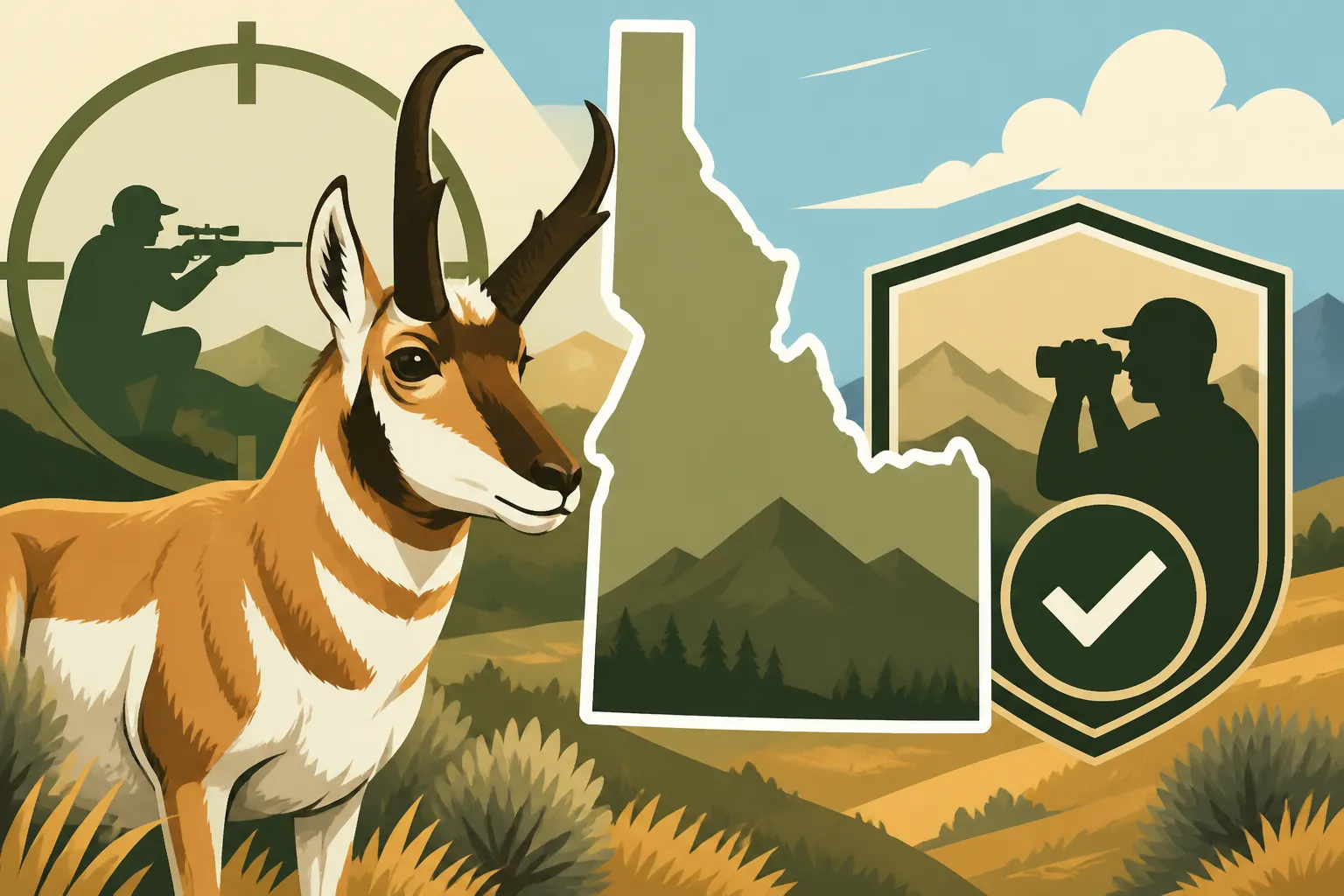
Pronghorn Hunting Is Controlled-Hunt Only in Idaho
It's incredibly frustrating when you set your sights on a specific hunt, only to discover the rules are completely different than what you might expect from other states. If you've been dreaming of chasing pronghorn in Idaho, you've likely already hit the wall of understanding that it's not a general over-the-counter tag situation here. This guide is all about cutting through that confusion, explaining why Idaho manages its pronghorn herds so carefully, and giving you a realistic roadmap for how to navigate the controlled hunt system to potentially draw a coveted tag for these amazing animals.
The Unique Appeal of Idaho Pronghorn Hunting
Idaho's vast, open landscapes hold a special kind of magic, and among its most iconic residents are the pronghorn. Often mistakenly called "antelope," these creatures are truly unique to North America, boasting incredible speed and eyesight. But unlike some of the more well-known pronghorn states, Idaho's opportunities are more selective, making a successful hunt here feel like a true accomplishment.
Why Idaho Pronghorn are a Trophy Hunt
Let's be honest, drawing an Idaho pronghorn tag feels like winning a small lottery ticket. The populations aren't as dense or widespread as they are in, say, Wyoming or Montana, which means the state manages them much more conservatively. This scarcity elevates the hunt from a "general season" experience to a genuine trophy pursuit. When you're out there on the Idaho plains, glassing for that distinct flash of white and tan, you're not just looking for "an antelope." You're looking for the pronghorn you've earned the right to pursue. The challenge lies not only in drawing the tag but in the demanding nature of hunting these wary animals in wide-open, often rugged, high desert terrain. It's an experience that really tests your patience, your glassing skills, and your ability to execute a difficult stalk.
Understanding Pronghorn Behavior and Habitat in Idaho
Pronghorn are truly masters of their domain. They thrive in open, arid, and semi-arid grasslands and sagebrush steppe environments. In Idaho, this typically means you'll find them scattered across the southern and eastern parts of the state, often in areas with vast, unobstructed views where their incredible eyesight gives them a distinct advantage. Their speed is legendary; they're the fastest land animal in North America, capable of sustaining speeds of 35-40 mph for miles, with bursts up to 60 mph. This means a direct chase is futile.
Their daily routine often involves feeding in the mornings and evenings, bedding down during the heat of the day, and always remaining vigilant. They are incredibly herd-oriented, and if one animal spooks, the entire group is likely to follow. Knowing Where Pronghorn Populations Are Strongest can give you a head start, but understanding why they are there – for water, forage, or protection – is key to predicting their movements. Their diet primarily consists of forbs, grasses, and sagebrush, making those high desert expanses ideal. Successfully hunting them requires a deep appreciation for their acute senses and an even deeper understanding of how they use the landscape to their advantage.
Idaho's Controlled Hunt System for Pronghorn
If you're coming from a state with over-the-counter pronghorn tags, Idaho's system can feel like a rude awakening. There's no popping into a sporting goods store and walking out with a tag for these speedsters. It's all about the draw, which means patience and strategic planning are absolutely critical.
The Draw Process Explained: No General Season Here
Idaho's Fish and Game Department manages pronghorn entirely through a controlled hunt draw. This means specific quotas are set for individual hunt units, and tags are allocated based on a random drawing from all eligible applicants. There are no general season tags for pronghorn in Idaho, period. This system is in place for a good reason: to carefully manage the population and ensure sustainable hunting opportunities without overharvesting. It also means that every tag issued is a precious commodity, a testament to the limited nature of these hunts.
The application period for most controlled hunts, including pronghorn, typically opens in the spring (often April) and runs through early June. You'll need to purchase a hunting license before you can even apply for a controlled hunt. This can feel like a financial gamble, as the license fee is generally non-refundable, even if you don't draw your desired tag. It's a system that definitely takes some getting used to. Many hunters find themselves checking Why Idaho Pronghorn Is Controlled Hunt Only for more detailed information on the specific management objectives and historical context behind this approach. For non-residents, the odds can be particularly tough, making accurate research on drawing odds absolutely essential. This is where tools like GoHunt become invaluable, as they compile historical data to help you understand your real chances for specific units.
Maximizing Your Chances in the Idaho Pronghorn Draw
Since there are no preference points in Idaho's drawing system, every applicant, whether a seasoned veteran or a first-timer, theoretically has an equal chance each year. This is both a blessing and a curse. While it means a newcomer isn't perpetually behind, it also means there's no guarantee of eventually drawing a tag just by applying consistently. So, how do you maximize your odds when it's essentially a lottery?
First, carefully review the controlled hunt regulations and unit quotas. Some units might have significantly more tags available than others, or perhaps slightly less competition. While everyone dreams of drawing a premium unit with monster bucks, sometimes choosing a unit with slightly higher tag numbers, even if it's not known for record-book animals, can increase your likelihood of drawing. It's all about playing the odds. Looking up Idaho Pronghorn Controlled Hunt Draw Odds for previous years can give you a realistic picture of what you're up against in different units. Another strategy some hunters employ is to apply for less popular units or hunt dates that might have fewer applicants. However, remember that "less popular" doesn't necessarily mean "easy hunt." Every Idaho pronghorn hunt is a challenge. Using a service like GoHunt for detailed analysis of draw odds and unit breakdowns can really help inform your application strategy, potentially saving you years of frustration.
Gear and Preparation for an Idaho Pronghorn Hunt
Hunting pronghorn in Idaho isn't like hunting deer in timber. The landscape, the animal's senses, and the weather demand specific gear choices. Showing up unprepared can quickly turn an exciting hunt into a miserable experience.
Optics: The Pronghorn Hunter's Best Friend
In the wide-open country where pronghorn roam, your eyes are your most important tool, and quality optics are an extension of those eyes. Without good glass, you'll spend countless hours walking past animals you never even knew were there. A solid pair of 10x or 12x binoculars is your primary workhorse for constantly scanning the landscape. Don't skimp here; clear, bright glass makes a world of difference, especially in the low light of dawn and dusk. Many hunters prefer a binocular harness to keep their optics accessible and secure while hiking.
Beyond binoculars, a high-quality spotting scope (20-60x or even 80x magnification) paired with a sturdy tripod is absolutely essential. This is your long-range detection and field-judging tool. You'll spend hours behind the glass, systematically picking apart distant hillsides, draws, and sage flats. Remember, pronghorn are often seen at incredible distances, and what looks like a small white patch with binoculars can turn into a buck of a lifetime with a spotting scope. Glassing techniques are critical; don't just randomly scan. Systematically grid-glass an area, moving slowly and deliberately. This deliberate approach is also vital for understanding Optics Power for Idaho's Long Canyon Sightlines which is a skill that translates well to many types of Western hunting.
Rifle and Ammunition Choices for Pronghorn
Pronghorn are not particularly large animals, but they are incredibly tough for their size, and shot opportunities often occur at longer ranges due to the open terrain. Therefore, a flat-shooting rifle chambered in a cartridge known for accuracy and manageable recoil is generally preferred. Popular choices include the .243 Winchester, 6.5 Creedmoor, .270 Winchester, .25-06 Remington, and even the .308 Winchester. The key is to choose a rifle you shoot accurately and consistently out to the maximum ethical range you are comfortable with.
A quality scope with a ballistic reticle or turret system is highly recommended for accurate shot placement at varying distances. Practice shooting from prone positions with a bipod or shooting sticks, as this is how most shots will be taken in the field. As for ammunition, choose a bullet designed for controlled expansion that will retain enough energy to cleanly dispatch a pronghorn. Lighter, faster bullets can be effective, but ensure they hold together. Zeroing your rifle for Rifle Zero Distance for Canyon Country Shooting can give you a good benchmark for long-range accuracy, even if pronghorn hunting doesn't usually involve canyon shots. Ethical shot placement, typically in the vitals, is paramount. Avoid shots at running animals or extreme distances if you haven't put in the practice to ensure a clean kill.
Essential Clothing and Field Gear
The Idaho high desert can be a land of extremes. Early season hunts (late August/early September) can be scorching hot during the day, with temperatures easily reaching into the 90s, but mornings and evenings can be surprisingly cool. Later seasons can bring significant temperature swings and even early snow. Layering is not just a suggestion; it's a necessity. Start with a moisture-wicking base layer, add insulating layers, and top it off with a good windproof and water-resistant outer shell.
Footwear is another critical component. You'll be doing a lot of walking, often over uneven, rocky, or sagebrush-covered terrain. Sturdy, broken-in hiking boots with good ankle support are a must. Don't forget high-quality wool or synthetic socks to prevent blisters. Beyond clothing, pack plenty of water – more than you think you'll need – along with electrolyte supplements. Sun protection is vital: a wide-brimmed hat, sunglasses, and sunscreen. A good quality rangefinder is indispensable for confirming distances before a shot. Trekking poles can save your knees and provide stability during long walks and stalks. A comfortable day pack to carry all your essentials, a knife for field dressing, and a small first-aid kit round out the necessities.
Scouting and Locating Pronghorn in Idaho's Terrain
Finding pronghorn is half the battle, and in Idaho's vast expanses, that can feel like finding a needle in a haystack. Effective scouting, both from afar and on the ground, will drastically improve your chances of success.
E-Scouting: Poring Over Maps and Satellite Imagery
Before you ever set foot in your chosen hunt unit, you should have spent hours pouring over maps and satellite imagery. This "e-scouting" phase is crucial for developing a solid game plan. Start with detailed topographic maps to understand elevation changes, draws, and potential hidden pockets. Satellite imagery, available through various mapping apps and services, is your window into the actual terrain. Look for areas with a mix of open sagebrush flats, which pronghorn love, and subtle terrain features like dry creek beds, eroded washes, or low ridges that could provide cover for a stalk.
Identify water sources – ponds, springs, even stock tanks – as these are often magnets for wildlife in arid environments. Pinpoint public land boundaries and potential access points, including two-track roads or ATV trails. Services like GoHunt offer advanced mapping tools and overlays that can show you historical animal locations, migration corridors, and public/private land ownership. Learning E-Scouting an Idaho Unit Before the Season is a skill that pays dividends for any Western hunt. Mark potential glassing points (high points with expansive views), and identify possible routes for stalks. Remember, the goal here is to narrow down huge areas into manageable chunks that you can then explore on the ground.
Boots on the Ground: Pre-Season Reconnaissance
Once you've done your homework with e-scouting, nothing beats actually getting out into your unit before the season opens. If possible, a pre-season scouting trip can provide invaluable insights that no map can fully convey. Drive the accessible roads, identify those glassing knobs you marked, and spend time behind your optics, just observing. Look for pronghorn sign: tracks, droppings, and feeding areas. Pay attention to fence crossings, as pronghorn are not natural jumpers and often use specific spots to crawl under fences.
This is your chance to confirm water sources, understand wind patterns, and identify potential bedding areas. Observe how existing herds use the landscape. Are they favoring certain benches in the morning? Are they moving to specific water holes in the afternoon? Knowing the nuances of the terrain and the typical movement patterns of the animals in your unit will give you a significant advantage when the season arrives. Don't just drive through; get out and walk some of those areas you identified as promising.
Understanding Pronghorn Movement and Seasonal Patterns
Pronghorn movements are largely influenced by forage availability, water, and predation pressure. In late summer/early fall, during the typical Idaho pronghorn season, bucks will begin to establish territories and gather does. This means you might find smaller bachelor groups of bucks or individual lone bucks, as well as larger herds of does with a dominant buck. Understanding When Pronghorn Bucks Go Into Rut will give you a better idea of when these territorial behaviors peak.
They are generally creatures of habit, often using the same travel corridors and feeding areas day after day, especially if undisturbed. However, hunting pressure or changing weather conditions can quickly alter their routines. Hot weather will often push them towards water sources more frequently, and they might become more active during the cooler parts of the day. A sudden cold front or storm can change their feeding patterns and cause them to seek shelter in slight depressions or behind low ridges. Being flexible and observing current conditions is key.
Stalking and Hunting Strategies for Idaho Pronghorn
This is where the rubber meets the road. Finding a pronghorn is one thing; getting within ethical shooting range of one is an entirely different, and often incredibly challenging, endeavor. Their legendary eyesight makes close-range stalks notoriously difficult.
The Art of the Pronghorn Stalk
Stalking a pronghorn is a masterclass in patience, stealth, and using the terrain to your absolute maximum advantage. Their large, unblinking eyes offer an almost 300-degree field of vision, making it incredibly hard to approach them in the open. The golden rule is: if they can see you, they'll likely bust you. You must utilize every bit of cover available: dry creek beds, washes, low ridges, even large sagebrush bushes. Crawling is often a necessary part of the equation, sometimes for hundreds of yards. It's grueling work, especially in the heat, and it will test your resolve.
Always keep the wind in your favor, as pronghorn have a decent sense of smell, though not as acute as an elk or deer. Approach slowly, deliberately, and be prepared to freeze for extended periods if they look your way. Watch their body language; if their heads are up and ears are swiveling, they're on alert. Wait until they are feeding or looking away to make your move. Sometimes, the best stalk is not a direct line but a long, circuitous route that keeps you out of sight for as long as possible. The concept is similar to How Far to Stalk a Bedded Mule Deer, but amplified due to the lack of cover. It's an exercise in humility and persistence.
Field Judging a Pronghorn Buck
When you finally get within range, you often have mere moments to make a decision. Field judging a pronghorn buck quickly and accurately is a skill that comes with practice. The key characteristics to look for are horn length, mass (circumference), and the distinct "prong" or cutter. A good buck will generally have horns that are noticeably taller than its ears, with decent mass carried up the horn. The prongs should be well-defined and forward-facing.
A common mistake is to be fooled by the dark patches below the eyes, which can make the horns appear larger at a quick glance. Focus on the actual horn structure. Compare the length of the horn above the prong to the length below it. Does it have good curl? Is it symmetrical? Being able to accurately Field Judging a Pronghorn Buck From Distance is crucial for making a quick, informed decision, especially when that trophy buck might only give you a brief window before vanishing over the horizon. Don't rush, but be decisive when the moment is right.
Dealing with Wind and Shot Opportunities
The open nature of pronghorn country means wind is almost always a factor, and it can play havoc with your shot. Even a moderate crosswind can push a bullet significantly at longer ranges. You absolutely must account for wind drift, either by holding off target or by dialing your scope. Practice shooting in windy conditions whenever possible.
When a shot opportunity arises, strive for the most stable shooting position possible. Prone is almost always the best option in open country, providing maximum stability. A bipod attached to your rifle or good shooting sticks are invaluable. If you can't get prone, kneeling or sitting with support (like your pack or shooting sticks) is the next best. Avoid offhand shots unless the animal is very close. Take a deep breath, control your crosshairs, and execute a clean trigger squeeze. Remember, a pronghorn's vitals are relatively small, so precision is key.
Post-Harvest Care and Regulations
You've successfully drawn the tag, executed the stalk, and made a clean shot. Congratulations! But the hunt isn't over yet. Proper post-harvest care and adherence to Idaho's regulations are just as important as the hunt itself.
Field Dressing and Meat Care in Warm Weather
Pronghorn season often falls during warm or hot weather, making rapid field dressing and meat care absolutely critical to prevent spoilage. As soon as you confirm the animal is down and safe to approach, get to work. Field Dressing and Carcass Transport Rules Explained is a good resource to review before your hunt. The goal is to remove the entrails as quickly as possible to allow the carcass to cool internally. Skinning the animal in the field is highly recommended if temperatures are high, as the hide acts as an insulator, trapping heat.
Once field dressed and potentially skinned, quarter the animal and get the meat into game bags immediately. Do not stack the quarters tightly together, as this will prevent air circulation and cooling. Get the meat out of direct sunlight and into a cooler filled with ice as soon as possible. If you have a long haul back to your vehicle, consider carrying a lightweight tarp or space blanket to cover the quarters and reflect heat. Neglecting meat care, especially in warm temperatures, can ruin your hard-earned harvest.
Tagging and Reporting Requirements
Idaho has strict rules regarding tagging and reporting your harvest. As soon as you dispatch a pronghorn, you must immediately validate and attach your tag to the animal. The tag must be securely fastened and remain with the carcass during transport. Make sure to carefully read the specific instructions on your tag for validation, including the date of kill.
Additionally, Idaho Fish and Game often requires mandatory harvest reporting for big game species, including pronghorn. This typically involves reporting your kill online or by phone within a specified timeframe (e.g., within 10 days of harvest, or before processing). Failing to properly tag or report your animal can lead to fines and penalties, so don't overlook this crucial step. Familiarize yourself with Mandatory Reporting After an Idaho Harvest well before your hunt begins. Always carry your hunting license and tag with you in the field.
Common Mistakes and How to Avoid Them
Hunting pronghorn in Idaho can be a fantastic experience, but many hunters make common errors that can derail their efforts. Learning from these pitfalls can save you a lot of heartache in the field.
Underestimating Pronghorn Senses and Speed
One of the biggest mistakes hunters make is underestimating the pronghorn. They aren't "just antelope." Their eyesight is truly phenomenal, often compared to that of an 8x binocular, and they can spot movement at incredible distances. Their ability to cover ground rapidly is also unmatched; it's why knowing How Fast a Pronghorn Can Actually Run is more than just a fun fact – it emphasizes how quickly they can escape. Many a hunter has been busted simply by walking openly in their presence, thinking they were "far enough away."
To avoid this, treat every pronghorn as if it can see you, even if it's miles away. Utilize terrain, move slowly, and glass constantly. Don't be afraid to take the long way around to stay out of sight during a stalk. Patience is your best weapon against their incredible senses.
Neglecting Physical Preparation and Hydration
Idaho's high desert environments, especially during the early season, can be brutal. You'll likely be walking miles over uneven terrain, often exposed to intense sun and high temperatures. Neglecting physical conditioning beforehand is a recipe for exhaustion, discomfort, and potentially missing opportunities. Get in shape, practice walking with your gear, and simulate field conditions as much as possible.
Hydration is equally critical. Dehydration can quickly lead to fatigue, headaches, and impaired decision-making. Always carry more water than you think you'll need, and start hydrating days before your hunt. Electrolyte packets can also be a lifesaver. Don't wait until you're thirsty to drink; sip water consistently throughout the day. Your body will thank you, and you'll be more effective in the field.
Overlooking Regulations and Application Details
Idaho's hunting regulations are complex, and the controlled hunt system adds another layer of detail. A common mistake is assuming that regulations are static or that they are similar to other states. They're not. Regulations change annually, and missing a deadline or misunderstanding a rule can cost you a tag, or worse, lead to a violation.
Always read the current year's Idaho Big Game Regulations cover to cover. Pay particular attention to the specific unit you applied for, including any weapon restrictions, hunt dates, or unique rules. Double-check all application deadlines, harvest reporting requirements, and tagging procedures. Don't rely on hearsay or what you did last year. The Idaho Fish and Game website is your best friend for up-to-date information. Missing a critical detail here can nullify all your hard work and planning.
The Broader Idaho Hunting Picture
While this guide focuses specifically on pronghorn, understanding how these hunts fit into the larger Idaho hunting landscape can enhance your overall experience and planning.
Combining Pronghorn with Other Idaho Hunts
Because Idaho's pronghorn season often falls in late August or September, it can sometimes overlap with other general or controlled hunting opportunities. For example, some early archery deer or elk seasons might be open. While pronghorn hunts demand a lot of focus due to their unique challenges, it's worth checking the regulations to see if there are any complementary small game opportunities or even predator hunting seasons open in your unit.
However, be realistic about what you can achieve. Pronghorn hunting itself is incredibly demanding, often requiring long hours of glassing and intense stalks. Trying to combine it with another big game pursuit in a limited timeframe might lead to spreading yourself too thin and not succeeding at either. Focus on the tag you drew, but keep an eye on the broader picture for future hunts.
Utilizing Digital Tools for Idaho Hunts
In today's hunting world, digital tools are indispensable, and this is especially true for planning complex hunts in vast Western landscapes like Idaho. Beyond just e-scouting, these tools can help you navigate in the field and stay informed. Mapping applications like onX Hunt, Gaia GPS, and the native Idaho Fish and Game Hunt Planner are essential. They provide detailed topographic maps, satellite imagery, public/private land boundaries, and often a wealth of overlay data specific to hunting units. Understanding how to use Using onX Layers for Idaho Public Land can literally save you from trespassing or getting lost.
Services like GoHunt go a step further, offering detailed drawing odds analysis, unit statistics, and insider information that can significantly aid your application strategy for controlled hunts like pronghorn. They consolidate a massive amount of data, making it digestible and actionable. Carrying a reliable GPS device or using a mapping app on your smartphone with downloaded offline maps is crucial for navigation in areas without cell service. These tools, when used effectively, become an extension of your hunting kit, helping you make more informed decisions before, during, and after your hunt.
Disclaimer
Please note: Hunting regulations can change frequently. The information provided in this guide is for general informational purposes only and should not be considered legal advice. It is the responsibility of every hunter to consult the most current Idaho Fish and Game regulations and ensure full compliance with all applicable laws before participating in any hunting activity. Always prioritize safety, ethical hunting practices, and respect for wildlife and the environment.