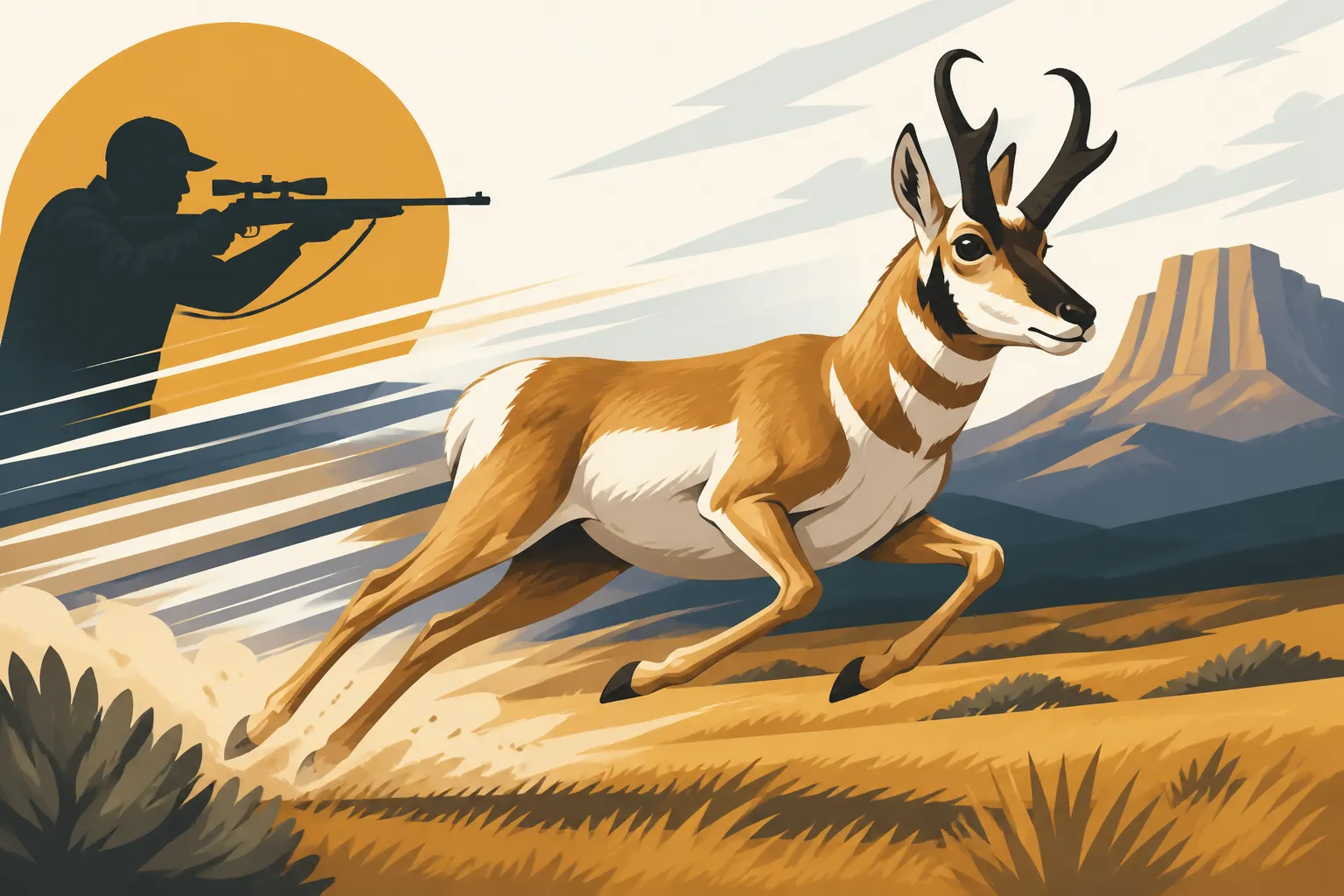
How Fast a Pronghorn Can Actually Run
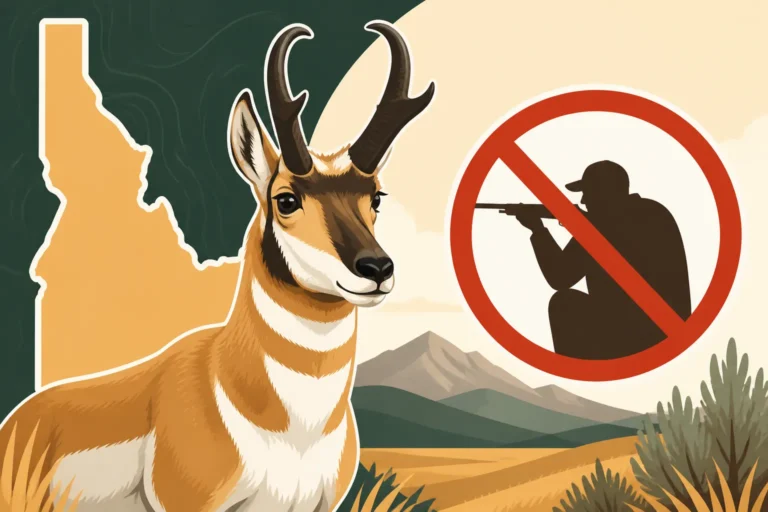
Have you ever been out in Idaho's vast sagebrush country, spotted a beautiful pronghorn buck a mile off, made a plan, only to look up a few minutes later and realize he's gone? It's a common, utterly frustrating experience that makes you wonder just how these animals disappear so quickly. Well, let me tell you, it's not magic – it's pure, unadulterated speed, and this guide is going to break down just how fast a pronghorn can actually run and why that matters immensely for anyone hoping to hunt them in the Gem State.
The Unmatched Speed of the Pronghorn in Idaho
When we talk about speed in the animal kingdom, most folks immediately think of cheetahs. And while cheetahs certainly hold the crown for short bursts, the pronghorn (often mistakenly called an antelope, though they're not true antelope!) is built for something different: sustained, incredible velocity over vast distances. Out on the sprawling high desert plains of southern Idaho, this isn't just a fun fact; it's a fundamental part of their survival and a major challenge for hunters.
Top Speed and Sustained Pace
A pronghorn can hit speeds of up to 55 to 60 miles per hour, sometimes even slightly more, over short distances. That alone is astonishing, making them the fastest land animal in North America. But what truly sets them apart isn't just their top-end sprint; it's their ability to maintain blistering speeds for an extended period. They can cruise comfortably at 30-40 miles per hour for several miles without seeming to break a sweat. Imagine an animal that can run a marathon at the speed of a car on the freeway! This is why they seem to vanish before your very eyes. They don't just sprint away; they move away, covering ground at a rate that is frankly bewildering if you're not prepared for it.
Their unique physiology, which we'll dive into, allows them to outrun almost any predator they'd historically encounter in North America. Unlike the cheetah, which is a sprinter designed for rapid acceleration and short chases, the pronghorn is built for endurance running at high speeds. This difference is critical for understanding why they thrive in wide-open spaces like those found in much of Idaho's pronghorn range.
The Evolutionary Advantage of Speed
Why are pronghorn so incredibly fast? The prevailing theory is an evolutionary arms race with now-extinct predators. Ancient North America hosted animals like the American cheetah and dire wolves, formidable hunters that would have put immense pressure on prey species. To survive, the pronghorn evolved an unparalleled capacity for speed and endurance. Today, while their primary predators (coyotes, bobcats, and occasionally wolves or mountain lions) can't match their speed, the pronghorn retains this incredible advantage.
This speed isn't just for escaping; it's also about energy conservation. When a herd of pronghorn senses danger, they don't necessarily bolt at maximum velocity right away. They might move at a brisk, sustained pace that effectively leaves most predators far behind without expending all their energy in one go. This allows them to stay vigilant and maintain a safe distance, especially in the exposed terrain where they live. For hunters, this means that even a seemingly relaxed herd can accelerate to an uncatchable speed in mere seconds, leaving you feeling like you've been tricked. It's truly a marvel of natural engineering.
Anatomy of a Pronghorn Runner
To appreciate the pronghorn's speed, you have to look under the hood, so to speak. Their bodies are perfectly engineered for running, from their respiratory system to their specialized hooves. It’s an intricate design that allows them to perform at such high levels, day in and day out, across the challenging landscapes of places like Idaho.
Lung Capacity and Oxygen Efficiency
One of the key secrets to the pronghorn's endurance is their massive lung capacity and highly efficient respiratory system. They have proportionally larger lungs and tracheas compared to other animals of their size, allowing them to take in huge amounts of oxygen with each breath. Their hearts are also notably large, enabling them to pump oxygenated blood throughout their bodies at an incredible rate. Furthermore, their blood itself is packed with red blood cells, maximizing oxygen transport to their muscles.
This robust oxygen delivery system means they can fuel their powerful muscles for extended periods without succumbing to fatigue as quickly as other animals. It's like having a turbocharger and an oversized fuel tank built right into their biology. This is a big reason why they can maintain those high speeds for miles, turning a short sprint into an escape that carries them far out of sight and reach. For an Idaho hunter trying to keep tabs on them, this means they don't just disappear; they truly travel with purpose and pace.
Specialized Hooves and Leg Structure
Beyond their internal engines, the pronghorn's external structure is also perfectly adapted for speed. Their legs are long and slender, acting like powerful springs. They possess a unique limb structure that allows for an extremely long stride, propelling them forward with tremendous force. Their hooves are also specialized for speed; unlike deer or elk, which have more spread-out hooves for stability in varied terrain, pronghorn hooves are relatively compact and hard, providing excellent traction on firm ground.
What's really fascinating is their unique dewclaws, or rather, the lack thereof. Most hoofed animals have dewclaws that can help with traction on uneven or soft ground. Pronghorn largely lack these, which reduces drag and weight, further optimizing them for open-country running. Their bone structure is also relatively light, contributing to their overall agility and speed. These physical adaptations, combined with their incredible cardiovascular system, create an animal that is literally built to run faster and longer than almost anything else.
Why Pronghorn Speed Matters to Idaho Hunters
Understanding a pronghorn's speed isn't just academic; it’s absolutely critical for anyone planning a hunt. The vast, open plains where you find these animals in Idaho demand a completely different approach than hunting elk in dark timber or whitetails in dense brush. Your strategies, your gear, and even your mindset need to adapt to an animal that can go from zero to gone in the blink of an eye.
Spot and Stalk Challenges
The most common hunting method for pronghorn in Idaho is spot and stalk, and let me tell you, it's a game of patience and precision. You might spot a nice buck a couple of miles away, and he looks totally relaxed. You make your plan, use every bit of cover available – draws, sagebrush, rises in the terrain – only to creep over the last ridge and find an empty plain. This isn't because you made noise; it's because they simply covered the distance faster than you could imagine. Their incredible vision, combined with their speed, means they often see you long before you ever get close enough for a shot.
This high-speed evasive action makes closing the distance incredibly difficult. A successful stalk often involves covering miles of ground, frequently crawling, to get within range. Even then, you need to be ready to take a quick shot if they decide to move. Remember, a slight elevation change or a small group of sagebrush that looks like decent cover from a distance might be totally inadequate when you're 500 yards out and they're watching you. When planning your hunt, consulting resources like Pronghorn Hunting Is Controlled-Hunt Only in Idaho and maps from tools like GoHunt can help identify potential stalking lanes and terrain features that might offer a chance for concealment, even if those chances feel slim.
Judging Distance and Shot Placement
Because pronghorn live in such open environments and are prone to sudden, long-distance movements, judging distance accurately is paramount. A shot that feels like 200 yards might actually be 350 when a pronghorn decides to move a bit further while you're getting set up. Their relatively small body size, combined with the vastness of their habitat, can also play tricks on the eye. Before you even think about taking a shot, using a rangefinder is non-negotiable. Don't guess; confirm the distance.
Moreover, their speed means they can cover a significant amount of ground in the time it takes for a bullet or arrow to reach them, especially at longer ranges. This emphasizes the need for excellent marksmanship and a thorough understanding of your weapon's ballistics. A slight miscalculation in lead or trajectory can result in a miss or, worse, a wounded animal that puts on a burst of speed and vanishes over the horizon. Consider how different the approach is compared to "The Effective Range of a Muzzleloader on Elk" where the target is larger and often in thicker cover, or "Rifle Zero Distance for Canyon Country Shooting" which focuses on different challenges of varied terrain.
Strategies for Closing the Gap
So, how do you beat an animal that's designed to outrun everything? It requires patience, smarts, and often, a little luck.
One common strategy involves using terrain features like draws, hills, and even larger sagebrush to your advantage. You might have to make a wide loop, adding miles to your stalk, just to approach from an angle that offers enough cover. Sometimes, finding a "screen" like a small herd of cattle or a group of non-target animals can offer temporary concealment.
Another tactic, especially if you're hunting with a partner, is a "pincer" movement, though this needs to be very well coordinated. One hunter acts as a spotter or drives to distract, while the other sneaks in from a different angle. This is tough to pull off solo, but with good communication (and legal distances always in mind), it can work. Remember that pronghorn have incredible eyesight, so anything that breaks up your silhouette or keeps you low to the ground is crucial. Using apps like GoHunt can help you analyze terrain and plot potential stalk routes based on elevation changes and cover. This careful planning, along with understanding "When Pronghorn Bucks Go Into Rut" might give you a slight edge as their focus might be slightly divided.
| Animal | Top Speed (mph) | Sustained Speed (mph) | Primary Defense | Hunting Implications in Idaho |
|---|---|---|---|---|
| Pronghorn | 55-60 | 30-40 | Speed, Vision | Difficult stalk, long shots, disappear quickly |
| Elk | 35-40 | 20-25 | Size, Strength, Cover | Can be found in timber, less open country speed |
| Mule Deer | 30-35 | 15-20 | Burst speed, cover, terrain | Use broken country for stalks, can be jumpy |
| Coyote | 35-40 | 20-25 | Speed, stealth, cunning | Prey to pronghorn's sustained pace |
Beyond Raw Speed: Pronghorn Behavior and Habitat
While raw speed is certainly a pronghorn's most famous trait, it's deeply intertwined with their behavior and the wide-open habitats they call home. Understanding these other factors further illuminates why they are such a challenging, yet rewarding, species to pursue in Idaho.
Open Country for Evasion
Pronghorn are creatures of the open plains, high deserts, and sagebrush flats – places where you can see for miles. This isn't a coincidence; it's a vital part of their defensive strategy. Their incredible speed is most effective in environments where they have a clear path to run and can spot predators from a long distance. In Idaho, you'll find them scattered across the vast expanses of the southern and eastern parts of the state, in areas like the Owyhee Breaks or the eastern plains. These are the same "Where Pronghorn Populations Are Strongest."
Imagine trying to run at 60 mph through dense forest. It's impossible. But on a flat, unobstructed plain, their speed becomes their ultimate shield. They can gain an immediate advantage over anything trying to catch them. This open habitat, however, also leaves them exposed. There's nowhere to hide, so they rely on their eyes and legs. As a hunter, this means that while their habitat makes them visible, it also makes them incredibly difficult to approach unseen. You're essentially playing a game of cat and mouse in a wide-open stadium, and the mouse has a rocket booster.
The Role of Vision and Group Dynamics
Alongside their speed, pronghorn possess arguably the keenest eyesight of any land mammal in North America. Their large eyes are set far back on their heads, giving them an almost 360-degree field of vision. They can detect movement at incredible distances, often spotting a hunter (or a predator) miles away. This acute vision is their early warning system, giving them ample time to deploy their speed. They are constantly scanning their surroundings, and any sudden movement or unfamiliar shape is immediately scrutinized.
This sharp vision is amplified by their social nature. Pronghorn typically live in herds, especially outside of the rut. This means dozens, sometimes hundreds, of eyes are constantly on alert. When one individual spots danger, the entire herd quickly becomes aware and can react as a unit. This collective vigilance makes it incredibly difficult to sneak up on them. Even if you manage to avoid the gaze of one animal, another in the herd is likely to catch your movement. Understanding these group dynamics and their superior senses is just as important as knowing "How Fast a Pronghorn Can Actually Run" because it all contributes to their legendary elusiveness. For planning a hunt, tools like GoHunt can provide insights into specific units where these animals are found, and overlay maps of terrain that might offer a strategic advantage, though you'll still be battling their incredible senses. When you're out there glassing, it's a good idea to employ similar techniques you might use for "Best Time of Day to Glass Mule Deer" or focusing on "Spotting Scope Power for Canyon Glassing" to pick them out before they pick you out!
Disclaimer
This article is for general informational purposes only and does not constitute professional advice. Laws, prices and regulations vary by location and change over time. Consult a qualified professional for guidance on your specific situation.