Is Night Hunting Legal for Coyotes Out West?
There's a common misconception among hunters, especially those new to predator control, that all hunting in Idaho shuts down at sunset. But when it comes to persistent predators like coyotes, who are often most active after dark, the rules can be a bit different. Many folks wonder if they can actually pursue these wily canids under the cloak of night, and it's a valid question given the varying regulations across states and even within different regions of Idaho. This guide is here to untangle the complexities of night hunting for coyotes in Idaho, laying out exactly what's permitted, what's off-limits, and how to stay safe and responsible while pursuing these animals after the sun dips below the horizon.
The General Legality of Night Hunting Predators in Idaho
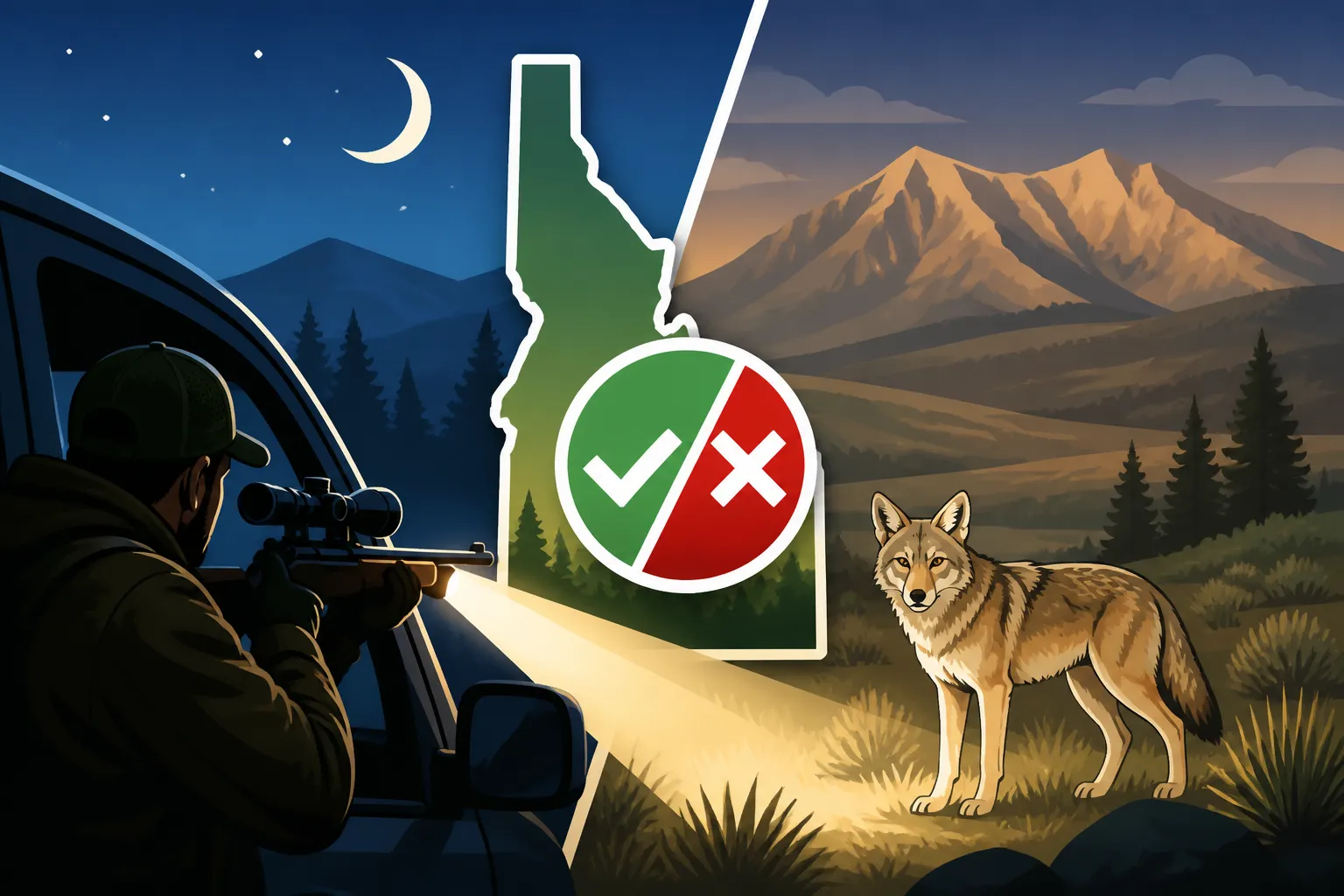
Idaho stands out in the West as one of the states that generally permits night hunting for predatory animals, and coyotes fall squarely into that category. Unlike big game species, which have strict Idaho Legal Shooting Hours for Big Game tied to sunrise and sunset, the rules are much more flexible for coyotes. This flexibility recognizes the nature of predator management and the fact that coyotes often become more active and less wary during nighttime hours. However, "legal" doesn't mean "anything goes." There are crucial distinctions and specific methods that are permitted or prohibited, and understanding these nuances is key to a lawful and successful night hunt.
State vs. Federal and Local Jurisdictions
While Idaho state law provides the broad framework for night hunting coyotes, it's vital to remember that not all land is governed solely by state regulations. Federal lands, such as those managed by the Bureau of Land Management (BLM) or the U.S. Forest Service (USFS), might have additional restrictions. For instance, while you might be permitted to spotlight on certain public lands for coyotes, some areas could have specific travel management plans or seasonal restrictions that impact your access or methods. It's always a good idea to consult the specific land management agency for the area you plan to hunt. Moreover, individual counties or even municipalities can enact their own ordinances regarding discharge of firearms or use of artificial lights, especially near populated areas. A quick check with local law enforcement or county offices before heading out can save you a lot of grief. Using resources like The Idaho Hunt Planner Is the Tool to Start With can help you overlay different land ownership types and quickly identify potential jurisdictional overlaps that might affect your plans.
Spotlighting Rules for Predator Hunting
One of the most common methods for night hunting coyotes involves spotlighting, and thankfully, Idaho generally allows this for predatory animals. However, this isn't an open invitation to shine lights wherever you please. The core of Idaho's Idaho Spotlighting Rules for Predator Hunting states that it's legal to use artificial lights to take predatory animals (like coyotes, wolves, badgers, skunks, and raccoons) on private land with the landowner's permission. If you're hunting on public land, spotlighting is generally permitted unless explicitly prohibited by the land management agency for that specific area, or if it interferes with other established hunting seasons. For example, spotlighting for coyotes during an active deer or elk season in the same unit could be seen as harassment of big game and lead to legal trouble, even if you have no intent to target those animals. Common sense and courtesy go a long way here; avoid shining lights on occupied dwellings or livestock unless you are absolutely certain of your target and have permission.
Specific Regulations for Coyote Night Hunting in Idaho
Beyond the general legality, there are specific rules and tools that apply to hunting coyotes at night in Idaho. These regulations are designed to ensure ethical hunting practices, promote public safety, and manage wildlife effectively. Understanding these particulars is crucial, especially when it comes to modern hunting aids like electronic calls or hunting on different land types.
Electronic Calls and Other Technology
For coyote hunters, electronic calls are incredibly effective, and Idaho allows their use for predators like coyotes. This means you can broadcast realistic coyote howls, distress calls, or even rabbit squeals to lure in unsuspecting animals under the cover of darkness. In fact, Electronic Calls for Predators and Varmint Hunting specifically details how these devices can be legally deployed. This is a significant advantage for night hunters, as it allows you to cover more ground vocally and attract coyotes from a distance without relying solely on passive waiting or scent. Thermal optics and night vision devices, while expensive, are also generally permitted for hunting predatory animals in Idaho. These tools, which are generally prohibited for big game hunting, can dramatically increase your effectiveness and safety margin when hunting at night by allowing you to clearly identify targets and scan for hazards without visible light. Many hunters use sophisticated mapping tools, like those available through GoHunt, to identify promising areas for setting up calls and anticipating coyote movement patterns.
Private Land vs. Public Land Considerations
The distinction between private and public land is paramount when planning a night coyote hunt. On private land, with explicit permission from the landowner, you typically have the most flexibility, especially concerning the use of artificial lights. Many landowners actively encourage predator control to protect livestock or local game populations. Always ensure you have written permission, especially if hunting at night or using lights, to avoid any misunderstandings or trespassing issues, as outlined in Getting Landowner Permission in Idaho.
On public lands, the situation can be more complex. While state law may permit night hunting for coyotes and spotlighting, federal agencies managing National Forests or BLM acreage might have their own specific rules. For example, while night hunting for coyotes is generally permitted on BLM land across southern Idaho and National Forest Hunting in northern Idaho, certain Wilderness Areas or designated roadless areas might prohibit motorized travel, which could impact how you transport gear or recover an animal. Always check with the local Forest Service or BLM office for the specific ranger district or field office you plan to hunt. Some Wildlife Management Areas (WMAs) also have unique rules or seasonal closures that could affect night hunting, so it's always worth checking the WMA-specific regulations published by Idaho Fish and Game. Additionally, remember that Idaho's Motorized Hunting Rule Runs August Into December, which strictly prohibits driving off established roads, even for predator hunting or game retrieval. This rule applies day and night.
| Legal Method/Tool | Coyote Night Hunting (ID) | Big Game Night Hunting (ID) | Notes |
|---|---|---|---|
| Artificial Lights/Spotlight | Generally Permitted | Prohibited | Requires landowner permission on private land; check public land rules. |
| Electronic Calls | Generally Permitted | Prohibited | Highly effective for coyotes. |
| Night Vision/Thermal | Generally Permitted | Prohibited | Aids in target identification and safety. |
| Firearms | Generally Permitted | Generally Permitted | Standard firearm regulations apply (caliber, licensing, etc.). |
| Archery Equipment | Generally Permitted | Generally Permitted | Requires high accuracy and ethical shot placement in low light. |
| Motorized Vehicles | Restricted to Established Roads | Restricted to Established Roads | No off-road travel for hunting or retrieval, day or night. |
| Hunting Hours | No Set Hours | Sunrise to Sunset | Core difference in predator vs. big game regulations. |
The "Depredation" Context
Sometimes, night hunting for coyotes falls under a "depredation" context, particularly when coyotes are actively preying on livestock. In these situations, landowners or their authorized agents might have more leeway, or even be encouraged by state agencies, to remove problem animals. While this isn't a blanket rule that changes the core legality of night hunting, it highlights the state's recognition of coyotes as a management issue. If you're a landowner experiencing depredation, or hunting for one, understanding how to report these incidents to Idaho Fish and Game can sometimes provide additional resources or permissions.
Essential Gear and Safety Considerations for Night Hunting
Stepping into the darkness to hunt adds layers of complexity and risk that aren't present during daylight hours. While the thrill of a coyote responding to a call in the dead of night is undeniable, prioritizing safety and having the right equipment is non-negotiable. Without proper preparation, a night hunt can quickly turn dangerous.
Lighting and Optics
Your primary tools for night hunting will be your lights and optics. A good quality handheld spotlight, ideally with a red or green filter (coyotes are less reactive to these colors), is essential for scanning and target acquisition. Many hunters also equip their firearms with weapon-mounted lights, which are legal for predatory animals, for simultaneous illumination and aiming. Beyond visible light, night vision or thermal optics can be game-changers. Night vision amplifies existing light, allowing you to see in near-dark conditions, while thermal optics detect heat signatures, making it easy to spot coyotes hidden in brush or at long distances. Investing in high-quality optics can significantly improve your target identification and shot placement. When using GoHunt, you can identify open areas or clearings that might be ideal for longer shots at night, where you can maximize the effectiveness of your optics.
Firearm Choice and Identification
When hunting coyotes at night, choosing the right firearm is crucial for both effectiveness and safety. Centerfire rifles, such as a .223 Remington, .22-250 Remington, or even larger calibers like the .204 Ruger, are popular choices due to their flat trajectory and knockdown power. Shotguns loaded with buckshot can also be effective at closer ranges, especially when coyotes are called in tight. However, regardless of weapon, target identification is paramount. In low light, distinguishing a coyote from other animals, or even an unintended background object, is much harder. Always use your lights or night optics to positively identify your target and ensure a safe shot placement with a clear backstop. Never assume what you hear or faintly see is a coyote; absolute certainty is the golden rule.
Communication and Emergency Preparedness
Hunting at night, often in remote locations, demands robust communication and emergency preparedness. If you're hunting with a partner, establishing clear communication protocols – hand signals, specific voice commands, or two-way radios – is essential. You'll want to avoid any confusion about who is shooting, or where each person is positioned. Always carry a fully charged cell phone, but don't rely on it as your sole communication device; signal can be spotty in Idaho's vast landscapes. A satellite messenger or personal locator beacon (PLB) is a wise investment for truly remote hunts. Beyond communication, a well-stocked first-aid kit, extra layers of clothing, sufficient water, and reliable navigation tools (GPS, compass, and map) are critical. Even if you've done your E-Scouting an Idaho Unit Before the Season thoroughly, unexpected weather changes or equipment failures can turn a routine hunt into an emergency.
Ethical Considerations and Responsible Night Hunting Practices
Beyond adhering strictly to the law, responsible night hunting involves a strong ethical component. We, as hunters, are stewards of the land and wildlife, and our actions reflect on the entire hunting community. Maintaining public acceptance and ensuring the sustainability of wildlife populations requires going above and beyond minimum legal requirements.
Respect for Wildlife and Other Land Users
While coyotes are often considered nuisance animals by some, they are still a vital part of the ecosystem. Ethical night hunting means minimizing stress and ensuring quick, humane kills. It also means being mindful of other wildlife. While spotlighting for coyotes, you might inadvertently illuminate deer, elk, or other non-target species. Avoid harassing these animals with your lights, and if they appear, simply shift your focus away. Furthermore, you might not be the only one out enjoying Idaho's wild places after dark. Other hunters, campers, or even stargazers could be present. Be respectful of their presence, avoid excessive noise, and make sure your lights don't create unnecessary disturbance or a sense of unease. A quick check of local access points and common camping spots on a mapping tool from GoHunt before heading out can help you anticipate potential encounters.
Avoiding Non-Target Species
One of the biggest ethical challenges of night hunting is the increased risk of misidentification. In the dark, even with advanced optics, subtle differences between species can be harder to discern. For example, a bobcat or even a domestic animal could be mistaken for a coyote. Always take extra time to confirm your target beyond any doubt before pulling the trigger. This means observing movements, body shape, and vocalizations if possible. If you're even a little bit unsure, do not take the shot. It's far better to let a coyote walk than to mistakenly harvest a protected species or a domestic animal. This commitment to positive identification is not just an ethical imperative; it's a legal one to avoid serious consequences.
Noise Discipline and Public Perception
Night hunting can be noisy. Calls, gunshots, and vehicle movements can carry far in the quiet of the night. Practicing good noise discipline, especially near settled areas or popular camping spots, is essential for maintaining positive public perception of hunting. While hunting coyotes can be a valuable wildlife management tool, negative perceptions can arise if local residents feel their peace or safety is being disturbed. Consider setting up further away from roads, trails, or private residences. Using a suppressor on your firearm, where legal, can also significantly reduce noise pollution and is generally a welcome practice for night hunting. Idaho generally allows suppressors for hunting, so this can be a great investment if you plan on doing a lot of night predator hunting. Remember, every hunter's actions contribute to the overall image of hunting, and preserving that image is critical for the future of our sport. You can hunt Hunting Coyotes in Idaho Year Round, but doing so responsibly and ethically ensures that the privilege continues.
Disclaimer
Please note that hunting regulations, seasons, and legal interpretations can change. This guide is intended for informational purposes only and does not constitute legal advice. Always consult the most current Idaho Fish and Game regulations, specific land management agency rules (e.g., BLM, USFS), and local ordinances before engaging in any hunting activities. It is your responsibility as a hunter to know and obey all applicable laws.