Idaho Legal Shooting Hours for Big Game
The moment you’re out in the field, with the crisp morning air on your face or the golden hour light stretching long shadows, the last thing you want to be worrying about is whether your hunt is still legal. Many hunters find navigating the precise shooting hours in Idaho confusing, as they change daily and vary by location. This guide is here to untangle those rules, ensuring you stay compliant, safe, and maximize your opportunities for big game, from the first legal light to the very last.
Understanding Idaho's Official Shooting Hours for Big Game
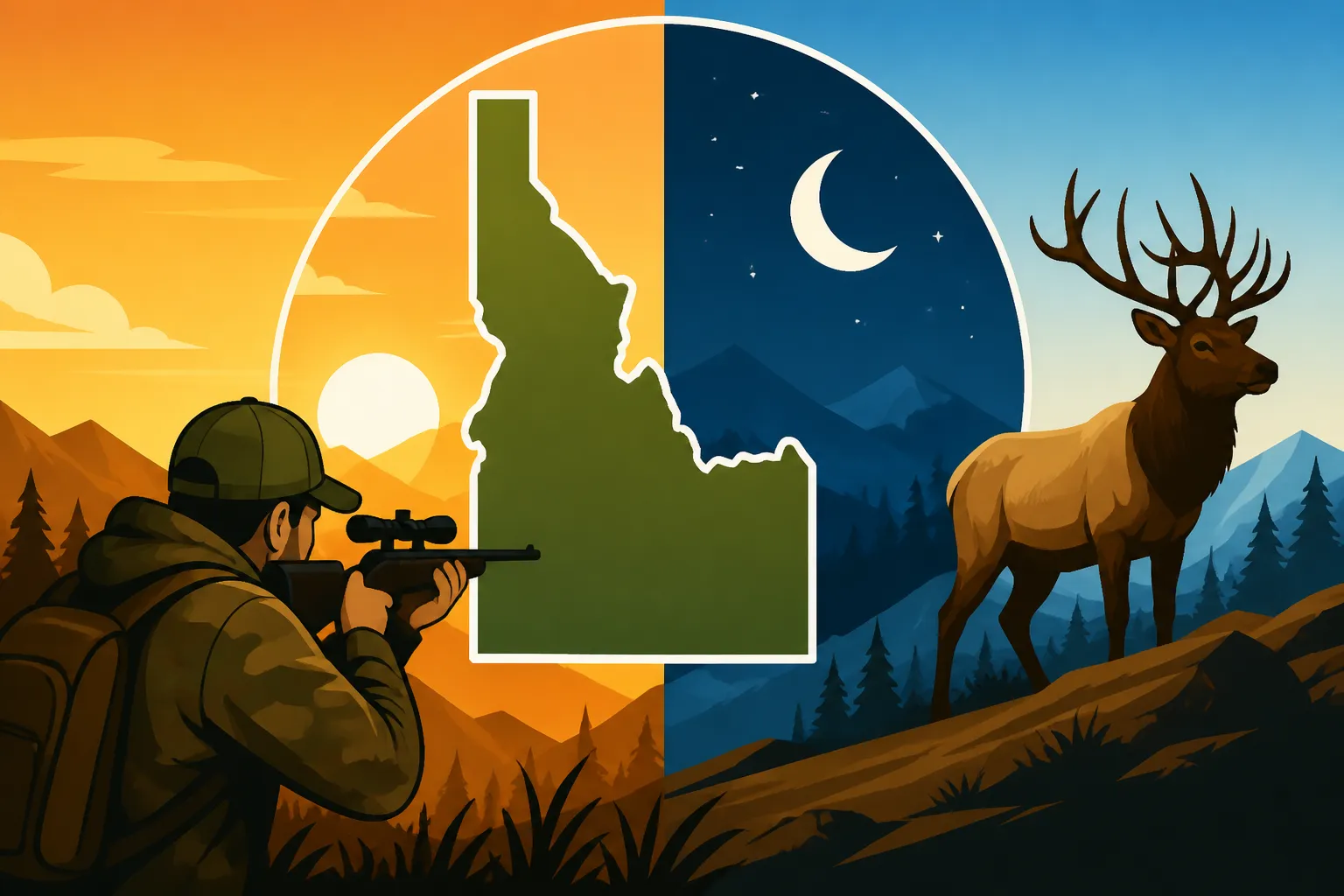
Let's cut right to the chase because this is the rule that underpins almost every big game hunt in Idaho. For big game animals, Idaho's legal shooting hours are quite clear: one-half hour before official sunrise to one-half hour after official sunset. This isn't just a suggestion; it's a hard and fast regulation set by the Idaho Department of Fish and Game (IDFG). It's designed to ensure fair chase, promote hunter safety, and give animals a bit of a reprieve during the darkest hours.
The Basic Rule: Half-Hour Before Sunrise to Half-Hour After Sunset
This rule sounds simple enough on paper, but its application can sometimes trip up even experienced hunters. What does "official" mean, and how do you calculate "one-half hour before or after"? Well, it means you can't just eyeball it. The state provides official sunrise and sunset times, and these are the times you must adhere to. So, if official sunrise is at 7:00 AM, you can legally start shooting at 6:30 AM. If official sunset is at 6:00 PM, you must cease shooting by 6:30 PM. It’s a crucial window that balances opportunity with ethics.
Think about a common scenario: you've been still hunting through some dark timber in the Panhandle, perhaps in an area like those covered when considering the topic of "Reading Wind in Steep Timbered Country". You bump into a nice mule deer buck, but the light is fading fast. You check your watch, then double-check your reliable hunting app for the official sunset. If it's already past the half-hour mark, no matter how perfect the shot looks, you have to hold off. Waiting until the next morning, even if it feels tough, is the only legal and ethical choice. This commitment to the rules not only protects you from fines but also upholds the integrity of the hunt.
Defining Sunrise and Sunset for Hunters
So, where exactly do you get these "official" sunrise and sunset times? You can't just rely on the general weather app on your phone, as those often provide civil twilight or other metrics. Idaho Fish and Game (IDFG) publishes these times. Historically, they were available in print versions of the hunting regulations or through weather services. In our modern age, however, most hunters rely on digital tools. Many dedicated hunting apps, like OnX Hunt, integrate official sunrise and sunset data specific to your exact GPS location. These are generally the most reliable for in-field use.
It’s important to understand that sunrise and sunset are defined when the upper edge of the sun appears on the horizon, not when the entire disk is visible or when the sky starts to lighten. The "one-half hour" buffer is a period of civil twilight, where there's enough ambient light for safe and ethical hunting, but it's not full daylight. Relying on an official source, whether it's the IDFG website, a specialized hunting app like GoHunt, or a reliable government weather service, is paramount. Never guess; always verify.
Specifics for Big Game Species
For almost all big game species in Idaho – including elk, deer (both mule and whitetail), moose, bighorn sheep, mountain goat, bear, and pronghorn – the legal shooting hours remain consistent: half an hour before sunrise to half an hour after sunset. There aren't specific exceptions that carve out different shooting times for, say, elk versus mule deer. This uniformity makes it a bit simpler for hunters, as you don't have to remember different timeframes for different animals when you're pursuing a combination of species.
However, it's always wise to double-check the latest Idaho hunting regulations annually. While the core rule rarely changes, regulations can be updated. For instance, while big game has this consistent rule, other species like migratory birds or certain predators might have different legal shooting hours. Staying current with the regulations is key. You'll find that the regulations are often very clear on which rules apply to which species, preventing any ambiguity in the field.
Why Shooting Hours Matter for Hunters
Beyond simply following the law, understanding and adhering to legal shooting hours is deeply intertwined with the very ethics of hunting, personal safety, and responsible wildlife management. It's not just an arbitrary timeframe; it's a framework built on decades of experience and conservation principles.
Ethical Hunting and Fair Chase Principles
The concept of fair chase is central to ethical hunting, and shooting hours play a significant role. When light is too low, our ability to accurately identify our target, discern its sex and age (especially if there are antler point restrictions or cow tags), and place a lethal shot is severely compromised. Shooting at a vague shape in the dim light risks wounding an animal that may then suffer and be lost. It also risks accidental shooting of non-target animals or, tragically, another hunter. The half-hour window before sunrise and after sunset provides enough ambient light to maintain a reasonable level of visibility, ensuring hunters can make responsible decisions.
Imagine you're hunting elk in a unit where "Spike-Only Bull Rules Inside Idaho A Tag Seasons" might be in effect, or you're specifically targeting a cow elk. In low light, distinguishing between a spike bull and a cow, or even judging antler size, becomes incredibly difficult. Ethical hunters want a clean, quick kill, and shooting in marginal light works against that goal. The rules reinforce our commitment to minimizing suffering and respecting the game we pursue.
Hunter Safety in Low Light Conditions
Hunter safety is paramount, and low light is inherently a higher-risk environment. During the pre-dawn and post-dusk hours, visibility is naturally limited. Other hunters, non-hunters, livestock, or even obstacles in the terrain can be difficult to see. The legal shooting hours provide a standardized period when hunters can expect others to be actively engaged in hunting, and therefore, exercising maximum caution. Shooting outside these hours not only endangers yourself and others but also casts a negative light on the entire hunting community.
Consider a scenario where you're set up for a morning ambush, perhaps waiting for deer to move along a known trail. If someone starts shooting before legal light, your ability to react or identify their position is severely hampered. This is why safety courses, like those required for anyone born after 1974 needs Idaho Hunter Education, always emphasize target identification and ensuring you have a clear understanding of what lies beyond your target. The shooting hours are a shared agreement among hunters to maintain a safer environment for everyone in the field.
Compliance and Avoiding Legal Trouble
The most straightforward reason to adhere to legal shooting hours is to avoid breaking the law. Violating these regulations can lead to significant penalties, including fines, confiscation of your weapon and game, and even the loss of your hunting privileges. These aren't minor infractions; they are taken seriously by game wardens, who patrol actively during these twilight hours because they know it's a common time for violations. A single mistake could jeopardize not just your current hunt, but your ability to hunt in Idaho, or even other states, for years to come.
Getting caught shooting outside legal hours is a clear-cut violation with little room for argument. Ignorance of the law is rarely an excuse that holds up. This is where using reliable tools and planning comes into play. If you're utilizing something like the Idaho Hunt Planner, you can map out your approach and departure routes to ensure you are in position or exiting the field well within the legal window. The frustration of missing out on a shot during those precious minutes just outside the legal window pales in comparison to the consequences of a citation.
How Shooting Hours Shift Throughout the Season
It's common knowledge that the length of the day changes with the seasons, but many hunters underestimate just how much this affects their legal shooting window. What was legal at 6:00 AM on opening day in September might be completely illegal by November, or vice-versa. Understanding these shifts is crucial for planning successful and compliant hunts.
The Impact of the Solstice and Equinox
Idaho, like all locations in the Northern Hemisphere, experiences significant changes in day length throughout the year, driven by the Earth's tilt relative to the sun. Around the summer solstice (late June), days are longest, meaning earlier sunrises and later sunsets, which translates to longer legal shooting windows. Conversely, around the winter solstice (late December), days are shortest, resulting in later sunrises, earlier sunsets, and a much shorter legal hunting period. The spring and autumn equinoxes (March and September) represent the transition points where day and night are roughly equal.
For big game hunters, this means the legal shooting window in an early September archery elk hunt, when you might be bugling elk in Idaho's timbered zones, will be significantly different from a late November rifle deer hunt. As fall progresses into winter, the mornings get darker later, and the evenings get dark much earlier. This requires a conscious adjustment to your hunting schedule, often meaning earlier rises to get into position before legal light and an earlier departure from your stand or glassing point in the evening. Don't assume the times you checked on opening day are still valid weeks later.
Geographic Differences Across Idaho
Idaho is a big state, stretching from the Canadian border in the north to the arid high desert bordering Nevada and Utah in the south. Because of its north-south expanse, sunrise and sunset times can vary considerably from one region to another on the same day. For example, the sun will rise and set earlier in the eastern parts of the state (near the Wyoming border) than in the western parts (near the Oregon and Washington borders). Similarly, there can be a noticeable difference between the northern Panhandle and the southern Owyhees.
Let's look at an example using approximate times (actual times vary daily):
| Location | October 1st Sunrise (Approx.) | October 1st Sunset (Approx.) | Legal Start (Approx.) | Legal End (Approx.) |
|---|---|---|---|---|
| Boise | 7:25 AM | 7:05 PM | 6:55 AM | 7:35 PM |
| Lewiston | 7:20 AM | 7:00 PM | 6:50 AM | 7:30 PM |
| Idaho Falls | 7:15 AM | 6:55 PM | 6:45 AM | 7:25 PM |
As you can see, even within Idaho, there's a slight but noticeable difference. These variations, while perhaps only 10-15 minutes, can be the difference between a legal shot and a violation. If you're hunting near the Oregon border, your sunset will be later than if you're hunting in the eastern part of the state. Always check the times for your specific hunting unit or nearest major town, rather than assuming a statewide average. Apps like GoHunt are great for this, as they can usually pinpoint your exact location for the most accurate times.
Official Publications and Resources for Accurate Times
For the most accurate and legally binding information, always refer to the official resources provided by the Idaho Department of Fish and Game. Their annual hunting regulations booklet, available online and in print at license vendors, typically includes a table of sunrise and sunset times for various regions in the state. While these tables are helpful, remember they are often generalized to a major town in a region and may still have slight discrepancies with your exact hunting spot.
The IDFG website is also a fantastic resource, often providing real-time sunrise/sunset calculators or links to reliable meteorological data. Additionally, many reputable hunting platforms and apps, as mentioned, are programmed to pull this official data, cross-referencing it with your location. It’s a good practice to check multiple sources if you have any doubt, especially if you're in a remote area or near a time zone boundary (though Idaho mostly observes Mountain Time, there are parts that adhere to Pacific Time). Never rely on casual estimates from fellow hunters unless they're showing you an official source.
Tools and Tips for Tracking Legal Hours in the Field
Knowing the rules is one thing, but consistently applying them in the dynamic environment of the field is another. Modern technology has made it significantly easier to track legal shooting hours, but a few tried-and-true methods still hold their weight.
Smartphone Apps and GPS Devices
This is where the majority of modern hunters find their real-time legal shooting hours. Apps like OnX Hunt, HuntStand, and Basemaps are incredibly popular and useful. They typically integrate official sunrise and sunset data, often down to the exact GPS coordinates of your location, accounting for elevation and terrain which can subtly affect visible sun times. Many of these apps will even display a countdown to legal shooting light or legal cease-fire, which is an invaluable feature when you're focused on the hunt.
Even dedicated GPS devices like those from Garmin or Bushnell often have built-in sun/moon calendars that provide accurate sunrise and sunset times. The key advantage of a dedicated GPS or a downloaded map app is that they can function even without cell service, which is often the case when you're hunting deep in Idaho's backcountry. Just make sure your device is charged, and you know how to access this feature before you head out. These tools can literally make or break your hunt, ensuring you're "on the clock" when the game appears and "off the clock" when it's too dark.
Physical Tables and Printouts
While technology is fantastic, it can fail (dead batteries, dropped phones, no signal). This is why having a physical backup is always a smart move. Printouts of the Idaho Fish and Game's official sunrise/sunset tables, or even a handwritten cheat sheet for your specific hunting dates and location, can be a lifesaver. Keep it laminated or in a Ziploc bag in your pack, alongside your hunting license and tag.
These physical references are particularly useful for those who prefer to minimize screen time in the woods or for remote backcountry hunts where electronics are a luxury. While they might not be as precise to your exact GPS coordinates as a high-tech app, they provide a reliable, no-battery-needed reference point that will keep you compliant. Remember the adage: "Two is one, and one is none." Always have a backup plan for critical information.
Planning Your Hunt Around Light Conditions
Beyond just knowing the times, truly successful and ethical hunters plan their entire hunt around these light conditions. This means arriving at your hunting spot well before legal shooting light in the morning and planning your exit strategy to be out of your prime hunting zone before the legal end of shooting hours.
For example, if you're "Glassing Breaks and Benches for Mule Deer" in the morning, you'll want to be set up on your vantage point with your optics ready well before the sun crests the horizon. This allows your eyes to adjust to the low light, your optics to gather what little light there is, and you to spot game moving in the twilight. Similarly, in the evening, rather than trying to push the limits, start your descent or move to your vehicle with enough time to spare. A deer might step out at the absolute last second of legal light, but you need to factor in the time it takes to assess the animal, make the shot, and safely retrieve it.
Knowing when to call it a day, even if game is still visible, is a mark of a responsible hunter. It’s also crucial for safety, especially if you're navigating steep or unfamiliar terrain in the dark, as might be the case when you're trying to figure out "How Close a Bowhunter Needs to Get on Elk". By integrating legal shooting hours into your overall hunting strategy, you not only ensure compliance but also enhance your safety and the ethical nature of your pursuit.
Disclaimer
This guide is intended for informational purposes only and is not a substitute for the official Idaho Department of Fish and Game regulations. Hunting laws and regulations can change, so always consult the most current Idaho hunting proclamation and relevant statutes before heading into the field.