Using Benches and Draws to Close Distance
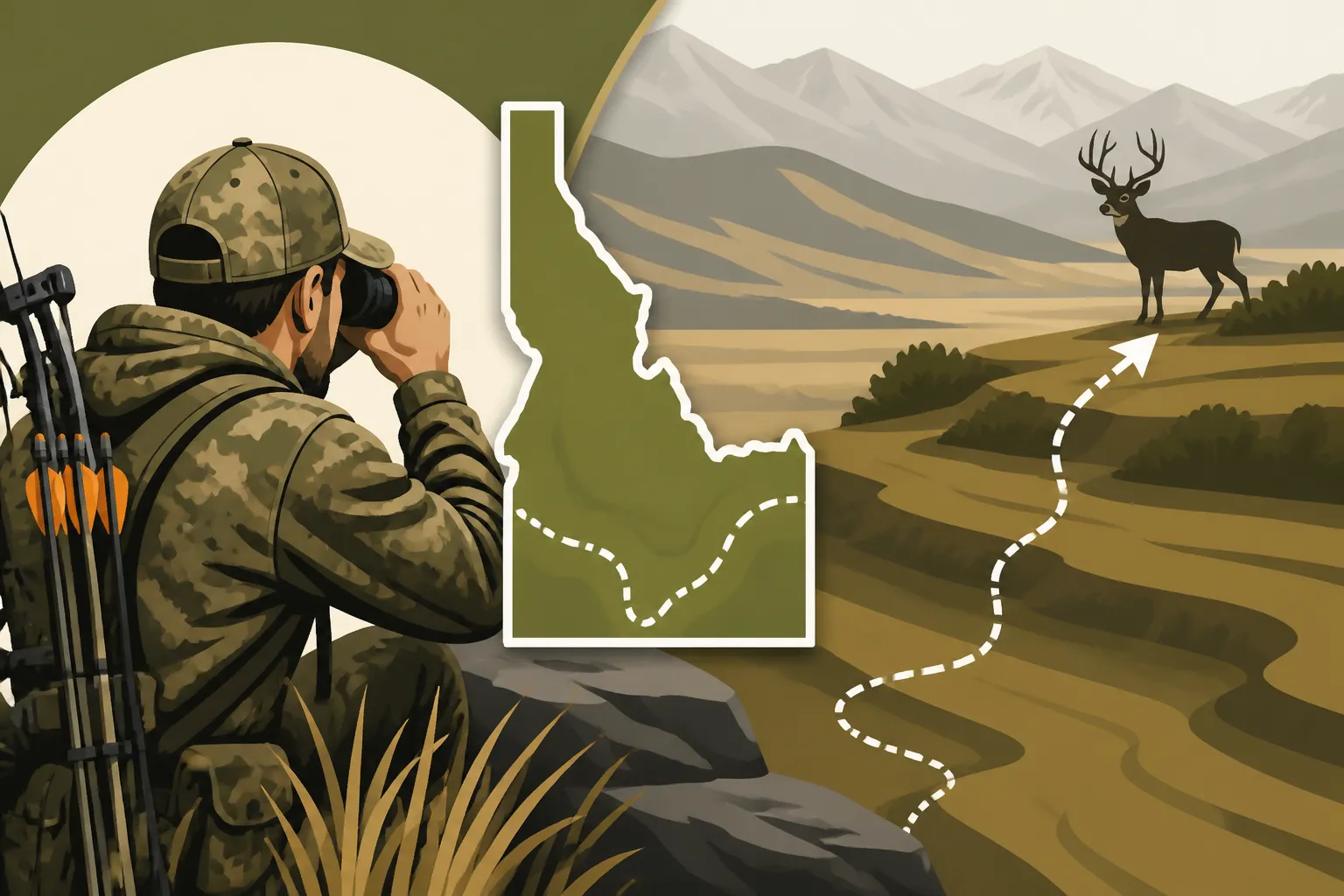
There’s nothing quite as frustrating as spotting that big mule deer buck or a herd of elk across a wide-open basin in Idaho, only to realize that every single step you take puts you at risk of being busted. That feeling of being totally exposed, with no cover in sight, can make even the most seasoned hunter want to throw in the towel. But don’t despair! Idaho’s rugged landscape, while challenging, also provides incredible opportunities for stealthy approaches if you know how to read the terrain. This guide is all about mastering the art of using benches and draws – those hidden highways and natural shelters – to close the distance on your quarry and turn a distant spotting into a successful stalk.
Understanding Idaho's Varied Terrain and Its Challenges
Idaho is a land of incredible diversity, from the dense timber of the Panhandle to the sprawling sagebrush deserts and the steep, rocky breaks of the Salmon River country. This variety means that no two stalks are ever truly the same, and what works in one area might be a bust in another. However, one constant across much of Idaho's big game country is the presence of vast, open spaces interspersed with rugged, broken ground.
The Difficulty of Stalking in Open Country
Picture this: you're glassing a distant hillside, maybe in Unit 39 or 43, and suddenly, a magnificent bull elk steps out from a patch of timber onto a grassy slope. Your heart pounds, and your mind immediately races to "how do I get over there?" The problem is, between you and that elk might be hundreds of yards of relatively open terrain, dotted with small shrubs or scattered pines that offer minimal concealment. Every movement you make, every rustle of dry grass, is amplified in the quiet mountain air. Animals like elk and mule deer have incredibly keen senses – their eyesight is exceptional, their hearing can pick up a twig snap from a surprising distance, and their noses are constantly working, sifting through the wind for any foreign scent. Attempting a direct, straight-line approach in such conditions is almost a guaranteed way to send that animal bounding away, leaving you with nothing but a fleeting memory.
The sheer scale of Idaho's backcountry often means animals have vast tracts of unpressured habitat. They’re not accustomed to constant human presence in the same way deer in suburban areas might be. This natural wildness makes them particularly wary and quick to react to anything out of place. This is precisely why understanding and utilizing the nuances of the landscape becomes not just an advantage, but an absolute necessity for successful Idaho hunting.
How Terrain Features Provide Opportunity
While the vastness can feel daunting, it’s also what creates the very opportunities we’re going to discuss. The same geological forces that carved out Idaho’s majestic mountains, deep canyons, and expansive plateaus also left behind a tapestry of smaller, more subtle terrain features. These include the gentle undulations of a ridge, the subtle dip of a saddle, or the abrupt cut of a ravine. These features, often overlooked by the casual observer, are the keys to unlocking stealthy movement. They offer natural "lanes" or "shelters" that allow you to travel unobserved, masking your silhouette, muffling your sounds, and sometimes even funneling your scent away from the animals you're pursuing. Learning to identify these features from afar, whether through careful glassing or by using detailed topographical maps, is the first step toward transforming what looks like an impossible stalk into a viable one. For planning these movements, tools like GoHunt can be incredibly useful, allowing you to layer topography and satellite imagery to identify these hidden routes before you even step foot in the field.
Mastering the Art of Using Benches for Cover
Benches are arguably one of the most underappreciated tools in a Western hunter's arsenal. They are subtle, yet incredibly effective for moving quietly and staying out of sight. Think of them as natural terraces or shelves that cut across a hillside.
What Is a Bench and Why It Matters
In simple terms, a "bench" is a relatively flat or gently sloping area that interrupts a steeper grade on a mountain or hillside. Imagine a series of steps on a giant staircase – those flat parts are the benches. They can range from just a few feet wide to several hundred yards across, often running horizontally or diagonally along the contour of the land. Benches are formed by various geological processes, including ancient water lines, fault lines, or differential erosion, where softer rock erodes faster than harder rock. Their importance for a hunter cannot be overstated. First and foremost, they provide invaluable concealment. By walking along a bench, you can keep the steeper terrain above or below you between yourself and the eyes of your quarry, effectively using the earth itself as a shield. Secondly, benches often offer easier walking than traversing directly up or down a steep slope, which means you can move more quietly and conserve energy. This makes them ideal travel corridors for both animals and hunters. They frequently feature denser vegetation, like clumps of brush or small trees, further aiding in concealment.
Critically, benches often serve as prime feeding and bedding areas for big game. Elk will graze on the edges of benches, especially where timber meets an open slope. Mule deer often bed down on benches that offer good visibility and access to browse. Recognizing a bench isn't just about finding cover; it's about understanding potential animal behavior.
Identifying and Navigating Benches
Identifying a bench from a distance requires a keen eye and often, good optics. When glassing a hillside, look for horizontal breaks in the slope, areas where the gradient changes abruptly, or where vegetation patterns shift in a linear fashion. Sometimes, they’re obvious, like a long, flat stretch of ground. Other times, they’re subtle, just a slight easing of the grade. Modern hunting apps like GoHunt, with their topographic layers and satellite imagery, are incredibly helpful for scouting these features before you even leave home. You can zoom in and trace potential bench routes, marking them as waypoints.
Once you’ve identified a bench and decided to use it, your approach needs to be calculated. Always try to approach the bench from a direction that keeps you concealed, usually from below or by topping out directly onto it while staying low. As you move along the bench, pay meticulous attention to wind direction. Your scent will travel, and even if you're out of sight, a whiff of human odor will end your stalk. Move slowly and deliberately. Every step should be checked for stability and noise before you put your full weight down. Look for softer ground, pine needles, or moss to step on, avoiding loose rocks or dry leaves whenever possible. Keep your body low, using any available scrub brush, rock outcroppings, or small trees for additional cover. Remember, the goal is to be invisible and silent.
Benches as Staging Areas and Ambush Points
Beyond simply being travel routes, benches serve as fantastic staging areas and ambush points. Let's say you've spotted an elk herd feeding on an adjacent slope. You can use a parallel bench to move into a position that puts you wind-advantageous and within shooting range. Once on the bench, you can often find a natural "pocket" or cluster of trees to hunker down in, giving you a vantage point to observe the animals without being detected. This allows you to evaluate their behavior, confirm the presence of legal animals, and wait for the perfect moment to make your final move or shot.
These flat areas are also ideal for taking a break, rehydrating, and calming your nerves before the final push. They provide stable ground for setting up shooting sticks or getting into a prone position, which is crucial for making an ethical shot when the time comes. Furthermore, animals themselves use benches for bedding, especially during mid-day. If you're still-hunting through timbered country, slowly working a bench can reveal a bedded buck or bull that you might otherwise walk past. Think about how a mature bull elk might want to bed down on a bench that gives him a commanding view of the canyon below, while still being able to quickly slip into dense cover if disturbed. Such a location would also offer thermal advantages, catching the first rays of morning sun or being shaded from the afternoon heat. Knowing this, you can focus your efforts on checking these prime bench locations.
Leveraging Draws for Stealthy Approaches
While benches offer horizontal movement, draws provide vertical or diagonal opportunities, acting as hidden highways that can take you deeper into game country or directly to your target. They are incredibly powerful features for a hunter who knows how to use them.
What Is a Draw and Its Strategic Value
A "draw" is essentially a natural depression, gully, or small valley that carves its way down a hillside or mountain. They're often formed by water erosion, and as such, tend to be steeper and more confined than benches. Draws can vary dramatically in size, from shallow indentations barely wide enough for a person, to deep, timbered canyons that might hold year-round water. Their strategic value lies in their ability to offer absolute concealment. When you're inside a draw, the high banks or timbered sides completely block your silhouette from view, even from nearby animals. This makes them ideal for approaching game that is on an opposite slope or further up the same hillside.
Moreover, draws often provide natural funnels for animal movement, especially during adverse weather or when moving between feeding and bedding areas. They can also hold denser, often taller, vegetation than the surrounding open slopes, providing additional visual and even auditory cover. The sounds you make inside a draw can be somewhat muffled by the terrain itself, though you still need to be incredibly quiet. Perhaps most importantly, draws can naturally channel wind currents, which, if read correctly, can be a hunter's best friend in managing their scent. Understanding how wind moves through these topographical features is key to executing a successful stalk.
Moving Through Draws Undetected
Successfully navigating a draw requires a combination of stealth, physical fitness, and constant awareness. Before you even commit to entering a draw, observe it carefully. Are there signs of animal activity? What is the vegetation like inside? Most importantly, assess the wind. Wind can swirl unpredictably in draws, so frequently checking your wind direction with a puffer bottle or powder is crucial. As you move, stay low to the ground whenever possible, especially if the draw is shallow. Use the deepest parts of the depression for maximum concealment. Avoid skylining yourself on the edges.
Foot placement is paramount. Look for soft earth, moss, or thick duff where your steps will be quiet. If the draw has a small creek bed, walk along the banks rather than in the noisy, rocky streambed itself. When ascending or descending, take small, controlled steps. Avoid any sudden movements that might dislodge rocks or create loud noises. If the draw is timbered, use the trunks of trees and dense brush for visual breaks. Remember, in Idaho's rugged units, every step can count, especially when dealing with the steep, broken country around rivers like the Salmon or Clearwater. Hunters looking to understand the nuances of this type of terrain will find excellent resources like Reading Wind in Steep Timbered Country invaluable.
Exiting a Draw for the Final Approach
The moment you decide to exit a draw for the final approach is often the most critical point of your stalk. This is where you transition from being fully concealed to potentially exposed, even if only briefly. Before you even think about popping your head up, stop and listen. Take several minutes to let your eyes and ears adjust. Use your binoculars to carefully scan the area where you expect the animal to be. Look for movement, an antler tip, an ear twitch – anything that confirms its position and current behavior.
When you’re ready, make your move with extreme caution. Crawl or slowly peek over the lip of the draw, exposing only the bare minimum of your body necessary to see. Avoid standing up quickly. Your silhouette against the sky or a bright background is a dead giveaway. Once you’ve confirmed the animal’s location and determined your shooting lanes, make your final approach as quickly and quietly as possible, utilizing any last bits of cover like a large rock or a patch of brush. This is often the point where you might switch from a slow stalk to a more deliberate, low crawl, especially if the ground is relatively flat leading to your target. This requires physical conditioning and precise movement. The closer you get, the more critical these details become.
Combining Benches and Draws for Ultimate Stealth
The true mastery of stalking in Idaho comes from understanding how to seamlessly link benches and draws, creating a natural, concealed pathway to your quarry. It's rarely about just using one or the other; it's about chaining them together to navigate complex terrain.
Planning Your Stalk with Topographical Maps
Effective stalking begins long before you leave your truck. It starts with meticulous planning, and topographical maps, whether paper or digital, are your best friends. Before you head out, or when you first spot an animal, pull out your map or open your hunting app. Visualize the landscape. Identify the animal's location and then look for natural avenues of approach using benches, draws, and other cover. Think about the prevailing wind direction and how it interacts with the terrain. Will that draw funnel your scent directly to the elk? Is there a parallel bench that allows you to get above them and then drop down, catching the thermals as they rise?
Tools like GoHunt are indispensable for this kind of planning. You can mark potential animal locations, trace multiple approach routes, and drop pins on key observation points. Pay attention to contour lines – tightly packed lines indicate steep terrain, while widely spaced lines show gentler slopes where benches might exist. Look for drainage patterns that indicate draws. Consider elevation changes and how they might affect your physical exertion and the time it takes to get into position. This "e-scouting" is crucial for breaking down a daunting landscape into manageable, strategic movements, helping you decide on the best strategy for How Far to Stalk a Bedded Mule Deer or a herd of feeding elk.
Real-World Scenarios and Adaptability
Let’s run through a hypothetical: you're hunting mule deer in the high desert breaks of Idaho, say in a unit known for its big bucks. You spot a bedded buck halfway up a steep, sage-covered hill, about 800 yards away. The wind is quartering from your left towards him. A direct approach is out of the question.
- Initial Assessment: You pull out your GoHunt app. You see a prominent draw running diagonally up the hillside to the right of the buck, and a long, faint bench running horizontally below his position.
- First Move (The Draw): You decide to drop into a nearby parallel draw (if one exists) or use a low-lying ridge to gain cover and move to the mouth of the prominent draw. The draw itself runs towards the general direction of the buck, offering initial concealment from his line of sight. As you move up the draw, you're careful to stay below the lip, checking the wind constantly for swirling gusts.
- Transition (Draw to Bench): About 400 yards from the buck, the draw shallows out or takes a sharp turn away from your target. However, you notice on your map that a bench begins just to the left of the draw’s end, running directly towards the buck's general area. You make a careful, low exit from the draw, using a clump of junipers for cover, and immediately drop onto the bench.
- Second Move (The Bench): Now on the bench, you move slowly and quietly, using the slight rise of the terrain above you to mask your movement. The wind is still good, pushing your scent away. You might take advantage of a small ravine cutting across the bench to get even closer.
- Final Approach: As you near what you estimate is shooting range, the bench begins to get patchy, with less continuous cover. You drop into a low crouch or crawl, moving towards a large sagebrush clump that offers a final bit of concealment. From there, you can slowly rise, bipod ready, for the shot.
This kind of adaptive thinking, constantly adjusting your route based on the terrain, wind, and animal behavior, is what separates successful hunters from those who consistently bump game. You have to be willing to change your plan the moment the situation changes. This includes knowing when to abort a stalk if conditions aren't right, or if the animal moves into an unapproachable area.
Practicing Your Stalking Skills
Just like any other hunting skill, mastering the use of benches and draws takes practice. You wouldn't expect to make a 500-yard shot without practicing, so why would you expect to execute a perfect stalk without putting in the time?
- Map Reading Practice: Spend time studying topographical maps of your hunting units, both physically and using digital tools. Identify benches and draws, and mentally trace various stalking routes. Challenge yourself to find three different ways to approach a hypothetical animal on a slope.
- Field Reconnaissance: Hike and explore your hunting areas outside of season. Go out with just your binoculars and map (or GoHunt on your phone) and practice identifying these features on the ground. Walk proposed stalk routes. Notice how the wind shifts in different terrain. Identify areas of noisy or quiet footing.
- Mock Stalks: Set up a target or have a friend act as a "bedded animal" and practice stalking them. Focus on noise reduction, staying low, and managing your scent. Time yourself. How long does it take to get within 100 yards while remaining undetected? What challenges did you face?
- Physical Conditioning: Stalking is physically demanding. You’ll be walking steep slopes, crawling on your hands and knees, and holding awkward positions. Incorporate hikes with your pack, lunges, and core exercises into your fitness routine. Being able to move silently and efficiently, even when your muscles are burning, is a huge advantage. This is especially true for backcountry elk hunting, where knowing Packing an Elk Out of Steep Country Alone is a skill many acquire out of necessity.
By diligently practicing these skills and truly learning to "read" the Idaho landscape, you'll find that many seemingly impossible stalks become achievable, opening up a world of hunting opportunities you might have previously thought were out of reach.
Terrain Feature Comparison for Stalking
To give you a quick overview, here's a comparison of how benches and draws stack up in different stalking scenarios:
| Feature | Primary Benefit | Ideal Scenario | Potential Challenges | Key Considerations |
|---|---|---|---|---|
| Benches | Horizontal concealment, easier travel | Long-distance approaches, observing game, resting | Limited deep cover, can be exposed from above | Wind stability, identifying subtle breaks in terrain |
| Draws | Deep concealment, direct approach | Steep terrain, approaching game in depressions | Unpredictable wind, noisy footing, can be dead-ends | Wind swirling, physical exertion, steep exits |
Disclaimer
Please remember that hunting regulations and land access rules can change. Always consult the most current Idaho Fish and Game regulations and ensure you understand public and private land boundaries before venturing out. Safety should always be your top priority in the field.