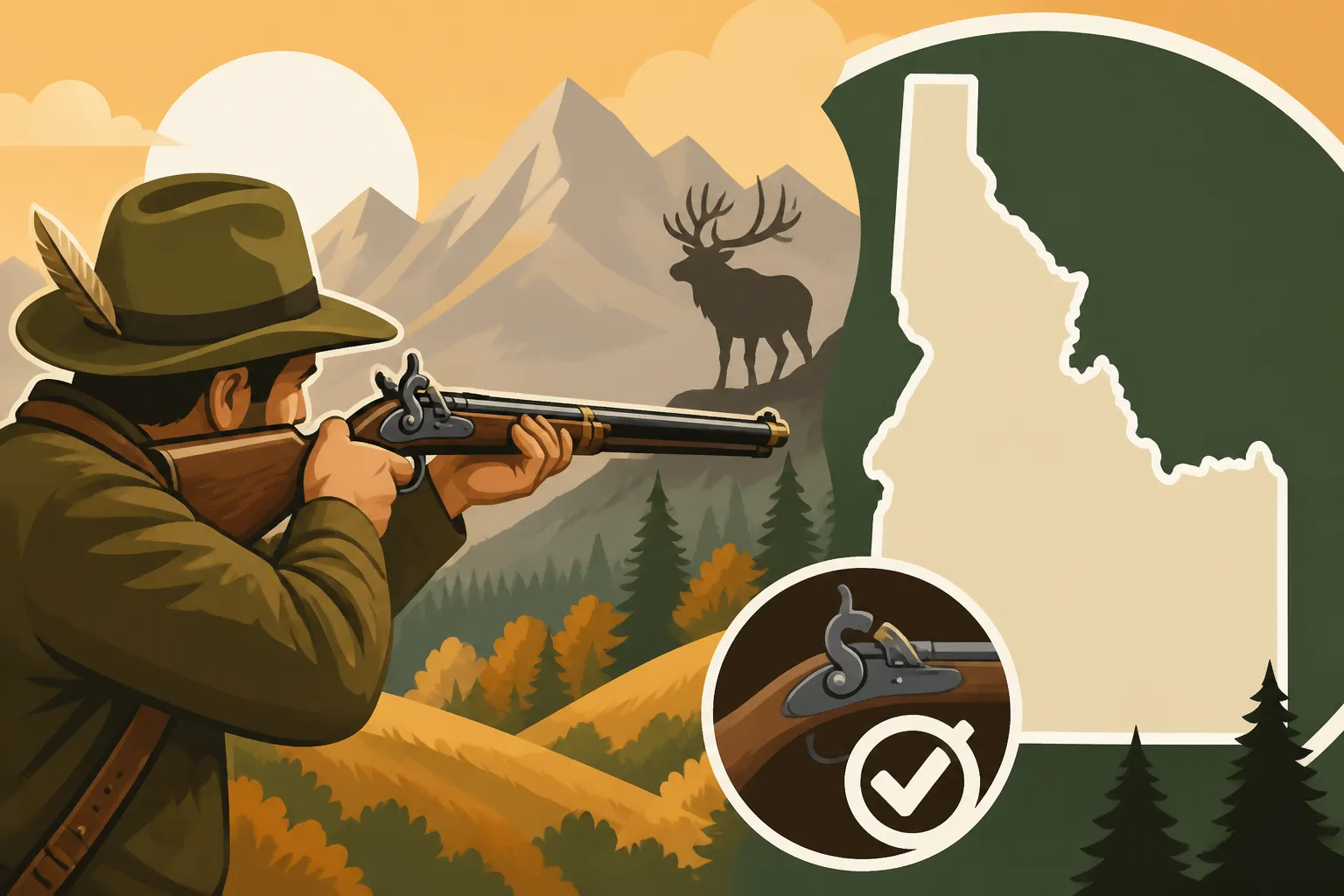
When You Need a Muzzleloader Validation in Idaho
Navigating the complexities of Idaho's hunting regulations can often feel like trying to hit a moving target, especially when it comes to specialized weapon seasons. One common point of confusion for many hunters, both resident and nonresident, is precisely when a muzzleloader validation is required. It's not just a simple "yes" or "no" answer, and misunderstanding the nuances can lead to a forfeited tag or, worse, a violation. This guide aims to clear up that confusion, breaking down the specific scenarios where a muzzleloader validation becomes a must-have in your hunting arsenal.
Understanding the Basics of Idaho Muzzleloader Hunting
Before diving into validations, let's set the stage for how Idaho approaches muzzleloaders. Unlike some states that might lump them into a "primitive weapons" category with broader rules, Idaho has distinct regulations that often depend on the type of hunt you're participating in. This distinction is crucial because it dictates not only if you need a validation but also what kind of muzzleloader you can legally carry.
Many hunters assume that if they own a muzzleloader, they can just use it whenever they want, but that's a dangerous assumption in Idaho. The rules are designed to manage hunter density, provide diverse opportunities, and ensure fair chase, especially during specific hunt periods. Ignoring these distinctions can turn an exciting hunt into a frustrating encounter with a game warden.
Muzzleloaders in General Any-Weapon Seasons
For many, a muzzleloader is simply another tool in the shed, much like a rifle or a shotgun. In Idaho, during general any-weapon seasons, your muzzleloader is often treated just like any other firearm. This means if you're hunting a general deer or elk season where centerfire rifles are allowed, you can absolutely bring your muzzleloader along without any special validation.
Think of it this way: if the season framework explicitly states "any weapon," your muzzleloader fits right in. You don't need an extra stamp on your license, nor do you need to worry about the stricter equipment requirements that apply to muzzleloader-specific hunts. It’s essentially considered another type of firearm. For example, if you're out chasing mule deer in a general season unit, and you prefer the challenge of a muzzleloader, you can use it just as you would a modern rifle. This flexibility allows hunters to use their preferred method without additional bureaucratic hurdles, making it a great option for those who enjoy the unique experience of a black powder hunt but don't want to deal with the more restrictive rules of dedicated muzzleloader seasons.
When a Muzzleloader Validation Becomes Necessary
The moment you consider hunting during a designated muzzleloader-only season, that's when the validation conversation shifts from optional to essential. These specific seasons are set aside by Idaho Fish and Game to offer opportunities to hunters using traditional black powder firearms, often during periods outside of general rifle seasons or in areas with specific management goals.
A muzzleloader validation isn't just a piece of paper; it's an acknowledgment that you understand and agree to abide by the more stringent regulations that come with these specialized hunts. It signifies that you're committed to the spirit of the hunt, which often means embracing the challenge of more traditional equipment. Without this validation, you are not legally permitted to participate in a muzzleloader-only hunt, plain and simple. It’s a permit to play by a specific, more challenging set of rules designed to make these seasons unique and often less pressured than their general weapon counterparts.
Muzzleloader-Only Hunts and Their Unique Demands
Idaho's muzzleloader-only seasons are where the rules really tighten up. These hunts are designed to provide a specific kind of experience, often appealing to hunters who appreciate the added challenge and historical connection of traditional black powder firearms. Because of this, Idaho Fish and Game imposes strict equipment restrictions that differentiate these hunts from general seasons, and these restrictions are directly linked to the validation requirement.
It’s not enough to simply have a muzzleloader; it must conform to the very specific legal definition for muzzleloader-only seasons. This is where many hunters, especially those new to Idaho or to muzzleloading in general, can get tripped up. The validation ensures that only hunters using approved traditional equipment are participating, maintaining the integrity and intent of these special opportunities.
Specific Equipment Restrictions for Muzzleloader-Only Hunts
When you apply for and purchase a muzzleloader validation, you're agreeing to hunt with a very particular type of firearm. The most common restrictions you'll encounter during Idaho's muzzleloader-only seasons involve optics, ignition systems, and projectile type:
- No Scopes or Optical Sights: This is a big one for many. Unlike modern rifles or even muzzleloaders used in general seasons, you generally cannot use a scope or any magnifying optical sight during muzzleloader-only hunts. The rule is typically "Are Scopes Allowed on Muzzleloader-Only Hunts?" and the answer is almost universally "no." You'll be limited to open or peep sights, forcing you to get closer to your quarry and refine your shooting skills. This harks back to a more traditional hunting experience and is a key distinction from other hunts.
- Exposed Primer or Cap Ignition: Idaho is quite specific about how your muzzleloader ignites. For muzzleloader-only seasons, your firearm must typically use an exposed percussion cap or flintlock ignition system. This means inline ignition systems, where the primer is fully enclosed within the breech, are usually prohibited. This is why you need to understand "Why Inline Ignition Fails Muzzleloader-Only Rules". It's all about maintaining the "primitive" nature of the hunt.
- No Sabots or Jacketed Bullets: While some regulations might vary slightly, a common restriction is that you must use a lead ball or a conically shaped lead bullet, often patched, rather than modern sabots or jacketed projectiles. These rules aim to limit the effective range and terminal performance to what would be expected from more traditional black powder loads.
- Minimum Caliber Requirements: Just like with any other weapon, there are minimum caliber requirements based on the species you're pursuing. For instance, "Minimum Muzzleloader Caliber for Idaho Deer" is typically .45 caliber, while for elk, it's usually "Minimum Muzzleloader Caliber for Idaho Elk" at .50 caliber. You must ensure your muzzleloader meets these minimums for the game you intend to hunt.
These restrictions are not arbitrary; they are put in place to ensure a challenging experience that aligns with the spirit of primitive weapon hunting. They add a layer of difficulty and demand a different set of skills from the hunter, which is precisely why many are drawn to these specialized seasons. When planning your hunt, use resources like the official Idaho Fish and Game website or comprehensive hunting platforms like GoHunt to double-check the exact rules for your chosen unit and season. The regulations can sometimes have subtle variations year to year, so always confirm.
The Role of the Muzzleloader Validation
The muzzleloader validation is the official stamp that says, "Yes, I understand and agree to these rules." When you purchase it, you're not just buying a privilege; you're confirming your commitment to the regulations specific to muzzleloader-only opportunities. It's a critical component of your license and tag package if you plan on participating in these specialized seasons.
If you don't have the validation and are found hunting in a muzzleloader-only season, even if your equipment technically meets the criteria, you are in violation. It's akin to hunting without the correct species tag—it's a critical oversight. Always ensure you have this validation in hand (or digitally accessible on your phone via the GoOutdoorsIdaho app) before you step into the field for a muzzleloader-only hunt.
Practical Steps to Getting Your Muzzleloader Validation
Acquiring your muzzleloader validation in Idaho is a straightforward process, but it's one that often gets overlooked until the last minute. Thinking ahead and understanding the steps involved will save you a lot of headache, especially if you're a nonresident planning a trip.
Remember, this validation is a specific endorsement on your hunting license, and it's tied directly to the special opportunities offered during muzzleloader-only seasons. It's not automatically included when you buy a general hunting license or a species tag.
Purchasing Your Muzzleloader Validation
The process for obtaining your muzzleloader validation is integrated into Idaho Fish and Game's licensing system. You'll typically add this to your cart when you're purchasing your other licenses and tags, or you can add it separately later if you decide to hunt a muzzleloader-only season.
- Online Through GoOutdoorsIdaho: The easiest and most common method for most hunters, especially nonresidents, is to purchase it directly through the Idaho Fish and Game licensing website, GoOutdoorsIdaho. Just navigate to the licensing portal, log in or create an account, and you'll find the option to add a muzzleloader validation to your profile. It's usually listed under "validations" or "permits."
- At an Authorized Vendor: If you're in Idaho, you can also purchase your validation at any authorized license vendor, such as a sporting goods store or even some general stores. Just let the clerk know you need a muzzleloader validation added to your hunting license.
- Through the IDFG Mobile App: For tech-savvy hunters, the Idaho Fish and Game mobile app also allows you to manage your licenses and tags, including purchasing validations. This is an excellent way to keep all your hunting documents in one accessible place.
The cost of a muzzleloader validation is usually quite modest, but it's a non-negotiable expense for those specific hunt opportunities. Always factor this small fee into your overall hunting budget.
Double-Checking Season Dates and Rules
Purchasing the validation is only half the battle; knowing when and where to use it is equally important. Idaho's hunting regulations are laid out in annual booklets, available both digitally on the Idaho Fish and Game website and in print at license vendors. You'll need to consult these regulations to pinpoint the specific units and dates for muzzleloader-only seasons for your desired species.
For example, a unit might have a general elk season in October, but a separate muzzleloader-only elk season in late September. It's for that September season that your validation becomes critical. Furthermore, some units might not have any muzzleloader-only seasons at all. Using tools like the Idaho Hunt Planner can help you overlay unit boundaries with season dates and weapon restrictions. Many experienced hunters also rely on detailed mapping and research platforms like GoHunt, which often consolidate this information, making it easier to filter by weapon type and see the opportunities.
Table: Muzzleloader Requirements at a Glance (Idaho)
| Feature/Requirement | General Any-Weapon Season | Muzzleloader-Only Season |
|---|---|---|
| Muzzleloader Validation Needed? | No | Yes |
| Scopes/Optical Sights? | Yes, if allowed for rifles | No (open or peep sights only) |
| Ignition System? | Any legal muzzleloader ignition | Exposed percussion cap or flintlock only |
| Projectile Type? | Any legal projectile | Typically lead ball or conical lead bullet (no sabots or jacketed) |
| Minimum Caliber? | Yes, by species (e.g., .45 deer, .50 elk) | Yes, by species (e.g., .45 deer, .50 elk) |
| Application Process? | Purchase general license/tag | Purchase general license/tag + muzzleloader validation |
This table highlights the stark differences, making it clear why that validation is such an important distinction for specific hunt types. Always confirm the exact rules in the current year's Idaho hunting regulations.
Common Misconceptions and Crucial Advice
Even with all the information at hand, some common pitfalls and misconceptions can still trip up hunters regarding muzzleloader validations in Idaho. Being aware of these can save you from a disappointing or even problematic situation in the field.
It's natural to have questions, especially if you're new to a state's regulations or trying a different hunting method. The key is to seek out accurate information and not make assumptions.
Don't Confuse General Season Use with Muzzleloader-Only Hunts
One of the biggest misunderstandings we see is hunters assuming that because they can use their muzzleloader in a general any-weapon season, they automatically qualify for muzzleloader-only seasons. This simply isn't true. As we've discussed, the former doesn't require a validation, and it allows for more modern muzzleloader setups (like scoped inline ignition systems). The latter does require the validation and comes with very specific traditional equipment rules.
If you plan to use a muzzleloader during a general season, you don't need to worry about the validation or the strict "primitive" rules. Your muzzleloader acts essentially like a single-shot rifle. However, if that same muzzleloader (or even a different one) is intended for a hunt specifically labeled "Muzzleloader Only," then you absolutely need that validation and your firearm must meet those stringent criteria. This is particularly important for nonresidents who may be flying in and bringing specific equipment. Make sure you know if you are "Using a Muzzleloader in Any-Weapon Season" or a dedicated primitive weapon hunt.
Always Verify Current Year Regulations
Idaho Fish and Game regulations can, and sometimes do, change from year to year. While the core principles regarding muzzleloader validations and equipment restrictions tend to remain consistent, there can be subtle modifications or unit-specific amendments. Never rely solely on information from previous years or from anecdotal advice on hunting forums.
The official Idaho Fish and Game website is your primary source for the most current regulations. Take the time to read the latest big game proclamation thoroughly before you hunt. Many hunters also find detailed hunting information resources, like those provided by GoHunt or similar mapping and research services, invaluable for cross-referencing and visualizing these complex rules and boundaries. These tools often compile and present the official data in an easily digestible format, helping you to plan effectively.
The "Exposed Cap" Rule and What It Means
We touched on this briefly, but it's worth reiterating due to its importance. For muzzleloader-only seasons, the "exposed cap" rule is a frequent point of confusion. This regulation specifically prohibits "inline" muzzleloaders that fully enclose the primer within the breech. Instead, your muzzleloader must use an exposed ignition system, such as a percussion cap sitting on a nipple, or a flintlock mechanism.
Why does Idaho enforce "The Exposed-Cap Ignition Rule Idaho Enforces"? It's primarily about maintaining the traditional challenge. Enclosed inline systems often offer greater reliability, weather resistance, and in some cases, can handle higher pressure loads, pushing them closer to modern firearm performance. The exposed cap rule is a deliberate effort to keep the "primitive" in primitive weapon season. If you're unsure if your muzzleloader qualifies, consult a reputable gunsmith or contact Idaho Fish and Game directly for clarification well before your hunt.
Planning Your Muzzleloader Hunt in Idaho
Successfully planning a muzzleloader hunt in Idaho goes beyond just having the right weapon and validation. It involves detailed research, understanding the terrain, and preparing for the unique challenges these hunts present.
Idaho offers incredible opportunities for muzzleloader hunters, but these opportunities are best capitalized on with careful preparation. From scouting to shot placement, every detail matters even more when you're limited by the effective range and sighting systems of a traditional muzzleloader.
Researching Units and Hunt Opportunities
Once you understand the validation requirements, the next step is finding the right place and time. Idaho has 99 Game Management Units (GMUs), and muzzleloader-only seasons can vary wildly between them. Some units might have excellent muzzleloader opportunities for elk, while others might focus more on deer, or perhaps have no dedicated muzzleloader seasons at all.
This is where intensive research comes into play. Use the Idaho Fish and Game hunt planner online. This tool allows you to filter hunts by weapon type, species, and unit, helping you identify potential areas. You'll want to look at harvest statistics, public land percentages, and access points. Platforms like GoHunt can significantly streamline this research by providing comprehensive data, drawing odds, and mapping tools that allow you to explore units in detail, see public land boundaries, and even identify potential areas for glassing or stalking. Knowing which units are accessible and offer the type of terrain suitable for a muzzleloader hunt is paramount.
Practicing with Your Muzzleloader
Hunting with a muzzleloader, especially one limited to open or peep sights, requires a different level of proficiency than shooting a modern rifle with a scope. The effective range is generally shorter, the trajectory is often more pronounced, and the recoil can be stout.
It's absolutely essential to spend significant time practicing with your specific muzzleloader, loads, and sighting system. Know your accurate range, understand your bullet drop, and practice shooting from various field positions. A muzzleloader-only hunt often demands closer shots, which means excellent stalking skills are just as important as marksmanship. Don't let your first shot of the season be at a game animal; practice, practice, practice until you're confident in your abilities. This level of preparation is crucial for ethical hunting and for making the most of your hard-earned tag and validation.
Disclaimer
Please note that hunting regulations, seasons, and fees can change. While this guide provides comprehensive information, always consult the official Idaho Fish and Game regulations for the most current and accurate information before planning and executing your hunt. It is the hunter's responsibility to know and follow all applicable laws.