Which Idaho Hunts Legally Require an Outfitter
Navigating the complexities of hunting regulations, especially as an out-of-state hunter looking at a vast and wild place like Idaho, can feel like trying to read a topo map in the dark. One of the most common questions that pops up, and often causes a lot of head-scratching, is whether you legally have to hire an outfitter or guide for your Idaho hunt. This guide is here to shed light on Idaho's specific rules, particularly concerning nonresident hunters in wilderness areas, so you can plan your adventure with confidence and stay within the law.
Understanding Idaho's Wilderness Guide Rule
Idaho is renowned for its immense tracts of public land, including some of the largest wilderness areas in the lower 48. These wild, untamed landscapes offer incredible hunting opportunities, but they also come with specific regulations, especially for those coming from outside the state. It's not about being exclusive, but about managing resources and supporting the local economy in these remote regions.
The Core Requirement for Nonresidents
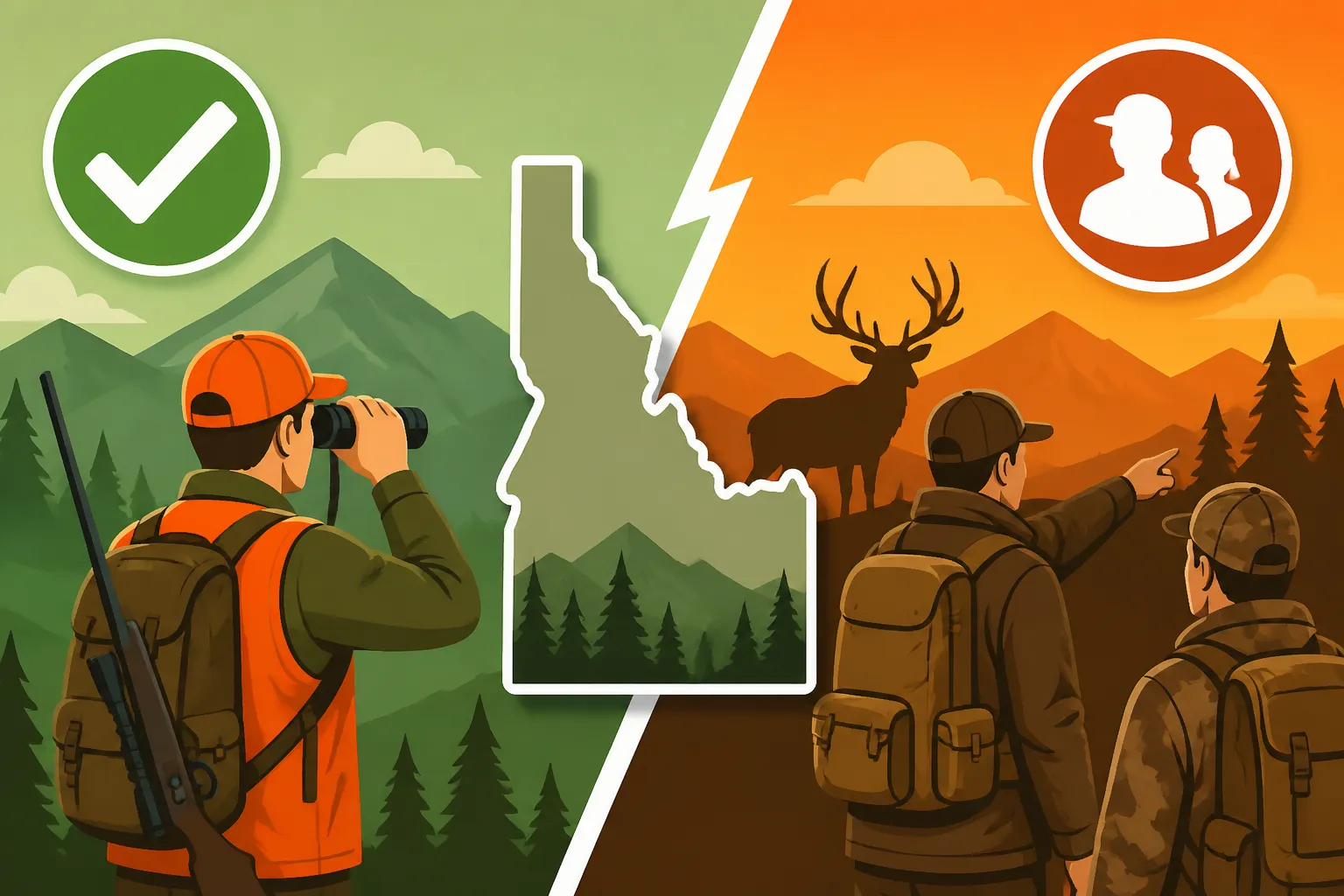
At its heart, Idaho law states that a nonresident hunter must be accompanied by a licensed Idaho outfitter or a resident Idaho hunter when hunting certain big game animals in designated wilderness areas. This isn't a suggestion; it's a hard and fast rule. The spirit of this regulation is multi-faceted. On one hand, it helps ensure safety and responsible hunting practices in incredibly challenging terrain where self-reliance is paramount. On the other, it's a way to support Idaho's outfitting industry, which plays a crucial role in providing access and services in these remote locations, often relying on specialized permits from agencies like the Forest Service to operate within these protected lands. It's a critical piece of information that many folks overlook until they're deep into planning, leading to a scramble or worse, a ruined hunt.
This rule specifically applies to designated federal wilderness areas within Idaho. This isn't just any national forest land; these are areas granted specific protection under the Wilderness Act, meaning no motorized vehicles, no roads, and a true backcountry experience. For many, the idea of a DIY Public Land Hunt in Idaho is appealing, but if you're a nonresident and certain species are on your wish list for a wilderness area, then a guide becomes part of the equation.
Which Species Trigger the Outfitter Mandate
This is where the details really matter. Not all big game species fall under this nonresident wilderness outfitter rule. Idaho has made specific distinctions, which are important for hunters to know before they apply for tags or start packing their bags.
The species that do require a nonresident to hunt with an outfitter (or a resident hunter) in designated wilderness areas are:
- Elk: This is the big one, the primary draw for many hunters coming to Idaho. If you're a nonresident and you've drawn an elk tag for a unit that encompasses wilderness, you absolutely need to factor in a guide. Many dreams of bugling bulls in the high country have been dashed by this overlooked regulation. For more details, you might want to read Idaho Forces Nonresidents to Hire a Guide for Wilderness Elk.
- Moose: Idaho moose hunts are often once-in-a-lifetime opportunities, highly sought after through controlled hunts. Given their rarity and the challenge of pursuing them in their wild habitats, it makes sense that they fall under this same umbrella. Idaho Moose Is a Controlled Hunt You Wait Years For gives you a sense of the commitment involved.
- Bighorn Sheep: Whether it's the Rocky Mountain or California subspecies, bighorn sheep hunts are incredibly difficult, demanding, and often take place in rugged, remote wilderness. These highly prized tags, often secured after many years in the draw, definitely require an outfitter for nonresidents in wilderness. To understand the different sheep populations, check out Rocky Mountain Bighorns in Idaho.
- Mountain Goat: Similar to bighorns, mountain goat hunts are physically taxing and occur in extreme alpine environments, almost exclusively within wilderness boundaries. Nonresidents pursuing these animals in such terrain are also subject to the outfitter rule.
It’s clear that the rule targets those species that are highly valued, often require specialized knowledge to pursue, and typically inhabit the most remote and challenging wilderness landscapes. The state wants to ensure responsible hunting and proper retrieval, especially given the difficulty of these hunts.
Species Exempt from the Wilderness Guide Rule
While the previous list might seem daunting, it's equally important to understand which popular big game species are not subject to this nonresident wilderness guide requirement. This opens up different avenues for nonresident hunters who prefer a do-it-yourself approach or are targeting specific animals.
Deer (Mule Deer and Whitetail)
This is excellent news for many nonresident hunters! If your primary goal is to chase deer in Idaho's vast wilderness areas, you are not legally required to hire an outfitter or be accompanied by a resident hunter. This applies to both mule deer, which roam Idaho's high desert and breaks, and whitetail deer, predominantly found in the timbered zones of the northern Panhandle.
The exemption for deer means a nonresident can load up a backpack, hike deep into a wilderness area like the Frank Church, and pursue a big muley buck entirely on their own terms (assuming they have the tag, of course!). This flexibility makes Idaho a fantastic destination for self-guided deer hunters looking for a true backcountry experience without the added cost and logistical planning of an outfitter. It also means that for many hunters, the choice between a Idaho A Tag Against B Tag for Rifle Hunters might depend on their preferred deer species and hunting style, regardless of wilderness boundaries. This rule helps balance access for various hunting preferences and economic factors.
Black Bear and Mountain Lion
Adding to the list of exempted species are black bear and mountain lion. Like deer, nonresidents are permitted to hunt these animals in designated wilderness areas without hiring an outfitter or being accompanied by an Idaho resident.
- Black Bear: Idaho boasts a healthy black bear population, and both spring and fall seasons offer incredible opportunities. Whether you prefer to hunt bears over bait (where legal and often done with an outfitter even if not legally required in wilderness) or through spot-and-stalk methods in the vast timbered wilderness, a nonresident can legally go unguided. This is a significant consideration for those planning a multi-species trip or specifically targeting bears.
- Mountain Lion: These elusive predators offer a challenging hunt, often pursued with hounds in the winter months. For nonresidents interested in a lion hunt in a wilderness setting, the guide requirement does not apply. However, hound hunting is often a specialized skill set, and many hunters still choose to go with an experienced outfitter or guide for success, even if not legally mandated.
This distinction is crucial because it allows nonresidents to pursue a wider range of species in Idaho's wildest places, either on their own or with a self-selected group of friends, making it more accessible for certain types of adventures. For a quick reference, here's a table summarizing the wilderness outfitter requirements for nonresidents in Idaho:
| Species | Nonresident Outfitter Required in Wilderness | Common Hunt Type |
|---|---|---|
| Elk | Yes | General season, controlled hunts |
| Moose | Yes | Controlled hunts only |
| Bighorn Sheep | Yes | Controlled hunts only |
| Mountain Goat | Yes | Controlled hunts only |
| Mule Deer | No | General season, controlled hunts |
| Whitetail Deer | No | General season, controlled hunts |
| Black Bear | No | Spring & Fall general, controlled hunts, baiting |
| Mountain Lion | No | General season, controlled hunts, hound hunting |
You can find more detailed information on specific exemptions in Deer and Bear Escape Idaho's Wilderness Guide Rule and Which Species Trigger Idaho's Wilderness Guide Rule.
Defining "Designated Wilderness Areas" in Idaho
The term "designated wilderness" is really the linchpin of this entire discussion. It's not just any remote public land; it refers to specific, legally defined areas under the National Wilderness Preservation System. Understanding these boundaries is absolutely critical, because stepping just outside of one can completely change the legal requirements for your hunt.
Key Wilderness Areas Affected
Idaho is home to some truly iconic and massive wilderness areas, offering some of the most rugged and unspoiled hunting experiences in the Lower 48. These are the places where the nonresident guide rule primarily applies for the mandated species.
The major designated wilderness areas in Idaho include:
- Frank Church-River of No Return Wilderness: This is one of the largest wilderness areas in the contiguous United States, encompassing vast tracts of the Salmon River Mountains, the Bighorn Crags, and the Middle Fork of the Salmon River. It's truly wild country, a place where you can disappear for weeks and not see another soul. The Frank Church Wilderness and Idaho's Rules gives a great overview of hunting specifics there.
- Selway-Bitterroot Wilderness: Straddling the Idaho-Montana border, this wilderness is another immense area of rugged peaks, deep canyons, and dense forests. Its sheer size and challenging terrain make it a prime location for those seeking a true backcountry experience. Nonresidents looking to chase elk here need to be aware of the outfitter rule.
- Hells Canyon Wilderness: Part of the deeper Hells Canyon complex, this wilderness area features incredible geology and the deepest river gorge in North America. Hunting here means navigating extremely steep and broken country.
- Sawtooth Wilderness: Famous for its jagged, glacier-carved peaks and alpine lakes, the Sawtooth Wilderness is a stunning area that offers both beauty and demanding hunting opportunities.
- Gospel-Hump Wilderness: Located in north-central Idaho, this wilderness offers a mix of high-elevation peaks and dense forest, providing critical habitat for elk and other big game.
It is absolutely paramount that you consult up-to-date maps from sources like the Idaho Department of Fish and Game (IDFG) or land management agencies like the Forest Service. Online tools and apps like GoHunt or BookYourHunt often integrate these wilderness boundaries into their mapping layers, making it much easier to visualize where the rules apply. You need to know not just the name of the wilderness, but its precise boundaries, as even a few yards can make a legal difference. These boundaries don't always follow neat geographical features, so detailed map study is non-negotiable.
The Difference Between Wilderness and Other Public Lands
This is a point of frequent confusion. Many hunters hear "public land" and assume all the rules are the same. In Idaho, that's simply not true, especially when it comes to the nonresident outfitter requirement.
- Designated Wilderness: These are areas specifically set aside by Congress to remain untrammeled by man, where natural processes dominate. This means no roads, no motorized vehicles (including e-bikes), and often very limited infrastructure. The nonresident guide rule applies only within these specific wilderness boundaries for the listed species.
- Other Public Lands (National Forests, BLM, State Lands): Outside of designated wilderness, Idaho has millions of acres of other public lands, including vast sections of National Forests (like the Payette or Boise National Forests) and Bureau of Land Management (BLM) ground. These areas might be just as remote and wild in character, but because they are not designated wilderness, the nonresident outfitter rule for elk, moose, sheep, and goat does not apply.
This distinction is crucial for planning. A nonresident can hunt elk on National Forest land outside a wilderness boundary entirely on their own. Many hunters specifically choose units and hunt areas that are adjacent to or completely outside of wilderness to avoid the outfitter requirement, while still getting a backcountry experience. Understanding Hunting Idaho's National Forests and BLM Ground is key to finding these opportunities. The lesson here is clear: don't confuse "remote" or "backcountry" with "designated wilderness." Always verify your intended hunt area's specific land designation.
What This Means for Your Hunt Planning
Knowing these rules ahead of time is absolutely priceless. It saves you from potential legal issues, unnecessary expenses, and the heartbreak of realizing your dream hunt isn't possible as planned. It allows you to build a solid, legal, and enjoyable hunting strategy.
Planning Your Nonresident Hunt Strategy
With Idaho's wilderness guide rules firmly in mind, you have a few distinct paths you can take as a nonresident hunter:
Option 1: Embrace the Wilderness with an Outfitter.
If your heart is set on hunting elk, moose, bighorn sheep, or mountain goat deep within a designated wilderness area, then hiring a licensed Idaho outfitter is your path. This isn't just a legal necessity; it can also be an incredible advantage. Outfitters often have decades of experience in specific wilderness areas, intimate knowledge of game movements, and the logistical capabilities (like pack strings of horses or mules) to get you and your gear into truly remote spots. They handle the camp setup, cooking, and game retrieval, allowing you to focus purely on the hunt. When choosing this route, ensure you're working with a reputable company. Utilize resources like The Idaho Outfitters and Guides Licensing Board Explained to verify credentials and check for any past complaints. Websites like BookYourHunt can also be helpful in connecting with vetted outfitters and reading reviews.
Option 2: Hunt Non-Wilderness Areas DIY.
For those who prefer a self-guided experience for elk, moose, sheep, or goat without the cost of an outfitter, Idaho still offers abundant opportunities. You'll need to focus your hunt planning on units and zones that are outside of the designated wilderness boundaries. These areas can be incredibly rugged and remote, offering a challenging backcountry hunt that feels very much like wilderness, but without the specific legal mandate for an outfitter. This might mean exploring vast stretches of National Forest or BLM land. Tools like GoHunt can be invaluable for e-scouting, helping you identify public land percentages and roadless areas that fit your DIY criteria. Understanding How Idaho Elk Zones Sit on Top of the Units is a good starting point for identifying viable hunting grounds.
Option 3: Hunt Exempt Species in Wilderness DIY.
If mule deer, whitetail, black bear, or mountain lion are your target, and you crave the solitude of a true wilderness hunt, you can absolutely pursue these species as a nonresident without an outfitter. This allows you to experience Idaho's most pristine landscapes on your own terms, pushing your limits in navigation, fitness, and hunting skill. Be sure to be extra prepared for the challenges of these remote areas, as self-sufficiency is paramount. This can be a fantastic way to experience a deep backcountry hunt without the added expense of a guide for species like Mule Deer Across Idaho's High Desert and Breaks or Whitetail Deer Hold Idaho's Northern Panhandle.
Verifying Outfitter and Guide Credentials
No matter which path you choose, if an outfitter is involved, due diligence is key. The Idaho Outfitters and Guides Licensing Board (IOGLB) is the governing body for all licensed outfitters and guides in the state. They ensure that operators meet specific safety, experience, and financial responsibility standards.
Before booking any trip:
- Verify their License: Always check that the outfitter you're considering is currently licensed and in good standing with the IOGLB. You can usually do this through the board's official website.
- Ask for References: Reputable outfitters will be happy to provide contact information for past clients. Take the time to call these references and ask about their experiences.
- Understand What's Included: Clarify exactly what the hunt package includes and, perhaps more importantly, what it doesn't include. Are tags, licenses, meat processing, taxidermy, or tips part of the quoted price? Knowing these details upfront prevents surprises.
- Review Contracts Carefully: Read the entire contract, paying close attention to cancellation policies, refund terms (especially in relation to the draw results if you're applying for controlled hunts), and liability waivers. This is where websites like BookYourHunt can be useful, as they often have vetting processes and clear communication channels to help with these details.
By doing your homework and understanding Idaho's specific requirements, you'll be well on your way to planning a successful and legal hunting adventure in the Gem State. Remember, preparation is the hunter's best friend, and that includes knowing the rules inside and out. For more planning advice, consider articles like Questions to Ask an Idaho Outfitter.
Disclaimer
This article is for general informational purposes only and does not constitute professional advice. Laws, prices and regulations vary by location and change over time. Consult a qualified professional for guidance on your specific situation.