Access Points Along the Snake River Breaks
The Snake River Breaks in Idaho can be an absolutely stunning, wild place to hunt, but let's be honest, getting into some of the prime spots feels like trying to solve a puzzle with half the pieces missing. Hunters often grapple with daunting, steep terrain and a confusing patchwork of land ownership that makes figuring out where you can even begin your hunt a monumental task. This guide is all about breaking down those barriers, helping you pinpoint legitimate access points, and offering practical strategies to confidently navigate the rugged beauty of the Snake River Breaks for your next hunting adventure.
The Rugged Reality of Hunting the Snake River Breaks
Anyone who has cast a hopeful gaze over the sprawling, broken landscape of the Snake River Breaks knows it's a place of incredible beauty and equally incredible challenge. This isn't your flat-country, easy-access hunt; this is an arena where the land itself is a major player, demanding respect and strategic planning from every hunter. The sheer scale and unforgiving nature of the topography are often the first hurdles, quickly followed by the intricate web of land ownership.
Topography That Tests Every Hunter
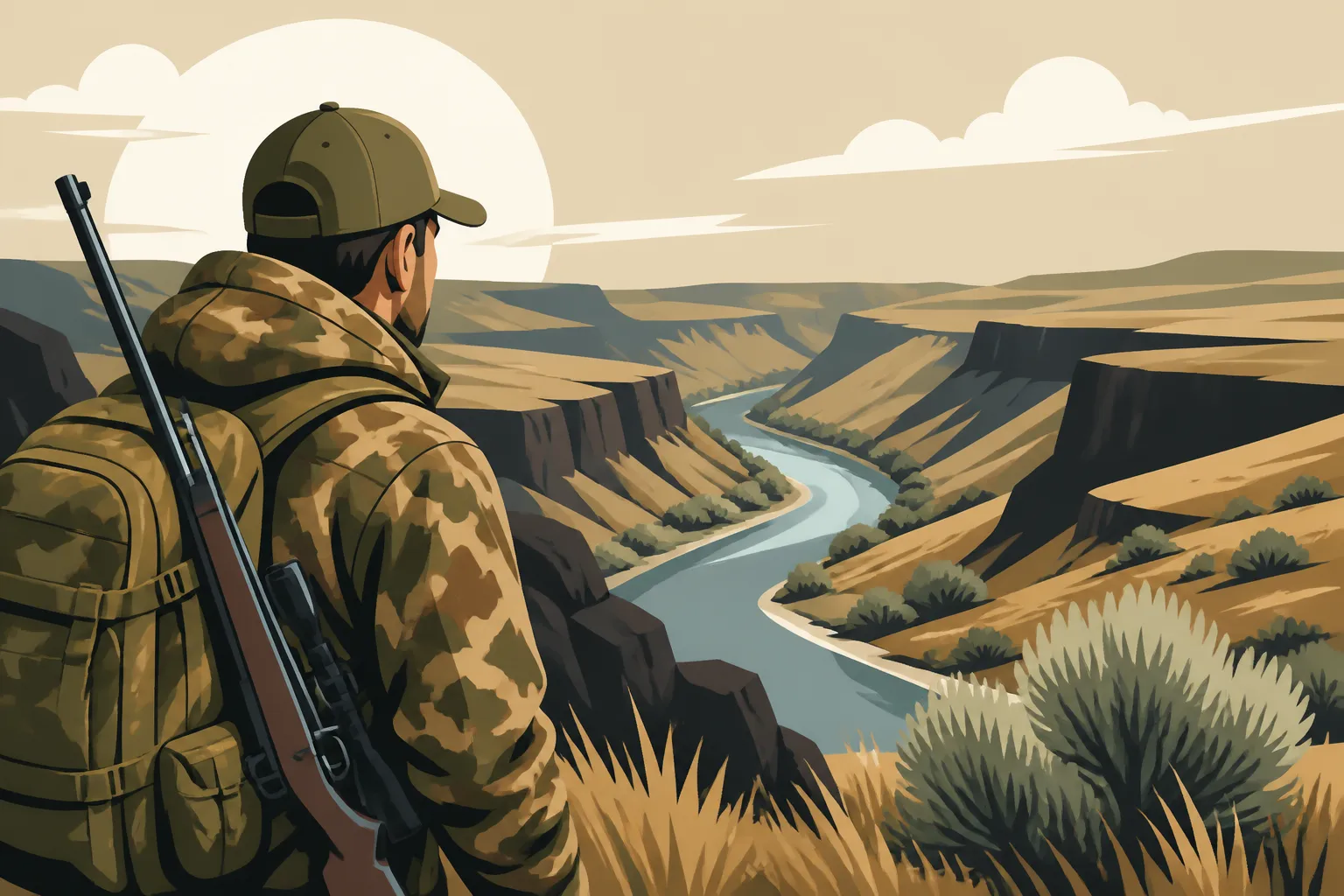
Imagine standing on a rimrock, looking down into a chasm that drops hundreds, even thousands, of feet to the river below. The Snake River itself has carved a formidable canyon, and the "breaks" are the intricate, often unstable, slopes and side canyons leading down to it. We're talking about extremely steep, rocky, and often brushy ground that seems to defy gravity. Every step is an effort, every descent a calculated risk, and every climb a test of endurance. Navigating these steep, broken drainages with a rifle or bow in hand, let alone packing out a downed animal, requires a whole different level of physical and mental fortitude. It’s not just a walk; it’s an expedition. You'll encounter basalt cliffs, deep draws choked with brush, and loose scree slopes that demand careful foot placement. For many, simply getting into a hunting position can take hours of strenuous effort, and that's before you even spot an animal.
The Checkerboard of Land Ownership
Once you've wrapped your head around the physical demands, you're faced with the next great puzzle: who owns what? The land along the Snake River Breaks, particularly in the more accessible fringe areas, is often a classic Western checkerboard. You'll find pockets of Bureau of Land Management (BLM) land, state land, and sometimes even small sections of National Forest, all intermingled with vast tracts of private ranchland. This creates immense frustration for hunters who see promising public ground on a map, only to find it completely surrounded by private property with no legal way to reach it. There's nothing quite like spending hours poring over maps, only to realize your prime hunting spot is inaccessible due to a private parcel acting as a barrier. Understanding this patchwork is absolutely critical, and it's a skill that can make or break your hunt. It requires more than just a passing glance at a land ownership map; it demands meticulous research and often, a lot of on-the-ground confirmation. This intricate mosaic is precisely why tools that delineate property lines are not just helpful, they're essential. Learning how to identify these boundaries and plan your approach is a foundational skill for success here, and it's why we spend so much time discussing Reading a Land Ownership Layer Correctly.
Your Essential Toolkit for Unlocking Access
Facing the challenges of the Snake River Breaks head-on requires more than just a strong back and a good rifle; it demands a sophisticated approach to planning and navigation. Thankfully, modern technology provides us with powerful tools that can transform a seemingly impenetrable landscape into a solvable puzzle. Think of these as your digital scout and your rulebook for the roads less traveled.
Digital Mapping Apps: Your Lifeline in the Breaks
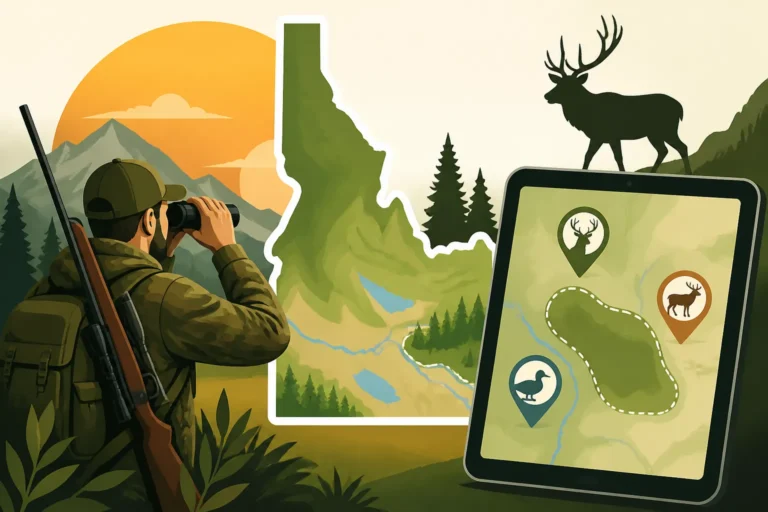
Gone are the days when a paper map and compass were your only hope (though you should absolutely still carry them as a backup!). Today, digital mapping applications like onX Hunt have become indispensable for anyone serious about hunting Idaho's challenging terrain. These apps lay detailed property boundaries right over satellite imagery, showing you exactly where public land ends and private land begins. You can identify potential access corridors, public easements, and even small, forgotten two-track roads that might lead you into prime hunting country. Being able to zoom in and out, mark waypoints for glassing knobs or water sources, and track your movement in real-time is a game-changer. For instance, you might see a small, unnamed road that appears to lead to a large chunk of public BLM land. With onX Hunt, you can verify if that road itself is public access, or if it crosses private ground where you'd need permission.
Beyond just property lines, these apps offer invaluable terrain analysis. You can use the contour lines and 3D views to identify steepness, assess potential bedding areas, or find hidden draws that might hold game. You can even layer in features like historic wildfires, which can reveal areas of new growth that attract deer and elk. For a broader view and strategic unit research, services like GoHunt offer a wealth of data on drawing odds, harvest statistics, and unit characteristics that can help you narrow down your search before you ever get to the detailed access planning. When you're dealing with the fragmented land of the Snake River Breaks, a detailed understanding of Using onX Layers for Idaho Public Land becomes critical, allowing you to maximize your time in the field and avoid accidental trespass.
Understanding Public Road Systems and Travel Management
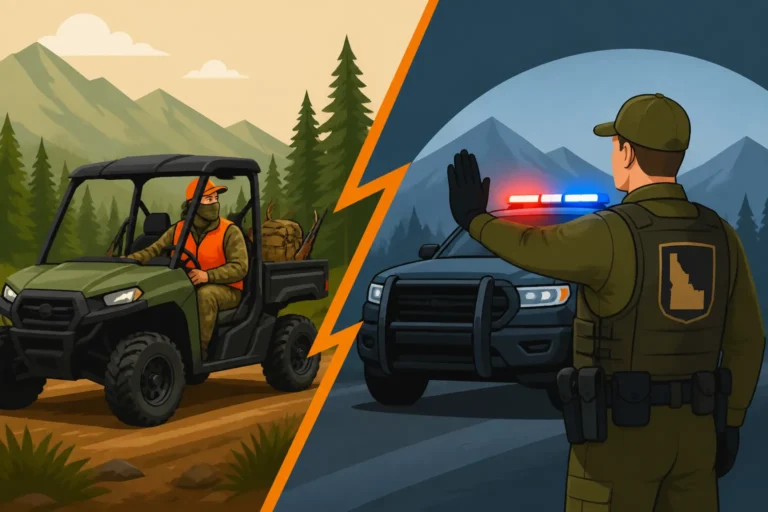
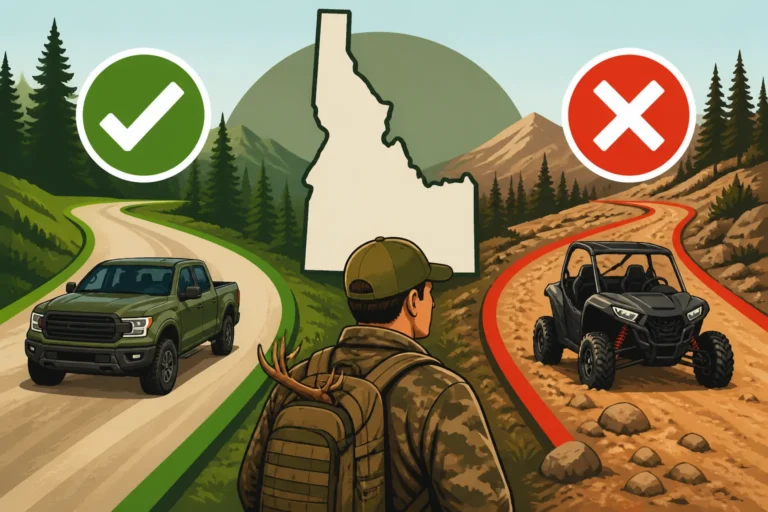
While the Snake River Breaks often feel like true wilderness, they are crisscrossed by a network of official and unofficial roads. Many of these are simple dirt two-tracks, old logging roads, or maintenance paths that can offer surprising access into the canyons and benches. However, knowing which roads are genuinely open to public motorized travel and which are not is paramount. Idaho has a well-defined motorized hunting rule that prohibits driving off established roads, and these rules are particularly stringent in many backcountry areas. Getting caught driving off-road, even if it feels like a faint track, can result in hefty fines and the loss of hunting privileges.
It's crucial to consult Forest Service Motor Vehicle Use Maps (MVUMs) or BLM travel management plans in conjunction with your mapping app. These resources clearly designate which roads are open, which are seasonally closed, and which are completely off-limits to vehicles. You might find a promising looking road on satellite imagery that, upon closer inspection of an MVUM, turns out to be closed seasonally from December through August to protect wintering wildlife, or is completely gated off to public traffic. These closures often align with Idaho's Motorized Hunting Rule Runs August Into December, making planning your ingress and egress a key part of your hunt strategy. Always double-check these resources, because conditions and regulations can change, and ignorance is rarely accepted as an excuse in the backcountry.
Strategies for Getting Boots on the Ground
With your digital tools in hand, the next step is translating those lines on a screen into actual boots on the ground. This involves a mix of conventional access points, careful negotiation for private land, and the grit to explore truly wild country. Each approach has its nuances, and a successful hunt in the Snake River Breaks often means being adept at all of them.
Designated Access Points and River Launches
Sometimes, the simplest approach is the best. The Snake River Breaks do have official access points, though they might be few and far between, and often require a longer hike to get away from other hunters. These usually take the form of designated trailheads maintained by the BLM, Forest Service, or state parks. They typically offer parking, and sometimes even primitive restroom facilities, though it's always wise to assume you'll find nothing more than a dirt pull-out. These spots are excellent starting points for day hikes or multi-day backpacking trips into the more remote canyons.
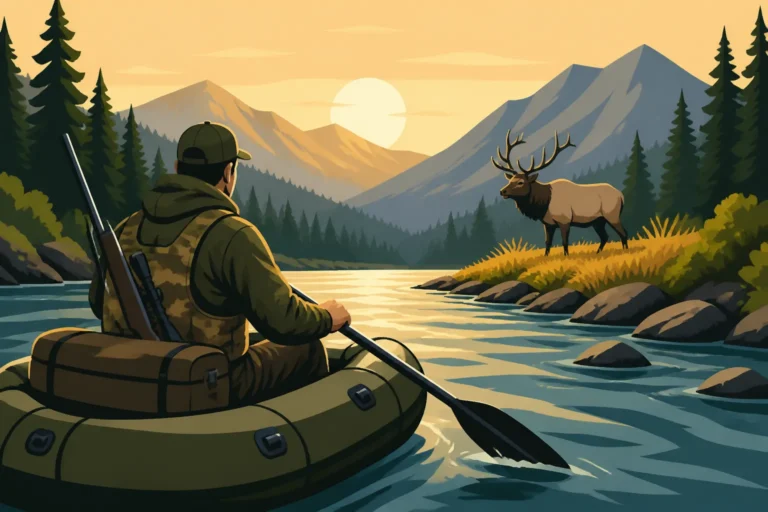
For those with a boat, the Snake River itself offers a unique form of access. Public boat ramps allow you to launch onto the river and then navigate to specific points where you can potentially hike up into the breaks. This can be particularly effective for reaching areas that are otherwise landlocked or exceptionally difficult to approach from above. Jet boats, in particular, are common on larger rivers like the Snake, allowing hunters to cover significant distances against the current to reach secluded stretches. While we're talking about the Snake, it's worth noting that the principles of Jet Boat Access on the Salmon River offer a great parallel for how river access can unlock remote hunting opportunities. Always be aware of river conditions, water levels, and any specific regulations for motorized craft on certain stretches of the river.
Navigating Private Property: Permission is Key
This is often the trickiest, but potentially most rewarding, access strategy in the Snake River Breaks. As we discussed, large portions of the breaks are privately owned, especially the more gently sloped benches and traditional winter range. Gaining permission from landowners can open up incredible hunting opportunities away from public land pressure. This isn't a quick or easy process; it requires respect, good communication, and often, a bit of luck. Start by identifying landowners using your mapping app and then doing some research to find contact information. A polite knock on the door or a well-crafted phone call, clearly stating your intentions and offering to respect their property, can go a long way. Some landowners might be willing to grant access for foot travel, while others might ask for a small trespass fee, or simply say no.
Be prepared to explain your hunting plan, including where you intend to go, what vehicle you'll be driving, and when you expect to be out. Offering to share a game camera photo or even a portion of your harvest can sometimes sweeten the deal. Additionally, Idaho has a fantastic program called The Idaho Access Yes Program Explained, where private landowners enroll their property to allow public access, often for hunting. While you might not find huge tracts of Access Yes land directly on the steepest river breaks, it’s always worth checking the map for enrolled parcels in the general vicinity that could provide a valuable entry point. A common frustration is the "corner crossing" dilemma, where public land meets public land at a corner over private ground. While the legalities of Corner Crossing Legality in Idaho remain a hot topic, the safest and most respectful approach is always to secure explicit landowner permission before crossing any private property, even just at a corner.
Backcountry Exploration for Undisturbed Hunting
For the truly adventurous and physically prepared, the deepest, most remote sections of the Snake River Breaks offer the ultimate reward: undisturbed hunting. These are the areas where the land is so rough, and the hike in so demanding, that most other hunters simply won't bother. This means packing in for multiple days, carrying everything you need on your back, and being completely self-sufficient. Accessing these areas often means hiking in from a designated trailhead, or even from a remote two-track road that dead-ends far from the river.
The advantage here is significantly less hunting pressure. Animals in these areas are often less wary, and you might encounter older, larger animals that rarely venture into more accessible terrain. However, the physical demands are extreme. You'll need to be in excellent physical condition, comfortable with navigation in rugged country, and prepared for emergencies. Your pack will be heavy going in, and hopefully, much heavier coming out! This type of hunting aligns perfectly with the opportunities found in Public Land Opportunity in Southern Idaho, where vast, undeveloped lands reward those willing to put in the effort to get off the beaten path. These hunts demand a blend of resilience, meticulous planning, and a deep appreciation for wild places.
Here's a quick overview of access types:
| Access Type | Description | Pros | Cons |
|---|---|---|---|
| Designated Trailheads | Marked starting points with parking, often leading to public lands. | Clear, legal, easy to find. | Can be crowded, often require long hikes to get away from pressure. |
| River/Boat Access | Launching a boat onto the Snake River to reach remote banks for hiking. | Access to otherwise landlocked areas, unique perspective. | Requires boat/equipment, subject to river conditions, specific rules. |
| Private Land Permission | Gaining explicit consent from landowners to cross or hunt on their property. | Access to low-pressure areas, potentially prime habitat. | Time-consuming, requires negotiation, not always granted. |
| Remote Two-Tracks | Unpaved, often rough roads leading into public land, sometimes gated. | Can get you closer to remote areas, less foot traffic. | Variable condition, seasonal closures, Idaho's Motorized Hunting Rule Keeps You on the Road rules. |
| Backcountry Hiking | Pure foot travel into roadless, wilderness-like areas. | Unpressured game, true wilderness experience. | Extremely physically demanding, requires extensive gear and planning. |
Maximizing Your Hunt in the Breaks
So, you've found your access point, navigated the private/public maze, and now your boots are finally on the ground in the Snake River Breaks. What's next? Maximizing your hunt in this challenging environment means more than just walking around with a weapon. It's about combining intelligent scouting, physical preparation, and a deep respect for the land and its creatures.
Scouting Beyond the Screen
While digital maps are an incredible tool for initial planning, they are no substitute for on-the-ground scouting. The topography of the Snake River Breaks often hides subtle features that are crucial for finding game. What looks like a uniform slope on a map might actually be a series of small benches, folds, or brushy draws that funnel animals or provide bedding cover. You need to physically walk these areas, even if it's just a short hike, to confirm what you've seen on screen. Look for fresh tracks, droppings, rubs, and bedding areas. Identify water sources, which are often limited in these dry breaks and can concentrate game. Pay attention to how the wind swirls in the canyons and how the sun hits certain slopes throughout the day.
Scouting also involves finding good vantage points. The breaks are a glasser's paradise, and spending hours behind good optics can save you miles of walking. Position yourself high on a ridge or a prominent knoll, preferably in the shade, and systematically pick apart the opposing slopes, draws, and benches. Techniques like Glassing Breaks and Benches for Mule Deer are not just helpful, they're essential for efficiently covering vast amounts of ground with your eyes before committing to a stalk. Remember, animals here are often accustomed to sparse cover, so spotting them at great distances before they spot you is key.
Physical Preparation and Gear
I cannot stress this enough: hunting the Snake River Breaks is a serious physical undertaking. The steep climbs and descents, often over loose rock and uneven ground, will test every muscle in your body. If you're planning a multi-day trip, or even just a long day hunt deep into a canyon, you absolutely must prioritize physical conditioning. Start a walking or hiking regimen months before your hunt, incorporating hills or stairs if possible. Strong legs, core, and lungs will not only make the hunt more enjoyable but will also dramatically increase your chances of success and, more importantly, your safety.
Your gear selection is equally critical. Sturdy, well-broken-in boots with excellent ankle support and aggressive tread are non-negotiable. You'll want a reliable backpack that fits well and can comfortably carry water, food, emergency supplies, and potentially the meat and antlers of a harvested animal. Consider a quality trekking pole or two; they can be a lifesaver for stability on steep descents and river crossings. Navigation tools (GPS device and physical map/compass), plenty of water, and first-aid supplies are also paramount. Don't forget that packing out an animal, especially a large mule deer or elk, from the bottom of a deep canyon can be one of the most physically demanding tasks imaginable. It's an exhausting endeavor that you need to be ready for, which is why resources like Packing an Elk Out of Steep Country Alone offer valuable insights into the logistics and challenges.
Respectful and Ethical Hunting Practices
Finally, as you explore and hunt the Snake River Breaks, remember the importance of respectful and ethical conduct. This wild landscape is a shared resource, and preserving its integrity for future generations is our collective responsibility. Always adhere strictly to Idaho's hunting regulations, including bag limits, season dates, and weapon restrictions. When driving, always stick to designated roads and trails; Idaho's Motorized Hunting Rule Keeps You on the Road is there for a reason, protecting sensitive habitats and minimizing disturbance to wildlife.
Practice Leave No Trace principles: pack out everything you pack in, including all trash and spent casings. If you're camping, select durable surfaces and properly dispose of human waste. Respect private property boundaries at all times, even if you don't have permission, and leave gates as you found them. When you make a harvest, ensure you retrieve all edible meat, which is not just ethical but a legal requirement in Idaho. Being a responsible hunter means being an ambassador for our sport, and nowhere is that more important than in the beautiful, yet fragile, environment of the Snake River Breaks. It’s also crucial to consider basic camp planning, and reading about Reading Terrain Before You Pick a Camp can help you choose a spot that is both effective for hunting and minimizes your impact on the land.
Disclaimer
This article is for general informational purposes only and does not constitute professional advice. Laws, prices and regulations vary by location and change over time. Consult a qualified professional for guidance on your specific situation.