Can You Drive Off Road to Retrieve an Elk?
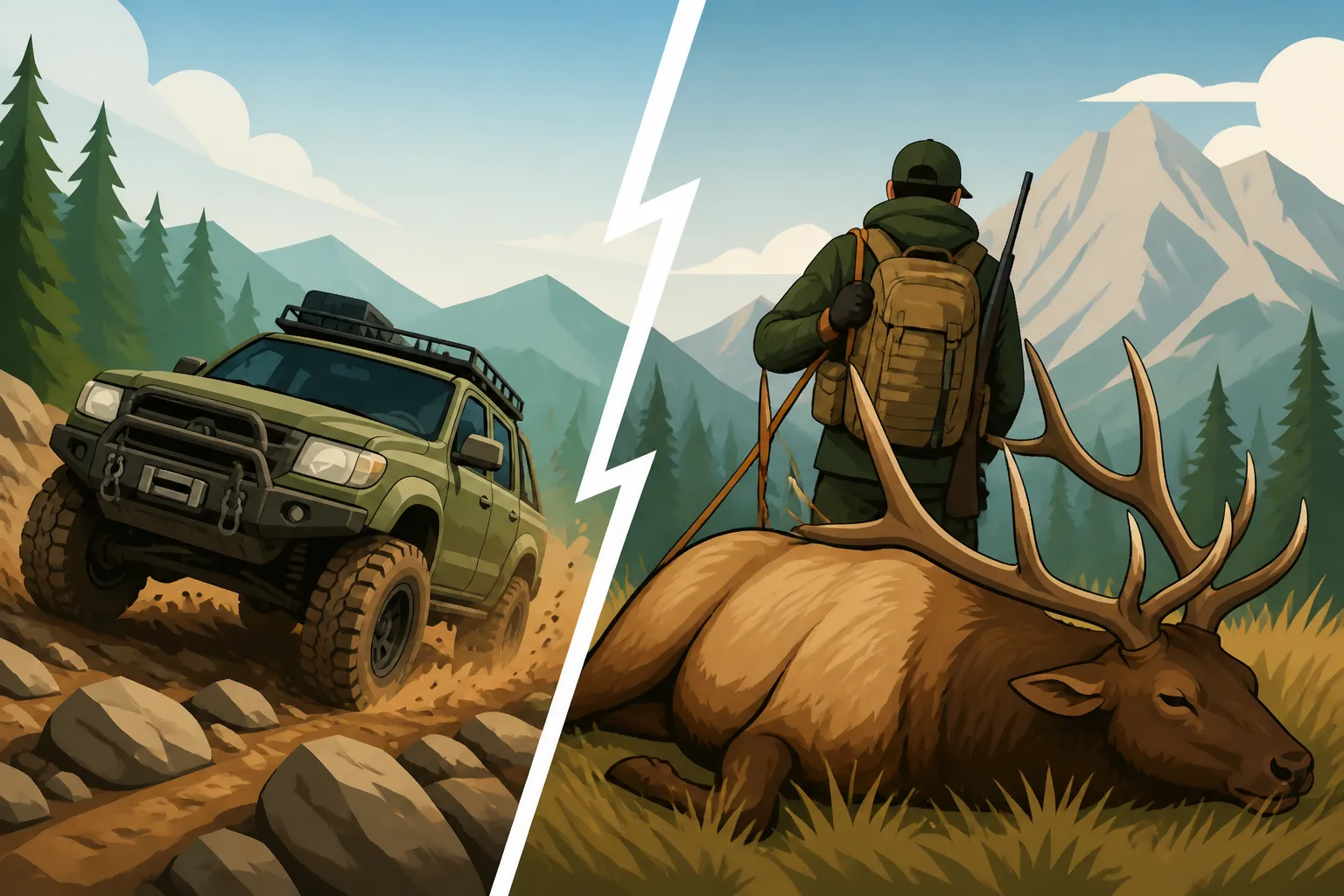
It’s a scenario every elk hunter has probably dreamed of: you’ve put in the miles, made a perfect shot, and there it is – a magnificent bull, down for the count. Your mind immediately leaps to the daunting task of packing out hundreds of pounds of meat, and then, a thought sparks: "Can I just drive the truck in there to make it easier?" The reality on Idaho's public lands is often a frustrating "no," and understanding why is crucial to avoiding hefty fines and protecting the very landscapes we cherish. This guide will walk you through Idaho's motorized hunting rules, explain what counts as "off-road," and help you plan your retrieval strategy responsibly.
The Harsh Reality: Driving Off-Road is Generally Prohibited in Idaho
Let's cut right to the chase: in most situations on Idaho public lands, no, you cannot drive off an established road to retrieve a downed elk. This often comes as a shock to hunters, especially those new to Idaho's regulations or coming from states with different rules. The sheer scale of an elk, combined with the rugged, often steep terrain, makes manual retrieval a monumental effort. It’s a moment where a hunter’s relief quickly turns into a cold, hard dose of reality, realizing the work is just beginning.
Idaho Fish and Game, alongside land management agencies like the Forest Service and Bureau of Land Management (BLM), has implemented strict rules regarding motorized vehicle use on public land. These rules are not arbitrary; they are in place to protect fragile ecosystems, prevent habitat degradation, minimize disturbance to wildlife, and maintain the fair chase principles of hunting. Imagine what every drainage would look like if every hunter drove their rig directly to their downed game – it would be a mess of new tracks, eroded soil, and destroyed vegetation. These rules aim to preserve the wild character of these hunting grounds for everyone.
What Constitutes "Off-Road" in Idaho?
The term "off-road" might seem simple, but its application in the field can sometimes feel ambiguous. In Idaho, "off-road" generally refers to any travel by a motorized vehicle that is not on a designated, established road or trail specifically marked for motorized use. This means driving across meadows, through timber, down dry creek beds, or along game trails is strictly prohibited. Even a seemingly innocent shortcut over a grassy knoll can fall under this definition and lead to a violation.
It's not just about creating new tracks; it's about adhering to the system of designated routes. Many areas within Idaho’s vast public lands have Motor Vehicle Use Maps (MVUMs) that clearly delineate what is open to motorized travel and what is not. These maps are your bible when navigating these areas. If it's not on the MVUM as a designated motorized route, then it's considered off-road. The moment your tires leave that established, maintained, and marked path, you're usually venturing into illegal territory.
Why the Strict "No Drive-Off-Road" Policy?
The strict enforcement of "no off-road" rules stems from several critical conservation and ethical considerations. First, and perhaps most visibly, is the prevention of habitat damage. Vehicles tear up vegetation, compact soil, and create erosion, especially on steep slopes or wet ground. This directly impacts the forage available for elk and other wildlife, degrades water quality, and can destroy critical bedding or fawning areas. Over time, unchecked off-road travel can turn pristine wilderness into a scarred, uninviting landscape.
Second, there's the element of fair chase. Part of the challenge and reward of hunting big game like elk is the physical effort involved in pursuing, harvesting, and retrieving the animal. Allowing vehicles to drive directly to downed game can be seen as diminishing this challenge, giving an unfair advantage, and reducing the "wild" experience for all. Idaho's Motorized Hunting Rule Keeps You on the Road speaks to this broader philosophy.
Finally, these rules help manage user conflict. When hunters are allowed to drive anywhere, it can lead to conflicts with other hunters, hikers, horseback riders, and wildlife enthusiasts who value quiet, non-motorized experiences. By confining vehicles to designated routes, agencies aim to provide a more harmonious outdoor experience for everyone while still allowing access to vast hunting grounds.
Understanding Idaho's Motorized Hunting Rule
Idaho's motorized hunting rule, often referred to as the "Motorized Hunting Rule" or variations thereof, is a critical piece of legislation for anyone planning a hunt in the state. It's not just about retrieval; it governs how you can use vehicles for hunting in general. This rule can be complex because it often overlaps with specific rules set by different land management agencies (like the US Forest Service or BLM) that might have their own local designations and restrictions.
The core of the rule is that motorized vehicles are restricted to "established roads" or "designated routes" during specific hunting seasons or in particular areas. The exact dates and areas can vary, so it's vital to check the current Idaho Fish and Game regulations for your specific hunting unit and the MVUMs for the public land you intend to hunt. This rule generally applies to public lands, but private land access has its own set of considerations, which we’ll cover later.
What Counts as an "Established Roadway"?
This is where things get a little nuanced, and misunderstanding can lead to trouble. An "established roadway" is typically a road that is constructed, maintained, and generally passable by a two-wheel-drive vehicle, or at least a high-clearance four-wheel-drive, and is explicitly designated for public or administrative motorized use. These are often marked on maps, signed in the field, and are part of the official road system of the Forest Service or BLM. They will be clearly shown on an official Motor Vehicle Use Map (MVUM).
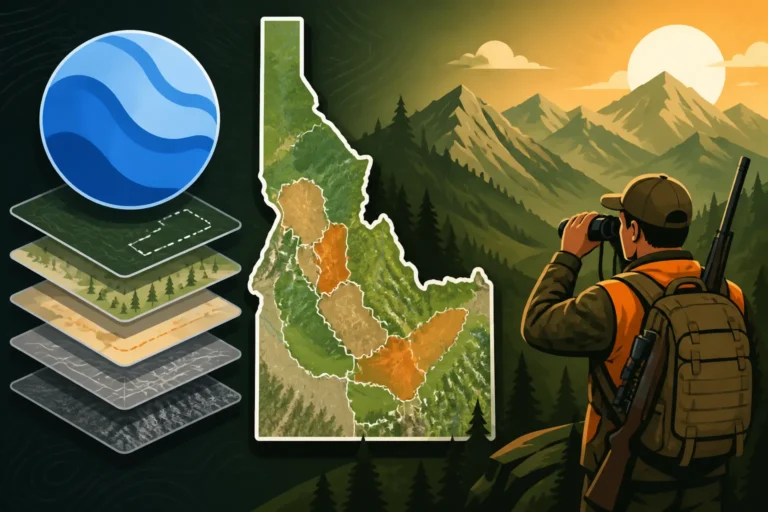
What doesn't count? Faint two-track trails that look like old logging roads but are no longer maintained or designated for public use. Game trails, ATV trails not open to full-sized vehicles, or paths created by previous off-road trespassers definitely don't count. Just because a truck can go somewhere doesn't mean it's an "established roadway." This is where scouting with tools like onX Hunt becomes invaluable. You can overlay MVUMs directly onto satellite imagery, clearly showing which routes are legal and which are not. This helps immensely in avoiding accidental violations and ensuring you're planning your hunt, including game retrieval, within the confines of the law.
| Feature | Established Roadway (Legal) | Non-Established / Off-Road (Illegal) |
|---|---|---|
| Mapping | Clearly marked on MVUMs, Forest Service, or BLM maps. | Not on official motorized maps, or marked as non-motorized. |
| Maintenance | Actively maintained (graded, signed, culverts, etc.). | No active maintenance, overgrown, or natural terrain. |
| Designation | Signed, numbered, and intended for vehicle use. | No official signage, appears as game trail, old skid track, or open ground. |
| Surface | Gravel, dirt, paved, or hardened earth. | Vegetated ground, mud, rock, creek beds, steep slopes. |
| Purpose | Access, resource management, public travel. | Not intended for vehicle travel; creates new tracks. |
Penalties for Breaking the Motorized Rule
Ignorance of the law is no excuse, and the penalties for violating Idaho's motorized hunting rule can be significant. Depending on the severity of the offense and whether it's a first-time violation or repeat offense, you could be looking at a hefty fine, potentially in the hundreds or even thousands of dollars. In some cases, vehicles might even be impounded. Beyond the financial cost, you could also face a loss of hunting privileges, not just in Idaho but potentially across state lines through the Interstate Wildlife Violator Compact.
The long-term impact on your hunting reputation and opportunities can be even more damaging. Being cited for an off-road violation marks you as a hunter who doesn't respect the rules or the land, which flies in the face of ethical hunting principles. This is why thorough preparation and understanding of the rules before you ever leave your truck is absolutely essential. Don't risk your reputation, your hunting privileges, or Idaho's wild places for the sake of a quicker retrieval.
Exceptions and Nuances to the Rule
While the general rule is strict, there are a few situations or considerations that create nuances. It's vital to understand these thoroughly and not to assume they apply to your specific situation without double-checking current regulations and local land management rules.
Private Land Retrieval with Permission
Here’s one of the primary exceptions: if the downed elk is on private property and you have explicit, written permission from the landowner, you might be able to drive off-road to retrieve it. This permission must be clear and specifically grant you the right to operate a motorized vehicle off designated roads on their property for game retrieval. Without that specific permission, even on private land, you could still be trespassing or causing damage the landowner didn't authorize.
It's absolutely critical to confirm the land ownership using a reliable mapping tool like onX Hunt or government plat maps before pursuing game onto what might appear to be private land. Many hunters find themselves in a bind when an animal crosses a property line. Always carry your landowner permission slips, and make sure they explicitly state what you're allowed to do. Retrieving Game From Private Land in Idaho covers this in more detail. Remember, "permission" is not a blanket term; it needs to cover the specific action of driving off-road.
Administrative or Permitted Access Roads
Sometimes, what appears to be an "off-road" trail might actually be an administrative access road used by land management agencies for their own purposes, such as timber harvest, fire suppression, or range management. While these might not be public roads, they are still "established" in a technical sense. However, they are almost never open to general public motorized use, especially for game retrieval, unless explicitly signed or permitted.
In extremely rare cases, and only after consulting with the local Idaho Fish and Game office or the specific land management agency (Forest Service, BLM), you might be granted a special permit for a one-time motorized retrieval if extraordinary circumstances exist. This is incredibly uncommon and should never be assumed. Such permits are usually reserved for situations where an animal is downed in an area posing a public safety risk or where retrieval is physically impossible without mechanical aid. Do not, under any circumstances, assume you have this permission without it being officially granted in writing.
What About ATVs and UTVs?
Many hunters rely on ATVs or UTVs for their hunting adventures, and while these vehicles can access more rugged terrain than a full-sized truck, they are still bound by the same motorized vehicle use rules. If a trail is designated for ATV/UTV use, you can certainly use it. However, if that designated trail ends, you cannot simply continue off-trail with your ATV to get closer to your elk. The rules apply to all motorized vehicles.
The temptation to push the limits with an ATV or UTV is strong, given their maneuverability. But the consequences are identical to those for a full-sized truck. Always refer to the MVUMs for your area; they will specify which trails are open to what types of vehicles. An ATV/UTV-specific trail is usually clearly marked. If you’re not on one, you’re off-road.
Planning for Game Retrieval in Idaho
Given the strict regulations, proactive planning for game retrieval is not just advisable; it's absolutely essential for any Idaho hunter. The moment you decide to pursue an elk, you should already have a retrieval plan in mind, knowing that driving right up to it is likely not an option. This is where tools, physical conditioning, and smart scouting really pay off.
Essential Gear for Packing Out Elk
When you're facing hundreds of pounds of meat over rugged terrain, the right gear makes all the difference. Don't skimp here. A sturdy, internal-frame backpack capable of carrying heavy loads is paramount. Look for one with a strong hip belt and good load lifters to transfer weight to your hips, not just your shoulders. Game bags are non-negotiable for keeping meat clean and cool – a set of breathable, high-quality bags will protect your hard-earned harvest from dirt, flies, and debris.
You'll also need a sharp, reliable knife and a bone saw for field dressing and quartering. A small, lightweight tarp or plastic sheet can be useful for keeping meat off the ground while you're working. Some hunters even carry a small, collapsible game cart if the terrain allows for it (though many elk hunting areas in Idaho are too steep or brushy for carts to be practical for the initial haul). Packing an Elk Out of Steep Country Alone is a great resource if you're tackling this challenge by yourself. Remember, the goal is to get the meat out efficiently and without spoilage, so plan for temperature and distance.
Scouting for Access Points and Retrieval Routes
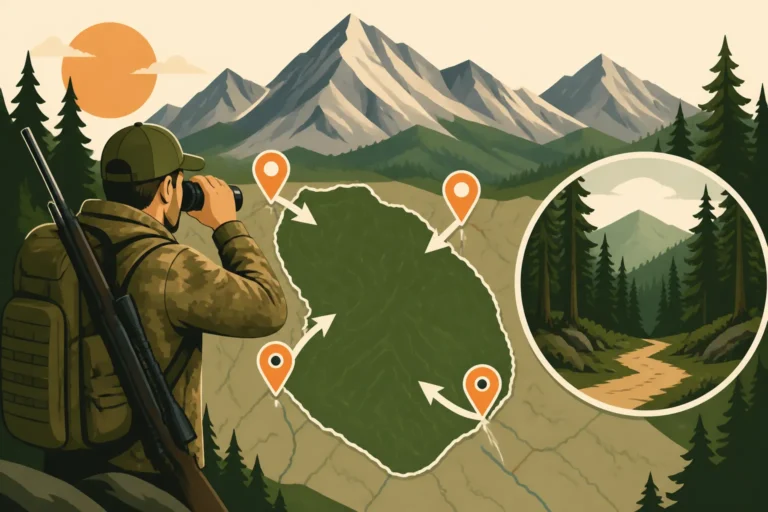
This is where pre-season scouting and detailed mapping become your best friends. Before you even set foot in your hunting unit, spend significant time studying maps – both topographic and Motor Vehicle Use Maps (MVUMs). Online tools like onX Hunt or even GoHunt can combine these layers, allowing you to identify established roads, designated trails, and potential retrieve routes from various parts of your hunting area. Look for features like ridges, drainages, and saddle points that might offer a more gradual descent or ascent, or paths that lead directly to an open, legal road.
When you're physically scouting, pay attention to the terrain:
- Grade: How steep is it? Will it be manageable with heavy loads?
- Cover: How thick is the brush or timber? This affects both your movement and your visibility.
- Water sources: Are there creeks or rivers that will impede your progress?
- Legal access: Confirm that any route you plan ends at a designated road.
- Nearby trails: Are there non-motorized trails that can shorten your packing distance to a legal road?
Having a few potential "exit strategies" mapped out for different parts of your hunting area can save you immense time and grief after a successful harvest.
Physical Conditioning: The Unsung Hero of Elk Retrieval
Let's be honest: packing out an elk is brutal work. There's no way around it. Even if you're hunting with a partner or a team, it's physically demanding. This is why physical conditioning isn't just about being able to hike miles; it's about being strong enough to carry heavy, awkward loads over difficult terrain. Incorporate exercises that build core strength, leg power, and endurance. Think squats, lunges, deadlifts, and plenty of stair climbing or incline hiking, ideally with a weighted pack.
Many hunters spend countless hours at the range but neglect the gym. Don't make that mistake. A physically fit hunter is not only more effective in the field but also safer and more capable of ethically retrieving their game without unnecessary delays or exhaustion-related errors. Consider this your "pre-retrieval training" – it's just as important as your shooting practice.
Conclusion: Embrace the Challenge
While the dream of driving your truck right up to a downed elk in Idaho is largely just that – a dream – the reality of strict motorized vehicle rules on public land isn't meant to deter you. Instead, it’s an invitation to embrace the full challenge of western big game hunting. It forces us to be better planners, more diligent scouts, and stronger, more prepared individuals.
By understanding Idaho's rules, utilizing modern mapping tools like onX Hunt to identify legal access, and committing to proper physical conditioning and gear, you can confidently and ethically retrieve your harvest. There's a deep satisfaction that comes from earning every pound of meat through honest sweat and effort, knowing you respected the land and its rules.
Disclaimer
This article is for general informational purposes only and does not constitute professional advice. Laws, prices and regulations vary by location and change over time. Consult a qualified professional for guidance on your specific situation.