Craters of the Moon Hunting Boundaries
Navigating the nuanced tapestry of hunting regulations can feel like a full-time job, especially when you're looking at unique areas that blend different land management designations. One common point of confusion for many Idaho hunters, or those planning a trip, revolves around places like Craters of the Moon, an area known for its stark, otherworldly volcanic landscape. It’s not always clear where you can legally pursue game, and where those boundaries suddenly shift, but this guide aims to unravel the complexities of hunting within and around the Craters of the Moon National Monument and Preserve.
Understanding the Unique Status of Craters of the Moon
The Craters of the Moon region is a truly special place in Idaho, a rugged expanse sculpted by ancient lava flows that holds both immense natural beauty and a unique administrative status. This status is absolutely critical for hunters to understand, as it dictates where and how hunting is permitted. It's not just another patch of public land; it has layers of federal designation that impact access and rules.
National Monument vs. Preserve Designations
Historically, Craters of the Moon was established as a National Monument in 1924, primarily for its geological significance. For decades, National Monuments, similar to National Parks, generally prohibited hunting. However, the landscape of land management is always evolving, and in 2000, the Craters of the Moon National Monument was significantly expanded and redesignated as the Craters of the Moon National Monument and Preserve. This seemingly small change in nomenclature had a profound impact on hunting.
The key distinction lies in the "Preserve" portion. While the original Monument area largely retains its no-hunting status, the newly added "Preserve" lands were specifically designated to allow hunting, in addition to other traditional uses like grazing. This dual designation means you're not dealing with a monolithic block of land with a single set of rules. Instead, you're looking at an area where a line on a map fundamentally changes what you can and cannot do with a firearm or bow. It's a prime example of why simply knowing the name of a federal area isn't enough; you must understand its precise legal framework.
Where Hunting is (and Isn't) Allowed
The core takeaway here is that hunting is only permitted within the National Preserve portions of Craters of the Moon. The original National Monument areas, generally closer to the main visitor center and developed attractions, remain closed to hunting. This creates a patchwork, where one side of a trail might be open for hunting, and the other side is strictly off-limits.
Imagine you're scouting for antelope or mule deer. You could be looking at a promising sagebrush flat, only to discover that a ridge line or an old lava flow marks the invisible boundary between the huntable Preserve and the non-huntable Monument. This isn't just about avoiding a ticket; it's about respecting the specific intent of these land designations and ensuring the safety of other visitors who might be enjoying the non-hunting areas. Knowing these lines precisely is paramount to a successful and legal hunt. The specific boundaries are generally well-marked on official maps and digital mapping tools, which we'll discuss further.
| Feature | National Monument (Original Area) | National Preserve (Expanded Area) |
|---|---|---|
| Primary Purpose | Preserve geological features & scenery | Preserve natural resources; multiple use |
| Hunting Status | Generally Prohibited | Generally Permitted |
| Vehicle Access | Restricted to established roads/parking | Restricted to established roads, some administrative routes |
| Public Use | Primarily sight-seeing, hiking | Hunting, hiking, grazing, scientific study |
| Management Agency | National Park Service | National Park Service |
Navigating Hunting Units and Zones in the Craters Area
Beyond the federal distinction between Monument and Preserve, you still have to contend with Idaho's own system of Game Management Units (GMUs) and elk zones. The Craters of the Moon area is not isolated from these state-level designations, and understanding how they overlay the federal boundaries is crucial.
Identifying the Overlapping Idaho Game Management Units
The Craters of the Moon National Monument and Preserve spans several Idaho Game Management Units. For instance, portions of it fall within Unit 52A, and depending on the specific boundaries you're looking at, adjacent units might also influence your hunt planning. It's a common mistake for hunters to assume that a federal land designation automatically corresponds to a single GMU, but that's rarely the case. These units, which delineate areas for specific hunting seasons and tag allocations, often cut across various types of public and private land.
When you're researching potential hunting spots in the Craters area, you'll need to consult both the federal Preserve boundaries and the relevant Idaho GMU maps. The animals don't know the difference between a National Preserve boundary and a GMU line, but you certainly need to. Ignoring one or the other could lead to hunting in the wrong unit, during the wrong season, or for the wrong species—all of which can carry significant penalties. The Idaho Hunt Planner Is the Tool to Start With when trying to make sense of these overlapping boundaries. It’s designed to help you visualize these complex maps.
The Importance of Digital Mapping Tools
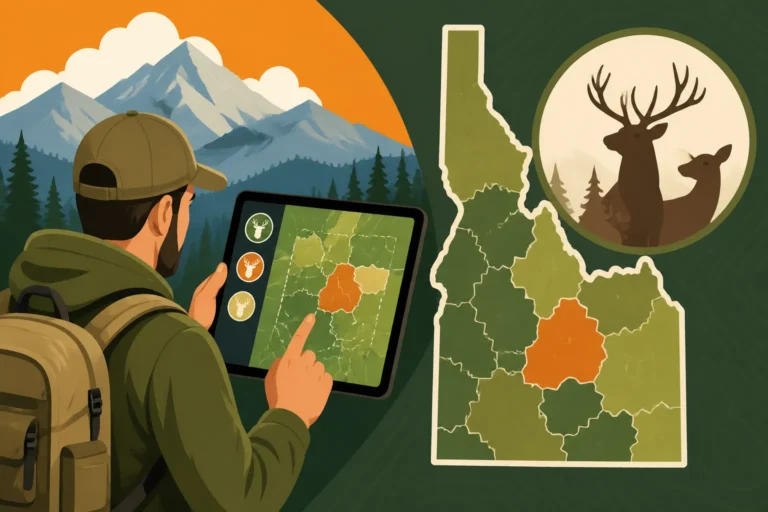
In an area with such intricate and layered boundaries as Craters of the Moon, relying solely on paper maps or general intuition is a recipe for trouble. This is where modern digital mapping tools become indispensable. Applications like onX Hunt have revolutionized how hunters navigate and understand land ownership and boundaries. With such a tool, you can download offline maps to your phone or GPS device, showing you in real-time exactly where you are in relation to the Craters of the Moon National Monument boundary, the National Preserve boundary, and the specific Idaho Game Management Unit lines.
Imagine being able to see a precise line on your phone screen that indicates the transition from the non-huntable Monument to the huntable Preserve, or the edge of a private land parcel. This level of detail helps you avoid accidental trespass onto private property or inadvertently hunting in a prohibited area. These apps often allow you to overlay different layers, such as public land, private land, GMU boundaries, and even road and trail networks. Using onX Layers for Idaho Public Land can literally save your hunt. Other resources like GoHunt can also offer valuable insights into unit statistics and drawing odds, helping you choose the right GMU before you even step foot in the field, further enhancing your E-Scouting capabilities. E-Scouting an Idaho Unit Before the Season is critical for success, especially in areas with complex boundaries.
Specific Regulations and Considerations for Craters of the Moon Hunters
Once you've wrapped your head around the boundaries, the next step is understanding the specific hunting regulations that apply within the Craters of the Moon National Preserve. It's not just about being in the right place; it's also about hunting the right way and for the right game.
Permitted Species and Seasons
Within the huntable portions of the Craters of the Moon National Preserve, typical Idaho big game species like mule deer and pronghorn can be pursued, as can various small game species. However, it is absolutely crucial to remember that hunting here is still governed by Idaho state hunting regulations. This means you must possess the correct Idaho hunting license and tags for the species you are pursuing. All state-mandated seasons, weapon restrictions, bag limits, and any controlled hunt requirements apply fully.
For example, if you plan to hunt mule deer, you'll need to check the Idaho General Deer Season Opening Dates for the specific GMU that overlaps with the Preserve. Pronghorn hunting, being a controlled hunt, will require even more meticulous planning regarding draw odds and specific hunt numbers. While the federal preserve designation allows hunting, it doesn't create its own unique seasons or tags; it simply permits the state's rules to operate within its boundaries. Always cross-reference Idaho Fish and Game's current regulations with the National Park Service's information for the Craters of the Moon National Monument and Preserve.
Access, Vehicles, and Special Rules
Accessing the Craters of the Moon National Preserve for hunting involves a few specific considerations. Generally, motorized vehicle use is restricted to established roads. This means no driving off-road to chase game, retrieve a downed animal, or set up camp. Idaho has a statewide Idaho's Motorized Hunting Rule Keeps You on the Road that you need to be aware of, and federal lands often have even stricter interpretations, especially within a National Preserve managed by the National Park Service. This is vital for protecting the delicate volcanic landscape and ensuring visitor safety.
Camping within the Preserve typically follows National Park Service guidelines, which might differ from those on, say, Bureau of Land Management (BLM) land nearby. Always check with the Preserve office for current camping regulations, especially regarding dispersed camping or the use of campfires. Retrieving game often means packing it out on foot from where it fell, so be prepared for a physically demanding hunt across rough, uneven lava fields. This isn't flat, open prairie hunting; the terrain itself presents significant challenges that require proper gear and physical conditioning.
Planning Your Hunt and Ensuring Compliance
Successful and ethical hunting in a special place like Craters of the Moon isn't just about luck or skill; it's about diligent preparation and a deep respect for the land and its rules.
Researching Current Regulations
I cannot stress this enough: regulations change. What was true last year might be different this year. Therefore, before you even consider heading out, you must dedicate time to thoroughly research the most current regulations. This means consulting several sources:
- Idaho Fish and Game Website: For all state-specific seasons, weapon restrictions, tag requirements, and GMU boundaries. Knowing How Idaho Numbers Its Game Management Units will help you find the correct information quickly.
- Craters of the Moon National Monument and Preserve Official Website: For federal regulations specific to the Preserve, including access points, camping rules, and any special conditions that might apply to hunters.
- Physical or Digital Maps: Utilize tools like onX Hunt or even the detailed maps available through the National Park Service. These are crucial for understanding the exact boundary lines between the non-huntable Monument and the huntable Preserve, and how they interact with Idaho's GMU lines. Reading an Idaho Controlled Hunt Area Boundary requires careful attention, and even more so when overlaying federal designations.
Never rely on hearsay or outdated information from online forums or old guidebooks. It is your personal responsibility as a hunter to know and abide by all applicable federal and state laws. A quick phone call to the Idaho Fish and Game office and the Craters of the Moon visitor center can clarify any lingering questions you might have.
Respecting the Landscape and Other Users
Hunting in a National Preserve means you are sharing the landscape with a diverse group of visitors. Craters of the Moon attracts hikers, sightseers, photographers, and researchers who may not be accustomed to hunters in the field. This unique environment demands an elevated level of ethical behavior and courtesy from hunters.
- Leave No Trace: Practice strict Leave No Trace principles. This includes proper waste disposal, minimizing your impact on vegetation, and leaving the volcanic landscape undisturbed. This area is designated for its geological and ecological value; preserving it for all users, and for future generations, is paramount.
- Visibility: While blaze orange isn't always required during archery or certain non-big game seasons, it's always a good idea to wear highly visible clothing, especially during general seasons. This not only enhances your own safety but also helps other users identify you as a hunter from a distance, reducing potential conflicts or alarm.
- Communication: If you encounter non-hunters, a friendly greeting and a brief explanation of what you're doing can go a long way in fostering mutual respect and understanding. Most people are simply curious, and a positive interaction can help promote a good image of hunting.
Remember, every hunter's actions contribute to the public perception of our sport. By demonstrating professionalism, courtesy, and a deep respect for the Craters of the Moon landscape, you help ensure that hunting opportunities can continue in this incredible Idaho gem for years to come. Understanding Hunting Idaho's National Forests and BLM Ground helps build context for the unique federal designations like a National Preserve.
Disclaimer
This article is for general informational purposes only and does not constitute professional advice. Laws, prices and regulations vary by location and change over time. Consult a qualified professional for guidance on your specific situation.