National Forest Hunting in Northern Idaho
The sheer scale of Idaho's National Forests, especially in the northern reaches, can feel incredibly overwhelming for any hunter, whether you're a seasoned local or someone planning their first Western adventure. Trying to decipher maps, understand regulations, and locate productive hunting areas within these vast timbered landscapes often feels like searching for a needle in a haystack. This guide is here to cut through that complexity, offering a detailed roadmap to successfully planning and executing a hunt in Northern Idaho's incredible National Forests.
The Lure of Northern Idaho's National Forests for Hunters
Northern Idaho is a world apart from the sagebrush and open plains often associated with Western hunting. Here, the landscape is defined by towering pines, dense undergrowth, and rugged mountains carved by countless drainages. This isn't just pretty scenery; it's a rich, diverse ecosystem that supports a remarkable variety of game, offering a deeply immersive, and often challenging, hunting experience.
Unpacking the Vastness and Biodiversity
When we talk about Northern Idaho's National Forests, we're discussing immense tracts of public land: the Idaho Panhandle National Forests (which include the Coeur d'Alene, St. Joe, and Kaniksu forests), and the Nez Perce-Clearwater National Forests further south. These areas cover millions of acres, characterized by steep mountainsides, deep river canyons, and extensive timber. It's a land shaped by fire, logging, and rugged topography, creating a mosaic of habitats from old-growth stands to new clearcuts and thick secondary growth. This variety in habitat is precisely what makes it so appealing to hunters, providing diverse cover, forage, and bedding areas for game across different elevations and aspects.
The sheer size of these forests means you can find solitude if you're willing to put in the effort, packing in deep away from roads and popular trailheads. However, that vastness also presents a challenge: where do you even start? Understanding the ecosystem, how logging and fire have impacted different areas, and where natural food sources are present is crucial. It’s not just about looking at a green blob on a map; it's about seeing the layers of habitat within.
Primary Game Species You'll Encounter
Northern Idaho's National Forests are primarily known for their incredible big game opportunities, with whitetail deer and elk often topping the list. Unlike other parts of the state where mule deer might dominate, the dense timber and mixed habitat of the north favor the elusive whitetail. These forests are home to strong populations of whitetail deer, particularly in the lower elevations and river bottoms, making Whitetail Range Through Idaho's Panhandle a key area for those focused on this species. They thrive in the thick cover, making them a challenging quarry that often requires patience and still-hunting tactics.
Elk, of course, are a major draw. You'll find strong elk herds throughout the Panhandle and Nez Perce-Clearwater, often migrating between high country summer ranges and lower elevation wintering grounds as the seasons progress. Hunting elk in this dense timber is a completely different ballgame than glassing open sagebrush basins. It's often a close-quarters affair, relying on tracking, calling, and subtle movement to get within range. Beyond deer and elk, black bear populations are robust, offering excellent spring and fall hunting opportunities, often over bait or through spot-and-stalk in clearcuts and berry patches. Mountain lion and wolf are also present, adding to the rich tapestry of hunting challenges and opportunities in this rugged country.
The Unique Challenges of the Timbered Landscape
Hunting in Northern Idaho's National Forests presents its own unique set of challenges that can surprise those accustomed to more open Western landscapes. First and foremost is the terrain. It's steep, often covered in blowdowns, and can be incredibly difficult to navigate, even with a good map and GPS. Every foot of elevation gained feels like two, and descending a slippery slope through thick brush can be treacherous. This demanding physical environment means you need to be in good shape and prepared for long, hard days.
Visibility is another major factor. Unlike open country where you might glass for miles, in the timber, your effective visibility can be as little as 30-50 yards. This means traditional long-range glassing strategies are often ineffective. Instead, you'll rely more on reading sign, listening for movement, and careful still-hunting to find game. The dense canopy also impacts thermal patterns and wind currents, making scent control and understanding swirling winds absolutely critical. Lastly, getting a downed animal out of these areas can be an epic undertaking, often requiring multiple trips, specialized gear, or even pack animals. It’s a rewarding challenge, but one that demands respect and thorough preparation.
Navigating Public Access and Forest Service Roads
Finding public access in Idaho's National Forests is generally straightforward—it's almost all public. The real challenge lies in understanding how to access the areas you want to hunt, especially when dealing with the complex network of Forest Service roads and the dynamic nature of seasonal closures. It’s not enough to simply know a road exists; you need to know if it's open, if it's motorized, and if it leads where you think it does.
Deciphering Motor Vehicle Use Maps (MVUMs)
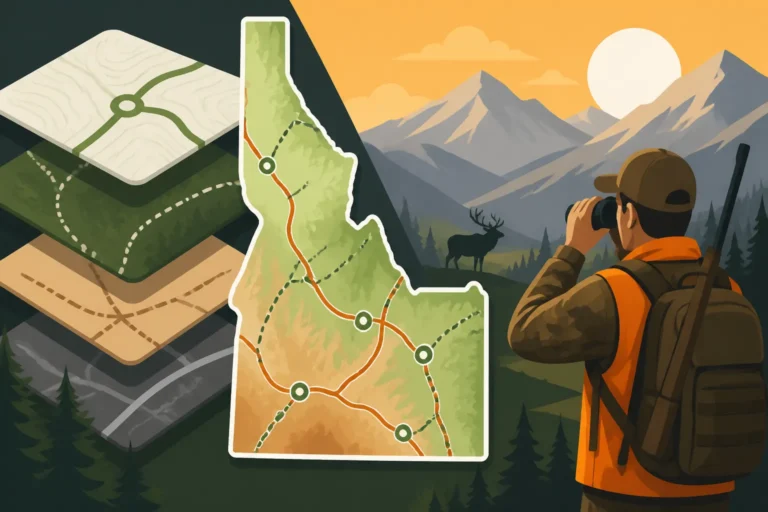
Motor Vehicle Use Maps, or MVUMs, are arguably the single most important tool for anyone planning a hunt in a National Forest. These maps, issued by the Forest Service, clearly delineate which roads and trails are open to motorized vehicles, what types of vehicles are allowed, and during what seasons. They are not always intuitive to read, but they are the definitive guide for legal access. Many hunters mistakenly rely on other mapping apps alone, which while helpful, sometimes don't show the nuances of MVUM restrictions. Getting a copy of the MVUM for the specific National Forest or district you plan to hunt is non-negotiable. You can often download them directly from the Forest Service website or pick up paper copies at ranger stations.
Understanding the symbols and color codes on an MVUM takes a bit of practice. Pay close attention to roads marked as "open to highway legal vehicles" versus those "open to vehicles 50 inches or less in width" (ATVs, dirt bikes). Also, note any seasonal restrictions. A road that's open in August might be closed by October due to winter range closures or snow. Using digital versions of these maps, often integrated into apps like onX Hunt, can make real-time navigation much easier, showing your exact location relative to open and closed routes. These maps are your legal compass; ignore them at your peril, as violations can lead to hefty fines and even vehicle impoundment. For more on this, check out Motor Vehicle Use Maps for Forest Ground.
Understanding Seasonal Road and Area Closures
Beyond the general rules outlined in MVUMs, National Forests in Northern Idaho implement numerous seasonal closures. These are typically put in place for a variety of reasons: protecting critical winter range for elk and deer, preventing road damage during spring thaw, or managing fire danger in summer. Seasonal Road Closures Across Idaho Forests are a common occurrence, and missing this critical detail can lead to wasted time, frustrated planning, or even inadvertently breaking rules.
Spring closures, for example, might prevent vehicle access to certain areas until late May or early June, impacting shed hunting or early season scouting. In the fall, as snow begins to accumulate, many high-elevation roads will be shut down for the winter. These closures can significantly alter your hunt plans, forcing you to hike in much further than anticipated. Always check the specific Forest Service district website for the most up-to-date closure information for the area you plan to visit. Sometimes, specific units might also have their own additional restrictions. It's a dynamic situation, so always verify closer to your hunt date.
The Role of Trailhead Access and Wilderness Boundaries
For many hunters, especially those seeking solitude and mature animals, National Forest roads are merely a means to an end: reaching a trailhead. From these trailheads, the true backcountry experience begins. Northern Idaho is home to vast wilderness areas, such as portions of the Selway-Bitterroot Wilderness and Gospel-Hump Wilderness, accessible from trailheads within the National Forests. These wilderness areas have strict rules against motorized vehicles, mountain bikes, and sometimes even wheeled carts, meaning your only mode of transport is on foot or horseback.
Understanding the exact location of these wilderness boundaries is crucial. Apps like onX Hunt are incredibly helpful for visualizing these lines on the ground. Keep in mind that for nonresidents, Idaho has specific rules about guided hunting within designated wilderness areas for certain species. While deer and bear are typically exempt, Does Idaho's Wilderness Rule Cover Elk? and other trophy species like bighorn sheep and mountain goat often require a licensed outfitter if you're not an Idaho resident. This adds another layer of planning for out-of-state hunters looking to delve deep into the remote wilderness. Even outside official wilderness, many trail systems lead into vast, roadless areas where you can escape the crowds if you're willing to earn it.
Essential Planning Tools for National Forest Hunts
In today's hunting world, advanced planning tools are no longer a luxury; they're an absolute necessity, especially when tackling complex landscapes like Northern Idaho's National Forests. From digital maps to detailed hunt planners, these resources can dramatically improve your scouting, navigation, and overall success rate.
How Digital Mapping Transforms Scouting
Gone are the days when a paper map and compass were your only tools (though you should still carry them as a backup!). Digital mapping applications have revolutionized how hunters scout and navigate. Services like onX Hunt allow you to view detailed topographic maps, satellite imagery, public and private land boundaries, and even historical fire data directly on your phone or tablet. You can mark waypoints for potential stand sites, water sources, bedding areas, and game trails from the comfort of your home. Before you even set foot in the woods, you can identify likely travel corridors, escape routes, and key terrain features that might hold game.
For Northern Idaho, where timber is king and visibility is limited, these apps are invaluable. You can virtually "walk" through a unit, identifying benches, saddles, and small clearings that might attract deer or elk. You can also download maps for offline use, ensuring you have critical navigation data even when you lose cell service deep in the backcountry—a very real possibility in these remote forests. The ability to see your precise location on a topo map with property lines clearly marked can prevent accidental trespass and boost confidence when navigating dense, unfamiliar timber. This level of detail and real-time positioning makes pre-season scouting and in-the-field navigation safer and more efficient.
Utilizing Online Hunt Planners for Unit Research
Idaho Fish and Game provides excellent online resources, including their comprehensive Hunt Planner. This tool is a goldmine for understanding units, species, and season dates. You can filter by species, weapon type, and general hunt areas, then drill down into specific units to see historical harvest statistics, draw odds for controlled hunts, and public land percentages. For Northern Idaho, this means you can research specific units within the Panhandle or Nez Perce-Clearwater National Forests. The Idaho Hunt Planner Is the Tool to Start With for anyone serious about hunting in the state.
Beyond the official state resources, third-party platforms like GoHunt also offer sophisticated data analysis and planning tools. These platforms often aggregate Idaho Fish and Game data with their own proprietary analysis, providing deeper insights into unit potential, hunter pressure trends, and even migration patterns. While GoHunt might require a subscription, the detailed draw odds, unit profiles, and strategy articles can save countless hours of research and potentially help you avoid units with historically low success rates or overwhelming hunter numbers. Combining the official Idaho Hunt Planner with a tool like GoHunt gives you a powerful one-two punch for making informed decisions about where and how to apply.
Reading Harvest Statistics and Public Land Percentages
Once you've identified a general area or unit, it's time to dive into the data. Harvest statistics provide a crucial historical snapshot of how successful hunters have been in a particular unit. You can see overall harvest numbers, success rates, and often even the number of antlered vs. antlerless animals taken. While past performance is no guarantee of future results, consistently high success rates for a particular species in a unit can indicate a healthy population and good hunting opportunity. Conversely, very low success rates might suggest high pressure, low game numbers, or extremely challenging terrain. Reading an Idaho Harvest Statistics Report allows you to see these trends firsthand.
Another critical piece of the puzzle is the public land percentage for a given unit. In Northern Idaho, most units within the National Forests will have very high public land percentages, often exceeding 80% or 90%. This means you have ample ground to explore without worrying about private land issues. However, even in public land-rich areas, it’s still wise to identify any pockets of private ground that might exist, especially along valley bottoms or near older logging operations. Digital mapping apps with land ownership layers, like onX Hunt, make identifying these boundaries simple. Knowing the public land percentage gives you confidence in your ability to access the best hunting areas and reduces the stress of inadvertently trespassing. Checking Public Land Percentage by Idaho Unit is a foundational step in your research.
Key Regulations and Ethical Considerations
Hunting in Idaho's National Forests, like anywhere else, requires adherence to specific regulations. These rules are in place for safety, conservation, and to ensure a fair chase experience for all. Ignorance of the law is never an excuse, and understanding these key regulations before you head afield is paramount.
Idaho's Motorized Hunting Rule Explained
Idaho has a statewide motorized hunting rule that significantly impacts how you can hunt on public land, including National Forests. This rule prohibits the use of motorized vehicles (including ATVs and UTVs) to "hunt, pursue, harass, or disturb" big game animals. Crucially, it also limits vehicle use during specific periods. Generally, Idaho's Motorized Hunting Rule Runs August Into December in many areas. This means you cannot use a vehicle off established roads to actively search for game, retrieve downed animals, or get to a hunting spot if doing so constitutes "hunting" directly from the vehicle.
The key distinction is access versus hunting. You can use a motorized vehicle to access established roads and trailheads, but once you begin your hunt, you must typically be off the vehicle. This means no driving slowly down a Forest Service road with a rifle across your lap, actively scanning for elk. You're expected to park and proceed on foot. There are also specific rules about retrieving downed game: you generally cannot drive off an established road to retrieve an animal, even if it's just a short distance. This often means quartering the animal and packing it out by hand, or using non-motorized means like a game cart or pack animal. Always consult the Idaho Fish and Game regulations for the exact wording and any unit-specific exceptions, as these rules are taken seriously.
Camping and Campfire Regulations on Forest Ground
Camping is an integral part of many National Forest hunts, allowing hunters to stay close to their hunting grounds and immerse themselves in the experience. Dispersed camping (camping outside of designated campgrounds) is generally allowed in most National Forests, often with a 14-day stay limit in any given area. However, there are important rules and ethical considerations to keep in mind. Camping on Forest Ground During Hunting Season is a fantastic way to maximize time afield, but you must do so responsibly.
Campfire regulations are especially critical, particularly during dry seasons. Always check for current fire restrictions before lighting a campfire. Forest Service districts frequently implement "hoot owl" restrictions, prohibiting fires during certain hours, or even full burn bans if conditions are severe. Always use an existing fire ring if possible, or create a small, contained fire in a safe location away from overhanging branches and dry fuels. Never leave a fire unattended, and always ensure it is "dead out" – cold to the touch – before leaving your campsite. Beyond fire, practice Leave No Trace principles: pack out all your trash, properly dispose of human waste, and leave your campsite cleaner than you found it. Respect for the land ensures these opportunities remain available for everyone.
Understanding Blaze Orange and Safety Requirements
Hunter safety is paramount, and wearing blaze orange is a critical component of that, especially in timbered areas where visibility can be poor. In Idaho, there are specific requirements for wearing blaze orange during general big game seasons. Generally, hunters are required to wear at least 36 square inches of visible hunter orange above the waist during any general big game firearms season. This includes an orange hat or a vest. However, there are exceptions. Is Blaze Orange Required for Archery Hunting? is a common question, and the answer is usually no, during designated archery-only seasons. Muzzleloader-only seasons also typically do not require blaze orange.
It's essential to consult the current Idaho hunting regulations brochure for precise details on blaze orange requirements, as they can vary slightly by season, weapon, and even specific unit or species. Always err on the side of caution. Even when not legally required, many hunters choose to wear some blaze orange, especially when moving through dense timber or in areas with high hunter traffic, as an added layer of safety. Beyond blaze orange, basic firearm safety, knowing your target and what's beyond it, and clearly communicating with hunting partners are all non-negotiable for a safe and ethical hunt.
Deep Dive into Northern Idaho's Forest Hunting Grounds
Northern Idaho is a tapestry of rugged mountains and deep forests, home to several distinct National Forest systems, each offering unique hunting experiences. Understanding the nuances of these areas can help you narrow down your focus and plan a more effective hunt.
Hunting the Panhandle National Forests
The Idaho Panhandle National Forests (IPNF) encompass a massive area covering the "handle" of Idaho, stretching from the Canadian border down towards Coeur d'Alene and the Palouse. This region is characterized by dense mixed-conifer forests, numerous lakes, and the clear waters of rivers like the St. Joe and Coeur d'Alene. Hunting in the IPNF typically means hunting in heavy timber, where sightlines are short, and elevation changes are constant. This is prime whitetail country, especially in the lower-elevation river drainages and agricultural fringes. For a deeper look, check out Hunting the Panhandle National Forests.
Elk are also abundant, often found higher up in the mountains during the early seasons and moving into lower elevations as snow pushes them down. Hunting here requires a good understanding of timber hunting tactics: slow, deliberate movements, reading subtle sign, and being prepared for close-range encounters. Access is generally good via a network of Forest Service roads, but seasonal closures and specific motorized restrictions are common. It's a challenging but rewarding landscape, where success often comes down to perseverance and adapting to the dense cover. Expect to hike, and consider packing a lightweight, packable stand for whitetails or planning a mobile elk hunt.
The Clearwater and Nez Perce-Clearwater Forests
Moving south from the Panhandle, you enter the vastness of the Nez Perce-Clearwater National Forests. This area is truly the heart of Idaho's backcountry, a rugged expanse dominated by the Selway-Bitterroot Wilderness and the Frank Church River of No Return Wilderness (partially within). The terrain is even more rugged than the Panhandle, with massive canyon systems, high peaks, and some of the most remote country in the Lower 48. This is classic elk country, with opportunities for large bulls if you're willing to put in the effort to get away from roads.
The Clearwater country is legendary for its elk herds, though hunting them in the dense timber and steep canyons is no easy feat. Mule deer also inhabit the more open, south-facing slopes and high country, while whitetails stick to the lower elevations and river bottoms. Access here often means long drives on rough Forest Service roads, followed by significant hikes into the backcountry. Many hunters opt for multi-day pack trips, either on foot or with horses, to reach remote areas. Understanding game migration patterns, especially for elk, is crucial, as they move between summer and winter ranges across vast distances. This is a truly wild place that demands respect and thorough preparation.
Exploring the Lolo Zone Backcountry
The Lolo Zone, which overlaps parts of the Nez Perce-Clearwater National Forests, is another iconic hunting area, particularly for elk. This zone is famous for its dense timber, steep terrain, and historical significance as a major corridor for elk movement. Hunting the Lolo Zone Backcountry is often considered one of Idaho's premier, yet most challenging, elk hunting experiences. It's not a place for the faint of heart; success often hinges on physical endurance, excellent navigation skills, and a deep understanding of elk behavior in thick cover.
The Lolo Zone is characterized by deep drainages and high ridges, providing ample escape cover and bedding areas for elk. Many hunters utilize calling strategies here, trying to locate and entice bulls from the timber. Road access can be limited in certain areas, pushing hunters further into the backcountry and requiring significant hiking. Seasonal closures and winter range designations are particularly important in this zone, influencing game movement and hunter access. It’s a place where you might go days without seeing another hunter, but also days without seeing an elk. However, for those who embrace the challenge, the rewards can be truly exceptional.
Preparing for a Successful Backcountry Forest Hunt
A successful hunt in Northern Idaho's National Forests isn't just about knowing where to go or what regulations apply; it's about being physically and mentally prepared for the rigors of the backcountry. These hunts demand a different level of readiness than many other hunting scenarios.
Physical Conditioning for Steep Terrain
Let's be honest, hunting in Northern Idaho means hiking. A lot of hiking. And not just flat ground, but incredibly steep, uneven, and often brush-choked terrain. Carrying a heavy pack, whether it's your gear for the day or several hundred pounds of elk meat, up and down these mountains can break even the fittest individuals. Many hunters underestimate the physical demands, especially if they're coming from flatter regions. If you are not accustomed to climbing mountains at elevation, you'll feel it.
Start a dedicated fitness regimen months before your hunt. Focus on strength training for your legs and core, cardiovascular endurance, and hiking with a weighted pack. Practice hiking uneven terrain, simulating the conditions you'll face in the timber. Don't just walk on a treadmill; find hills, stairs, or even a local mountain to train on. The better your physical condition, the more enjoyable and successful your hunt will be. It will allow you to cover more ground, pack out meat more efficiently, and stay safer in challenging conditions. Remember, you might be miles from the nearest road, and self-rescue or packing out an animal often falls solely on you and your hunting partners.
Essential Gear for Forest Hunting
The gear you choose for a National Forest hunt in Northern Idaho can make or break your experience. Forget the minimalist approach; this environment demands robust, reliable equipment. Your pack is your lifeline. A well-fitted pack capable of carrying heavy loads is non-negotiable for day hunts and even more so for multi-day trips. Layered clothing is essential, as temperatures can swing wildly from cold mornings to warm afternoons, and conditions can shift rapidly from rain to snow. Look for durable, quiet fabrics that can withstand snags and brush.
Navigation tools are critical: a reliable GPS unit or a smartphone with a pre-downloaded mapping app like onX Hunt, extra batteries, and a traditional compass and paper map. Good quality binoculars (8x or 10x) are useful even in timber for spotting parts of animals or evaluating terrain, though a spotting scope is often less critical than in open country. A reliable headlamp with extra batteries, a first-aid kit, fire-starting materials, a water filter or purification tablets, and enough food for contingencies are all absolute musts. Don't forget proper rain gear, sturdy hiking boots with good ankle support, and sharp knives for field dressing. Consider a trekking pole or two for stability on steep descents and stream crossings.
Strategies for Finding and Approaching Game
Finding game in the dense timber of Northern Idaho often boils down to patience, stealth, and keen observation. Traditional long-range glassing from ridge tops might work in some pockets of open timber or clearcuts, but more often, you'll be glassing into the timber from closer ranges or still-hunting through it. Look for subtle signs: fresh tracks, droppings, rubs, and active feeding areas. Pay attention to changes in terrain – benches, saddles, and small drainages often act as travel corridors or bedding areas.
For elk, early morning and late evening are prime times. Listen for bugles during the rut, or subtle cow calls. Don't be afraid to use locator calls, but be prepared to move quickly and quietly once you get a response. For whitetails, understanding their bedding and feeding patterns in thick cover is key. Focus on transition areas between dense bedding cover and feeding areas. When you do spot an animal, the approach needs to be calculated and quiet. Use the terrain to your advantage, keeping the wind in your face or crosswind. Remember, in thick timber, your shot opportunities might be very brief, so practice shooting quickly and accurately in realistic scenarios. This environment tests every hunting skill you possess, making success incredibly rewarding.
Disclaimer
This article is for general informational purposes only and does not constitute professional advice. Laws, prices and regulations vary by location and change over time. Consult a qualified professional for guidance on your specific situation.