Why You Cannot Drive Off Road to Retrieve Game
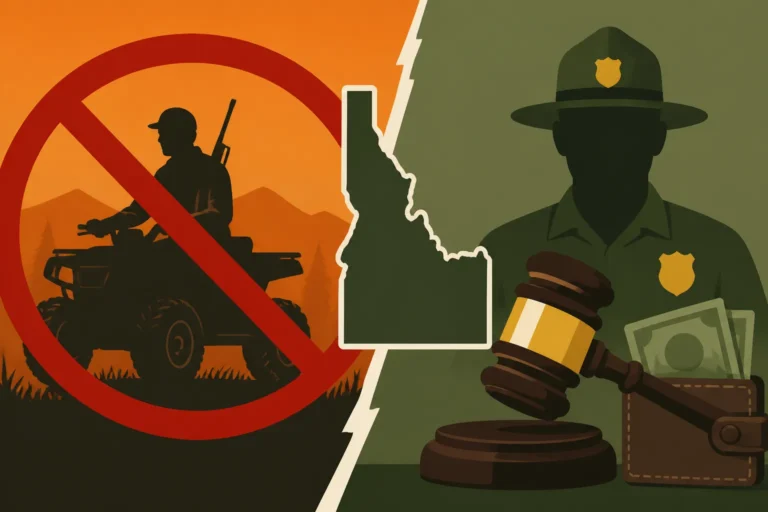
It's an incredibly frustrating moment: you've made a great shot on an Idaho deer or elk, the animal is down, but it's in a steep canyon or a thick patch of timber, seemingly miles from the nearest established road. Your first instinct might be to fire up the truck or ATV and drive in to retrieve it, but here's the cold, hard truth: in Idaho, driving off-road to retrieve game is strictly prohibited. This guide is here to help you understand why this rule exists, what it means for your hunt, and how to plan for a legal and ethical game retrieval every time.
Understanding Idaho's Motorized Hunting Rule
Idaho's motorized hunting rule is one of those regulations that can cause a lot of head-scratching, especially for hunters new to the state or those used to different rules elsewhere. It's designed to protect Idaho's wild landscapes and maintain the integrity of hunting, but its implications for game retrieval are significant. Many hunters find themselves in a bind, with a downed animal and seemingly no way to get it out without bending the rules. Let's dig into what this rule actually entails.
What "Motorized" Actually Means
When Idaho Fish and Game talks about "motorized," they're not just talking about your pickup truck. This definition casts a wide net, encompassing nearly any vehicle powered by an engine. Think about your trusty ATV, your side-by-side (UTV), dirt bikes, snowmobiles, and yes, even electric bicycles (e-bikes) if they're used to travel off designated routes. The intent here is to prevent any form of engine-driven transport from disturbing the natural environment or providing an unfair advantage in accessing game or retrieval areas. It’s all about minimizing impact and keeping the playing field as fair as possible.
This broad definition means that even if you're on a small, quiet electric vehicle, if it's motorized, it falls under the purview of this rule. The spirit of the regulation is about the power source and its ability to traverse terrain quickly or easily, not just the size or noise of the vehicle. So, before you even consider bringing a vehicle into a potential retrieval scenario, you need to understand that if it has a motor, its use is restricted to established routes. This isn't just a suggestion; it's a critical part of Idaho's game management strategy.
Defining "Off-Road" and "Established Roads"
This is where many hunters get tripped up, because what constitutes an "established road" can sometimes feel like a moving target, especially in vast public lands. Generally, "established roads" are those maintained for public travel, legally open to motorized vehicles, and clearly identifiable on official maps, like those provided by the Forest Service, BLM, or in mapping apps such as onX Hunt. These roads usually have a discernible roadbed, are signed, and appear on Motor Vehicle Use Maps (MVUMs) which are crucial tools for hunters. Anything else – a faint two-track trail that disappears into the brush, a game trail, an open meadow, or a steep hillside – is considered "off-road."
The key takeaway here is that if you have to guess whether a path is an "established road," it probably isn't. Driving even a few yards off a clearly defined, legal road onto a grassy shoulder or into a dry creek bed for retrieval is considered an off-road violation. This rule isn't just about preventing new roads from being carved into the landscape; it's about restricting access to preserve habitat, prevent soil erosion, and ensure that hunters are physically engaging with the terrain in a way that aligns with fair chase principles. Always check your Motor Vehicle Use Maps for Forest Ground before heading out, and consider using digital mapping tools to confirm your location relative to legal routes.
The Specific Prohibition on Game Retrieval
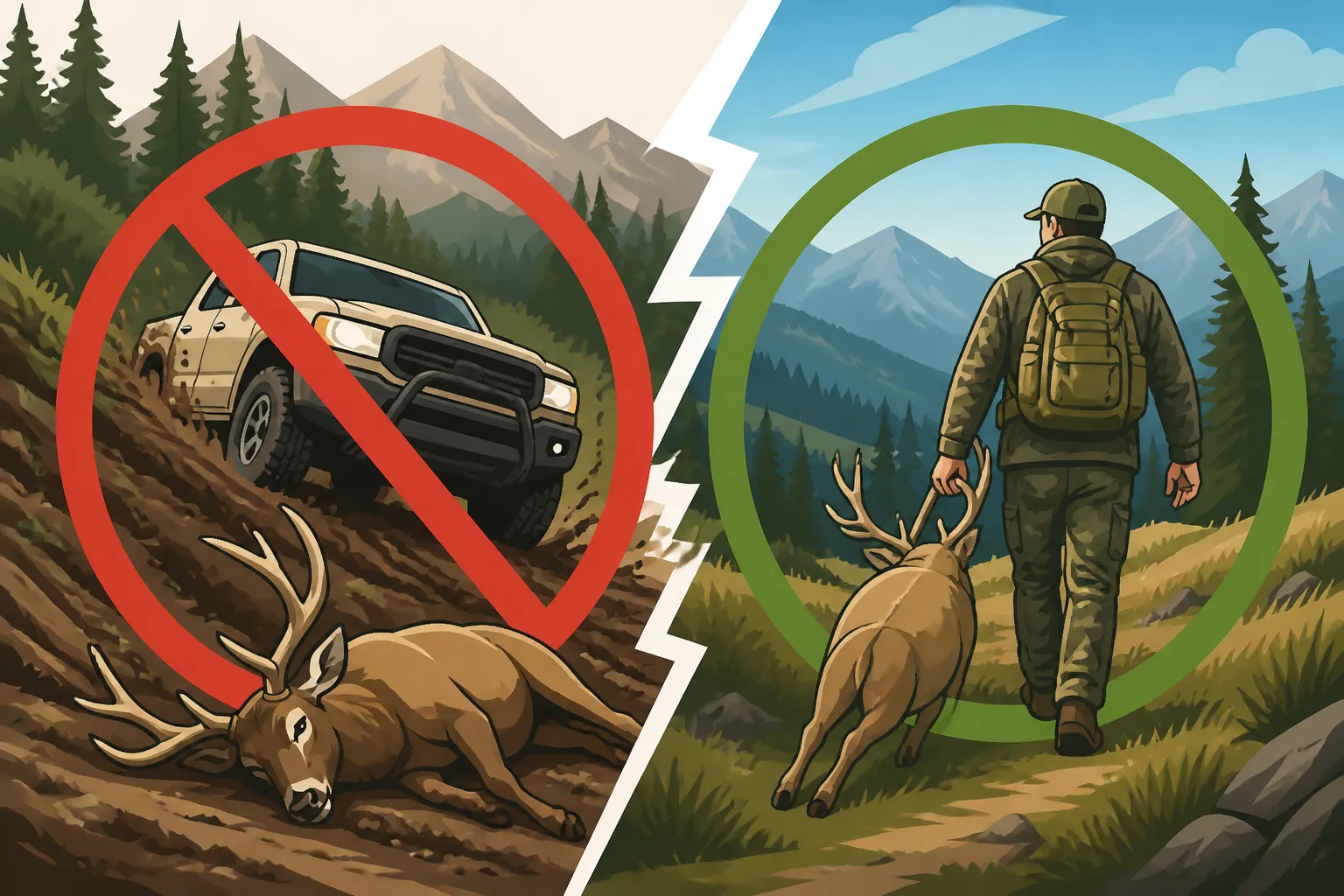
So, you've got your elk down in a ravine, and the nearest legal road is a mile away. Can you drive your ATV down that old logging spur that hasn't seen a vehicle in years, just to get the meat out? The answer is a resounding no. Idaho's motorized hunting rule specifically prohibits driving off established roads for the purpose of retrieving game. This isn't a loophole that allows you to bypass the general motorized travel restrictions just because you have a downed animal. The game retrieval aspect is explicitly covered.
This means that once your animal is on the ground, your motorized vehicle must remain on designated, open routes. You cannot drive cross-country, use non-motorized trails, or create your own path, even if it feels like the most logical or efficient way to get your harvest back to the truck. The rule is absolute in this regard. This can be a tough pill to swallow, especially when you're looking at hundreds of pounds of meat in difficult terrain, but understanding this strict prohibition before you hunt is crucial for avoiding violations and planning a successful, legal hunt. Consider what Can You Drive Off Road to Retrieve Game? means in practice.
The Intent Behind the Restriction
It's easy to view these rules as arbitrary roadblocks, making an already challenging hunt even harder. But like most wildlife regulations, there are solid, conservation-based reasons behind Idaho's motorized hunting rules. Understanding the "why" can often help hunters better accept and comply with the "what." These restrictions aren't designed to punish hunters but to protect the very resources we cherish.
Preventing Habitat Damage and Erosion
Idaho's landscape is diverse and often fragile. From the high desert sagebrush country to the steep, timbered mountains, much of the ground is susceptible to damage from motorized vehicles. Driving off-road, especially in wet conditions or on steep slopes, can quickly lead to soil compaction, vegetation destruction, and accelerated erosion. This erosion can degrade water quality in streams and rivers, impact fish spawning beds, and destroy crucial wildlife habitat. Even seemingly minor tracks can persist for years, acting as scars on the landscape.
Imagine dozens, or even hundreds, of hunters each year driving off-road to retrieve their deer or elk. Over time, these individual actions would cumulatively create a spiderweb of unofficial trails, disrupting ecosystems, stressing wildlife, and permanently altering the wilderness character of public lands. The rule preventing off-road retrieval is a proactive measure to prevent this widespread environmental degradation, ensuring that these pristine hunting grounds remain healthy and productive for generations to come. It’s about being good stewards of the land, leaving it better than we found it.
Ensuring Fair Chase and Ethical Hunting Practices
The concept of fair chase is central to ethical hunting, and Idaho's motorized rules play a significant role in upholding it. Fair chase means giving the animal a reasonable chance to escape and relying on a hunter's skill and effort, rather than technological or mechanical advantages, to secure a harvest. Driving a vehicle directly to a downed animal, especially one that might be located deep in undeveloped areas, can be seen as compromising this principle. It removes a significant element of the physical challenge and wilderness experience that many hunters seek.
By requiring hunters to retrieve game by non-motorized means when off established roads, the rule reinforces the idea that hunting is an immersive, physically demanding pursuit. It encourages hunters to develop skills in field dressing, quartering, and packing, rather than simply driving to the spot. This isn't about making hunting harder just for the sake of it; it's about preserving the traditional values and integrity of the hunt, ensuring that success is earned through hard work and respect for the animal and the land. For a deeper dive, consider the discussions around Idaho's Motorized Hunting Rule Runs August Into December.
Reducing Pressure on Wildlife
While not directly tied to retrieval, the broader motorized hunting rules, including those concerning off-road travel, indirectly reduce pressure on wildlife. By limiting vehicle access, larger tracts of land remain undisturbed by engine noise and human presence, providing crucial sanctuary for animals. If hunters could drive anywhere, anytime, the constant presence of vehicles would likely push game into harder-to-reach areas or cause them undue stress, especially during vulnerable times like winter.
This regulation helps maintain a buffer zone between human activity and wildlife habitat, fostering healthier populations. Even when an animal is harvested, the act of retrieving it on foot or with pack animals minimizes further disturbance to other game in the vicinity. It encourages a slower, more deliberate approach to hunting and land use, which ultimately benefits the wildlife we pursue. Understanding that these rules contribute to robust game populations helps to contextualize the inconvenience they might sometimes present.
Consequences of Violating the Rule
No hunter wants to find themselves on the wrong side of the law, especially when it comes to something as simple as game retrieval. The temptation to "just drive in quickly" can be strong when you're facing a long, arduous pack out. However, the consequences of violating Idaho's motorized hunting rule for game retrieval are significant and can extend far beyond a simple warning. It's crucial to understand what's at stake before you even consider bending the rules.
Penalties and Fines
If you're caught driving off an established road to retrieve game, you're likely looking at a citation. The specific fines can vary, but they are generally substantial enough to make you think twice. These aren't just minor traffic tickets; they're often considered wildlife violations. In addition to the monetary fine, you might also face court costs and other administrative fees. These penalties are designed to be a deterrent, reflecting the seriousness with which Idaho Fish and Game views illegal motorized travel and its potential impact on natural resources.
Imagine you've just spent a significant amount of money on tags, licenses, and gear for your Idaho elk hunt. To then incur a fine that could rival or even exceed the cost of your hunting license simply for trying to avoid a tough pack out is a bitter pill to swallow. It's an expense that could have been entirely avoided with proper planning and adherence to the regulations. Always remember that conservation officers are out there, and they take these rules seriously, especially on heavily hunted public lands. To learn more about specific punitive measures, research Penalties for Breaking the Motorized Rule.
Potential License Revocation
Beyond the immediate financial penalties, a violation of the motorized hunting rule can have much longer-lasting repercussions: the potential loss of your hunting privileges. Depending on the severity of the offense, your hunting license could be suspended or even revoked, not just for Idaho but potentially in other states as well, due to interstate wildlife compacts. A suspension could mean you miss an entire hunting season, or several, impacting years of careful planning and anticipation.
For many, hunting isn't just a hobby; it's a deeply ingrained part of their identity and lifestyle. The thought of losing the ability to participate in this cherished activity is far more impactful than any fine. This consequence underscores the importance of respecting all hunting regulations, even those that seem inconvenient in the moment. It's a reminder that hunting is a privilege, not a right, and that privilege comes with a responsibility to abide by the rules designed to protect wildlife and wild places.
Long-Term Impact on Hunting Privileges
A license revocation isn't the only long-term consequence. A violation, particularly if it's considered a serious one, can create a permanent mark on your hunting record. This can affect future tag draws, especially for coveted controlled hunts where your history as a responsible hunter might be considered. While Idaho doesn't use a preference point system in the same way some states do, a history of violations certainly won't put you in a favorable light with wildlife agencies.
Furthermore, a violation can damage your reputation among fellow hunters and landowners. The hunting community often operates on a strong ethical code, and actions that undermine fair chase or conservation principles are generally frowned upon. It can be hard to regain trust once it's lost. Ultimately, the long-term impact of a violation can diminish the enjoyment of future hunts and tarnish what should be a proud and ethical pursuit. It's simply not worth the risk to save a few hours of physical effort.
Practical Strategies for Game Retrieval
Okay, so driving off-road is out. Now what? The reality of retrieving a large game animal like an elk or a mule deer from rugged Idaho terrain is indeed challenging. But challenging doesn't mean impossible, and with proper planning and the right mindset, you can execute a legal and ethical retrieval. This is where the real work of hunting begins for many.
The Reality of Packing Game Out on Foot
Most of the time, especially if you're hunting general units or drawing tags that aren't in heavily outfitted areas, you're going to be packing your game out on your back. This means field dressing the animal quickly and efficiently, then quartering it into manageable sections. For an elk, this typically involves bone-in quarters, the backstraps, tenderloins, neck meat, and often the rib meat. A mature bull elk can easily yield 200-300 pounds of boned-out meat, plus the hide and antlers. That's a lot of weight.
This requires physical conditioning, the right gear (a sturdy pack frame, sharp knives, game bags), and often multiple trips. Imagine a scenario: you shoot a bull two miles deep into a timbered drainage. You might make one trip out with the two front quarters and the backstraps, return for the hindquarters, and then make a third trip for the head, cape, and any remaining meat. This isn't a quick process; it can take many hours, or even an entire day, especially if the terrain is steep or the weather turns. It’s a test of grit and determination, but also incredibly rewarding. Packing an Elk Out of Steep Country Alone is a common challenge that many Idaho hunters face.
Using Pack Animals and Professional Packers
For those who don't want to shoulder the entire load themselves, or for hunters targeting particularly remote areas, pack animals offer an excellent solution. Horses, mules, and even llamas are commonly used in Idaho's backcountry to transport heavy loads. Outfitters often provide pack support services, even if you're not booking a fully guided hunt. You might hire a packer to simply meet you at a designated trailhead or even deep in the backcountry to help bring your animal out. This can save immense physical effort and ensure your meat is out quickly.
If you plan to use pack animals, whether your own or hired, be sure to understand trail rules and regulations for pack stock in the area you're hunting. Not all trails are open to horses or mules. Planning this in advance is key; you can't just call a packer on your satellite phone after the shot and expect them to be there in an hour. This takes coordination and pre-arranged logistics. Professional packers are invaluable for accessing the deep wilderness and are familiar with the terrain and the best routes for moving heavy loads efficiently and safely.
Planning for Retrieval Before the Shot
The absolute best strategy for legal and ethical game retrieval starts long before you pull the trigger. It begins with your e-scouting and on-the-ground reconnaissance. When you're scouting an area, don't just look for game sign; pay attention to the terrain, potential travel routes, and, most importantly, the accessibility of the area from established roads. Use mapping apps like onX Hunt or GoHunt to identify road networks, trails, and contour lines. If you're hunting public land, refer to Using onX Layers for Idaho Public Land to understand land ownership and access.
Before you make a move, ask yourself: "If I shoot an animal right there, how will I get it out?" Consider the distance from the nearest legal road, the steepness of the terrain, and any natural barriers like thick brush or rivers. This might influence your stalking strategy or even your decision to take a shot. Sometimes, passing on a marginal shot or a poorly located animal is the most ethical choice, simply because retrieving it would be impossible or lead to a violation. Strategic camp placement can also make a huge difference, so consider Trailhead Parking During Hunting Season and how it impacts your retrieval plan.
Navigating Public and Private Land Nuances
The motorized hunting rule generally applies across all land types in Idaho, but the specific enforcement and the practicalities of access can differ between public and private ground. It’s important to understand these nuances to ensure you stay legal and respectful, regardless of where your hunt takes you.
Public Land Enforcement and Management
On Idaho's vast public lands—National Forests, Bureau of Land Management (BLM) ground, and State Lands—the motorized hunting rule is strictly enforced by Idaho Fish and Game, Forest Service law enforcement, and BLM rangers. These agencies work together to protect these resources, and they regularly patrol areas, especially during hunting season. They use Motor Vehicle Use Maps (MVUMs) as their primary guide for what constitutes a legal route. If you're on public land, having these maps (physical or digital via apps like onX Hunt) is non-negotiable.
The rules on public land are designed to serve the collective good, ensuring that these areas remain wild and accessible for various forms of recreation, not just hunting. Violations are often met with fines and potentially license suspension because they undermine the management goals for these public resources. Hunters are seen as stewards of these lands, and respecting these rules is part of that responsibility. Remember that areas like Wildlife Management Areas also have specific rules; check out Motorized Rules on Idaho Wildlife Management Areas for details.
Private Land: Permission, Not Carte Blanche
While private land might seem like a gray area, the motorized hunting rule generally applies there too. However, the enforcement mechanism can be different. On private land, the landowner has the primary authority to allow or restrict motorized travel. If you have permission from a landowner to hunt their property, you must also get specific permission for any off-road vehicle use, even for game retrieval. Do not assume that hunting permission implies permission to drive anywhere.
A landowner might grant you permission to drive a specific route to retrieve an animal, as long as it doesn't cause undue damage to their property. However, even with landowner permission, you may still be subject to broader state-level regulations regarding motorized travel if the area isn't truly isolated from public access or if your actions impact public resources. The best practice is always to have a clear, written agreement with the landowner detailing all aspects of vehicle use. Never take access for granted, and always respect the property owner's wishes above all else. Getting Landowner Permission in Idaho is always the first step.
Leveraging Technology for Ethical Hunting
In today's hunting world, technology can be a huge asset, not just for finding game but for ensuring you hunt ethically and legally. Digital mapping tools, in particular, have revolutionized how hunters plan and execute their trips, including how they approach game retrieval.
Using Mapping Apps for Road Networks
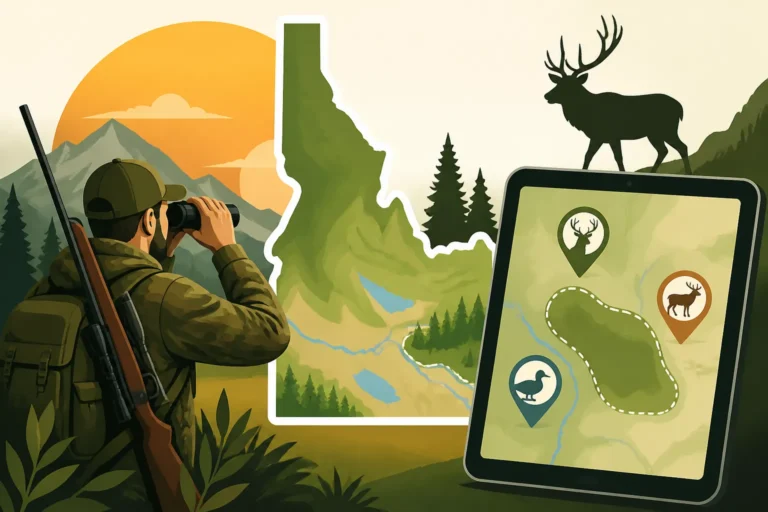
Modern mapping applications like onX Hunt and GoHunt are indispensable for navigating Idaho's complex road and trail systems. These apps layer essential information onto detailed satellite imagery and topographic maps, including land ownership boundaries, game management unit lines, and, crucially, designated motorized routes. You can clearly see which roads are open to vehicles and which are not, preventing accidental violations.
Before your hunt, you can use these apps to pre-mark potential retrieval routes from likely hunting spots to the nearest legal road. This allows you to assess the difficulty of a pack-out beforehand, giving you a realistic understanding of the effort involved. During the hunt, if you harvest an animal, these apps can instantly show you your location relative to established roads, helping you plan your non-motorized retrieval path. They can even track your route, so you know exactly how far you've traveled and how far you have to go. Reading a Land Ownership Layer Correctly and understanding road designations are critical skills these apps help develop.
Pre-Season Scouting with Digital Tools
E-scouting is more than just looking for elk sign; it's about understanding the entire hunting landscape, including access and egress. Tools like onX Hunt allow you to virtually "walk" the terrain, identifying potential natural funnels, bedding areas, and water sources, but also focusing on the practicalities of a successful hunt. This means scrutinizing the roadless areas, understanding the topography, and mentally mapping out where you would quarter and pack an animal out if you were successful.
By using digital tools like GoHunt for research and planning, you can look at harvest statistics by unit, public land percentages, and even identify units with less road density, indicating a more wilderness-like experience where pack-out strategies will be paramount. This comprehensive approach to pre-season scouting helps you develop realistic expectations for the physical demands of an Idaho hunt and ensures that you're mentally and physically prepared for all phases of the hunt, including the often-overlooked and most strenuous part: getting your game back to the truck. This kind of detailed prep helps with E-Scouting an Idaho Unit Before the Season and creating a solid plan for Planning a DIY Public Land Hunt in Idaho.
Table of Legal vs. Illegal Game Retrieval Scenarios
To help solidify your understanding, here's a quick comparison of common game retrieval scenarios and whether they'd be considered legal or illegal under Idaho's motorized hunting rules.
| Scenario | Legal/Illegal | Explanation |
|---|---|---|
| Driving your ATV on a designated, open Forest Service road to retrieve game. | Legal | You are staying on an established, legal motorized route. |
| Driving your pickup truck a few yards off a paved county road onto a grassy shoulder to load an animal. | Illegal | Even a few yards off an established road is considered "off-road." The vehicle must remain on the hard surface of the road. |
| Using an electric bicycle (e-bike) to ride a closed forest road or non-motorized trail to reach a downed animal. | Illegal | If the e-bike is motorized and the route is not open to motorized traffic, it's a violation. E-bikes are still considered motorized vehicles in most contexts. |
| Quartering your elk and packing it out on your back, making multiple trips to your truck parked on a legal road. | Legal | This is the standard, legal, and ethical method for retrieving game from off-road areas. |
| Hiring a professional packer with mules to bring your harvested deer out from two miles deep in a roadless area. | Legal | Pack animals (horses, mules, llamas) are considered non-motorized transport and are legal for game retrieval on designated trails or cross-country where allowed. |
| Using a UTV to follow a faint two-track trail that is not marked on any official map, to retrieve game. | Illegal | If the trail is not clearly designated and open for motorized public travel on official maps, it is considered off-road. |
| Driving through a private field with landowner permission to retrieve game that was shot on their property. | Legal | If the landowner specifically grants permission for off-road vehicle travel on their private property for retrieval, it is legal. Always get explicit, written permission. |
| Driving your ATV on a forest road that is typically open, but is currently closed by a seasonal gate, to retrieve an animal. | Illegal | A closed road is not an "established road" open for use. Driving around a gate or using a closed route is a violation. |
Disclaimer
This article is for general informational purposes only and does not constitute professional advice. Laws, prices and regulations vary by location and change over time. Consult a qualified professional for guidance on your specific situation.