Idaho’s Motorized Hunting Rule Runs August Into December
One of the most common frustrations hunters face in Idaho, especially those new to the state or coming from areas with different regulations, is navigating the confusing landscape of motorized vehicle rules. It can feel like a minefield trying to figure out where you can drive, what counts as a legal road, and what happens if you shoot an animal off a trail. This guide aims to clear up that confusion, offering a deep dive into Idaho's motorized hunting rule, its scope, and how to stay on the right side of the law while still having a successful and ethical hunt.
Understanding Idaho's Core Motorized Hunting Rule
Idaho's motorized hunting rule is pretty straightforward in its intent: to limit the impact of vehicles on wildlife and sensitive habitats, particularly during the peak hunting seasons. But in practice, understanding its nuances can feel like trying to decipher a secret code. At its heart, the rule dictates that driving off established roads and trails is generally prohibited for hunting purposes, especially during specific months. It's a critical piece of regulation that shapes how many of us access and hunt public lands across the state.
What "Motorized" Actually Means in Idaho
When the Idaho Department of Fish and Game talks about "motorized vehicles," they're casting a pretty wide net. This isn't just about your pickup truck; it extends to almost anything with an engine that moves you through the woods. We're talking ATVs, UTVs, dirt bikes, and even snowmobiles when snow depth allows for them to travel off established routes in other seasons. The spirit of the rule is to restrict vehicles that can leave defined travel corridors, disturbing wildlife or damaging the natural landscape.
This broad definition means hunters need to think carefully about any mechanical device they use for transport. While e-bikes have created some interesting discussions in recent years, traditional motorized vehicles like side-by-sides are unequivocally included. If it has an engine and moves you, assume it falls under this rule. The key isn't necessarily the size or type of vehicle, but its capacity to travel beyond established routes and the potential impact that has on the environment and wildlife.
The rule doesn't aim to prevent you from using these vehicles entirely; rather, it aims to channel their use onto designated routes. This means you might drive your ATV down a forest road to a specific trailhead, but then you'll need to park it and proceed on foot. It’s about managing access and preventing widespread habitat disturbance that could negatively affect game animals and the hunting experience for everyone.
The Critical August Through December Timeline
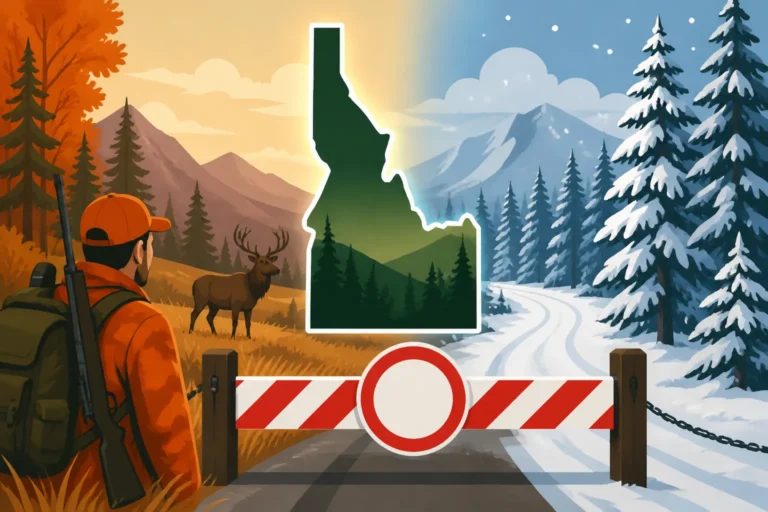
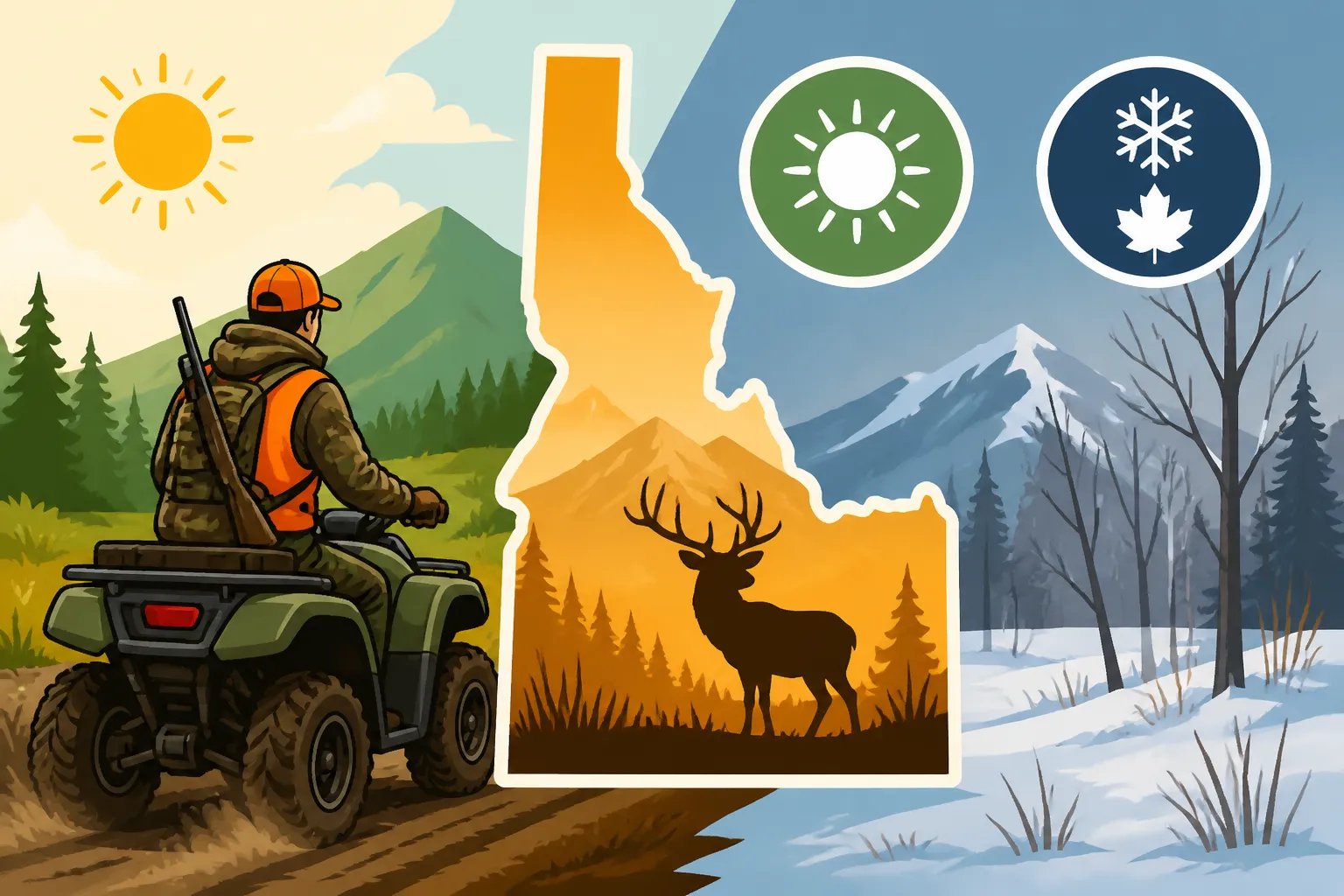
The Idaho motorized hunting rule isn't a year-round blanket ban on all off-road travel, though many areas have permanent restrictions. Instead, the specific "hunting rule" typically kicks in around August and runs through December. This timing is no accident; it directly coincides with the opening of many big game hunting seasons, including archery and general rifle seasons for deer and elk. This is when hunter presence on the landscape is at its highest, and wildlife are often under the most pressure.
By limiting motorized travel during these months, the state aims to reduce stress on game animals as they navigate their fall movements and migrations. It also helps preserve the quality of the hunting experience for those seeking solitude and a fair chase. Imagine trying to stalk a wary elk herd if vehicles were crisscrossing every ridge and drainage. The August through December timeframe ensures that during the critical hunting period, the focus shifts back to traditional, low-impact methods of pursuit.
This means that your scouting trips in July might look very different from your actual hunt in September. While some Forest Service roads might be open to general travel earlier in the summer, come August, the additional hunting restrictions can apply. It's crucial to check the specific regulations for the Game Management Unit (GMU) you plan to hunt, as well as any relevant Forest Service or BLM travel management plans, which can sometimes extend these dates or impose stricter limitations year-round.
Where Idaho's Motorized Rule Actually Applies
Understanding what a motorized vehicle is is only half the battle. The real challenge often lies in knowing where these rules are enforced. Idaho is a vast state with a patchwork of land ownership and management, and the motorized hunting rule generally focuses on public lands, though its principles can sometimes spill over into adjacent private parcels depending on access agreements.
Public Lands: National Forests and BLM Ground
The vast majority of Idaho's public hunting opportunities occur on lands managed by the U.S. Forest Service (USFS) and the Bureau of Land Management (BLM). These are the areas where the motorized hunting rule is most strictly enforced and where hunters need to be most vigilant. Both agencies have their own travel management plans, which designate specific roads and trails for motorized use, and these plans directly inform Idaho's hunting regulations.
On USFS land, you'll often encounter "Motor Vehicle Use Maps" (MVUMs). These maps are your absolute best friend. They clearly show which roads are open to motorized vehicles, which are seasonally closed, and which are entirely off-limits. You'll find MVUMs at Ranger Stations, and many are available online. Similarly, BLM offices publish travel management plans and maps for their districts. These public lands are managed for multiple uses, but conservation and maintaining a quality hunting experience are high priorities, hence the strict adherence to motorized rules. Ignoring these designated routes can lead to severe penalties, not just from game wardens but also from the federal agencies themselves.
It's a common misconception that if a two-track or old logging road "looks" open, it must be. This is rarely the case on public lands during hunting season. Driving Off Established Roads Is Prohibited in Idaho for good reason, and the regulations are designed to protect these wild spaces. Always assume that if it's not explicitly marked as open on an official map, you should not be driving on it. This proactive approach saves you headaches and helps preserve the land for future generations of hunters.
Sticking to Designated Roads and Trails
The core directive of the motorized hunting rule is to stay on "designated roads and trails." But what truly defines these? It’s not just any dirt track you happen upon. A designated road or trail is one that has been officially recognized and marked by the managing agency (USFS or BLM) for motorized use. This is where those MVUMs really shine; they are the authoritative source.
These designated routes are typically well-maintained and clearly identifiable. You'll often see signage indicating route numbers, open/closed status, or specific vehicle restrictions. Sometimes, a gate will clearly indicate a seasonal or permanent closure. The rule is about keeping vehicles on hardened surfaces that are designed to handle traffic, preventing new tracks from being formed, erosion, and habitat fragmentation. It helps concentrate vehicle impact to specific corridors rather than allowing widespread dispersal.
If you find yourself on a faint two-track that suddenly seems to disappear into the timber, chances are you've gone off a designated route. Don't push it. Turn around. Even if there are no physical barriers, the legal designation is what matters. Apps like onX Hunt are incredibly helpful here, as they often layer MVUM data and land ownership information right onto your map, allowing you to see designated routes in real-time. This can be a game-changer for staying compliant and avoiding accidental violations in unfamiliar territory.
Exemptions and the Nuance of Private Land
While the motorized hunting rule is strict on public lands, there are a few scenarios where it might not apply, or where the rules shift. For instance, private land operates under different assumptions. If you have explicit permission from a private landowner to drive off-road on their property for hunting purposes, then Idaho's motorized hunting rule (the August-December one) generally doesn't apply there. However, even on private land, you still need to be aware of other local ordinances or land-use agreements, and the landowner's specific rules always take precedence.
Another potential area of nuance involves emergency situations, though these are rare and shouldn't be relied upon. Also, certain administrative or agency-authorized activities might involve off-road travel, but these are exceptions for official business, not for general public hunting access. For the average hunter, the safest and most compliant approach is to assume the rule applies to all public lands and stick to designated routes.
It’s crucial to distinguish between Idaho's hunting rule and general state vehicle codes or private property laws. While the hunting rule might not apply to your off-road driving on your own land, general vehicle registration, insurance, and safe operation laws still do. Always clarify with landowners if you plan any off-road travel on their property, and respect their wishes completely. Good relationships with landowners are vital for maintaining access, and violating their trust with motorized vehicles can quickly lead to access being revoked for everyone.
The Vehicles Idaho's Motorized Rule Keeps in Check
When we talk about "motorized vehicles" in the context of Idaho's hunting regulations, it’s not always immediately clear what falls under that umbrella. Many hunters automatically think of ATVs, but the scope is actually broader, aiming to manage all forms of engine-powered transport that can potentially go off-road. This section will clarify what types of vehicles are typically covered, emphasizing that the rule's intent is to manage access and impact, not just a specific machine.
ATVs, UTVs, and Dirt Bikes: The Usual Suspects
These are the machines most commonly associated with off-road travel and, consequently, the ones most directly impacted by Idaho's motorized hunting rule. All-terrain vehicles (ATVs), utility terrain vehicles (UTVs, or side-by-sides), and dirt bikes are designed for traversing rough terrain, and as such, their use off designated roads and trails during hunting season is strictly prohibited. Their ability to access remote areas quickly and quietly (relative to a truck) makes them valuable tools for hunters, but also precisely why their use is regulated to prevent habitat damage and reduce disturbance to wildlife.
Hunters often use these vehicles to get to trailheads or to cover long distances on designated forest roads, cutting down on walk-in time. This is perfectly legal and encouraged where the routes are open. However, the temptation to take a shortcut through a grassy meadow or drive down a faint game trail to retrieve a downed animal can be strong. This is where hunters can get into trouble. The rule doesn't care if you're trying to pack out an elk; if you're off a designated route, you're in violation. Which Roads Count Under Idaho's Motorized Rule is paramount here – if it’s not on the map as open, don’t take your ATV on it.
The enforcement of this rule for ATVs, UTVs, and dirt bikes is often quite visible. Game wardens and Forest Service rangers regularly patrol popular hunting areas, especially during the peak season. They're looking for fresh tracks leading off designated routes, and they're well-versed in interpreting MVUMs. Your best bet is to plan your hunting strategy knowing that your ATV is strictly for designated routes, and the real hunting begins when you park it and go on foot.
Full-Sized Vehicles and Pickups: Don't Forget Them!
While ATVs and UTVs often get the most attention regarding motorized restrictions, it’s vital to remember that full-sized vehicles like pickup trucks and SUVs are also absolutely subject to the rule. Just because your truck has four-wheel drive and high clearance doesn’t give you a pass to drive it where an ATV cannot go. In fact, due to their larger footprint and heavier weight, full-sized vehicles can cause even more damage to fragile terrain when driven off-road.
Many older logging roads or primitive two-tracks are only suitable for high-clearance 4×4 vehicles, but they are still subject to the "designated route" requirement. If a road or trail isn't explicitly marked on an MVUM as open for full-sized vehicles, you cannot drive your truck on it, even if it physically looks passable. This includes driving cross-country, through fields, or up dry creek beds that are not officially recognized as travel routes.
The distinction between a designated forest road and what might look like a faint track through the sagebrush can be subtle, especially to an unfamiliar eye. Again, this is where detailed mapping tools like onX Hunt or checking official Forest Service MVUMs become indispensable. Never assume a route is legal for your truck just because you could drive it. When Idaho's Motorized Hunting Rule Runs August Into December, it applies to every engine-powered vehicle, from the smallest dirt bike to the largest pickup.
E-Bikes and Their Gray Areas
Electric bikes, or e-bikes, present a fascinating and evolving challenge to motorized vehicle regulations, and Idaho has been grappling with how to classify them, especially in the context of hunting. Historically, trails were often classified for "motorized" or "non-motorized" use. Traditional bikes were non-motorized, and anything with an engine was motorized. E-bikes blur that line. Some e-bikes offer pedal assist, while others have throttles that can propel them without pedaling, essentially acting like a quiet moped.
Idaho, like many western states, has worked to clarify e-bike regulations. The general consensus often categorizes e-bikes into different classes, with Class 1 (pedal-assist only, cuts off at 20 mph) often treated more like traditional bicycles on non-motorized trails. However, Class 2 (throttle assist, cuts off at 20 mph) and Class 3 (pedal assist, cuts off at 28 mph) are more frequently considered motorized and thus subject to the same restrictions as other motorized vehicles.
This is a critical area where hunters must check the very latest regulations for the specific GMU and land management agency they are hunting in. Rules can change, and interpretation can vary by jurisdiction. Some National Forests or specific WMAs might have different policies than others. When in doubt, err on the side of caution. If you are using an e-bike to access hunting areas, and it falls into a category that resembles a motorized vehicle, treat it as such and stick to designated motorized routes. Misinterpreting the rules for your e-bike could lead to a citation just as easily as driving an ATV off-limits.
Understanding "Established Roads and Trails" on the Ground
The cornerstone of Idaho's motorized hunting rule is the concept of "established roads and trails." This isn't just common sense or what looks like a road; it's a legal definition rooted in specific maps and criteria. For a hunter trying to stay compliant, knowing how to identify these legal routes on the ground and on a map is absolutely crucial.
Official Motor Vehicle Use Maps (MVUMs) are Your Bible
If you're hunting on National Forest land in Idaho, the most authoritative source for what constitutes an "established road or trail" is the Motor Vehicle Use Map (MVUM). These maps are published annually by each National Forest and are essentially your "bible" for where you can and cannot drive a motorized vehicle. They clearly delineate roads and trails that are open, closed, or subject to seasonal restrictions.
MVUMs are black-and-white maps (often with some color overlays in digital versions) that use specific symbols and line types to show designated routes. They typically list the open season for each route, the type of vehicle allowed (e.g., highway legal vehicles, ATVs under 50 inches), and any specific restrictions. What's not on an MVUM as an open route is, by default, closed. This means that old logging spurs, faint two-tracks, or even what looks like a well-used game trail are likely off-limits if they don't appear on the MVUM.
Many hunters make the mistake of relying solely on general topographic maps or even GPS units that show every faint track. While these are great for navigation, they do not replace the MVUMs when it comes to motorized vehicle legality. Always cross-reference your planned routes with the current MVUM for the specific National Forest or district you'll be hunting. You can usually download these maps directly from the Forest Service website or pick up printed copies at Ranger District offices. They are truly the definitive guide for understanding Which Roads Count Under Idaho's Motorized Rule.
Physical Characteristics of a Legal Route
Beyond the maps, there are some physical characteristics that often distinguish a legal, designated route from a non-legal one. Designated roads are usually maintained to some degree, even if they are rough. They might have road numbers posted, culverts for drainage, or signs indicating their status. They typically have a more defined roadbed, suggesting historical and permitted use. Trails designated for motorized use will also usually be clearly cut and maintained, perhaps with signage.
Conversely, routes that are not established often show signs of disuse: growing over with grass and brush, large rocks or downed trees that haven't been cleared, or simply fading into the landscape. Sometimes there will be old signs of closure, like berms, rocks, or even old gates that have fallen into disrepair. A key indicator is whether it looks like a path meant for vehicles, or merely a path created by vehicles going off-road. The latter is almost always illegal during hunting season.
It’s important to remember that recent rainfall or heavy snowmelt can obscure old tracks or make a non-designated route appear more defined. Don't be fooled by temporary conditions. Always rely on the official maps first, and then use your on-the-ground observations to confirm. If there's any doubt, assume it's closed to motorized traffic and proceed on foot. It’s far better to walk a bit further than to face a citation for illegal vehicle use.
Hunting Apps Like onX Hunt and GoHunt as Tools
In today's hunting world, digital mapping tools like onX Hunt have become invaluable, and for good reason. These apps often integrate layers of information, including land ownership, topographic features, and critically, motor vehicle use restrictions. While MVUMs are the official word, onX Hunt can layer that data directly onto a user-friendly satellite image, making it incredibly easy to see where you can and cannot drive your vehicle.
With onX Hunt, you can select specific layers that show designated motorized roads and trails, often color-coded for clarity. This allows you to e-scout an area from the comfort of your home, identifying potential access points and planning your approach long before you ever set foot in the field. This capability helps hunters avoid surprises and ensures they're planning a trip that aligns with the rules. Similarly, services like GoHunt offer detailed mapping resources and unit breakdowns that can highlight public land access points and road networks.
However, a word of caution: while these apps are fantastic tools, they should be used as guides and supplements to the official MVUMs and regulations. Technology can have glitches, and maps might not always be updated instantly. Always verify critical information with the official sources, especially if you're venturing into a new area or a remote part of a GMU. Using onX Layers for Idaho Public Land effectively means understanding both its strengths and its limitations, and always cross-referencing to ensure full compliance. These apps dramatically reduce the chances of accidental trespass or motorized violations, making them an essential part of a modern hunter's kit for navigating Idaho's complex terrain and rules.
The Absolute Ban on Driving Off-Road to Retrieve Game
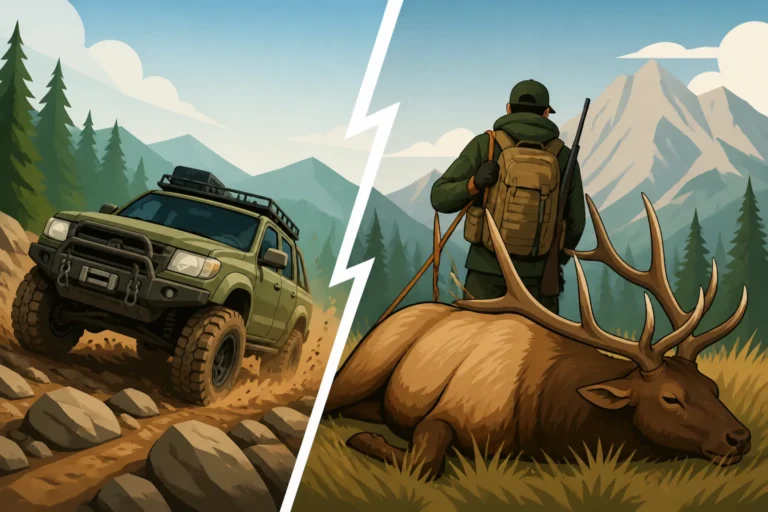
This particular aspect of Idaho's motorized hunting rule causes some of the most confusion and frustration among hunters, yet it's one of the clearest mandates: you cannot drive off designated roads or trails to retrieve a downed animal, even if it's just a few hundred yards. The moment you pull off an established route with a motorized vehicle, you're in violation. This rule stands regardless of the size of the animal, the difficulty of the terrain, or your perceived urgency.
Why This Rule Exists: Respect for Wildlife and Habitat
The primary reason behind the "no driving off-road for game retrieval" rule is deeply rooted in wildlife conservation and habitat protection. While it might seem harsh when you're looking at a huge elk lying just out of reach, allowing vehicles to create new tracks and disturbances across the landscape would quickly degrade habitat and disrupt wildlife. Every new track can lead to erosion, alter water flow, and introduce invasive species. Furthermore, widespread vehicle access would fundamentally change the nature of fair chase hunting, making it too easy to pursue and retrieve animals, potentially leading to over-harvest and increased stress on game populations.
It also speaks to the "public land" ethos. These lands are shared resources, and minimizing impact helps preserve the experience for hikers, backpackers, other hunters, and future generations. The rule reinforces the idea that hunting is an active pursuit that requires effort and respect for the environment. It compels hunters to consider their retrieval strategy before they pull the trigger, encouraging ethical shot placement and realistic assessments of their physical capabilities.
This rule emphasizes that the hunt doesn't end when the animal falls. The ethical and legal responsibilities extend to how you recover that animal. It forces hunters to be true backcountry adventurers, ready to pack out heavy loads on their own power or with the help of pack animals, embracing the challenge that comes with hunting in wild places. It's about preserving the wildness of Idaho's hunting heritage.
Planning for Game Retrieval Without a Vehicle
Given the strict prohibition on off-road game retrieval with motorized vehicles, planning becomes paramount. Before you even head out, you need a solid strategy for how you'll get an animal out of the woods. This often means relying on human power, pack animals, or even the strategic use of carts if the terrain allows.
For many hunters, especially those pursuing elk in steep, remote areas, this means investing in good quality pack frames and being in excellent physical condition. Quartering an animal and packing it out in multiple loads is the norm. This is where fitness truly pays off. If you’re not physically capable of packing out an animal, you need to either hunt closer to designated access points or consider hiring a pack support service, which often involves horses or mules. Companies specializing in drop camps or gear hauling can be invaluable here, but they too must adhere to designated motorized and non-motorized routes.
Another option for less rugged terrain or smaller game is a game cart or sled. While these are human-powered, they can significantly reduce the effort of dragging an animal. However, carts are only effective on relatively flat ground or established trails wide enough to accommodate them. They won't work in thick timber, steep slopes, or areas with heavy blowdowns. The key is to scout your hunting area with retrieval in mind: look for drainages, ridge lines, or old non-motorized trails that could serve as pack-out routes to get back to a designated road.
Serious Consequences for Violating the Rule
Breaking the "no driving off-road to retrieve game" rule carries significant consequences in Idaho. Can You Drive Off Road to Retrieve Game? is a question with a very clear "no" answer. Violations are often treated as serious infractions by Idaho Fish and Game and by federal land management agencies. You could face substantial fines, forfeiture of your vehicle, loss of hunting privileges (potentially for multiple years and across multiple states through interstate compacts), and even jail time in extreme cases.
A game warden encountering you driving off-road to retrieve an animal isn't going to give you a warning because you "just needed to get it out." They understand the challenges of retrieval, but they also enforce a rule that is fundamental to conservation and fair chase. The evidence of a violation is often undeniable—tire tracks leading off a designated route to a carcass. It's an easy one for enforcement to spot and cite.
Beyond the legal ramifications, there's also an ethical dimension. Violating this rule reflects poorly on the hunting community as a whole. It fuels negative perceptions of hunters and can jeopardize public access to hunting lands in the long run. Adhering to this rule, despite its difficulty, demonstrates a commitment to ethical hunting and responsible land stewardship. Plan ahead, be prepared, and accept the challenge of packing out your game the legal way.
Common Misconceptions and Costly Violations
Despite the clear language in the regulations and the ubiquitous presence of MVUMs, hunters still make mistakes regarding Idaho's motorized hunting rule. These aren't always malicious acts; often, they stem from a combination of eagerness, a lack of thorough preparation, and common misconceptions about what constitutes a legal route. Understanding these pitfalls can help you avoid becoming another statistic.
The "Just a Little Ways Off" Mentality
Perhaps the most common and dangerous misconception is the "just a little ways off" mentality. This is the thought process that leads a hunter to believe that driving a short distance—be it 50 feet, 100 yards, or "just over that knoll"—off a designated road to get to a good glassing point, a fresh track, or even to retrieve an animal, is somehow okay or won't be noticed. This is a critical error. The rule has no "a little ways" clause. The moment your tires leave the designated route, you are in violation.
This mentality often arises from desperation, impatience, or simply underestimating the reach of enforcement. Game wardens are highly skilled at spotting fresh tire tracks that deviate from established roads. They often patrol these areas specifically looking for such violations, knowing that hunters, especially when excited or tired, can be tempted to push the boundaries. The damage to vegetation, soil, and the perceived integrity of the hunting rules begins with that first "little ways off."
It’s crucial to understand that there is no gray area here. "Designated" means on the map. If you're physically off the route, no matter how short the distance, you're breaking the rule. This is where self-discipline and meticulous planning truly come into play. If your hunt plan requires you to be "just a little ways off," then your plan needs to involve parking your vehicle and covering that "little ways" on foot. Driving Off Established Roads Is Prohibited in Idaho means all driving off established roads.
Ignoring Closed Gates or "No Motorized Travel" Signs
Another common violation stems from ignoring clear and unambiguous signs. Many forest roads or trails are seasonally or permanently closed to motorized travel, and these closures are often marked with physical gates, berms, or prominent "No Motorized Travel" signs. Yet, hunters will sometimes rationalize bypassing these warnings, claiming they didn't see them, thought they didn't apply to them, or simply chose to ignore them to access a perceived advantage.
These gates and signs are not suggestions; they are directives. They are placed there for specific reasons, whether it's to protect winter range for wildlife, prevent damage during wet seasons, or manage hunting pressure in certain areas. Driving around a closed gate, breaking a chain, or simply ignoring a large sign that explicitly prohibits motorized access is a blatant violation of both hunting regulations and land management rules.
The penalties for such actions can be severe, often encompassing not just hunting violations but also property damage or trespassing charges. These acts undermine the efforts of land managers to protect resources and can lead to even more restrictive access for all hunters in the future. Always respect signage and physical barriers. If a gate is closed, it's closed for a reason, and it means your motorized vehicle stops there.
Assuming All Two-Tracks Are Legal to Drive
Idaho's landscape is crisscrossed with countless two-track roads, many of them remnants of old logging operations, mining ventures, or ranching access. It’s incredibly easy to assume that if a two-track exists and appears somewhat defined, it must be a legal route for motorized travel. This is a dangerous assumption and a frequent source of violations. As covered earlier, only officially "designated" roads and trails are legal for motorized use during hunting season.
Many old two-tracks have been decommissioned, reclaimed by nature, or simply never officially designated for public motorized use. They might be visible on satellite imagery or older maps, but unless they appear on the current MVUM for that specific area, they are off-limits. The appearance of use doesn't grant legality. In fact, if you're the one driving on it, you're contributing to illegal use and potentially creating further damage.
This is where the combination of detailed map study, using resources like the Idaho Hunt Planner, and on-the-ground observation becomes critical. Don't rely on what "looks" like a road. Rely on what the official maps say is a road. If you encounter a two-track that isn't on your onX Hunt app as a designated motorized route, assume it's closed and plan accordingly. It's a fundamental aspect of navigating public lands ethically and legally.
Enforcement and Penalties for Violations
Ignoring Idaho's motorized hunting rule is not a trivial matter. The Idaho Department of Fish and Game, along with federal land management agencies, takes these regulations very seriously. Violations can lead to significant repercussions, impacting not only your wallet but also your ability to hunt in the future. It's far better to understand the potential consequences and adhere to the rules than to face the severe penalties.
Game Warden Authority and Patrols
Idaho's Conservation Officers (game wardens) are the primary enforcement arm for hunting regulations, and they have broad authority to investigate and cite violations of the motorized hunting rule. These officers are highly trained and intimately familiar with their patrol areas. They know the designated road systems, the common access points, and where hunters are most likely to bend or break the rules.
Wardens regularly patrol public lands during hunting season, often using ATVs or UTVs themselves to access remote areas and monitor compliance. They are adept at spotting fresh tracks leading off designated routes, and they frequently work in conjunction with Forest Service or BLM law enforcement officers. Don't underestimate their presence or their ability to find you, even in what feels like a remote location. Many hunters have been surprised by a warden appearing seemingly out of nowhere, having tracked their unauthorized vehicle movements.
Moreover, Idaho Fish and Game relies on responsible citizens and other hunters to report violations. If someone sees you driving where you shouldn't be, they can and often will report it. This community aspect of enforcement means that you're not just accountable to an officer; you're accountable to your fellow hunters and the wider public who value responsible land use. Penalties for Breaking the Motorized Rule are serious because the violations themselves are serious.
Fines, Court Appearances, and Forfeiture
The immediate consequence of a motorized hunting rule violation is typically a citation that carries a substantial fine. These fines can vary depending on the specific nature of the violation, the amount of damage caused, and whether it's a first offense or a repeat offense. It's not uncommon for fines to run into hundreds of dollars, and they can be significantly higher for egregious violations or damage to resources.
Beyond the initial fine, many violations require a mandatory court appearance. This means taking time off work, traveling to a courthouse, and potentially incurring legal fees if you choose to hire an attorney. A conviction can result in a criminal record, even if it's for a misdemeanor. The inconvenience and financial burden of a court case alone can be far more punitive than the initial fine.
In more severe cases, especially those involving repeated offenses, extensive environmental damage, or attempting to evade an officer, your vehicle could be subject to forfeiture. This means the state could seize your ATV, UTV, or even your truck. Losing a valuable asset like a hunting vehicle is a devastating consequence that underscores the seriousness of these regulations. It's a stark reminder that the state views these rules as critical for resource management.
Impact on Future Hunting Opportunities and Privileges
Perhaps one of the most significant long-term consequences of a motorized hunting violation is the potential loss of your hunting privileges. Idaho has laws that allow for the suspension or revocation of hunting, fishing, and trapping licenses. The length of the suspension can range from one year to several years, depending on the severity and frequency of the offense.
Furthermore, Idaho is a member of the Interstate Wildlife Violator Compact. This means that if your hunting privileges are suspended in Idaho, that suspension will often be recognized and enforced by other member states. A violation in Idaho could mean you're unable to hunt in neighboring states like Montana, Wyoming, or Oregon, effectively shutting down your hunting opportunities across a significant portion of the West. This can be a crushing blow for passionate hunters.
A violation can also affect your ability to draw tags in the future, as some states consider past violations when reviewing applications. It sends a message to wildlife agencies that you are not a responsible steward of public lands and wildlife resources. Avoiding these penalties isn't just about saving money; it's about preserving your passion for hunting and maintaining your access to the incredible opportunities Idaho has to offer. Adhere to Idaho's Motorized Hunting Rule Runs August Into December with absolute diligence to protect your future hunting prospects.
Planning Your Hunt Around Motorized Restrictions
Navigating Idaho's motorized hunting rules can feel daunting, but with smart planning and the right tools, it's entirely manageable. A successful hunt isn't just about finding game; it's about executing your plan legally and ethically, and that often means embracing foot-hunting and strategic use of technology.
E-Scouting with onX Hunt and GoHunt
Before you ever leave your living room, you can make significant strides in planning a compliant and effective hunt using e-scouting tools. Apps like onX Hunt are indispensable for this. You can overlay MVUMs and public land data onto satellite imagery, allowing you to clearly see where designated motorized roads and trails exist and where they abruptly end. This helps you identify legal parking areas and determine the maximum distance you can drive into a unit.
With onX Hunt, you can mark potential trailheads, note areas where roads transition to non-motorized trails, and even identify specific points where you'll need to park your vehicle and begin your foot travel. This eliminates guesswork in the field and prevents those "just a little ways off" temptations. You can plan your entire approach, including the first several miles of walking, all from your computer or phone. This level of detail helps you maximize your time in the field by minimizing wasted effort on illegal routes. GoHunt is another excellent resource, providing detailed information on units, drawing odds, and often including links to relevant land management maps, further aiding your pre-hunt research. E-Scouting an Idaho Unit Before the Season is not just a luxury, it's a necessity for navigating these rules.
Furthermore, these tools allow you to visualize the terrain well beyond the road system. You can identify potential game holding areas, escape routes, and bedding locations that are far from any vehicle access. This helps you focus your foot-hunting efforts on truly remote areas where game may be less pressured, directly leveraging the motorized restrictions to your advantage. Understanding Reading an Idaho Controlled Hunt Area Boundary alongside motorized rules ensures you're planning within legal parameters.
Developing a Foot-Hunting and Backcountry Strategy
Since motorized travel off designated routes is prohibited, a significant part of your hunting strategy must revolve around foot travel. This means being prepared to cover miles on foot, often in steep, rugged terrain, and being comfortable being deep in the backcountry. Your physical conditioning becomes paramount. Long hikes with a heavy pack are the reality of hunting many parts of Idaho.
Developing a robust foot-hunting strategy involves understanding how to move quietly and efficiently through the woods, how to read sign, and how to use topography to your advantage. You'll need to think about water sources, potential camp spots, and emergency egress routes that are all accessible on foot. For many, this also means adopting a lighter, more minimalist gear setup to make those long hikes more manageable. The reward, of course, is often access to less pressured game and a more profound wilderness experience.
Consider mapping out several "drop points" along designated roads where you can park and access different drainages or ridge systems. Varying your access points can help you explore more country without constantly retracing your steps. It's about maximizing your "boots on the ground" time in effective hunting areas, rather than relying on a vehicle to get you directly to the game.
Utilizing Pack Animals or Human Power for Retrieval
The motorized rule absolutely forces hunters to consider how they will retrieve an animal without vehicle assistance. For many, this means embracing the traditional methods of packing out game: quartering the animal and making multiple trips, using a sturdy pack frame. This is physically demanding but incredibly rewarding, a true test of a hunter's grit.
For larger game like elk, especially in remote, steep country, pack animals can be an invaluable asset. Hiring an outfitter or knowing someone with horses or mules can turn an otherwise impossible pack-out into a manageable task. These animals can travel many of the same non-motorized trails that you can hike, allowing them to get much closer to a downed animal than a vehicle ever could. Remember, even pack animals must stick to established non-motorized trails, not simply go cross-country. This is where researching outfitters who offer "pack-in, pack-out" services or drop camps becomes a smart investment for a backcountry hunt.
Alternatively, for hunters operating closer to designated roads and in less challenging terrain, a game cart can be a useful tool. While not suitable for all landscapes, a robust cart can greatly ease the burden of moving deer or quartered elk across relatively flat ground or wide, non-motorized trails. Regardless of your chosen method, having a clear, well-rehearsed retrieval plan in place before you hunt will save you immense stress and prevent any temptation to violate the motorized rule when faced with a successful harvest.
The Role of Wildlife Management Areas in Motorized Rules
Idaho's Wildlife Management Areas (WMAs) are special places managed by the Idaho Department of Fish and Game, specifically for the benefit of wildlife and to provide public access for recreation, including hunting. While they offer fantastic opportunities, their unique management objectives often mean even stricter motorized vehicle rules than on general National Forest or BLM lands. Hunters must pay close attention to WMA-specific regulations.
WMA-Specific Motorized Regulations and Goals
Each of Idaho's 31 Wildlife Management Areas has its own set of detailed rules, and motorized vehicle use is almost always a heavily regulated aspect. The primary goal of WMAs is to provide critical habitat for various species, manage wildlife populations, and often to provide winter range or calving grounds. To protect these sensitive areas and minimize disturbance to wildlife, vehicle access is typically much more restricted than on surrounding public lands.
You'll find that many WMA roads are permanently closed, seasonally closed for wildlife protection (especially during winter), or restricted to specific vehicle types or times of the year. Some WMAs might only allow foot traffic beyond a certain point, or may have highly limited motorized access to just a few main thoroughfares. The rules are designed to ensure that the areas remain sanctuaries for wildlife, and that human impact, particularly from vehicles, is kept to an absolute minimum.
It is imperative that before hunting any WMA, you thoroughly review the specific regulations for that particular area. These can usually be found on the Idaho Fish and Game website, often in a dedicated section for each WMA. Do not assume WMA rules are the same as National Forest rules. They are often much more stringent. Motorized Rules on Idaho Wildlife Management Areas are a distinct category of regulation that demands careful attention from hunters.
Designated Parking and Access Points
Given the highly restricted nature of motorized travel within WMAs, understanding designated parking and access points is critical. Unlike vast stretches of National Forest where you might park off to the side of a forest road, WMAs often have specific, clearly marked parking areas. These are the only places you are permitted to leave your vehicle before proceeding on foot or by other non-motorized means.
These parking areas are usually located at the boundaries of the WMA or at the start of designated non-motorized trails. They serve to funnel hunter access, concentrate vehicle impact, and ensure that vehicles aren't left in sensitive habitats or blocking access for others. Ignoring designated parking can lead to citations and potential towing of your vehicle, in addition to motorized travel violations.
Planning your WMA hunt means identifying these access points during your e-scouting phase. Use tools like the Idaho Hunt Planner Is the Tool to Start With or onX Hunt to pinpoint these legal parking spots. Then, factor in the additional walking distance from these points to your desired hunting locations. This upfront planning will prevent any frustrating surprises or illegal actions in the field.
Impact on Hunter Density and Opportunity
The strict motorized rules within WMAs often have a direct impact on hunter density and the type of hunting opportunity available. Because vehicle access is so limited, hunters willing to go deep on foot can often find areas with less hunting pressure. This creates a more challenging but potentially more rewarding hunting experience, as game animals within WMAs may be less disturbed due to the lack of vehicles.
However, the limited access can also mean that popular WMAs, especially those with easily accessible parking and shorter walk-in distances, can experience significant foot traffic. Hunters who are truly looking for solitude and unpressured game might need to embrace even longer walks or seek out less popular WMAs. Understanding How Many Wildlife Management Areas Idaho Runs and researching their specific regulations and hunter use patterns can help you make an informed decision about where to focus your efforts.
Ultimately, WMAs offer incredible hunting opportunities in Idaho, but they demand a high level of respect for their specific rules, especially concerning motorized vehicles. By adhering to these regulations, hunters contribute to the conservation goals of these areas and help maintain them as vital havens for wildlife and quality hunting experiences.
Disclaimer
This article is for general informational purposes only and does not constitute professional advice. Laws, prices and regulations vary by location and change over time. Consult a qualified professional for guidance on your specific situation.