Identifying a Cinnamon Bear in the Field
There's nothing quite like spotting a bear in the wild Idaho backcountry, whether you're out hunting, scouting, or just enjoying a quiet hike. But that fleeting glimpse often brings a surge of anxiety for many hunters: what kind of bear is it? With the protected grizzly bear sharing some of Idaho's wild spaces, and black bears coming in a surprising array of colors, correctly identifying a cinnamon bear in the field isn't just a matter of curiosity—it's absolutely critical for safety, ethical hunting, and staying on the right side of the law. This guide aims to clear up the confusion, helping you confidently distinguish a cinnamon-phase black bear from its grizzly cousins.
The Allure and Challenge of Idaho's Color-Phase Bears
Idaho is a state rich in diverse wildlife, and our bear populations are a prime example. While many hunters expect to see a solid black bear, the reality is far more colorful. These magnificent animals, particularly the American black bear, can display a stunning variety of coats, leading to both wonder and, at times, significant confusion.
Beyond Black: Understanding Color Variations in Idaho Black Bears
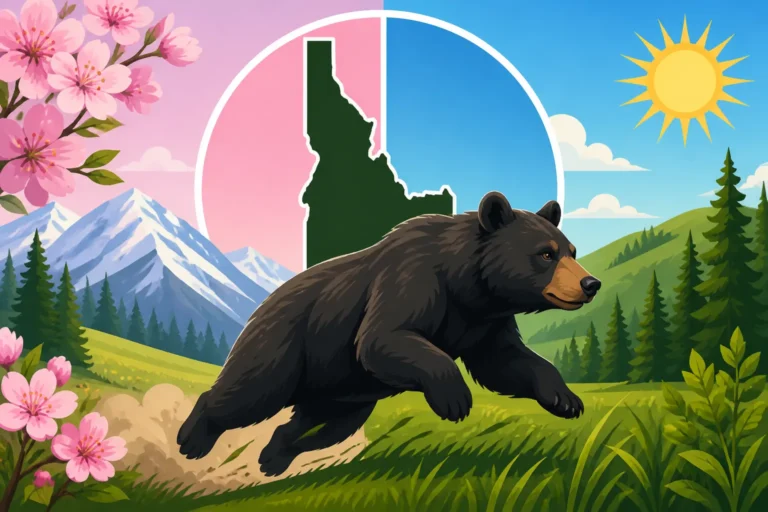
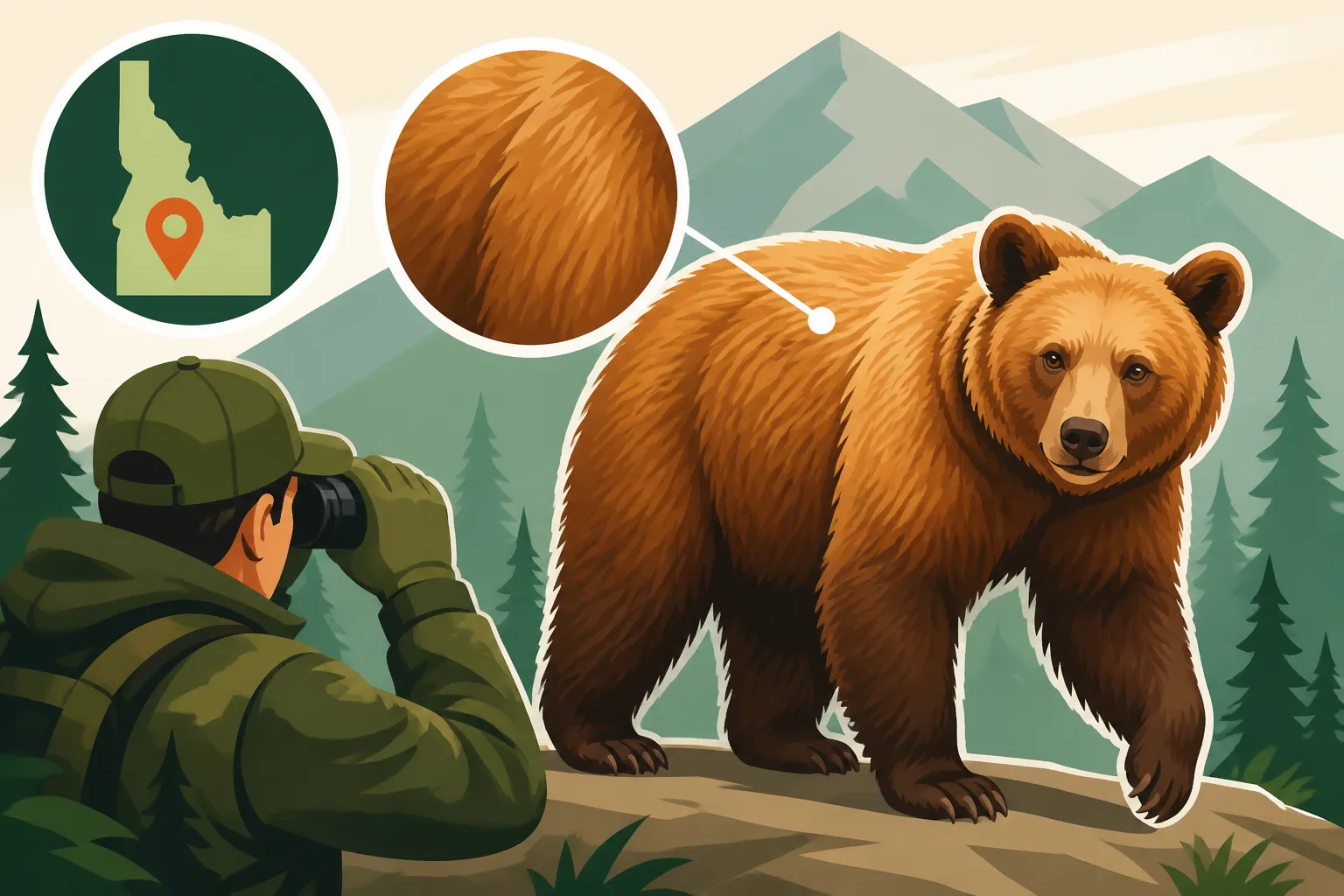
When we talk about "black bears," it’s easy to assume they are, well, black. But in Idaho, and across much of the West, that assumption couldn't be further from the truth. American black bears (Ursus americanus) are incredibly diverse in their coloration. While many are indeed a glossy black, a significant portion of the population exhibits various shades of brown, often referred to as "color phases." These can range from a light, almost blond hue, to chocolate brown, and yes, that distinctive reddish-brown we call "cinnamon."
This genetic variation is fascinating. It's not about different species, but rather different expressions of the same species. Think of it like human hair color – we're all humans, but we come in blond, brown, red, and black. For bears, this adaptation might even offer advantages in certain environments, perhaps for camouflage in sun-dappled timber or sagebrush. But for hunters, it adds a layer of complexity, especially when you're trying to quickly and accurately identify an animal from a distance in challenging terrain. The Black Bear Population Estimate Explained further details the distribution and variety you might encounter.
Why Correct Identification Matters So Much
The stakes for correctly identifying a bear in Idaho are incredibly high. The primary reason for this intense focus on identification is the presence of grizzly bears (Ursus arctos horribilis) in certain parts of the state. Grizzly bears are federally protected, and harming one carries severe legal consequences, including hefty fines and potential jail time. More importantly, it's an ethical responsibility to know what you're targeting.
Imagine being on a remote Idaho ridge, spotting a brown bear moving through the trees. Your heart starts pounding. Is it a cinnamon black bear, legal to harvest if you have the right tag, or is it a grizzly, a protected species that you absolutely cannot touch? The difference can be life-altering. Mistaking a grizzly for a black bear can lead to an illegal kill, and conversely, mistaking a black bear for a grizzly might cause you to pass on a perfectly legal and hard-earned opportunity. Beyond the legal ramifications, the safety aspect cannot be overstated. While both bear species are wild animals deserving of respect, grizzlies generally command a different level of caution due to their size and potential for defensive behavior, especially if cubs are involved. This is why understanding the nuances of bear identification is paramount before you ever head into bear country. For more on where these protected bears might be found, consider reviewing Where Grizzlies Overlap Idaho Hunting Units.
Key Distinguishing Features: Cinnamon Bear vs. Grizzly Bear
When you're trying to tell bears apart in the field, especially a cinnamon-phase black bear from a grizzly, you can't rely on color alone. It's often the combination of several physical characteristics, along with behavior and habitat, that provides a confident identification.
Physical Traits: The Hump, the Face, and the Ears
Let's break down the most reliable physical indicators. These are the details you'll be straining to see through your binoculars or spotting scope.
- The Shoulder Hump: This is often the most talked-about and usually the most reliable differentiator. Grizzly bears possess a prominent muscle mass over their shoulders, creating a distinct "hump" above their front legs. This hump is especially noticeable when they are standing or walking. It's essentially a power boost for their massive digging claws. Black bears, including cinnamon phases, lack this hump. Their back typically forms a relatively straight line from the neck to the rump. Even a very large black bear will not have the same pronounced hump as a grizzly.
- Facial Profile: Look at the bear's face from the side. Grizzly bears typically have a "dished" or concave facial profile, meaning their snout dips inward between their eyes and the end of their nose. Their forehead often appears more sloped and pronounced. Black bears, on the other hand, tend to have a straighter, more Roman nose profile. Their forehead meets their snout in a relatively smooth, straight line, giving them a more "dog-like" or "pony-like" appearance.
- Ears: This can be a subtle but helpful clue. Grizzly bears tend to have smaller, rounder ears that often appear relatively short and stubby in proportion to their large head. Black bear ears are usually larger, more pointed, and stand up more prominently from the sides of their head, especially compared to their overall head size.
It's crucial to look for all these features, not just one. A young grizzly might not have as pronounced a hump, and a black bear could have a slightly dished face. But typically, the combination will guide you.
Claws and Tracks: Reading the Ground
Sometimes, the bear might be too far away, or the light too poor, to make a clear call on facial features or the hump. In such cases, or when you're scouting, looking for tracks and signs can offer valuable clues, though it requires more experience.
- Claw Length: Grizzly bears have long, relatively straight claws (especially on their front paws) that can be several inches long. These are perfect for digging for roots, grubs, and excavating dens. When a grizzly walks, these long claws often leave distinct claw marks well in front of their toe pads in their tracks. Black bear claws are shorter, more curved, and sharper, designed more for climbing trees. In their tracks, black bear claw marks are usually either absent or appear much closer to the toe pads.
- Tracks: Examine the overall shape of the front paw track. A grizzly's front paw track tends to be broader and more "blocky," with the toes often forming a relatively straight line across the front. The heel pad is usually broad and tapers at the back. Black bear front tracks are generally more rounded or oval-shaped, and their toes are often more distinctly arched, not in a straight line. The heel pad tends to be less broad. Remember, hind tracks are more elongated and plantigrade (like a human foot) for both species, making them less reliable for distinguishing between the two unless you can also see the front tracks clearly.
Reading tracks takes practice, but it's an invaluable skill in bear country. For more on staying safe, consider Bear Spray Against a Sidearm in Grizzly Country.
Size and Behavior: Not Always Reliable Alone
While size and behavior might seem like obvious indicators, they can be misleading, especially without a direct comparison.
- Size: Yes, grizzlies tend to be larger and heavier than black bears, often weighing several hundred pounds more as mature adults. However, a large adult black bear can be significantly bigger than a young grizzly, or even a smaller adult grizzly. A 300-pound black bear can look enormous, while a 2-year-old grizzly might only weigh 150-200 pounds. Without something to compare it to, like another bear or a known object, size alone is a risky identifier.
- Behavior: Generalizations about bear behavior can also be problematic. Grizzlies are often portrayed as more aggressive, while black bears are seen as shyer. In reality, any bear, regardless of species, can be dangerous if surprised, feeling threatened, or protecting cubs or a food source. Both can be curious, both can run away, and both can stand their ground. While grizzlies are generally less inclined to climb trees as adults due to their weight and claw structure, a black bear can scamper up a tree with incredible speed. Therefore, relying solely on how a bear acts could lead you down a dangerous path. Focus on those physical features first.
The Specifics of Identifying a Cinnamon Bear
Now that we’ve covered the general distinctions, let’s hone in on the specific challenge of a cinnamon-phase black bear. These are the bears that most frequently cause confusion due to their brown coloration.
The Range of "Cinnamon" Hues
The term "cinnamon" itself describes a spectrum. A cinnamon black bear isn't just one shade. Their coats can be anything from a light, almost blondish-brown, to a vibrant reddish-brown, often resembling the spice itself, or a deeper, rich chocolate. The color can also vary across the bear's body, sometimes with darker legs and a lighter body, or a lighter muzzle. Sunlight and moisture can also play tricks on the eyes, making a bear appear lighter or darker than it truly is. A bear wet from rain will look significantly darker than one basking in dry sun.
Sometimes, especially with cubs, the color can be particularly deceiving. Cubs often mimic the color phase of their sow, so a cinnamon sow will likely have cinnamon cubs. This means you could see multiple brown bears, adding to the identification challenge. Always remember that brown doesn't automatically mean grizzly. Color Phase Bears in Idaho explores these variations in greater detail.
Contextual Clues: Habitat and Geographic Location
While physical features are paramount, understanding the bear's environment can offer valuable supporting evidence.
- Black Bear Habitat: Black bears are widely distributed across Idaho. They are incredibly adaptable and can be found in dense timber, thick brush, riparian areas, and even venturing into agricultural lands or suburban fringes. They are generally more prevalent in forested areas.
- Grizzly Bear Habitat: Grizzly bears in Idaho are primarily found in specific ecosystems, largely concentrated in the panhandle (around the Selkirk and Cabinet-Yaak mountains) and in the eastern part of the state, particularly in the Greater Yellowstone Ecosystem (around Island Park and the Centennial Mountains). These areas often feature high elevations, dense timber, and remote wilderness.
- Overlap Zones: There are areas where the ranges of black bears and grizzly bears overlap, and these are the zones where extreme caution and meticulous identification are absolutely necessary. Places like the Panhandle, sections of the Clearwater, and units near Yellowstone National Park are prime examples.
Before you even step foot into a unit, research the known bear populations. A tool like GoHunt can help you visualize unit boundaries and known species ranges, allowing you to prepare mentally for the potential presence of grizzlies. This background knowledge doesn't replace careful observation in the field, but it helps set your expectations and heighten your awareness. When considering a bear hunt, knowing the regulations for specific units is key. For example, Idaho Spring Bear Season Runs From April Into Summer outlines the timing for these hunts.
What to Do When You're Unsure
Here’s the golden rule in bear country: if there’s any doubt, there is no doubt. If you cannot make a positive identification, beyond any shadow of a doubt, then you do not shoot. It's that simple.
- Erase the "If It's Brown, It's Down" Mentality: This old adage, while well-intentioned in areas where only grizzlies are brown, is dangerous and outright illegal in Idaho. Here, brown can easily be a black bear. Embrace the mindset: "If it's brown, put your optics on it and verify it's a black bear."
- Observe and Wait: If you see a bear that you suspect might be a cinnamon black bear but can't confirm, take your time. Watch its behavior. Wait for it to move, or change its position, to get a better view of its shoulder profile, face, and ears. Patience is a virtue in bear country.
- Use Optics: This is where high-quality binoculars or a spotting scope become indispensable. They allow you to safely observe from a distance and pick out those crucial identifying features without putting yourself or the bear at undue risk.
- Carry Bear Spray: Regardless of species, encountering any bear can be startling. Always carry bear spray in an accessible holster and know how to use it. It's a non-lethal deterrent that can save your life and prevent an unfortunate incident.
Preparation and Best Practices for Bear Country
Stepping into Idaho's bear country, whether for a hunt or just to explore, requires preparation. Knowing what to do and what to bring can make all the difference for a safe and successful outing.
Optics are Your Best Friend
You absolutely cannot overestimate the value of good optics when hunting or hiking in bear country. Your eyes, even with perfect vision, are simply not enough to reliably distinguish subtle features on an animal hundreds of yards away, often in varying light conditions.
- Binoculars: A good pair of 10×42 or 10×50 binoculars are a fundamental piece of gear. Use them constantly, not just when you spot something. Scan the terrain, pick apart shadows, and confirm what you think you see. When you spot a bear, use your binoculars to zoom in on its shoulder hump, facial profile, and ear shape.
- Spotting Scope: For longer distances, a quality spotting scope (e.g., 15-45x or 20-60x) is invaluable. It allows for detailed examination of a distant animal, giving you the clarity needed to make a positive identification before considering a stalk or approach. This extra magnification can literally prevent a costly mistake. Don't rush your observation. Take your time to really study the animal through the glass, noting every detail.
Understanding Idaho's Bear Regulations
Idaho Fish and Game has clear, albeit sometimes complex, regulations regarding bear hunting. It is your responsibility to know and understand these rules before you head into the field.
- Black Bear Seasons and Tags: Idaho has specific seasons and tag requirements for black bears. These often vary by unit and can include spring and fall seasons. You must possess a valid black bear tag to harvest a black bear. Some units even have Two-Bear Limits in Some Idaho Units, allowing for more opportunity.
- Grizzly Bear Protection: Remember, grizzly bears are always protected. There is no open season for grizzlies in Idaho. Any harvest of a grizzly bear, even accidental, is a serious violation.
- Baiting and Hounds: Idaho allows for both baiting and hound hunting for black bears in specific units, under strict regulations. If you choose to hunt using these methods, ensure you understand all the rules regarding bait site registration, permissible bait, and hound use. For more on baiting, check out How Bear Baiting Works in Idaho and Registering a Bear Bait Site.
Before any bear hunt, checking the most current regulations on the Idaho Fish and Game website or using resources like GoHunt is paramount. These resources provide up-to-date information on season dates, unit restrictions, and any changes that might affect your hunt.
Staying Safe and Legal
Being prepared isn't just about identification and regulations; it's about overall safety and ethical conduct in the field.
- Carry Bear Spray: Seriously, always carry bear spray. It's your last line of defense in a close encounter. Practice deploying it so it's second nature.
- Make Noise in Thick Cover: If you're moving through dense brush or areas with limited visibility, make noise to avoid surprising a bear. A bear that knows you're there is less likely to be surprised and defensive.
- Store Food Properly: If camping, ensure all food and scented items are stored in bear-resistant containers, hung from a tree, or secured in a vehicle. This prevents bears from becoming habituated to human food, which can lead to dangerous encounters. Check Food Storage Rules in Grizzly Country for specific guidelines.
- Patience and Ethics: Hunting is about more than just pulling a trigger. It's about respecting the animal, the land, and the law. If you're not 100% sure, don't take the shot. An ethical hunter prioritizes positive identification and responsible action above all else. Tools like GoHunt can help you pinpoint areas with lower pressure or specific habitats known for different bear populations, allowing you to plan your hunt effectively and make informed decisions.
Remember that hunting a bear, especially a color-phase one, requires a high level of discernment. Take the time to educate yourself, practice with your optics, and always err on the side of caution. Idaho's wild places are magnificent, and by being prepared, you can ensure your experiences are safe, legal, and truly memorable.
Bear Identification Comparison Table
| Feature | Cinnamon Black Bear (Ursus americanus) | Grizzly Bear (Ursus arctos horribilis) |
|---|---|---|
| Shoulder Hump | Absent; back forms a relatively straight line. | Prominent muscle mass (hump) over shoulders. |
| Facial Profile | Straighter, "Roman nose" profile; forehead meets snout in a smooth line. | "Dished" or concave profile; snout dips inward between eyes and nose. |
| Ears | Relatively larger, more pointed, and prominent. | Relatively smaller, rounder, and less prominent. |
| Claws (Front) | Shorter, more curved, darker; usually don't extend far beyond toe pads in tracks. | Longer, straighter, often lighter in color; extend well beyond toe pads in tracks. |
| Tracks (Front) | More rounded/oval; toes often arched; heel pad less broad. | Broader, "blocky"; toes often in a straighter line; broad heel pad. |
| Color | Highly variable: black, brown, cinnamon, blond, chocolate. | Highly variable: brown, blond, silver-tipped ("grizzled"). |
| Size | Generally smaller, but large individuals can overlap with small grizzlies. | Generally larger and heavier, but young grizzlies can be smaller than large black bears. |
| Tree Climbing | Excellent climbers, especially cubs and younger bears. | Less proficient climbers, especially adults; may climb short distances. |
Disclaimer
This article is for general informational purposes only and does not constitute professional advice. Laws, prices and regulations vary by location and change over time. Consult a qualified professional for guidance on your specific situation.