Idaho Mountain Goat Draw Odds Explained
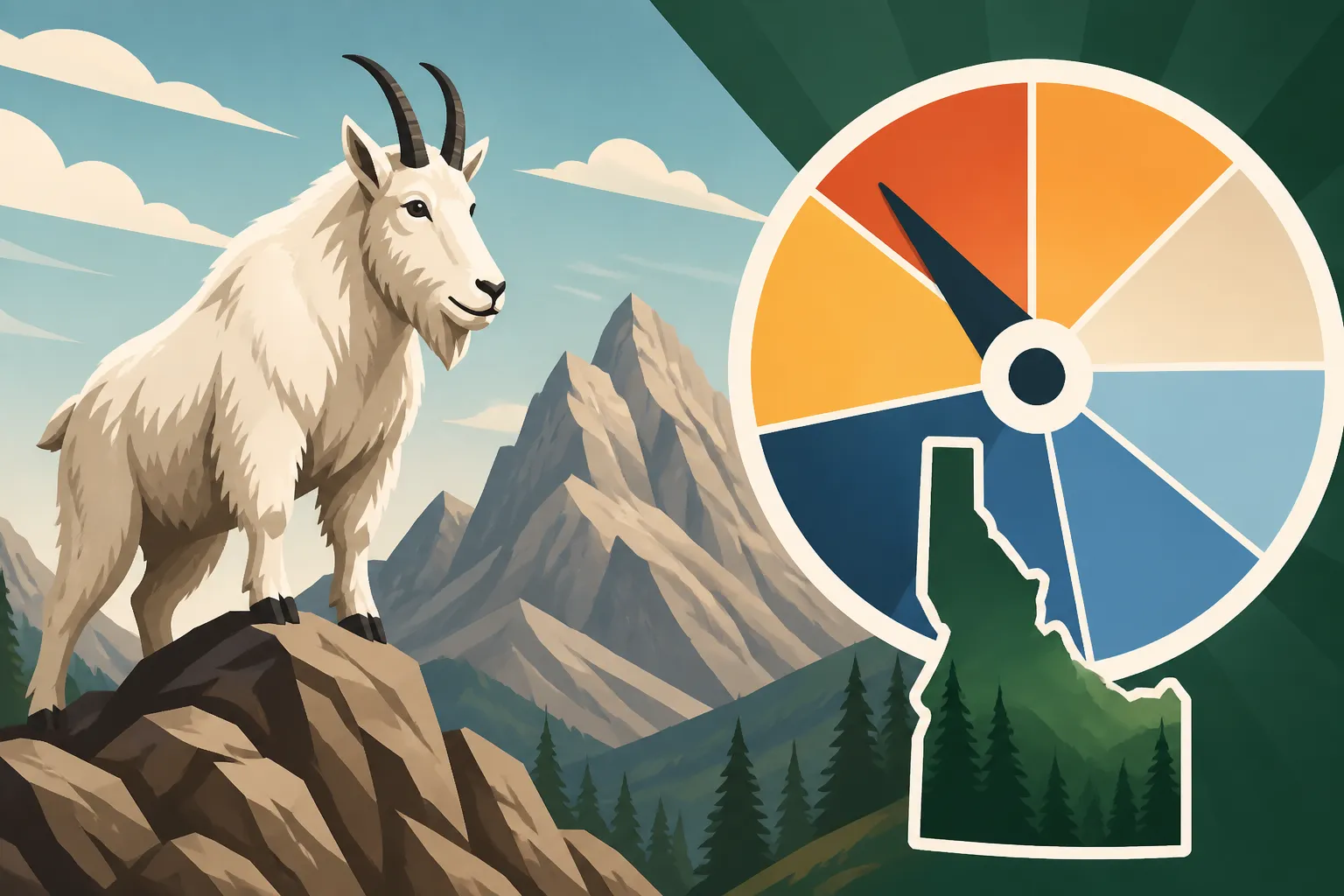
Applying for an Idaho mountain goat tag can feel like trying to win the lottery, and for many hunters, the draw odds are a mysterious, often disheartening, puzzle. It’s a hunt of a lifetime, but getting that coveted tag requires not just luck, but a solid understanding of how Idaho's drawing system works and how to best strategize your application. This guide is here to unravel those complexities, explain exactly what the draw odds mean for mountain goats in Idaho, and help you navigate the path to potentially drawing one of the rarest and most sought-after big game tags in the West.
The Rarity of an Idaho Mountain Goat Tag
Let's be honest: drawing an Idaho mountain goat tag is exceptionally difficult. It's not just a matter of competing with a few hundred other hunters; often, it's thousands for a handful of permits. This rarity isn't arbitrary; it's a carefully managed situation designed to protect one of Idaho's most iconic and vulnerable big game species.
Why Goat Tags Are So Limited in Idaho
Idaho's mountain goat populations are not as robust or widespread as elk or deer. These incredible animals thrive in specific, often harsh, high-alpine environments, which means their habitat is limited and often fragmented. They are also slow to reproduce, typically having only one kid per year, and can be sensitive to disturbance. Over-hunting even a small number of nannies (female goats) can have a devastating long-term impact on a local herd.
Because of this delicate balance, Idaho Fish and Game manages mountain goat hunting with extreme caution. The number of tags issued each year for specific units is painstakingly determined through extensive population surveys, habitat assessments, and careful scientific modeling. The goal is always to ensure the long-term health and stability of the goat herds. This conservative approach means that only a tiny fraction of applicants will ever draw a tag, making each successful draw a truly remarkable achievement. You can learn more about this careful management in Why Goat Tags Are So Limited in Idaho.
Understanding the Controlled Hunt System
Mountain goat hunting in Idaho falls under a "controlled hunt" system, which is different from general season tags that can be purchased over the counter. A controlled hunt means that specific numbers of tags are allocated for specific hunt units, and access is granted only through a lottery drawing. This system is crucial for managing species with limited populations, like mountain goats, moose, and bighorn sheep.
Unlike some other western states that use preference points or bonus points to give returning applicants an advantage, Idaho operates on a purely random draw system for these trophy species. Every applicant, regardless of how many times they've applied in the past, essentially has the same chance each year. This means that while some hunters may wait decades, others might draw on their very first try – it's truly a roll of the dice. The application period for these highly sought-after tags typically opens in April, with results usually posted by late May or early June. This is also when applications open for other trophy species; for more details, check out When Moose and Sheep Applications Open in Idaho.
Decoding Idaho's Mountain Goat Draw Odds
When you look at the official draw statistics, the numbers for mountain goat tags can be quite daunting. Understanding what these "odds" truly represent in Idaho's unique system is key to managing your expectations and making informed application choices.
What "Odds" Really Mean in Idaho's System
In Idaho, when you see "draw odds" for mountain goats, it's often expressed as a percentage or a ratio, like "1 in 500" or "0.2% chance." Because Idaho does not use a preference point system for these controlled hunts, these odds represent a true statistical chance for every single applicant in that given year for that specific hunt unit. This is a crucial distinction.
Think of it like this: every time you apply, your name goes into a hat alongside every other applicant's name. There are no extra entries for past applications, no "seniority" that gives you a better shot. While this can be frustrating for those who have put in for years, it also means that a first-time applicant has exactly the same mathematical chance as someone applying for their twentieth time. This system ensures that the opportunity remains open to everyone, rather than becoming solely accessible to those with the most points. This differs significantly from states with preference point systems, a concept explained further in Idaho Has No Preference Points, and What That Changes.
Factors Influencing Your Chances
While the draw is random, several factors do indirectly influence the reported draw odds for any given unit:
- Number of Tags Available: This is the most significant factor. If a unit only has one or two tags available, the odds will naturally be much lower than a unit with five or six tags, simply because fewer "winning tickets" exist.
- Number of Applicants: Unsurprisingly, the more people who apply for a particular unit, the lower the individual odds become. Highly desirable units, often those with a reputation for larger billies (male goats) or more accessible terrain, tend to attract far more applicants.
- Resident vs. Nonresident Quotas: Idaho has specific tag allocations for residents and nonresidents. Nonresident quotas for mountain goats are extremely limited, often just one or two tags across the entire state in some years, making nonresident odds astronomically low. This is a major hurdle for anyone from out of state hoping to draw an Idaho goat tag.
- Hunt Unit Popularity: Some units consistently have lower odds because they are simply more popular. This could be due to ease of access, higher success rates in past years, or word-of-mouth about trophy potential. Hunters will often gravitate towards these "known" units, further depressing the odds.
Practical Ways to Research Draw Odds
To make the most informed decision possible, you need to dive into the data. Idaho Fish and Game provides detailed draw statistics on its website, which is the official source for all this information. When looking at these statistics, pay attention to:
- Total Applicants: How many people applied for that unit?
- Tags Issued: How many tags were actually drawn for that unit?
- Success Rate: This isn't just about drawing a tag, but also about the success rate of hunters who did draw a tag. A unit might have good draw odds, but a terrible harvest success rate if the goats are incredibly difficult to find or access.
- Unit-Specific Data: Look for year-over-year trends. Have the number of tags increased or decreased? Has applicant interest surged?
Many hunters find platforms like GoHunt or similar subscription services helpful for their detailed breakdown of hunt units and success rates. These third-party resources often compile the raw data from Fish and Game into more user-friendly formats, sometimes offering additional analysis that can help you compare units quickly. However, always double-check against the official IDFG data. Before you commit your application, spend some quality time on resources like the Idaho Fish and Game website and specialized tools such as GoHunt. You can also start your research with Checking Idaho Drawing Odds Before You Apply and by utilizing The Idaho Hunt Planner Is the Tool to Start With.
Here's a simplified example of how draw odds might appear:
| Hunt Unit (GMU) | Tags Offered (Resident) | Applicants (Resident) | Draw Odds (Resident) | Tags Offered (Nonresident) | Applicants (Nonresident) | Draw Odds (Nonresident) |
|---|---|---|---|---|---|---|
| GMU 1A | 2 | 850 | 0.24% (1 in 425) | 0 | 120 | 0% |
| GMU 4 | 3 | 1100 | 0.27% (1 in 367) | 1 | 550 | 0.18% (1 in 550) |
| GMU 17 | 1 | 600 | 0.17% (1 in 600) | 0 | 90 | 0% |
| GMU 20A | 2 | 950 | 0.21% (1 in 475) | 0 | 130 | 0% |
Note: These numbers are hypothetical and for illustrative purposes only. Always consult official Idaho Fish and Game publications for current statistics.
Strategies for Applying for an Idaho Mountain Goat Tag
Given the incredibly low odds, developing a clear application strategy is essential. It's not just about throwing your name in the hat; it's about making smart choices that align with your hunting goals and understanding the long game involved.
Choosing the Right Unit
This is perhaps the most critical decision when applying for a mountain goat tag. Should you apply for the unit with the "best" odds, even if it's not where you truly want to hunt? Or should you consistently apply for your dream unit, knowing the odds might be worse?
- "Best Odds" Strategy: Some hunters analyze the draw statistics religiously, looking for units that had slightly less interest or a marginally higher number of tags in previous years. The idea is to play the numbers game, hoping a small statistical advantage might swing in their favor. Be warned, though, that "better" odds for mountain goats are still incredibly long odds. Also, a unit with "better" odds might be one that's physically grueling, has lower trophy potential, or is harder to access. Understanding Idaho Mountain Goat Hunt Areas can help inform these decisions.
- "Dream Unit" Strategy: Many hunters prefer to apply for the unit they genuinely want to hunt, year after year. This might be a unit they've scouted, one that holds personal significance, or one known for exceptional trophy quality. While the odds might be tougher, if they ever do draw, it'll be for the hunt they truly desire. This approach aligns with the fact that Idaho has no point system, so applying for a tough unit doesn't penalize you for future draws.
- Consider the Experience, Not Just the Trophy: Beyond draw odds and trophy size, think about the kind of hunt you want. Are you prepared for an extreme backpacking expedition into remote wilderness, or would you prefer a unit with somewhat more accessible peaks? Mountain goat hunting is physically demanding, often taking place above timberline in rugged, unforgiving terrain. Researching the terrain and accessibility of a unit, perhaps by looking at satellite imagery or reading hunt reports on forums, is just as important as the draw odds. Keep in mind that Mountain Goat Hunting Above Idaho Timberline means serious physical conditioning will be necessary.
The Application Process, Step by Step
Applying for an Idaho controlled hunt tag is straightforward, but missing a deadline means missing your chance for the entire year.
- Purchase Your License: First and foremost, you must purchase a valid Idaho hunting license before you can apply for any controlled hunt. For nonresidents, this is a significant upfront cost that is generally non-refundable, even if you don't draw a tag.
- Access the Application: Applications are typically submitted online through the Idaho Fish and Game website or via authorized vendors like GoOutdoorsIdaho.
- Select Your Species and Unit: Carefully choose "Mountain Goat" and the specific hunt unit you wish to apply for. Double-check your selection before finalizing!
- Pay the Application Fee: There is a non-refundable application fee for each species you apply for. This is separate from the license cost.
- Meet the Deadline: The application period for mountain goat (and other trophy species like moose and bighorn sheep) generally runs through April. Missing this deadline means waiting until next year. The Idaho Controlled Hunt Calendar, April Through August provides all these crucial dates.
Managing Expectations and Persistence
Drawing an Idaho mountain goat tag is a marathon, not a sprint. For most hunters, it's a multi-year, even multi-decade, endeavor.
- Embrace the Low Odds: Go into it with the understanding that the odds are stacked against you, but someone has to draw. Why not you? This mindset helps mitigate the inevitable disappointment of not drawing year after year.
- The Long Game: Many successful goat hunters will tell you they applied for 10, 20, or even 30 years before their name was finally pulled. Persistence is key. Each year is a new chance, a fresh roll of the dice in Idaho's truly random system.
- Consider Alternatives: If the odds for a mountain goat tag feel too overwhelming, remember that Idaho offers incredible hunting opportunities for other big game like elk and mule deer, often with more accessible general season tags or better draw odds for controlled hunts. It's okay to pursue those opportunities while keeping your name in the hat for a goat.
Drawing an Idaho mountain goat tag is a dream for many, and for good reason—it’s an extraordinary hunt in some of the most stunning country Idaho has to offer. While the odds are undeniably long, understanding how the system works, making informed choices, and maintaining a hopeful perspective are your best strategies. Keep applying, keep dreaming, and someday, just maybe, you'll be one of the lucky few holding that coveted tag.
Disclaimer
This article is for general informational purposes only and does not constitute professional advice. Laws, prices and regulations vary by location and change over time. Consult a qualified professional for guidance on your specific situation.