What Happens After You File an Outfitter Complaint
It's incredibly frustrating when you've invested your time, hard-earned money, and dreams into an Idaho hunting trip, only to feel like you've been let down by an outfitter. Whether it's a feeling of being misled, a safety concern, or a blatant breach of contract, the disappointment can linger long after you've left the field. This guide aims to pull back the curtain on what actually happens after you decide to take that step and file a formal complaint against an outfitter in Idaho, detailing the process and setting realistic expectations for what comes next.
Understanding the Idaho Outfitters and Guides Licensing Board (IOGLB) Role
Before diving into the nuts and bolts of the complaint process, it's really important to understand who you're complaining to and what their job actually is. The Idaho Outfitters and Guides Licensing Board, or IOGLB, isn't just a general customer service department for hunting trips. It's a specific regulatory body with a very defined mandate. Think of them less like a mediator for all your grievances and more like a watchdog for the integrity and legality of the outfitting industry in the state.
Why the IOGLB Exists
The primary reason the IOGLB exists is to protect the public and ensure that professional outfitting and guiding services in Idaho operate safely and ethically. They license outfitters and guides, ensuring they meet certain standards for experience, safety, and business practices. This includes everything from ensuring guides have the necessary first-aid certifications to making sure an outfitter maintains proper insurance. Their goal is to maintain high standards for the industry, which in turn helps safeguard you, the client, from unscrupulous or unsafe operations. It's about setting a baseline of professionalism and holding operators accountable to it, rather than simply resolving every dispute. For a deeper dive into their overall function, you can check out The Idaho Outfitters and Guides Licensing Board Explained.
It's crucial to grasp that while your complaint is important to them, their ultimate aim isn't necessarily to get your money back or ensure your specific hunt was perfect. Their focus is on whether the outfitter violated the laws and regulations governing the industry. If they find violations, their actions will be aimed at correcting those breaches and preventing future occurrences, which might involve penalties for the outfitter, but not direct financial compensation for you. This distinction is vital for setting realistic expectations about the outcome of your complaint.
What Falls Under IOGLB Jurisdiction
The IOGLB has specific areas where its authority applies. Generally, they investigate complaints related to violations of the Idaho Outfitters and Guides Act and the associated administrative rules. This means they look into issues like an outfitter or guide operating without a valid license, gross negligence that compromises client safety, or a clear misrepresentation of services that constitutes a breach of their professional obligations under Idaho law. For instance, if you were told your guide had specific certifications, but they didn't, or if the outfitter promised a service they were legally unauthorized to provide, that falls squarely within their purview. Understanding What the Idaho Licensing Board Actually Regulates can help clarify what types of issues are actionable.
However, many common frustrations, while deeply disappointing, might fall outside their direct jurisdiction. For example, simply not seeing any animals, or having a hunt that felt "unsuccessful" in terms of harvest, is generally not something the IOGLB will investigate. Hunting is, by its very nature, uncertain, and the IOGLB doesn't guarantee success. Similarly, if your complaint is purely about a financial dispute over a cancellation or a perceived overcharge, and it doesn't involve a violation of licensing rules or safety regulations, it might be considered a civil matter best resolved through other legal avenues. They are concerned with the conduct of the outfitter as it relates to their license and regulatory compliance, not typically with the subjective quality of your hunting experience or contractual payment disagreements.
The Complaint Filing Process: Your First Steps
Okay, so you've weighed your options, reviewed your situation, and decided to move forward. The next phase is all about getting your ducks in a row. Filing a complaint isn't just about sending an angry email; it's a formal process that requires clear, concise information and solid evidence to back up your claims. This is where your diligent record-keeping really pays off.
Documenting Your Experience
The strength of your complaint rests heavily on the evidence you provide. Before you even touch a complaint form, gather everything related to your hunt. This includes copies of your signed contract, any written communications such as emails, text messages, or even detailed notes from phone calls (dates, times, who you spoke with, what was said). If you have photographs or videos that support your claims, those are invaluable. For example, if safety was an issue, photos of unsafe equipment or conditions can be powerful evidence. If an outfitter misrepresented the camp or gear, visual proof makes your case much stronger. You might also include witness statements from other hunters or individuals who observed the situation.
Think of yourself as building a case. Each piece of documentation is a brick in that wall. Did the outfitter promise specific services or amenities that weren't delivered? Point to the exact wording in your contract or the email where that promise was made. Was there a safety concern? Detail the date, time, location, and exactly what happened, and if possible, who else was present. The more specific and factual you can be, the better. Avoid emotional language and stick to verifiable facts. It also helps to revisit any initial conversations or marketing materials; sometimes Red Flags When Booking a Hunt are clearer in hindsight.
Submitting Your Formal Complaint
Once you've compiled all your supporting documents, you'll need to locate and complete the official complaint form provided by the Idaho Outfitters and Guides Licensing Board. This form is typically found on their website. It's designed to guide you through providing the necessary information in a structured format. Be sure to fill out every section accurately and completely. Use clear, concise language to describe your grievances. Avoid jargon and assume the person reading it has no prior knowledge of your specific situation.
When you're describing the issues, refer back to your documentation. For instance, instead of saying, "The guide was awful," you would say, "On [date], Guide [Name] failed to provide proper instruction on [activity] as outlined in section X of our contract, leading to [specific consequence]. See attached photo/email." Attach all your supporting documentation as requested. It's often helpful to number your attachments and refer to them in the complaint form itself. Pay close attention to any deadlines or specific submission instructions they provide, such as mailing physical copies versus submitting online. Don't procrastinate; file your complaint as soon as you have all your information together, as memories fade and evidence can become harder to obtain over time. If you're unsure how to start, reading resources like Filing a Complaint Against an Idaho Outfitter might give you additional insight.
What Happens After Your Complaint Is Filed
So you've sent off your meticulously documented complaint. Now what? The waiting game can be tough, but understanding the steps the IOGLB typically takes can help manage your expectations and keep you informed. It's not an instant resolution, but a process designed to be fair and thorough for all parties involved.
Initial Review and Investigation
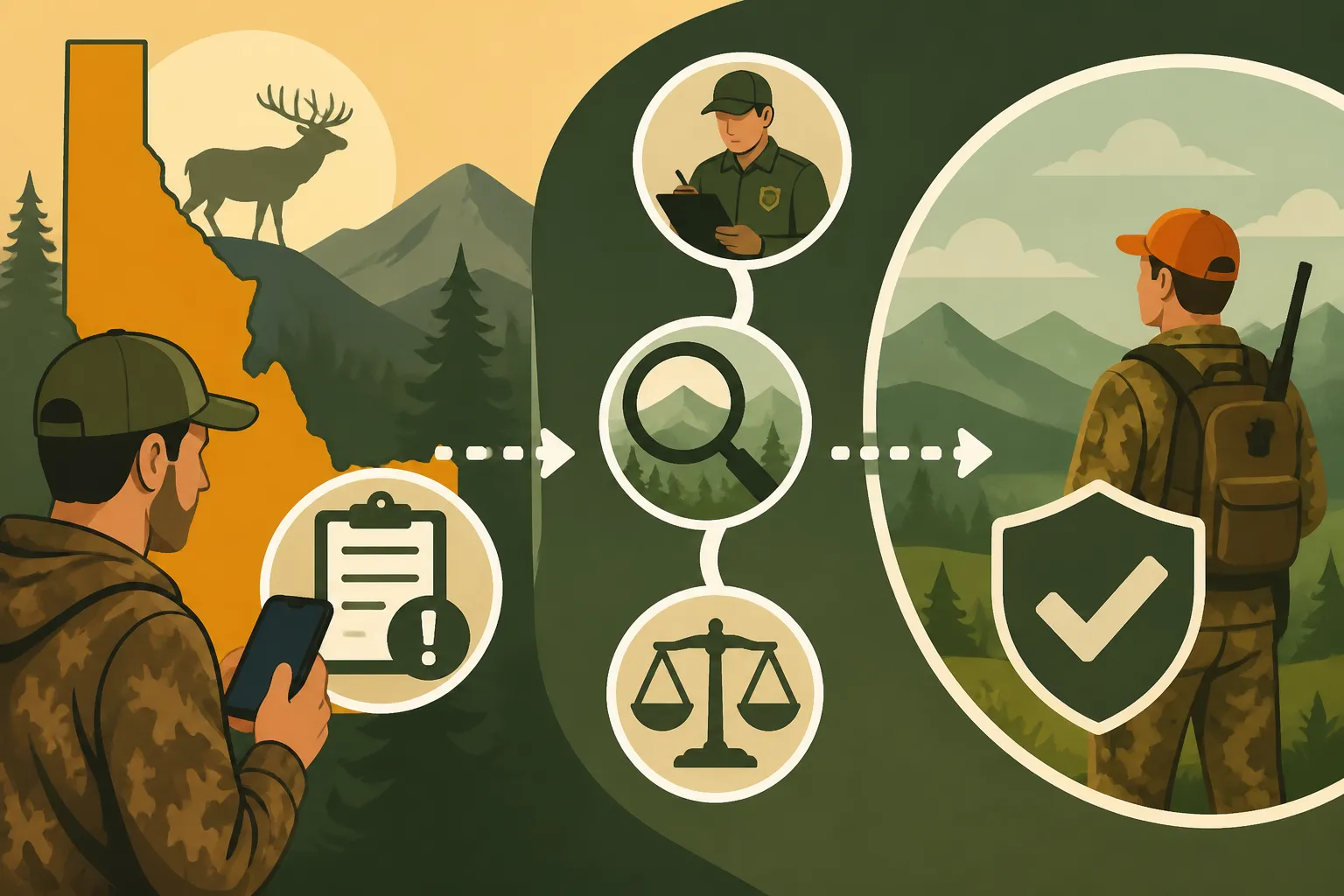
Once the IOGLB receives your formal complaint, their staff will first conduct an initial review. This isn't the full investigation yet, but rather an assessment to ensure the complaint falls within their jurisdiction and contains enough information to warrant further action. If it's a legitimate issue that the Board can address, they will typically notify the outfitter in question, providing them with a copy of your complaint and an opportunity to respond. This is a standard part of due process – giving the accused party a chance to tell their side of the story.
After the outfitter has responded, or if the initial review indicates a serious potential violation, the IOGLB will often launch a more in-depth investigation. This can involve interviewing you, the outfitter, the guide, any witnesses, and reviewing all submitted documentation, potentially even requesting additional records. They might also consult with legal counsel or other experts if the nature of the complaint requires specialized knowledge. This investigative phase can take some time, as they work to gather all pertinent facts and ensure a comprehensive understanding of the situation. They are essentially acting as fact-finders to determine if a violation of Idaho's outfitting and guiding regulations has occurred.
Potential Outcomes and Resolutions
The resolution of your complaint can take several paths, depending on the findings of the investigation. If the IOGLB determines there's insufficient evidence of a violation, or if the issue falls outside their jurisdiction, your complaint might be dismissed. This doesn't mean your experience wasn't valid, just that it wasn't a matter the IOGLB could address through their regulatory powers. In some cases, especially for minor issues, there might be an attempt at informal resolution or mediation between the parties, though this is less common for serious complaints.
If the investigation finds evidence of a violation, the Board can take disciplinary action against the outfitter or guide. These actions can range from a formal warning or a letter of reprimand to significant fines, suspension of their license for a period, or, in the most severe cases, revocation of their outfitter or guide license entirely. These disciplinary actions are recorded and become part of the outfitter's public record, serving to protect future clients. It's important to remember that these actions are about enforcing regulatory compliance and protecting the public, not about directly compensating you for your financial losses or dissatisfaction. While you won't get a check from the IOGLB, their actions help maintain the integrity of the industry. Sometimes, even if you don't get the outcome you hoped for, simply knowing that the Board has taken action against a problematic operator provides a measure of closure and ensures others won't face the same issues. Services like GoHunt and BookYourHunt often have review systems where you can share your experience, which, while not a regulatory action, can also inform other hunters.
| Complaint Scenario | IOGLB Jurisdiction? | Likely IOGLB Action (if applicable) | Alternative Action Recommended |
|---|---|---|---|
| Unlicensed guide / Outfitter | Yes | Investigation, potential disciplinary action | Report to IOGLB, consider civil action |
| Safety negligence | Yes | Investigation, potential disciplinary action | Report to IOGLB, consider civil action |
| Gross misrepresentation of services | Yes (if specific) | Investigation, potential disciplinary action | Report to IOGLB, consider civil action |
| Failure to harvest game | No | None | Review contract, manage expectations |
| Disagreement over tip amount | No | None | Direct communication, review terms |
| Disputed refund on cancellation | No (contract issue) | May inform investigation, but not resolve | Civil court, legal counsel |
What the IOGLB Cannot Do for You Directly
It's vital to maintain realistic expectations about what the Idaho Outfitters and Guides Licensing Board can and cannot achieve. While they are a powerful regulatory body, they operate within specific legal confines. Understanding these limits will help you decide if filing a complaint with them is the right path for your particular grievance, or if other avenues might be more appropriate.
No Direct Financial Reimbursement
One of the most common misconceptions is that filing a complaint with the IOGLB will result in you getting your money back. Unfortunately, that's almost never the case. The Board does not have the authority to order an outfitter to refund your deposit, cover your travel expenses, or compensate you for lost wages or emotional distress. Their role is disciplinary and regulatory, not adjudicative for civil damages. They're not a small claims court, nor are they set up to mediate financial disputes between clients and businesses.
If your primary goal is to recover money, you would generally need to pursue a civil lawsuit in a court of law. This might involve small claims court for lesser amounts or consulting with an attorney for larger sums. While the IOGLB's findings of a violation could potentially support your civil case, they will not directly handle the financial recovery aspect for you. It's a tough pill to swallow when you feel cheated out of your money, especially when considering the significant costs associated with a hunt. For instance, What a Guided Idaho Elk Hunt Costs can be a substantial investment, making the sting of a negative experience even sharper. Always remember to scrutinize Reading the Cancellation and Refund Terms before committing to any booking to understand your options should things go south.
Limited Scope of "Unsatisfactory Hunt"
Another important distinction is the difference between a regulatory violation and simply having an "unsatisfactory hunt." As mentioned earlier, the IOGLB doesn't guarantee a successful harvest or a perfect experience. Hunting is inherently unpredictable, and many factors outside an outfitter's control (like weather, animal movement, or your own shooting skills) contribute to the outcome. An outfitter promising a "successful" hunt doesn't automatically mean you're guaranteed to bag an animal. Many outfitters specify What Outfitter Prices Almost Never Include, which often clarifies that the fee covers the experience, not the harvest.
Therefore, a complaint that centers solely on the fact that you didn't see an elk, or didn't get a shot opportunity, or that the guide wasn't as talkative as you hoped, generally won't fall under the IOGLB's jurisdiction for disciplinary action. Their focus is on whether the outfitter upheld their legal and ethical duties as a licensed professional, such as maintaining safety standards, providing the advertised services within reason, and employing properly licensed guides. Unless there was a clear, provable breach of contract regarding the services explicitly promised, or a demonstrable act of negligence, the IOGLB typically won't intervene in what's essentially a subjective evaluation of your hunting experience. It's worth remembering that outfitters often secure permits from federal agencies, and their ability to keep these permits, like a How Outfitters Get Forest Service Special Use Permits, depends on their compliance with regulations, which the IOGLB oversees.
Ultimately, navigating the aftermath of a less-than-ideal hunting experience can be complex. While the Idaho Outfitters and Guides Licensing Board is a critical mechanism for maintaining industry standards and holding bad actors accountable, it's not a catch-all solution for every grievance. By understanding their role, your responsibilities in documenting your case, and the limitations of their authority, you can approach the process with clear eyes and realistic expectations. Your efforts in filing a complaint, even if it doesn't directly recover your costs, contribute significantly to ensuring the integrity of Idaho's outfitting industry for all hunters, present and future.
Disclaimer
This article is for general informational purposes only and does not constitute professional advice. Laws, prices and regulations vary by location and change over time. Consult a qualified professional for guidance on your specific situation.