Idaho Wildlife Management Areas by Region
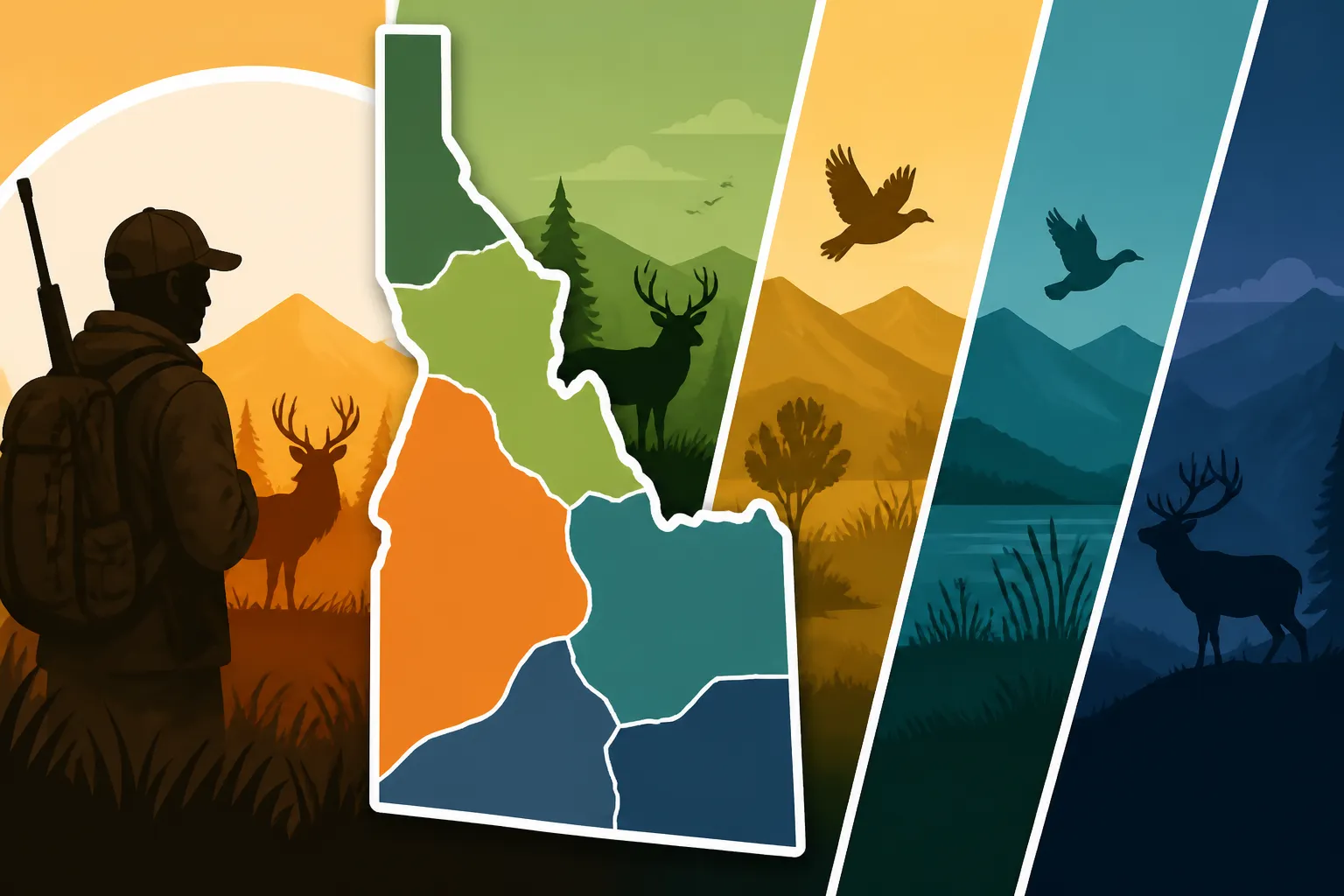
Finding quality public land to hunt in Idaho can feel like searching for a needle in a haystack, especially when you’re trying to avoid the crowds that flock to the most obvious spots. It’s tough to pinpoint areas that offer both decent opportunity and a bit of solitude. This guide is all about shedding light on Idaho’s Wildlife Management Areas (WMAs), offering a region-by-region breakdown to help you understand where these crucial parcels of public land are, what they offer, and how to make the most of them for your next hunting adventure.
The Unique Role of Idaho's Wildlife Management Areas
Idaho's landscape is a vast tapestry of public and private land, from towering mountains to sweeping sagebrush plains. Within this diverse geography, Wildlife Management Areas stand out as dedicated havens for wildlife, and consequently, for hunters who understand their unique value. It's easy to lump all public land together, but WMAs operate under a distinct mandate that sets them apart.
What Exactly is a WMA and Its Purpose?
Imagine a piece of land specifically acquired and managed to benefit wildlife populations. That's essentially what an Idaho WMA is. These aren't just random parcels; they're strategically located to provide critical habitat, often focusing on winter range for big game, nesting and brood-rearing areas for upland birds, or prime waterfowl wetlands. The Idaho Department of Fish and Game (IDFG) actively manages these areas with conservation and public access, including hunting, as primary goals. This means controlled burns, habitat restoration projects, food plots, and water developments are common to ensure robust wildlife populations. It's a proactive approach to managing the land for the animals, which in turn creates sustainable hunting opportunities. So, when you step onto a WMA, you're not just on public ground; you're on a wildlife-focused parcel where the health of the ecosystem is paramount.
WMAs often serve as vital corridors for migrating animals or provide sanctuary during harsh winter months. For instance, many WMAs are critical winter range for deer and elk, meaning they are absolutely essential for the survival of these herds through the cold season. This importance directly impacts how these areas are managed and when they are open for public use, including hunting. Understanding this core purpose helps you appreciate why certain rules exist and how to best utilize these areas for hunting, often finding concentrations of game during specific times of the year when they rely most heavily on these protected habitats.
How WMAs Differ from National Forests and BLM Land
While National Forests and Bureau of Land Management (BLM) lands also offer incredible hunting opportunities in Idaho, WMAs have a more focused and intensive management approach geared specifically towards wildlife. National Forests, managed by the U.S. Forest Service, balance multiple uses like timber production, recreation, grazing, and wildlife habitat. BLM lands, meanwhile, are managed for sustained yield, which encompasses energy development, grazing, recreation, and wildlife. Their management goals are broader, which can sometimes lead to different outcomes for hunters.
WMAs, on the other hand, are designed first and foremost for wildlife. This often means more direct habitat manipulation, stricter seasonal closures to protect wintering animals or nesting birds, and sometimes, more restrictive motorized vehicle rules than you might find on some Forest Service or BLM roads. For instance, you're much more likely to encounter Camping Limits on Idaho WMAs than on dispersed camping areas in a National Forest. The management objectives directly influence the type and timing of hunting opportunities available. This specialized focus can make WMAs incredibly productive, but it also means hunters need to be extra diligent about understanding specific area regulations, which can differ significantly even between adjacent WMAs.
Consider the level of detail in management: a WMA might have specific food plots planted for pheasants, constructed wetlands for ducks, or carefully managed browse for deer and elk. While National Forests and BLM lands certainly provide excellent habitat, the direct, intensive management on WMAs often translates to a higher concentration of game in smaller, more accessible areas. This makes them particularly appealing for hunters who prefer to scout and hunt smaller, more controlled environments or target specific species that benefit from this focused habitat work. For example, if you're looking for Waterfowl Hunting on Idaho Wildlife Management Areas, a WMA is often your best bet.
Navigating Regulations and Access within Idaho WMAs
Stepping onto an Idaho WMA is a bit different than simply pulling off the highway onto general public land. Each WMA is a unique parcel with its own set of rules, largely dictated by its specific conservation objectives and the species it supports. The biggest frustration often comes from not knowing these nuanced regulations until you're already there, boots on the ground.
General Rules and Restrictions You'll Encounter
One of the most common regulations you'll face on WMAs revolves around motorized vehicle use. Just like on other public lands, Idaho's Motorized Hunting Rule and Where It Applies is a big one. However, WMAs often take it a step further. While you might find open roads on a National Forest, many WMAs have very specific rules about where and when you can drive. This is often done to reduce disturbance to wildlife, especially during critical times like winter. You might find certain roads are open only during specific seasons, or entirely closed, requiring you to access areas on foot, horseback, or bicycle. It’s not uncommon to find signs explicitly stating "foot traffic only" beyond a certain point. This restriction can be a blessing in disguise, reducing hunting pressure and allowing for a more primitive hunting experience, but it definitely requires planning.
Beyond motorized access, camping regulations are often tighter on WMAs than on other public lands. While you might be able to dispersed camp almost anywhere in a National Forest, many WMAs restrict camping to designated sites, or prohibit it altogether. This is often to maintain habitat integrity, manage human impact, and reduce conflicts with wildlife. Additionally, WMAs might have specific rules regarding target shooting, the use of ATVs, or even dog training, especially during nesting seasons. Understanding these can save you a frustrating encounter with a game warden or, worse, inadvertently disturbing wildlife you're trying to hunt. It's a reminder that these areas are managed intensively, and our activities need to align with their conservation goals.
How to Find WMA-Specific Regulations
The Idaho Department of Fish and Game (IDFG) website is your absolute best friend when it comes to understanding WMA-specific regulations. You simply cannot rely on general public land rules when planning a WMA hunt. Each WMA has its own page on the IDFG site, which will detail everything from permitted activities, seasonal closures, specific hunting rules for different species, and camping restrictions. It's a deep dive, but a necessary one. Think of it as homework that pays off with a more successful and compliant hunt. These pages will often include maps and contact information for the local WMA manager, which can be invaluable for getting current, hyper-local information.
Beyond the official IDFG website, modern mapping applications like onX Hunt are incredibly helpful. These apps often integrate WMA boundaries and can sometimes even display specific WMA-related closures or rules directly on the map layers. They're a fantastic tool for Using onX Layers for Idaho Public Land to scout your chosen WMA from your couch, identifying access points, potential food sources, and travel corridors before you even set foot on the ground. However, always cross-reference what you see on an app with the official IDFG regulations. Technology is a powerful scouting tool, but the official word from IDFG is the ultimate authority. Don't let the convenience of technology replace the necessity of checking the regulations yourself.
Panhandle and Clearwater WMAs: Northern Idaho's Diverse Offerings
Northern Idaho, with its dense timber, abundant water, and rugged terrain, offers a distinct hunting experience. The Wildlife Management Areas in the Panhandle and Clearwater regions reflect this environment, providing crucial habitat for a variety of game, from waterfowl to big game. These WMAs are often characterized by their forested landscapes and proximity to major waterways.
Panhandle Region WMAs: Timber and Waterfowl Opportunities
The Panhandle region is defined by its vast forests, numerous lakes, and the winding Kootenai and Pend Oreille rivers. WMAs here are often a mix of dense timber, riparian zones, and dedicated wetlands, providing exceptional opportunities for both upland birds and waterfowl. For example, areas like the Boundary Creek WMA or the Pend Oreille WMA are prime waterfowl destinations, managed specifically for ducks and geese. These WMAs feature managed wetlands, dikes, and often food plots that attract and hold migratory birds, making them highly productive for shotgunners. Hunters often utilize blinds and decoys in these managed environments.
However, it's not all about waterfowl. The forested sections within these WMAs and adjacent uplands provide habitat for forest grouse species, and even whitetail deer. The dense cover can make for challenging hunting, requiring patience and a good understanding of the local terrain. Access might involve navigating logging roads, some of which may be seasonally closed, or hiking through thick brush. If you're looking for a change of pace from big game, these WMAs can offer fantastic bird hunting, and sometimes, a surprise encounter with a whitetail buck. Just remember to check specific WMA maps for walk-in only zones and designated waterfowl hunting areas.
Clearwater Region WMAs: Big Game and Upland Challenges
Moving south into the Clearwater region, the landscape transitions to steep canyons, timbered slopes, and the confluence of major rivers like the Clearwater and Salmon. WMAs here often play a critical role in providing winter range for elk and deer, as well as habitat for upland birds like chukar and Hungarian partridge on the dryer breaks. Craig Mountain WMA is a prime example, a massive and rugged area that offers incredible big game hunting, particularly for mule deer and elk, along with outstanding chukar hunting on its steep, sage-covered hillsides. This WMA is truly vast and often requires significant physical exertion to access its more remote reaches.
Other WMAs in the Clearwater, such as Lapwai Creek WMA, might be smaller but still provide crucial habitat, often focusing on pheasant and quail in more agricultural-influenced landscapes, or offering accessible entry points for big game hunting adjacent to private lands. Hunters in these WMAs need to be prepared for diverse terrain, from river bottoms to steep, brushy slopes. Scouting is key, and understanding seasonal animal movements, particularly on winter ranges, can lead to success. These areas can sometimes see considerable pressure, so knowing how to get off the beaten path, even by a short distance, can make a huge difference.
Southwest and Central Idaho WMAs: From Sagebrush to River Bottoms
The heart of Idaho presents a diverse blend of high desert, agricultural valleys, and the dramatic river breaks of the Salmon and Snake Rivers. The WMAs in these regions are as varied as the landscape itself, each managed to support wildlife adapted to these unique environments.
Southwest Region WMAs: Diverse Habitats Near Population Centers
The Southwest region, often close to Idaho's larger population centers, features WMAs that range from managed wetlands along the Snake River to sagebrush uplands. These areas are incredibly important for providing accessible hunting opportunities. Fort Boise WMA, for example, is a renowned waterfowl mecca and also offers excellent pheasant hunting, with many fields actively managed and pheasants often stocked. This WMA sees heavy pressure, especially on opening weekends, but consistent effort can yield success. Hunters here need to be mindful of crowded conditions and strict regulations regarding blinds and shooting hours.
Further afield, the Cecil D. Andrus WMA (formerly known as the Little Wood River WMA) provides critical winter range for mule deer and elk, extending into more rugged country. This WMA offers opportunities for big game hunters who are willing to put in the effort. The proximity of these WMAs to population centers means they often act as vital green spaces for wildlife in otherwise developed or agricultural areas. They represent a significant investment in ensuring that local hunters have places to pursue game. Always check for seasonal closures, as many of these WMAs have specific periods when vehicle access or even foot traffic is restricted to protect wintering herds.
| WMA Name (Region) | Primary Game Species | Key Habitat Type | Notable Access/Regulation |
|---|---|---|---|
| Fort Boise WMA (Southwest) | Waterfowl, Pheasant | Wetlands, Crop Fields | Heavy pressure, designated blinds |
| Craig Mountain WMA (Clearwater) | Elk, Mule Deer, Chukar | Steep Canyons, Sagebrush | Rugged, extensive hiking required |
| Tex Creek WMA (Upper Snake) | Elk, Mule Deer | Winter Range, Conifer | Seasonal closures for winter range |
| C.J. Strike WMA (Magic Valley) | Waterfowl, Upland Birds | Reservoir, Riparian | Boat access for waterfowl, open areas |
| Boundary Creek WMA (Panhandle) | Waterfowl, Forest Grouse | Wetlands, Timber | Good for waterfowl, some timber roads |
Central Idaho WMAs: High Country and River Breaks
Central Idaho is the heart of the state's wild country, characterized by vast wilderness areas, towering mountains, and deep river canyons. WMAs in the Salmon/Challis and Magic Valley regions are often connected to this rugged landscape, providing crucial habitat in diverse environments. The Salmon/Challis region, home to parts of the Frank Church River of No Return Wilderness, has WMAs that serve as critical winter range and migration corridors for elk and mule deer. Places like the Pahsimeroi WMA are managed specifically to sustain large herds of mule deer and elk, particularly during the harsh winter months. These WMAs are generally more remote and rugged, often requiring a good deal of backcountry experience.
The Magic Valley region, though known for its agricultural plains, also contains WMAs along the Snake River and in the surrounding sagebrush steppe. C.J. Strike WMA, for instance, focuses on waterfowl and upland birds along the Snake River reservoir, offering a mix of water and riparian habitat. Other WMAs like Carey Lake WMA provide wetland habitat for migratory birds and can be excellent for early-season waterfowl or pheasant hunting. These central Idaho WMAs are often less developed than those closer to population centers, offering a more secluded hunting experience, but still requiring attention to specific seasonal rules. Don't forget that Idaho's Motorized Hunting Rule Runs August Into December in many of these areas to protect sensitive wintering grounds.
Eastern Idaho WMAs: High Country, Wetlands, and Winter Range
Eastern Idaho stretches from the agricultural plains of the Upper Snake River to the high mountain ranges bordering Wyoming and Montana. This region's WMAs are critical for large migratory herds of elk and deer, as well as providing key wetland habitat for waterfowl, making them diverse and highly valued hunting grounds.
Southeast Region WMAs: Wetlands and Foothills
The Southeast region of Idaho blends irrigated farmland with rolling foothills and mountain ranges. WMAs here often capitalize on the interface between agricultural fields and natural habitats, creating rich environments for a variety of game. The Sterling WMA, for example, is a prime destination for waterfowl hunters, situated along the Snake River Plain. It boasts managed wetlands that draw in thousands of ducks and geese during migration and wintering periods. Hunters will find designated access points and often have to navigate specific rules related to blind use and retrieval of downed birds.
Beyond waterfowl, WMAs like the Blackfoot River WMA extend into the foothills, providing important habitat for big game and upland birds. These areas can be excellent for general deer and elk hunting, especially during migration periods when animals move between higher summer ranges and lower wintering grounds. Understanding these migratory patterns, perhaps by Reading an Idaho Harvest Statistics Report for the units these WMAs fall into, can greatly increase your chances of success. The mix of cover, water, and food sources makes these WMAs productive, but their strategic location often means they're popular, especially with local hunters.
Upper Snake Region WMAs: Elk Winter Range and Waterfowl
The Upper Snake region is perhaps best known for its significant big game winter ranges, particularly for elk. WMAs in this area are paramount for the survival of Idaho's iconic elk herds. Tex Creek WMA is a stellar example, encompassing a vast area specifically managed as critical winter range for thousands of elk and mule deer. Hunters targeting these areas need to be acutely aware of seasonal closures. Often, vehicle access is severely restricted or entirely prohibited during certain times to prevent disturbing stressed animals. While hunting during open seasons can be incredibly rewarding, respect for these closures is non-negotiable for the long-term health of the herd.
In addition to big game, the Upper Snake also hosts significant wetland WMAs, such as Mud Lake WMA, which provides crucial habitat for waterfowl and shorebirds. These areas are intensively managed with water control structures and food plots to create ideal conditions for migratory birds. Like other waterfowl-focused WMAs, hunters here will find specific rules regarding access, boat use, and hunting zones. The diversity across eastern Idaho's WMAs means that whether you're chasing trophy elk or a limit of ducks, there's likely a WMA designed to support that pursuit.
Tools and Strategies for Successful WMA Hunting
Hunting WMAs successfully isn't just about showing up; it's about smart planning, understanding the terrain, and leveraging modern tools. These areas, while productive, can also be challenging due to specific regulations and, at times, increased hunting pressure.
Using Mapping Apps for WMA Recon
In today's hunting world, digital mapping apps like onX Hunt and GoHunt are indispensable for WMA reconnaissance. These platforms allow you to overlay public land boundaries, including WMAs, onto detailed satellite imagery and topographic maps. You can identify access points, locate potential bedding areas, find water sources, and plan your routes, all from the comfort of your home. Before you ever hit the road, you can pinpoint specific WMA boundaries, check for Reading an Idaho Controlled Hunt Area Boundary, and even see private land enclaves that might butt up against public WMA ground. This level of detail helps you avoid trespassing and maximize your time in the field.
These apps often include layers for roads, trails, and sometimes even recent satellite imagery that can show current vegetation. Being able to visualize the terrain, identify subtle changes in elevation, or locate benches and draws can give you a significant advantage. For example, knowing where the thickest cover is or where a seasonal water source might be available within a WMA can lead you to concentrations of game. It's a fundamental part of E-Scouting an Idaho Unit Before the Season, allowing you to eliminate unproductive areas and focus your on-the-ground scouting efforts on the most promising spots.
Understanding Seasonal Use and Hunting Pressure
One of the biggest frustrations for hunters on publicly accessible ground, including WMAs, is navigating hunting pressure. Because WMAs are often managed to be productive, they can attract a lot of attention, especially during popular seasons. To counter this, understanding seasonal animal movements and human pressure is crucial. For instance, a WMA that serves as a critical winter range will likely have higher densities of big game in late fall and early winter, but might be subject to closures during the harshest months. Conversely, a waterfowl WMA will be most active during migration periods.
To find less pressured ground, consider hunting during weekdays instead of weekends, or be willing to hike further than most other hunters. Even a half-mile walk beyond typical access points can put you into relatively unpressured territory on a WMA. Utilize your mapping app to find those less obvious access routes or deep pockets of public land that require a bit more effort to reach. Pay attention to how the WMA's specific regulations, like motorized vehicle restrictions, might naturally funnel hunters or create de facto walk-in areas. The more you understand how game uses the area throughout the year and how other hunters access it, the better equipped you'll be to find success and a little solitude.
Disclaimer
This article is for general informational purposes only and does not constitute professional advice. Laws, prices and regulations vary by location and change over time. Consult a qualified professional for guidance on your specific situation.