BLM Ground Across the Owyhee Country
Navigating the vast, open landscapes of Idaho for hunting can feel like trying to solve a puzzle, especially when you're looking at public land. Many hunters feel overwhelmed trying to figure out where they can actually go, what's accessible, and what regulations apply to those seemingly endless stretches of sagebrush and rimrock. This guide is here to untangle the complexities of hunting on Bureau of Land Management (BLM) ground, specifically focusing on the unique and often challenging Owyhee Country in Idaho, giving you the knowledge to confidently plan your next adventure.
Understanding BLM Land in Idaho's Owyhee Country
Before you even think about throwing a pack on your back and heading out, it's vital to understand what BLM land actually is and what makes the Owyhee region such a distinctive place to hunt it. It’s not just a generic "public land" designation; it comes with its own set of characteristics and considerations that are crucial for any hunter.
What is Bureau of Land Management Land?
The Bureau of Land Management, or BLM, is a federal agency responsible for managing over 245 million acres of public land, primarily in the Western United States. These lands are managed for a variety of uses, including recreation, livestock grazing, mineral extraction, and, of course, wildlife habitat and hunting. Unlike National Forests, which often feature dense timber and higher elevations, BLM land is typically characterized by open sagebrush-steppe, desert, and canyon country. Think wide-open vistas, deep ravines, and rolling hills rather than towering pines. In Idaho, a significant portion of these lands exists in the southern half of the state, with the Owyhee region being one of the most iconic and rugged examples.
For a hunter, this means opportunities for different types of terrain and different species. BLM ground is often less timbered, leading to more emphasis on long-range glassing and open country stalks. It's the kind of place where your binoculars become your best friend, and patience in scanning distant ridges pays off handsomely. It's also multi-use land, which means you might encounter other users like ranchers, recreationists, or even mineral prospectors. Understanding this multi-use nature helps set expectations and ensures you're sharing the landscape responsibly.
The Unique Character of the Owyhee Region's BLM Ground
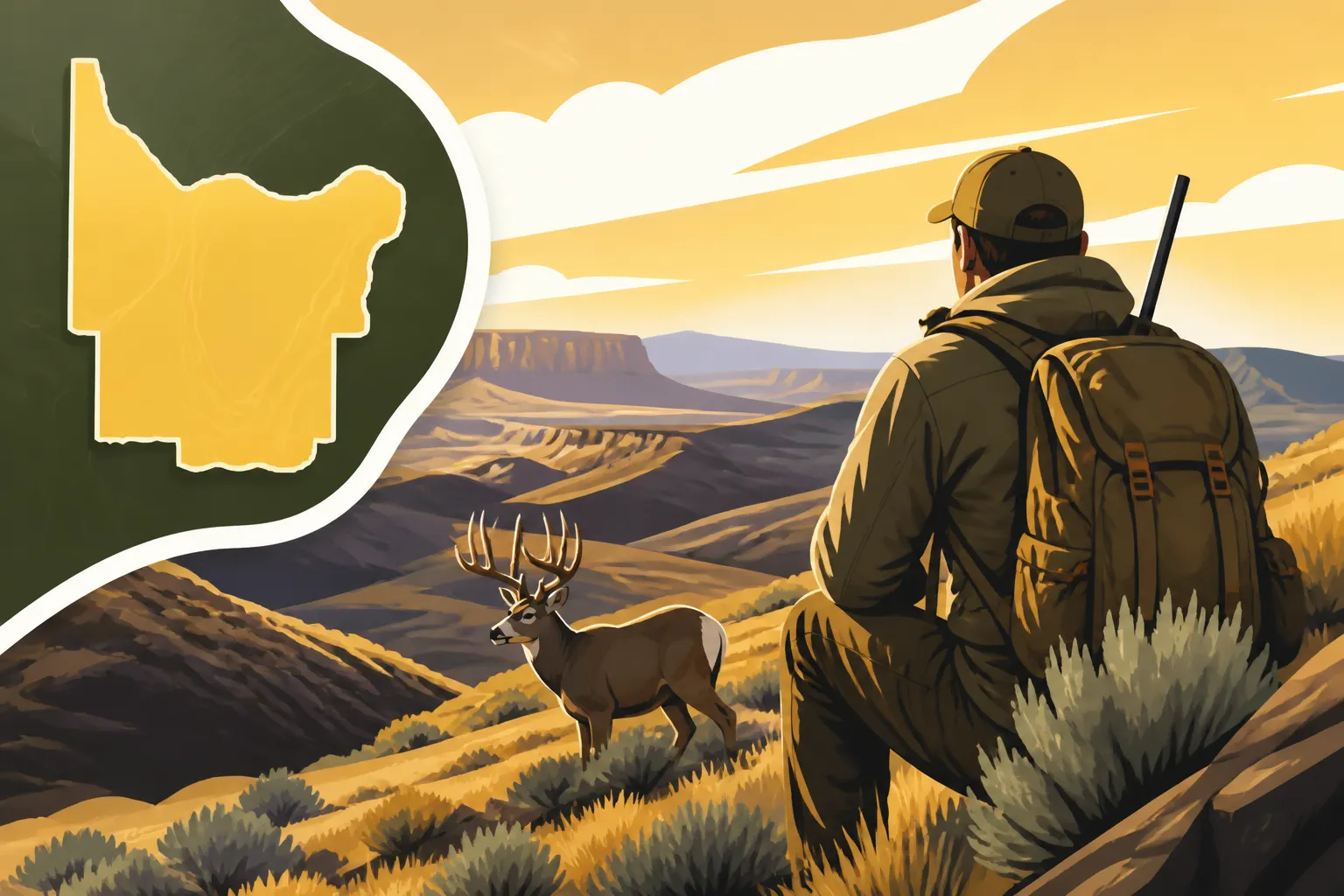
The Owyhee Country isn't just any BLM land; it's a vast, wild, and incredibly rugged expanse in southwestern Idaho that often feels like a world unto itself. This area is defined by its deep, basaltic canyons carved by the Owyhee River and its tributaries, interspersed with expansive sagebrush flats and rolling plateaus. It’s remote, often dry, and can be incredibly challenging to navigate, making it a true test for any hunter.
What sets the Owyhee apart is its sheer scale and the raw, untamed nature of its landscape. Road access can be limited to rough two-tracks, and many areas require serious commitment on foot to reach. This remoteness can be both a blessing and a curse. On one hand, it often means less hunting pressure in the deepest recesses; on the other, it means you need to be entirely self-sufficient, prepared for extreme weather, and skilled in backcountry navigation. Water sources are scarce, especially in the late summer and fall, which is a significant factor in both wildlife distribution and your own survival planning. The terrain itself, with its steep canyon walls and rocky outcrops, creates natural barriers that funnel game and challenge hunters with demanding climbs and descents. This isn't a place for the faint of heart, but for those willing to embrace its wildness, the rewards can be incredible.
Hunting Opportunities on Owyhee BLM
The Owyhee Country, with its dramatic landscapes, holds a special allure for hunters seeking a true Western experience. While often overlooked by those chasing elk in the timber, the BLM lands here provide exceptional opportunities for specific big game and upland species.
Primary Game Species You'll Encounter
When you talk about hunting the Owyhee, the conversation quickly turns to certain iconic Western species that thrive in its arid, rugged environment. The king of the Owyhee's big game is arguably the mule deer. These deer are perfectly adapted to the high desert, often found bedding in the breaks of canyons or feeding on the sagebrush flats. Hunting them often involves extensive glassing from high points, patiently picking apart distant hillsides and canyon systems for a tell-tale flicker of an ear or the distinct shape of an antler. The deer here might not always be as numerous as in some timbered units, but the challenge of finding and stalking a mature buck in such open country is incredibly rewarding. For more on hunting mule deer, check out Mule Deer Across Idaho's High Desert and Breaks.
Another highly sought-after species in the Owyhee is the pronghorn. Idaho's pronghorn population is robust, and many controlled hunts are allocated to units within or adjacent to the Owyhee region. These incredible animals are built for speed and thrive on the open, rolling sage flats. Spotting them from a distance is usually not difficult, but closing the gap on an animal that can see you from miles away and run at incredible speeds is a true test of a hunter's skill. You'll need to master the art of using terrain features, even subtle ones, to break up your silhouette and make an approach. Keep in mind that Pronghorn Hunting Is Controlled-Hunt Only in Idaho.
Beyond big game, the Owyhee is also a fantastic destination for upland birds. Chukar partridge are kings of the canyon country, often found on steep, rocky slopes where sagebrush meets rimrock. These birds are notoriously tough to hunt, requiring strong legs and a determined attitude, but their explosive flush and delicious meat make them a favorite among wingshooters. Additionally, you'll find healthy populations of coyotes throughout the Owyhee. Predator calling can be highly effective here, offering an exciting challenge and a way to extend your time in the field outside of big game seasons.
Seasonality and Tag Considerations
Hunting in the Owyhee, particularly for big game, is largely dictated by Idaho's tag system, which often involves controlled hunts. For mule deer, many of the Owyhee units fall under general seasons, but specific trophy units or desirable areas might be part of a controlled hunt. This means you'll need to apply for a tag well in advance and cross your fingers for a successful draw. The same goes for pronghorn, which are almost exclusively available through controlled hunts. Understanding the controlled hunt calendar and applying strategically is paramount to hunting these species in the Owyhee. You can typically find all the application periods and deadlines through the Idaho Fish and Game website or by using resources like GoHunt, which provides detailed draw odds and unit information.
General seasons for mule deer in the Owyhee often run from early October into November. Archery seasons typically precede the general rifle seasons, offering a different set of challenges and opportunities. For upland birds, seasons generally open in September and run through the fall, providing ample time to chase chukar across the canyonlands. Predator hunting, particularly for coyotes, often extends year-round, making it a great option for off-season scouting trips. Always consult the current Idaho hunting regulations, available through the official Fish and Game website, to confirm exact season dates, unit boundaries, and weapon restrictions before making any plans. Tools like the Idaho Hunt Planner Is the Tool to Start With are invaluable for this research.
Navigating and Accessing Owyhee BLM Ground
The sheer size and remote nature of the Owyhee Country's BLM land mean that navigation and access are often your biggest hurdles. Understanding land ownership and travel management rules is not just a suggestion; it's a necessity for a successful and legal hunt.
The Challenge of Landlocked Public Parcels
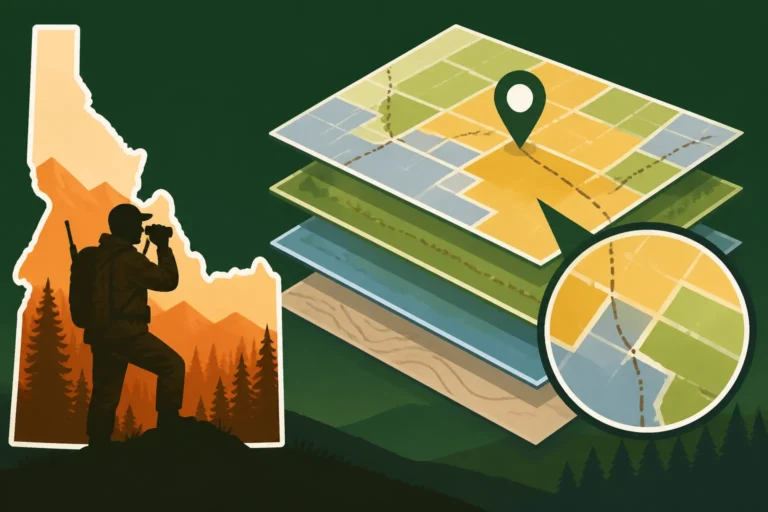
One of the most frustrating realities of hunting public land in the West, and especially within the Owyhee's patchwork of ownership, is encountering "landlocked" public parcels. These are pieces of BLM land that are entirely surrounded by private property, with no legal public road or easement providing access. You can see it clearly on a map – a block of yellow (BLM) completely enclosed by white (private). Without explicit permission from the surrounding landowner, you cannot legally cross that private land to reach the public ground. This is where tools like onX Hunt become absolutely indispensable.
These mapping applications use GPS technology to show you real-time land ownership boundaries directly on your phone or GPS device. By Using onX Layers for Idaho Public Land, you can quickly identify which parcels are public, which are private, and critically, how to access them legally. This helps you avoid inadvertent trespass, which can quickly ruin a hunt and lead to fines or worse. Before you even leave home, spend time studying the land ownership layers for your chosen hunting unit. Look for checkerboard patterns, identify established public roads or easements that lead into BLM ground, and be mindful of any corners that might be "corner-crossing" grey areas, though Idaho has clearer stances on these. The key is to know before you go, and a good mapping app is your best defense against trespass. Reading a Land Ownership Layer Correctly is a skill worth developing.
Motorized Travel Rules and Restrictions
While the Owyhee offers immense open spaces, that doesn't mean you can just drive wherever you please. The BLM manages travel within these areas to protect sensitive habitats, prevent erosion, and maintain the wild character of the landscape. For hunters, this means adhering to specific motorized vehicle use rules. Most BLM roads are designated as "open" (usually well-maintained dirt roads), "limited" (two-tracks or primitive roads where use might be restricted to certain times or vehicles), or "closed" (no motorized travel allowed). These designations are typically marked on maps provided by the BLM or shown as layers within mapping apps like onX Hunt.
A major consideration for Idaho hunters is Idaho's Motorized Hunting Rule Runs August Into December. This rule, which applies across many public lands, restricts off-road motor vehicle use primarily to established roads and trails. This means you generally cannot drive cross-country to retrieve downed game, scout, or access an area. You must stay on designated routes. Violating these rules not only harms the environment but can also result in significant penalties. Always obtain the most current Motor Vehicle Use Maps (MVUMs) from the local BLM field office or use your mapping app to understand specific road designations for the area you plan to hunt. Be prepared to hike significant distances from legal parking spots to reach your hunting grounds.
Dispersed Camping and Camp Setup
Camping on Owyhee BLM land is a fantastic way to immerse yourself in the hunting experience, and "dispersed camping" is generally permitted. This means camping outside of developed campgrounds, usually without amenities like picnic tables, fire rings, or toilets. The beauty of dispersed camping is the freedom to set up camp in a remote, scenic location close to your hunting area. However, this freedom comes with responsibility.
When dispersed camping on BLM land in the Owyhee, follow Leave No Trace principles. Pack out everything you pack in, including all trash and food waste. Fires are often restricted, especially during dry seasons, so always check for current fire restrictions before lighting a campfire. If fires are allowed, use an existing fire ring if possible, or build a small, contained fire in a safe location, ensuring it's dead out before you leave. You'll also need to consider water; there are usually no potable water sources, so you must pack in all the water you'll need for drinking, cooking, and basic hygiene. Dispersed Camping Limits on BLM Ground also covers rules about how long you can stay in one spot, which is typically 14 days within a 30-day period. Always select a campsite that minimizes your impact on the landscape, avoiding sensitive areas like riparian zones or fragile soils.
Planning Your Hunt in the Owyhee
A successful hunt in the Owyhee Country rarely happens by chance. It's the result of diligent research, meticulous planning, and a deep understanding of the unique challenges this landscape presents. Don't underestimate the Owyhee; it demands respect and preparation.
Researching Units and Drawing Odds
The first step in planning any Idaho hunt, especially for big game in the Owyhee, is thorough research into game management units (GMUs). Idaho has a specific unit system, and understanding these boundaries is critical. While How Many Game Management Units Idaho Has gives you the big picture, your focus should be on the specific units within the Owyhee region that offer the species you're targeting. For instance, some units might have better mule deer populations, while others are prime pronghorn country.
Once you've identified potential units, the next crucial step is to research drawing odds if you're pursuing a controlled hunt. Websites like GoHunt are fantastic resources for historical draw odds, harvest statistics, and unit profiles. This data allows you to make informed decisions about where to apply, balancing your desired species and location with your realistic chances of drawing a tag. For example, if a unit has 0% draw odds for non-residents over the past five years, it might be wise to look elsewhere. The Idaho Fish and Game website also provides a robust Idaho Hunt Planner Is the Tool to Start With that allows you to explore units, overlay maps, and review regulations. Combine these resources to build a comprehensive picture of potential hunting opportunities and the likelihood of drawing a tag. Units With the Highest Public Land Percentage can also be a helpful factor in your decision-making.
Essential Gear for Owyhee Backcountry
Hunting in the Owyhee is a backcountry endeavor, even if you're not miles from a road. The remote nature, rugged terrain, and often extreme weather demand a specific gear list that prioritizes self-sufficiency and safety.
First and foremost, reliable navigation is non-negotiable. This means a GPS device or a smartphone with a robust mapping app like onX Hunt, loaded with offline maps of the entire area. Always carry a physical map and compass as a backup, and know how to use them. Cell service is virtually non-existent in much of the Owyhee, so don't rely on it.
Optics are your lifeline in this open country. High-quality binoculars (10×42 or 12×50 are popular choices) are essential for spotting game at long distances. A spotting scope (20-60x or similar) on a sturdy tripod is equally critical for evaluating animals, particularly mule deer and pronghorn, across vast canyons and sage flats. You'll be spending a lot of time behind glass, so comfortable optics are a must. Remember that Spotting Scope Power for Canyon Glassing can make a big difference in challenging terrain.
Water management is perhaps the most critical component. Natural water sources are few and far between, and those that exist may be seasonal or contaminated. You must carry enough water for your entire trip, or have a reliable plan for filtration/purification if you locate a source. Factor in water for cooking and hygiene, not just drinking. This often means packing in multiple gallons, which adds significant weight.
Finally, consider clothing and footwear designed for extreme conditions. The Owyhee can experience scorching heat during the day and freezing temperatures at night, even in the fall. Layering is key. Your boots must be sturdy, comfortable, and capable of handling miles of steep, rocky, and uneven terrain. Sun protection (hat, sunglasses, sunscreen) is also crucial due to the exposed nature of the landscape. Don't forget a well-stocked first-aid kit, emergency shelter, and sufficient food to cover unexpected delays. This isn't the kind of place to skimp on preparedness.
| Item Type | Specific Gear (Owyhee Focus) | Rationale |
|---|---|---|
| Navigation | GPS device (e.g., Garmin inReach) or Smartphone with onX Hunt | Essential for land ownership, route finding, and emergency communication. |
| Printed topographic maps & compass | Backup for electronic failure, crucial for understanding terrain. | |
| Optics | High-quality Binoculars (10×42 / 12×50) | Spotting game at extreme distances in open country. |
| Spotting Scope (e.g., 20-60×80) with Tripod | Detailed evaluation of game, especially for trophy assessment. | |
| Water | Water Filter/Purifier (e.g., Sawyer Squeeze, Katadyn BeFree) | If a source is found, essential for safe hydration. |
| Large Capacity Water Bladder/Bottles (3-6 liters per day) | No natural water sources, must carry all needs. | |
| Clothing | Layered System (Base, Mid, Outer) | Wide temperature swings from day to night, protects against sun, wind, cold. |
| Durable, High-Ankle Hiking Boots | Rugged terrain, steep climbs, ankle support. | |
| Safety | Comprehensive First-Aid Kit | Remote location, potential for injury far from help. |
| Emergency Shelter (lightweight tarp or bivy) | Protection from unexpected weather or unplanned overnight stays. | |
| Headlamp with extra batteries | Early morning starts, late night pack-outs, camp duties. | |
| Hunting Specific | Rangefinder | Accurate shot placement in open, undulating terrain. |
| Backpack (50-80L for multi-day, 25-40L for day hunts) | Carrying water, gear, and meat. |
Disclaimer
This article is for general informational purposes only and does not constitute professional advice. Laws, prices and regulations vary by location and change over time. Consult a qualified professional for guidance on your specific situation.